
Regulations
Sovereignty, Security, and the Shifting Borders of Big Tech

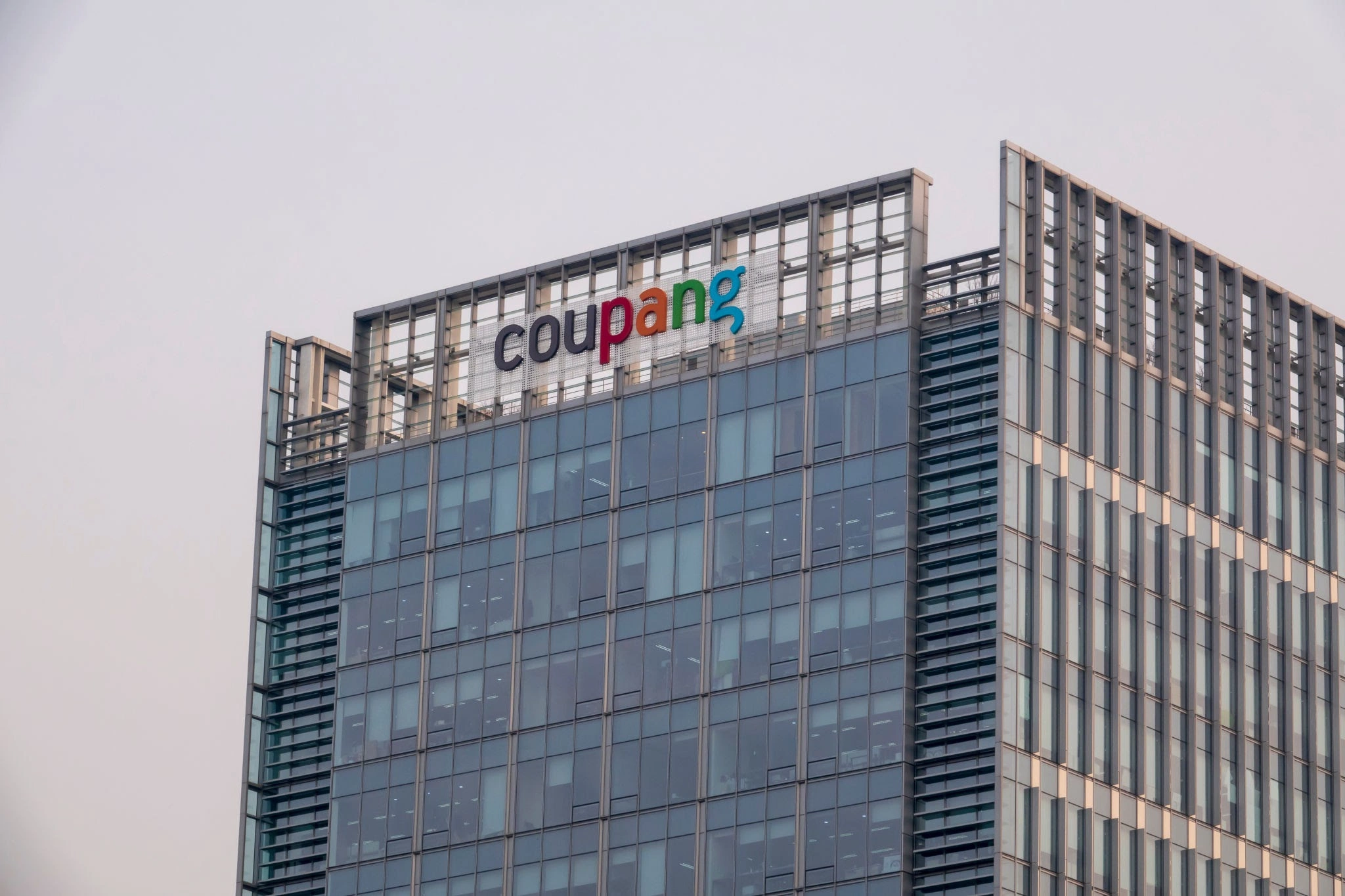
SEOUL — The enforcement notice arrived at the Tower 7 headquarters of Coupang Inc. in Seoul with the force of a macroeconomic shock. On June 11, 2026, South Korea’s primary privacy regulator handed down an unprecedented financial penalty against the country’s undisputed sovereign of digital commerce, terminating a months-long investigation that had already spilled into the arenas of international trade and bilateral diplomacy. The action signals a definitive end to the era of regulatory leniency for dominant platforms operating across overlapping jurisdictions, demonstrating that data sovereignty is no longer an abstract legal theory but an expensive operational reality.
The dispute shifts attention to the vulnerable intersection of global capital markets, cross-border corporate registrations, and regional data security. Coupang built its empire on the promise of logistical frictionlessness, converting capital into infrastructure until it controlled nearly 40% of South Korea’s logistics services. Yet the physical speed of its distribution network masked structural vulnerabilities in its digital architecture, turning a localized internal security failure into a matter of state concern.
The corporate architecture of the platform complicates the regulatory standoff. Founded by Korean-American graduate Bom Kim, Coupang is registered in Delaware and listed on the New York Stock Exchange under the ticker CPNG, yet it extracts the overwhelming majority of its revenue from the domestic South Korean market. This structural asymmetry has long shielded the enterprise from local market shocks while attracting billions of dollars from international investment funds. However, the sheer scale of the domestic enforcement action demonstrates that financial insulation in Wilmington offers no protection when a sovereign data protection watchdog decides to assert its regulatory authority over digital infrastructure.
The Core Development: Anatomy of a Historic Ruling
The Personal Information Protection Commission delivered its final judgement on Thursday morning, confirming a cumulative administrative penalty of 624.7 billion won, or roughly $409 million. This historic Coupang data breach fine represents the largest privacy-related financial sanction ever levied in South Korea, completely overshadowing the previous record of 134.8 billion won issued against telecom operator SK Telecom in 2025. The penalty is split into two distinct enforcement categories: 423.6 billion won directly penalizing the massive security leak, and an additional 201.1 billion won for the systemic, non-consensual data collection of users’ broader online activities.
The statistical reality of the compromise is staggering. The regulatory investigation established that the personal data of approximately 33.67 million users was systematically exposed over several months. In a country with a total population of roughly 51 million, this means that nearly two-thirds of all South Korean citizens saw their names, telephone numbers, physical delivery addresses, and historical order profiles exposed to unauthorized parties. While the company quickly clarified that payment credentials and account passwords remained uncompromised, the exposure of high-fidelity residential and behavioral data triggered an immediate domestic backlash and an unprecedented consumer exodus.
The state probe revealed that the systemic breakdown originated from an internal administrative error rather than an external cyberattack. According to a specialized investigation by the Ministry of Science and ICT, a former software engineer who was a Chinese national managed to retain active administrative access long after their formal offboarding from the company. The engineer exploited an active, unrevoked cryptographic signing key between April and June 2025, pulling deep records from overseas cloud servers without triggering internal security alerts or database access thresholds.
What turned a severe technical vulnerability into a corporate compliance failure was the company’s delayed disclosure timeline. The platform only identified the continuous data siphon in November 2025, after a routine customer inquiry highlighted unusual account anomalies. The enterprise then delayed its statutory report to local regulators by 48 hours, missing the mandatory 24-hour notification window established under South Korean consumer protection laws. PIPC Chairperson Song Kyung-hee observed that the platform had achieved explosive domestic growth by utilizing vast reserves of consumer information, but had fundamentally failed to deploy an information security framework commensurate with that operational scale.
Analytical Layer: The Escalation of Global Privacy Enforcement
The sheer magnitude of this penalty marks a permanent structural shift in how sovereign states govern systemic digital monopolies. For years, massive consumer platforms treated statutory data compliance penalties as a predictable, manageable cost of doing business—modest entry fees offset by the immense profitability of data monetization. By lifting the penalty to 1.4% of Coupang’s 45 trillion won annual revenue for 2025, South Korean authorities have signaled an era of regulatory enforcement escalation designed to inflict true balance-sheet discipline.
This environment demands a closer examination of structural liabilities.
What is the record fine for a data breach in South Korea?
The record fine for a data breach in South Korea is 624.7 billion won ($409 million), levied by the Personal Information Protection Commission against Coupang on June 11, 2026. The historic penalty punished a massive security failure that exposed 33 million user records and unauthorized tracking of 11 million consumers.
| Regulatory Parameter | Historic Precedent (SK Telecom 2025) | Current Ruling (Coupang 2026) |
| Total Financial Penalty | 134.8 billion won | 624.7 billion won ($409 million) |
| Impacted User Base | Minor corporate segment | 33.67 million citizens (Two-thirds of population) |
| Statutory Revenue Cap | Standard fixed tier | Calculated at 1.4% of total annual revenue |
| Primary Infraction Focus | External system vulnerability | Insider access failure & non-consensual tracking |
The second component of the regulatory action—the 201.1 billion won penalty for systematic tracking—reveals a deeper structural conflict regarding data monetization. The commission’s investigation proved that Coupang’s proprietary advertising and marketing tracking systems had been harvesting the detailed off-platform application and web browsing histories of 11.17 million consumers without explicit, unbundled user consent. This constitutes a clear series of e-commerce privacy violations that directly undermine the platform’s targeted advertising business model, proving that modern regulators will no longer tolerate the opaque, cross-site consumer profiling techniques that underpinned the initial wave of Big Tech profitability.
Implications & Second-Order Effects: Trade Wars and Market Crises
The immediate consequences of the ruling have reverberated far beyond the technical architecture of Seoul’s data networks, rapidly transforming into an international trade conflict between Washington and Seoul. Following the initial disclosure of the state investigation, an influential group of institutional investors petitioned the United States Trade Representative under Section 301 of the Trade Act, arguing that South Korean regulators were using local privacy protections as non-tariff barriers to systematically disadvantage American-listed corporations. Though that specific petition was later withdrawn under intense diplomatic pressure, the geopolitical damage had already been done.
The trade friction escalated sharply in late January 2026, when the White House unexpectedly modified its regional trade policy, raising baseline import tariffs on targeted categories of South Korean manufacturing exports from 15% to 25%. While official statements pointed to macroeconomic currency adjustments, officials in Seoul privately acknowledged that the aggressive regulatory actions against Delaware-registered entities had severely soured trade relationships. In response, nearly 100 South Korean lawmakers signed a joint legislative memorandum declaring that foreign political pressure on domestic data privacy enforcement constituted an unacceptable violation of the country’s judicial sovereignty.
Macroeconomic Capital Flows & Regulatory Friction (2025-2026)
───────────────────────────────────────────────────────────
[Q3 2025: Insider Breach Occurs] ──► [Q4 2025: $1.2B Compensation Plan]
                                              │
[Jan 2026: US Tariff Escalation] ◄────────────┘
        │
        ▼
[June 11, 2026: Historic 624.7B Won Regulatory Penalty Imposed]
The financial markets have reacted with visible panic. The combined financial exposure of this security crisis has placed unprecedented pressure on the platform’s capital reserves. Prior to this regulatory ruling, the group had already been forced to dedicate 1.7 trillion won—approximately $1.2 billion—to a comprehensive consumer compensation and identity protection fund launched in December 2025 to mitigate consumer churn. When combined with the new 624.7 billion won penalty, the total cash drain from this single security incident exceeds $1.6 billion, a reality that contributed directly to the company reporting a painful $242 million operating loss in the first quarter of the year.
The long-term impact on the underlying business model could be even more severe. The platform’s competitive advantage has always been its data-driven logistics network, which relies on tracking consumer habits to anticipate demand and power its famous overnight rocket delivery system. With its off-platform tracking capabilities severely restricted by the commission’s new enforcement mandates, the e-commerce giant faces a structural decline in its core operational efficiency. Wall Street has adjusted its expectations accordingly; shares of the company have steadily declined, trading down 35% so far in 2026 as institutional investors re-evaluate the regulatory risks built into foreign tech monopolies.
Competing Perspectives: The Corporate Defense and Judicial Sovereignty
The platform has mounted an aggressive legal defense, signaling its intent to challenge the commission’s calculations in court as soon as the official administrative resolution is delivered. Corporate attorneys argue that the regulatory commission has fundamentally miscalculated the penalty by applying the 3% statutory maximum revenue cap to the company’s entire corporate revenue, rather than isolating the specific revenue streams directly derived from the affected user accounts. The platform maintains that its rapid response, which included the immediate containment of the rogue credentials and a voluntary $1.2 billion consumer remediation program, should have resulted in a significant reduction of the final fine.
The executive team also argues that the regulator’s public statements have created an inaccurate narrative regarding its security culture. “We deeply regret the concern caused to our valued customers,” the company noted in an official corporate statement issued from its executive offices. “Yet our proactive measures to prevent secondary harm from last year’s incident, alongside our transparent explanations based on clear technical facts, were not sufficiently reflected in the commission’s final administrative decision.” The company emphasizes that there has been zero verified evidence of secondary data misuse, financial fraud, or identity theft resulting from the breach, suggesting that the historic fine is disproportionately punitive.
Still, domestic legal experts point out that the state’s aggressive stance is an appropriate response to an egregious insider security threat that exposed the sovereign citizenry to prolonged vulnerabilities. Lee Jae-min, a professor of international law at Seoul National University, noted that the extraordinary scale of the fine reflects a calculated judicial effort to establish an absolute regulatory precedent. Professor Lee observed that if the regulator had backed down under international trade pressure, it would have signaled that foreign-listed digital platforms operate above local consumer protection laws, effectively rendering domestic privacy protections obsolete in the face of global market pressures.
The Horizon of Sovereign Data Governance
The unresolved tension at the heart of this historic dispute is fundamentally structural: it pits the borders of sovereign states against the borderless flows of global digital commerce. South Korea’s record-breaking fine demonstrates that when an e-commerce platform becomes a utility—deeply integrated into the daily lives, geographic movements, and residential details of two-thirds of a nation’s citizens—it can no longer view data security as a secondary technical challenge. The state will inevitably step in to treat consumer data protection as a core element of national security.
What follows will be a critical test of endurance for both the platform and the broader global tech economy. As the legal battle moves into the South Korean appellate courts, tech firms worldwide are watching closely, forced to realize that international corporate registration is no longer a shield against localized regulatory enforcement. The true cost of building a digital monopoly is no longer just the capital required to scale the network, but the immense, unyielding cost of keeping it secure.
Discover more from The Economy
Subscribe to get the latest posts sent to your email.



The 2026 AI governance conversation has largely been framed as a contest between great powers — the United States, China, and the European Union pursuing incompatible regulatory visions. That framing captures only part of the picture. A parallel and increasingly consequential dynamic involves non-state actors — from terrorist organizations exploiting open-weight AI models to civil society groups and industry consortia shaping the rules themselves — operating both as subjects of the emerging global guardrail push and, in some cases, as active participants in building it.
Key Takeaways
- The UN’s Global Dialogue on AI Governance and Independent International Scientific Panel on AI, launched from the 2024 Global Digital Compact, convened its first substantive session in Geneva in 2026 — described by the Council on Foreign Relations as a test of whether global AI governance can move beyond fragmented national approaches.
- A benchmark pilot by Tech Against Terrorism found that almost one-third of AI model responses provided meaningful uplift when prompted to assist malicious actors preparing terrorist activity, despite existing guardrails — and researchers assessed that guardrails are likely removable for all open-weight models, a structural, not merely operational, vulnerability.
- Recorded drone strike events rose 115-fold between 2018 and 2025, with 565 distinct armed groups — including non-state actors and criminal networks alongside state militaries — carrying out at least one drone attack in that period, according to the 2026 Global Peace Index.
- AI-enabled target-to-fire times have compressed from roughly a day using 1990s cruise missile systems to as little as five seconds with autonomous selection systems now in active use in conflicts including Ukraine — a compression the Global Peace Index explicitly warns is outpacing the international legal and diplomatic frameworks needed to govern it.
- A May 2026 terrorism case filed by India’s National Investigation Agency documented a defendant linked to al Qaeda in the Indian Subcontinent using YouTube and ChatGPT to learn improvised explosive device construction and mixture ratios — illustrating how AI reduces informational friction for less experienced non-state actors even as researchers note operational execution barriers remain significant.
Two Distinct Meanings of “Non-State Actors” in the 2026 AI Governance Debate
Precision matters here, because “non-state actors” spans two substantively different categories in current policy discourse, each with distinct guardrail implications.
Non-state actors as governance participants include large technology companies (Google, Meta, Microsoft, and others), multistakeholder organizations like the Partnership on AI, and civil-society watchdog groups such as the Civil Liberties Union for Europe — entities with formal or informal access to shape AI regulatory processes at the OECD, the EU, and increasingly at the UN level. Research on this dimension has found that large tech companies possess the monetary resources and technical expertise to actively promote their regulatory preferences within legislative and bureaucratic processes, while civil society organizations have played a documented, vocal role in specific negotiations — including the EU AI Act process.
Non-state actors as security threats include terrorist organizations, insurgent groups, criminal networks, and militias exploiting increasingly accessible AI capabilities to enhance operational effectiveness — the category most directly implicated in the “global guardrails” security debate, and the focus of the remainder of this analysis.
The Democratization Problem: Why Open-Source AI Changes the Threat Calculus
A recurring, structural concern across 2026 security research is that the proliferation of sophisticated open-source AI models has lowered the barrier to entry for non-state actors — including terrorist groups and armed militias — to acquire meaningful operational capability. Open-source and commercial foundation models can be repurposed relatively easily for military or paramilitary applications, a dynamic that Belfer Center research explicitly warns contributes to a “race to the bottom” on safety and reliability standards among both states and non-state actors competing for tactical or strategic advantage from early adoption.
The severity of this concern is directly quantified by a 2026 benchmark pilot from Tech Against Terrorism, which found that almost one-third of AI model responses provided meaningful uplift when prompted to assist malicious actors preparing terrorist activity — despite guardrails explicitly designed to prevent exactly this outcome. The research’s most strategically significant finding is not the uplift rate itself but the assessment that guardrails are probably removable for all open-weight models, meaning the release of a capable open-weight model is potentially catastrophically irreversible from a governance standpoint: once released, the safety measures built into the model cannot be reliably re-imposed by any subsequent regulatory action.
Documented Cases: From Tactical Planning to Explosive Device Instruction
The 2026 evidence base for non-state actor AI exploitation has moved from theoretical concern to documented case material. CSIS research cites a May 2026 charge sheet filed by India’s National Investigation Agency in connection with a November 2025 bombing in Delhi, in which the accused principal — linked to al Qaeda in the Indian Subcontinent — reportedly used YouTube and ChatGPT to learn how to construct an improvised explosive device and determine correct mixture proportions.
Separately, reporting drawing on the 2026 Global Terrorism Index describes AI reportedly helping a designated terrorist organization refine unit sizing, protect explosive components delivered by drone, and plan raids with greater tactical precision — part of a broader pattern the 2026 Global Peace Index frames not as AI inventing new categories of violence, but as making existing violence more efficient. This distinction matters directly for governance strategy: if AI is primarily an efficiency multiplier on existing threat patterns rather than a source of categorically new threats, the governance priority becomes controlling the technology’s diffusion pathways rather than searching for entirely novel threat vectors.
Importantly, CSIS research also notes meaningful operational limits remain: violence is difficult to execute successfully, and untrained individuals frequently fail during operational execution due to stress, inexperience, poor tradecraft, or logistical shortcomings that AI assistance does not eliminate. Advanced terrorist operations still typically require organizational trust, coordination, operational security, financing, and real-world experience that AI-generated technical instructions alone cannot substitute for.
The Speed Problem: Autonomous Systems and the Governance Gap
Beyond informational uplift for individual actors, the 2026 Global Peace Index identifies a second, more systemic non-state actor dynamic: the militarization of AI in ongoing conflicts, where target-to-fire times have compressed dramatically — from approximately a day using 1990s-era cruise missile systems to as little as five seconds with autonomous target-selection systems now in active use in conflicts including Ukraine. Recorded drone strike events rose 115-fold between 2018 and 2025, with 565 distinct armed groups — a category explicitly including non-state actors and criminal networks alongside state militaries — carrying out at least one documented drone attack during that period.
The Global Peace Index’s central warning is structural: this speed of technological change is arriving well ahead of the international legal and diplomatic frameworks needed to govern it, creating a widening gap between what autonomous and semi-autonomous systems can now do operationally and what international oversight mechanisms exist to meaningfully constrain their use — a gap that applies with particular force to non-state actors operating outside the state-level arms control and export regimes that, however imperfectly, still apply some constraint to national militaries.
The Institutional Response: Building Global Guardrails in 2026
The primary multilateral response to this landscape has centered on the UN’s Global Dialogue on AI Governance, launched from the 2024 Global Digital Compact alongside a companion Independent International Scientific Panel on AI. UN Secretary-General António Guterres has framed the effort’s core rationale directly: no single country can see the full picture of AI risk alone, and shared understanding is necessary to build effective guardrails, unlock AI’s benefits, and foster cooperation. The Global Dialogue represents, per Council on Foreign Relations analysis, a genuine test of whether international AI governance can move beyond fragmented, incompatible national approaches toward a more coordinated and inclusive form — though early indications suggest not all countries support this coordinated model equally, and the effort unfolds against a backdrop of the EU’s rights-based regulatory approach, the US’s preference for voluntary standards, and China’s emphasis on state control existing in active tension with one another.
This tension matters directly for the non-state-actor security dimension: a genuinely global guardrail regime capable of constraining terrorist or criminal exploitation of AI capabilities requires exactly the kind of coordinated, cross-jurisdictional cooperation that great-power regulatory competition currently undermines. Smaller and developing states, meanwhile, gain a formal voice in these new UN-backed forums but remain structurally dependent on the small number of major powers that control the bulk of global AI talent, capital, and computing infrastructure — limiting their practical influence over how any eventual guardrail regime is designed and enforced.
Implications for Foreign Policy and Technology Governance Stakeholders
- Open-weight model release policy deserves treatment as an irreversible governance decision, not an incremental product choice. Given the finding that guardrails are likely removable from any open-weight model post-release, policy frameworks evaluating AI model release should weight this irreversibility explicitly rather than treating open-weight releases as equivalent in risk profile to controllable, API-gated model access.
- Governance frameworks should target diffusion pathways, not solely model capability. Since the 2026 evidence base suggests AI is primarily amplifying existing non-state actor threat efficiency rather than creating unprecedented threat categories, policy resources may generate more impact by controlling how capable models reach less-resourced or less-vetted actors than by attempting to cap frontier model capability alone.
- The autonomous-systems governance gap requires urgency independent of the broader UN Dialogue timeline. With target-to-fire compression already operational in live conflicts and 565 armed groups (including non-state actors) already engaged in drone warfare, the multilateral governance process’s more deliberate, consensus-building pace may not match the operational speed of the threat it aims to address.
- Civil society and industry non-state actors remain a meaningful, underutilized lever for governance influence. Given documented civil-society influence in processes like the EU AI Act negotiation, foreign policy and technology governance stakeholders should treat multistakeholder engagement — not only formal state-to-state negotiation — as a genuine channel for shaping eventual global guardrail design.
Frequently Asked Questions
Are terrorist groups actually using AI for operational planning in 2026?
Yes, with documented cases: a May 2026 Indian terrorism case involved a defendant who used ChatGPT and YouTube to learn explosive device construction, and broader reporting describes AI assisting a designated terrorist organization with unit sizing and raid planning — though researchers note significant operational execution barriers remain independent of AI assistance.
Can AI safety guardrails be removed from open-source models?
Research from Tech Against Terrorism’s 2026 benchmark pilot assessed that guardrails are likely removable for all open-weight AI models, making open-weight model releases a potentially irreversible governance risk once safety measures can no longer be reliably enforced post-release.
What is the UN doing about global AI governance in 2026?
The UN launched the Global Dialogue on AI Governance and an Independent International Scientific Panel on AI, stemming from the 2024 Global Digital Compact, aiming to build coordinated international guardrails — though the effort operates amid significant tension between the EU’s rights-based, the US’s voluntary-standards, and China’s state-control regulatory approaches.
Conclusion
The 2026 non-state actor dimension of AI governance defies a simple narrative: the same technology lowering barriers for terrorist groups to plan attacks with greater precision is also, through civil society and multistakeholder participation, actively shaping the emerging global guardrail frameworks meant to constrain that very misuse. With autonomous weapons systems already compressing target-to-fire times to single-digit seconds in live conflicts, and open-weight model guardrails assessed as fundamentally removable once released, the core tension facing foreign policy and technology governance stakeholders is one of speed: whether the deliberate, consensus-driven pace of UN-backed multilateral coordination can keep pace with a threat landscape that is, by the clearest available evidence, evolving considerably faster.
Discover more from The Economy
Subscribe to get the latest posts sent to your email.
For most of the past decade, smart glasses were a philosophical privacy concern — a hypothetical about what might happen if cameras became wearable and identity recognition became instant. The first half of 2026 turned that hypothetical into a documented chain of concrete events: whistleblower reports, federal class-action lawsuits, regulatory investigations spanning three continents, a confirmed facial-recognition code deployment inside a consumer app, and a first-of-its-kind statewide court ban — all within roughly six months. For corporate compliance and legal teams, smart glasses have moved from an emerging-technology curiosity to an active regulatory exposure.
Key Takeaways
- The EU AI Act’s Article 5 prohibitions on real-time remote biometric identification in public spaces became fully applicable on August 2, 2026, directly implicating facial-recognition-capable smart glasses across the European Union.
- Several European countries — including France, Germany, and the Netherlands — are actively considering bans on Meta’s smart glasses, with the European Data Protection Board conducting a dedicated “social acceptability” review of the category in 2026.
- A Swedish media investigation found contractors in Nairobi, Kenya reviewing smart glasses footage for AI training had seen recordings of bathroom visits, banking details, and intimate moments — a finding that triggered a US class action, formal European Parliament questions, and a Renew Europe group letter to the European Commission.
- Harvard students demonstrated in 2024 (with continued relevance through 2026 policy debates) that consumer smart glasses combined with publicly available facial-recognition tools could identify a stranger’s name, address, and phone number in just over a minute — using entirely off-the-shelf, publicly available components, not custom hardware.
- 75 civil liberties, domestic violence, and worker rights organizations formally called on Meta to halt facial recognition plans for its Ray-Ban and Oakley product lines, while EPIC has separately urged the FTC and a nine-state regulatory consortium to block the feature.
The 2026 Timeline: How a Philosophical Concern Became a Regulatory Crisis
The acceleration of smart glasses privacy scrutiny in 2026 did not stem from a single triggering event but from a sequence in which each incident amplified the next. The starting point was a Swedish media investigation — reported by Svenska Dagbladet and Göteborgs-Posten — that found subcontractors in Nairobi, Kenya reviewing footage captured by Ray-Ban Meta users as part of Meta’s AI model training pipeline had encountered recordings including bathroom visits, banking details, and people having sex. This reporting directly triggered a US class-action lawsuit, formal questions from Members of the European Parliament to the European Commission, and a letter from the Renew Europe political group specifically asking what regulatory action the EU could take.
Separately, and around the same period, Wired reported finding facial recognition code already built into the mobile companion app used to connect smart glasses to a user’s phone — even though the feature had not been publicly activated. This “dormant capability” finding is legally significant: it shifts the regulatory question from whether a company might add facial recognition in the future to whether the infrastructure for that capability already exists inside a shipped consumer product.
The Regulatory Response: A Fragmented but Intensifying Patchwork
European Union: GDPR and the AI Act Converge
Camera-equipped smart glasses trigger overlapping EU legal regimes. Basic camera capture invokes GDPR Article 6 transparency requirements and member-state recording consent statutes. Facial recognition processing that extracts biometric templates for identification purposes goes further, triggering GDPR Article 9’s special category provisions for biometric data. Critically, the EU AI Act’s Article 5 prohibitions on real-time remote biometric identification in public spaces for law enforcement purposes became fully applicable on August 2, 2026 — a hard regulatory deadline that directly implicates any facial-recognition-capable consumer wearable operating in EU public spaces.
France’s data protection authority (CNIL) and the European Data Protection Board both opened dedicated regulatory workstreams on smart glasses in 2026, with an EDPB report specifically addressing the “social acceptability” of the category expected by the end of summer 2026. This is not the EU’s first engagement with the category: when Meta launched the original Ray-Ban Stories in September 2021, both Ireland’s Data Protection Commission and Italy’s Garante raised concerns about whether people being recorded would realistically notice a small LED recording indicator light — a concern that has only intensified as devices have become more capable and less visually distinguishable from ordinary eyewear.
United States: A Regulatory Patchwork With No Federal Framework
There is currently no federal law in the United States specifically governing smart glasses. Devices instead fall under a patchwork of existing frameworks never designed with always-on, AI-integrated wearables in mind: state-level recording consent laws (some states require all-party consent to recordings), wiretapping statutes, and state biometric privacy laws such as Illinois’s Biometric Information Privacy Act (BIPA), which imposes specific obligations around biometric data collection and consent.
This patchwork has produced uneven but escalating enforcement activity:
- EPIC (Electronic Privacy Information Center) has formally urged the FTC and a bipartisan nine-state regulatory consortium to block Meta from adding facial recognition to its smart glasses line, arguing the feature would violate the FTC Act and state unfair/deceptive trade practice laws.
- A March 2026 class-action complaint filed in the US District Court for the Northern District of California (Bartone and Canu v. Meta Platforms and Luxottica of America) alleges Meta’s “designed for privacy, controlled by you” marketing claims were materially false.
- 75 organizations — spanning domestic violence advocacy, worker rights, and civil liberties groups — jointly called on Meta to halt and publicly disavow any plans to add facial recognition to its Ray-Ban and Oakley product lines.
- Institutional bans have emerged independently of federal or state legislation, including a first-of-its-kind statewide court ban and exclusion from major industry conferences (one Las Vegas conference banned camera-equipped smart glasses with zero exceptions, including prescription versions, during its August 2026 event).
Why This Category of Device Presents a Unique Risk Profile
The core technical concern, as articulated by privacy researchers, is structural rather than incidental: putting a camera into glasses is already an inherent privacy risk because it normalizes covert recording in public and private spaces alike; adding facial recognition on top of that camera compounds the risk into what one privacy law expert described as “an intolerable escalation.” Without any opt-in mechanism for the person being recorded or identified, this technology fundamentally changes what a stranger in public can learn about an individual — from effectively nothing to a complete identity dossier, generated in seconds.
The Harvard student demonstration (I-XRAY), which combined consumer smart glasses, a facial image search engine (PimEyes), and a large language model, proved this is not a theoretical risk requiring sophisticated technical resources: the entire mechanism relied exclusively on publicly available tools, and the students identified dozens of individuals — including fellow students — without those individuals ever being aware. The researchers deliberately withheld their code from public release specifically because of this ease of replication.
Corporate Compliance Implications
For organizations navigating this environment in 2026, several compliance considerations are now concrete rather than speculative:
- Facial-recognition capability, whether active or dormant, is now a material legal fact. The discovery of inactive facial recognition code inside a companion app demonstrates that regulators and plaintiffs’ counsel will scrutinize latent capability, not merely activated features.
- Workplace and public-facing business policies need explicit smart glasses provisions. Institutions managing sensitive populations — healthcare facilities, courts, financial institutions handling in-person transactions, and any business subject to two-party consent recording laws — face direct exposure from customer- or employee-worn recording devices that may not be visually identifiable as recording equipment.
- AI training data pipelines involving human review require jurisdiction-specific scrutiny. The Kenya-based content review scandal illustrates that offshoring sensitive video review work does not insulate a company from EU or US regulatory and reputational consequences.
- Marketing claims about privacy design are now litigation-tested. The pending California class action demonstrates that “privacy by design” marketing language is being treated as a potentially actionable representation, not mere puffery.
Frequently Asked Questions
Is facial recognition currently active on consumer smart glasses like Ray-Ban Meta?
As of the most recent public statements, Meta has indicated no facial recognition feature has been launched on its Ray-Ban glasses, though reporting has found dormant facial recognition code within the companion mobile app and internal plans reportedly under consideration.
What does the EU AI Act say about smart glasses and facial recognition?
The EU AI Act’s Article 5 prohibits real-time remote biometric identification in public spaces for law enforcement purposes, and this provision became fully applicable on August 2, 2026 — directly relevant to any facial-recognition-capable wearable device operating within the EU.
Is there a federal law regulating smart glasses in the United States?
No. Smart glasses in the US currently fall under a patchwork of state-level recording consent laws, wiretapping statutes, and biometric privacy laws like Illinois’s BIPA, none of which were specifically designed for always-on, AI-integrated wearable devices.
Conclusion
The 2026 smart glasses privacy crisis illustrates a recurring pattern in technology regulation: a capability that was philosophically debated for years becomes a concrete legal and compliance problem only once a documented chain of real-world incidents — a whistleblower report, a demonstrated exploit, a discovered dormant feature — converts abstract risk into evidence. With the EU AI Act’s biometric provisions now fully in force, US litigation actively testing corporate privacy marketing claims, and civil society organizations coordinating pressure across continents, corporate legal and compliance teams can no longer treat smart glasses as a future risk to monitor — it is a present regulatory and reputational exposure requiring active policy response.
Discover more from The Economy
Subscribe to get the latest posts sent to your email.

The reliable “tells” that once let a wary consumer spot a scam call — bad grammar, robotic cadence, obvious accent mismatches — have largely disappeared. In 2026, an AI-generated voice can convincingly clone a real person from as little as three to ten seconds of audio, adapt its script in real time under questioning, and pass through a spoofed number that appears to originate from a legitimate bank fraud line. The result is a category of fraud that has moved from a nuisance to a board-level risk, forcing financial institutions to rewrite verification protocols that have gone essentially unchanged for a decade.
Key Takeaways
- Financial institutions reported a 32% rise in deepfake-related fraud attempts in 2025, with over 10% of banks reporting individual deepfake vishing losses exceeding $1 million per case.
- Fraudsters need as little as 3–10 seconds of audio to clone a voice convincingly, with deepfake audio now achieving over 90% accuracy in mimicking real voices, according to multiple 2026 fraud research compilations.
- Vishing now accounts for over 60% of phishing-related incident response engagements, and in more than 80% of voice phishing attacks, attackers use spoofed caller IDs to make calls appear to originate from legitimate numbers.
- The 2024 Arup case remains the reference incident for enterprise risk: an employee at the UK engineering firm authorized 15 wire transactions totaling $25.6 million after joining a video call featuring convincing real-time deepfakes of the company’s CFO and several executives.
- Verizon’s 2026 Data Breach Investigations Report tracks pretexting (synchronous voice or chat manipulation) at 6% of initial access vectors, with phone-based phishing simulations showing a median click rate roughly 40% higher than email-based simulations.
Why Deepfake Vishing Broke the Old Verification Model
Voice-based identity verification has historically relied on a simple, largely unstated assumption: that a familiar voice, speaking in a familiar and contextually appropriate way, is a reasonably reliable signal of identity. That assumption depended on voice cloning being expensive, technically demanding, and largely confined to research labs and high-budget production environments. That constraint dissolved in 2024 and 2025, as open-source models, real-time inference, and cheap, abundant compute closed the technical gap — reducing the cost of a convincing voice-cloning attack from what industry practitioners describe as a “research lab” undertaking to a “weekend project.”
The critical architectural failure this exposes: any verification process that depends on a human listening to a voice and confirming it “sounds right” can now be defeated by AI, because the voice only needs to be convincing under pressure — not indefinitely, and not against forensic scrutiny, just long enough to complete a transaction.
First-Generation vs. Second-Generation AI Vishing
The evolution of AI voice phishing across 2025 and 2026 illustrates why static defenses have consistently fallen behind:
- First-generation (pre-rendered audio): Attackers scripted a short call, generated the audio in advance, and played it through a SIP gateway. Defenders could reliably defeat this by throwing the call off-script — asking an unexpected question, requesting a callback, or changing the topic — because pre-rendered audio could not adapt.
- Second-generation (real-time inference, 2025–2026): Real-time inference services now synthesize responses inside the call itself, with end-to-end latency low enough to feel like a normal conversation. The off-script defense that worked reliably against first-generation attacks is substantially weaker against a system that can adapt its responses live.
This progression matters directly for bank security protocol design: verification procedures built around the assumption that unpredictable questioning defeats vishing are now defending against a threat model that no longer exists in its original form.
The Arup Case: What $25.6 Million Bought as a Lesson
The 2024 Arup incident remains the most frequently cited case study in 2026 vishing analysis, and for good reason: it demonstrates the failure mode at enterprise scale. An employee at the UK engineering firm joined what appeared to be a routine video conference featuring the company’s CFO and several senior executives — everyone looked right, and everyone sounded right. The employee authorized 15 separate transactions totaling $25.6 million to Hong Kong bank accounts before the fraud was identified. The case has become the reference point specifically because it defeated not just voice verification but visual verification simultaneously, illustrating that multi-channel deepfake attacks — voice plus video plus contextually accurate scripting — represent the frontier threat model banks and enterprises must now defend against, not single-channel voice calls in isolation.
How Banks Are Rewriting Security Protocols in 2026
Several concrete protocol shifts are emerging across financial institutions in response to this threat environment:
- Out-of-band verification as a hard requirement. The consistent recommendation across 2026 fraud research is to verify any high-risk request on a channel the caller does not control — for example, calling back through an independently sourced phone number rather than a number provided during the suspicious call itself, or confirming through a separate app-based channel.
- Behavioral and telephony metadata analysis over voice recognition alone. Since caller identity and voice familiarity are no longer sufficient trust signals in high-risk workflows, leading practitioners now emphasize behavioral detection and telephony metadata analysis — call origination patterns, timing anomalies, SIP routing irregularities — as stronger risk signals than voice identity checks.
- Mandatory delay windows for high-value transfers. Given that wire recall success rates drop sharply after the first six hours following a fraudulent transfer, banks are increasingly building mandatory cooling-off periods for large or unusual transfers specifically to create a window for after-the-fact verification.
- Pre-established fraud team relationships. Practitioner guidance increasingly recommends that businesses establish a relationship with their bank’s fraud team before an incident occurs, since wire recall procedures, session revocation, and credential rotation all move faster when a pre-existing escalation path exists.
- No-blame reporting culture. Because deepfake vishing has higher success rates than traditional email phishing due to its emotional-manipulation component, organizations that punish employees for falling victim risk delayed incident discovery; a no-blame reporting culture surfaces incidents in real time rather than days later.
The Data Gap: Where Awareness Training Is Misallocated
A notable finding from 2026 security awareness research is a significant mismatch between actual risk and training prioritization: while 73% of security leaders prioritize phishing reporting training, only 10% prioritize deepfake recognition training specifically — despite 35% of organizations having already experienced a deepfake incident, according to Gartner’s 2025 AI Risk Management Survey. Phone-based phishing simulations show a median click rate roughly 40% higher than email-based simulations, according to Verizon’s 2026 Data Breach Investigations Report, suggesting that voice-channel vulnerability is measurably higher than email-channel vulnerability even as training investment remains skewed toward the latter.
A Practical Vishing Incident Response Framework
- Pre-written wire recall playbook, covering bank fraud-team contact procedures, session revocation, credential rotation, and forensic capture of call metadata
- Mandatory callback verification through independently sourced contact information for any request involving funds transfer, credential reset, or access changes
- Layered channel verification for high-risk requests — requiring confirmation through at least two independent channels (e.g., a callback plus an internal messaging system confirmation) rather than relying on any single channel, however convincing
- Regular, realistic vishing simulation exercises modeled on actual scenarios (bank fraud alerts, executive impersonation, SaaS support calls) rather than generic phishing awareness content alone, given the roughly 40% higher click-through vulnerability documented on phone-based channels
Frequently Asked Questions
How much audio does it take to clone someone’s voice in 2026?
As little as 3 to 10 seconds of audio is sufficient to produce a convincing voice clone using current AI tools, with resulting deepfake audio achieving over 90% accuracy in mimicking the real voice.
What was the Arup deepfake case?
In 2024, an employee at UK engineering firm Arup authorized 15 wire transactions totaling $25.6 million after joining a video call featuring real-time deepfakes of the company’s CFO and several executives — a case widely cited as the reference incident for enterprise multi-channel deepfake fraud risk.
How are banks defending against AI voice phishing in 2026?
Banks are shifting toward out-of-band verification on channels the caller cannot control, behavioral and telephony metadata analysis instead of voice-identity checks alone, mandatory delay windows for high-value transfers, and pre-established fraud-team relationships to speed wire recalls.
Conclusion
The 2026 vishing threat landscape reflects a broader pattern seen across AI-enabled fraud: the technology did not create a new category of crime so much as it removed the practical constraints — cost, technical skill, adaptability — that previously kept an old category of crime in check. Financial institutions rewriting security protocols around out-of-band verification, behavioral metadata, and multi-channel confirmation are responding to a threat model where “it sounded right” and “it looked right” have both stopped being reliable signals of anything at all.
Discover more from The Economy
Subscribe to get the latest posts sent to your email.

Balance of Payments (BOP)

The Falkland Islands Dispute: Sovereign Wealth, Offshore Drilling, and Market Impacts

Gross Domestic Product (GDP): Nominal vs. Real

What is Inflation and the Consumer Price Index (CPI)?

US-China Trade Competition 2026: Supply Chain Relocation Guide

Oil Prices Break $100 in 2026: Middle East Conflict & Energy Markets

South-South Trade Expansion: Digital Integration and Emerging Market Growth

$166B Tariff Refund Tapering Fast: Is Your Business Missing Out?

Stock Market Today: Dow Climbs 500 Points as Markets Shake Off Inflation Jitters

14th WTO Conference 2026: Tariffs & Global Supply Chain Impact

Swish Secures $24M Funding to Disrupt India’s $100B Food Market

Physical AI and Driverless Tech: The Next Trillion-Dollar Industrial Revolution

Enterprise AI Platforms Disrupting B2B SaaS in 2026: Full Analysis

Crypto vs. Safe Haven Assets 2026: Where Institutions Are Hedging

State Farm’s $5B Dividend 2026: Who Qualifies & Payout Dates

US-China Relations in Q3 2026: Trade Tariffs and Supply Chain Risks

Gold’s Wild 2026: From a Record $5,600 Peak to a 24% Crash and Back Toward $4,500

Oil Surges as Strait of Hormuz Traffic Collapses Again

The Rocket That Won’t Quit: Inside SpaceX’s Falcon 9 Launch Machine

Bank of England Set to Hold Rates Through Year-End, Reuters Poll Shows

SpaceX Starship Flight 14: First Orbital Attempt & Starlink V3 Launch Explained

The 2026 Crypto Regulatory Shift: What It Means for Institutional Investors

AI Chip Stocks 2026: The Best Semiconductor Investments Beyond Marvell

Retail Earnings Week: What Home Depot, Target & Walmart Reveal

AI-Powered Training: The Next Multi-Billion Dollar Ecosystem in Fitness

Russia’s Black Sea Oil Exports Fall for a Fifth Straight Week

Top 30 Stocks for Investment in PSX for Massive ROI in 2026

Global Chip Selloff Deepens: What’s Driving the Aug. 19 Semiconductor Rout
-

 Markets & Finance8 months ago
Top 15 Stocks for Investment in 2026 in PSX: Your Complete Guide to Pakistan’s Best Investment Opportunities
-

 Analysis7 months ago
Johor’s Investment Boom: The Hidden Costs Behind Malaysia’s Most Ambitious Economic Surge
-

 Analysis7 months ago
Top 10 Stocks for Investment in PSX for Quick Returns in 2026
-

 Analysis7 months ago
Brazil’s Rare Earth Race: US, EU, and China Compete for Critical Minerals as Tensions Rise
-

 Banks8 months ago
Best Investments in Pakistan 2026: Top 10 Low-Price Shares and Long-Term Picks for the PSX
-

 Investment8 months ago
Top 10 Mutual Fund Managers in Pakistan for Investment in 2026: A Comprehensive Guide for Optimal Returns
-

 Global Economy9 months ago
15 Most Lucrative Sectors for Investment in Pakistan: A 2025 Data-Driven Analysis
-

 Global Economy9 months ago
Pakistan’s Export Goldmine: 10 Game-Changing Markets Where Pakistani Businesses Are Winning Big in 2025