Analysis
Abu Dhabi’s Goodbye: Why the UAE’s OPEC Exit Is the Cartel’s Most Dangerous Rupture Yet
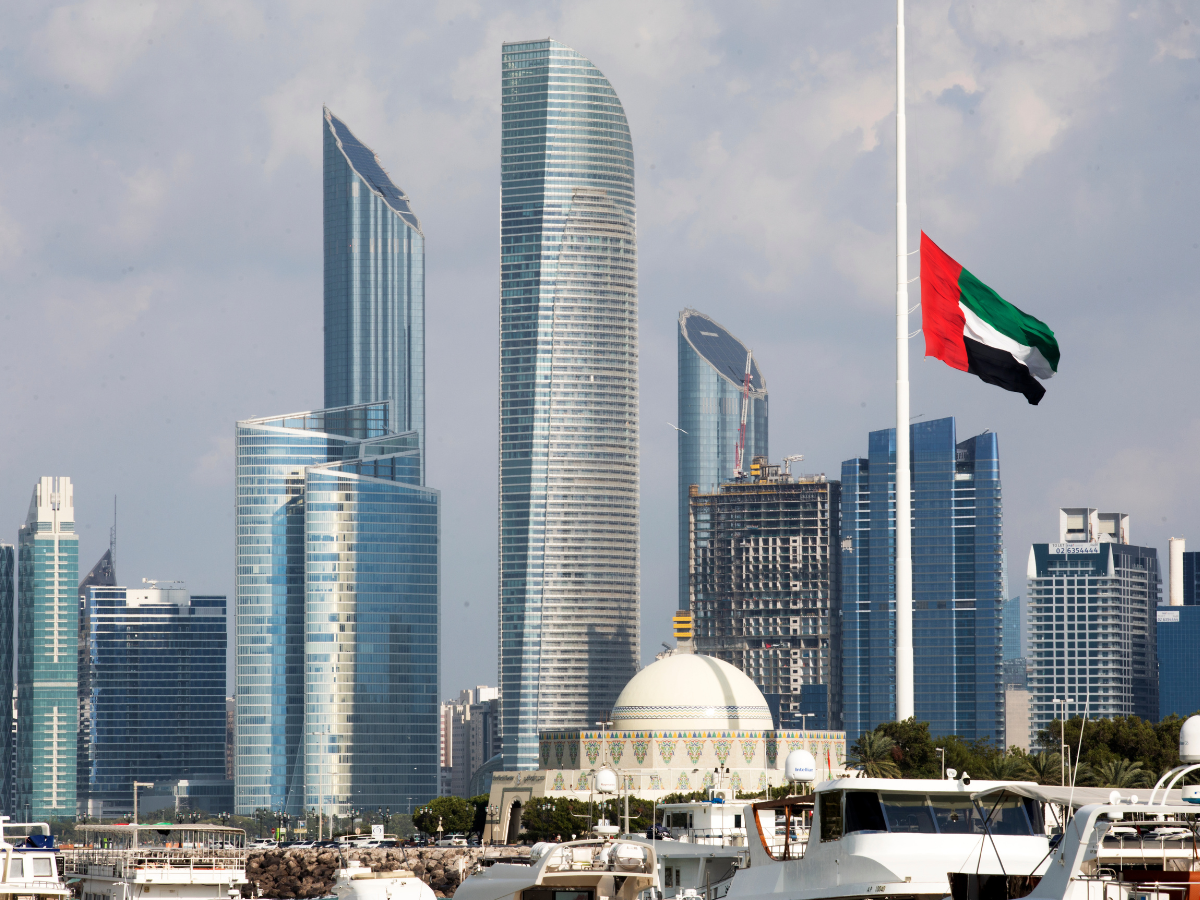
The UAE’s shock departure from OPEC on May 1, 2026, after nearly 60 years, exposes deep Gulf rifts, weakens cartel supply leverage, and could redraw the global oil order at the worst possible moment.
On the morning of April 28, 2026, the world’s energy establishment woke up to news that had been whispered about in Gulf corridors for years—but that almost no one expected to arrive this week, in this manner, in the middle of an active war. The United Arab Emirates, one of OPEC’s most consequential members for nearly six decades, announced it would withdraw from the cartel effective May 1. Three days’ notice, after 59 years of membership. The speed of the exit was as revealing as the exit itself.
“A long time coming,” a senior Emirati official told the Atlantic Council. That phrase, candid and unbothered, says everything about how Abu Dhabi views this moment—not as a crisis, but as a correction.
For the rest of the oil world, however, the implications are anything but calm.
The Breaking Point: Quota Frustrations and a Rivalry That Could No Longer Be Contained
To understand why the UAE left OPEC, you must first understand what OPEC had become for Abu Dhabi: a straitjacket tailored to Saudi measurements. For years, Emirati energy officials chafed under production quotas that bore little relationship to the country’s actual capacity. The UAE had invested more than $150 billion through its national champion ADNOC to build out its oil infrastructure, pushing sustainable production capacity to roughly 4.85 million barrels per day. Yet as part of the OPEC+ architecture, it was producing closer to 3.2 million bpd—operating at nearly 30 percent below what its wells could actually deliver.
When Energy Minister Suhail Al Mazrouei announced the departure, he was careful, almost courtly, in his language. “This has nothing to do with any of our brothers or friends within the group,” he said in an interview with CNBC. And yet the decision to leave OPEC at this precise moment—as the group scrambles to manage the worst supply shock in its history, triggered by the Iran war and Strait of Hormuz disruptions—speaks louder than diplomatic niceties ever could.
The backdrop is a Gulf that has been quietly fracturing for years. Once described as the twin pillars of Sunni Arab power, Saudi Arabia and the UAE have developed what can only be described as a simmering strategic rivalry. They clash over oil policy, compete aggressively for foreign investment, technology talent, and regional influence, and have carved out conflicting spheres of authority from Sudan to Yemen. That Yemeni rupture—when Saudi forces struck UAE-backed Southern Transitional Council fighters in late December 2025—was no small affair. It was personal, public, and unresolved, dominating Gulf social media and poisoning back-channel diplomacy for months before the Iran war temporarily eclipsed it.
Abu Dhabi’s OPEC decision is the latest and most consequential manifestation of that rift. As the Atlantic Council’s William Wechsler noted, the UAE increasingly views the relationship with the United States—and, through the Abraham Accords, with Israel—as its primary strategic lever, one that is fundamentally incompatible with an organization whose coherence now depends partly on Russia and whose membership still includes Iran.
Immediate Market Ripples Amid the Iran War Energy Crisis
The announcement landed on markets that were already stretched beyond normal parameters. U.S. crude oil surpassed $100 per barrel on April 28 for the first time since April 10, after Iran peace talks with the Trump administration showed no meaningful progress. West Texas Intermediate climbed to nearly $102 per barrel; Brent crude jumped sharply toward $113 per barrel. The national average price of gasoline reached $4.18 per gallon—its highest level this year. These numbers reflect a market operating under acute geopolitical stress, not merely the incremental shock of the UAE announcement.
The Iran war’s energy consequences have already been historic. According to The National, OPEC’s total production fell 27 percent to 20.79 million barrels per day in March—a supply collapse of nearly 7.88 million bpd that dwarfed even the COVID-19 shock of May 2020. The Strait of Hormuz, through which roughly one-fifth of the world’s oil and natural gas had previously flowed, has been effectively closed to non-allied shipping. Before hostilities flared, some 130 ships passed through the strait daily; by late April, that figure had fallen to single digits.
The UAE itself felt this acutely. Its production, which stood at approximately 3.4 million bpd before the Iran war’s onset, plummeted 44 percent to just 1.9 million bpd in March as Hormuz closures cut off export routes. It is a bitter irony: the country leaving OPEC ostensibly to produce more cannot yet fully export what it already extracts. Al Mazrouei was candid about this, saying the UAE “will gradually increase production to supply global markets, once freedom of navigation is restored in the Strait of Hormuz.”
In the near term, then, the market impact of the UAE departure is largely symbolic—or, as Rystad Energy analyst Jorge Leon put it, “near-term effects may be muted given ongoing disruptions.” But markets price the future, and what traders absorbed on Tuesday was not just an operational announcement. It was a structural signal: OPEC, as a coordination mechanism, is weaker than it was 72 hours ago. That repricing is happening, quietly, in the forward curves.
Can OPEC Survive Without Abu Dhabi? The Case For and Against
OPEC has weathered exits before. Qatar left in 2019. Ecuador departed twice. Angola walked out in late 2023. None of those departures fundamentally challenged the cartel’s ability to manage supply, because none of them removed a producer with meaningful spare capacity and a credible willingness to use it. The UAE is different.
Rystad Energy put it plainly: “Losing a member with 4.8 million barrels per day of capacity, and the ambition to produce more, takes a real tool out of the group’s hands.” That capacity figure—4.85 million bpd, confirmed by the Emirati energy ministry—means OPEC has effectively lost its third-largest producer in terms of sustainable output, even if current volumes are suppressed by the Hormuz crisis. When the strait reopens, Abu Dhabi will face no quota constraints. It has the infrastructure, the capital, and now the political will to ramp toward its stated target of 5 million bpd by 2027.
David Goldwyn, a former U.S. energy security coordinator, told CNBC that Riyadh would “still have a significant ability to discipline the market with its own spare capacity but it will have a weaker hand now that the UAE is no longer a member.” That is the key analytical frame. Saudi Arabia retains the single largest cushion of immediately deployable spare capacity in the world—perhaps 2 to 3 million bpd—which gives it genuine market power regardless of what OPEC’s nominal membership looks like. The Riyadh playbook of 2020, when the Kingdom flooded markets to punish Russia for resisting production cuts, remains available in theory.
But that threat carries less deterrence today. Saudi Arabia’s fiscal breakeven price—the oil price it needs to balance its budget—has risen substantially as Vision 2030 spending accelerates. With the kingdom’s finances already strained, a deliberate price war would be self-harm. Abu Dhabi has likely done this calculus, and its conclusion, according to the Atlantic Council’s analysis, is that “Riyadh’s response cannot be as dramatic” as it once was.
The more unsettling question is what precedent the UAE departure sets. Robin Mills, CEO of Qamar Energy, told CNN that Kazakhstan—a significant producer with its own frustrations over quota compliance—could be watching closely. “If there is a time to leave, now is the time,” Mills observed. Kazakhstan has repeatedly exceeded its OPEC+ production ceilings, absorbing diplomatic criticism without much consequence. A formal exit would merely regularize what is already an informal reality. If others follow, the arithmetic of OPEC’s coordinated capacity becomes genuinely tenuous.
The Long Game: Strategic Autonomy, Energy Transition, and the UAE’s Vision 2031
The UAE’s decision is not simply about oil volume. It is about economic identity. Abu Dhabi increasingly understands that its long-term prosperity will be determined less by cartel membership and more by its ability to function as a globally integrated, capital-attracting, technologically advanced energy and financial hub. This is a country that has built one of the world’s largest sovereign wealth funds, anchored a global aviation network, diversified into financial services, artificial intelligence, and clean energy—all while quietly distancing itself from the political baggage that OPEC membership now entails.
“From an economic perspective, given the size of the UAE’s sovereign wealth funds, the country’s finances in recent years have been more tied to global economic growth than to the global price of oil,” the Atlantic Council noted in its analysis. This is not a petrostate defending a price floor. It is a post-petrostate in construction, attempting to monetize its remaining hydrocarbon reserves as rapidly and efficiently as possible before the energy transition reshapes demand curves in ways that make production quotas irrelevant.
ADNOC’s chief executive Sultan Al Jaber framed the decision as consistent with “the UAE’s long-term energy strategy, its true production capability and its national interest, as well as global energy market stability.” Embedded in that language is a subtle but significant claim: Abu Dhabi believes it can contribute more to global energy security outside OPEC than inside it. Whether markets agree will depend on how quickly Hormuz normalizes and how responsibly Abu Dhabi manages the ramp-up it has promised.
That phrase—”gradual and measured”—matters. The worst-case scenario for oil prices would be an Emirati production surge timed to coincide with an Iran ceasefire and a broader OPEC compliance breakdown, flooding markets with supply at precisely the moment geopolitical risk premiums are deflating. The best-case scenario is an orderly, demand-aligned expansion that contributes to price stability while reducing OPEC’s ability to engineer artificial scarcity.
The Trump Factor: Cartel Politics and Washington’s Shifting Energy Calculus
No analysis of the UAE’s exit is complete without acknowledging the geopolitical context that the Trump administration has shaped. President Trump has long criticized OPEC as a cartel engaged in price manipulation inimical to American consumers and the U.S. economy. The Washington Post noted that OPEC has been “long criticized by Trump,” and the broader energy framework of the current administration favors production expansion, market liberalization, and skepticism of coordinated supply management.
For the UAE—Washington’s most reliable Gulf ally, especially after the Abraham Accords deepened Israel-UAE ties and gave Abu Dhabi a unique channel to the White House—an OPEC exit aligns neatly with the posture Trump’s team favors. It signals willingness to prioritize the U.S. strategic relationship over traditional Gulf solidarity. It also positions the UAE favorably for any post-war reconstruction conversation, where American firms and capital will play an outsized role in rebuilding regional energy infrastructure.
Riyadh, by contrast, finds itself in an increasingly uncomfortable position—leading a cartel that is hemorrhaging relevance while managing its own relationship with a U.S. administration that has never fully trusted Saudi intentions on oil pricing. The UAE’s exit narrows Saudi diplomatic space precisely when Riyadh most needs flexibility.
What Comes Next: Three Scenarios for a Fragmented Oil Order
The UAE’s OPEC departure crystallizes a broader structural question that energy markets have been circling for years: what is OPEC actually for in a world of U.S. shale, accelerating energy transition, and irreducibly sovereign national interests?
Scenario One: Managed Decline. OPEC retains its core members—Saudi Arabia, Iraq, Kuwait—and continues to serve as a price floor mechanism for higher-cost producers, while free agents like the UAE expand production independently. Oil markets become more volatile but not catastrophically so. Prices gradually moderate as Hormuz reopens and UAE volumes come to market.
Scenario Two: Contagion. Kazakhstan, and possibly others, follow the UAE example. OPEC loses coordinated control of 15 to 20 percent of its nominal capacity within 18 months. The cartel’s ability to enforce discipline collapses, and the global oil market becomes fully competitive—good for consumers, destabilizing for petrostates with high fiscal breakevens.
Scenario Three: Saudi Consolidation. Riyadh responds to the UAE exit by deepening ties with remaining members, possibly offering favorable terms to retain wavering producers, and using its spare capacity diplomatically rather than commercially. OPEC contracts to a tighter core but retains functional market power, becoming in effect a Saudi-led oil bank of last resort for geopolitical emergencies.
None of these scenarios is certain. All of them are more likely today than they were on April 27.
Conclusion: The Cartel at a Crossroads
The UAE’s exit from OPEC is neither the end of the cartel nor a trivial procedural matter. It is something more consequential: a market signal that the era of unconditional cartel loyalty among major producers is over, that national interest calculus has definitively overtaken institutional solidarity, and that the geography of energy influence is being redrawn in real time.
Saudi Arabia’s spare capacity still matters. OPEC’s remaining members still represent a substantial share of global supply. The organization will not disappear on May 2, and oil prices will not immediately collapse. But a cartel is ultimately a political construct—a shared commitment to collective action—and the UAE’s departure has demonstrated that this commitment is now conditional, negotiable, and expendable when national interests point elsewhere.
For energy consumers, this may ultimately be welcome news: more production flexibility, less artificial scarcity, and a slow erosion of the pricing power that has cost economies trillions of dollars over decades. For the geopolitical architecture of the Gulf, it is a reminder that the old certainties—Saudi leadership, Emirati loyalty, collective Arab economic solidarity—are dissolving faster than most strategists anticipated.
The question is not whether OPEC can survive without Abu Dhabi. It almost certainly can, in some form. The question is what kind of OPEC remains—and whether, in the era of energy transition and multipolar geopolitics, anyone will still need to ask Saudi Arabia’s permission to produce their own oil.
The answer, increasingly, is no.
Discover more from The Economy
Subscribe to get the latest posts sent to your email.
Analysis
Emerging Market Stocks Hit Record High as Asian Chipmakers Surge: The AI-Driven Reordering of Global Capital
There is a number that has quietly upended a decade of received wisdom about where global capital belongs. On April 28, 2026, South Korea’s combined equity market capitalization crossed $4 trillion — surpassing the United Kingdom to rank eighth in the world. Korea overtook the UK — with a market cap of about $3.99 trillion — to rank eighth worldwide, behind the US, China, Japan, Hong Kong, India, Canada, and Taiwan. Taiwan had beaten them to it. The total market value of Taiwan-listed stocks had already reached $4.14 trillion, edging past the UK’s $4.09 trillion. Two Asian chip-powered economies, once casually bracketed under the patronizing rubric of “emerging,” now dwarf France, Germany, and the financial colossus of the City of London by equity market size. The Korea HeraldTaiwan News
This is not an anecdote. It is an epoch.
The surge in emerging market stocks to fresh record highs in 2026 is being powered, in ways that most Western investors have been agonizingly slow to appreciate, by a fundamental structural shift: the semiconductor supply chain — the physical backbone of the artificial intelligence revolution — is concentrated overwhelmingly in East Asia. TSMC, Samsung Electronics, and SK Hynix are not beneficiaries of a cyclical trade; they are the indispensable infrastructure of the twenty-first-century economy. The MSCI Emerging Markets Index hitting record highs this year is not a fluke. It is the market’s belated acknowledgment of a reality that analysts in Seoul and Taipei have understood for years.
The Numbers Behind the Surge
The MSCI Emerging Markets Index has surged 16% since the beginning of 2026, outpacing the S&P 500, which has climbed only about 5% over the same period. The index’s robust performance has been consistent for five consecutive quarters, and analysts have revised profit forecasts for emerging market companies upward by approximately 30% this year — contrasting sharply with the S&P 500, where earnings have been adjusted upward by only around 10%. GuruFocus
The engine of that outperformance is not hard to locate. South Korea’s iShares MSCI South Korea ETF has risen 43.28% year-to-date, following a 96% surge in 2025. The broader MSCI Emerging Markets ETF has achieved its strongest relative surge against the S&P 500 since 2008 over the past two months. Euronews
The TSMC earnings report of April 16 crystallized what was already legible in the data. TSMC posted a 58% profit jump, its fourth consecutive quarter of record profits, driven by strong AI chip demand, with net income of NT$572.48 billion — representing a fourth consecutive quarter of record earnings. First-quarter revenue increased 35.1% year-over-year, while gross margin expanded to 66.2% and net profit margin reached a remarkable 50.5%. These are not the numbers of a company riding a hype cycle. They are the metrics of a structurally dominant monopolist at the apex of its pricing power — a position TSMC has earned through two decades of relentless capital discipline and engineering excellence. CNBCTSMC
Meanwhile, in the memory markets that underpin AI training and inference workloads, memory prices surged in 2025 and are expected to rise a further 40% through the second quarter of 2026, as demand shows no sign of abating. High-bandwidth memory — essential for training and running large AI models — faces particularly constrained supply, with SK Hynix and Samsung in the strongest position to benefit. CNBC
Why Asian Chipmakers Are the New Vanguard
Ask any hyperscaler where they source the silicon that makes their AI ambitions possible, and the answer invariably routes through Taiwan’s Hsinchu Science Park or South Korea’s Icheon. TSMC holds roughly 70% of the global foundry market and an even higher share of the most advanced nodes essential for Nvidia GPUs and custom AI chips from Google, Microsoft, and Amazon. In memory, SK Hynix leads with an estimated 50–62% share of the HBM market, thanks to early qualification wins with Nvidia and strong technical execution. International Business TimesInternational Business Times
This is not supplier dependency in the conventional sense. It is strategic chokepoint control. The AI boom — from hyperscaler data centers to edge inference in smartphones and automobiles — requires two ingredients above all others: leading-edge logic and high-bandwidth memory. Both are controlled by a handful of Asian firms with technological leads measured not in months but in years.
Asia’s top chipmakers plan to invest over $136 billion in capital expenditure in 2026, a 25% increase from 2025. TSMC alone plans a record $52–56 billion capex this year, a 27–37% increase, with 70–80% focused on advanced processes and advanced packaging. This level of investment, sustained across multiple players simultaneously, speaks to something more durable than a demand spike — it reflects the industry’s collective conviction that the AI infrastructure build-out has years, not quarters, left to run. DATAQUEST
The EM tech sector now accounts for 29% of the MSCI EM Index, with Asia home to globally competitive leaders across the AI value chain: foundry through TSMC, memory through SK Hynix and Samsung Electronics, IC design through MediaTek, and the broader hardware ecosystem including packaging, testing, and ODM. This is a complete industrial ecosystem, not a single-point dependency — a distinction that matters enormously when thinking about the durability of the current rally. GAM
From “Emerging” to “Essential”: The Re-Rating of EM Risk
The label “emerging markets” carries ideological baggage. It conjures images of currency crises, governance deficits, thin liquidity, and political instability — markets where a Yale endowment might allocate 5% of its portfolio for optionality and diversification, not conviction. That mental model, always an oversimplification, is now actively misleading.
Taiwan and South Korea have shot past Germany and France in equity market capitalization over the past seven months. As Fidelity International portfolio manager Ian Samson has noted, the rapid rise of Korea and Taiwan reflects the long-term megatrend of semiconductors as “the new oil” — the key input to economic activity — combined with the latest price-insensitive boom in AI investment. Taipei Times
What makes this re-rating structurally significant — rather than a repeat of the commodity supercycle mirages of the 2000s — is the nature of the earnings driving it. These are not resource rents dependent on Chinese construction demand or the whims of OPEC. They are technology rents derived from proprietary process nodes, decades of accumulated engineering capital, and customer relationships so embedded that switching costs are measured in years of qualification cycles. In Taiwan, technology-related goods now account for roughly 80% of exports, with revenue at TSMC continuing to track the island’s export momentum. Euronews
Capital markets are adjusting accordingly. The iShares MSCI Emerging Markets ETF attracted more than $4 billion in January 2026, its strongest month for inflows since 2015, with South Korea alone drawing $1.6 billion in January and over $1 billion in February. Institutional investors are not merely chasing momentum. They are correcting a structural underweight that persisted through years of “U.S. exceptionalism” narrative — a narrative that, with the S&P 500 trailing EM by more than 10 percentage points in 2026, looks increasingly threadbare. Euronews
There is a harder point to make here, and it deserves plain statement: the concentration of the world’s most critical semiconductor manufacturing outside the political borders of the United States — and outside the reach of U.S. export controls — represents not a vulnerability for investors, but an opportunity. Capital that was over-concentrated in a small cohort of American mega-cap technology names has begun the long process of diversification. The Magnificent Seven era of returns-without-risk was always a mirage. The current rebalancing toward Asian chipmakers is its corrective.
Why This Rally Matters for Global Investors
Featured snippet summary: Emerging market stocks are hitting record highs in 2026 primarily because TSMC, Samsung Electronics, and SK Hynix — which dominate the global AI semiconductor supply chain — are generating exceptional earnings growth. South Korea’s market is up over 43% year-to-date and has surpassed the UK in total market cap. Taiwan’s TAIEX has set consecutive record highs. The MSCI EM Index has outperformed the S&P 500 by more than 10 percentage points. Analysts have raised EM earnings forecasts by approximately 30% versus roughly 10% for U.S. equities. This is a structural, not cyclical, shift driven by irreplaceable AI hardware infrastructure concentrated in East Asia.
Risks and Realities: Geopolitics, Concentration, and the Dollar
Any honest account of this rally must grapple with its vulnerabilities, and they are real.
The most acute is geopolitical. Taiwan sits in one of the world’s most tensely contested straits, and the island’s equity market now trades at prices that embed optimistic assumptions about the continued stability of cross-strait relations. A serious escalation — even a rhetorical one — would reverberate instantly through global semiconductor supply chains and asset prices. There is no hedge that fully neutralizes this tail risk, and investors who pretend otherwise are engaged in motivated reasoning.
South Korea carries its own geopolitical freight, with a northern border that requires no elaboration. The KOSPI’s 44% year-to-date gain reflects immense confidence in structural AI demand — but that confidence coexists with security risks that Western pension fund trustees may be quietly re-examining.
Some investors have sounded caution about the outsized influence of tech stocks within local indexes: Samsung and SK Hynix account for a combined 42% of South Korea’s KOSPI, while TSMC makes up a similar proportion of Taiwan’s TAIEX. Index-level concentration of this magnitude creates the conditions for spectacular reversals. A single earnings miss, a customer dispute, or a technology stumble at any of these three companies would be amplified dramatically through passive index exposure. Taipei Times
The U.S. dollar dynamic cuts both ways. Dollar weakness in 2025–2026 has been a significant tailwind for EM assets — a weaker dollar makes emerging market assets cheaper for foreign buyers, directly boosting inflows and supporting local currency valuations, while simultaneously boosting dollar-denominated earnings for Korean and Taiwanese exporters. Should the Federal Reserve pivot more hawkishly than markets currently anticipate — or should the dollar stage a recovery driven by safe-haven demand amid global uncertainty — this tailwind could become a headwind with little warning. Ainvest
U.S. semiconductor export controls remain a persistent wildcard. Washington’s attempts to limit China’s access to advanced chips have, paradoxically, thus far accelerated rather than impeded the earnings growth of TSMC and SK Hynix, as Chinese demand redirects toward compliant suppliers and as the U.S. market for advanced AI accelerators balloons. But the next round of controls — targeting HBM specifically, or tightening restrictions on packaging services — could disrupt supply chain economics in unpredictable ways.
Finally, there is the broadening question. Early-2026 performance suggests that AI investment momentum is moving further down the technology stack, toward software-driven application AI and the rapidly emerging domain of physical-world AI. As AI applications broaden beyond the hyperscaler buildout phase into consumer and industrial deployment, the composition of winners will evolve. Foundry and memory players will remain essential, but their relative dominance within the AI value chain may moderate as software and application layers capture a growing share of the economic pie. GAM
Investment Implications for Global Portfolios
For sophisticated investors, several conclusions follow from this structural analysis.
The diversification case for EM tech is no longer theoretical. A portfolio overweight in the Magnificent Seven — Nvidia, Microsoft, Apple, Alphabet, Amazon, Meta, Tesla — carries an implicit bet on continued U.S. tech dominance at valuations that leave little margin for error. If investors shifted just 5% of U.S. allocations to emerging markets, the resulting capital could disproportionately re-rate smaller, more liquid markets and accelerate the entire trend. Many institutional investors are already making precisely this calculation. Ainvest
The selective approach matters. Within the broad EM tech complex, the risk-reward is not uniform. Leading-edge players — TSMC, SK Hynix, MediaTek — have durable competitive moats, demonstrated pricing power, and earnings trajectories anchored in multi-year hyperscaler capex commitments. Second-tier memory names, by contrast, have seen valuation multiples expand well beyond what earnings fundamentals justify, driven by retail trading momentum that historically precedes painful reversals.
Currency-hedged exposure deserves careful consideration. For investors in USD-denominated portfolios, the current dollar weakness is accretive to EM returns but introduces the symmetrical risk of reversal. Sophisticated allocators may wish to consider partial hedging strategies — though the cost of hedging Korean won or New Taiwan Dollar exposures has risen alongside the rally itself.
Finally, the geopolitical dimension argues for diversification within Asian EM tech itself, rather than concentrated bets on a single geography. Japan’s semiconductor equipment makers, India’s growing chip design ecosystem, and ASEAN-based assembly and test operations all offer exposure to the AI hardware buildout with differentiated risk profiles.
A New Chapter in Global Capital Flows
History rarely announces its turning points in advance. The decline of British industrial hegemony was not proclaimed in a single moment — it accumulated across decades of relative productivity decline, visible only in retrospect through the rearview mirror of economic history. The rise of American technological supremacy similarly played out across generations, culminating in the equity market exuberance that made Silicon Valley synonymous with the future itself.
What is happening in Seoul and Taipei today has the texture of another such transition. As recently as the end of 2024, the UK market was roughly twice the size of Korea’s. Today, they have crossed. South Korea’s KOSPI is up 44% in 2026, having already overtaken both Germany and France this year. Taiwan’s TAIEX has set consecutive all-time highs. TSMC’s Q1 2026 performance represents its eighth consecutive quarter of double-digit profit growth, driven by surging global demand for advanced AI processors and high-performance computing chips. Seoul Economic Daily + 2
The investors who are already repositioning understand something that the Wall Street consensus has been painfully slow to internalize: the AI revolution is not primarily a software story. It is a hardware story — a story about atoms as much as algorithms, about wafer fabs and memory stacks and advanced packaging as much as transformer architectures and foundation models. And that hardware story, at its productive core, is an Asian story.
The structural reordering of global capital is underway. It may be interrupted by geopolitical shocks, policy miscalculations, or the inevitable compression of valuations that follows any period of extraordinary outperformance. But the underlying shift — semiconductors as the essential infrastructure of the twenty-first-century economy, concentrated in East Asian firms with irreplaceable technological leads — is not reversible on any investment horizon that serious allocators should be contemplating.
The emerging markets that matter most are no longer emerging. They are, in the most literal sense, essential. The markets are finally beginning to price that reality accordingly.
Discover more from The Economy
Subscribe to get the latest posts sent to your email.
Analysis
The $52 Million Gamble: How Citi’s Star Hire Exposed the Dark Side of Wall Street Talent Wars
In poaching JPMorgan’s most controversial rainmaker for a staggering nine-figure total package, Citigroup bet that results excuse everything. The question Wall Street can no longer avoid: do they?
There is a moment in every great institutional drama when the price tag becomes the story. For Citigroup, that moment arrived quietly in a proxy filing last year — a single line disclosing $52.25 million in “replacement awards” for one man. The man was Viswas “Vis” Raghavan, the Indian-American banker who had spent nearly a quarter century at JPMorgan Chase before Jane Fraser personally authorized writing him one of the most eye-watering make-whole packages in recent Wall Street memory. The question that filing detonated — and that reverberates still — is not whether Raghavan is talented. He plainly is. The question is what institutions reveal about themselves when they decide that talent, of a sufficiently dazzling variety, renders conduct a secondary concern.
This is a story about money, of course. But more than that, it is a story about the moral accounting of elite finance, and about whether the industry’s loudly proclaimed post-#MeToo, post-DEI culture reset was ever more than a conference-room aspiration.
The Anatomy of a $52 Million Make-Whole
To understand the controversy, it helps to understand the mechanics. When Raghavan left JPMorgan in mid-2024 to become Citi’s head of banking and executive vice chair — reporting directly to Fraser — he forfeited a substantial tranche of deferred compensation that had accumulated over two decades of service. This is standard practice in senior banking transitions: deferred pay is designed as a golden leash, and breaking it costs real money.
Citi’s solution was what the industry calls a make-whole award: a structured replacement package mirroring what Raghavan left on the table. Per a supplemental proxy filing with the SEC, the award broke down to $39.38 million in deferred equity and $12.87 million in deferred cash — together totalling $52.25 million — designed to compensate him for the 263,447 shares of JPMorgan stock he forfeited. On top of that came $22.6 million in total 2024 compensation including salary and bonus, agreed before he formally joined. The structure, under UK regulatory deferral rules that governed his London-based JPMorgan awards, spreads the equity over a seven-year vesting schedule. Not a penny of the main equity tranche can be fully collected until early 2031.
When proxy advisory firm Glass Lewis first saw the disclosure, it found the explanation inadequate and recommended shareholders vote against Citi’s compensation proposal — a significant rebuke for any FTSE-equivalent institution. Citi scrambled, filing supplementary materials. Glass Lewis eventually reversed its stance, noting the updated disclosures provided “a meaningful discussion,” though the firm remained, in its own words, “wary of the sizeable sign-on awards.” ISS, the other major proxy advisor, was watching too.
The episode was a masterclass in how thoroughly a single hiring decision can upend a bank’s shareholder relations calendar. And it had only just begun.
The Man Behind the Number
Who is Vis Raghavan, and why did Fraser want him badly enough to write that check?
The short answer: he is exactly the kind of banker that turns around investment banking franchises. Born in India, educated at the University of Bombay and Aston University — distinctly outside the Oxbridge-LSE corridor that dominates City of London finance — Raghavan built his career at Lehman Brothers in the late 1990s before joining JPMorgan in 2000. Over 24 years there, he rose through equity-linked and derivatives capital markets, ran the EMEA investment banking operation as CEO, and by 2020 had become global co-head of investment banking, before briefly serving as sole head immediately prior to his departure.
By the accounts of his admirers, he was ferociously rigorous, commercially hungry, and possessed of the kind of institutional memory that only decades inside one organisation can produce. “He increased the intensity of coverage and the winning mentality of this organization by several notches,” one JPMorgan managing director told eFinancialCareers. “We wouldn’t have gone up in league tables and increased market share without him.”
His detractors tell a different story. Or rather, they tell the same story from a different angle: ambitious, political, a micromanager who built loyal cliques and was described by some former colleagues — even admirers — as “not always the easiest” and at times “abrasive.” Senior banker exits at JPMorgan clustered in periods of his influence, though headhunters cautioned against drawing simple causal lines.
What is not disputed is that when JPMorgan’s president Daniel Pinto — Raghavan’s chief internal patron — ceded control of the corporate and investment bank to Jennifer Piepszak and Troy Rohrbaugh in January 2024, Raghavan’s position became untenable. New sheriffs typically install their own deputies. The vacancy at Citi — unfilled since the previous September — was, as it happened, perfectly timed.
Whether Raghavan jumped or was pushed is a question of which version of events one finds more flattering. The Financial Times has reported that complaints about his behaviour accumulated over years at JPMorgan, and that he was ultimately informed his time there was ending. JPMorgan declined to comment publicly. The truth likely contains elements of both: a man whose formidable abilities were inseparable from a management style that generated friction, and an institution that concluded, after a decade of accommodation, that the balance had tipped.
Jane Fraser’s Audacious Bet
For Jane Fraser, Raghavan’s hire was not a footnote in Citi’s restructuring story. It was the restructuring story, or at least its most vivid chapter.
Fraser has spent her tenure since 2021 dismantling what she inherited: a sprawling, over-layered institution running 13 management tiers, operating in too many markets with too little focus, and consistently losing ground in investment banking league tables for the better part of three decades. Analysts at Wells Fargo were blunt: “Citi has been losing market share in investment banking for 25 years.” Her restructuring — internally codenamed “Project Bora Bora” — collapsed that hierarchy to eight tiers and reorganized the bank into five reporting divisions: Services, Markets, Banking, Wealth, and U.S. Personal Banking.
The Banking division, languishing at a roughly 3.4% share of global investment banking fees at its nadir, was the most urgent repair job. Fraser needed someone with a network, a track record of market-share growth, and the willingness to shake a complacent culture by the lapels. Raghavan called her with what Bloomberg described as an “audacious” pitch — he could “work wonders” for the franchise. Fraser was persuaded.
The results, so far, are measurable. Since joining in June 2024, Raghavan recruited at least 15 senior managing directors from competitors — most of them former JPMorgan colleagues, including new M&A co-heads Guillermo Baygual and Drago Rajkovic, and technology banking co-head Pankaj Goel. In the final quarter of 2025, Citi reported an 84% surge in M&A advisory revenues. By early 2026, the bank entered a landmark $25 billion private credit partnership with Apollo, an “asset-light” model designed to generate fee income without consuming balance sheet capital. The bank’s fee share, which stood at 4.6% when Raghavan arrived, was approaching 5% — his stated target — by mid-2025.
Mike Mayo of Wells Fargo, long a critic of Citi’s governance, upgraded his price target to $150 and called the turnaround “real.” The stock, which had traded at a chronic discount to peers, began to narrow the gap.
By any conventional metric, the hire was working.
The Poaching War and Its Casualties
The Citi-JPMorgan talent feud became one of the defining Wall Street narratives of 2025. The direction of traffic was almost entirely one-way. At least ten, and by some accounts closer to fifteen, JPMorgan managing directors relocated to Citi under Raghavan’s aegis. Bloomberg reported that JPMorgan declined to match several of Citi’s offers — a notable departure from the usual retain-at-all-costs calculus of investment banking HR.
The irony is exquisite. JPMorgan, under Jamie Dimon, has for years positioned itself as the employer of choice — the place where talent aspires to arrive and stay. The spectacle of its bankers departing en masse for a rival historically regarded as less prestigious exposed a vulnerability that Dimon’s public persona rarely acknowledges. By early 2026, JPMorgan’s new investment banking co-heads John Simmons and Filippo Gori were issuing pep talks to the ranks, urging bankers to tour clients more aggressively and win back lost market share. The urgency was palpable.
Inside Citi, however, Raghavan’s arrival was not universally welcomed. Several prominent incumbents — Anthony Diamandakis, Tomasso Ponsele, Tyler Dickson — departed after his arrival. Some left for rivals, including ironically JPMorgan, which hired Diamandakis, one of Citi’s finest sponsor-coverage bankers. An unnamed senior Citi banker described Raghavan to the Financial Times as “tough” — someone who “believes more in the franchise than in the individuals.”
There were also quieter complaints: that Raghavan’s hiring of JPMorgan colleagues amounted to nepotism of a particular type, that his “cheap” hires — his own descriptor — raised eyebrows among established colleagues, and that his impatience with Citi’s existing culture created internal friction. At a management offsite, Jane Fraser conspicuously praised a photograph of Raghavan playing table tennis with markets head Andrew Morton — a moment of publicly staged collegiality that rather underscored the private anxieties about cultural cohesion.
The Conduct Question Wall Street Keeps Trying to Bury
Here is where the story becomes genuinely uncomfortable — not just for Citi, but for the entire industry.
The FT’s reporting established that Raghavan did not leave JPMorgan purely of his own volition, and that complaints about his behaviour accumulated over a sustained period before the institution concluded the relationship had to end. The nature of those complaints has not been fully made public. What has been widely reported is a management style characterised by intensity, political manoeuvring, micromanagement, and a propensity to surround himself with loyalists at the expense of those outside his inner circle.
One may argue — and Raghavan’s defenders do — that this description applies to virtually every alpha personality who has ever run an investment banking division. “At that level in banking everyone is a type A personality,” one headhunter told eFinancialCareers. “It goes with the territory and he’s no worse than his peers.” This is probably true. It is also, depending on your tolerance for circular logic, either a defence or an indictment of the entire culture.
What makes the Raghavan case different from garden-variety executive friction is its timing. It erupted during a period when Wall Street institutions had spent years publicly committing to transformation: diversity, equity and inclusion programmes, psychological safety frameworks, conduct-based compensation clawbacks, revised whistleblower protections. The language of cultural reform has become fluent in banking boardrooms. The practice — as evidenced by the decision to hand a nine-figure package to a man being shown the door over years of conduct complaints — tells a different story.
To be clear: there is no allegation of illegality in the public record regarding Raghavan’s behaviour at JPMorgan. The complaints, as reported, appear to relate to management style rather than statutory misconduct. But the bar for “acceptable” executive behaviour in 2024 was supposed to be higher than “not illegal.” Boards and HR functions in financial services have spent considerable resources articulating exactly that principle. The Raghavan episode raises a disquieting question: does that principle apply equally to rainmakers as to everyone else?
The answer, evidently, is no. Not if the rainmaker is producing enough revenue.
Glass Lewis, Governance, and the Limits of Shareholder Activism
The proxy advisory pushback from Glass Lewis deserves more attention than it received. When Glass Lewis initially recommended a vote against Citi’s compensation proposal over the inadequately disclosed Raghavan package, it was performing precisely the function that post-2008 governance reforms intended: applying independent scrutiny to executive pay decisions that boards, captured by their own executives, are structurally reluctant to question.
Citi’s response — filing supplementary proxy materials to itemise and contextualise the $52.25 million — was technically satisfactory. The awards do mirror forfeited deferred compensation; the make-whole structure is legal and commercially rational. Glass Lewis reversed its stance. ISS, reviewing the same materials, did not mount a sustained objection.
And yet the entire episode illustrated the limits of disclosure-based governance. The question was never really whether the numbers added up. It was whether an institution undergoing a culture transformation should be importing, at extraordinary cost, an executive whose departure from his previous employer was partly driven by sustained complaints about his conduct — and whether shareholders had enough information to make that judgement. They did not, and still largely do not.
There is a systemic gap here. Compensation disclosure requirements are detailed and improving. Conduct disclosure requirements remain opaque, partly by design — litigation risk and confidentiality obligations create genuine constraints — but also because the industry has shown little appetite for transparency on the subject. Until that gap closes, proxy advisors are scrutinising the price of the ticket without being told what play is actually being staged.
Is the Rainmaker Model Sustainable?
Step back further, and the Raghavan story sits within a larger strategic question: is the traditional investment banking talent model — paying extraordinary sums for known producers with powerful client networks — sustainable in a market that is changing structurally?
Consider the headwinds. Artificial intelligence is compressing the analytical and execution work that historically justified large armies of junior bankers and, by extension, the pyramid of rainmakers above them. Private credit is disintermediating traditional leveraged finance, reshaping the deal flow that gave bulge-bracket advisory its competitive moat. Fee pools are being contested by boutiques — Lazard, PJT, Evercore — that can offer senior attention without the conflicts inherent in universal banking. And the regulatory environment, particularly in Europe, continues to tighten deferred compensation structures in ways that make the make-whole dynamic more expensive with each passing cycle.
In this context, betting nine figures on one individual’s ability to rebuild a franchise looks like an enormous concentration of institutional risk. Raghavan’s vesting schedule runs to 2031. A great deal can change in five years in investment banking — clients, markets, technology, the man himself. The clawback provisions in his contract cover misconduct, but they do not cover underperformance. If Citi’s M&A market share, which shrivelled to 13.6% of completed deals by deal value in late 2025 before recovering, does not sustainably reach Raghavan’s stated ambitions, the package looks even harder to defend.
The counterargument — voiced by Raghavan’s supporters, and acknowledged implicitly by Jane Fraser — is that the alternative was stagnation. Citi had been losing ground for a quarter century. Sometimes an institution needs a disruption agent badly enough to accept the costs and frictions that agents of disruption invariably carry. The 84% M&A revenue surge in late 2025, the narrowing fee-share gap, the energised league table performance: these are not nothing.
They are, however, one data set. And one data set is not a culture.
What This Means for the Industry
The lessons here are not complicated, but they require an honesty that financial institutions are constitutionally reluctant to supply.
First, on due diligence: When hiring at the most senior levels, boards and compensation committees need to treat conduct history with the same rigour applied to commercial track records. This is not about witch-hunting. It is about recognising that management style — especially in organisations whose assets are almost entirely human — is a material business risk. A leader who generates sustained internal complaints, even where those complaints fall short of formal misconduct, creates turnover, reputational exposure, and cultural damage that rarely appears on a quarterly income statement until it is very expensive to fix.
Second, on make-whole awards: The compensation structure that produced the Glass Lewis controversy is not inherently problematic — replacing forfeited deferred pay is commercially rational. What is problematic is doing so without asking whether the behaviour that precipitated the departure from the previous employer ought to modify the terms, or trigger enhanced oversight provisions. Clawback clauses tied to future misconduct are standard. Clawback clauses that account for past conduct patterns are not. They should be.
Third, on transparency: Regulators in the UK and Europe have made significant strides in requiring disclosure of conduct-related terminations and settlement agreements. The US, notably, has not kept pace. The SEC’s executive compensation disclosure framework, detailed as it is on quantum, remains largely silent on conduct. A disclosure requirement that required boards to certify that no material conduct complaints existed against senior hires — or to disclose where they did — would concentrate minds wonderfully.
Fourth, on the culture reset: Financial services institutions cannot credibly claim to be building psychologically safe, inclusive workplaces while simultaneously sending the message — via nine-figure packages and C-suite appointments — that conduct concerns are negotiable if the commercial case is sufficiently compelling. These signals are not lost on the junior and mid-level employees those institutions are simultaneously trying to attract and retain. They register precisely, and they endure.
Conclusion: The Price of a Story Told Twice
Viswas Raghavan may well vindicate Jane Fraser’s gamble entirely. By 2027 or 2028, Citi may sit comfortably among Wall Street’s top three investment banks, and the $52 million make-whole will look, in retrospect, like the affordable price of a genuine institutional renaissance. History has been kind to disruptive bets before.
But the story will always carry a second narrative — the one that runs beneath the league table results and the fee-share statistics. In an era when Wall Street institutions have spent enormous political and financial capital claiming they have changed, the Raghavan episode offers an uncomfortable data point: that the change is real, and sincere, right up until the moment it costs something genuinely significant. At which point, the old calculus re-asserts itself with remarkable speed.
The $52 million was not really a gamble on one banker. It was a wager on whether Wall Street’s culture reset had any teeth. The verdict, so far, is that it has teeth — but not enough to bite a rainmaker.
That answer will not be sufficient forever. The question is whether it takes a costly failure, or a regulatory mandate, or simply the grinding pressure of a generation of bankers who grew up expecting better, to finally change it.
Discover more from The Economy
Subscribe to get the latest posts sent to your email.
Analysis
When War Becomes a Windfall: UBS’s 80% Profit Surge and the Geopolitics of Global Banking
How the Strait of Hormuz crisis supercharged Swiss banking’s trading machine — and what it means for investors navigating a world in flames
On the morning of February 28, 2026, as the first American and Israeli strikes hit Iranian soil and panicked oil traders scrambled to price the unthinkable, the screens on the trading floors of Canary Wharf and Wall Street began to glow with something their operators had not seen in years: genuine, sustained, structurally embedded volatility. Brent crude, which had been drifting in the low-$70s through a sluggish winter, erupted. Within days it was approaching $82 a barrel; within weeks, after Iran closed the Strait of Hormuz to commercial traffic in retaliation, it would spike to nearly $120 — one of the largest single-month oil price surges on record, with Brent gaining 51% in March alone. Currency volatility followed. Sovereign bond markets lurched. Equity derivatives desks, long starved of the dislocations they need to generate outsized returns, suddenly found themselves operating in the richest environment in a decade.
For UBS Group AG, none of this was welcome news in the ordinary human sense. But in the dispassionate arithmetic of a diversified global bank, it was rocket fuel.
The Numbers: A Beat So Large It Rewrote the Narrative
The headline from Zurich on Wednesday is striking enough on its own terms. UBS reported first-quarter 2026 net profit attributable to shareholders of $3.0 billion — up 80% year-on-year — blowing past the average analyst estimate of $2.3 billion by a margin that, in calmer times, would be considered embarrassing for the forecasting community. Group revenue reached $14.2 billion. The return on CET1 capital came in at 16.8%, a figure that would make any European bank CEO feel quietly triumphant. Profit before tax rose to $3.8 billion.
These are not soft numbers dressed up with accounting creativity. They reflect genuine revenue momentum across virtually every business line.
The headline driver was the Investment Bank, where revenues jumped 27% year-on-year, powered by an all-time record in the Global Markets trading arm. Equities trading — the business that lives and dies on client activity, volatility, and the quality of prime brokerage relationships — hit a new quarterly high. FX, Rates, and Credit (FRC) revenues surged on the back of commodity-driven currency dislocations and the massive hedging demand that oil importers from Tokyo to Frankfurt suddenly found urgent. Global Wealth Management, UBS’s crown jewel and strategic anchor, generated $37 billion in net new assets and saw underlying transaction-based income rise 17% year-on-year, as ultra-high-net-worth clients scrambled to reposition portfolios in a world where energy prices, inflation expectations, and geopolitical risk premiums all repriced simultaneously.
The bank also reported $11.5 billion in cumulative gross cost savings from the Credit Suisse integration — ahead of schedule, on track toward a revised $13.5 billion target by year-end 2026.
The Hormuz Premium: How a Chokepoint Became a Catalyst
To understand why UBS’s trading desk delivered a record quarter, one must understand what the Strait of Hormuz crisis actually did to global markets — not just to oil prices, but to the entire architecture of financial risk.
The strait, a waterway 34 kilometres wide at its narrowest point, carries roughly 20% of the world’s seaborne crude oil and a significant share of global LNG. When Iran declared it closed on March 2, 2026 — and then proceeded to board merchant vessels, lay sea mines, and fire on ships attempting transit — the shock was not merely physical. It was epistemic. Markets did not know how long the closure would last, whether a ceasefire would hold, whether OPEC+ supply increases could meaningfully compensate, or how quickly Saudi Arabia’s limited alternative export routes could be scaled. Goldman Sachs and Barclays analysts warned of sustained elevated oil prices if the strait remained restricted for weeks. Commodity Context founder Rory Johnston noted that even a reopening would likely only anchor Brent in the $80–$90 range, with supply chain damage and infrastructure disruptions keeping the market structurally tight.
Uncertainty at this scale — where the direction of oil prices could swing $20 in a single week depending on whether a ceasefire was holding or whether the U.S. Navy had just seized an Iranian cargo vessel — is precisely what trading desks are engineered to monetise. Bid-ask spreads on crude derivatives widened. Implied volatility in FX pairs — particularly in Asian currencies exposed to energy imports — spiked. Corporate treasurers from Seoul to Stuttgart urgently needed hedges. Sovereign wealth funds in the Gulf needed to rapidly rebalance. Asset managers globally needed to reduce beta and increase commodity exposure. Every one of these transactions flows through a trading desk somewhere, and the largest, most liquid counterparties collect the spread.
UBS, with its globally distributed trading infrastructure and deep relationships in both corporate and institutional wealth channels, was positioned to capture a disproportionate share of this flow.
A Broader Banking Bonanza — With Important Nuance
UBS is not alone in this bonanza, which is worth emphasising for analytical clarity. The six largest U.S. banks collectively reported Q1 2026 profits of $47.3 billion — up 12% year-on-year — driven primarily by record trading revenues amid geopolitical volatility. Goldman Sachs, which reported first, posted equities trading revenues of $5.33 billion — a new record — up 27% year-on-year. Industry-wide equities trading revenues across the five largest banks reached approximately $19.9 billion, up 26% year-on-year, with total trading revenues hitting $43 billion, up 17%.
But what distinguishes UBS’s result — and makes it more than just another entry in a sector-wide tide — is the simultaneous strength in wealth management. JPMorgan and Goldman, pre-eminent as they are in markets, lack the systematic wealth management scale of UBS. The combination of $37 billion in net new GWM assets and record trading revenues in a single quarter is a demonstration of what Sergio Ermotti has consistently argued since taking back the helm: that the Credit Suisse acquisition created a structurally differentiated institution, not merely a bigger one.
There is also the matter of execution premium. Every large bank benefited from the volatility environment in Q1 2026. Not every large bank delivered record-setting numbers across both wealth and markets simultaneously, while also showing positive operating leverage for the fourth consecutive quarter.
The Credit Suisse Dividend: Integration as Competitive Advantage
Three years ago, the emergency acquisition of Credit Suisse was widely described — with some justification — as a risk-management exercise forced upon UBS by Swiss regulators, rather than a strategic triumph. The bank absorbed a balance sheet riddled with legacy problems, a toxic non-core portfolio, and the deep client anxiety that attaches to any institution that collapses in public.
The Q1 2026 results suggest that narrative has largely been superseded by operational reality.
UBS completed the migration of former Credit Suisse clients in Switzerland onto its banking platforms in March 2026, a milestone the bank’s own CEO called one of the most complex operational transitions in European banking history. Cumulative gross cost savings had already reached $10.7 billion by end-2025 — above the bank’s own $10 billion guidance for that year — with a further $500 million identified, taking the planned total to $13.5 billion by year-end. The non-core and legacy unit has freed up $8 billion of capital and reduced its risk-weighted assets by two-thirds compared to the 2022 baseline.
This matters for Q1 2026 in a specific, underappreciated way: a leaner, better-integrated cost base means that incremental revenue — particularly the geopolitically-driven surge in trading — falls to the bottom line with higher conversion efficiency. The operating leverage that UBS has been targeting is not merely a financial abstraction; it is the mechanism by which a volatility windfall becomes a record profit quarter rather than simply a good one.
The View From the Other Side: Risks That Remain Unresolved
A responsible analyst — or indeed any FT reader who has lived through enough boom-and-bust cycles — should resist the temptation to treat Q1 2026 as a structural re-rating of Swiss banking’s earnings power. Several significant risks demand acknowledgement.
Volatility as a tailwind is reversible. The Hormuz crisis has already shown signs of cyclical movement: Iran’s Foreign Minister briefly declared the strait fully open to commercial traffic on April 17, sending crude prices falling more than 10% in a single session. The subsequent re-closure and renewed U.S.-Iran tensions have sustained elevated prices, but analysts note that even a sustained reopening would likely anchor Brent in the $80–$90 range rather than returning it to pre-crisis levels. A durable ceasefire — which U.S. and Iranian negotiators are reportedly working toward through Pakistani mediation — could meaningfully compress trading revenues in subsequent quarters. Banks cannot budget around geopolitical crises indefinitely.
Swiss capital rules remain a structural overhang. UBS Chairman Colm Kelleher has been publicly vocal about the risk that Swiss regulators, responding to domestic political pressure post-Credit Suisse, impose capital requirements on UBS that would render it uncompetitive versus American and other European peers. The final shape of these requirements — which could compel UBS to hold substantially more capital against its investment bank operations — remains unresolved, and any significant tightening would constrain the very trading operations that produced Q1’s record results.
Geopolitical de-escalation creates its own paradox. A resolution of the Iran conflict — however improbable in the near term — would simultaneously lower oil prices, reduce market volatility, tighten bid-ask spreads in derivatives, and reduce client demand for hedging. In other words, the conditions that made Q1 2026 exceptional would reverse. Banks would not be impoverished by peace, but they would lose the extraordinary trading premium that crises provide.
Wealth management resilience has limits. Ultra-high-net-worth clients in Asia and the Middle East — significant sources of UBS’s net new assets — face their own pressures from energy disruption and regional instability. If geopolitical risk intensifies further and begins to impair economic growth in key markets, the wealth management flywheel could turn in reverse.
Key Metrics at a Glance
| Metric | Q1 2026 | Change (YoY) |
|---|---|---|
| Net Profit | $3.0 billion | +80% |
| Revenue | $14.2 billion | +27% (IB division) |
| RoCET1 | 16.8% | — |
| GWM Net New Assets | $37 billion | Strong momentum |
| Transaction-Based Income (GWM) | — | +17% |
| Global Markets Revenue | Record quarter | All-time high |
| Cumulative CS Integration Savings | $11.5 billion | Ahead of schedule |
What This Means for Investors, Regulators, and the Future of Global Banking
The UBS Q1 2026 result crystallises several themes that will define global banking’s strategic trajectory over the coming years — and they are not all comfortable ones.
For investors, the immediate message is that diversified, genuinely global banks with deep trading infrastructure are the clearest beneficiaries of a world characterised by geopolitical fragmentation, energy insecurity, and persistent macro volatility. The “boring banking” thesis — that wealth management recurring fees and stable net interest income should be valued above the volatility of trading — needs updating in an era when trading revenue can surge 27% in a single quarter while wealth management inflows simultaneously hit $37 billion. The two businesses are not simply additive; in a volatility spike, they reinforce each other, as clients seek both hedging solutions and strategic asset repositioning advice from the same institution.
For asset allocators specifically, UBS’s Q1 results underscore the case for commodities and commodity-linked financials as portfolio diversifiers in geopolitically volatile environments. The bank’s own strategists have been advocating defensive positioning in equity markets — a call that proved prescient as energy-driven inflation concerns resurfaced.
For regulators, the result creates a paradox. UBS’s trading machine benefited from a crisis that regulators and central banks are simultaneously trying to insulate the real economy from. The question of how much trading volatility revenue should be allowed to drive a bank’s capital distribution plans — and whether extraordinary crisis-era profits create false confidence about normalised earnings power — is one that Switzerland’s FINMA and the Basel Committee will need to grapple with carefully.
For the banking sector more broadly, JPMorgan CEO Jamie Dimon’s warning of an “increasingly complex set of risks — geopolitical tensions and wars, energy price volatility, trade uncertainty, large global fiscal deficits and elevated asset prices” captures the paradox precisely: the risks that threaten the real economy are simultaneously enriching the institutions designed to manage them. That is not hypocrisy — it is the structural logic of financial intermediation. But it is a dynamic that will demand more sophisticated public discourse than the simple celebration of record profits allows.
Conclusion: A Record Built on Rare Ground
UBS’s 80% profit surge in Q1 2026 is a genuinely impressive result — a product of smart integration execution, deep client relationships, strong trading infrastructure, and an extraordinary macro environment that the bank did not create but was well-positioned to exploit. Sergio Ermotti’s thesis, that the Credit Suisse acquisition would ultimately transform UBS from a wealth manager with a trading arm into a globally systemically important institution capable of competing on multiple dimensions simultaneously, has received its most powerful validation yet.
But the sophistication of the result should not obscure its contingency. The Strait of Hormuz remains functionally closed as of this writing, oil prices continue to swing by $10 or more on a single news cycle, and the diplomatic path to de-escalation is neither clear nor short. The conditions that made Q1 2026 exceptional are, by definition, not permanent.
What is more durable — and what investors and analysts should focus on as the noise of crisis-era trading revenues eventually subsides — is the structural platform that UBS has assembled: the $7 trillion-plus in invested assets, the completed Swiss client migration, the $13.5 billion in cost savings nearing realisation, and the complementary relationship between wealth management stability and trading cycle leverage.
In a world where geopolitical risk has become a permanent feature of the macroeconomic landscape rather than an episodic disruption, that platform may be worth more than any single quarter’s headline number suggests. The question is not whether this profit surge can be repeated. It is whether the institution beneath it is built to compound value even when the fires — eventually — go out.
Discover more from The Economy
Subscribe to get the latest posts sent to your email.
-
Markets & Finance4 months agoTop 15 Stocks for Investment in 2026 in PSX: Your Complete Guide to Pakistan’s Best Investment Opportunities
-
Analysis3 months agoBrazil’s Rare Earth Race: US, EU, and China Compete for Critical Minerals as Tensions Rise
-
Analysis2 months agoTop 10 Stocks for Investment in PSX for Quick Returns in 2026
-
Investment4 months agoTop 10 Mutual Fund Managers in Pakistan for Investment in 2026: A Comprehensive Guide for Optimal Returns
-
Banks3 months agoBest Investments in Pakistan 2026: Top 10 Low-Price Shares and Long-Term Picks for the PSX
-
Global Economy4 months agoPakistan’s Export Goldmine: 10 Game-Changing Markets Where Pakistani Businesses Are Winning Big in 2025
-
Global Economy4 months ago15 Most Lucrative Sectors for Investment in Pakistan: A 2025 Data-Driven Analysis
-
Asia4 months agoChina’s 50% Domestic Equipment Rule: The Semiconductor Mandate Reshaping Global Tech