
Analysis
Asia’s Hidden Reckoning: How the US-Iran War Is Reshaping the Continent’s Financial Future

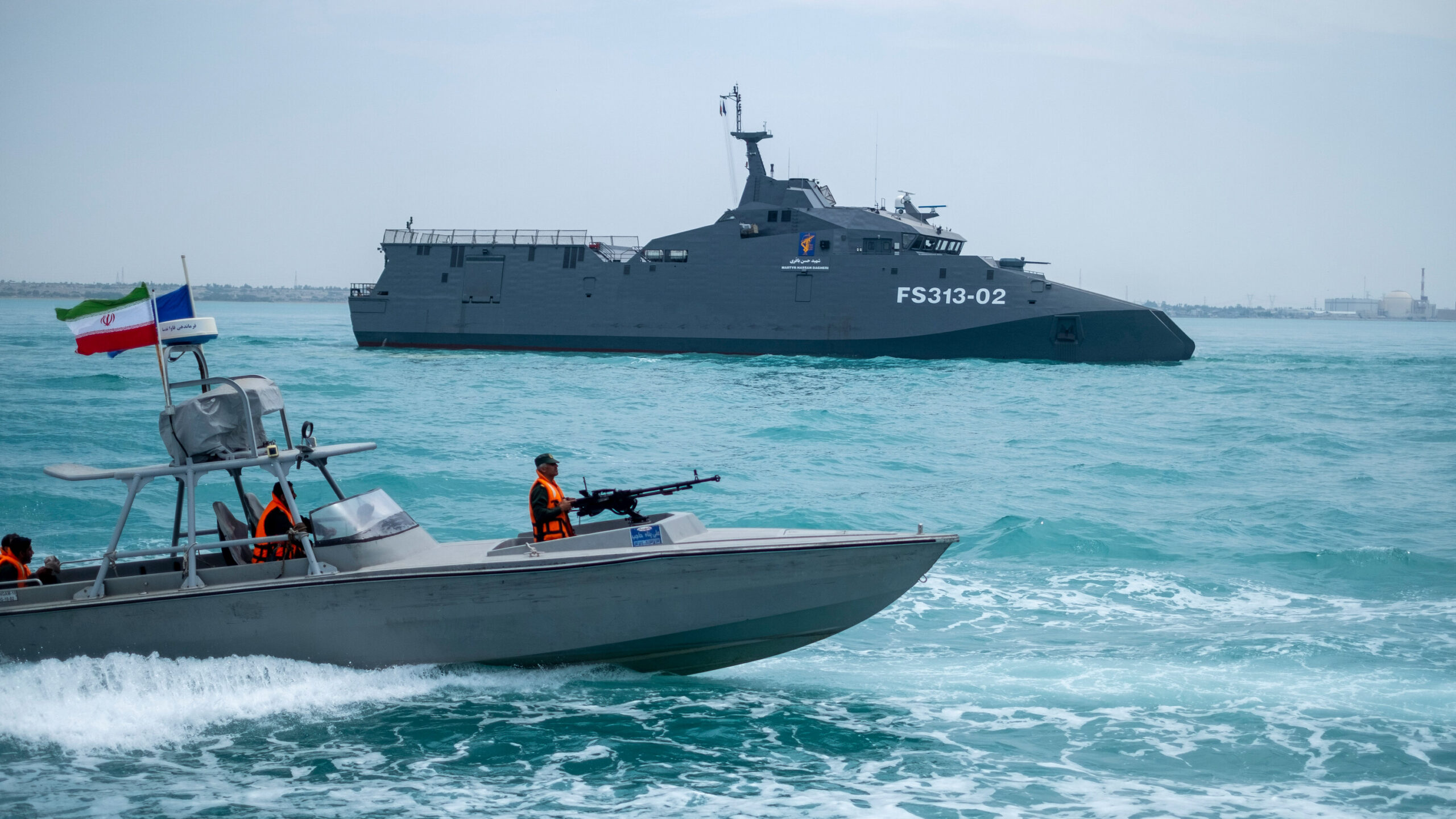
Key Figures at a Glance
- $299B — Maximum output loss projected for Asia-Pacific (UNDP)
- 8.8M — People at risk of poverty across Asia-Pacific
- $103/bbl — Brent crude average, March 2026
- +140% — Asian LNG spot price surge following Ras Laffan strike
- 84% — Share of Gulf crude bound for Asian markets
When the United States and Israel launched their opening airstrikes on Iran on the morning of February 28, 2026, the immediate headlines belonged to the military: assassinated officials, retaliatory ballistic missiles, the macabre theatre of drone swarms over Gulf capitals. Economists watched a different ticker. Within hours, Brent crude had surged more than ten percent. Within days, the Strait of Hormuz — that narrow, twenty-one-mile pinch point between Iran and Oman — had been declared closed by the Iranian Revolutionary Guard Corps. That single act of strategic disruption set off a financial shockwave that, two months on, continues to resonate most violently not in New York or London, but across the factories, farm fields, and households of Asia.
The financial impact of the US-Iran war on Asia is, in the precise language of economics, an asymmetric shock: a crisis whose costs are distributed with breathtaking inequity. The United States — now a net energy exporter thanks to its shale revolution — is cushioned from the worst. Its gasoline prices spiked, its consumers winced, but the macro numbers held. Asia, by contrast, sits at the exact intersection of the world’s most consequential energy corridor and its most energy-hungry growth engines. To understand why this war’s economic toll lands differently in Seoul than in Cincinnati, you must begin not with geopolitics but with geography — and with the inescapable arithmetic of who buys what from where.
The Choke Point That Choked an Entire Continent
The Strait of Hormuz is, to borrow a phrase from energy analysts, the world’s most consequential twenty-one miles of water. Before the war, approximately 20 percent of global seaborne oil and a fifth of global liquefied natural gas flowed through it daily. That figure, while striking, undersells Asia’s particular exposure. According to data compiled by the Congressional Research Service from pre-conflict 2024 shipping records, 84 percent of the crude oil and 83 percent of the LNG transiting the strait was destined for Asian markets. China, India, Japan, and South Korea alone accounted for roughly 70 percent of those oil shipments; the remaining 15 percent was scattered across Southeast and South Asia.
Iran’s closure of the strait on March 2 — the formal declaration by a senior IRGC official that “the strait is closed” — was not a bluff. Within hours, no tankers in the strait were broadcasting automatic identification signals. Britannica’s conflict chronology records that commercial traffic fell more than 90 percent after the opening of hostilities. War-risk insurance premiums for strait transits — which had crept from 0.125 percent to 0.4 percent of ship value in the days before the strikes — became essentially academic: the economic risk made transit uninsurable at any rational price.
The Energy Math, Laid Bare
Qatar’s Ras Laffan LNG complex — struck by Iranian drones on March 18 — suffered a 17 percent reduction in production capacity. Repair timelines: three to five years. Asian LNG spot prices surged more than 140 percent in response. QatarEnergy, the single largest LNG supplier to Asian markets, declared force majeure on its contracts with buyers.
Oil prices surged from roughly $70 per barrel just before the war to an average of $103 per barrel in March, with analysts at Capital Economics warning that a prolonged conflict could push Brent to $150 per barrel over a six-month horizon.
Fertilizers represent a less-discussed but equally dangerous channel: the Persian Gulf accounts for roughly 30–35 percent of global urea exports. With the strait closed, Asian agrarian economies face input cost shocks arriving precisely as spring planting cycles begin — a cruel, compound blow to food security.
The Chatham House analysis published in March put the structural vulnerability plainly: at the far end of energy import dependence sit South Korea, Taiwan, Japan, India, and China — all economies where energy imports represent a significant share of GDP. The United States sits “somewhere in the middle” — a net energy exporter whose domestic consumers pay more, but whose macro balance is net-positive when global oil prices rise. For Asia’s importers, the transmission is brutally direct: higher oil and gas prices raise the import bill for every household and firm, squeezing real incomes, widening current account deficits, and forcing central banks into an impossible bind between tightening to defend currencies and loosening to protect growth.
“This is not only a Middle East oil shock but also a wider Asian gas and power-security problem.” — Energy analyst cited in TIME, March 2026
Country by Country: A Continent Under Differential Pressure
China — Relatively Buffered, For Now
China entered the crisis with approximately 1.4 billion barrels of strategic crude reserves and pre-war stockpiling. Its belt-and-road railway links to Central Asia and overland Russian pipeline gas provided partial substitutes. Beijing’s formal neutrality also gave it negotiating leverage: Iran granted Chinese-flagged vessels selective strait access. But higher energy costs feed directly into steel, chemicals, and electronics production — squeezing margins at exactly the moment of peak trade friction with Washington. If the conflict persists beyond three months, Capital Economics estimates that Chinese growth could fall below 3 percent year-on-year.
India — Severely Exposed
India imports over 90 percent of its oil needs, with more than 40 percent of crude and 90 percent of LPG sourced from the Middle East. The UNDP’s socioeconomic analysis notes that 85 percent of India’s fertilizer imports originate in the region. The rupee weakened under import-bill pressure; inflation accelerated. New Delhi invoked emergency powers to redirect LPG from industry to households and secured a US Treasury 30-day waiver to purchase stranded Russian crude cargoes — a diplomatic improvisation that underscores just how thin the margins truly are. Higher energy prices are, as the World Economic Forum observed, “feeding inflation, weakening the rupee and threatening growth.”
Japan & South Korea — Emergency Measures Activated
South Korea imposed its first fuel price cap in nearly three decades and activated a 100 trillion won (approximately $68 billion) market-stabilisation programme. Korean Air entered “emergency mode,” focusing entirely on internal cost reduction. Japan began releasing strategic oil reserves. The exposure is structural: South Korea sources around 70 percent of its crude from the Middle East and routes more than 95 percent of that through Hormuz, leaving almost no slack. South Korea also makes much of the refined product — jet fuel, diesel — that sustains air travel and logistics across Southeast Asia and Oceania, meaning its own supply squeeze transmits regionally.
Southeast & South Asia — Recession-Level Risk
The region’s most acute vulnerabilities lie in its most reserve-thin, subsidy-dependent economies. Bangladesh faces recession-like conditions; universities were closed early ahead of Eid holidays to conserve fuel, and shopping centres were ordered to shut by 8 pm. Vietnam is weighing temporary cuts to fuel import tariffs. Thailand imposed a diesel price cap. The Philippines declared a state of emergency in late March. Pakistan, already under IMF-supervised austerity, faces a particularly compressed policy space. The UNDP is explicit: South Asia accounts for the largest share of the 8.8 million people at poverty risk in the region, reflecting “higher exposure to income and price shocks and more limited policy buffers.”
The Fertilizer-Food Nexus: An Invisible Crisis
One dimension of the Iran war’s economic impact on Asia that has received insufficient attention in financial media is the agricultural supply chain. Up to 30 percent of internationally traded fertilizers normally transit the Strait of Hormuz — primarily urea and ammonia from Gulf producers. With the strait closed and QatarEnergy having declared force majeure, fertilizer shortages have become a particular concern for agrarian economies, threatening Asian grain supplies just as spring planting cycles are underway. The knock-on to food prices — layered on top of already elevated energy costs — creates an inflationary compound that official models notoriously underestimate, because the agricultural price shock transmits with a lag of weeks to months into consumer food baskets.
Semiconductors, AI, and the Energy-Intensity Trap
The war has introduced a less-discussed vulnerability specific to this technological moment. Middle Eastern supply chain disruptions are tightening global helium supply — a critical input for semiconductor fabrication — potentially affecting chipmaking industries in Taiwan, South Korea, and Japan. Meanwhile, Asia’s rapidly expanding AI data-centre infrastructure is exceptionally energy-intensive. Higher electricity costs, driven by LNG price surges, directly increase the operational cost of the large-scale compute clusters that underpin the region’s technology ambitions. In an era when digital infrastructure is a strategic asset, energy price shocks are no longer merely an industrial problem — they are a competitiveness problem.
The Macroeconomic Damage: What the Numbers Say
The headline figures are stark. The United Nations Development Programme’s April 2026 report estimated that output losses for the Asia-Pacific region could range from $97 billion to $299 billion, equivalent to 0.3 to 0.8 percent of regional GDP. The range reflects two scenarios: rapid adaptation (drawing on reserves, securing alternative supplies, executing fast policy response) versus prolonged disruption that exhausts those buffers. As UNDP’s regional director for Asia and the Pacific, Kanni Wignaraja, put it with clinical precision: “You’re going to triple that if many of these countries run through these reserves and really have very little to fall back on.”
The Asian Development Bank revised its Asia-Pacific growth forecast down from 5.4 to 5.1 percent for both 2026 and 2027, with regional inflation projected to rise to 3.6 percent — a full 0.6 percentage points above 2025’s outturn. The ADB’s chief economist, Albert Park, called a prolonged conflict “the single biggest risk to the region’s outlook.” The IMF, in its April 2026 World Economic Outlook, quantified the transmission with precision: every sustained 10 percent increase in oil prices adds approximately 0.4 percentage points to global inflation and cuts worldwide output by up to 0.2 percent. Since oil prices rose roughly 47 percent from pre-conflict levels to the March average, the arithmetic is uncomfortably clear.
Beyond the aggregate GDP figures, the human dimension is where the shock truly registers. The UNDP estimates that 8.8 million people in the Asia-Pacific are at risk of falling into poverty as a direct consequence of the war’s economic fallout — part of a global total of 32 million at poverty risk. Losses are “most pronounced in South Asia,” the report notes, with women, migrant workers, and households in the informal economy carrying the sharpest edge of the crisis.
“A prolonged conflict in the Middle East is the single biggest risk to the region’s outlook, as it could lead to persistently high energy and food prices and tighter financial conditions.” — Albert Park, Chief Economist, Asian Development Bank, April 2026
Why Asia Bears a Disproportionate Burden
The asymmetry deserves direct examination, because it is not accidental — it is structural. The United States, transformed by the shale revolution into a modest net energy exporter, is in the peculiar position of being a country whose macro balance sheet benefits slightly from higher global oil prices, even as its consumers pay more at the pump. American gasoline prices surged — the national average hit $4 per gallon by March 31, a 30 percent surge — and that is real pain for American households. But it does not structurally impair America’s current account, its currency, or its capacity to service debt.
Asia’s arithmetic is inverted. The continent accounts for more than half of the world’s manufacturing output and is overwhelmingly dependent on imported hydrocarbons to run it. When oil prices rise, Asia’s terms of trade deteriorate. Import bills balloon in dollar terms while export revenues — primarily manufactured goods — do not rise commensurately. Currencies weaken. Inflation rises. Central banks face pressure to tighten even as growth falters. The spectre of stagflation is not rhetorical for Asia’s emerging economies. It is, in the worst scenario, the condition of 2026.
Compounding the structural disadvantage is the policy constraint. Advanced Asian economies like Japan and South Korea can deploy large fiscal stabilisation packages. But for Bangladesh, Pakistan, or Vietnam, fiscal space is thin, foreign reserves are finite, and subsidy commitments are already straining government budgets. As the World Economic Forum analysis observed, “in countries where energy subsidies remain extensive and government finances are already shaky, higher energy prices could unsettle bond markets.” A sovereign debt crisis in a major emerging Asian economy is not the base case — but it is no longer an extreme tail risk.
Two Scenarios: Short Shock Versus Prolonged Siege
Scenario A — Rapid Resolution (2–3 Months of Disruption)
If the current ceasefire holds and the Strait of Hormuz returns to near-normal traffic by mid-2026, Capital Economics forecasts Brent crude falling back toward $65 per barrel by year-end. Asian LNG prices would ease, though the Ras Laffan damage means the pre-war supply equilibrium in LNG is structurally impaired for years regardless. Growth downgrades in the region would be material but manageable — the 5.1 percent ADB forecast holds. Inflation peaks in Q2 before moderating. The 8.8 million poverty-risk figure represents a severe but temporary disruption, recoverable with targeted social protection and swift fiscal deployment.
Scenario B — Prolonged Conflict (6+ Months)
If the “dual blockade” — Iran restricting the strait, the US Navy blockading Iranian ports — persists through summer, the damage becomes qualitatively different. Capital Economics estimates Chinese growth could fall below 3 percent year-on-year. Brent crude could average $130–150 per barrel in Q2 alone. Sovereign spreads in vulnerable emerging markets blow out. The poverty count rises sharply as household energy and food subsidies are exhausted. The IMF’s severe scenario — oil prices 100 percent above the January 2026 WEO baseline, food commodity prices up 10 percent, corporate risk premiums rising 200 basis points in emerging markets — ceases to be a modelling exercise. At that point, the question is not whether Asia experiences stagflation, but how many economies tip into technical recession.
Even in the best case, IMF Managing Director Kristalina Georgieva has been explicit: “There will be no neat and clean return to the status quo ante.” The Ras Laffan damage alone has permanently reduced Qatar’s LNG production capacity for a multi-year window. Shipping companies are accelerating their rerouting calculus — longer, more expensive voyages around the Cape of Good Hope are already being priced into freight contracts. Chatham House’s economists warn that even a short war would leave Asian and European inflation roughly 0.5 percentage points above pre-conflict forecasts for the full year — a seemingly modest figure that, distributed across hundreds of millions of near-poor households, translates into meaningful welfare losses.
Long-Term Strategic Realignments: The Silver Linings Are Real, But Distant
Crises concentrate minds, and this one is already accelerating several structural adaptations that were moving too slowly in the years of cheap, reliable Gulf energy.
Renewable energy investment is surging. The war has done more in eight weeks to demonstrate the vulnerability of fossil-fuel dependence than a decade of climate negotiations. Asian governments are fast-tracking solar, wind, and storage capacity approvals. The long-run dividend — energy systems less exposed to a single maritime chokepoint — is real, though it accrues over years, not quarters.
Supply chain diversification is being institutionalised. The shock has forced a reckoning in corporate boardrooms from Tokyo to Mumbai. “Just-in-time” logistics, which assumes reliable, low-cost global supply chains, is being replaced by “just-in-case” thinking — higher inventory buffers, dual sourcing, and strategic reserves for critical inputs. This raises costs in the short term but reduces systemic fragility over time.
Alternative energy corridors are attracting investment. Oman’s deepwater ports at Duqm, Salalah, and Sohar — situated outside the strait in the Arabian Sea — have suddenly become critical strategic assets. The existing railway links from China through Central Asia to Iran underscore the geopolitical logic of overland connectivity as maritime insurance.
India’s strategic autonomy is under stress-test. New Delhi’s refusal to align categorically with either Washington or Tehran has been both asset and liability. The US Treasury emergency waiver allowing Indian access to Russian crude was an American concession that acknowledges India’s structural dependence. But analysts note that India’s closer relationship with Israel prior to the conflict has complicated its engagement with Tehran. Managing these tensions while securing energy supply is the defining foreign policy challenge for Indian diplomacy in 2026.
China’s mediation leverage has grown. Beijing’s decisive nudge reportedly played a role in Iran’s acceptance of the April 7 ceasefire. China’s formal neutrality, its deep economic entanglement with both Iran and the Gulf Arab states, and its status as the largest single destination for Gulf oil give it unique mediating currency. The war has, paradoxically, expanded China’s soft power in the region at a moment when American credibility among its Gulf allies is being intensely scrutinised.
The Policy Imperative: What Asia Must Do Now
For policymakers in Asian capitals, the crisis demands a response on three timeframes simultaneously.
In the immediate term, the priority is cushioning the household impact: targeted fuel price subsidies, food assistance, and social protection for the most vulnerable — the informal workers, migrant labourers, and near-poor households the UNDP identifies as carrying the greatest risk. Several governments have moved quickly; South Korea, Japan, Thailand, Vietnam, and Indonesia have all deployed market interventions. But the fiscal runway for sustained subsidisation is finite, and the political economy of subsidy withdrawal, when it eventually comes, is treacherous.
In the medium term, the crisis accelerates the urgency of energy security architecture — strategic reserve capacity, diversity of supply, and accelerated renewable deployment. The ADB and multilateral development banks have a clear role: concessional financing for energy security infrastructure in the most exposed economies should be treated as a geopolitical priority, not merely a development finance question.
In the long term, Asia needs a more sophisticated diplomatic framework for managing the risks that arise when its largest trading partner and its primary energy supplier are in conflict — and when the United States, which provides the security architecture for global maritime commerce, is simultaneously a belligerent party in a war disrupting that commerce. This is not an abstract geopolitical puzzle. It is the central structural tension of Asian economic security in the second quarter of the 21st century.
A Measured Verdict: The Bill Is Real, The Reckoning Is Unfinished
The US-Iran war is, at its core, a military and political conflict. But its most durable legacy — for Asia, at least — may be economic. A generation of Asian policymakers built growth models premised on cheap, reliable energy from the Gulf, frictionless maritime supply chains, and an American security umbrella that ensured both. All three premises are now in question simultaneously.
The immediate financial impact of the US-Iran war on Asia is quantifiable, if deeply uncertain in range: somewhere between $97 billion and $299 billion in output losses, 8.8 million people pushed toward poverty, growth forecasts revised downward across the region, and a continent navigating the worst energy shock since the 1970s with uneven policy buffers and inadequate strategic reserves. The human cost — measured in foregone school years, reduced caloric intake, deferred medical care — is harder to quantify but no less real.
What the numbers cannot fully capture is the subtler, more lasting damage: the erosion of confidence in the stability of the global trading system, the repricing of geopolitical risk across Asian supply chains, and the quiet acceleration of the region’s long, unfinished transition toward energy self-sufficiency. The war in Iran is, among many other things, a forcing function — brutal in its immediacy, but potentially clarifying in its long-run consequences for how Asia’s economies are structured, where its energy comes from, and how deeply it can afford to trust an international order whose most powerful guarantor is also, for now, the war’s primary author.
The markets will eventually stabilise. The strait will eventually reopen. But Asia’s relationship with the Hormuz chokepoint — and with the geopolitical vulnerabilities it represents — will not return to what it was on February 27, 2026. That may yet prove to be the conflict’s most consequential economic legacy.
Discover more from The Economy
Subscribe to get the latest posts sent to your email.



Key Takeaways
- Rolex’s secondary market rose approximately 7.9% year-over-year as of 2026 (per WatchCharts data) — trailing Patek Philippe (+16.2%) and Tudor (+11.4%) but still outperforming Audemars Piguet (+3.4%).
- Rolex raised U.S. retail prices 4–9% in January 2026 (steel models ~5.6%, gold models ~8.7%), narrowing the historical gap between retail and pre-owned pricing.
- Not every model appreciates: steel sports references (Submariner, GMT-Master II, Daytona) have held value far better than two-tone or widely available dress references like the standard Datejust.
- The Lady-Datejust posted the sharpest 2026 gain among tracked collections — up 22.73%, from roughly $9,269 to $11,376 — driven by demand for smaller, “everyday luxury” watches.
- Gold’s rise past $2,400/oz has directly lifted the investment case for Rolex’s precious-metal references (Day-Date, Sky-Dweller, Yacht-Master).
The Model-by-Model Picture
| Category | 2026 Trend |
|---|---|
| Lady-Datejust | +22.73% (strongest performer among tracked collections) |
| Steel sports models (Submariner, GMT-Master II) | Held value well; corrected from 2022 peak but stabilized above retail |
| Daytona | Corrected from highs above $50,000 to the mid-$30,000s; still among the most sought-after references |
| Two-tone/widely available Datejust | Flat to negative — “holds value” is an overstatement for this category |
| Gold references (Day-Date, Sky-Dweller) | Lifted by gold’s rise above $2,400/oz |
Why the “Rolex Always Appreciates” Myth Is Fading
The pandemic-era boom pushed some references — the Daytona above all — to speculative highs disconnected from historical norms. Since the March 2022 peak, steel sports models have compressed meaningfully, and dealers who bought inventory near the top have in some cases faced 20–40% markdowns on liquidation. The lesson for 2026 buyers: Rolex as a category is not a monolith. Value retention depends heavily on specific reference, condition, and whether the piece comes with box and papers (“full set”).
What’s Actually Driving 2026 Strength
- Retail price increases raise the floor. When a new Submariner retails at $10,050 (up from $9,500), a pre-owned example at $11,000–$12,000 suddenly represents a smaller premium — narrowing the gap without secondary prices actually moving.
- Supply discipline remains Rolex’s core lever. The brand has never confirmed production numbers, and secondary-market premiums remain entirely a function of Rolex’s own manufacturing decisions — a risk factor as much as a support.
- Certified Pre-Owned rollout. Rolex’s now fully rolled-out CPO program has changed how buyers transact in the used market, adding a layer of brand-verified legitimacy that supports pricing.
The Case for Rolex as a Portfolio Diversifier
Financial advisors increasingly frame luxury watches not as a replacement for equities or bonds, but as a tangible, historically low-correlation diversifier — one that carries its own risks (illiquidity, condition-dependent pricing, no yield) but has demonstrated multi-decade resilience for specific references.
Is Rolex a good investment in 2026?
It depends heavily on the specific reference. Steel sports models like the Submariner and Daytona have held or grown in value; two-tone and widely available dress models generally have not. Overall, Rolex’s secondary market rose about 7.9% year-over-year in 2026, trailing Patek Philippe but ahead of Audemars Piguet.
Discover more from The Economy
Subscribe to get the latest posts sent to your email.

Navigating Mortgage and Loan Refinancing in a High-Yield Environment
Global public debt crossing critical thresholds has kept central bank policies volatile, resulting in fluctuating US Treasury yields throughout 2026. For homeowners and commercial property holders burdened by previous high-interest borrowing cycles, finding optimal refinance windows has become a high-stakes financial puzzle. Stalled disinflation and stubborn employment numbers mean rate cuts are incremental, requiring borrowers to act with precision.
Timing your mortgage or commercial loan refinance in this environment requires a deep understanding of yield curve movements and lender risk appetites.
Decoding 2026 Refinance Dynamics
The 10-Year Treasury Yield Benchmark
Mortgage rates continue to track closely with the 10-year US Treasury yield. When macroeconomic anxiety spikes debt issuance, yields rise, tightening consumer borrowing capacity. Savvy borrowers monitor weekly Treasury auctions to lock in rates during brief dip windows.
Hybrid ARMs and Alternative Structures
With fixed rates remaining elevated, 7/1 and 10/1 adjustable-rate mortgages (ARMs) have surged in popularity. These products offer lower initial monthly payments, giving borrowers breathing room until central bank easing cycles fully materialize.
| Loan Product | Current Rate Range | Best For | Key Risk Factor |
| 30-Year Fixed Mortgage | 6.2% – 6.8% | Long-term predictability | Higher initial monthly outlay |
| 7/1 Hybrid ARM | 5.5% – 5.9% | Short-term ownership / flipping | Rate reset risk after year 7 |
| Commercial Refinance | 7.0% – 8.2% | Corporate asset restructuring | Strict DSCR lender covenants |
Actionable Steps for Successful Refinancing
To maximize your chances of securing favorable refinance terms in a volatile market, follow a disciplined preparation strategy.
Boost Your Credit Score Immediately: Lenders in 2026 are applying stringent credit tiering; a 20-point increase can drop your APR by a crucial quarter-point.
Shop Regional Credit Unions: Smaller financial institutions often offer portfolio loans with more flexible underwriting than major national banks.
Calculate the Break-Even Point: Ensure your total closing costs are recouped through monthly savings within 24 months of closing.
“Market Strategist View: Refinancing in 2026 is an exercise in opportunistic timing. Borrowers must maintain immaculate financial profiles ready to strike the moment Treasury yields dip.”
Mastering the complexities of today’s debt environment ensures you can successfully lower your debt service costs and protect your long-term financial stability.
Discover more from The Economy
Subscribe to get the latest posts sent to your email.

The days of pulling generic auto insurance quotes based purely on your zip code and age are officially over. In 2026, insurance comparison engines are powered entirely by generative AI and real-time telematics. These platforms digest thousands of live data points—ranging from your driving smoothness via connected vehicle sensors to real-time traffic congestion patterns—to generate hyper-personalized premiums instantly.
For consumers, this evolution represents both a massive opportunity for savings and a hidden trap for penalty pricing. Understanding how AI algorithms evaluate risk is essential for anyone looking to lower their monthly auto insurance premiums.
How AI Comparison Engines Evaluate Your Risk Profile
Behavioral Telematics and Connected Cars
Modern cars stream performance data directly to insurance aggregators. Generative AI models analyze braking sharpness, acceleration curves, cornering G-forces, and phone distraction metrics. Drivers who maintain smooth, defensive habits are rewarded with dynamic rate cuts of up to 40% compared to traditional rating tiers.
Predictive Traffic and Weather Modeling
AI tools now cross-reference your daily commute route with predictive weather and accident probability models. If your standard parking location or driving corridor has a statistically higher incidence of uninsured motorist claims, your quotes will reflect that hyper-local risk assessment.
| Comparison Factor | Traditional Rating Model | 2026 Generative AI Model | Impact on Premium |
| Mileage & Usage | Annual estimated odometer reading | GPS tracking & live trip duration | High (up to 35% savings) |
| Driving Behavior | MVR driving record & accidents | Real-time braking, speed, & G-force | Critical (determines tier) |
| Vehicle Tech | Make, model, and safety rating | ADAS calibration & repair cost data | Moderate |
Strategies to Lower Your AI-Driven Insurance Quote
To outsmart the algorithm and secure the lowest possible premium in 2026, drivers must proactively manage their digital footprint on insurance platforms.
Opt-In for Telematics Trial Periods: Many insurers offer immediate 15% discounts just for installing their driving app; let it track safe habits for 30 days to lock in permanent savings.
Scrub Unverified Public Records: Ensure your motor vehicle report is free of clerical errors that AI risk models misinterpret as reckless behavior.
Compare AI Aggregators: Use platforms that integrate multi-carrier API feeds rather than single-brand comparison sites to find the best risk-adjusted rate.
“Industry Note: AI-driven pricing rewards transparency and precision. Drivers who actively manage their telematics data consistently out-save those relying on legacy quote calculators.”
Embracing AI comparison tools allows savvy policyholders to customize coverage limits precisely to their driving habits, eliminating wasted premium spend while ensuring robust protection.
Discover more from The Economy
Subscribe to get the latest posts sent to your email.

Neocloud Economics in 2026: GPU Debt, Utilization and Power

What Is a Neocloud? How AI GPU Clouds Work and Compare

Lula Re-elected in 2026: What Changes for the Dollar, Brazilian Stocks, and Interest Rates?

Lula Wins Brazil’s 2026 Election: Five Economic Tests for 2027

SSI November 2026 Payment: Why Benefits Arrive October 30

Russia Sanctions Waiver: What Asian Oil Buyers Gain

Asia Markets Weekly: How Oil, US Yields and the Fed Reach Tokyo, Kuala Lumpur and Karachi

Gold Near $4,000: Buy, Hold or Wait? A Pakistan Tola Price Guide

US 10-Year Treasury Yield Near 5%: The Hidden Cost for Pakistani Investors

Fed Meeting on October 28: Hike or Hold—and Why Pakistan Investors Should Care

Can Pakistan Turn US–Iran Mediation Into an Economic Dividend?

Oil Above $100: How Higher Crude Prices Reach Pakistan’s Rupee, Petrol and Imports

SBP Interest Rate at 11.5%: What Will Decide Pakistan’s Next Policy Move?

The Global South: Debt, Climate Finance and Investment in 2026

Crude Oil & Petroleum Market Analysis: OPEC+ Decisions and Price Forecasts

Top US Convenience Store Chains: Store Counts, EV Charging, and Sales Trends

Algorithmic Dogfights: Why the U.S. and China Must Establish Rules of Engagement for Autonomous Air Power

Who Is Shivon Zilis? The Neuralink Executive at the Center of the Musk–OpenAI Trial

Social Security Extra $90 Deposit: Who Qualifies for the October 2026 Medicare Rebate?

Corporate America Faces a New Debt Test as US Borrowing Costs Surge

Global Economic Outlook 2026: 7 Forces Reshaping Markets, Trade and Business

Gold Price Outlook 2026: The Forces Behind the Forecasts—and What Could Reverse Them

Gold Falls 3.7% as Yields Surge: Is Gold Still a Safe Haven in 2026?

Stock Market Crash in 2026? Warning Signs, Scenarios and a Calm Investor Checklist

MAS Allocates S$1.45 Billion to Five Asset Managers in Third EQDP Batch: Total Deployment Reaches S$5.4 Billion

Stock Market Today: Dow, S&P 500, and Nasdaq Retreat as Treasury Yields

Anthropic Bans Sustained Abuse of Claude AI Under New Usage Policy Effective November 12, 2026

Geopolitics and Your Portfolio: How International Affairs Move Global Markets
-

 Markets & Finance10 months ago
Top 15 Stocks for Investment in 2026 in PSX: Your Complete Guide to Pakistan’s Best Investment Opportunities
-

 Analysis8 months ago
Johor’s Investment Boom: The Hidden Costs Behind Malaysia’s Most Ambitious Economic Surge
-

 Analysis8 months ago
Top 10 Stocks for Investment in PSX for Quick Returns in 2026
-

 Banks9 months ago
Best Investments in Pakistan 2026: Top 10 Low-Price Shares and Long-Term Picks for the PSX
-

 Analysis9 months ago
Brazil’s Rare Earth Race: US, EU, and China Compete for Critical Minerals as Tensions Rise
-

 Investment10 months ago
Top 10 Mutual Fund Managers in Pakistan for Investment in 2026: A Comprehensive Guide for Optimal Returns
-

 Global Economy10 months ago
15 Most Lucrative Sectors for Investment in Pakistan: A 2025 Data-Driven Analysis
-

 Global Economy10 months ago
Pakistan’s Export Goldmine: 10 Game-Changing Markets Where Pakistani Businesses Are Winning Big in 2025