
Analysis
When the World’s Oil Tap Runs Dry: Inside the Strait of Hormuz Crisis Reshaping Global Energy Markets

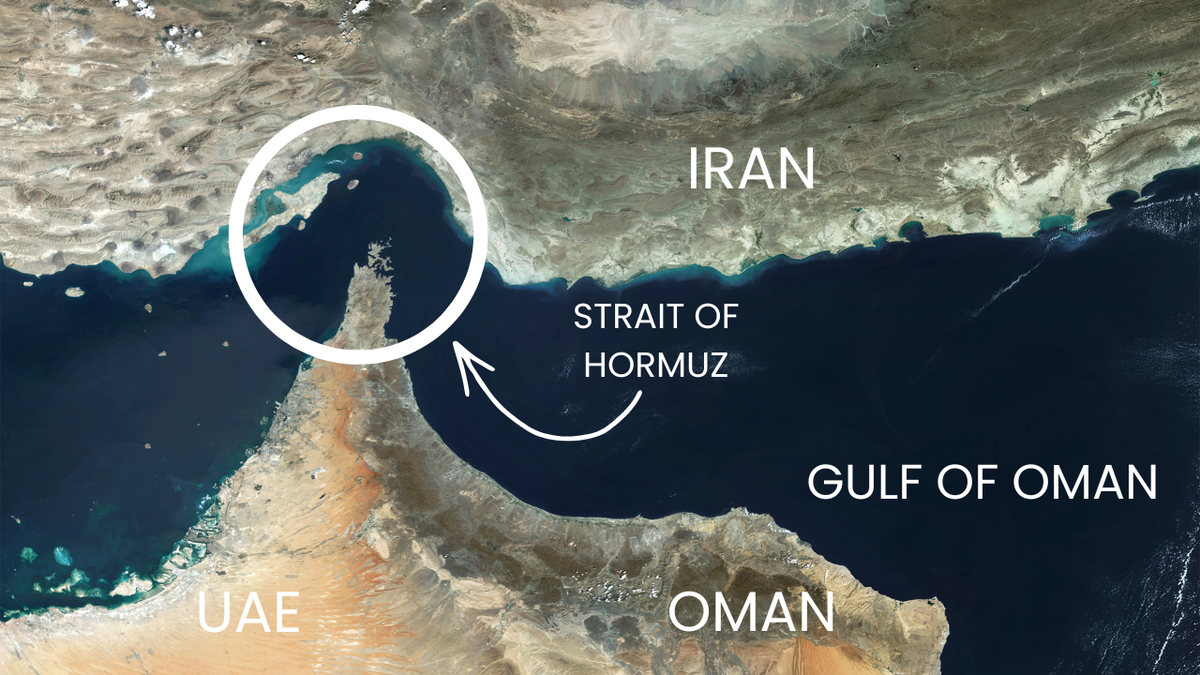
There is a number that haunts every finance minister, central banker, and airline CFO on the planet right now: $114. That was the intraday peak for Brent crude on Monday, May 4th — a staggering 60% above where it traded just ten weeks ago, before the world woke up to the most severe oil supply disruption in recorded history. It is a number that means $6-a-gallon gasoline on California’s freeways, fuel rationing queues in Karachi and Dhaka, and the spectre of 1970s-style stagflation returning to haunt a global economy that was only just finding its footing.
The story of how we arrived here — how a waterway barely 33 kilometres wide at its narrowest point came to hold the entire global economy in a chokehold — is, at its core, a story about the lethal intersection of nuclear brinkmanship, the fragility of energy infrastructure, and three decades of strategic miscalculation by policymakers who assumed the Strait of Hormuz would always, eventually, stay open.
It will not always stay open. We are living through the proof.
The Price Shock: What the Numbers Are Actually Telling Us
Let’s start with the raw data, because the numbers themselves are extraordinary.
Brent crude surged nearly 6% to close at $114.44 per barrel on Monday — its highest level since May 2022 — before pulling back to $113.24 on Tuesday morning as a fragile ceasefire showed signs of fracture. WTI, the U.S. benchmark, settled at $106.42 before easing to $104.57. Both contracts remain up roughly 60% since the U.S. and Israeli-led air war against Iran began on February 28th — the steepest two-month rally in the history of the crude oil market.
What the price action tells us about trader psychology is revealing: markets are not pricing in a resolution. They are pricing in prolonged uncertainty with intermittent ceasefire noise providing brief relief. The classic “buy the rumour, sell the fact” dynamic has been replaced by something grimmer — a market that has become structurally adapted to crisis, where every diplomatic statement is greeted with scepticism and every escalation triggers mechanical, algorithmic buying.
The volatility itself is informative. A 6% single-session spike in Brent is not normal market behaviour; it reflects genuine fear that the next morning’s headlines could remove another tranche of supply. As ING’s commodities strategist Warren Patterson noted in a research note to clients: “The oil market has moved from over-optimism to the reality of the supply disruption we are seeing in the Persian Gulf. The longer this disruption persists, the less the market can rely on inventory, and the greater the need for further demand destruction.”
The only mechanism that drives demand destruction, as Patterson implicitly acknowledges, is higher prices. Which is precisely why Exxon Mobil CEO Darren Woods warned investors on Friday that the market still hasn’t absorbed the full impact of the disruption. “There’s more to come,” Woods said on Exxon’s Q1 earnings call. He wasn’t bluffing.
The Strait That Runs the World: A Geography Lesson the World Learned Too Late
| Key Metric | Pre-Crisis (Feb 2026) | Current (May 2026) |
|---|---|---|
| Daily oil flow through Hormuz | ~20 million barrels/day | ~3.8 million barrels/day |
| Brent Crude Price | ~$70/barrel | ~$113/barrel |
| Global oil supply disruption | Baseline | -10.1 million barrels/day |
| Strait traffic vs. peacetime | 100% | Approx. 4% (Goldman est.) |
| IEA global observed oil inventories (March drop) | — | -85 million barrels |
The Strait of Hormuz — 21 miles across at its narrowest, straddling Iran to the north and Oman to the south — was, until February 28th, the conduit for roughly 20% of the world’s seaborne oil trade and 20% of its LNG. The numbers were always known; the vulnerability was always documented; the strategic risk was always theorised. What was not adequately war-gamed was what happened when Iran chose to act on its most extreme leverage rather than merely threaten it.
Iran’s Revolutionary Guard Corps has laid sea mines in the strait, boarded and attacked merchant vessels, and issued warnings forbidding transit. According to the IEA’s April 2026 Oil Market Report, shipments through Hormuz had by early April fallen to just 3.8 million barrels per day — compared to more than 20 million before the crisis. The IEA’s executive director did not mince words, calling it “the greatest global energy security challenge in history.”
Goldman Sachs analysts, meanwhile, estimated that the combined effect of the Strait’s closure and attacks on energy infrastructure has reduced global daily production by a staggering 14.5 million barrels. To put that figure in context: at its peak disruption, the 1973 Arab Oil Embargo removed approximately 4.4 million barrels per day from global markets. The current shock is more than three times larger.
The IEA confirms that global oil supply plummeted by 10.1 million barrels per day in March alone, the largest single-month drop in the agency’s five-decade history. Global observed inventories fell by 85 million barrels in March, with stocks outside the Middle East drawn down by a significant 205 million barrels as flows through Hormuz were choked off.
Fire at Fujairah: When Infrastructure Becomes a Weapon
Monday’s renewed market shock arrived at 6 a.m. UAE time, when Iranian drones breached Emirati air defenses and struck the Fujairah oil hub — one of the world’s largest bunkering ports and a critical chokepoint for tanker re-fuelling operations. The UAE’s defense ministry confirmed that it intercepted 12 ballistic missiles, three cruise missiles, and four drones launched from Iran, but the drone that slipped through ignited a fire at the storage terminal.
Three people were injured. The financial damage is incalculable.
The attack on Fujairah was not random. It was a calculated strike on one of the few alternative energy export routes available to Gulf producers attempting to bypass the blocked strait. Saudi Arabia’s East-West Pipeline (Petroline), with roughly 5 million barrels per day of theoretical capacity, and the Abu Dhabi Crude Oil Pipeline, which routes around the Strait to Fujairah itself, represent the only meaningful alternatives to Hormuz transit for the region’s producers. Hitting Fujairah is Iran’s way of closing the escape hatch.
The U.S. military confirmed that Iran’s IRGC also launched cruise missiles at American warships and commercial vessels in the waterway, while U.S. forces reported “defending all commercial ships” against drones and small boats. Two American-flagged vessels did manage to transit the strait under naval escort — a symbolic, if operationally limited, proof-of-concept for President Trump’s “Project Freedom” initiative. Markets were unimpressed. As one analyst quipped: escorting two ships through a mined strait to demonstrate normalcy is rather like opening one lane of a motorway after a major earthquake and declaring traffic flowing.
The Supply Arithmetic: Why Recovery Will Take Months, Not Weeks
Here is the analytical dimension that the breathless daily price commentary tends to miss: even if Hormuz reopened tomorrow, the supply problem would not be solved quickly.
According to Wood Mackenzie’s Head of Upstream Analysis, Fraser McKay, it could take Iraq alone up to nine months to reach prior production levels after a reopening — due to reservoir management complexities and resource constraints. Some wells, shut in hastily in the opening days of the conflict, may have been permanently damaged.
The IEA estimates that even after reopening, it would take around two months to re-establish steady exports, and initial volumes would remain below pre-conflict levels. More pointedly: essentially all of the world’s meaningful spare production capacity — housed in Saudi Arabia and the UAE — is itself trapped behind the blockade. The U.S. shale sector, often romanticised as a swing producer capable of absorbing global shocks, simply cannot substitute for the scale of disruption here.
Goldman’s base case, as of late April, assumed Hormuz normalises by end of June 2026 — a timeline their analysts noted carried “considerable scepticism” even when written. Under sustained production losses near 2 million barrels per day, Goldman projects Brent reaching the $115–$120 range in Q3 and Q4 2026. But that assumes June reopening. The ceasefire announced on April 8th has already frayed dramatically.
The U.S. blockade of Iranian ports, initiated on April 13th, has created what analysts are calling a “dual blockade” — Iran blocking ships from leaving the Gulf, the U.S. blocking ships from reaching Iran. The result is an energy purgatory from which there is no technical exit, only a diplomatic one.
Ripple Effects: From Petrol Forecourts to Supply Chains to the Dining Table
The economic damage extends far beyond crude prices, and its full scope is only beginning to be understood.
For consumers: Californian pump prices have topped $6 a gallon for 87-octane gasoline — a level last seen during the worst post-COVID supply crunch. European fuel prices are rising sharply. In Asia and the developing world, the pain is more acute: Pakistan, Bangladesh, Vietnam, and Zimbabwe are experiencing severe fuel shortages. The Philippines declared a state of emergency in March.
For food security: The Strait of Hormuz carries over 30% of global urea exports — the critical fertiliser input for corn and wheat production. Disruption to the fertiliser supply chain during the spring planting season is now seeping into food price projections. The Food Policy Institute in London has warned of long-term food price increases. Gulf states, which depend on the Strait for over 80% of their caloric imports, are experiencing a concurrent grocery supply emergency — with retailers like Lulu Retail airlift-pricing staples after 70% of the region’s food imports were disrupted.
For airlines: Jet fuel shortages are now being reported across parts of Asia and Oceania, complicating flight schedules and hammering airline margins. Shipping costs have surged as major carriers including Maersk, CMA CGM, and Hapag-Lloyd rerouted around Africa’s Cape of Good Hope, adding weeks to transit times and hundreds of millions in fuel costs per voyage.
For central banks: The macroeconomic script that was written through 2024 and early 2025 — disinflation, rate normalisation, soft landing — has been shredded. The IEA characterises this crisis as echoing the 1970s energy crisis through “acute supply shortages, currency volatility, inflation, and heightened risks of stagflation and recession.” Interest rate reductions expected earlier this year are now either postponed or, in some cases, being reconsidered as upward moves to combat imported inflation.
Investment Implications: The Winners, the Losers, and the Structural Shifts
For investors navigating this landscape, the crisis is simultaneously a pricing windfall and a structural warning.
Integrated oil majors — ExxonMobil, Shell, BP, TotalEnergies — are reporting sharply stronger Q1 earnings. Saudi Arabia, with a fiscal breakeven of approximately $70–$80 per barrel, is generating substantial surplus revenue at current prices. These are, for now, the crisis’s clearest beneficiaries.
Oil-importing economies face the sharpest medium-term pain. India, which imports approximately 85% of its crude oil requirements, is one of the most exposed large economies. Indian refiners have pivoted aggressively toward Russian crude imports as Middle Eastern supplies evaporated. The government has raised export duties on diesel and aviation fuel to protect domestic availability — a politically costly but economically necessary intervention.
The structural shift accelerating beneath the headlines is more significant than the daily price chart. Every board room energy conversation that previously categorised renewable transition as a “long-term strategic priority” is now being revisited with urgency. Solar, wind, battery storage, and nuclear capacity — politically contested and economically uncertain in February — now represent an obvious insurance policy against the geopolitical volatility that fossil fuel dependency inescapably entails.
The crude lesson of the Hormuz crisis — a lesson that will be written into energy policy curricula for decades — is that diversification is not a luxury. It is a survival strategy.
What Comes Next: Three Scenarios
Scenario 1 — Diplomatic resolution (base case, but fading): U.S.-Iran negotiations produce a framework agreement. Hormuz reopens by late June or July. Brent stabilises in the $90–$100 range through H2 2026 as inventories slowly rebuild and production restarts. Inflation pressure eases; central banks resume rate cuts. Markets rally.
Scenario 2 — Prolonged stalemate (increasingly plausible): The current dual blockade persists through Q3. Brent tests the $120–$130 range. Global growth forecasts are cut. Several emerging market economies enter recession. Demand destruction becomes the only mechanism that rebalances the market, and it is brutal.
Scenario 3 — Escalation (tail risk, non-negligible): A miscalculation — a U.S. warship struck, or Iranian infrastructure in the Gulf hit by a significant attack — tips the standoff into broader military confrontation. Brent exceeds $150. Strategic petroleum reserves are released globally. The global economy enters the most severe energy crisis since World War II.
ING’s Patterson and Manthey wrote on Tuesday that markets may find some relief following President Trump’s comments suggesting the conflict could continue for two to three weeks — implying, at least, a defined timeline. But the analysts added a crucial caveat: markets would view this with “considerable scepticism, given the recent escalation and the repeated extensions of projected timelines for ending hostilities since the conflict began.”
The market has heard this before. Every week for ten weeks.
FAQ: Oil Prices and the Hormuz Crisis
Q: Why have oil prices surged above $110 per barrel? Iran’s blockade of the Strait of Hormuz has removed approximately 20% of the world’s seaborne oil trade from the market since late February 2026, creating the largest supply disruption in history. Combined with attacks on energy infrastructure across the Gulf, global oil supply has fallen by more than 10 million barrels per day.
Q: What is the Strait of Hormuz and why does it matter? The Strait of Hormuz is a narrow sea lane between Iran and Oman through which approximately 20% of global oil and 20% of global LNG passed before the crisis. There is no viable full alternative: bypass pipelines through Saudi Arabia and the UAE collectively carry roughly 6.5 million barrels per day, a fraction of Hormuz’s prior throughput of over 20 million.
Q: How long could oil prices stay this high? Goldman Sachs projects Brent will average $90 per barrel in Q4 2026 in its base case (up nearly $30 from pre-crisis levels), assuming Hormuz reopens by end of June. If the blockade persists, $115–$120 Brent in Q3/Q4 is a real scenario, and $130+ cannot be ruled out in a further escalation.
Q: Will U.S. shale production offset the supply loss? Not meaningfully at this scale. The disruption is simply too large — over 10 million barrels per day of shut-in production — and U.S. shale ramp-up timelines are measured in months. The world’s spare production capacity is itself largely trapped in the Gulf behind the blockade.
Q: What does this mean for inflation and interest rates? The supply shock is unambiguously inflationary for energy-importing economies. Central banks that had been expected to cut rates through 2026 are now in a wait-and-see posture. A prolonged shock risks entrenching a new inflationary cycle that could require rate increases rather than cuts.
Q: How will this affect renewable energy investment? The crisis will likely accelerate it. Oil above $110 makes renewables economically competitive across a wider range of use cases. The strategic argument — that fossil fuel dependence creates catastrophic geopolitical exposure — has rarely been made more viscerally.
Q: Is a diplomatic resolution possible? It is the only resolution. There is no military path that reopens Hormuz quickly. The question is whether U.S.-Iran negotiations can produce a framework acceptable to both Tehran and Washington — and, critically, whether the terms of any nuclear deal can be agreed before the economic damage becomes irreversible.
Discover more from The Economy
Subscribe to get the latest posts sent to your email.



Key Takeaways
- Rolex’s secondary market rose approximately 7.9% year-over-year as of 2026 (per WatchCharts data) — trailing Patek Philippe (+16.2%) and Tudor (+11.4%) but still outperforming Audemars Piguet (+3.4%).
- Rolex raised U.S. retail prices 4–9% in January 2026 (steel models ~5.6%, gold models ~8.7%), narrowing the historical gap between retail and pre-owned pricing.
- Not every model appreciates: steel sports references (Submariner, GMT-Master II, Daytona) have held value far better than two-tone or widely available dress references like the standard Datejust.
- The Lady-Datejust posted the sharpest 2026 gain among tracked collections — up 22.73%, from roughly $9,269 to $11,376 — driven by demand for smaller, “everyday luxury” watches.
- Gold’s rise past $2,400/oz has directly lifted the investment case for Rolex’s precious-metal references (Day-Date, Sky-Dweller, Yacht-Master).
The Model-by-Model Picture
| Category | 2026 Trend |
|---|---|
| Lady-Datejust | +22.73% (strongest performer among tracked collections) |
| Steel sports models (Submariner, GMT-Master II) | Held value well; corrected from 2022 peak but stabilized above retail |
| Daytona | Corrected from highs above $50,000 to the mid-$30,000s; still among the most sought-after references |
| Two-tone/widely available Datejust | Flat to negative — “holds value” is an overstatement for this category |
| Gold references (Day-Date, Sky-Dweller) | Lifted by gold’s rise above $2,400/oz |
Why the “Rolex Always Appreciates” Myth Is Fading
The pandemic-era boom pushed some references — the Daytona above all — to speculative highs disconnected from historical norms. Since the March 2022 peak, steel sports models have compressed meaningfully, and dealers who bought inventory near the top have in some cases faced 20–40% markdowns on liquidation. The lesson for 2026 buyers: Rolex as a category is not a monolith. Value retention depends heavily on specific reference, condition, and whether the piece comes with box and papers (“full set”).
What’s Actually Driving 2026 Strength
- Retail price increases raise the floor. When a new Submariner retails at $10,050 (up from $9,500), a pre-owned example at $11,000–$12,000 suddenly represents a smaller premium — narrowing the gap without secondary prices actually moving.
- Supply discipline remains Rolex’s core lever. The brand has never confirmed production numbers, and secondary-market premiums remain entirely a function of Rolex’s own manufacturing decisions — a risk factor as much as a support.
- Certified Pre-Owned rollout. Rolex’s now fully rolled-out CPO program has changed how buyers transact in the used market, adding a layer of brand-verified legitimacy that supports pricing.
The Case for Rolex as a Portfolio Diversifier
Financial advisors increasingly frame luxury watches not as a replacement for equities or bonds, but as a tangible, historically low-correlation diversifier — one that carries its own risks (illiquidity, condition-dependent pricing, no yield) but has demonstrated multi-decade resilience for specific references.
Is Rolex a good investment in 2026?
It depends heavily on the specific reference. Steel sports models like the Submariner and Daytona have held or grown in value; two-tone and widely available dress models generally have not. Overall, Rolex’s secondary market rose about 7.9% year-over-year in 2026, trailing Patek Philippe but ahead of Audemars Piguet.
Discover more from The Economy
Subscribe to get the latest posts sent to your email.

Navigating Mortgage and Loan Refinancing in a High-Yield Environment
Global public debt crossing critical thresholds has kept central bank policies volatile, resulting in fluctuating US Treasury yields throughout 2026. For homeowners and commercial property holders burdened by previous high-interest borrowing cycles, finding optimal refinance windows has become a high-stakes financial puzzle. Stalled disinflation and stubborn employment numbers mean rate cuts are incremental, requiring borrowers to act with precision.
Timing your mortgage or commercial loan refinance in this environment requires a deep understanding of yield curve movements and lender risk appetites.
Decoding 2026 Refinance Dynamics
The 10-Year Treasury Yield Benchmark
Mortgage rates continue to track closely with the 10-year US Treasury yield. When macroeconomic anxiety spikes debt issuance, yields rise, tightening consumer borrowing capacity. Savvy borrowers monitor weekly Treasury auctions to lock in rates during brief dip windows.
Hybrid ARMs and Alternative Structures
With fixed rates remaining elevated, 7/1 and 10/1 adjustable-rate mortgages (ARMs) have surged in popularity. These products offer lower initial monthly payments, giving borrowers breathing room until central bank easing cycles fully materialize.
| Loan Product | Current Rate Range | Best For | Key Risk Factor |
| 30-Year Fixed Mortgage | 6.2% – 6.8% | Long-term predictability | Higher initial monthly outlay |
| 7/1 Hybrid ARM | 5.5% – 5.9% | Short-term ownership / flipping | Rate reset risk after year 7 |
| Commercial Refinance | 7.0% – 8.2% | Corporate asset restructuring | Strict DSCR lender covenants |
Actionable Steps for Successful Refinancing
To maximize your chances of securing favorable refinance terms in a volatile market, follow a disciplined preparation strategy.
Boost Your Credit Score Immediately: Lenders in 2026 are applying stringent credit tiering; a 20-point increase can drop your APR by a crucial quarter-point.
Shop Regional Credit Unions: Smaller financial institutions often offer portfolio loans with more flexible underwriting than major national banks.
Calculate the Break-Even Point: Ensure your total closing costs are recouped through monthly savings within 24 months of closing.
“Market Strategist View: Refinancing in 2026 is an exercise in opportunistic timing. Borrowers must maintain immaculate financial profiles ready to strike the moment Treasury yields dip.”
Mastering the complexities of today’s debt environment ensures you can successfully lower your debt service costs and protect your long-term financial stability.
Discover more from The Economy
Subscribe to get the latest posts sent to your email.

The days of pulling generic auto insurance quotes based purely on your zip code and age are officially over. In 2026, insurance comparison engines are powered entirely by generative AI and real-time telematics. These platforms digest thousands of live data points—ranging from your driving smoothness via connected vehicle sensors to real-time traffic congestion patterns—to generate hyper-personalized premiums instantly.
For consumers, this evolution represents both a massive opportunity for savings and a hidden trap for penalty pricing. Understanding how AI algorithms evaluate risk is essential for anyone looking to lower their monthly auto insurance premiums.
How AI Comparison Engines Evaluate Your Risk Profile
Behavioral Telematics and Connected Cars
Modern cars stream performance data directly to insurance aggregators. Generative AI models analyze braking sharpness, acceleration curves, cornering G-forces, and phone distraction metrics. Drivers who maintain smooth, defensive habits are rewarded with dynamic rate cuts of up to 40% compared to traditional rating tiers.
Predictive Traffic and Weather Modeling
AI tools now cross-reference your daily commute route with predictive weather and accident probability models. If your standard parking location or driving corridor has a statistically higher incidence of uninsured motorist claims, your quotes will reflect that hyper-local risk assessment.
| Comparison Factor | Traditional Rating Model | 2026 Generative AI Model | Impact on Premium |
| Mileage & Usage | Annual estimated odometer reading | GPS tracking & live trip duration | High (up to 35% savings) |
| Driving Behavior | MVR driving record & accidents | Real-time braking, speed, & G-force | Critical (determines tier) |
| Vehicle Tech | Make, model, and safety rating | ADAS calibration & repair cost data | Moderate |
Strategies to Lower Your AI-Driven Insurance Quote
To outsmart the algorithm and secure the lowest possible premium in 2026, drivers must proactively manage their digital footprint on insurance platforms.
Opt-In for Telematics Trial Periods: Many insurers offer immediate 15% discounts just for installing their driving app; let it track safe habits for 30 days to lock in permanent savings.
Scrub Unverified Public Records: Ensure your motor vehicle report is free of clerical errors that AI risk models misinterpret as reckless behavior.
Compare AI Aggregators: Use platforms that integrate multi-carrier API feeds rather than single-brand comparison sites to find the best risk-adjusted rate.
“Industry Note: AI-driven pricing rewards transparency and precision. Drivers who actively manage their telematics data consistently out-save those relying on legacy quote calculators.”
Embracing AI comparison tools allows savvy policyholders to customize coverage limits precisely to their driving habits, eliminating wasted premium spend while ensuring robust protection.
Discover more from The Economy
Subscribe to get the latest posts sent to your email.

The Global South: Debt, Climate Finance and Investment in 2026

Energy Security Is the New Economic Security

Can Global Tourism Survive Geopolitical Shocks?

Global Maritime Hegemony: How China Secured Over 81% of All New Shipbuilding Orders

The Coming Battle Over AI, Jobs and Wages

Why Developing Economies Face a Sharper Inflation Problem

The New Geography of Trade: Are Supply Chains Coming Home?

Is AI Saving Global Growth or Creating the Next Bubble?

Global Banking Trends 2026: Digital Banks, AI and Compliance

Gold vs US Dollar vs Bitcoin in 2026: Inflation Hedge Compared

How Global Interest Rates Affect Savings, Loans and Investments

How to Invest During High Inflation: A Global Guide

Best Global Stocks to Watch in 2026: Four Sectors to Research

Pakistan’s 2027 Growth Strategy: Exports, AI, Energy and Jobs

Crude Oil & Petroleum Market Analysis: OPEC+ Decisions and Price Forecasts

World’s Largest Economies: Ranking the Top Global Powers

Silver Price Today: Why the Xi-Trump AI Standoff Is Fueling a Safe-Haven Rally

Top US Convenience Store Chains: Store Counts, EV Charging, and Sales Trends

Algorithmic Dogfights: Why the U.S. and China Must Establish Rules of Engagement for Autonomous Air Power

Who Is Shivon Zilis? The Neuralink Executive at the Center of the Musk–OpenAI Trial

Business Insurance: What Coverage You Actually Need and What It Costs in 2026

Corporate America Faces a New Debt Test as US Borrowing Costs Surge

Global Economic Outlook 2026: 7 Forces Reshaping Markets, Trade and Business

Social Security Extra $90 Deposit: Who Qualifies for the October 2026 Medicare Rebate?

US 10-Year Yield Hits 5.24%: What the Historic Bond Market Sell off Means for Mortgages and Investors

Gold Falls 3.7% as Yields Surge: Is Gold Still a Safe Haven in 2026?

Stock Market Today: Dow, S&P 500, and Nasdaq Retreat as Treasury Yields

MAS Allocates S$1.45 Billion to Five Asset Managers in Third EQDP Batch: Total Deployment Reaches S$5.4 Billion
-

 Markets & Finance10 months ago
Top 15 Stocks for Investment in 2026 in PSX: Your Complete Guide to Pakistan’s Best Investment Opportunities
-

 Analysis8 months ago
Johor’s Investment Boom: The Hidden Costs Behind Malaysia’s Most Ambitious Economic Surge
-

 Analysis8 months ago
Top 10 Stocks for Investment in PSX for Quick Returns in 2026
-

 Banks9 months ago
Best Investments in Pakistan 2026: Top 10 Low-Price Shares and Long-Term Picks for the PSX
-

 Analysis9 months ago
Brazil’s Rare Earth Race: US, EU, and China Compete for Critical Minerals as Tensions Rise
-

 Investment10 months ago
Top 10 Mutual Fund Managers in Pakistan for Investment in 2026: A Comprehensive Guide for Optimal Returns
-

 Global Economy10 months ago
15 Most Lucrative Sectors for Investment in Pakistan: A 2025 Data-Driven Analysis
-

 Global Economy10 months ago
Pakistan’s Export Goldmine: 10 Game-Changing Markets Where Pakistani Businesses Are Winning Big in 2025