
AI
Kevin Warsh Channels Alan Greenspan in AI Productivity Bet


When Kevin Warsh steps into the ornate confines of the Federal Reserve’s Eccles Building—assuming Senate confirmation—he’ll carry with him a wager that could define the American economy for a generation. Donald Trump’s nominee for Fed chair is betting that artificial intelligence will unleash a productivity boom powerful enough to justify aggressive interest rate cuts without reigniting inflation, echoing the audacious gamble Alan Greenspan made during the internet revolution of the 1990s.
It’s a high-stakes proposition. Get it right, and Warsh could preside over an era of robust growth and falling prices reminiscent of the late Clinton years. Get it wrong, and he risks stoking the very inflation demons the Fed has spent years battling. As economists debate whether AI represents the most productivity-enhancing wave since electrification or merely another overhyped technology cycle, Warsh’s nomination has become a referendum on America’s economic future.
Echoes of the 1990s: Greenspan’s Legacy Revisited
The parallels to Greenspan’s tenure are striking—and deliberate. In the mid-1990s, as the internet began reshaping commerce and communication, mainstream economists warned that the US economy was overheating. Unemployment had fallen below 5%, traditionally considered the threshold for accelerating wage growth and inflation. The conventional playbook called for rate hikes to cool demand.
Greenspan defied orthodoxy. Convinced that internet-driven productivity gains were fundamentally altering the economy’s speed limit, he held rates steady and even cut them in 1998. The gamble paid off spectacularly: productivity growth surged from an anemic 1.4% annually in the early 1990s to 2.5% by decade’s end, while core inflation remained tame. The economy expanded at a 4% clip, unemployment fell to 4%, and the federal budget swung into surplus.
Now Warsh appears poised to replay that script with AI as the protagonist. In a Wall Street Journal op-ed last year, he described artificial intelligence as “the most productivity-enhancing wave of technological innovation since the advent of computing itself.” His thesis: AI will drive down costs across the economy while supercharging output, creating a disinflationary force that allows the Fed to maintain easier monetary policy without courting price instability.
The timing is provocative. After hiking rates from near-zero to over 5% to combat post-pandemic inflation, the Fed under Jerome Powell has adopted a cautious stance. But recent data suggests Warsh may have identified an inflection point: productivity growth has accelerated to 2.1% annually, according to calculations by The People’s Economist, while inflation has cooled to near the Fed’s 2% target. Meanwhile, corporate America is pouring unprecedented capital into AI infrastructure—Google parent Alphabet alone has committed $185 billion over several years to AI data centers and computing capacity.
The AI Productivity Wager: Data and Doubts
Yet the AI productivity bet rests on assumptions that many economists find uncomfortably optimistic. While Greenspan could point to visible productivity gains from internet adoption—e-commerce, email, digital supply chains—AI’s economic impact remains largely theoretical.
Consider the evidence on both sides of this consequential debate:
The Optimistic Case:
- Investment tsunami: Big Tech companies have announced over $500 billion in AI-related capital expenditure through 2027, potentially eclipsing the infrastructure buildout of the internet era
- Early productivity signals: Goldman Sachs research suggests AI could boost US labor productivity growth by 1.5 percentage points annually over the next decade
- Deflationary mechanisms: AI-powered automation is already reducing costs in customer service, software development, legal research, and medical diagnostics
- Broad applicability: Unlike previous technologies limited to specific sectors, AI promises productivity gains across virtually every industry from agriculture to healthcare
The Skeptical Counterargument:
- Implementation lag: As The Economist notes, productivity gains from transformative technologies typically take 10-15 years to materialize fully—Greenspan’s bet benefited from fortuitous timing as gains accelerated just as he cut rates
- Measurement challenges: Productivity statistics notoriously struggle to capture improvements in service quality, potentially understating gains but also making real-time policy decisions hazardous
- Displacement costs: AI-driven job disruption could create transitional unemployment and reduce consumer spending, offsetting productivity benefits
- Energy demands: AI data centers consume massive electricity, potentially creating inflationary pressure in energy markets that could offset disinflationary effects elsewhere
The comparison between the 1990s internet boom and today’s AI surge reveals both similarities and critical differences:
| Metric | 1990s Internet Era | 2026 AI Era |
|---|---|---|
| Productivity Growth | 1.4% → 2.5% over decade | 1.5% → 2.1% (18 months) |
| Capital Investment | ~$2 trillion (inflation-adjusted) | Projected $500B+ through 2027 |
| Inflation Environment | Stable 2-3% range | Recently peaked at 9%, now ~2% |
| Fed Funds Rate | Gradually lowered from 6% to 5% | Currently 5.25-5.5%, pressure to cut |
| Adoption Timeline | 15+ years to mass adoption | Rapid deployment but uncertain ROI |
| Labor Market | Unemployment fell to 4% | Currently 3.7%, near historic lows |
Desmond Lachman of the American Enterprise Institute offers a sobering caution in Project Syndicate. While acknowledging Warsh’s qualifications to navigate the AI revolution, Lachman warns that premature rate cuts could spook bond markets, particularly given elevated government debt levels that dwarf those of the 1990s. Federal debt stood at 60% of GDP when Greenspan made his bet; today it exceeds 120%.
Implications for the US Economy and Growth Trajectory
The stakes extend far beyond monetary policy arcana. Warsh’s AI productivity bet carries profound implications for workers, businesses, and America’s competitive position.
If AI delivers on its promise as a disinflationary force, the US economy could enter a golden period of what economists call “immaculate disinflation”—falling inflation without the recession typically required to achieve it. Real wages would rise as nominal pay increases outpace price growth. The Fed could maintain accommodative policy, supporting business investment and job creation. Housing affordability might improve as mortgage rates decline. Stock markets, particularly growth-oriented technology shares, would likely soar on expectations of sustainably higher earnings.
But this optimistic scenario requires several conditions to align. First, productivity gains must materialize quickly—not in the usual decade-plus timeframe—to validate easier policy. Second, AI’s benefits must diffuse broadly across the economy rather than concentrating in a handful of tech giants. Third, labor market adjustments must occur smoothly without triggering political backlash that could derail the technological transition.
The risks of miscalculation loom large. As The New York Times editorial board cautioned, the Fed’s credibility—painstakingly rebuilt after taming inflation—could be squandered if premature rate cuts reignite price pressures. Workers on fixed incomes and retirees would suffer disproportionately. The Fed might then face the painful choice between tolerating higher inflation or hiking rates sharply enough to trigger recession.
There’s also the political dimension. Warsh’s nomination by Trump, who has repeatedly criticized Powell for maintaining restrictive policy, raises questions about Fed independence. While Warsh has a track record of intellectual autonomy—he dissented against some of the Fed’s crisis-era policies as a Governor from 2006-2011—the optics of a Trump-appointed chair cutting rates aggressively ahead of the 2028 election could undermine public confidence in the institution’s apolitical mandate.
Learning from History Without Repeating It
The Greenspan precedent offers both inspiration and warning. Yes, the Maestro’s productivity bet succeeded brilliantly—for a time. But his extended period of easy money also inflated the dot-com bubble that burst spectacularly in 2000, wiping out $5 trillion in market value. Critics argue his approach sowed the seeds of subsequent financial instability, including the housing bubble that culminated in the 2008 crisis.
Warsh, to his credit, has shown awareness of these pitfalls. As a Fed Governor during the financial crisis, he advocated for earlier recognition of asset bubbles and tighter oversight of financial institutions. His 2025 writings emphasize the need for “vigilant monitoring of financial stability risks” even as the Fed pursues growth-oriented policies.
The question is whether he can thread this needle—cutting rates to accommodate productivity gains while preventing the kind of speculative excess that characterized the late 1990s. The answer may depend less on economic theory than on judgment, timing, and some measure of luck.
The Verdict: A Calculated Gamble Worth Taking?
So is Warsh’s AI productivity bet sound policy or dangerous hubris? The honest answer is that we won’t know for several years, and by then the consequences—positive or negative—will already be unfolding.
What we can say is this: the bet is intellectually coherent, grounded in plausible economic mechanisms, and supported by preliminary data. AI does appear to be driving genuine productivity improvements, even if their ultimate magnitude remains uncertain. The disinflationary forces Warsh identifies—automation, improved resource allocation, reduced transaction costs—are real and observable.
But coherence doesn’t guarantee correctness. The 1990s productivity boom emerged from technologies that were already mature and widely deployed by mid-decade. Today’s AI tools, while impressive, remain in their infancy with uncertain commercial applications beyond a handful of use cases. The gap between technological potential and economic reality has tripped up many forecasters.
Perhaps the most balanced perspective comes from examining not just the economics but the political economy. A Fed chair’s primary job isn’t to achieve optimal policy in some abstract sense—it’s to maintain the institutional legitimacy necessary to conduct monetary policy effectively over time. That requires building consensus, communicating clearly, and preserving independence from political pressure.
On these criteria, Warsh brings both strengths and vulnerabilities. His intellectual firepower and private sector experience (he worked at Morgan Stanley before joining the Fed) command respect in financial markets. His youth—he’d be one of the youngest Fed chairs in history—signals fresh thinking. But his close ties to Trump and Wall Street could make him a lightning rod for criticism if his policies falter.
Conclusion: The Most Consequential Fed Chair Since Greenspan?
As Kevin Warsh prepares for confirmation hearings, he stands at a crossroads that could define not just his tenure but the trajectory of the US economy for decades. His AI productivity bet represents the kind of paradigm-shifting policy vision that comes along once in a generation—for better or worse.
If he’s right, future historians may rank him alongside Greenspan and Paul Volcker as transformational Fed chairs who correctly identified tectonic economic shifts and adjusted policy accordingly. We could be entering an era where technology-driven productivity gains allow faster growth with lower inflation, improving living standards across income levels while maintaining US economic dominance.
If he’s wrong, the consequences could range from merely embarrassing—a Fed chair who cut rates prematurely and had to reverse course—to genuinely damaging, with renewed inflation, financial instability, or the policy credibility erosion that made the 1970s such a painful decade.
The truth, as usual, likely lies somewhere in between these extremes. AI will probably deliver meaningful but not transformational productivity gains over the next 5-10 years. Policy will muddle through with some successes and some setbacks. The economy will neither enter utopia nor collapse.
But “muddling through” is an unsatisfying conclusion for an award-winning columnist to offer readers. So here’s a bolder prediction: Warsh will cut rates more aggressively than current market pricing suggests—perhaps 100-150 basis points over his first 18 months—justified by his AI productivity thesis. Growth will initially accelerate, validating his approach. But by 2028, signs of overheating will emerge—not in consumer prices but in asset markets, particularly AI-adjacent stocks and commercial real estate serving data centers. The Fed will face pressure to tighten, creating volatility.
The ultimate judgment on Warsh’s tenure will then depend on whether he shows the flexibility to adjust course when reality deviates from theory—something Greenspan struggled with in his later years. That capacity for intellectual humility and policy adaptation, more than the theoretical soundness of any particular bet, separates adequate Fed chairs from great ones.
For now, we can only watch, wait, and hope that Warsh’s AI productivity wager proves as prescient as Greenspan’s internet bet—without the bubble that followed.
Discover more from The Economy
Subscribe to get the latest posts sent to your email.


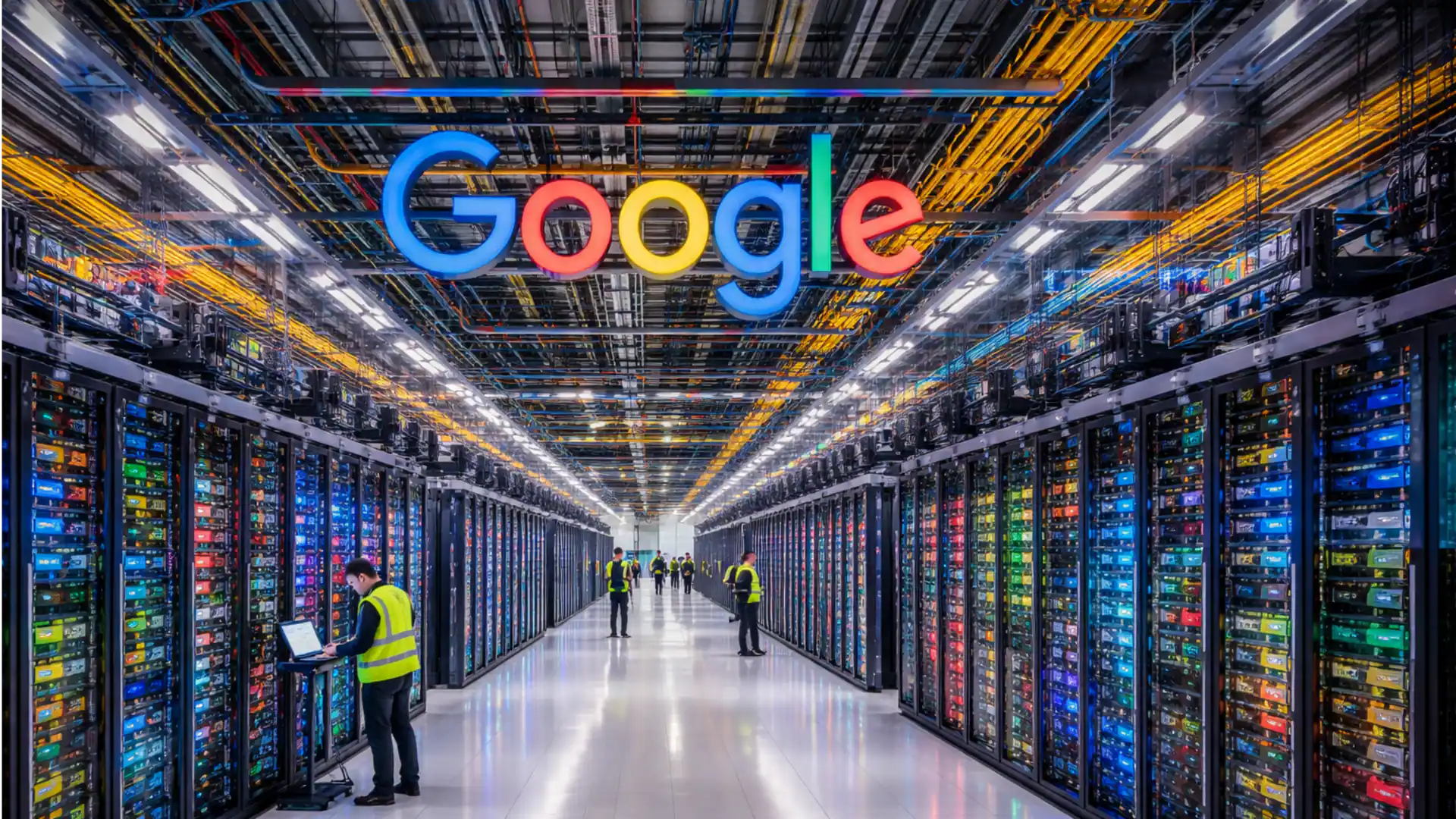
Google is investing €13 billion in Finland’s AI infrastructure. Here’s why Finland won the deal, where the data centers will be built, the nuclear-power agreement and what it means for Europe’s AI race.
Google’s $15 Billion Finland Investment Is About More Than Data Centers
Google is making one of its biggest infrastructure commitments outside the United States, announcing at least €13 billion ($15.1 billion) of investment in Finland over 2027 and 2028.
The project will expand Google’s existing data-center presence in Hamina while developing additional infrastructure in Kajaani, Muhos and Vaala.
Google describes the commitment as its largest single investment in Europe. The spending is designed to expand digital infrastructure, support clean-energy projects and strengthen Google’s ability to provide services including Search, Maps and Gemini as demand for artificial intelligence continues to grow.
But the headline figure only tells part of the story.
The more important question is why Finland?
The answer involves a combination of electricity, climate, infrastructure, security, connectivity and access to low-carbon power.
And increasingly, the AI infrastructure race is becoming an energy race.
Why Google Chose Finland
Finnish President Alexander Stubb told Fox News Digital that Finland’s appeal to technology companies rests partly on its electricity mix, security environment and northern climate. Fox Business reported that Stubb highlighted Finland’s clean electricity, cybersecurity capabilities and naturally cool climate as factors supporting data-center investment.
These advantages matter because modern AI infrastructure requires enormous quantities of computing power.
Large data centers consume electricity not only to operate servers but also to cool them and support networking and other infrastructure.
The International Energy Agency estimates that electricity consumption from data centers worldwide was approximately 485 TWh in 2025 and projects it could reach around 950 TWh by 2030 under its central outlook. AI-focused data centers are expected to grow particularly rapidly.
That makes the availability of reliable electricity increasingly important when companies decide where to build.
Finland offers several advantages simultaneously:
- A cool northern climate
- A developed electricity system
- Significant low-carbon electricity generation
- Access to renewable energy
- Nuclear generation
- Strong digital infrastructure
- A highly educated workforce
- Political and institutional stability
- Existing Google infrastructure
The combination is difficult for competing locations to replicate all at once.
The €13 Billion Investment: Where the Money Is Going
Google’s announcement covers more than conventional server buildings.
The company says the €13 billion commitment will support digital infrastructure, clean-energy projects and economic partnerships across Finland.
The geographic footprint includes four Finnish municipalities:
| Location | Role in Google’s expansion |
|---|---|
| Hamina | Expansion of Google’s existing data-center campus |
| Kajaani | New data-center development |
| Muhos | New data-center development |
| Vaala | New data-center development |
Business Finland says the expansion builds on Google’s more than 15-year presence in Finland. The company’s Hamina facility began after Google converted a former paper mill into a data center in 2009.
That existing presence is important.
Google isn’t entering Finland from scratch. It already has operational experience, local relationships and infrastructure knowledge.
The Nuclear-Power Deal Could Be the Most Important Part
One of the most consequential aspects of Google’s Finnish expansion is its agreement with Fortum, Finland’s major energy company.
Fortum announced a 22-year Power Purchase Agreement under which Google can contract for up to 50% of Loviisa nuclear power plant’s capacity.
The agreement is intended to provide economic certainty for the plant’s lifetime extension and power upgrade through 2050.
This is significant because it illustrates how the economics of AI infrastructure are changing.
Historically, a technology company could primarily think about:
Where should we build the servers?
Increasingly, the question is:
Where can we secure the electricity required to operate those servers reliably and economically?
Google’s Finland strategy effectively links compute infrastructure with energy infrastructure.
Reuters described the deal as Google’s first nuclear-energy deal outside the United States.
Why Nuclear Power Matters to AI
AI data centers require electricity around the clock.
Wind and solar can contribute substantial amounts of low-carbon power, but their output varies according to weather and time of day.
Nuclear generation, by contrast, can provide a more continuous source of electricity.
That makes nuclear power particularly interesting for companies operating energy-intensive computing infrastructure.
The Google-Fortum arrangement also demonstrates another trend: technology companies are increasingly becoming major participants in energy markets.
The agreement isn’t simply about purchasing electricity.
It provides Google with greater visibility into its future power supply while potentially supporting the continued operation and modernization of an existing nuclear facility.
Fortum also said the two companies established a memorandum of understanding covering potential new nuclear, renewable-energy capacity, flexibility solutions and energy-portfolio management.
Finland’s Cold Climate Is a Data-Center Advantage
There is another deceptively simple reason Finland works for data centers:
It’s cold.
Servers generate substantial heat, and cooling systems can become a major component of data-center operating costs.
Finland’s northern climate can reduce the amount of mechanical cooling required compared with warmer locations.
Reuters noted that the temperatures in northern Finland can fall well below freezing during winter, providing favorable conditions for data-center cooling.
Google’s existing Hamina operation also demonstrates how Finland’s environment can be integrated into data-center engineering.
Business Finland says Google’s Hamina facility uses seawater for cooling and has developed waste-heat recovery initiatives intended to provide heat for local households and businesses.
That creates an important secondary benefit:
The data center doesn’t necessarily have to be viewed only as an electricity consumer.
Its waste heat can potentially become part of the local energy system.
Google’s Finland Expansion Is Part of a Much Bigger AI Infrastructure Race
The Finland investment should not be viewed in isolation.
Google, Microsoft, Amazon, Meta and other technology companies are committing enormous amounts of capital to data centers, networking and power infrastructure as AI usage expands.
The IEA says global electricity demand is expected to grow at an average annual rate of 3.6% from 2026 through 2030, with data centers among the drivers of that increase.
The AI boom therefore creates a new infrastructure bottleneck.
Computing chips may be available.
Capital may be available.
Demand may be available.
But without sufficient electricity and grid capacity, new AI facilities cannot operate at their intended scale.
That helps explain why Google’s Finnish strategy combines data centers + electricity + nuclear power + renewable energy + grid considerations.
Finland Is Trying to Turn Data Centers Into an Economic Ecosystem
The Finnish government views the projects as more than construction projects.
Prime Minister Petteri Orpo said data centers can create opportunities across construction, maintenance, energy infrastructure, telecommunications, security services, software, research and development.
This is an important distinction.
A data center directly employs fewer people than some traditional manufacturing facilities of similar capital value.
But its economic footprint can extend through:
- Construction contractors
- Electrical engineering
- Grid infrastructure
- Cooling systems
- Security
- Telecommunications
- Maintenance
- Software
- Universities
- Research institutions
- Local suppliers
- Energy companies
Finland therefore hopes that large data centers can become anchors for wider technology clusters.
The Job Question: What Could Google’s Investment Mean for Finland?
Google’s investment announcement has been associated with substantial economic activity during construction.
The company and Finnish authorities have highlighted job creation, regional development and opportunities for local suppliers and partners.
The government’s broader argument is that data-center investments can generate employment and tax revenue while strengthening Finland’s technology ecosystem.
But there is an important distinction between construction employment and permanent operational employment.
A multi-billion-dollar data-center project can generate significant short-term construction activity, while the number of long-term direct jobs at a highly automated facility may be considerably smaller.
For Finland, the bigger economic opportunity may therefore come from the ecosystem surrounding the facilities rather than from server operations alone.
There Is a Potential Downside: Electricity Demand
The investment is not without challenges.
Reuters reported that Finnish opposition politicians raised concerns about the potential effects of data centers on electricity supply, transmission capacity and energy prices.
This is a critical issue for Finland.
If several hyperscale data centers simultaneously increase electricity consumption, the country must ensure that:
- Generation capacity grows fast enough.
- Transmission networks can handle the additional load.
- Electricity remains affordable for households and businesses.
- Industrial users aren’t disadvantaged.
- New projects don’t create unacceptable regional grid constraints.
The Finnish government has acknowledged the issue.
Prime Minister Orpo said Finland is working on measures involving energy storage, electricity-system flexibility, demand-side response and better use of waste heat.
In other words, Finland is attempting to turn the data-center boom into an energy-management challenge as well as an investment opportunity.
Why Finland Could Become a European AI Infrastructure Hub
Google’s announcement reinforces a broader shift in Europe’s data-center geography.
The traditional assumption might have been that computing infrastructure should be located close to the largest population centers.
AI changes that calculation.
For many workloads, access to:
- electricity,
- land,
- cooling,
- fiber connectivity,
- reliable grids,
- regulatory stability,
- and low-carbon power
can be more important than being immediately adjacent to consumers.
Finland has many of those characteristics.
That helps explain why Google is expanding beyond its established Hamina operation into additional Finnish locations.
What Google’s Finland Investment Means for the AI Industry
There are three larger implications.
1. AI is becoming an energy infrastructure story
The next phase of AI development isn’t only about better models and faster chips.
It is also about who can secure sufficient electricity to operate those systems.
The IEA’s forecasts demonstrate how rapidly data-center electricity consumption is becoming a component of global power demand.
2. Nuclear power is becoming strategically important to hyperscalers
Google’s Finnish nuclear agreement shows that large technology companies are increasingly interested in long-term power arrangements.
The objective is not simply to buy electricity on the spot market.
It is to improve long-term visibility over supply.
3. Countries are competing for AI infrastructure
Finland is competing with other countries and regions for data-center investment.
Its selling proposition combines energy, climate, infrastructure, technology talent and institutional stability.
The Google investment demonstrates that these factors can influence where billions of euros in AI infrastructure capital are deployed.
Google vs. Finland: What Each Side Gets
The relationship is mutually dependent.
Google gets:
- Additional AI computing capacity
- Access to low-carbon electricity
- A favorable cooling environment
- Long-term energy visibility
- European infrastructure capacity
- An established technology ecosystem
Finland gets:
- Billions of euros in investment
- Construction activity
- New infrastructure
- Potential employment
- Regional economic development
- Technology-sector investment
- Greater data-center expertise
- Potential research and innovation partnerships
The central challenge will be ensuring that the benefits of the investment are not offset by infrastructure or electricity constraints.
The Bigger Picture: Why Google’s Finland Bet Matters
Google’s €13 billion Finnish commitment is ultimately a story about the changing economics of artificial intelligence.
The AI industry has moved beyond a purely digital business model.
The next generation of AI requires enormous physical infrastructure: semiconductor factories, servers, data centers, fiber networks, power plants, batteries, cooling systems and electricity grids.
Finland offers Google an unusually attractive combination of those requirements.
The country’s cold climate can help with cooling. Its electricity system offers access to low-carbon generation. Its institutions and digital infrastructure provide a stable operating environment. And its existing relationship with Google reduces some of the uncertainty associated with developing a new market.
The 22-year Fortum power agreement adds another dimension by linking Google’s AI expansion directly to Finland’s nuclear-energy infrastructure.
But the project also highlights a question that will become increasingly important across Europe:
How much electricity should countries allocate to the rapidly expanding AI and data-center economy, and how can they expand generation and grids fast enough to meet that demand without putting pressure on households and traditional industries?
Finland now has an opportunity to demonstrate one possible answer.
Google’s $15 billion commitment is therefore more than a major corporate investment. It is a test of whether a country can combine AI, electricity, nuclear power, renewable energy, digital infrastructure and economic development into a single national strategy.
And if the Finnish model succeeds, the impact could extend well beyond Finland.
Sources & Further Reading
- Google — €13 billion Finland investment announcement
- Reuters — Google to invest $15 billion in Finnish AI infrastructure
- Fortum — 22-year nuclear Power Purchase Agreement with Google
- Finnish Prime Minister’s Office — Google investment speech
- Business Finland — Google’s €13 billion Finland investment
- International Energy Agency — Electricity 2026
- International Energy Agency — Energy and AI analysis
- Reuters — Finland power-supply concerns following Google’s AI deal
- Fox Business — Original exclusive interview with President Alexander Stubb
Discover more from The Economy
Subscribe to get the latest posts sent to your email.
AI
Inside the White House Feud: How Trump’s Allies Are Painting Anthropic’s Dario Amodei as the Face of ‘AI Doomerism’

As tech leaders push for international safeguards at the UN, Washington’s inner circle is framing safety-first mandates as a direct threat to American innovation and global dominance.
A high-stakes battle over the future trajectory of artificial intelligence has moved from Silicon Valley boardrooms directly into the West Wing. Internal White House memos and statements from presidential advisers signal a concerted effort by political allies of President Donald Trump to target Anthropic CEO Dario Amodei as the primary architect of “AI doomerism.”
The ideological rift comes at a pivotal moment. While frontier AI executives call for cautious development in light of self-improving models, the Trump administration is doubling down on an “America First” accelerationist agenda, warning that safety-driven slowdowns will surrender geopolitical victory to foreign adversaries.
1. The Memo: Branding Effective Altruism as an “AI-Doom Pipeline”
At the center of the political offensive is a White House memo drafted by key political strategists. The document explicitly criticizes the philosophical underpinnings of Effective Altruism (EA)—a movement influential among Anthropic’s founding team that prioritizes mitigating existential risks from advanced technology.
According to sources familiar with the administration’s strategy, the memo outlines how safety-centric advocacy functions as an “AI-doom pipeline” that hampers domestic progress. One official close to the administration remarked that Amodei represents:
“The embodiment of an ideology and globalist approach to innovation that is fundamentally counter to the President’s America First agenda.”
This offensive reflects a broader effort to dismantle regulatory frameworks and third-party oversight mechanisms that administration officials view as disguised attempts to stall American market velocity.
2. Pacing the Frontier vs. “Don’t Kill the Golden Goose”
The campaign against Amodei follows a series of public warnings from Anthropic’s leadership. In a landmark essay, Amodei called on frontier labs to “pace the frontier” by committing to independent safety testing and slowing down deployment schedules when necessary, as detailed in reports by The Washington Post.
Amodei emphasized that recent breakthroughs in recursive self-improvement—where AI models are used to train and refine their own next-generation successors—require rigorous safety boundaries before systems exceed human control capacity, a point reiterated in coverage by TIME Magazine.
                 FRONTIER AI DEVELOPMENT SPECTRUM

   [ White House / Acceleration ]          [ Anthropic / Safety Pacing ]
  ─────────────────────────────────      ─────────────────────────────────
  • "Don't kill the Golden Goose"        • Third-party safety evaluations
  • Maximize speed & infrastructure     • Pause/Slow down if risk spikes
  • Unilateral advantage over China       • Multi-lateral coordination
In response, President Trump rejected calls to restrain the industry, lashing out at regulatory proposals and stating at the United Nations that the U.S. “rejects any attempt to construct a globalist scheme to control artificial intelligence,” according to reporting from LiveMint. Trump’s core stance remains straightforward: slowing down U.S. labs directly benefits China.
3. The China Dilemma and the UN Speech
The debate reached global prominence during the United Nations General Assembly, where Dario Amodei, OpenAI CEO Sam Altman, and other tech leaders addressed world leaders on catastrophic risks, as covered by The Guardian.
Amodei argued that while Chinese technological parity poses an existential geopolitical hazard, unmonitored recursive models pose an equal operational threat:
| Policy Dimension | Administration Alignment | Anthropic Alignment |
| Primary Goal | Outpace China at all costs | Ensure safety while maintaining lead |
| Governance Mechanism | Deregulation & domestic industrial builds | Third-party audits & safety benchmarks |
| Global Frameworks | Strongly Rejected (“Globalist scheme”) | Advocated (International safety standards) |
| Perspective on Speed | “Don’t kill the Golden Goose” | “Pacing the frontier” when risks escalate |
Prominent right-leaning technology leaders, including administration AI adviser David Sacks, pushed back on social media, questioning the independence of non-profit safety bodies like Model Evaluation and Threat Research (METR) and claiming they are closely aligned with Anthropic’s leadership network.
4. What Lies Ahead for AI Policy
The clash between Washington and San Francisco highlights a fundamental divergence in how the future of artificial intelligence is conceived:
- Industrial Policy Push: The White House is pushing forward with fast-tracked data center permitting, energy deregulation, and aggressive chip export controls to secure an insurmountable lead over Beijing.
- Corporate Safety Mandates: Frontier labs face internal pressure from researchers demanding strict adherence to safety protocols, creating tension between market pressure to deploy and institutional safety commitments.
- The Regulatory Vacuum: With federal legislative action stalled, the conflict between presidential executive action and voluntary lab commitments will dictate the pace of AI releases through the rest of the decade.
Discover more from The Economy
Subscribe to get the latest posts sent to your email.

Is the AI stock rally a bubble? The honest answer in 2026 is that the market itself is genuinely split — and the concentration numbers explain why the debate has gotten so intense. Roughly two dozen stocks now account for over half of the S&P 500’s total value, a concentration level comparable to the 32-stock peak reached during the 2000 dot-com bubble, according to market analysis relayed through Charles Schwab’s commentary. Three companies alone — Alphabet, Amazon, and Meta — are expected to drive roughly 70% of the S&P 500’s entire 2026 earnings growth.
That’s the bear case in a single statistic: an index marketed to investors as broadly diversified across 500 companies is, in practice, a leveraged bet on whether a handful of AI infrastructure spenders convert capital expenditure into earnings fast enough to justify their valuations.
The Bull Case: Spending Is Turning Into Real Revenue
Featured Snippet Target: The bull case for 2026’s AI rally rests on genuine, verifiable revenue growth rather than pure speculation — Microsoft’s AI revenue run rate surpassed $37 billion annually, Alphabet’s Google Cloud backlog nearly doubled to over $460 billion, and Amazon Web Services grew 28% — figures that distinguish this cycle from dot-com-era companies that had capital spending but little corresponding revenue.
Alphabet spent $35.67 billion on capital expenditure in a single recent quarter — more than double the prior year’s pace — while Amazon led hyperscaler quarterly spending at $44.2 billion, according to reporting compiled by Yahoo Finance’s technology desk. Combined, the four largest U.S. hyperscalers — Alphabet, Amazon, Microsoft, and Meta — are on pace to spend over $700 billion in 2026 alone. Unlike the fiber-optic overbuild of the dot-com era, where telecom capacity sat unused for years, current AI infrastructure spending is being absorbed by measurable, growing cloud and AI-service revenue in the same reporting periods it’s being deployed.
The Financing Shift That’s Making Analysts Nervous
What has shifted the debate in recent months isn’t the spending itself — it’s how that spending is being funded. Goldman Sachs has characterized 2026 as marking a transition from a low-cost-of-capital “Modern” market cycle to a higher-volatility “Post-Modern” one, in which capital expenditure is increasingly rewarded over shareholder buybacks: S&P 500 companies posted 24% year-on-year capex growth in the second quarter of 2026 alongside a 1% decline in gross buybacks, according to market commentary circulated via KuCoin’s research desk.
Consensus hyperscaler capex estimates for the 2026-2028 period were revised upward from roughly $2.5 trillion to $2.8 trillion during recent earnings seasons, with gross debt issuance among these companies expected to peak near $460 billion in fiscal 2028 — roughly a third of total capex — according to Macquarie’s Investment Strategy Insights. Alphabet’s own June 2026 equity raise, combining Class A common stock, Class C capital stock, and mandatory convertible preferred shares, ranks as the largest single AI-funding capital raise in market history. That shift — from funding AI buildout purely from operating cash flow toward relying on debt and equity markets — is precisely the kind of financing pattern that historically precedes sharper corrections when growth expectations disappoint, even when the underlying business fundamentals remain genuinely strong.
Early Cracks Have Already Appeared
The market has not been uniformly bullish through 2026 — there have already been real bouts of AI-specific volatility. Mid-September commentary from CNBC noted bond yields spiking and AI-linked stocks selling off even as broader investor sentiment remained constructive on equities generally — an early signal that markets have begun pricing a wider range of outcomes for the AI capex cycle than the largely unbroken bull run of the year’s first half suggested. That divergence between AI-specific stocks and the broader market is itself notable: in a genuine across-the-board bubble, sentiment tends to move in lockstep across a sector; a split reaction suggests investors are starting to differentiate between AI companies converting spending into revenue and those merely riding sector-wide enthusiasm.
What Would Actually Confirm a Bubble
The distinction analysts increasingly draw is not “is there a lot of spending” — there unambiguously is — but whether that spending is converting into durable revenue at a pace that justifies current valuations. The genuinely bubble-confirming scenario would involve a sustained gap opening between hyperscaler capex growth and actual AI-linked revenue growth, forcing companies to either write down infrastructure investments or continue raising debt at deteriorating terms to sustain spending. As of September 2026, revenue growth at the largest hyperscalers has generally kept pace with — and in some cases exceeded — capex growth, which is the key data point separating this cycle from a pure speculative bubble so far.
The Bottom Line
The 2026 AI trade sits in a genuinely ambiguous middle ground: spending levels and market concentration have reached bubble-era extremes by historical comparison, but the revenue being generated alongside that spending remains real and, so far, largely justifies it. The financing shift toward debt — rather than the spending level itself — is the single most important variable to watch, because it introduces a genuine failure mode (refinancing risk, credit-market stress) that pure equity-funded capex would not carry. Neither the unambiguous bull case nor the unambiguous bubble case is fully supported by the data as it stands; both remain live possibilities depending on how the next several quarters of hyperscaler earnings play out.
Next step: Track the spread between hyperscaler capex growth rates and their AI-linked revenue growth rates each earnings season — a widening gap, more than any single stock’s valuation multiple, would be the clearest confirming signal that 2026’s AI rally has crossed from justified investment into unsustainable bubble territory.
Discover more from The Economy
Subscribe to get the latest posts sent to your email.

US 10-Year Yield Hits 5.24%: What the Historic Bond Market Sell off Means for Mortgages and Investors

Battle for the Farm Belt: How Tariff Pressures and Fuel Costs Are Reshaping Iowa’s 2026 Midterms

Southeast Asia’s Critical Minerals Power Play: Can ASEAN Avoid Choosing Between China and the US?

MAS Allocates S$1.45 Billion to Five Asset Managers in Third EQDP Batch: Total Deployment Reaches S$5.4 Billion

Beyond Singapore’s Borders: How Squeezed SMEs Can Unlock High-Yield Growth Across ASEAN

Bank Jago’s Wealth Management Push:Indonesia’s 31.1 Million Investors boom

Beyond the Four-Year Degree: The $100K+ Trade Careers Young Americans Are Overlooking

SpaceX Starship Achieves First Full Orbit on Historic 10-Hour Test Flight 14

Google’s $15B Finland AI Investment: Data Centers, Nuclear Power & Jobs

Fast Invoice Factoring: Rates, APR Math & Contract Traps

SOC 2 Type II Guide: Cost, Timeline & Compliance Companies

Hong Kong Wages Surge 3.4% in June: Sector Data & Analysis

Silver Price Today: Why the Xi-Trump AI Standoff Is Fueling a Safe-Haven Rally

Citibank & Dólar Estadounidense: Forex Playbook After the Xi-Trump Truce

Top 30 Stocks for Investment in PSX for Massive ROI in 2026

Oil Prices Break $100 in 2026: Middle East Conflict & Energy Markets

BRICS+ Cross-Border Payments 2026: Interoperability Explained

Fidelity Investments Review 2026: SPAXX Yields & Zero-Fee Funds

10-Year Treasury Yield Hits 4.80%: What It Means for Rates & Portfolios

IMF & World Bank 2026 Global Economic Outlook: Growth, Inflation, Debt

Shein Clothes Quality & Safety in 2026: What Lab Tests Show

China’s US$10.8 Billion Trade Shortcut: Why the Pinglu Canal Matters

High-CPM Finance Niches 2026: Publisher Monetization Blueprint

Middle East War Economics 2026: Oil Prices & Energy Markets

China Stocks Today: Are Big Economies in Asia Nearing a Market Bottom?

Social Security Trust Fund 2032: OASI Depletion Timeline Explained

Global Pension Systems Ranked: The World’s Best and Worst Retirement Frameworks

Enterprise AI Platforms Disrupting B2B SaaS in 2026: Full Analysis
-

 Markets & Finance9 months ago
Top 15 Stocks for Investment in 2026 in PSX: Your Complete Guide to Pakistan’s Best Investment Opportunities
-

 Analysis7 months ago
Johor’s Investment Boom: The Hidden Costs Behind Malaysia’s Most Ambitious Economic Surge
-

 Analysis7 months ago
Top 10 Stocks for Investment in PSX for Quick Returns in 2026
-

 Banks8 months ago
Best Investments in Pakistan 2026: Top 10 Low-Price Shares and Long-Term Picks for the PSX
-

 Analysis8 months ago
Brazil’s Rare Earth Race: US, EU, and China Compete for Critical Minerals as Tensions Rise
-

 Investment9 months ago
Top 10 Mutual Fund Managers in Pakistan for Investment in 2026: A Comprehensive Guide for Optimal Returns
-

 Global Economy9 months ago
15 Most Lucrative Sectors for Investment in Pakistan: A 2025 Data-Driven Analysis
-

 Global Economy9 months ago
Pakistan’s Export Goldmine: 10 Game-Changing Markets Where Pakistani Businesses Are Winning Big in 2025