
Analysis
Trump Furious: Supreme Court Upends Global Tariffs, Vows Defiant 10% Levy Amid Trade Chaos

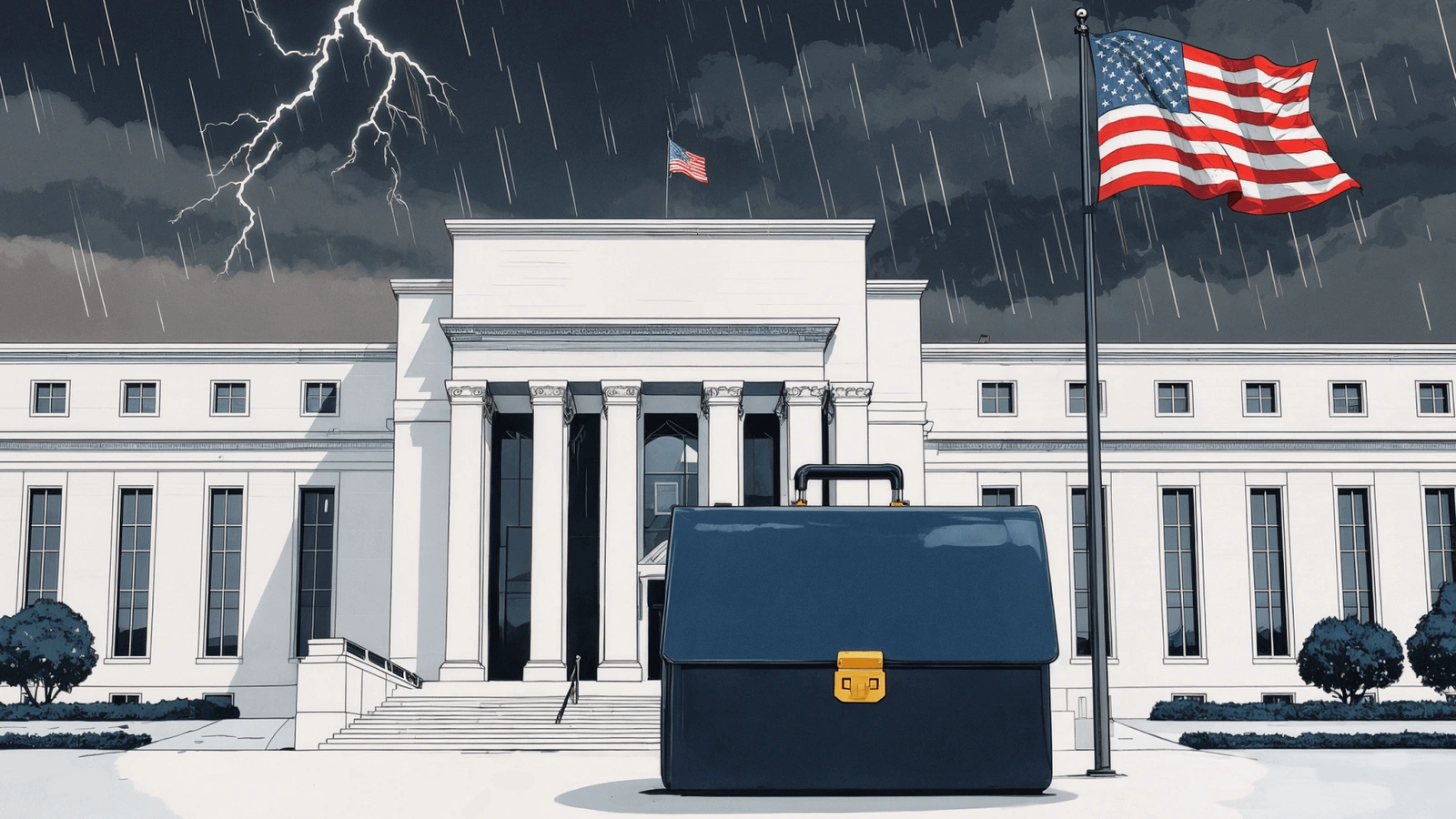
In a ruling that reverberated from Wall Street to the World Trade Organization, the United States Supreme Court delivered a landmark 6-3 decision on Friday that stripped President Donald Trump of one of his most powerful economic weapons — the unilateral authority to impose sweeping global tariffs under a claimed national emergency. Within hours, Trump vowed to continue his trade war with a new 10% levy, attacking individual justices in language rarely heard from a sitting president. The world, already exhausted by a year of tariff-induced whiplash, braced for another round of uncertainty.
What does Trump’s new tariff mean for businesses, households, and global trade partners? The short answer: a great deal of pain, and perhaps — for the first time in a year — a narrow window of legal and economic clarity.
The Ruling That Shook the Trade War
At the heart of Friday’s decision was a deceptively simple question: Can a president declare a vaguely defined economic emergency and, under that banner, restructure the entire architecture of global trade? The Court, in a majority opinion that legal scholars are already calling one of the most consequential trade rulings since the post-war era, answered with an emphatic no.
The Trump administration had invoked the International Emergency Economic Powers Act (IEEPA) — a Cold War-era statute designed to freeze foreign assets during genuine national security crises — to justify broad tariffs on imports from virtually every trading partner on earth. The argument was creative, if constitutionally precarious: that a persistent trade deficit constituted a war-like emergency, unlocking executive powers broad enough to reshape the global trading order with a signature.
As AP News reported, the Court’s majority found this interpretation a fundamental overreach. IEEPA was never designed as a blank check for protectionist economic policy, the justices wrote, and Congress had never explicitly granted the executive branch the power to levy tariffs of this scope without legislative approval. The ruling invalidated the IEEPA tariff framework that had become the backbone of the Trump trade agenda — touching everything from Chinese electronics to French wine to Canadian lumber.
The three dissenting justices, appointees aligned with expansive executive authority, argued the majority had second-guessed legitimate presidential prerogatives during a period of genuine economic dislocation. Their dissent is likely to become a citation in future legal battles as the administration searches for new statutory footing.
Trump’s Defiant Response — and What It Means
True to form, President Trump did not retreat. Within hours of the ruling, he announced an immediate 10% tariff on all imports from every country — a levy grounded not in IEEPA but in older statutory authority that permits such measures for up to 150 days. Standing before reporters at Mar-a-Lago, he described the ruling as “ridiculous,” questioned the intellect of the justices in the majority by name, and promised the trade war would continue “louder and stronger.”
The 150-day window is not trivial. It hands the administration roughly five months to pursue either congressional authorization for a more durable tariff regime or to negotiate bilateral deals that could be codified through existing trade authority. Senior trade advisors, according to sources familiar with the discussions cited by Reuters, are already exploring both paths simultaneously.
But the new 10% levy carries its own legal fragility. Trade attorneys across Washington moved quickly to assess whether the statutory basis Trump cited would survive judicial scrutiny — particularly given the Court’s evident skepticism of emergency-framing as a route to unilateral trade power. “This administration has a habit of finding creative legal vessels for the same policy,” one former USTR official told this correspondent. “The Court just told them the vessel has holes. Building a new one in 150 days is ambitious.”
The $130–200 Billion Question: Are Importers Owed a Refund?
Perhaps the most economically explosive dimension of Friday’s ruling is what it implies for the estimated $130 to $200 billion in tariff revenues collected under the now-invalidated IEEPA framework. If importers — from multinational corporations to small family businesses — can successfully argue that those levies were illegally collected, the refund exposure for the U.S. Treasury would be staggering.
Legal precedent on customs refunds is complicated but not unfavorable to importers. Businesses that paid duties under protest, preserved their legal standing, or filed timely liquidation extensions at U.S. Customs and Border Protection may have the strongest claims. Larger importers — think major electronics retailers, auto parts manufacturers, and pharmaceutical supply chains — likely have the legal firepower to pursue those claims aggressively. Smaller importers, many of whom absorbed the costs quietly rather than navigating the bureaucratic maze of customs litigation, may find the path to restitution considerably harder.
The human dimension here is real. Consider a mid-sized furniture importer in North Carolina who, over the past year, rerouted supply chains, renegotiated contracts, and passed costs onto consumers — all to comply with tariffs a court has now declared illegal. For businesses like these, Friday’s ruling is simultaneously vindicating and maddening.
How Markets Responded — And Why the Euphoria Faded
The immediate market reaction was telling. As CNN reported, U.S. stock indices surged briefly — up 1 to 2% — on news of the ruling, as investors priced in the possibility of reduced trade friction, lower input costs, and a less chaotic global trading environment. The S&P 500 and Nasdaq both spiked in the first hour of post-ruling trading.
Then reality set in. Trump’s counter-announcement of the new 10% blanket tariff — and his evident fury, which markets have learned to read as a signal of escalation rather than resolution — erased most of the gains. Major indices ended the session modestly higher, roughly 0.4 to 0.7%, a performance that reflected neither celebration nor panic but something more unsettling: exhaustion and confusion.
Analysts at major investment banks issued rapid-fire notes warning clients that the ruling, paradoxically, may have increased short-term uncertainty rather than reduced it. The legal basis for tariffs is now contested terrain, the 150-day clock is ticking, and foreign governments are left parsing whether to resume negotiations, retaliate, or simply wait. “We’ve moved from one form of unpredictability to another,” noted one economist at a prominent European central bank, speaking on background.
Impact on Global Supply Chains: China, EU, Canada, and Mexico
The Supreme Court’s ruling lands at a particularly sensitive moment for the four trading partners that have been most directly targeted by Trump’s tariff agenda. Each faces a distinct calculus.
China, which has been subject to tariffs well above the baseline — some products facing effective rates above 100% — is watching closely. Beijing had begun quiet back-channel discussions with U.S. trade envoys in recent weeks, according to diplomatic sources cited by The Washington Post. Those talks, already fragile, are now further complicated by the legal fog surrounding U.S. trade authority. Chinese negotiators are unlikely to make concessions to a counterpart whose leverage instrument the Supreme Court just declared unconstitutional.
The European Union had been preparing retaliatory measures targeting politically sensitive U.S. exports — bourbon, motorcycles, agricultural goods — and had paused those plans pending legal developments in Washington. Brussels now faces a strategic dilemma: the ruling is legally favorable to EU interests, but Trump’s immediate 10% counter-tariff means the trade pressure has not actually lifted.
Canada and Mexico, deeply enmeshed in U.S. supply chains through the USMCA framework, are perhaps the most acutely affected. Cross-border manufacturing in the automotive, aerospace, and agricultural sectors has been disrupted for a year. Friday’s ruling offers legal vindication but little immediate economic relief, as the new 10% levy applies to both countries.
For global supply chains, the longer-term damage may be the most consequential story. Research from the Yale Budget Lab had estimated that IEEPA tariffs were costing the average U.S. household more than $1,700 annually in higher prices. Whether Friday’s ruling ultimately translates into consumer savings depends entirely on what replaces the invalidated tariff structure — and that question remains emphatically open.
A Historical Parallel: The Ghost of Smoot-Hawley
History offers a useful, if sobering, frame for this moment. The Smoot-Hawley Tariff Act of 1930 — passed by Congress, not executive fiat — triggered a cascade of retaliatory tariffs from trading partners that helped deepen and prolong the Great Depression. The lesson economists drew was not simply that high tariffs are bad economics, but that uncertainty and retaliation amplify the damage exponentially.
What makes the current moment distinct — and in some ways more dangerous — is the institutional instability at its core. Smoot-Hawley, for all its economic catastrophe, at least had the predictability of statutory law. The IEEPA tariff regime, by contrast, was built on executive improvisation, and the market convulsions of the past year reflect that fragility. Friday’s ruling does not end the trade war; it relocates it — from the trade desk to the courthouse, and back again.
As The New York Times noted in its analysis of the ruling, the fundamental tension is between a president determined to use trade as both economic instrument and geopolitical lever, and a constitutional order that vests tariff authority primarily in Congress. That tension will not be resolved by a single ruling, however landmark.
What Comes Next: The 150-Day Clock and the Path Forward
The immediate future is shaped by three variables operating simultaneously. First, the legal durability of the new 10% tariff will be tested in federal courts within days; the Customs and International Trade Bar Association had already signaled litigation readiness before Trump finished speaking on Friday.
Second, the congressional dimension is no longer theoretical. For the IEEPA framework to be replaced with something durable, the administration needs legislative buy-in. Whether a deeply polarized Congress will hand Trump a new tariff mandate — or use the moment to reclaim trade authority — is a genuinely open question that will define the next phase of U.S. trade policy.
Third, and perhaps most importantly, foreign governments are recalibrating. The ruling hands U.S. trading partners a new form of leverage: the knowledge that American tariff threats may be less legally secure than previously assumed. That psychological shift, subtle but real, will influence negotiating dynamics from Geneva to Beijing.
For businesses navigating the chaos, Friday offered something rarer than certainty — it offered clarity about what isn’t legally settled. In a trading environment that has operated on ambiguity for over a year, that is, paradoxically, a form of progress.
The Bottom Line
The Supreme Court’s 6-3 ruling is not the end of Trump’s trade war — it is a dramatic inflection point within it. The IEEPA tariff architecture has been dismantled, but a new 10% levy has already risen in its place. Legal battles are incoming, refund claims are being assessed, and foreign governments are recalculating. Markets are neither celebrating nor panicking; they are, in the most apt phrase, waiting.
What is clear is that the global trading order — painstakingly constructed over eight decades of postwar diplomacy — has absorbed another significant shock. Whether Friday’s ruling ultimately accelerates a return to rules-based trade, or merely reshuffles the chaos into new legal vessels, will depend on choices made in the next 150 days by Congress, the courts, and a president who has made his intentions unmistakably clear.
He is not done Yet.
Discover more from The Economy
Subscribe to get the latest posts sent to your email.



China’s leadership used its closely watched late-July Politburo meeting to strike a more supportive tone on the economy without committing to the kind of sweeping stimulus package investors had hoped might follow a sharp second-quarter slowdown, reinforcing Beijing’s preference for targeted, precision-guided policy support over broad-based easing.
Growth Slows Below Beijing’s Own Target Range
China’s economy expanded 4.3% year-on-year in the second quarter of 2026, a marked deceleration from the 5.0% pace recorded in the first quarter and a figure that sits below the lower bound of Beijing’s own 4.5–5% full-year growth target — the lowest such target range Beijing has set since the early 1990s, according to CryptoBriefing’s analysis of the data. Consumer demand has remained persistently weak, and deflationary pressure has now been a recurring theme in the Chinese economy for several consecutive quarters.
A Reuters poll of economists ahead of the meeting found growth for 2026 as a whole is expected to cool to around 4.6%, before easing further to roughly 4.4% in 2027, as weak domestic demand offsets the boost from resilient exports recorded during a global oil-price shock earlier this year.
Fiscal Firepower Exists — But Beijing Is Choosing Restraint
Perhaps the most consequential signal from analysts previewing the meeting was not about new money, but about unused capacity. China retains roughly RMB 6.8 trillion of this year’s approved government bond issuance quota still undeployed as of the end of June, alongside an RMB 800 billion quasi-policy financing instrument and an estimated RMB 1.8 trillion in unused bond quota carried over from prior years, according to analysis published on Substack’s macro research platform. The implication: Beijing does not lack tools, it is choosing to prioritise faster execution of existing plans over announcing a new headline package.
Standard Chartered economists have argued the meeting was likely to emphasise accelerating fiscal execution in the second half rather than expanding the overall scope of policy support, with monetary policy relegated to a supplementary role. That reading is consistent with the People’s Bank of China’s approach since May 2025, when it last adjusted policy rates or reserve requirements, opting instead for short-term liquidity operations.
China’s July 2026 Politburo meeting signalled stronger support language without a large new stimulus package, after Q2 GDP growth slowed to 4.3% — below Beijing’s 4.5–5% target. With RMB 6.8 trillion in unused bond quota available, policymakers are prioritising faster fiscal execution over broad-based monetary or fiscal easing.
Property Downturn and Overcapacity Remain the Structural Drag
Beneath the headline growth numbers lies a widening bifurcation. New growth drivers — high-end manufacturing, the digital economy, and modern services — accounted for more than 40% of growth in the first half, with high-tech manufacturing value-added up 13.3%. Yet retail sales grew just 1.3% year-on-year in the same period, and fixed-asset investment fell 5.7%, according to detailed policy analysis from independent China economy newsletter Fred Gao. That divergence — a resilient “new economy” propping up an ailing “old economy” — is precisely the dynamic policymakers appear determined not to paper over with indiscriminate stimulus that could derail the structural transition central to the 15th Five-Year Plan’s opening year.
Markets Should Watch Implementation, Not Rhetoric
The consistent message from economists across Citi, Standard Chartered, and independent research houses ahead of the meeting was that markets should discount policy language and instead track fiscal execution data in the coming months — the pace of local government bond issuance, infrastructure project approvals, and any loosening of housing-related restrictions in major cities. Beijing’s playbook, as one analyst close to policymaking circles put it, increasingly resembles precision-guided support rather than the credit-fuelled stimulus waves of 2008–09 or 2015–16.
What It Means for Investors
For global investors positioned in Chinese equities, the yuan, or commodities exposed to Chinese infrastructure demand, the takeaway is one of managed disappointment: meaningful policy support is coming, but gradually, and calibrated to avoid reigniting the property-sector excesses Beijing spent years trying to unwind. A weaker yuan remains the most likely near-term consequence of any incremental stimulus, while a sharper-than-expected growth slowdown in the third quarter remains the primary catalyst that could force Beijing’s hand toward broader action.
Discover more from The Economy
Subscribe to get the latest posts sent to your email.

Britain’s government bond market is entering a delicate holding pattern as investors wait for new Prime Minister Andy Burnham to lay out his economic programme, with 10-year gilt yields hovering near 5% and the Bank of England widely expected to keep interest rates unchanged this week.
Gilts Steady as Markets Await Policy Clarity
Ten-year gilt yields eased two basis points to roughly 5.01% in late July, while 30-year yields — the maturity most sensitive to fiscal risk — slipped to around 5.72%, according to Bloomberg. The modest moves came as data showed UK private-sector wage growth slowing to its weakest pace since 2020, tempering expectations for near-term rate hikes even as markets digest the transition to a new premiership.
The yield backdrop remains elevated by historical standards. Earlier in the month, the 10-year gilt yield climbed toward 5.1% — its highest level since May — after outgoing Finance Minister John Healey warned of rising costs of doing business and persistent cost-of-living pressure, according to Trading Economics. The 30-year gilt, a proxy for long-term fiscal credibility, touched its highest level since May 19 in the same window.
Inflation Cools, Giving the Bank of England Room to Hold
Underpinning the relative calm in bond markets is an unexpectedly benign inflation print: annual consumer price growth slowed to a 15-month low of 2.6% in June, below the Bank of England’s own forecasts, per Trading Economics. Delayed pass-through of wholesale energy costs to regulated household bills has helped keep UK inflation below both the US and eurozone, where rate increases are still expected before year-end.
Consumer-facing data has also surprised to the upside. UK retail sales rose 1% in June, confounding forecasts for a 0.3% decline, boosted by warmer weather and a consumer spending lift tied to the football World Cup, while consumer confidence climbed to a six-month high in July.
Why Gilt Yields — Not Bank Rate — Are Driving Mortgage Costs
For households, the more immediate transmission channel runs through the gilt market rather than the Bank of England’s policy rate directly. UK fixed-rate mortgages are priced off swap rates that track gilt yields, meaning the current 10-year yield sits roughly 1.32 percentage points above the Bank of England’s 3.75% base rate, according to mortgage-market analysis from SalaryWise. That spread — near the top of its multi-year range — means fixed mortgage pricing has stayed elevated even as headline inflation has cooled, a disconnect that is likely to dominate the political conversation around the cost of living as Burnham settles into office.
The Burnham Variable
Markets are treating the change in Downing Street as a genuine source of uncertainty rather than a formality. Investors are specifically awaiting fresh policy detail from the new administration on fiscal rules, spending commitments, and its approach to the gilt-issuance programme inherited from its predecessor. Until that detail arrives, strategists expect gilts to trade in a holding pattern, reactive to incoming data — this week’s Bank of England decision chief among them — rather than to political headlines alone.
What to Watch
The Bank of England’s rate decision this week is expected to confirm a hold at 3.75%, but the accompanying minutes and forecasts will be scoured for any signal on how the Monetary Policy Committee is weighing the new government’s early fiscal signals against the growth and inflation outlook. A repeat of the volatility seen during the 2022 mini-budget episode remains the tail risk markets are most keen to avoid.
Discover more from The Economy
Subscribe to get the latest posts sent to your email.

A punishing monsoon season has killed more than 100 people across Pakistan since late June and is now colliding with the country’s fragile post-IMF recovery, pushing food prices toward multi-year highs just as the State Bank prepares to defend a currency propped up by fresh inflows from allied governments.
Flood Toll Rises as Damage Assessment Begins
Flood-related incidents — drownings, house collapses, and flash floods across Punjab, Khyber Pakhtunkhwa, and Sindh — have killed 109 people in Pakistan since June 26, according to Business Recorder’s latest tracking of disaster management data. The toll is a fraction of the devastation wrought by the catastrophic 2022 floods, which caused roughly $30 billion in damages and losses, but officials and independent economists are already warning that this year’s disruption is arriving at a far more precarious moment for the economy.
Planning Minister Ahsan Iqbal has acknowledged the floods will “set back” GDP growth, with a fuller damage tally expected within weeks, according to reporting from Arab News. The State Bank of Pakistan has characterised the disruption as a temporary but significant supply shock, and has pencilled in growth near the bottom of its already-modest 3.25–4.25% range for the fiscal year.
Inflation Pressure Builds Ahead of Key IMF Review
Headline consumer price inflation is projected to climb above 9% year-on-year in July, according to Business Recorder, a sharp acceleration driven by jumps in the price of wheat, sugar, onions, and tomatoes as flood-hit farmland disrupts supply chains in Punjab and Sindh, historically the country’s rice, cotton, and maize belt.
The timing is delicate. The Asian Development Bank’s July 2026 outlook has already revised Pakistan’s inflation forecast upward to 7.2% for the fiscal year and 8.3% for FY2027, citing persistent spillover from the Middle East energy conflict that has kept oil and fertiliser costs elevated even before the floods hit. Real GDP growth, meanwhile, is projected at a modest 3.7% for FY2026, a figure now at risk of downward revision once flood losses are fully tallied.
Friendly Countries Roll Over $6 Billion as IMF Reviews Deepen
Even as flood losses mount, Pakistan has secured a measure of external breathing room. Allied governments have rolled over approximately $6 billion in bilateral deposits and financing in July 2026, providing an early cushion to the country’s foreign exchange reserves ahead of a scheduled review of the IMF’s Extended Fund Facility. That review will determine whether Islamabad’s FY2026 budget framework and emergency disaster provisions are adequate to absorb the shock without derailing the broader fiscal consolidation programme that has underpinned the rupee’s relative stability over the past two years.
The floods also complicate an already fragile agricultural outlook. Compounding this year’s disruption, foreign direct investment in Pakistan weakened further in FY2026, with little evidence yet of a durable recovery, leaving the government more reliant than usual on remittances and official rollovers to plug the external financing gap.
What It Means for Investors and Policymakers
For a country whose economic narrative had begun shifting from “crisis mode” to “consolidation,” as officials described it earlier this year, the floods are a reminder of how exposed Pakistan’s recovery remains to climate shocks. Analysts note that unlike 2022, the State Bank enters this disaster with stronger foreign exchange reserves and a lower policy rate — buffers that may cushion, but not eliminate, the growth hit. The coming weeks — encompassing the finalised damage assessment, the IMF’s EFF review outcome, and the State Bank’s next monetary policy statement — will be the clearest test yet of whether Pakistan’s hard-won macroeconomic stability can withstand a second consecutive year of severe monsoon disruption.
Discover more from The Economy
Subscribe to get the latest posts sent to your email.

China Politburo July 2026: Stimulus Signals Explained

Andy Burnham, UK Gilts and Mortgages: July 2026 Explainer

Pakistan’s 2026 Monsoon Floods Threaten Fragile Economic Recovery as Inflation Nears 9%

Pakistan Gulf Investment Outflows 2026: Peace Deal Stakes Explained

Canada Trade Diversification 2026: China, Indonesia, UAE Deals Explained

US Forced-Labour Tariffs on 60 Countries: The Hidden Trade Shock of 2026

Global Central Banks 2026: Fed, BoE and BoJ Decisions Could Reshape Markets

Gulf Capital Retreat From Pakistan 2026: UAE Loan Freeze & What It Means

Pakistan’s Most Reliable Export Is Its People: Remittances Hit $41.6 Billion, Overtaking Total Exports

Indonesia’s Confidence Problem: Record Investment, a Sinking Rupiah, and a Widening Credibility Gap

Down But Not Out: Inside the Slow Sinking of Russia’s War Economy

China’s Growth Slips to a Four-Year Low: Why Beijing Still Won’t Pull the Stimulus Trigger

The Johor-Singapore Corridor: How Malaysia Became Southeast Asia’s AI Infrastructure Powerhouse

Canada’s Economy ‘On Pause’: Inside the CUSMA Deadline That Passed Without a Deal

Carry Trade Unwind 2026: How the Yen’s Snapback Triggered a Global Margin Call

AI Bubble Warning 2026: Why BIS, IMF and Bank of England Fear a Market Crash

BRICS De‑Dollarization Strategy Takes Shape with $15 Billion Local‑Currency Push

The AI Super Bubble Is Ready to Burst

Russia Bans Diesel Exports 2026: Global Fuel Market Impact Explained

Strait of Hormuz Blockade 2026: Oil Prices Surge 9% as US-Iran Conflict Reignites

Private Credit Warning: Most BDCs Turn Unprofitable in 2026, Reuters Finds

Bitcoin $150k Milestone Achieved as US Sovereign Crypto Pivot Looms

IMF Cuts Pakistan Growth Forecast, Raises Inflation to 8.4%
Gulf Capital Retreat From Pakistan 2026: UAE Loan Freeze & What It Means

India Economic Rise 2026: How the Subcontinent Toppled Japan

Strait of Hormuz 2026: Why Markets Still Don’t Trust It’s Open

China Housing Market Turnaround: White‑List Model Stabilises Prices

Chipmakers Just Lost 6.7% in Two Days: Inside the Great AI Trade Rotation
-

 Markets & Finance7 months ago
Top 15 Stocks for Investment in 2026 in PSX: Your Complete Guide to Pakistan’s Best Investment Opportunities
-

 Analysis5 months ago
Johor’s Investment Boom: The Hidden Costs Behind Malaysia’s Most Ambitious Economic Surge
-

 Analysis5 months ago
Top 10 Stocks for Investment in PSX for Quick Returns in 2026
-

 Analysis6 months ago
Brazil’s Rare Earth Race: US, EU, and China Compete for Critical Minerals as Tensions Rise
-

 Banks6 months ago
Best Investments in Pakistan 2026: Top 10 Low-Price Shares and Long-Term Picks for the PSX
-

 Investment7 months ago
Top 10 Mutual Fund Managers in Pakistan for Investment in 2026: A Comprehensive Guide for Optimal Returns
-

 Global Economy7 months ago
15 Most Lucrative Sectors for Investment in Pakistan: A 2025 Data-Driven Analysis
-

 Global Economy7 months ago
Pakistan’s Export Goldmine: 10 Game-Changing Markets Where Pakistani Businesses Are Winning Big in 2025