Connect with us

Analysis

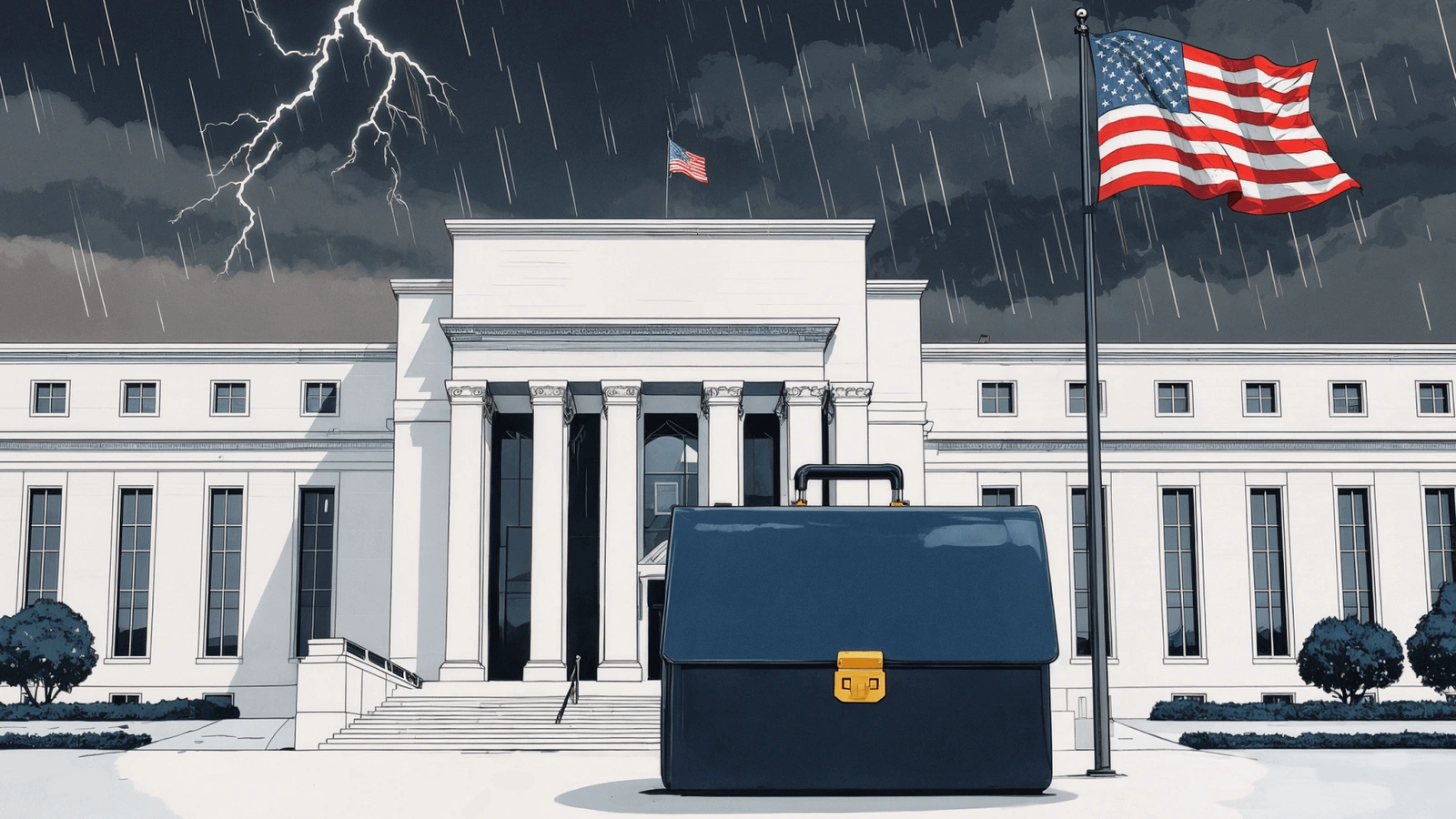
Trump Furious: Supreme Court Upends Global Tariffs, Vows Defiant 10% Levy Amid Trade Chaos

Published

on

In a ruling that reverberated from Wall Street to the World Trade Organization, the United States Supreme Court delivered a landmark 6-3 decision on Friday that stripped President Donald Trump of one of his most powerful economic weapons — the unilateral authority to impose sweeping global tariffs under a claimed national emergency. Within hours, Trump vowed to continue his trade war with a new 10% levy, attacking individual justices in language rarely heard from a sitting president. The world, already exhausted by a year of tariff-induced whiplash, braced for another round of uncertainty.

What does Trump’s new tariff mean for businesses, households, and global trade partners? The short answer: a great deal of pain, and perhaps — for the first time in a year — a narrow window of legal and economic clarity.

The Ruling That Shook the Trade War

At the heart of Friday’s decision was a deceptively simple question: Can a president declare a vaguely defined economic emergency and, under that banner, restructure the entire architecture of global trade? The Court, in a majority opinion that legal scholars are already calling one of the most consequential trade rulings since the post-war era, answered with an emphatic no.

The Trump administration had invoked the International Emergency Economic Powers Act (IEEPA) — a Cold War-era statute designed to freeze foreign assets during genuine national security crises — to justify broad tariffs on imports from virtually every trading partner on earth. The argument was creative, if constitutionally precarious: that a persistent trade deficit constituted a war-like emergency, unlocking executive powers broad enough to reshape the global trading order with a signature.

As AP News reported, the Court’s majority found this interpretation a fundamental overreach. IEEPA was never designed as a blank check for protectionist economic policy, the justices wrote, and Congress had never explicitly granted the executive branch the power to levy tariffs of this scope without legislative approval. The ruling invalidated the IEEPA tariff framework that had become the backbone of the Trump trade agenda — touching everything from Chinese electronics to French wine to Canadian lumber.

The three dissenting justices, appointees aligned with expansive executive authority, argued the majority had second-guessed legitimate presidential prerogatives during a period of genuine economic dislocation. Their dissent is likely to become a citation in future legal battles as the administration searches for new statutory footing.

Trump’s Defiant Response — and What It Means

True to form, President Trump did not retreat. Within hours of the ruling, he announced an immediate 10% tariff on all imports from every country — a levy grounded not in IEEPA but in older statutory authority that permits such measures for up to 150 days. Standing before reporters at Mar-a-Lago, he described the ruling as “ridiculous,” questioned the intellect of the justices in the majority by name, and promised the trade war would continue “louder and stronger.”

The 150-day window is not trivial. It hands the administration roughly five months to pursue either congressional authorization for a more durable tariff regime or to negotiate bilateral deals that could be codified through existing trade authority. Senior trade advisors, according to sources familiar with the discussions cited by Reuters, are already exploring both paths simultaneously.

But the new 10% levy carries its own legal fragility. Trade attorneys across Washington moved quickly to assess whether the statutory basis Trump cited would survive judicial scrutiny — particularly given the Court’s evident skepticism of emergency-framing as a route to unilateral trade power. “This administration has a habit of finding creative legal vessels for the same policy,” one former USTR official told this correspondent. “The Court just told them the vessel has holes. Building a new one in 150 days is ambitious.”

The $130–200 Billion Question: Are Importers Owed a Refund?

Perhaps the most economically explosive dimension of Friday’s ruling is what it implies for the estimated $130 to $200 billion in tariff revenues collected under the now-invalidated IEEPA framework. If importers — from multinational corporations to small family businesses — can successfully argue that those levies were illegally collected, the refund exposure for the U.S. Treasury would be staggering.

Legal precedent on customs refunds is complicated but not unfavorable to importers. Businesses that paid duties under protest, preserved their legal standing, or filed timely liquidation extensions at U.S. Customs and Border Protection may have the strongest claims. Larger importers — think major electronics retailers, auto parts manufacturers, and pharmaceutical supply chains — likely have the legal firepower to pursue those claims aggressively. Smaller importers, many of whom absorbed the costs quietly rather than navigating the bureaucratic maze of customs litigation, may find the path to restitution considerably harder.

The human dimension here is real. Consider a mid-sized furniture importer in North Carolina who, over the past year, rerouted supply chains, renegotiated contracts, and passed costs onto consumers — all to comply with tariffs a court has now declared illegal. For businesses like these, Friday’s ruling is simultaneously vindicating and maddening.

How Markets Responded — And Why the Euphoria Faded

The immediate market reaction was telling. As CNN reported, U.S. stock indices surged briefly — up 1 to 2% — on news of the ruling, as investors priced in the possibility of reduced trade friction, lower input costs, and a less chaotic global trading environment. The S&P 500 and Nasdaq both spiked in the first hour of post-ruling trading.

Then reality set in. Trump’s counter-announcement of the new 10% blanket tariff — and his evident fury, which markets have learned to read as a signal of escalation rather than resolution — erased most of the gains. Major indices ended the session modestly higher, roughly 0.4 to 0.7%, a performance that reflected neither celebration nor panic but something more unsettling: exhaustion and confusion.

Analysts at major investment banks issued rapid-fire notes warning clients that the ruling, paradoxically, may have increased short-term uncertainty rather than reduced it. The legal basis for tariffs is now contested terrain, the 150-day clock is ticking, and foreign governments are left parsing whether to resume negotiations, retaliate, or simply wait. “We’ve moved from one form of unpredictability to another,” noted one economist at a prominent European central bank, speaking on background.

Impact on Global Supply Chains: China, EU, Canada, and Mexico

The Supreme Court’s ruling lands at a particularly sensitive moment for the four trading partners that have been most directly targeted by Trump’s tariff agenda. Each faces a distinct calculus.

China, which has been subject to tariffs well above the baseline — some products facing effective rates above 100% — is watching closely. Beijing had begun quiet back-channel discussions with U.S. trade envoys in recent weeks, according to diplomatic sources cited by The Washington Post. Those talks, already fragile, are now further complicated by the legal fog surrounding U.S. trade authority. Chinese negotiators are unlikely to make concessions to a counterpart whose leverage instrument the Supreme Court just declared unconstitutional.

The European Union had been preparing retaliatory measures targeting politically sensitive U.S. exports — bourbon, motorcycles, agricultural goods — and had paused those plans pending legal developments in Washington. Brussels now faces a strategic dilemma: the ruling is legally favorable to EU interests, but Trump’s immediate 10% counter-tariff means the trade pressure has not actually lifted.

Canada and Mexico, deeply enmeshed in U.S. supply chains through the USMCA framework, are perhaps the most acutely affected. Cross-border manufacturing in the automotive, aerospace, and agricultural sectors has been disrupted for a year. Friday’s ruling offers legal vindication but little immediate economic relief, as the new 10% levy applies to both countries.

For global supply chains, the longer-term damage may be the most consequential story. Research from the Yale Budget Lab had estimated that IEEPA tariffs were costing the average U.S. household more than $1,700 annually in higher prices. Whether Friday’s ruling ultimately translates into consumer savings depends entirely on what replaces the invalidated tariff structure — and that question remains emphatically open.

A Historical Parallel: The Ghost of Smoot-Hawley

History offers a useful, if sobering, frame for this moment. The Smoot-Hawley Tariff Act of 1930 — passed by Congress, not executive fiat — triggered a cascade of retaliatory tariffs from trading partners that helped deepen and prolong the Great Depression. The lesson economists drew was not simply that high tariffs are bad economics, but that uncertainty and retaliation amplify the damage exponentially.

What makes the current moment distinct — and in some ways more dangerous — is the institutional instability at its core. Smoot-Hawley, for all its economic catastrophe, at least had the predictability of statutory law. The IEEPA tariff regime, by contrast, was built on executive improvisation, and the market convulsions of the past year reflect that fragility. Friday’s ruling does not end the trade war; it relocates it — from the trade desk to the courthouse, and back again.

As The New York Times noted in its analysis of the ruling, the fundamental tension is between a president determined to use trade as both economic instrument and geopolitical lever, and a constitutional order that vests tariff authority primarily in Congress. That tension will not be resolved by a single ruling, however landmark.

What Comes Next: The 150-Day Clock and the Path Forward

The immediate future is shaped by three variables operating simultaneously. First, the legal durability of the new 10% tariff will be tested in federal courts within days; the Customs and International Trade Bar Association had already signaled litigation readiness before Trump finished speaking on Friday.

Second, the congressional dimension is no longer theoretical. For the IEEPA framework to be replaced with something durable, the administration needs legislative buy-in. Whether a deeply polarized Congress will hand Trump a new tariff mandate — or use the moment to reclaim trade authority — is a genuinely open question that will define the next phase of U.S. trade policy.

Third, and perhaps most importantly, foreign governments are recalibrating. The ruling hands U.S. trading partners a new form of leverage: the knowledge that American tariff threats may be less legally secure than previously assumed. That psychological shift, subtle but real, will influence negotiating dynamics from Geneva to Beijing.

For businesses navigating the chaos, Friday offered something rarer than certainty — it offered clarity about what isn’t legally settled. In a trading environment that has operated on ambiguity for over a year, that is, paradoxically, a form of progress.

The Bottom Line

The Supreme Court’s 6-3 ruling is not the end of Trump’s trade war — it is a dramatic inflection point within it. The IEEPA tariff architecture has been dismantled, but a new 10% levy has already risen in its place. Legal battles are incoming, refund claims are being assessed, and foreign governments are recalculating. Markets are neither celebrating nor panicking; they are, in the most apt phrase, waiting.

What is clear is that the global trading order — painstakingly constructed over eight decades of postwar diplomacy — has absorbed another significant shock. Whether Friday’s ruling ultimately accelerates a return to rules-based trade, or merely reshuffles the chaos into new legal vessels, will depend on choices made in the next 150 days by Congress, the courts, and a president who has made his intentions unmistakably clear.

He is not done Yet.


Discover more from The Economy

Subscribe to get the latest posts sent to your email.

Analysis

Volodymyr Zelenskyy Says Ukraine War is at the ‘Beginning of the End’: Why He’s Urging Trump to See Through Russia’s Peace ‘Games’

Published

on

Four years ago today, the world held its breath as Russian armor rolled toward Kyiv, expecting a sovereign nation’s rapid collapse. Today, on February 24, 2026, the geopolitical narrative has fundamentally shifted from sheer survival to the brutal, complex mechanics of a resolution. Standing in Independence Square near a makeshift memorial of flags honoring fallen soldiers, Ukrainian President Volodymyr Zelenskyy cast a profound look toward the future. But it was his candid, newly published Financial Times Zelenskyy interview that sent immediate ripples through the corridors of power in Washington, Brussels, and Moscow. The Ukraine war end is no longer a distant abstraction. We are, in his exact words, at the “beginning of the end.”

However, this final chapter is fraught with diplomatic landmines. As the world digests the latest Ukraine war updates, Zelenskyy’s core message wasn’t just directed at his weary citizens or European allies; it was a targeted, urgent plea to U.S. President Donald Trump. His goal? To ensure Washington doesn’t fall for the Russia games Trump might be tempted to entertain in his quest for a historic diplomatic victory.

“The Beginning of the End”: Decoding Zelenskyy’s Strategy

In international diplomacy, vocabulary is everything. By declaring the conflict is at the “beginning of the end,” Zelenskyy is signaling a transition from indefinite attrition to the tactical positioning that precedes an armistice. He is acknowledging the realities of a war-weary globe while firmly attempting to dictate the terms of the endgame.

In his extensive interview, Zelenskyy clarified that the “beginning of the end” does not equate to an immediate surrender or a hasty territorial compromise. Instead, it marks the phase where military stalemates force genuine structural negotiations. The recent trilateral Geneva negotiations on February 18, 2026, underscored this shift. Zelenskyy described the talks as arduous, noting that while political consensus remains out of reach, tangible progress was achieved on military de-escalation protocols.

“Putin is this war. He is the cause of its beginning and the obstacle to its end. And it is Russia that must be put in its place so that there is real peace.” — Volodymyr Zelenskyy, February 24, 2026

Seeing Through Putin’s “Games”: A Warning to Washington

The return of Donald Trump to the White House has undeniably accelerated the push for a negotiated settlement. Following the highly scrutinized Trump-Putin summit in Anchorage, Alaska, in late 2025, anxiety has permeated Kyiv. The underlying fear is that Washington might broker a transactional deal over Ukraine’s head, exchanging Ukrainian sovereignty for a perceived geopolitical win against the backdrop of rising U.S.-China tensions.

Zelenskyy’s challenge to the U.S. President is blunt: come to Kyiv. “Only by coming to Ukraine and seeing with one’s own eyes our life and our struggle… can one understand what this war is really about,” Zelenskyy stated during his anniversary address.

He explicitly warned that Trump Russia Ukraine tripartite dynamics are being actively manipulated by Moscow. During Putin peace talks, the Kremlin’s proposals are not olive branches but tactical Trojan horses—designed to weaken Kyiv’s negotiating position and exploit the new U.S. administration’s desire for a swift resolution. “The Russians are playing games,” Zelenskyy noted, stressing that the Kremlin has no serious, good-faith intention of ending the war unless forced by overwhelming leverage.

[Map of the current line of contact in Eastern Ukraine and proposed ceasefire monitoring zones]

The Mechanics of Peace: Security Guarantees and Ceasefire Monitoring

A ceasefire without enforcement is merely a tactical pause for rearmament—a painful lesson Ukraine learned between 2014 and 2022. This is the crux of the current diplomatic deadlock. However, the February 18 Geneva talks highlighted that military pragmatism is slowly taking shape.

Crucially, the sides have reportedly resolved the logistical framework for monitoring a prospective ceasefire, which would include direct US participation ceasefire oversight. This represents a massive geopolitical pivot, particularly given the Trump administration’s historical reluctance to commit American resources abroad, though it stops short of deploying U.S. combat troops.

To prevent a future invasion, Kyiv is demanding ironclad Ukraine ceasefire guarantees before any guns fall silent. As analyzed by foreign policy experts at The Washington Post, vague promises will not suffice.

Proposed Security Frameworks vs. Historical Precedents

FrameworkCore MechanismDeterrence LevelSticking Points in 2026 Negotiations
NATO MembershipArticle 5 Mutual DefenseAbsoluteRussia’s ultimate red line; lingering U.S./German hesitation.
“Coalition of the Willing”Bilateral defense pacts (UK, France, Germany)HighRobust, but lacks a unified, legally binding U.S. enforcement mandate.
U.S.-Monitored CeasefireArmed/unarmed monitors along the Line of ContactModerateHighly vulnerable to domestic political shifts in Washington; “mission creep” fears.
Budapest Memorandum 2.0Diplomatic assurances & promisesLowWholly rejected by Kyiv due to the catastrophic failures of 2014 and 2022.

The Economic Battlefield: Tariffs, Sanctions, and EU Accession

You cannot divorce the geopolitical reality of the conflict’s resolution from the ongoing global macroeconomic shifts. As of February 2026, the international economy is digesting President Trump’s newly implemented 10% global tariff, creating a complex web of leverage and friction among Western allies.

For Ukraine, the endgame is not merely about drawing lines on a map; it is about securing the economic viability required to rebuild its shattered infrastructure and advance its European Union accession. According to insights from The New York Times, Western aid must now transition from emergency military provisions to long-term economic reconstruction capital.

[Chart illustrating the comparative economic contraction and recovery projections of Russia and Ukraine from 2022 to 2026]

Russia, meanwhile, continues to operate a hyper-militarized war economy. While Moscow projects resilience, the structural rot is becoming impossible to hide. The Bloomberg commodities index reflects how Western sanctions have forced Russia to pivot its energy exports to Asian markets at steep discounts, fundamentally restructuring the global energy grid and slashing the Kremlin’s long-term revenue streams.

The Economic Attrition of the War (2022–2026)

Economic MetricUkraineRussiaGlobal Macro Fallout
GDP ImpactStabilizing with EU/US aid, but fundamentally altered.Masked by unsustainable state war production; civilian sector starved.Lingering supply chain shifts; restructuring of global defense budgets.
Energy ExportsNear-total loss of transit revenue; grid heavily damaged.Forced pivot to Asia at heavy discounts; loss of premium European market.Accelerated European transition to renewables and U.S. LNG.
Labor ForceSevere strain due to mobilization and refugee displacement.Mass exodus of tech/skilled labor; severe labor shortages across industries.European demographic shifts due to integration of Ukrainian refugees.

Expert Analysis: The Realities of Global Geopolitics in 2026

When we analyze the Zelenskyy beginning of the end statement through the lens of geopolitics 2026, it is clear this is a calculated narrative pivot. As international relations researchers at The Economist note, Zelenskyy is preemptively framing the narrative. By calling out Russia’s “games” publicly, he is boxing the Trump administration into a corner where any concession to Putin looks like American weakness rather than diplomatic pragmatism.

Europe, meanwhile, is stepping up. The “coalition of the willing”—spearheaded by the UK, France, and a re-arming Germany—recognizes that the continent can no longer rely solely on the American security umbrella. If the U.S. forces a bitter peace, Europe will be left dealing with the fallout of an emboldened, revanchist Russia on its borders.

Conclusion: Forging a Durable Peace

The fourth anniversary of the full-scale invasion is a somber reminder of the staggering human cost of this conflict. As Zelenskyy urges Trump to visit Independence Square and witness the “sea of pain” firsthand, the message is unmistakable: peace cannot be signed on a spreadsheet or dictated from a summit in Alaska. It must be forged in reality, backed by unshakeable security guarantees, and grounded in the acknowledgment that rewarding aggression only guarantees future wars.

The “beginning of the end” is here. The question now is whether the Western alliance, led by a highly transactional U.S. administration, has the strategic patience to ensure that the end results in a lasting, just peace—or merely a countdown to the next conflict.


Discover more from The Economy

Subscribe to get the latest posts sent to your email.

Continue Reading

Analysis

Trump’s 2026 State of the Union: Navigating Low Polls, Shutdowns, and Divisions in a Fractured America

Published

on

Explore President Trump’s upcoming 2026 SOTU address amid record-low approval and political turmoil—insights on the US economy, immigration, and foreign policy shifts.

A year after reclaiming the White House in a historic political comeback, President Donald Trump will step up to the House rostrum on Tuesday at 9 p.m. ET to deliver his State of the Union address. The political climate he faces, however, is one of unusual fragility. Midway between his inauguration and the critical November midterm elections, this 2026 SOTU preview reveals a commander-in-chief confronting a partial government shutdown, rare judicial rebukes, and deep fractures within his own coalition.

When Trump last addressed Congress in March 2025, his approval rating hovered near a career high, buoyed by the momentum of his return to power. Today, he faces an electorate thoroughly fatigued by persistent inflation and systemic gridlock. Tuesday’s address is intended to showcase a leader who has unapologetically reshaped the federal government. Yet, as the Trump State of the Union amid low polls approaches, the spectacle will inevitably be weighed against the stark economic and political realities defining his second act.

Sagging Polls and Economic Realities

Historically, Trump has leveraged economic metrics as his strongest political shield. But the US economy under Trump 2026 presents a complicated picture for international economist researchers and everyday voters alike. According to recent data from the Bureau of Economic Analysis, while the stock market has seen notable rallies, 2025 marked the slowest year for job and economic growth since the pandemic-induced recession of 2020.

A recent Gallup tracking poll places his overall approval rating near record lows. Furthermore, roughly two-thirds of Americans currently describe the nation’s economy as “poor”—a sentiment that mirrors the frustrations felt during the latter half of the Biden administration. Grocery, housing, and utility costs remain stubbornly high. Analysts at The Economist note that the US labor market has settled into a stagnant “low-hire, low-fire” equilibrium, heavily exacerbated by sweeping trade restrictions.

Economic & Polling IndicatorMarch 2025 (Inauguration Era)February 2026 (Current)
Overall Approval Rating48%39%
Immigration Handling Approval51%38%
GDP Growth (Quarterly)4.4% (Q3 ’25)1.4% (Q4 ’25 Advance)
Economic Sentiment (“Poor”)45%66%

Trump has vehemently defended his record, insisting last week that he has “won” on affordability. In his address, he is widely expected to blame his predecessor, Joe Biden, for lingering systemic economic pain while claiming unilateral credit for recent Wall Street highs.

Immigration Backlash and Shutdown Stalemate

Adding to the drama of the evening, Tuesday will mark the first time in modern US history that a president delivers the annual joint address amid a funding lapse. The partial government shutdown, now in its second week, centers entirely on the Department of Homeland Security.

Funding for DHS remains frozen as Democratic lawmakers demand stringent guardrails on the administration’s sweeping immigration crackdown. The standoff reached a boiling point following the deaths of two American citizens by federal agents during border protests in January. This tragic incident sparked nationwide outrage and eroded what was once a core political advantage for the President. An AP-NORC poll recently revealed that approval of Trump’s handling of immigration has plummeted to just 38%. The political capital he once commanded on border security is now deeply contested territory.

The Supreme Court Rebuke and Congressional Dynamics

Trump will be speaking to a Republican-led Congress that he has frequently bypassed. While he secured the passage of his signature tax legislation last summer—dubbed the “Big, Beautiful Bill,” which combined corporate tax cuts and immigration enforcement funding with deep reductions to Medicaid—he has largely governed via executive order.

This aggressive use of executive authority recently hit a massive judicial roadblock. Last week, the Supreme Court struck down many of Trump’s sweeping global tariffs, a central pillar of his economic agenda. In a pointed majority opinion, Trump-nominated Justice Neil Gorsuch warned against the “permanent accretion of power in the hands of one man.”

This ruling has massive implications for global trade. Financial analysts at The Financial Times suggest that the removal of these tariffs could ease some inflationary pressures, though Trump has already vowed to pursue alternative legal mechanisms to keep import taxes active, promising prolonged uncertainty for international markets.

Simultaneously, Trump’s coalition is showing signs of fraying:

  • Demographic Shifts: Americans under 45 have sharply turned against the administration.
  • Latino Voters: A demographic that shifted rightward in 2024 has seen steep drops in approval following January’s border violence.
  • Intra-Party Apathy: Nearly three in 10 Republicans report that the administration is failing to focus on the country’s most pressing structural problems.

Trump Foreign Policy Shifts and Global Tensions

Foreign policy is expected to feature heavily in the address, highlighting one of the most unpredictable evolutions of his second term. Candidate Trump campaigned heavily on an “America First” platform, promising to extract the US from costly foreign entanglements. However, Trump foreign policy shifts over the last twelve months have alarmed both critics and isolationist allies.

The administration has dramatically expanded US military involvement abroad. Operations have ranged from seizing Venezuela’s president and bolstering forces around Iran to authorizing a lethal campaign of strikes on alleged drug-smuggling vessels—operations that have resulted in scores of casualties. For global observers and defense analysts at The Washington Post, this muscular, interventionist approach contradicts his earlier populist rhetoric, creating unease among voters who favored a pullback from global policing.

What to Expect: A Trump Midterm Rally Speech

Despite the mounting pressures, Trump is unlikely to strike a chastened or conciliatory tone. Observers should expect a classic Trump midterm rally speech.

“It’s going to be a long speech because we have a lot to talk about,” Trump teased on Monday.

Key themes to watch for include:

  1. Defending the First Year: Aggressive framing of the “Big, Beautiful Bill” and an insistence that manufacturing is successfully reshoring.
  2. Attacking the Courts and Democrats: Expect pointed rhetoric regarding the Supreme Court’s tariff ruling and the ongoing DHS shutdown.
  3. Political Theater: Democratic leader Hakeem Jeffries has urged his caucus to maintain a “strong, determined and dignified presence,” but several progressive members have already announced plans to boycott the speech in silent protest. For details on streaming the event, see our guide on How to Watch Trump’s State of the Union.

Conclusion: A Test of Presidential Leverage

For a president who has built a global brand on dominance and disruption, Tuesday’s State of the Union represents a profoundly different kind of test. The visual of Trump speaking from the dais while parts of his own government remain shuttered and his signature tariffs sit dismantled by his own judicial appointees is a potent symbol of his current vulnerability.

The core question for international markets and domestic voters alike is no longer whether Trump can shock the system, but whether he can stabilize it. To regain his footing ahead of the November midterms, he must persuade a highly skeptical public that his combative priorities align with their economic needs—and prove that his second act in the White House is anchored by strategy rather than adrift in grievance.


Discover more from The Economy

Subscribe to get the latest posts sent to your email.

Continue Reading

Analysis

Transforming Karachi into a Livable and Competitive Megacity

Published

on

A comprehensive analysis of governance, fiscal policy, and urban transformation in South Asia’s most complex megacity

Based on World Bank Diagnostic Report  |  Policy Roadmap 2025–2035  |  $10 Billion Transformation Framework

PART 1: EXECUTIVE SUMMARY & DIAGNOSTIC FRAMEWORK

Karachi is a city in contradiction. The financial capital of the world’s fifth-most populous nation, it contributes between 12 and 15 percent of Pakistan’s entire GDP while remaining home to some of the most acute urban deprivation in South Asia. A landmark World Bank diagnostic, the foundation of this expanded analysis, structures its findings around three interconnected “Pathways” of reform and four operational “Pillars” for transformation. Together, they constitute a $10 billion roadmap to rescue a city that is quietly—but measurably—losing its economic crown.

The Three Pathways: A Diagnostic Overview

Pathway 1 — City Growth & Prosperity

The central paradox driving the entire World Bank report is one that satellite imagery has made impossible to ignore. While Karachi officially generates between 12 and 15 percent of Pakistan’s national GDP—an extraordinary concentration of economic output in a single metropolitan area—the character and location of that wealth is shifting in troubling ways. Nighttime luminosity data, a reliable proxy for economic intensity, shows a measurable dimming of the city’s historic core. High-value enterprises, anchor firms, and knowledge-economy businesses are quietly relocating to the unmanaged periphery, where land is cheaper, regulatory friction is lower, and the absence of coordinated planning perversely functions as a freedom.

This is not simply a real estate story. It is a harbinger of long-term structural decline. When economic activity migrates from dense, serviced urban centers to sprawling, infrastructure-poor peripheries, the fiscal returns per unit of land diminish, commute times lengthen, productivity suffers, and the social fabric of mixed-use neighborhoods frays. Karachi is not alone in this dynamic—it mirrors patterns seen in Lagos, Dhaka, and pre-reform Johannesburg—but the speed and scale of its centrifugal drift are alarming.

Yet the picture is not uniformly bleak. One of the report’s most striking findings is the city’s quiet success in poverty reduction. Between 2005 and 2015, the share of Karachi’s population living in poverty fell from 23 percent to just 9 percent, making it one of the least poor districts anywhere in Pakistan. This achievement, largely the product of informal economic dynamism, remittance flows, and the resilience of its entrepreneurial working class, stands as proof that Karachi’s underlying human capital remains formidable. The governance challenge is not to create prosperity from nothing—it is to stop squandering the prosperity that already exists.

“Karachi’s economy is like a powerful engine running on a broken chassis. The horsepower is there. The infrastructure to harness it is not.”

Pathway 2 — City Livability

By global benchmarks, Karachi is a city in crisis. It consistently ranks in the bottom decile of international livability indices, a fact that reflects not mere inconvenience but a fundamental failure of urban governance to provide the basic services that allow residents to live healthy, productive, and dignified lives.

Water and sanitation constitute the most acute dimension of this failure. The city’s non-revenue water losses—water that enters the distribution system but never reaches a paying consumer due to leakage, illegal connections, and metering failures—are among the highest recorded for any city of comparable size globally. In a megacity of 16 to 20 million people, depending on the methodology used to define its boundaries, these losses translate into hundreds of millions of liters of treated water wasted daily while residents in katchi abadis pay informal vendors a price per liter that is many multiples of what wealthier households in serviced areas pay through formal utilities. This regressive dynamic—where the urban poor subsidize systemic dysfunction—is one of the defining injustices of Karachi’s service delivery crisis.

Green space presents a related but distinct vulnerability. At just 4 percent of total urban area, Karachi’s parks, tree canopy, and public open spaces are a fraction of the 15 to 20 percent benchmarks recommended by urban health organizations. In a coastal city where summer temperatures routinely exceed 40 degrees Celsius and where the Arabian Sea’s humidity compounds heat stress, this deficit is not merely aesthetic. It is a public health emergency waiting to erupt. The urban heat island effect—whereby dense built environments trap and re-radiate solar energy, raising local temperatures by several degrees above surrounding rural areas—disproportionately affects the informal settlements that house half the city’s population and where air conditioning is a luxury few can afford.

Underlying both crises is the governance fragmentation that the report identifies as the structural root cause of virtually every livability failure. Karachi is currently administered by a patchwork of more than 20 federal, provincial, and local agencies. These bodies collectively control approximately 90 percent of the city’s land. They include the Defence Housing Authority, the Karachi Port Trust, the Karachi Development Authority, the Malir Development Authority, and a constellation of cantonment boards, each operating according to its own mandate, budget cycle, and institutional incentive structure. The result is what urban economists call a “tragedy of the commons” applied to governance: because no single entity bears comprehensive responsibility for the city’s functioning, no single entity has the authority—or the accountability—to coordinate a systemic response to its failures.

“In Karachi, everyone owns the problem and no one owns the solution. That is not governance; it is organized irresponsibility.”

Pathway 3 — City Sustainability & Inclusiveness

The fiscal dimension of Karachi’s crisis is perhaps the most analytically tractable, because it is the most directly measurable. Property taxation—the foundational revenue instrument of urban government worldwide, and the mechanism by which cities convert the value of land and improvements into public services—is dramatically underperforming in Sindh relative to every comparable benchmark.

The International Monetary Fund’s cross-country data confirms that property tax yields in Sindh are significantly below those achieved in Punjab, Pakistan’s other major province, and far below those recorded in comparable Indian metropolitan areas such as Mumbai, Pune, or Hyderabad. The gap is not marginal. Whereas a well-functioning urban property tax system should generate revenues equivalent to 0.5 to 1.0 percent of local GDP, Karachi’s yields fall well short of this range. The consequences are compounding: underfunded maintenance leads to asset deterioration, which reduces the assessed value of the property base, which further constrains tax revenues, which deepens the maintenance deficit. This is a fiscal death spiral, and Karachi is caught within it.

Social exclusion compounds the fiscal crisis in ways that resist easy quantification. Approximately 50 percent of Karachi’s population—somewhere between 8 and 10 million people—lives in katchi abadis, the informal settlements that have grown organically on land not formally designated for residential use, often lacking title, rarely connected to formal utility networks, and perpetually vulnerable to eviction or demolition. The rapid growth of these settlements, driven by both natural population increase and sustained rural-to-urban migration, has increased what sociologists describe as social polarization: the geographic and economic distance between the formal, serviced city and the informal, unserviced one.

This polarization is not merely a social concern. It has direct economic consequences. Informal settlement residents who lack property rights cannot use their homes as collateral for business loans. Children who spend excessive time collecting water or navigating unsafe streets have less time for education. Workers who cannot afford reliable transport face constrained labor market options. The informal city subsidizes the formal one through its labor, while receiving little of the infrastructure investment that makes formal urban life possible.

The Four Transformation Pillars

The World Bank’s $10 billion roadmap does not limit itself to diagnosis. It proposes four operational pillars through which the three pathways of reform can be pursued simultaneously. These pillars are not sequential—they are interdependent, and progress on one without the others is unlikely to prove durable.

Pillar 1 — Accountable Institutions

The first and arguably most foundational pillar concerns governance architecture. The report argues, persuasively, that no amount of infrastructure investment will generate sustainable improvement so long as 20-plus agencies continue to operate in silos across a fragmented land ownership landscape. The solution it proposes is a transition from the current provincial-led, agency-fragmented model to an empowered, elected local government with genuine fiscal authority over the metropolitan area.

This is not a technical recommendation. It is a political one. The devolution of meaningful power to an elected metropolitan authority would require the Sindh provincial government—which has historically resisted any erosion of its control over Karachi’s lucrative land assets—to accept a substantial redistribution of authority. It would require federal agencies to cede operational jurisdiction over land parcels they have controlled for decades. And it would require the creation of new coordination mechanisms: inter-agency land-use committees, joint infrastructure planning bodies, and unified development authorities with the mandate and resources to enforce coherent spatial plans.

International precedents for such transitions are encouraging. Greater Manchester’s devolution deal in the United Kingdom, Metropolitan Seoul’s governance reforms in the 1990s, and the creation of the Greater London Authority all demonstrate that consolidating fragmented metropolitan governance into accountable elected structures can unlock significant improvements in both service delivery and economic performance.

Pillar 2 — Greening for Resilience

The climate dimension of Karachi’s transformation cannot be treated as a luxury add-on to more “practical” infrastructure priorities. A city with 4 percent green space in a warming coastal environment is a city accumulating climate risk at an accelerating rate. The 2015 Karachi heat wave, which killed more than 1,200 people in a single week, was a preview of what routine summers will look like within a decade if the urban heat island effect is not actively countered.

The greening pillar encompasses multiple overlapping interventions: expanding parks and urban forests to absorb heat and manage stormwater; restoring the mangrove ecosystems along Karachi’s coastline that serve as natural buffers against storm surges and coastal erosion; redesigning road networks to incorporate permeable surfaces, street trees, and bioswales; and integrating green infrastructure standards into building codes for new development.

These investments are not merely environmental. They are economic. The World Health Organization estimates that urban green space reduces healthcare costs, increases property values in surrounding areas, and improves labor productivity by reducing heat stress. In a city where informal settlement residents have no access to air conditioning, every degree reduction in ambient temperature achievable through urban greening has a direct, measurable impact on human welfare.

Pillar 3 — Leveraging Assets

Karachi possesses one asset in extraordinary abundance: prime urban land controlled by public agencies. The Defence Housing Authority alone controls thousands of hectares in locations that, by any market measure, represent some of the most valuable real estate on the subcontinent. The Karachi Port Trust, the railways, and various federal ministries hold additional parcels of commercially significant land that are either underdeveloped, misused, or lying fallow.

The asset monetization pillar proposes to unlock this latent value through structured Public-Private Partnerships (PPPs) that use land as the primary input for financing major infrastructure projects. The model is well-established: a government agency contributes land at concessional rates to a joint venture, a private developer finances and constructs mixed-use development on a portion of the parcel, and the revenue generated—whether through commercial rents, residential sales, or transit-adjacent development premiums—is used to cross-subsidize the public infrastructure component of the project.

This model has been successfully deployed for mass transit financing in Hong Kong (through the MTR Corporation’s property development strategy), in Singapore (through integrated transit-oriented development), and more recently in Indian cities like Ahmedabad (through the BRTS land value capture mechanism). Karachi’s $10 billion infrastructure gap—encompassing mass transit, water treatment, wastewater management, and flood resilience—is too large for public budgets alone. Asset monetization is not optional; it is the essential bridge between fiscal reality and infrastructure ambition.

Pillar 4 — Smart Karachi

The fourth pillar recognizes that technological capacity is both a multiplier of the other three pillars and a reform agenda in its own right. A city that cannot accurately map its land parcels, track its utility consumption, monitor its traffic flows, or measure its air quality in real time is a city flying blind. Karachi’s current data infrastructure is fragmented, inconsistently maintained, and largely inaccessible to the policymakers who most need it.

The Smart Karachi pillar envisions a comprehensive digital layer over the city’s physical fabric: GIS-based land registries that reduce the scope for fraudulent title claims and agency disputes; smart metering for water and electricity that reduces non-revenue losses; integrated traffic management systems that improve the efficiency of Karachi’s chronically congested road network; and citizen-facing digital platforms that allow residents to pay utility bills, register property transactions, and report service failures without navigating physical bureaucracies that historically reward connection over competence.

Beyond service delivery, digital infrastructure enables a new quality of fiscal accountability. When every property transaction is recorded on a unified digital platform, the scope for tax evasion narrows. When utility consumption is metered and billed accurately, the implicit subsidies that currently flow to well-connected large users are exposed and can be redirected to the residents who actually need them.

PART 2: OPINION ARTICLE

The Megacity Paradox: Can Karachi Reclaim Its Crown?

Originally conceived for The Economist / Financial Times  |  Policy & Economics Desk

I. The Lights Are Going Out

There is a satellite image that haunts Pakistan’s urban planners. Taken at night, it shows the Indian subcontinent as a constellation of light—Mumbai’s sprawl blazing across the Arabian Sea coast, Delhi’s agglomeration pulsing outward in every direction, Lahore’s core radiating upward into Punjab’s flat horizon. And then there is Karachi.

Karachi is visible, certainly. It is not a dark city. But look closely at the World Bank’s time-series nighttime luminosity analysis, and something disturbing emerges: the city center—the historic financial district that once justified Karachi’s sobriquet as the “City of Lights”—is getting dimmer, not brighter. The economic heartbeat of Pakistan’s largest city is weakening at its core while its periphery sprawls outward in an unlit, unplanned, ungovernable direction.

This is not poetry. It is data. And the data tells a story that no government in Islamabad or Karachi seems to want to confront directly: Pakistan’s financial capital is slowly but measurably losing the competition for economic intensity. While Karachi still accounts for an extraordinary 12 to 15 percent of national GDP—more than any other Pakistani city by an enormous margin—the character of that contribution is shifting from high-value, knowledge-intensive activity to lower-productivity, sprawl-dependent commerce. The lights are going out in the places that matter most.

“A city that cannot govern its center cannot grow its future. Karachi is learning this lesson the hard way.”

II. The Governance Trap: Twenty Agencies and No Captain

To understand why Karachi is losing its economic edge, it is necessary to understand something about how the city is actually governed—which is to say, how it is catastrophically not governed.

More than 20 federal, provincial, and local agencies currently exercise jurisdiction over some portion of Karachi’s land, infrastructure, or services. The Defence Housing Authority controls some of the most commercially prime real estate on the subcontinent. The Karachi Development Authority nominally plans land use for the broader metropolitan area. The Malir Development Authority manages a separate zone. Cantonment boards exercise authority over military-adjacent districts. The Sindh government retains overarching provincial jurisdiction. The federal government maintains control of the port, the railways, and various strategic assets.

Together, these agencies control roughly 90 percent of Karachi’s total land area. Separately, none of them has the mandate, the resources, or the incentive to coordinate with the others in service of any coherent vision for the city as a whole. The result is what economists call a “tragedy of the commons” applied to urban governance: because the costs of mismanagement are diffused across all agencies and the benefits of good management accrue to whoever happens to govern the relevant parcel, rational self-interest produces collectively irrational outcomes. Roads built by one agency end abruptly at the boundary of another’s jurisdiction. Water mains installed by one utility are torn up months later by another laying telecom cables. Parks planned for one precinct are quietly rezoned for residential development when a connected developer makes the right request to the right official.

This is not corruption in the traditional sense—though corruption is certainly present. It is something more structurally damaging: the institutionalization of irresponsibility. When no single entity is accountable for the city’s performance, no single entity can be held to account for its failures. Karachi’s governance crisis is not a problem of bad actors. It is a problem of a system designed, whether intentionally or through historical accumulation, to ensure that no one is ever truly responsible.

The analogy that comes to mind is that of a vast corporation with twenty co-equal CEOs, each controlling a different business unit, each reporting to a different shareholder group, and none with the authority to overrule the others on decisions that affect the whole enterprise. No serious investor would put money into such a structure. Yet international capital is expected to flow into Karachi’s infrastructure on exactly these terms.

III. The Fiscal Frontier: The Absurdity of Karachi’s Property Tax

Here is a number that should concentrate minds in every finance ministry from Islamabad to Washington: the property tax yield of Sindh province—which means, in practical terms, largely Karachi—is dramatically lower than that of Punjab, Pakistan’s other major province, and an order of magnitude below what comparable cities in India manage to extract from their property bases.

Property taxation is, as the IMF has repeatedly documented, the bedrock of sustainable urban finance. Unlike income taxes, which are mobile and can be avoided by relocating economic activity, property taxes fall on an asset that cannot move. Land is fixed. Buildings are fixed. The value embedded in a well-located urban parcel—value created not by the owner but by the surrounding city’s infrastructure, connectivity, and economic density—is a legitimate and efficient target for public revenue extraction.

Karachi’s failure to capture this value is not a technical problem. The Sindh government knows where the land is. It knows who owns it, at least formally. The failure is political. Property in Karachi is owned, directly or indirectly, by constituencies that have historically exercised substantial influence over provincial revenue decisions: military-affiliated institutions, politically connected developers, landed families whose wealth is measured in urban plots rather than agricultural hectares, and the 20-plus agencies whose own landholdings are routinely exempt from assessment.

The practical consequence is a city that starves its own maintenance budget. Without adequate property tax revenues, Karachi cannot fund the routine upkeep of its roads, drains, parks, and utility networks. Deferred maintenance becomes structural deterioration. Structural deterioration reduces assessed property values. Reduced assessed values further constrain tax revenues. The spiral tightens. And as the infrastructure degrades, the high-value businesses and residents who might otherwise anchor the formal tax base migrate—precisely to the peri-urban fringe where assessments are even lower and enforcement is even weaker.

The comparison with Mumbai is instructive and humbling. Mumbai’s Brihanmumbai Municipal Corporation, despite its own well-documented dysfunctions, generates property tax revenues sufficient to fund a meaningful share of the city’s operating budget. Karachi’s fiscal capacity is a fraction of Mumbai’s, despite a comparable or larger population. This gap is not destiny. It is policy failure, and policy failure can be reversed.

IV. The Human Cost: Green Space, Public Transport, and Social Exclusion

Behind every percentage point of GDP and every unit of property tax yield, there are people. And in Karachi, roughly half of those people—somewhere between 8 and 10 million human beings—live in katchi abadis: informal settlements without formal property rights, reliable utilities, or legal protection against eviction.

The absence of green space, which stands at a mere 4 percent of Karachi’s urban area against a globally recommended minimum of 15 percent, may seem like a quality-of-life concern rather than a governance emergency. But in a coastal megacity where summer temperatures regularly exceed 40 degrees Celsius, green space is not a luxury. It is a survival infrastructure. The 2015 heat wave that killed more than 1,200 Karachi residents in a single week—the vast majority of them poor, elderly, or engaged in outdoor labor—was a preview of what happens when a city builds itself as a concrete heat trap and then removes the last natural mechanisms for thermal relief.

Public transport amplifies the exclusion dynamic. Karachi has one of the lowest rates of formal public transit use of any megacity its size. The city’s primary mass transit project—the Green Line Bus Rapid Transit corridor—has been in various stages of construction and delay for the better part of a decade. In its absence, millions of residents depend on informal minibuses and rickshaws that are slow, unreliable, expensive relative to informal-sector wages, and environmentally catastrophic. Workers in Karachi’s industrial zones who might otherwise access higher-paying employment in the financial district are effectively priced out of mobility. The labor market is segmented not by skill alone but by geography, and geography in Karachi is determined by whether one happens to live near the remnants of a functional transit connection.

Social polarization—the growing distance, geographic and economic, between those who live in the serviced formal city and those consigned to the informal one—is not merely an equity concern. It is a threat to the social contract that makes metropolitan agglomeration economically productive in the first place. Cities generate wealth through density, through the interactions and spillovers that occur when diverse people with diverse skills and ideas occupy shared space. When half a city’s population is effectively excluded from the spaces where those interactions happen—because they cannot afford the transport, because they lack the addresses required for formal employment, because the green spaces that make urban life bearable do not exist in their neighborhoods—the economic dividend of agglomeration is substantially squandered.

“Karachi’s inequality is not an unfortunate side effect of its growth. It is an active drag on the growth that could otherwise occur.”

V. Radical Empowerment: The Only Path Forward

The World Bank report is, appropriately, diplomatic in its language. It speaks of “institutional reform,” of “transitioning toward empowered local government,” of “Track 1 vision” and “shared commitment.” These are the necessary euphemisms of multilateral diplomacy. But translated into plain language, the report’s core argument is blunt: Karachi will not be saved by better planning documents or more coordinated inter-agency meetings. It will be saved only by radical political devolution.

What Karachi needs—what its scale, complexity, and fiscal situation demand—is an elected metropolitan mayor with genuine executive authority over the city’s land, budget, and infrastructure. Not a mayor who advises the provincial government. Not a mayor who chairs a committee. A mayor who can be voted out of office if the roads are not repaired, the water does not flow, and the city continues to dim.

This is not an untested idea. Greater London’s transformation under Ken Livingstone and Boris Johnson—whatever one thinks of their respective politics—demonstrated that a directly elected executive with transport and planning powers can fundamentally alter the trajectory of a major global city within a single term. Metro Manila’s governance reforms in the 1990s, imperfect as they were, showed that consolidating fragmented metropolitan authority into a more unified structure produces measurable improvements in infrastructure coordination. Even Pakistan’s own history provides precedent: Karachi’s period of most effective urban management arguably occurred under the elected metropolitan mayor system that prevailed briefly in the early 2000s, before provincial interests reasserted control.

The Sindh government’s resistance to devolution is understandable in terms of short-term political calculus. Karachi’s land is extraordinarily valuable, and control of that land is the foundation of enormous political and economic power. But the calculus changes when one considers the medium-term consequences of continued governance failure. If Karachi’s economic decline continues—if the businesses flee, the tax base erodes, the informal settlements expand, and the infrastructure deteriorates beyond cost-effective rehabilitation—the Sindh government will find itself governing a fiscal and social catastrophe rather than a golden goose.

The international community—the OECD, the IMF, the World Bank, bilateral development partners—has a role to play in shifting this calculus. The $10 billion investment framework proposed in the World Bank report should not be made available on the existing governance terms. It should be conditioned, explicitly and transparently, on measurable progress toward metropolitan devolution: the passage of legislation establishing an elected metropolitan authority, the transfer of specific land-use planning powers from provincial agencies to the new metropolitan government, and the implementation of a reformed property tax system with independently verified yield targets.

This is not interference in Pakistan’s internal affairs. It is the basic principle of development finance: that large public investments require the governance conditions necessary to make those investments productive. Pouring $10 billion into a city governed by 20 uncoordinated agencies is not development. It is waste on a grand scale.

Karachi was once the most dynamic city in South Asia. In 1947, it was Pakistan’s largest, wealthiest, and most cosmopolitan urban center. The decades of governance failure that followed its initial promise are not irreversible. The city’s underlying assets—its port, its financial markets, its entrepreneurial population, its coastal location—remain extraordinary. The human capital that built Karachi’s original prosperity has not gone anywhere. It is waiting, in informal settlements and gridlocked streets and underperforming schools, for a governance system capable of releasing it.

The question is not whether Karachi can reclaim its crown. The question is whether Pakistan’s political establishment has the will to create the conditions under which it can. The satellite data showing the city’s dimming lights is not a verdict. It is a warning. And warnings, unlike verdicts, can still be heeded.

Key Statistics at a Glance

Economic Contribution: 12–15% of Pakistan’s GDP generated by a single city

Poverty Reduction: From 23% (2005) to 9% (2015) — one of Pakistan’s least poor districts

Governance Fragmentation: 20+ agencies controlling 90% of city land

Green Space Deficit: 4% vs. 15–20% globally recommended

Informal Settlements: 50% of population in katchi abadis without property rights

Infrastructure Investment Gap: $10 billion required over the next decade

Heat Wave Mortality: 1,200+ deaths in the 2015 event alone

Property Tax Yield: Significantly below Punjab, Pakistan and Indian metro benchmarksThis analysis draws on the World Bank Karachi Urban Diagnostic Report, IMF cross-country fiscal data, and global urban governance research. It is intended for policymakers, development finance institutions, and international investors engaged with Pakistan’s urban futur


Discover more from The Economy

Subscribe to get the latest posts sent to your email.

Continue Reading

Trending

Copyright © 2025 The Economy, Inc . All rights reserved .

Discover more from The Economy

Subscribe now to keep reading and get access to the full archive.

Continue reading