
Analysis
Trade or Surrender? Congress Lambasts US-India Deal as Path to ‘American Colony’ Amid Tariff Cuts

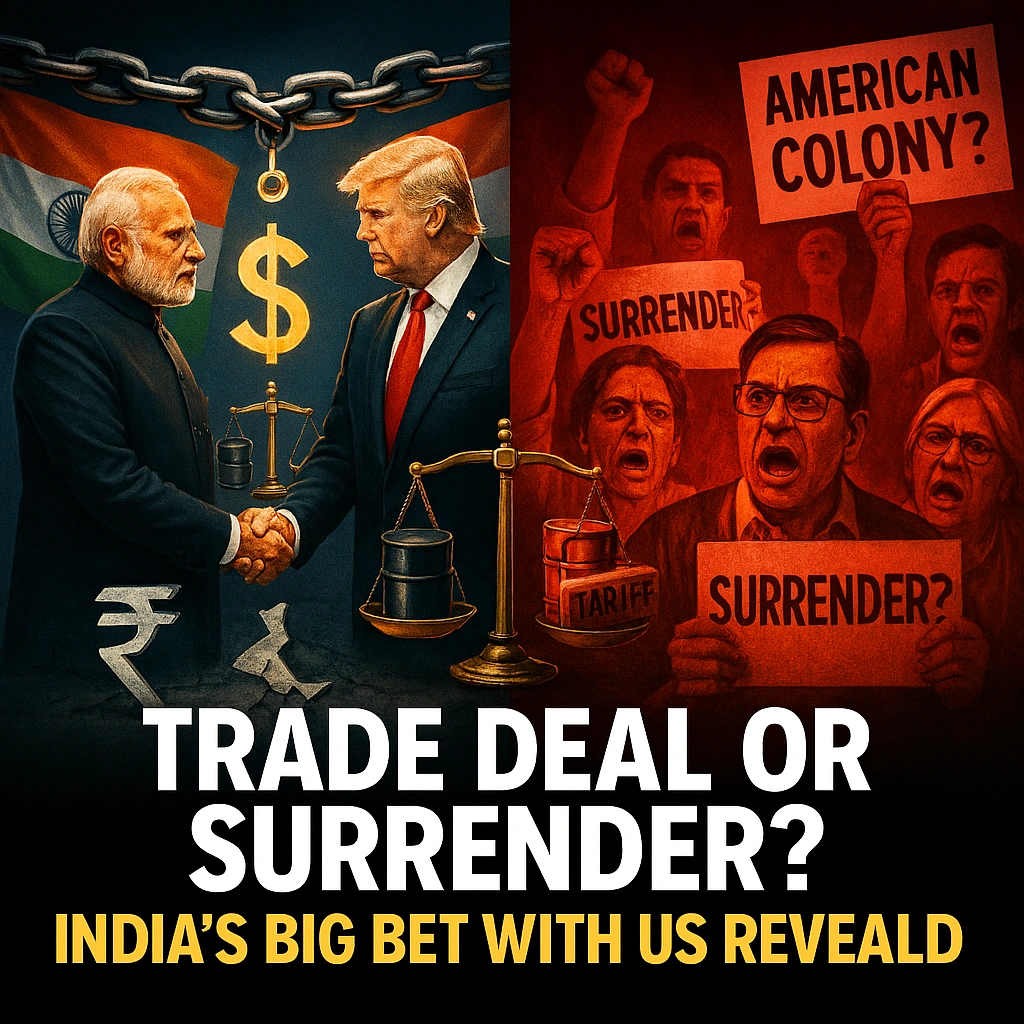
In a dramatic announcement that has electrified India’s political landscape, Prime Minister Narendra Modi and US President Donald Trump unveiled what they’re calling a landmark US-India trade deal 2026 on February 1st. Modi took to X (formerly Twitter) to hail the agreement as a “historic milestone” that would deepen bilateral ties and unlock unprecedented economic opportunities. Yet within hours, the Congress criticism US India deal erupted into a political firestorm, with opposition leaders branding the arrangement a capitulation that threatens to transform India into an “American colony.”
The controversy centers on what remains unsaid as much as what’s been revealed. While the Trump Modi trade agreement details promise substantial tariff reductions and increased trade flows, the devil—as opposition voices insist—lurks in the strategic concessions that may fundamentally alter India’s foreign policy autonomy.
The Deal’s Contours: Tariff Cuts and Trade Commitments
According to multiple authoritative sources including Reuters and Bloomberg, the agreement centers on reciprocal tariff reductions that could reshape bilateral commerce. The India US tariffs reduction impact appears substantial on paper: India has committed to slashing tariffs on select American goods from approximately 50% to 18%—a reduction that Washington has long demanded.
In exchange, Trump administration officials have indicated willingness to reduce certain tariffs on Indian exports, particularly in sectors where India holds competitive advantages. The Council on Foreign Relations notes that this represents a significant shift from Trump’s previous stance, where he famously called India the “tariff king.”
Key provisions reportedly include:
Sector-Specific Tariff Impacts:
| Sector | Current Tariff (India) | Proposed Tariff | Potential Impact |
|---|---|---|---|
| IT Services | Variable (15-25%) | 10-12% | Enhanced market access for Indian tech firms |
| Pharmaceuticals | 10-30% | 8-15% | Increased generic drug exports to US |
| Textiles | 20-35% | 12-18% | Competitive pressure on domestic manufacturers |
| Agricultural Products | 30-60% | 18-25% | Flood concerns for Indian farmers |
| Defense Equipment | 0-10% (US to India) | Further reductions | Deeper defense integration |
While proponents argue these reductions will boost Indian exports—particularly in pharmaceuticals and IT services, where India commands global market share—critics point to asymmetric vulnerabilities in agriculture and manufacturing.
Opposition’s Fury: “Economic Surrender” or Strategic Pragmatism?
The Congress criticism US India deal has been withering and unrelenting. Rahul Gandhi, Congress’s most prominent voice, attacked the agreement as “Modi’s complete surrender to American interests,” drawing parallels to colonial-era treaties that subordinated Indian interests to British commercial demands.
“This isn’t a trade deal—it’s a charter for American economic colonization,” Gandhi declared at a press conference, highlighting what he termed “secret clauses” that remain undisclosed. Congress spokesperson Jairam Ramesh elaborated on what the opposition views as the deal’s most troubling aspects:
The Russian Oil Dilemma: Perhaps the most explosive allegation centers on reports that India stops Russian oil US deal provisions may be embedded in side agreements. According to The Hindu, unofficial briefings suggest India has committed to “significantly reducing” its purchases of discounted Russian crude—purchases that have saved the Indian economy billions of dollars since the Ukraine conflict began.
India ramped up Russian oil imports from virtually zero to over 1.8 million barrels per day following Western sanctions on Moscow. This discounted oil—purchased at $20-30 below market rates—has been crucial in managing inflation and maintaining India’s current account balance. Opposition economists estimate that reverting to market-rate purchases from Middle Eastern or American suppliers could cost India an additional $15-20 billion annually.
The $500 Billion Question: Trump has publicly claimed India will purchase “$500 billion worth of American goods” over the deal’s timeframe, though specific timelines remain unclear. Hindustan Times reports that Indian officials have neither confirmed nor denied this figure, fueling speculation about what commitments Modi’s government actually made.
Critics note that India’s total imports from the US in 2024 stood at approximately $42 billion. Reaching $500 billion would require either a dramatic expansion of the timeline or transformative shifts in procurement—particularly in defense, energy, and technology sectors.
Strategic Autonomy Under Pressure?
Beyond immediate economic calculations, opposition voices frame the deal as eroding India’s cherished strategic autonomy—the decades-old policy of maintaining independent foreign policy choices regardless of great power pressures.
Former Foreign Secretary Shyam Saran articulated these concerns in recent commentary, noting that trade agreements increasingly serve as vehicles for broader geopolitical alignment. “When trade deals involve commitments on third-party relations—such as oil purchases from Russia—they cease to be purely commercial arrangements,” he observed.
The timing is particularly sensitive. India has walked a diplomatic tightrope on Ukraine, refusing to condemn Russia explicitly while maintaining robust defense and energy ties with Moscow. This position has frustrated Washington but allowed India to preserve relationships across the geopolitical spectrum. Critics worry the new trade framework forecloses this flexibility.
Comparisons to the recent US-Pakistan ceasefire have also surfaced in political discourse. Congress leaders argue that Trump is simultaneously rewarding Pakistan with diplomatic engagement while extracting strategic concessions from India—a “double game” that leaves New Delhi with obligations but uncertain benefits.
Economic Benefits: Real or Oversold?
Government defenders counter that opposition criticisms ignore substantial economic opportunities. The Confederation of Indian Industry (CII) has welcomed the agreement, particularly provisions that may ease market access for Indian IT services, pharmaceuticals, and textiles.
IT and Digital Services: With tariff and regulatory barriers reduced, Indian IT companies—which already dominate global outsourcing—could expand their US footprint. Industry estimates suggest potential revenue gains of $15-20 billion over five years.
Pharmaceutical Exports: India supplies nearly 40% of generic drugs to the US market. Streamlined regulatory approvals and tariff reductions could accelerate this further, though concerns about intellectual property requirements persist.
Manufacturing and “Make in India”: Here the picture muddies considerably. While reduced tariffs on intermediate goods could boost India’s manufacturing competitiveness, flooding Indian markets with American agricultural products and finished goods could undermine domestic industries still developing under protectionist frameworks.
Agricultural economists warn that dairy farmers, pulse growers, and certain fruit producers could face devastating competition from heavily subsidized American agribusiness. The politically crucial farm sector—already volatile after years of protest—could become even more unstable.
What We Still Don’t Know: The Transparency Deficit
Remarkably, for an agreement touted as “historic,” critical details remain undisclosed. As Council on Foreign Relations analysts note, the absence of published text—even in summary form—is highly unusual for trade agreements of this magnitude.
Unanswered Questions Include:
- Implementation timeline: When do tariff reductions actually take effect?
- Sectoral exclusions: Which industries are protected or exempt?
- Dispute resolution: What mechanisms exist for resolving trade conflicts?
- Labor and environmental standards: Are there enforceable provisions?
- Investment protections: What rights do American companies gain in Indian markets?
- Pharmaceutical IP requirements: Does India face tighter intellectual property enforcement that could limit generic drug production?
This opacity fuels opposition charges of US India trade surrender concerns, with critics arguing that transparency itself has been sacrificed for optics.
Global Context: Trump’s Transactional Trade Strategy
Understanding the deal requires situating it within Trump’s broader trade approach. Unlike traditional multilateral frameworks, Trump favors bilateral deals that maximize American leverage and deliver tangible, measurable outcomes—preferably ones he can tout politically.
For India, this creates both opportunity and risk. Trump’s willingness to negotiate suggests flexibility that multilateral forums rarely offer. Yet his transactional style also means agreements can be renegotiated or abandoned if political winds shift. The volatility that characterized his first term—when he threatened India with retaliatory tariffs multiple times—hasn’t disappeared.
Bloomberg’s trade analysts note that Trump views India primarily through three lenses: a massive consumer market for American goods, a counterweight to China, and a source of skilled immigration he wants to restrict. The challenge for Indian negotiators is extracting maximum benefit from the first two while managing the third.
Opposition’s Alternative Vision: What Would Congress Do Differently?
Critics bear responsibility for articulating alternatives, not just opposition. Congress leaders have sketched—albeit vaguely—what they would prioritize differently:
- Maintain Russian energy ties while diversifying suppliers to avoid overdependence
- Negotiate tariff reductions sector-by-sector rather than broad cuts that expose vulnerable industries
- Demand reciprocal commitments on H-1B visas and immigration restrictions
- Prioritize regional trade agreements (particularly reviving enthusiasm for Regional Comprehensive Economic Partnership participation)
- Insist on published texts before parliamentary ratification
Whether these alternatives constitute a coherent counter-strategy or political positioning remains debatable.
Looking Ahead: Parliamentary Battles and Economic Reality
As the deal moves toward potential parliamentary consideration, political warfare will intensify. The opposition, though numerically weaker, will use the debate to question the government’s competence and independence. Regional parties—particularly those representing agricultural states—will face pressure to oppose provisions threatening farmers.
Yet economic gravity may ultimately matter more than political rhetoric. If the agreement genuinely accelerates growth, creates jobs, and expands exports, public opinion may shift regardless of opposition framing. Conversely, if tariff reductions devastate specific sectors or strategic concessions prove costly, vindication will flow to critics.
The US-India trade deal 2026 represents more than commerce—it’s a referendum on India’s evolving global posture. Whether it marks a new chapter of prosperity or an erosion of hard-won strategic independence may not be clear for years. What is certain is that in democratic India, every clause and concession will be fiercely, noisily debated.
Discover more from The Economy
Subscribe to get the latest posts sent to your email.



Key Takeaways
- Rolex’s secondary market rose approximately 7.9% year-over-year as of 2026 (per WatchCharts data) — trailing Patek Philippe (+16.2%) and Tudor (+11.4%) but still outperforming Audemars Piguet (+3.4%).
- Rolex raised U.S. retail prices 4–9% in January 2026 (steel models ~5.6%, gold models ~8.7%), narrowing the historical gap between retail and pre-owned pricing.
- Not every model appreciates: steel sports references (Submariner, GMT-Master II, Daytona) have held value far better than two-tone or widely available dress references like the standard Datejust.
- The Lady-Datejust posted the sharpest 2026 gain among tracked collections — up 22.73%, from roughly $9,269 to $11,376 — driven by demand for smaller, “everyday luxury” watches.
- Gold’s rise past $2,400/oz has directly lifted the investment case for Rolex’s precious-metal references (Day-Date, Sky-Dweller, Yacht-Master).
The Model-by-Model Picture
| Category | 2026 Trend |
|---|---|
| Lady-Datejust | +22.73% (strongest performer among tracked collections) |
| Steel sports models (Submariner, GMT-Master II) | Held value well; corrected from 2022 peak but stabilized above retail |
| Daytona | Corrected from highs above $50,000 to the mid-$30,000s; still among the most sought-after references |
| Two-tone/widely available Datejust | Flat to negative — “holds value” is an overstatement for this category |
| Gold references (Day-Date, Sky-Dweller) | Lifted by gold’s rise above $2,400/oz |
Why the “Rolex Always Appreciates” Myth Is Fading
The pandemic-era boom pushed some references — the Daytona above all — to speculative highs disconnected from historical norms. Since the March 2022 peak, steel sports models have compressed meaningfully, and dealers who bought inventory near the top have in some cases faced 20–40% markdowns on liquidation. The lesson for 2026 buyers: Rolex as a category is not a monolith. Value retention depends heavily on specific reference, condition, and whether the piece comes with box and papers (“full set”).
What’s Actually Driving 2026 Strength
- Retail price increases raise the floor. When a new Submariner retails at $10,050 (up from $9,500), a pre-owned example at $11,000–$12,000 suddenly represents a smaller premium — narrowing the gap without secondary prices actually moving.
- Supply discipline remains Rolex’s core lever. The brand has never confirmed production numbers, and secondary-market premiums remain entirely a function of Rolex’s own manufacturing decisions — a risk factor as much as a support.
- Certified Pre-Owned rollout. Rolex’s now fully rolled-out CPO program has changed how buyers transact in the used market, adding a layer of brand-verified legitimacy that supports pricing.
The Case for Rolex as a Portfolio Diversifier
Financial advisors increasingly frame luxury watches not as a replacement for equities or bonds, but as a tangible, historically low-correlation diversifier — one that carries its own risks (illiquidity, condition-dependent pricing, no yield) but has demonstrated multi-decade resilience for specific references.
Is Rolex a good investment in 2026?
It depends heavily on the specific reference. Steel sports models like the Submariner and Daytona have held or grown in value; two-tone and widely available dress models generally have not. Overall, Rolex’s secondary market rose about 7.9% year-over-year in 2026, trailing Patek Philippe but ahead of Audemars Piguet.
Discover more from The Economy
Subscribe to get the latest posts sent to your email.

Navigating Mortgage and Loan Refinancing in a High-Yield Environment
Global public debt crossing critical thresholds has kept central bank policies volatile, resulting in fluctuating US Treasury yields throughout 2026. For homeowners and commercial property holders burdened by previous high-interest borrowing cycles, finding optimal refinance windows has become a high-stakes financial puzzle. Stalled disinflation and stubborn employment numbers mean rate cuts are incremental, requiring borrowers to act with precision.
Timing your mortgage or commercial loan refinance in this environment requires a deep understanding of yield curve movements and lender risk appetites.
Decoding 2026 Refinance Dynamics
The 10-Year Treasury Yield Benchmark
Mortgage rates continue to track closely with the 10-year US Treasury yield. When macroeconomic anxiety spikes debt issuance, yields rise, tightening consumer borrowing capacity. Savvy borrowers monitor weekly Treasury auctions to lock in rates during brief dip windows.
Hybrid ARMs and Alternative Structures
With fixed rates remaining elevated, 7/1 and 10/1 adjustable-rate mortgages (ARMs) have surged in popularity. These products offer lower initial monthly payments, giving borrowers breathing room until central bank easing cycles fully materialize.
| Loan Product | Current Rate Range | Best For | Key Risk Factor |
| 30-Year Fixed Mortgage | 6.2% – 6.8% | Long-term predictability | Higher initial monthly outlay |
| 7/1 Hybrid ARM | 5.5% – 5.9% | Short-term ownership / flipping | Rate reset risk after year 7 |
| Commercial Refinance | 7.0% – 8.2% | Corporate asset restructuring | Strict DSCR lender covenants |
Actionable Steps for Successful Refinancing
To maximize your chances of securing favorable refinance terms in a volatile market, follow a disciplined preparation strategy.
Boost Your Credit Score Immediately: Lenders in 2026 are applying stringent credit tiering; a 20-point increase can drop your APR by a crucial quarter-point.
Shop Regional Credit Unions: Smaller financial institutions often offer portfolio loans with more flexible underwriting than major national banks.
Calculate the Break-Even Point: Ensure your total closing costs are recouped through monthly savings within 24 months of closing.
“Market Strategist View: Refinancing in 2026 is an exercise in opportunistic timing. Borrowers must maintain immaculate financial profiles ready to strike the moment Treasury yields dip.”
Mastering the complexities of today’s debt environment ensures you can successfully lower your debt service costs and protect your long-term financial stability.
Discover more from The Economy
Subscribe to get the latest posts sent to your email.

The days of pulling generic auto insurance quotes based purely on your zip code and age are officially over. In 2026, insurance comparison engines are powered entirely by generative AI and real-time telematics. These platforms digest thousands of live data points—ranging from your driving smoothness via connected vehicle sensors to real-time traffic congestion patterns—to generate hyper-personalized premiums instantly.
For consumers, this evolution represents both a massive opportunity for savings and a hidden trap for penalty pricing. Understanding how AI algorithms evaluate risk is essential for anyone looking to lower their monthly auto insurance premiums.
How AI Comparison Engines Evaluate Your Risk Profile
Behavioral Telematics and Connected Cars
Modern cars stream performance data directly to insurance aggregators. Generative AI models analyze braking sharpness, acceleration curves, cornering G-forces, and phone distraction metrics. Drivers who maintain smooth, defensive habits are rewarded with dynamic rate cuts of up to 40% compared to traditional rating tiers.
Predictive Traffic and Weather Modeling
AI tools now cross-reference your daily commute route with predictive weather and accident probability models. If your standard parking location or driving corridor has a statistically higher incidence of uninsured motorist claims, your quotes will reflect that hyper-local risk assessment.
| Comparison Factor | Traditional Rating Model | 2026 Generative AI Model | Impact on Premium |
| Mileage & Usage | Annual estimated odometer reading | GPS tracking & live trip duration | High (up to 35% savings) |
| Driving Behavior | MVR driving record & accidents | Real-time braking, speed, & G-force | Critical (determines tier) |
| Vehicle Tech | Make, model, and safety rating | ADAS calibration & repair cost data | Moderate |
Strategies to Lower Your AI-Driven Insurance Quote
To outsmart the algorithm and secure the lowest possible premium in 2026, drivers must proactively manage their digital footprint on insurance platforms.
Opt-In for Telematics Trial Periods: Many insurers offer immediate 15% discounts just for installing their driving app; let it track safe habits for 30 days to lock in permanent savings.
Scrub Unverified Public Records: Ensure your motor vehicle report is free of clerical errors that AI risk models misinterpret as reckless behavior.
Compare AI Aggregators: Use platforms that integrate multi-carrier API feeds rather than single-brand comparison sites to find the best risk-adjusted rate.
“Industry Note: AI-driven pricing rewards transparency and precision. Drivers who actively manage their telematics data consistently out-save those relying on legacy quote calculators.”
Embracing AI comparison tools allows savvy policyholders to customize coverage limits precisely to their driving habits, eliminating wasted premium spend while ensuring robust protection.
Discover more from The Economy
Subscribe to get the latest posts sent to your email.

Solar Panel Installation Cost in 2026: Why the Math Changed Overnight

Business Insurance: What Coverage You Actually Need and What It Costs in 2026

Auto Insurance Quotes: How to Get the Lowest Rate Without Losing Coverage

Huntington Online Banking: Full Features, Fees, and How It Compares in 2026

Apply for a Bank Account Online: What You Need and How Long It Actually Takes

World’s Largest Economies: Ranking the Top Global Powers

Business Loan: A Complete 2026 Guide to Rates, Types, and Qualifying

Fast Invoice Factoring: How to Turn Unpaid Invoices Into Cash Within 24 Hours

Investment Banking Services: What They Cost and How to Choose the Right Firm in 2026

Structured Settlement Loan: What “Cash Now” Offers Actually Cost You

DUI Attorney: Why Your First Call After an Arrest Should Never Be to the Court

Personal Injury Lawyer: A Complete Guide to Filing Your Claim in 2026

Commercial Vehicle Accident Lawyer: Holding Companies Accountable Beyond the Driver

Inside the White House Feud: How Trump’s Allies Are Painting Anthropic’s Dario Amodei as the Face of ‘AI Doomerism’

Top 30 Stocks for Investment in PSX for Massive ROI in 2026

SpaceX Starship Flight 14: First Orbital Attempt & Starlink V3 Launch Explained

Oil Prices Break $100 in 2026: Middle East Conflict & Energy Markets

Fidelity Investments Review 2026: SPAXX Yields & Zero-Fee Funds

AI Chip Stocks 2026: The Best Semiconductor Investments Beyond Marvell

BRICS+ Cross-Border Payments 2026: Interoperability Explained

Tween Back-to-School Trends 2026: What’s Driving the $85B Season

10-Year Treasury Yield Hits 4.80%: What It Means for Rates & Portfolios

Shein Clothes Quality & Safety in 2026: What Lab Tests Show

China’s US$10.8 Billion Trade Shortcut: Why the Pinglu Canal Matters

MRVL Earnings 2026: Why Marvell Sank Despite Beating Estimates

IMF & World Bank 2026 Global Economic Outlook: Growth, Inflation, Debt

High-CPM Finance Niches 2026: Publisher Monetization Blueprint

Middle East War Economics 2026: Oil Prices & Energy Markets
-

 Markets & Finance9 months ago
Top 15 Stocks for Investment in 2026 in PSX: Your Complete Guide to Pakistan’s Best Investment Opportunities
-

 Analysis7 months ago
Johor’s Investment Boom: The Hidden Costs Behind Malaysia’s Most Ambitious Economic Surge
-

 Analysis7 months ago
Top 10 Stocks for Investment in PSX for Quick Returns in 2026
-

 Banks8 months ago
Best Investments in Pakistan 2026: Top 10 Low-Price Shares and Long-Term Picks for the PSX
-

 Analysis8 months ago
Brazil’s Rare Earth Race: US, EU, and China Compete for Critical Minerals as Tensions Rise
-

 Investment9 months ago
Top 10 Mutual Fund Managers in Pakistan for Investment in 2026: A Comprehensive Guide for Optimal Returns
-

 Global Economy9 months ago
15 Most Lucrative Sectors for Investment in Pakistan: A 2025 Data-Driven Analysis
-

 Global Economy9 months ago
Pakistan’s Export Goldmine: 10 Game-Changing Markets Where Pakistani Businesses Are Winning Big in 2025