
Analysis
Trade or Surrender? Congress Lambasts US-India Deal as Path to ‘American Colony’ Amid Tariff Cuts


In a dramatic announcement that has electrified India’s political landscape, Prime Minister Narendra Modi and US President Donald Trump unveiled what they’re calling a landmark US-India trade deal 2026 on February 1st. Modi took to X (formerly Twitter) to hail the agreement as a “historic milestone” that would deepen bilateral ties and unlock unprecedented economic opportunities. Yet within hours, the Congress criticism US India deal erupted into a political firestorm, with opposition leaders branding the arrangement a capitulation that threatens to transform India into an “American colony.”
The controversy centers on what remains unsaid as much as what’s been revealed. While the Trump Modi trade agreement details promise substantial tariff reductions and increased trade flows, the devil—as opposition voices insist—lurks in the strategic concessions that may fundamentally alter India’s foreign policy autonomy.
The Deal’s Contours: Tariff Cuts and Trade Commitments
According to multiple authoritative sources including Reuters and Bloomberg, the agreement centers on reciprocal tariff reductions that could reshape bilateral commerce. The India US tariffs reduction impact appears substantial on paper: India has committed to slashing tariffs on select American goods from approximately 50% to 18%—a reduction that Washington has long demanded.
In exchange, Trump administration officials have indicated willingness to reduce certain tariffs on Indian exports, particularly in sectors where India holds competitive advantages. The Council on Foreign Relations notes that this represents a significant shift from Trump’s previous stance, where he famously called India the “tariff king.”
Key provisions reportedly include:
Sector-Specific Tariff Impacts:
| Sector | Current Tariff (India) | Proposed Tariff | Potential Impact |
|---|---|---|---|
| IT Services | Variable (15-25%) | 10-12% | Enhanced market access for Indian tech firms |
| Pharmaceuticals | 10-30% | 8-15% | Increased generic drug exports to US |
| Textiles | 20-35% | 12-18% | Competitive pressure on domestic manufacturers |
| Agricultural Products | 30-60% | 18-25% | Flood concerns for Indian farmers |
| Defense Equipment | 0-10% (US to India) | Further reductions | Deeper defense integration |
While proponents argue these reductions will boost Indian exports—particularly in pharmaceuticals and IT services, where India commands global market share—critics point to asymmetric vulnerabilities in agriculture and manufacturing.
Opposition’s Fury: “Economic Surrender” or Strategic Pragmatism?
The Congress criticism US India deal has been withering and unrelenting. Rahul Gandhi, Congress’s most prominent voice, attacked the agreement as “Modi’s complete surrender to American interests,” drawing parallels to colonial-era treaties that subordinated Indian interests to British commercial demands.
“This isn’t a trade deal—it’s a charter for American economic colonization,” Gandhi declared at a press conference, highlighting what he termed “secret clauses” that remain undisclosed. Congress spokesperson Jairam Ramesh elaborated on what the opposition views as the deal’s most troubling aspects:
The Russian Oil Dilemma: Perhaps the most explosive allegation centers on reports that India stops Russian oil US deal provisions may be embedded in side agreements. According to The Hindu, unofficial briefings suggest India has committed to “significantly reducing” its purchases of discounted Russian crude—purchases that have saved the Indian economy billions of dollars since the Ukraine conflict began.
India ramped up Russian oil imports from virtually zero to over 1.8 million barrels per day following Western sanctions on Moscow. This discounted oil—purchased at $20-30 below market rates—has been crucial in managing inflation and maintaining India’s current account balance. Opposition economists estimate that reverting to market-rate purchases from Middle Eastern or American suppliers could cost India an additional $15-20 billion annually.
The $500 Billion Question: Trump has publicly claimed India will purchase “$500 billion worth of American goods” over the deal’s timeframe, though specific timelines remain unclear. Hindustan Times reports that Indian officials have neither confirmed nor denied this figure, fueling speculation about what commitments Modi’s government actually made.
Critics note that India’s total imports from the US in 2024 stood at approximately $42 billion. Reaching $500 billion would require either a dramatic expansion of the timeline or transformative shifts in procurement—particularly in defense, energy, and technology sectors.
Strategic Autonomy Under Pressure?
Beyond immediate economic calculations, opposition voices frame the deal as eroding India’s cherished strategic autonomy—the decades-old policy of maintaining independent foreign policy choices regardless of great power pressures.
Former Foreign Secretary Shyam Saran articulated these concerns in recent commentary, noting that trade agreements increasingly serve as vehicles for broader geopolitical alignment. “When trade deals involve commitments on third-party relations—such as oil purchases from Russia—they cease to be purely commercial arrangements,” he observed.
The timing is particularly sensitive. India has walked a diplomatic tightrope on Ukraine, refusing to condemn Russia explicitly while maintaining robust defense and energy ties with Moscow. This position has frustrated Washington but allowed India to preserve relationships across the geopolitical spectrum. Critics worry the new trade framework forecloses this flexibility.
Comparisons to the recent US-Pakistan ceasefire have also surfaced in political discourse. Congress leaders argue that Trump is simultaneously rewarding Pakistan with diplomatic engagement while extracting strategic concessions from India—a “double game” that leaves New Delhi with obligations but uncertain benefits.
Economic Benefits: Real or Oversold?
Government defenders counter that opposition criticisms ignore substantial economic opportunities. The Confederation of Indian Industry (CII) has welcomed the agreement, particularly provisions that may ease market access for Indian IT services, pharmaceuticals, and textiles.
IT and Digital Services: With tariff and regulatory barriers reduced, Indian IT companies—which already dominate global outsourcing—could expand their US footprint. Industry estimates suggest potential revenue gains of $15-20 billion over five years.
Pharmaceutical Exports: India supplies nearly 40% of generic drugs to the US market. Streamlined regulatory approvals and tariff reductions could accelerate this further, though concerns about intellectual property requirements persist.
Manufacturing and “Make in India”: Here the picture muddies considerably. While reduced tariffs on intermediate goods could boost India’s manufacturing competitiveness, flooding Indian markets with American agricultural products and finished goods could undermine domestic industries still developing under protectionist frameworks.
Agricultural economists warn that dairy farmers, pulse growers, and certain fruit producers could face devastating competition from heavily subsidized American agribusiness. The politically crucial farm sector—already volatile after years of protest—could become even more unstable.
What We Still Don’t Know: The Transparency Deficit
Remarkably, for an agreement touted as “historic,” critical details remain undisclosed. As Council on Foreign Relations analysts note, the absence of published text—even in summary form—is highly unusual for trade agreements of this magnitude.
Unanswered Questions Include:
- Implementation timeline: When do tariff reductions actually take effect?
- Sectoral exclusions: Which industries are protected or exempt?
- Dispute resolution: What mechanisms exist for resolving trade conflicts?
- Labor and environmental standards: Are there enforceable provisions?
- Investment protections: What rights do American companies gain in Indian markets?
- Pharmaceutical IP requirements: Does India face tighter intellectual property enforcement that could limit generic drug production?
This opacity fuels opposition charges of US India trade surrender concerns, with critics arguing that transparency itself has been sacrificed for optics.
Global Context: Trump’s Transactional Trade Strategy
Understanding the deal requires situating it within Trump’s broader trade approach. Unlike traditional multilateral frameworks, Trump favors bilateral deals that maximize American leverage and deliver tangible, measurable outcomes—preferably ones he can tout politically.
For India, this creates both opportunity and risk. Trump’s willingness to negotiate suggests flexibility that multilateral forums rarely offer. Yet his transactional style also means agreements can be renegotiated or abandoned if political winds shift. The volatility that characterized his first term—when he threatened India with retaliatory tariffs multiple times—hasn’t disappeared.
Bloomberg’s trade analysts note that Trump views India primarily through three lenses: a massive consumer market for American goods, a counterweight to China, and a source of skilled immigration he wants to restrict. The challenge for Indian negotiators is extracting maximum benefit from the first two while managing the third.
Opposition’s Alternative Vision: What Would Congress Do Differently?
Critics bear responsibility for articulating alternatives, not just opposition. Congress leaders have sketched—albeit vaguely—what they would prioritize differently:
- Maintain Russian energy ties while diversifying suppliers to avoid overdependence
- Negotiate tariff reductions sector-by-sector rather than broad cuts that expose vulnerable industries
- Demand reciprocal commitments on H-1B visas and immigration restrictions
- Prioritize regional trade agreements (particularly reviving enthusiasm for Regional Comprehensive Economic Partnership participation)
- Insist on published texts before parliamentary ratification
Whether these alternatives constitute a coherent counter-strategy or political positioning remains debatable.
Looking Ahead: Parliamentary Battles and Economic Reality
As the deal moves toward potential parliamentary consideration, political warfare will intensify. The opposition, though numerically weaker, will use the debate to question the government’s competence and independence. Regional parties—particularly those representing agricultural states—will face pressure to oppose provisions threatening farmers.
Yet economic gravity may ultimately matter more than political rhetoric. If the agreement genuinely accelerates growth, creates jobs, and expands exports, public opinion may shift regardless of opposition framing. Conversely, if tariff reductions devastate specific sectors or strategic concessions prove costly, vindication will flow to critics.
The US-India trade deal 2026 represents more than commerce—it’s a referendum on India’s evolving global posture. Whether it marks a new chapter of prosperity or an erosion of hard-won strategic independence may not be clear for years. What is certain is that in democratic India, every clause and concession will be fiercely, noisily debated.
Discover more from The Economy
Subscribe to get the latest posts sent to your email.



When the Trump administration’s tariff regime rattled export-dependent Asian economies in 2025, Malaysia’s finance ministry response stood out for its composure. “We didn’t panic,” the finance minister told reporters, describing a deliberate strategy of diversification and negotiation rather than reactive concessions (Fortune).
From crisis response to execution agenda
That composure has carried into 2026. Malaysia’s economy minister has described this year explicitly as one of “execution,” as the Anwar Ibrahim administration works to lock in the policy gains built through 2025’s trade turbulence (Fortune). The framing matters: it signals Putrajaya sees 2026 less as a year of new initiatives and more as a year of delivering on commitments already made — the Johor-Singapore Special Economic Zone chief among them.
The semiconductor exposure that both helps and constrains
Malaysia’s electrical and electronics sector accounts for roughly 40% of total exports, with semiconductors alone comprising about 65% of E&E exports (J.P. Morgan Private Bank). That concentration is precisely why Malaysia benefited from 2025’s tariff exemptions on semiconductors, electronics and pharmaceuticals, and precisely why any future change to those exemptions carries outsized risk for Malaysian growth relative to more diversified regional peers (J.P. Morgan Private Bank).
The Johor-Singapore SEZ as the structural bet
Johor’s 7,300-acre innovation sandbox, part of the new special economic zone with Singapore, is Malaysia’s clearest attempt to convert its manufacturing base into a higher-value regional hub rather than remain a low-cost assembly point (Fortune). The zone’s stated ambition — combining Johor’s “land and scale” with Singapore’s “capital and speed” — positions the region to capture AI-linked infrastructure and hardware investment that would otherwise bypass both countries individually (Fortune).
Corporate consolidation follows the growth signal
Confidence in Malaysia’s execution story is visible in corporate activity too: two Southeast Asia 500 companies are reportedly exploring a merger that would form Malaysia’s largest construction conglomerate, a scale bet that typically follows — rather than precedes — genuine confidence in a multi-year infrastructure pipeline (Fortune).
The regulatory friction points
Not every 2026 storyline is frictionless. Malaysia has moved to temporarily block the Grok AI platform alongside Indonesia following a sexual-deepfake scandal, illustrating that Malaysia’s AI-forward economic strategy is running in parallel with an increasingly assertive AI-governance posture — a tension regional investors should track as a signal of how Malaysia intends to regulate the same technology sector it is courting for investment (Fortune).
What “execution” needs to mean by year-end
For Malaysia’s 2026 narrative to hold, three things need to materialise beyond announcements: measurable Johor SEZ tenant commitments, continued semiconductor export resilience against any tariff-exemption rollback, and a construction-sector consolidation that actually delivers infrastructure rather than simply consolidating market share.
Discover more from The Economy
Subscribe to get the latest posts sent to your email.
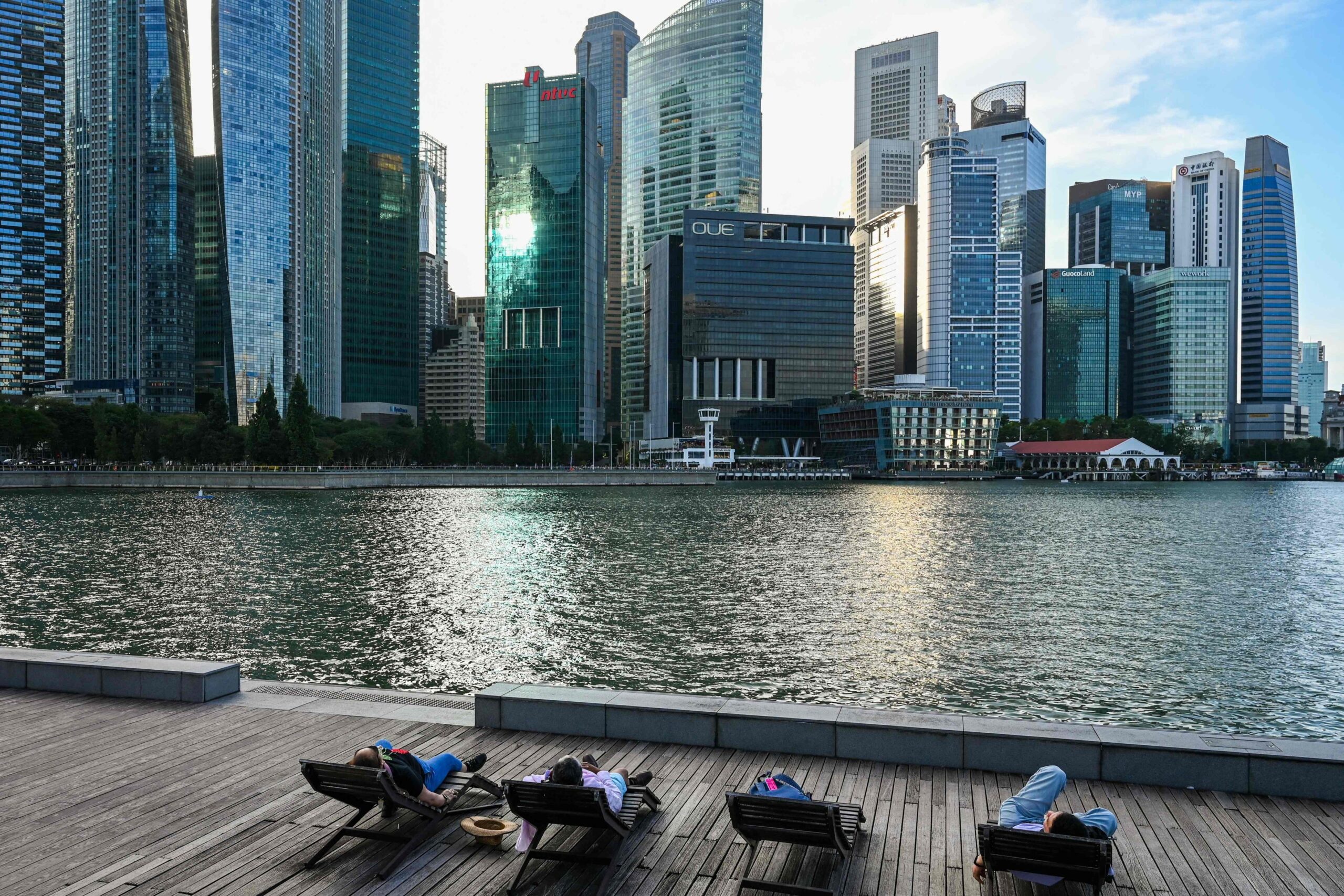
Singapore has spent the past two years becoming one of the primary beneficiaries of the global AI infrastructure buildout, alongside Taiwan’s semiconductor sector. The city-state’s role as a data-center hub allowed it to capture significant capital inflows even as the broader labour-market impact of that investment stayed limited, given how capital-intensive AI infrastructure spending tends to be (J.P. Morgan Private Bank).
Why the AI cycle didn’t stay contained to Singapore
What is changing in 2026 is the geography of that investment. J.P. Morgan’s Asia outlook notes Southeast Asian economies — traditionally anchored in commodities and export manufacturing — are now aligning more closely with the global AI investment cycle by deepening involvement in higher-value areas: infrastructure, hardware and complementary supply chains (J.P. Morgan Private Bank).
Land constraints in Singapore make expansion difficult, which is precisely where the Johor-Singapore Special Economic Zone becomes central to the region’s AI investment thesis rather than a side story.
The Johor SEZ as capacity release valve
Johor has launched a 7,300-acre innovation sandbox as part of the new special economic zone bordering Singapore, explicitly designed to combine Johor’s land and scale with Singapore’s capital and speed, according to the state investment committee’s chair (Fortune). One local official described the ambition bluntly: the zone is meant to be more than “an industrial park with a nicer brochure” (Fortune).
Malaysia’s structural beneficiary position
Malaysia’s electrical and electronics sector already accounts for roughly 40% of the country’s total exports, with semiconductors comprising about 65% of E&E exports — positioning Malaysia as a structural beneficiary of the AI-linked shift in regional trade, according to J.P. Morgan’s Asia analysis (J.P. Morgan Private Bank). Malaysia’s economy minister has framed 2026 explicitly as a year of “execution” for the Anwar administration as it tries to lock in these policy gains (Fortune).
Monetary policy backdrop supports the buildout
Asian central banks spent much of 2025 easing policy and are entering the final stages of that cycle in 2026, shifting more of the growth-support burden to fiscal policy — a backdrop J.P. Morgan expects to support stronger domestic credit growth and consumer demand across the region, reinforcing rather than competing with the AI capital cycle (J.P. Morgan Private Bank).
The regional risk to watch
Most of the region avoided the brunt of 2025’s tariff shock thanks to exemptions on semiconductors, electronics and pharmaceuticals, but that exemption structure remains a policy choice in Washington rather than a permanent feature — meaning the Singapore-Johor AI corridor’s growth case still carries meaningful US trade-policy risk that investors should not discount simply because 2025’s tariffs were absorbed relatively smoothly (J.P. Morgan Private Bank).
Discover more from The Economy
Subscribe to get the latest posts sent to your email.

Dubai’s transformation from oil-adjacent trading post to global capital hub is no longer a talking point — it is a measurable trend. The emirate’s newly launched Economic Survey 2026 shows GDP climbing to $265 billion alongside rising employment, while international family offices are gathering for the Family Office Summit Dubai 2026 as the city cements its position as a family-wealth hub (Gateway Group; Arabian Business).
The non-oil growth engine
The UAE enters 2026 with the World Bank projecting national growth of roughly 5%, well above the global average, driven substantially by 5.3% expansion in the non-oil sector (Barchart). Technology, green energy and healthcare are the top-performing sectors, and 64% of UAE executives expect trade volumes to exceed 2025 levels — confidence underpinned by the country’s expanding network of Comprehensive Economic Partnership Agreements (Barchart). Historically, oil production accounted for half of Dubai’s GDP; today it contributes less than 1% (Wikipedia/Economy of Dubai).
Why family offices specifically are relocating
The Family Office Summit Dubai 2026 is drawing international participants precisely because the emirate has built regulatory infrastructure — inside jurisdictions like the DIFC — designed to attract exactly this category of capital. As one DIFC executive noted, incentives alone are no longer enough to win global finance; institutional credibility and regulatory clarity now matter more, which explains why firms such as Sixth Street have opened Abu Dhabi offices as global investment houses deepen their Middle East presence (Gateway Group).
Infrastructure is compounding the pull
Beyond finance, the UAE’s infrastructure build-out is reinforcing the wealth-hub thesis. Etihad Rail’s Abu Dhabi–Fujairah passenger service and the Madinat Zayed and Liwa station openings, arriving ahead of schedule, signal a state execution model that investors increasingly cite as a differentiator versus regional peers (GCC Business Watch). Dubai has also rolled out a AED 1 billion economic support package aimed at business liquidity and resilience amid regional geopolitical headwinds (GCC Business Watch).
The regional competition for capital
Dubai’s rise is happening alongside — not in isolation from — a broader Gulf capital race. Saudi Arabia’s economy is set for stronger growth per IMF assessments, and Gulf sovereign and corporate capital is increasingly being deployed across sectors from AI infrastructure to green growth commitments, meaning Dubai’s wealth-hub status will need continual reinforcement rather than passive maintenance (GCC Business Watch).
The bottom line for investors
For family offices weighing jurisdiction, Dubai’s pitch in 2026 combines three elements rarely available together: near-zero effective taxation, a non-oil economy growing faster than most G20 peers, and physical and financial infrastructure being built ahead of demand rather than in reaction to it. That combination — not simply low tax rates — is what is now pulling global family wealth toward the emirate.
Discover more from The Economy
Subscribe to get the latest posts sent to your email.

Russia’s War Economy Got a Reprieve From Iran

China’s Economy Has a Structural Problem: Factories Are Winning, Households Are Losing

How Malaysia “Shrugged Off” Trump’s Tariffs — and What Comes Next

Singapore’s AI Boom Is Now a Two-Country Story

Why Global Family Offices Are Converging on Dubai in 2026

A Weak Jobs Report Just Rewired the Fed’s Autumn — And Wall Street Cheered

Britain’s Fragile Rebound Meets a Budget Deadline and a Trump Ultimatum

Pakistan’s Economy Grew 3.7% — So Why Doesn’t It Feel Like a Recovery?

Top 15 Financial Stocks for Investment in PSX

Pakistan Exports 2026: Record $35.6B Forecast Masks Trade Deficit Risk

UK’s Jobs Downturn Now Matches the 2008 Financial Crisis — And AI Is Accelerating It

Fed Rate Cut Bets Surge After Shock US Jobs Report Exposes Labor Market Cracks

Pakistan’s Trade Gap Widens to $3.95bn Despite Meeting FY26 Current Account Target

Why Ottawa Is Betting on Dubai: Inside Canada’s Gulf Trade Pivot

Gold Price Forecast 2026: Fed’s July 29 Decision and Record Central Bank Buying Explained

China Politburo July 2026: Stimulus Signals Explained

Pakistan Economy 2026: GDP Grows 3.7% as IMF Completes EFF Review Amid Middle East Risk

Strait of Hormuz Blockade 2026: Oil Prices Surge 9% as US-Iran Conflict Reignites

Down But Not Out: Inside the Slow Sinking of Russia’s War Economy

Apple vs OpenAI Lawsuit: The Economic Story Behind the Headline

Gulf Capital Retreat From Pakistan 2026: UAE Loan Freeze & What It Means

Global Stock Market Selloff 2026: Stagflation Fears Return as Iran Conflict Reignites

Pakistan’s Economic Survey FY26: Inflation Spike Insights

Russia Fuel Shortages 2026: Inside a Cracking War Economy

Strait of Hormuz Crisis 2026: How Trump’s Toll U-Turn Exposes Global Economic Risk

Bank of England Rate Decision Amid Energy Crisis

Russia’s War Economy Model Is Starting to Crack, Think Tank Warns

Pakistan’s Economic Growth: Resilience Amid Challenges
-

 Markets & Finance7 months ago
Top 15 Stocks for Investment in 2026 in PSX: Your Complete Guide to Pakistan’s Best Investment Opportunities
-

 Analysis6 months ago
Johor’s Investment Boom: The Hidden Costs Behind Malaysia’s Most Ambitious Economic Surge
-

 Analysis6 months ago
Top 10 Stocks for Investment in PSX for Quick Returns in 2026
-

 Analysis6 months ago
Brazil’s Rare Earth Race: US, EU, and China Compete for Critical Minerals as Tensions Rise
-

 Banks7 months ago
Best Investments in Pakistan 2026: Top 10 Low-Price Shares and Long-Term Picks for the PSX
-

 Investment7 months ago
Top 10 Mutual Fund Managers in Pakistan for Investment in 2026: A Comprehensive Guide for Optimal Returns
-

 Global Economy8 months ago
15 Most Lucrative Sectors for Investment in Pakistan: A 2025 Data-Driven Analysis
-

 Global Economy8 months ago
Pakistan’s Export Goldmine: 10 Game-Changing Markets Where Pakistani Businesses Are Winning Big in 2025