
Analysis
USD to PKR Today: Pakistani Rupee Inches Higher at 279.75 Amid Cautious Stability

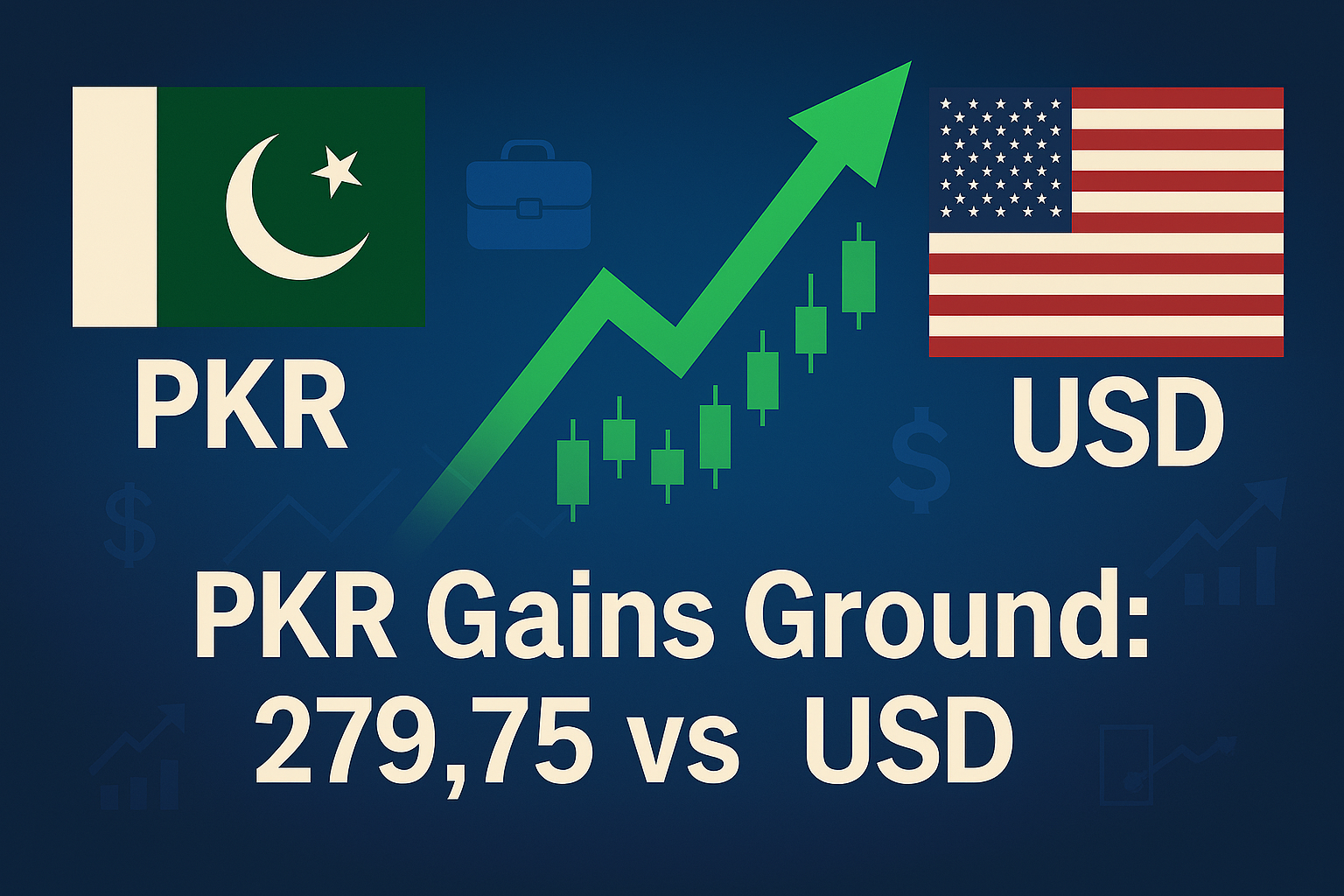
The Pakistani rupee edged marginally higher against the US dollar in inter-bank trading on Tuesday, February 3, 2026, settling at 279.75—a modest gain of 0.01 rupee. While the movement appears negligible on the surface, it reflects a broader pattern of relative stability that has characterized Pakistan’s currency markets in recent weeks, even as the country navigates a complex economic landscape shaped by International Monetary Fund (IMF) commitments, global monetary policy shifts, and persistent inflation concerns.
Exchange Rate Snapshot: What the Numbers Tell Us
At market close, the USD to PKR today stood at 279.75 in the inter-bank market, compared to 279.76 the previous session. This fractional appreciation, though modest, contrasts with the volatility Pakistan’s currency has experienced over the past two years. According to data from Reuters, the rupee has traded within a narrow band of 279.50 to 280.15 over the past fortnight, suggesting that interventions by the State Bank of Pakistan (SBP) and improved foreign exchange reserves may be containing excessive fluctuations.
The dollar rate in Pakistan has stabilized considerably since mid-2023, when the rupee plummeted to record lows near 307 against the greenback amid a balance-of-payments crisis. Today’s marginal gain, while symbolically positive, underscores a cautious equilibrium rather than a decisive reversal of fortunes.
Why Is the Pakistani Rupee Gaining Against the Dollar?
Several interrelated factors explain the rupee’s tentative strength:
IMF Program Compliance: Pakistan’s adherence to its $3 billion Stand-By Arrangement with the IMF—extended through fiscal consolidation measures, tax reforms, and subsidy reductions—has bolstered investor confidence. The Economist recently noted that Pakistan’s commitment to structural reforms, though politically contentious, has reassured multilateral lenders and stabilized external financing flows.

Remittance Inflows: Worker remittances from the United Arab Emirates, Saudi Arabia, and the United Kingdom remain a critical pillar of Pakistan’s foreign exchange reserves. Data from the State Bank of Pakistan indicates remittances totaled approximately $2.4 billion in January 2026, providing vital support to the Pakistani rupee exchange rate. These inflows offset trade deficits and reduce pressure on the currency.
US Federal Reserve Policy Stance: Global currency dynamics also matter. The US Federal Reserve has signaled a cautious approach to interest rate adjustments in 2026, following aggressive tightening cycles in 2022-2023. Bloomberg reports that expectations of stable or slightly lower US rates have tempered dollar strength globally, indirectly benefiting emerging market currencies like the rupee.
Import Compression and Export Growth: Pakistan’s current account balance has improved modestly due to administrative import curbs and a slight uptick in textile exports to European markets. While imports remain constrained—reflecting weak domestic demand—the narrowing trade gap has eased immediate pressure on foreign reserves, currently hovering around $8 billion.
Impact of PKR Appreciation on Pakistan’s Economy
Even marginal currency gains carry tangible consequences for Pakistan’s economic stakeholders:
Inflation Moderation: A stronger rupee reduces the cost of imported goods, particularly energy and food commodities priced in dollars. With inflation running above 20% year-on-year, any currency stability helps the SBP’s efforts to tame price pressures without resorting exclusively to interest rate hikes.
Debt Servicing Relief: Pakistan’s substantial external debt burden—exceeding $100 billion—means that even small rupee gains lower the local currency cost of servicing dollar-denominated obligations. This provides fiscal breathing room for a government already stretched by competing spending priorities.
Business Confidence: Stability in the PKR vs USD exchange rate signals predictability to businesses engaged in international trade and investment. Reduced currency volatility lowers hedging costs and supports planning for importers and exporters alike.
However, analysts caution against over-interpreting today’s minor gain. The Financial Times recently highlighted that Pakistan’s economic fundamentals remain fragile, with political uncertainty, structural inefficiencies, and climate vulnerabilities posing persistent risks to currency stability.
PKR vs USD Forecast: What Lies Ahead?
Forecasting Pakistan’s exchange rate trajectory requires balancing short-term stabilization against medium-term structural challenges. Most currency analysts project the rupee will trade within a 275-285 range through mid-2026, barring external shocks such as:
Global Oil Price Spikes: Pakistan imports over 80% of its energy needs. A sustained rise in crude oil prices—whether due to Middle East geopolitical tensions or OPEC+ production cuts—would widen the trade deficit and pressure the rupee downward.
IMF Review Outcomes: Pakistan’s next IMF review, scheduled for March 2026, will assess compliance with program targets on tax revenue, energy sector reforms, and provincial fiscal discipline. Favorable reviews could unlock additional financing and support currency stability; setbacks could trigger renewed depreciation.
Political Stability: Domestic political cohesion—or its absence—directly impacts investor sentiment and capital flows. Prolonged political gridlock or governance crises have historically weakened the rupee through capital flight and reduced foreign direct investment.
US Economic Data: American inflation prints, employment figures, and Federal Reserve communications will continue to drive dollar strength globally. According to The Wall Street Journal, any surprise hawkish pivot by the Fed in response to sticky US inflation could strengthen the dollar and weaken emerging market currencies, including the rupee.
Expert Perspectives on the Inter-Bank Market Dynamics
The inter-bank market—where commercial banks trade foreign currencies among themselves under SBP oversight—serves as Pakistan’s primary price-discovery mechanism for the rupee-dollar exchange rate. Unlike the open market, where retail currency exchange occurs, inter-bank rates reflect wholesale liquidity conditions and central bank interventions.
Market participants note that the SBP has adopted a “managed float” regime, allowing market forces to determine the exchange rate while intervening selectively to smooth volatility. This approach, endorsed by the IMF, aims to preserve competitiveness while avoiding the reserve depletion that accompanies rigid currency pegs.
Economists at Investing.com suggest that Pakistan’s foreign exchange market remains “thinly traded” compared to regional peers, making it susceptible to sharp movements from relatively small capital flows. Building deeper, more liquid markets—through regulatory reforms and financial sector development—remains a long-term priority.
The Remittance Factor: Sustaining Currency Support
Pakistan’s dependence on overseas worker remittances cannot be overstated. Approximately nine million Pakistanis work abroad, primarily in Gulf Cooperation Council (GCC) countries, with remittances constituting nearly 8% of GDP. The rupee’s relative stability owes much to these consistent dollar inflows, which have proven resilient even during global economic downturns.
However, shifts in Gulf labor markets—including Saudization and Emiratization policies promoting local employment—pose risks to future remittance volumes. Diversifying export earnings and attracting foreign direct investment will be crucial to reducing Pakistan’s structural reliance on worker remittances for currency stability.
Conclusion: Cautious Optimism Amid Structural Headwinds
Today’s marginal gain of 0.01 rupee symbolizes Pakistan’s tentative progress toward exchange rate stability, reflecting improved compliance with IMF conditions, steady remittances, and global dollar dynamics. Yet, this should not obscure the formidable challenges ahead: chronic fiscal deficits, low foreign reserves, political uncertainty, and vulnerability to external shocks.
For businesses and investors tracking the dollar rate in Pakistan today, the message is clear: cautious optimism is warranted, but vigilance remains essential. The rupee’s trajectory will ultimately depend on Pakistan’s ability to implement deep structural reforms, broaden its export base, and navigate an increasingly volatile global economic environment.
As one senior economist observed, “Pakistan has bought itself time, not transformation.” Whether this stability proves durable or ephemeral will become evident in the months ahead.
Discover more from The Economy
Subscribe to get the latest posts sent to your email.


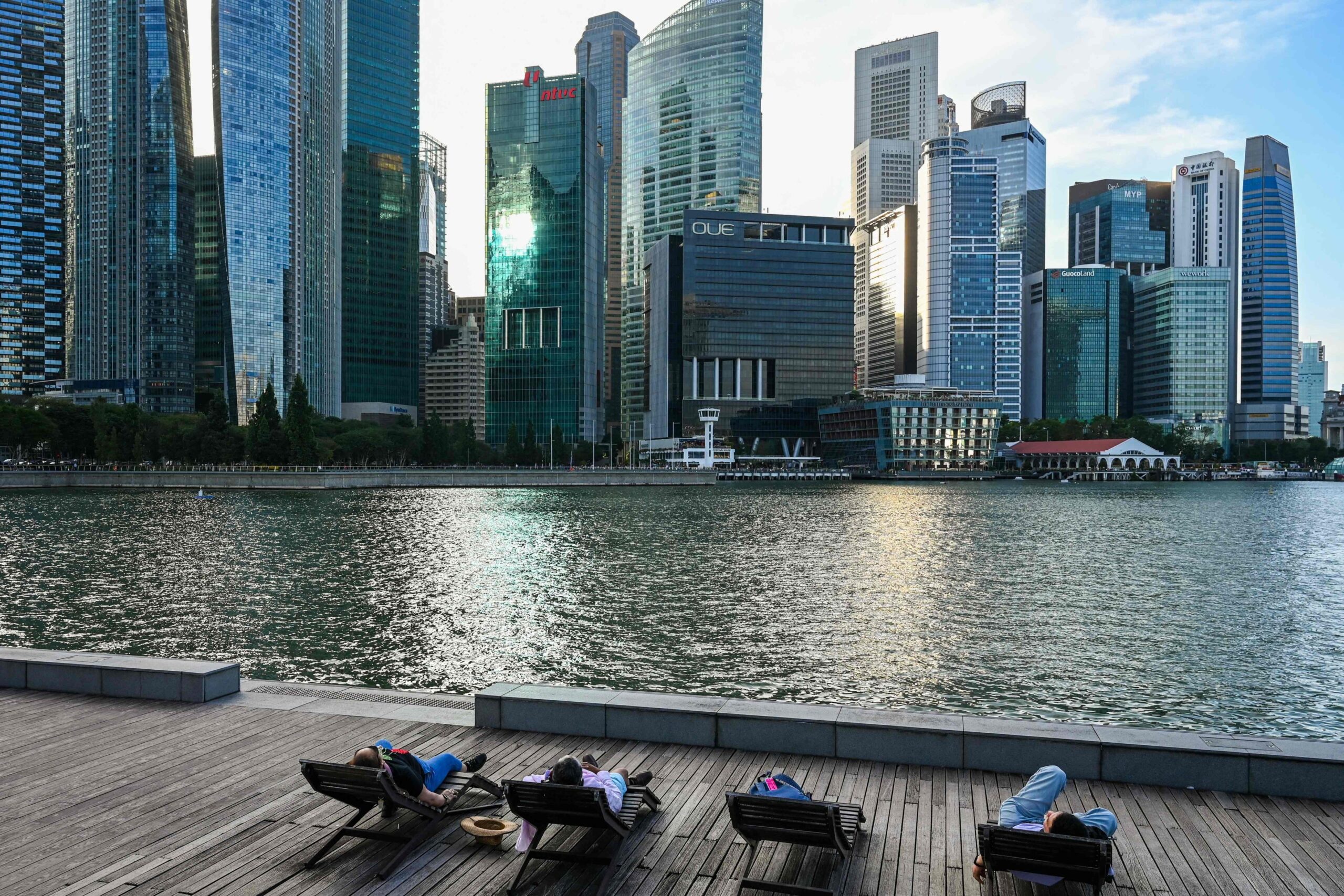
Singapore has spent the past two years becoming one of the primary beneficiaries of the global AI infrastructure buildout, alongside Taiwan’s semiconductor sector. The city-state’s role as a data-center hub allowed it to capture significant capital inflows even as the broader labour-market impact of that investment stayed limited, given how capital-intensive AI infrastructure spending tends to be (J.P. Morgan Private Bank).
Why the AI cycle didn’t stay contained to Singapore
What is changing in 2026 is the geography of that investment. J.P. Morgan’s Asia outlook notes Southeast Asian economies — traditionally anchored in commodities and export manufacturing — are now aligning more closely with the global AI investment cycle by deepening involvement in higher-value areas: infrastructure, hardware and complementary supply chains (J.P. Morgan Private Bank).
Land constraints in Singapore make expansion difficult, which is precisely where the Johor-Singapore Special Economic Zone becomes central to the region’s AI investment thesis rather than a side story.
The Johor SEZ as capacity release valve
Johor has launched a 7,300-acre innovation sandbox as part of the new special economic zone bordering Singapore, explicitly designed to combine Johor’s land and scale with Singapore’s capital and speed, according to the state investment committee’s chair (Fortune). One local official described the ambition bluntly: the zone is meant to be more than “an industrial park with a nicer brochure” (Fortune).
Malaysia’s structural beneficiary position
Malaysia’s electrical and electronics sector already accounts for roughly 40% of the country’s total exports, with semiconductors comprising about 65% of E&E exports — positioning Malaysia as a structural beneficiary of the AI-linked shift in regional trade, according to J.P. Morgan’s Asia analysis (J.P. Morgan Private Bank). Malaysia’s economy minister has framed 2026 explicitly as a year of “execution” for the Anwar administration as it tries to lock in these policy gains (Fortune).
Monetary policy backdrop supports the buildout
Asian central banks spent much of 2025 easing policy and are entering the final stages of that cycle in 2026, shifting more of the growth-support burden to fiscal policy — a backdrop J.P. Morgan expects to support stronger domestic credit growth and consumer demand across the region, reinforcing rather than competing with the AI capital cycle (J.P. Morgan Private Bank).
The regional risk to watch
Most of the region avoided the brunt of 2025’s tariff shock thanks to exemptions on semiconductors, electronics and pharmaceuticals, but that exemption structure remains a policy choice in Washington rather than a permanent feature — meaning the Singapore-Johor AI corridor’s growth case still carries meaningful US trade-policy risk that investors should not discount simply because 2025’s tariffs were absorbed relatively smoothly (J.P. Morgan Private Bank).
Discover more from The Economy
Subscribe to get the latest posts sent to your email.

Dubai’s transformation from oil-adjacent trading post to global capital hub is no longer a talking point — it is a measurable trend. The emirate’s newly launched Economic Survey 2026 shows GDP climbing to $265 billion alongside rising employment, while international family offices are gathering for the Family Office Summit Dubai 2026 as the city cements its position as a family-wealth hub (Gateway Group; Arabian Business).
The non-oil growth engine
The UAE enters 2026 with the World Bank projecting national growth of roughly 5%, well above the global average, driven substantially by 5.3% expansion in the non-oil sector (Barchart). Technology, green energy and healthcare are the top-performing sectors, and 64% of UAE executives expect trade volumes to exceed 2025 levels — confidence underpinned by the country’s expanding network of Comprehensive Economic Partnership Agreements (Barchart). Historically, oil production accounted for half of Dubai’s GDP; today it contributes less than 1% (Wikipedia/Economy of Dubai).
Why family offices specifically are relocating
The Family Office Summit Dubai 2026 is drawing international participants precisely because the emirate has built regulatory infrastructure — inside jurisdictions like the DIFC — designed to attract exactly this category of capital. As one DIFC executive noted, incentives alone are no longer enough to win global finance; institutional credibility and regulatory clarity now matter more, which explains why firms such as Sixth Street have opened Abu Dhabi offices as global investment houses deepen their Middle East presence (Gateway Group).
Infrastructure is compounding the pull
Beyond finance, the UAE’s infrastructure build-out is reinforcing the wealth-hub thesis. Etihad Rail’s Abu Dhabi–Fujairah passenger service and the Madinat Zayed and Liwa station openings, arriving ahead of schedule, signal a state execution model that investors increasingly cite as a differentiator versus regional peers (GCC Business Watch). Dubai has also rolled out a AED 1 billion economic support package aimed at business liquidity and resilience amid regional geopolitical headwinds (GCC Business Watch).
The regional competition for capital
Dubai’s rise is happening alongside — not in isolation from — a broader Gulf capital race. Saudi Arabia’s economy is set for stronger growth per IMF assessments, and Gulf sovereign and corporate capital is increasingly being deployed across sectors from AI infrastructure to green growth commitments, meaning Dubai’s wealth-hub status will need continual reinforcement rather than passive maintenance (GCC Business Watch).
The bottom line for investors
For family offices weighing jurisdiction, Dubai’s pitch in 2026 combines three elements rarely available together: near-zero effective taxation, a non-oil economy growing faster than most G20 peers, and physical and financial infrastructure being built ahead of demand rather than in reaction to it. That combination — not simply low tax rates — is what is now pulling global family wealth toward the emirate.
Discover more from The Economy
Subscribe to get the latest posts sent to your email.
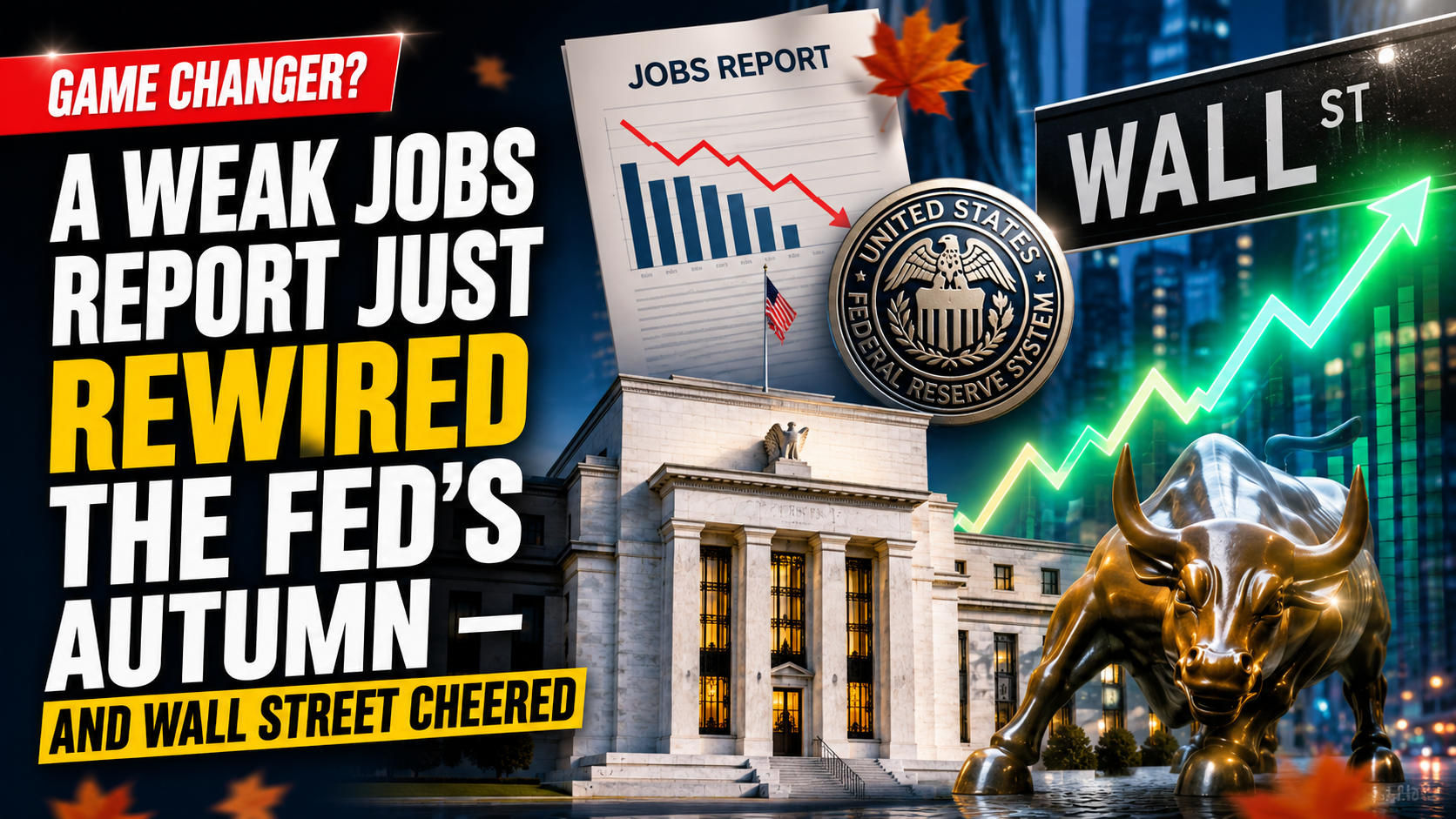
American payrolls contracted by 23,000 in July, a stunning miss against consensus expectations of an 80,000 gain, while the unemployment rate ticked down to 4.1% — a combination that reads less like resilience than like a shrinking labour force (e-Morning Coffee). The labour-force participation rate fell to its lowest level in fifty years outside the pandemic, a structural detail markets have been slower to price than the headline payrolls miss (e-Morning Coffee).
Why bad news was good news for stocks
The market reaction was immediate and largely one-directional: Treasury yields fell across the curve, growth stocks recaptured months of losses in a single session, and rate-hike probability for the September and November FOMC meetings collapsed toward zero (Clearbrook). The S&P 500 posted its best weekly performance since the spring’s Iran-ceasefire rally, gaining 3.59%, with Information Technology leading all sectors at +7.22% — its largest single-week advance of 2026 — powered by the combination of a strong Apple earnings print and the sharp repricing of Fed expectations (Clearbrook).
The rally was notably broad rather than concentrated in mega-cap technology: the equal-weighted S&P 500 advanced 2.43%, Materials gained 5.61%, Industrials rose 3.03%, and the Russell Micro Cap index — which benefits disproportionately from lower rate expectations given its more leveraged constituents — surged 5.77% (Clearbrook). Growth stocks also outperformed value for the week, though value still leads decisively on a year-to-date basis, 23.48% versus growth’s 5.68% (Clearbrook).
The Fed’s dissenters, suddenly exposed
Perhaps the most consequential detail is political rather than statistical: three FOMC members who had dissented in favour of an immediate rate hike just a week before the report was released now find themselves in a significantly weakened position within the committee (Clearbrook). A single data print has shifted the internal balance of the Fed’s policy debate heading into September.
This is the third straight “cruel summer”
What distinguishes 2026 from a one-off shock is the pattern. In each of the last two years, a comparable summer weakening in US employment data has pushed the Federal Reserve into a short cycle of rate cuts — meaning July’s contraction fits a now-recognisable seasonal-plus-structural trend rather than standing as an isolated anomaly (Bloomberg).
What to watch next
Two threads now dominate the September calendar: whether the Fed opts for a standard 25-basis-point cut or moves more aggressively given the depth of the labour miss, and whether the falling participation rate — rather than the unemployment rate — becomes the metric investors and policymakers watch most closely. A shrinking labour force can flatter the headline unemployment number while masking real economic softness, and that distinction will shape how credible the “soft landing” narrative remains through year-end.
Discover more from The Economy
Subscribe to get the latest posts sent to your email.

Singapore’s AI Boom Is Now a Two-Country Story

Why Global Family Offices Are Converging on Dubai in 2026

A Weak Jobs Report Just Rewired the Fed’s Autumn — And Wall Street Cheered

Britain’s Fragile Rebound Meets a Budget Deadline and a Trump Ultimatum

Pakistan’s Economy Grew 3.7% — So Why Doesn’t It Feel Like a Recovery?

Top 15 Financial Stocks for Investment in PSX

Pakistan Exports 2026: Record $35.6B Forecast Masks Trade Deficit Risk

UK’s Jobs Downturn Now Matches the 2008 Financial Crisis — And AI Is Accelerating It

Fed Rate Cut Bets Surge After Shock US Jobs Report Exposes Labor Market Cracks

Pakistan’s Trade Gap Widens to $3.95bn Despite Meeting FY26 Current Account Target

Why Ottawa Is Betting on Dubai: Inside Canada’s Gulf Trade Pivot

UK Wealth Tax Fears Trigger Record £13.9bn Investor Exodus Ahead of October Budget

July Jobs Shock: Why the Fed’s September Rate Decision Just Flipped (2026 Analysis)

Global Growth Forecast 2026: IMF, World Bank Outlooks and the “Slow-Hire, Slow-Fire” Labor Market

Gold Price Forecast 2026: Fed’s July 29 Decision and Record Central Bank Buying Explained

China Politburo July 2026: Stimulus Signals Explained

Pakistan Economy 2026: GDP Grows 3.7% as IMF Completes EFF Review Amid Middle East Risk

Strait of Hormuz Blockade 2026: Oil Prices Surge 9% as US-Iran Conflict Reignites

Down But Not Out: Inside the Slow Sinking of Russia’s War Economy

Apple vs OpenAI Lawsuit: The Economic Story Behind the Headline

Gulf Capital Retreat From Pakistan 2026: UAE Loan Freeze & What It Means

Global Stock Market Selloff 2026: Stagflation Fears Return as Iran Conflict Reignites

Pakistan’s Economic Survey FY26: Inflation Spike Insights

Russia Fuel Shortages 2026: Inside a Cracking War Economy

Strait of Hormuz Crisis 2026: How Trump’s Toll U-Turn Exposes Global Economic Risk

Bank of England Rate Decision Amid Energy Crisis

Russia’s War Economy Model Is Starting to Crack, Think Tank Warns

Pakistan’s Economic Growth: Resilience Amid Challenges
-

 Markets & Finance7 months ago
Top 15 Stocks for Investment in 2026 in PSX: Your Complete Guide to Pakistan’s Best Investment Opportunities
-

 Analysis6 months ago
Johor’s Investment Boom: The Hidden Costs Behind Malaysia’s Most Ambitious Economic Surge
-

 Analysis6 months ago
Top 10 Stocks for Investment in PSX for Quick Returns in 2026
-

 Analysis6 months ago
Brazil’s Rare Earth Race: US, EU, and China Compete for Critical Minerals as Tensions Rise
-

 Banks7 months ago
Best Investments in Pakistan 2026: Top 10 Low-Price Shares and Long-Term Picks for the PSX
-

 Investment7 months ago
Top 10 Mutual Fund Managers in Pakistan for Investment in 2026: A Comprehensive Guide for Optimal Returns
-

 Global Economy8 months ago
15 Most Lucrative Sectors for Investment in Pakistan: A 2025 Data-Driven Analysis
-

 Global Economy8 months ago
Pakistan’s Export Goldmine: 10 Game-Changing Markets Where Pakistani Businesses Are Winning Big in 2025