
Analysis
Trump Considers Seizing Iran’s Kharg Island to ‘Take the Oil’ | Analysis

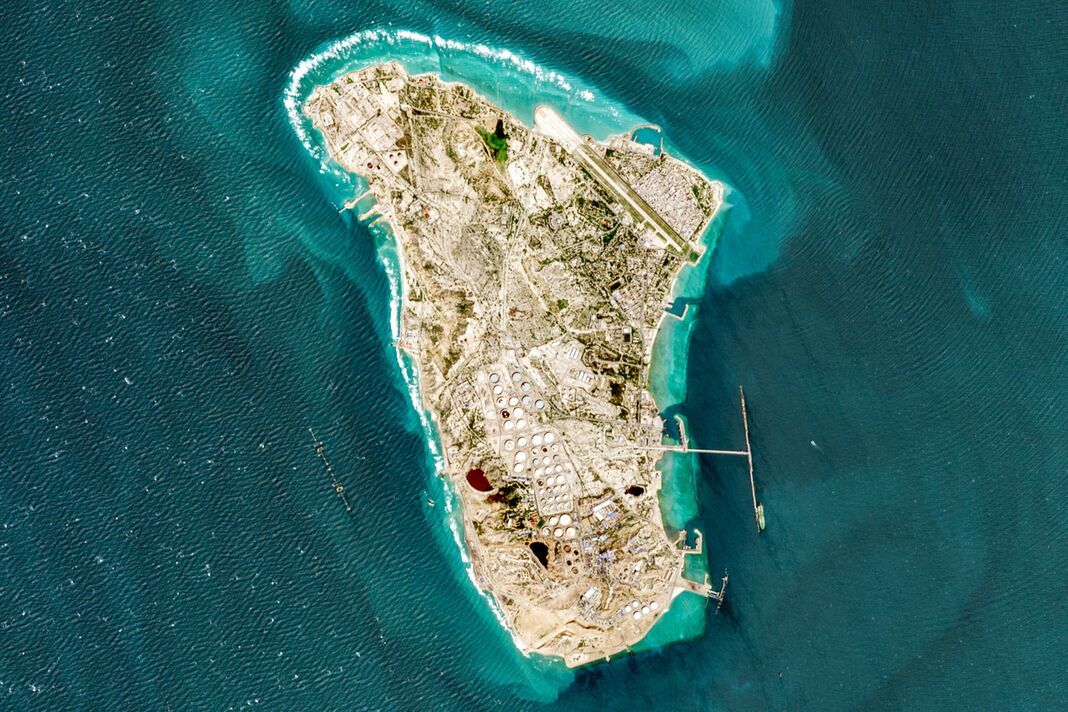
The popular Idiom : “The Cat comes out of bag” reveals the actual designs of trump by imposing illegal war on Iran . All he wants to occupy Oil reserves like he did in Venezuela.There are moments in geopolitics when a single sentence, dropped casually into a newspaper interview, reconfigures the strategic landscape. Donald Trump provided one such moment on Sunday when he told the Financial Times that his “favourite thing is to take the oil in Iran” — and that he was weighing whether to order U.S. forces to seize Kharg Island, the sun-scorched coral outcrop in the northern Persian Gulf that serves as the beating heart of the Islamic Republic’s petrostate economy.
“To be honest with you, my favourite thing is to take the oil in Iran, but some stupid people back in the US say: ‘why are you doing that?’ But they’re stupid people,” Trump told the newspaper. When pressed on whether U.S. forces might seize the island, he replied: “Maybe we take Kharg Island, maybe we don’t. We have a lot of options.” CNN
The markets did not wait for clarification. May futures for Brent crude rose over 3.2% to $116.12 per barrel during early Asia hours, with the international benchmark heading for a record monthly jump, while U.S. West Texas Intermediate futures gained 3.4% to $102.9ba6 per barrel. CNBC The words of one man in an Oval Office interview had, within hours, threatened to reroute the global economy.
The Island That Runs an Empire
To understand why Trump’s remarks triggered such alarm, one must first appreciate the extraordinary concentration of strategic value contained within nine square miles of Persian Gulf coral.
Around 96% of Iran’s crude exports pass through Kharg, making it one of the most concentrated oil-export chokepoints in the world. Over the past year Iran exported about 1.64 million barrels per day of crude, roughly 1.577 million bpd of which departed from Kharg’s terminals. The terminal can theoretically load up to 5 million bpd, far above current export levels. The island also hosts 55 storage tanks capable of holding about 34 million barrels of crude. Iranopendata
Kharg Island lies in the northern Middle East Gulf, around 25 km off Iran’s coast and more than 480 km northwest of the Strait of Hormuz. Its importance begins with geography. Much of Iran’s coastline is too shallow for the world’s largest tankers, but Kharg is surrounded by naturally deep water, allowing Very Large Crude Carriers to berth directly and load cargoes of up to roughly two million barrels. Kpler
This is not merely infrastructure. It is the fiscal spine of the Iranian state. Disrupt Kharg, and you do not merely inconvenience Tehran — you amputate its primary source of hard currency. Iran has spent decades and billions of dollars attempting to build alternatives, but as Kpler data confirms, the Jask terminal’s effective capacity is widely estimated at closer to 0.3 million barrels per day, with historically low utilization. By comparison, Kharg alone has historically exported around 1.5 to 2.0 million barrels per day. Kpler
The island’s vulnerability was not lost on Iran either. During the 15 to 20 February period before hostilities commenced, Iran increased its oil export to three times its normal rate and reduced oil storage — probably in anticipation of an attack. Wikipedia A regime that had spent years insisting Kharg was inviolable was hedging in ways that suggested otherwise.
The Venezuela Parallel — and Its Limits
Trump’s framing of the Kharg question is revealing. He likened the potential move to the U.S. ambitions to control Venezuela’s oil industry following the capture of its leader Nicolás Maduro in January. CNN The comparison illuminates both the president’s strategic logic and its considerable weaknesses.
Venezuela’s oil infrastructure was seized after a regime change that unfolded largely through domestic political collapse, accelerated by economic strangulation. Iran is a different proposition entirely. It is a sovereign state with a standing military, substantial missile and drone arsenals, and — crucially — geography that does not afford the United States the luxury of standoff control. Kharg Island sits within range of Iranian rocket artillery and short-range ballistic missiles. Unlike Venezuela’s Maracaibo Basin, it is embedded within a conflict zone where Iranian forces retain the capacity to strike daily.
Real dangers to the troops would come after the initial invasion. Iran would turn the U.S. presence on the key island into a priority target and focus its firepower there. Iran has been hit hard, but still retains the ability to fire drones and missiles, including daily barrages at Israel and the UAE. Unlike Israel, Kharg is in range of Iranian rocket artillery, as well as multiple types of suicide drones. The Times of Israel
Trump acknowledged this arithmetic only obliquely: “It would also mean we had to be there [in Kharg Island] for a while,” CNBC he told the FT — a rare concession that even optimistic scenarios involve an extended, contested occupation of hostile territory deep in the Persian Gulf.
The Military Backdrop: Strikes, Troops, and Escalating Posture
Trump’s remarks do not emerge from a vacuum of rhetorical speculation. They land in a conflict that is now in its fifth week and has already made Kharg Island a theatre of direct U.S. military action.
The United States on March 14 targeted military assets on Kharg Island as part of a broader campaign aimed at protecting maritime traffic in the Strait of Hormuz. U.S. Central Command said American forces struck military targets on the island while deliberately avoiding its oil infrastructure. “Moments ago, at my direction, the United States Central Command executed one of the most powerful bombing raids in the history of the Middle East and totally obliterated every military target in Iran’s crown jewel, Kharg Island,” Trump wrote in a post on Truth Social. Iran International
The deliberate sparing of oil infrastructure was itself a message — one that Trump has now placed under explicit review. “Should Iran, or anyone else, do anything to interfere with the free and safe passage of ships through the Strait of Hormuz, I will immediately reconsider this decision,” he wrote at the time. Iran International
The troop posture reinforces the strategic intent. The Washington Post reported that the Pentagon was preparing for weeks of potential ground conflict in Iran with around 3,500 troops arriving in the region on Friday, while thousands of soldiers from the 82nd Airborne Division have also been ordered to support the war effort. CNBC An amphibious assault team arrived in the Persian Gulf on Saturday. The combination of airborne and marine assets in the region is precisely the force package one would assemble to secure and hold a fortified island.
Three Scenarios the Market Is Now Pricing
Analysts surveying the current landscape have begun structuring their outlook around three distinct trajectories, each with materially different energy-market implications:
- Scenario A — Negotiated settlement: Parallel diplomatic efforts, notably Pakistan’s offer to host talks, produce a ceasefire framework. Trump told reporters aboard Air Force One that Iran had agreed to “most of” the 15-point list of demands conveyed via Pakistan to end the war, adding: “They’re agreeing with us on the plan.” CNN In this scenario, Kharg Island serves as a pressure lever rather than an occupation target; oil recedes toward the $90 range. Probability: rising but fragile.
- Scenario B — Blockade or encirclement: U.S. naval forces impose a maritime cordon around Kharg without a physical landing, severing Iranian oil exports through economic rather than military occupation. This hedges U.S. casualty risk while achieving the fiscal strangulation objective, though it invites Iranian retaliation against Gulf energy infrastructure and risks a protracted naval standoff.
- Scenario C — Physical seizure: American marines and paratroopers land on Kharg Island, securing the oil terminal under U.S. military administration. This is Trump’s stated preference. Such an attempt would likely require a ground troop operation, and an attack would also likely prompt further energy market volatility at a time when oil prices have soared to nearly $120 a barrel. CNBC In the worst-case variant, Iranian retaliation extends to Saudi Arabia’s Ras Tanura and Abu Dhabi’s Fujairah terminals, removing a combined 15 to 20 million barrels per day from global supply and triggering recession conditions across import-dependent economies.
The Hormuz Dimension
Any analysis of Kharg Island must account for the Strait of Hormuz, the nautical bottleneck whose closure has already inflicted severe damage on global energy flows since the war began in late February.
Before the disruption, about 14.7 million bpd of crude and 4.8 million bpd of petroleum products moved through the strait each day. Energy prices have surged roughly 30%, pushing oil above $100 per barrel. The ripple effects extend beyond crude: Qatar has halted exports of roughly 330 million cubic metres of LNG per day, about one-fifth of global liquefied natural gas trade. Iranopendata
Iran’s naval doctrine emphasizes the use of asymmetric tactics, including naval mines, fast-attack boats and anti-ship missiles. Iran is believed to possess between 2,000 and 6,000 naval mines. Even a limited number could disrupt maritime traffic in the narrow waterway. Iran International
The seizure of Kharg Island is, in part, Trump’s proposed solution to the Hormuz problem: occupy the oil infrastructure Iran uses to fund its naval doctrine, and the regime’s capacity to sustain a blockade erodes. The logic is not without merit — but it rests on the assumption that an occupied Kharg would remain operational. That assumption is far from guaranteed. JPMorgan’s commodities research team found it likely that an attack on Kharg Island could trigger retaliation in the Strait of Hormuz or against major regional energy facilities, including Saudi Arabia’s Ras Tanura, the Abqaiq processing facility, and the UAE’s Fujairah. Euronews
Expert Perspectives: A Divided Strategic Community
The analyst community reflects the genuine strategic ambiguity of the moment.
Senator Lindsey Graham, a Republican influential in guiding Trump’s policy on Iran, argued that controlling the island could shorten the war. “Seldom in warfare does an enemy provide you a single target like Kharg Island that could dramatically alter the outcome of the conflict,” he wrote on X. Time
Former Israeli defence minister Yoav Gallant was equally direct. “On the strategic chessboard of this war, Kharg Island is the next piece,” he wrote. “It may be the move that decides the conflict. If it is going to be made, it must be made now.” The Times of Israel
But seasoned military and energy analysts are considerably more cautious. Marc Gustafson, former head of the White House Situation Room who served under presidents Trump, Biden and Obama, acknowledged that Trump may be tempted by the opportunity to claim a “big PR win” and give U.S. troops a natural barrier from mainland Iran, but this must be weighed against force protection risks. CNBC
Jan van Eck, CEO of VanEck Funds, had earlier offered a prescient framing of the strategic calculus: “It’s where 90% of Iran’s oil gets exported out of — that is a choke point. And if you think that Trump just follows the same playbook that he did in Venezuela — he cut off their oil exports, their hard currency, and I think he is going to want that leverage point going forward.” CNBC
The critical distinction, however, is one of sequencing. Richard Goldberg of the Foundation for Defense of Democracies offered a pointed qualifier: “If you could actually deny them that oil export, it would likely mean we’ve so degraded the regime’s threat capacity that we don’t fear for our own force protection whether on or near Kharg.” The Times of Israel The question, in other words, is not whether Kharg is a prize worth having — it manifestly is — but whether the conditions for holding it can be created before the attempt is made.
The Wider Regional Fragmentation
Iran has not stood still while these calculations are being made in Washington. As hostilities continue for a fifth week, Tehran has escalated attacks on Gulf energy and civilian infrastructure, with a service building at a power generation and water desalination plant in Kuwait damaged Sunday evening, killing one worker. CNBC The Houthi rebels in Yemen formally entered the conflict over the weekend, adding another axis of missile and drone pressure. Oil prices surged to about $115 a barrel after Iranian media reported a suspected US-Israeli strike on the Tabriz Petrochemical Company in northwestern Iran on Monday. RT International
Meanwhile, analysts warned that the most significant risk remains broader escalation targeting energy infrastructure across the region, with particular concern about attacks on Saudi Arabia’s East-West pipeline and the UAE’s Abu Dhabi crude oil pipeline, both of which are being used to re-route oil flows disrupted by the Strait of Hormuz’s closure. Euronews
The global macroeconomic implications are no longer hypothetical. Asian equities fell sharply on Monday morning. LNG-dependent economies in South Korea, Japan, and Taiwan face acute near-term supply deficits. European energy ministers convened emergency calls. The economic impact of a prolonged U.S. seizure of Iran’s oil terminal — combined with the pre-existing Hormuz disruption — would constitute the most severe peacetime energy shock since the 1973 Arab oil embargo, and arguably surpass it in duration and geographic scope.
Historical Echoes: Oil as the Currency of Power
Trump’s instinct to “take the oil” is neither new nor confined to Iran. It reflects a persistent thread in his strategic worldview — one that treats energy infrastructure as sovereign collateral in the service of American power projection.
He made similar arguments about Iraqi oil during both his 2016 campaign and first term. He framed the Venezuela intervention in part through the lens of oil control. The difference in 2026 is that, for the first time, the rhetorical posture has been coupled with deployed military assets, live combat operations against Kharg’s military facilities, and an explicit public statement of preference — delivered not on a rally stage but to the Financial Times.
That distinction matters. Presidents who tell the Financial Times what they “really want” to do are rarely speaking entirely off the cuff.
Conclusion: The Most Consequential Nine Square Miles on Earth
Kharg Island has occupied a unique position in the geography of global energy since the 1960s, when Mohammad Reza Shah partnered with American oil companies to transform a coral outcrop into the engine of Iran’s petrostate. It has survived the Iran-Iraq War, international sanctions, and decades of strategic calculation by adversaries who understood that destroying it would inflict more pain on global markets than on Tehran alone.
It now confronts an entirely new category of threat: not destruction, but seizure. A U.S. president publicly stated that taking it is his “favourite option.” Whether that preference translates into orders depends on the outcome of parallel diplomatic tracks, the resilience of Tehran’s negotiating position, and the tolerance of American allies for a ground operation that could, depending on Iranian retaliation, spiral into the most consequential regional conflict since the Second World War.
What is already beyond doubt is the economic verdict. Oil above $116 a barrel, LNG flows disrupted, a Strait effectively closed to commercial traffic — these are not hypothetical stress tests. They are today’s reality. The decision on Kharg Island will determine whether they become tomorrow’s starting point.
The stakes, as Trump himself might say, are very, very big.
References
Euronews Business. (2026, March 16). Explainer: Why Kharg Island is vital to Iran and the global economy. Euronews. https://www.euronews.com/business/2026/03/16/explainer-why-kharg-island-is-vital-to-iran-and-the-global-economy
Financial Times. (2026, March 30). Trump says US could ‘take the oil in Iran’ as president eyes Kharg Island. Financial Times. https://www.ft.com/content/3bd9fb6c-2985-4d24-b86b-23b7884031f5
Kpler. (2026). Explainer: Why Kharg Island is the backbone of Iran’s oil economy — and its greatest vulnerability. Kpler Intelligence. https://www.kpler.com/blog/explainer-why-kharg-island-is-the-backbone-of-irans-oil-economy—and-its-greatest-vulnerability
CNBC. (2026, March 9). Iran war, US-Israel conflict, oil prices and Kharg Island. CNBC. https://www.cnbc.com/2026/03/09/iran-war-us-israel-conflict-oil-prices-kharg-island.html
Times of Israel. (2026). Taking Kharg Island is seen as key to opening Hormuz — there are better options. The Times of Israel. https://www.timesofisrael.com/taking-kharg-island-is-seen-as-key-to-opening-hormuz-there-are-better-options/
Washington Post. (2026, March 30). Iran-US-Israel conflict: Trump, Lebanon, latest updates — March 30, 2026. The Washington Post. https://www.washingtonpost.com/business/2026/03/30/iran-us-israel-trump-lebanon-march-30-2026/
Discover more from The Economy
Subscribe to get the latest posts sent to your email.



Key Takeaways
- Rolex’s secondary market rose approximately 7.9% year-over-year as of 2026 (per WatchCharts data) — trailing Patek Philippe (+16.2%) and Tudor (+11.4%) but still outperforming Audemars Piguet (+3.4%).
- Rolex raised U.S. retail prices 4–9% in January 2026 (steel models ~5.6%, gold models ~8.7%), narrowing the historical gap between retail and pre-owned pricing.
- Not every model appreciates: steel sports references (Submariner, GMT-Master II, Daytona) have held value far better than two-tone or widely available dress references like the standard Datejust.
- The Lady-Datejust posted the sharpest 2026 gain among tracked collections — up 22.73%, from roughly $9,269 to $11,376 — driven by demand for smaller, “everyday luxury” watches.
- Gold’s rise past $2,400/oz has directly lifted the investment case for Rolex’s precious-metal references (Day-Date, Sky-Dweller, Yacht-Master).
The Model-by-Model Picture
| Category | 2026 Trend |
|---|---|
| Lady-Datejust | +22.73% (strongest performer among tracked collections) |
| Steel sports models (Submariner, GMT-Master II) | Held value well; corrected from 2022 peak but stabilized above retail |
| Daytona | Corrected from highs above $50,000 to the mid-$30,000s; still among the most sought-after references |
| Two-tone/widely available Datejust | Flat to negative — “holds value” is an overstatement for this category |
| Gold references (Day-Date, Sky-Dweller) | Lifted by gold’s rise above $2,400/oz |
Why the “Rolex Always Appreciates” Myth Is Fading
The pandemic-era boom pushed some references — the Daytona above all — to speculative highs disconnected from historical norms. Since the March 2022 peak, steel sports models have compressed meaningfully, and dealers who bought inventory near the top have in some cases faced 20–40% markdowns on liquidation. The lesson for 2026 buyers: Rolex as a category is not a monolith. Value retention depends heavily on specific reference, condition, and whether the piece comes with box and papers (“full set”).
What’s Actually Driving 2026 Strength
- Retail price increases raise the floor. When a new Submariner retails at $10,050 (up from $9,500), a pre-owned example at $11,000–$12,000 suddenly represents a smaller premium — narrowing the gap without secondary prices actually moving.
- Supply discipline remains Rolex’s core lever. The brand has never confirmed production numbers, and secondary-market premiums remain entirely a function of Rolex’s own manufacturing decisions — a risk factor as much as a support.
- Certified Pre-Owned rollout. Rolex’s now fully rolled-out CPO program has changed how buyers transact in the used market, adding a layer of brand-verified legitimacy that supports pricing.
The Case for Rolex as a Portfolio Diversifier
Financial advisors increasingly frame luxury watches not as a replacement for equities or bonds, but as a tangible, historically low-correlation diversifier — one that carries its own risks (illiquidity, condition-dependent pricing, no yield) but has demonstrated multi-decade resilience for specific references.
Is Rolex a good investment in 2026?
It depends heavily on the specific reference. Steel sports models like the Submariner and Daytona have held or grown in value; two-tone and widely available dress models generally have not. Overall, Rolex’s secondary market rose about 7.9% year-over-year in 2026, trailing Patek Philippe but ahead of Audemars Piguet.
Discover more from The Economy
Subscribe to get the latest posts sent to your email.

Navigating Mortgage and Loan Refinancing in a High-Yield Environment
Global public debt crossing critical thresholds has kept central bank policies volatile, resulting in fluctuating US Treasury yields throughout 2026. For homeowners and commercial property holders burdened by previous high-interest borrowing cycles, finding optimal refinance windows has become a high-stakes financial puzzle. Stalled disinflation and stubborn employment numbers mean rate cuts are incremental, requiring borrowers to act with precision.
Timing your mortgage or commercial loan refinance in this environment requires a deep understanding of yield curve movements and lender risk appetites.
Decoding 2026 Refinance Dynamics
The 10-Year Treasury Yield Benchmark
Mortgage rates continue to track closely with the 10-year US Treasury yield. When macroeconomic anxiety spikes debt issuance, yields rise, tightening consumer borrowing capacity. Savvy borrowers monitor weekly Treasury auctions to lock in rates during brief dip windows.
Hybrid ARMs and Alternative Structures
With fixed rates remaining elevated, 7/1 and 10/1 adjustable-rate mortgages (ARMs) have surged in popularity. These products offer lower initial monthly payments, giving borrowers breathing room until central bank easing cycles fully materialize.
| Loan Product | Current Rate Range | Best For | Key Risk Factor |
| 30-Year Fixed Mortgage | 6.2% – 6.8% | Long-term predictability | Higher initial monthly outlay |
| 7/1 Hybrid ARM | 5.5% – 5.9% | Short-term ownership / flipping | Rate reset risk after year 7 |
| Commercial Refinance | 7.0% – 8.2% | Corporate asset restructuring | Strict DSCR lender covenants |
Actionable Steps for Successful Refinancing
To maximize your chances of securing favorable refinance terms in a volatile market, follow a disciplined preparation strategy.
Boost Your Credit Score Immediately: Lenders in 2026 are applying stringent credit tiering; a 20-point increase can drop your APR by a crucial quarter-point.
Shop Regional Credit Unions: Smaller financial institutions often offer portfolio loans with more flexible underwriting than major national banks.
Calculate the Break-Even Point: Ensure your total closing costs are recouped through monthly savings within 24 months of closing.
“Market Strategist View: Refinancing in 2026 is an exercise in opportunistic timing. Borrowers must maintain immaculate financial profiles ready to strike the moment Treasury yields dip.”
Mastering the complexities of today’s debt environment ensures you can successfully lower your debt service costs and protect your long-term financial stability.
Discover more from The Economy
Subscribe to get the latest posts sent to your email.

The days of pulling generic auto insurance quotes based purely on your zip code and age are officially over. In 2026, insurance comparison engines are powered entirely by generative AI and real-time telematics. These platforms digest thousands of live data points—ranging from your driving smoothness via connected vehicle sensors to real-time traffic congestion patterns—to generate hyper-personalized premiums instantly.
For consumers, this evolution represents both a massive opportunity for savings and a hidden trap for penalty pricing. Understanding how AI algorithms evaluate risk is essential for anyone looking to lower their monthly auto insurance premiums.
How AI Comparison Engines Evaluate Your Risk Profile
Behavioral Telematics and Connected Cars
Modern cars stream performance data directly to insurance aggregators. Generative AI models analyze braking sharpness, acceleration curves, cornering G-forces, and phone distraction metrics. Drivers who maintain smooth, defensive habits are rewarded with dynamic rate cuts of up to 40% compared to traditional rating tiers.
Predictive Traffic and Weather Modeling
AI tools now cross-reference your daily commute route with predictive weather and accident probability models. If your standard parking location or driving corridor has a statistically higher incidence of uninsured motorist claims, your quotes will reflect that hyper-local risk assessment.
| Comparison Factor | Traditional Rating Model | 2026 Generative AI Model | Impact on Premium |
| Mileage & Usage | Annual estimated odometer reading | GPS tracking & live trip duration | High (up to 35% savings) |
| Driving Behavior | MVR driving record & accidents | Real-time braking, speed, & G-force | Critical (determines tier) |
| Vehicle Tech | Make, model, and safety rating | ADAS calibration & repair cost data | Moderate |
Strategies to Lower Your AI-Driven Insurance Quote
To outsmart the algorithm and secure the lowest possible premium in 2026, drivers must proactively manage their digital footprint on insurance platforms.
Opt-In for Telematics Trial Periods: Many insurers offer immediate 15% discounts just for installing their driving app; let it track safe habits for 30 days to lock in permanent savings.
Scrub Unverified Public Records: Ensure your motor vehicle report is free of clerical errors that AI risk models misinterpret as reckless behavior.
Compare AI Aggregators: Use platforms that integrate multi-carrier API feeds rather than single-brand comparison sites to find the best risk-adjusted rate.
“Industry Note: AI-driven pricing rewards transparency and precision. Drivers who actively manage their telematics data consistently out-save those relying on legacy quote calculators.”
Embracing AI comparison tools allows savvy policyholders to customize coverage limits precisely to their driving habits, eliminating wasted premium spend while ensuring robust protection.
Discover more from The Economy
Subscribe to get the latest posts sent to your email.

Stock Market Crash in 2026? Warning Signs, Scenarios and a Calm Investor Checklist

Peso Mexicano vs Dólar Estadounidense: A Practical USD/MXN Guide for October 2026

Is the Stock Market Open on Columbus Day 2026? NYSE, Nasdaq and Bonds Explained

Concert Ticket Prices in 2026: Dynamic Pricing, Fees and How to Buy Safely

High-Yield Savings Accounts in 2026: How to Compare APY Without Chasing a Headline

EU-China Trade Deal 2026: How Beijing and Brussels Avoided a Trade War—and Who Wins

Social Security 2027 COLA Announcement: Date, Formula and What Retirees Should Check

China’s AI Microdrama Boom: How Beijing Is Reshaping Global Media

Q3 2026 Earnings Preview: Can Record Profit Expectations Keep Wall Street’s Rally Alive?

Russia Diesel Deal 2026: Oil Prices and Inflation Risks

Fed Rates 2026: Treasury Yields, Bonds and SGOV Explained

S&P 500 Market Breadth 2026: Weak Rally or Rotation?

The AI Capex Boom: Data Centers Reshaping Growth

Palantir Stock in 2026: Extraordinary AI Growth

China Stocks Today: Are Big Economies in Asia Nearing a Market Bottom?

Crypto Daily Outlook: Bitcoin, Altcoins, and the Future of Decentralized Finance

Global Pension Systems Ranked: The World’s Best and Worst Retirement Frameworks

World’s Largest Economies: Ranking the Top Global Powers

Elon Musk’s Next Moves: Disrupting the 2026 Global Economy

Pakistan Economy 2026: Inside the SBP’s Balancing Act

GasBuddy Market Insights: How Crude Price Shifts Impact Local Fuel Cost Averages

World Bank & IMF Reports 2026: Why the “3% Growth” Consensus Is Actually a Debate

Crude Oil & Petroleum Market Analysis: OPEC+ Decisions and Price Forecasts

Global Equity Market Divergence: US Tech vs. European Dividend Stocks vs. Asian Growth

IMF & World Bank Global Economic Outlook: Growth Forecasts Across Europe and Asia

Silver Price Today: Why the Xi-Trump AI Standoff Is Fueling a Safe-Haven Rally

Bitcoin Price Forecast 2026–2027: Will the 4-Year Cycle Hold?

The Future of Silicon: Supply Chain Vulnerabilities in the 2026 Tech Sector
-

 Markets & Finance9 months ago
Top 15 Stocks for Investment in 2026 in PSX: Your Complete Guide to Pakistan’s Best Investment Opportunities
-

 Analysis8 months ago
Johor’s Investment Boom: The Hidden Costs Behind Malaysia’s Most Ambitious Economic Surge
-

 Analysis8 months ago
Top 10 Stocks for Investment in PSX for Quick Returns in 2026
-

 Banks9 months ago
Best Investments in Pakistan 2026: Top 10 Low-Price Shares and Long-Term Picks for the PSX
-

 Analysis8 months ago
Brazil’s Rare Earth Race: US, EU, and China Compete for Critical Minerals as Tensions Rise
-

 Investment9 months ago
Top 10 Mutual Fund Managers in Pakistan for Investment in 2026: A Comprehensive Guide for Optimal Returns
-

 Global Economy10 months ago
15 Most Lucrative Sectors for Investment in Pakistan: A 2025 Data-Driven Analysis
-

 Global Economy10 months ago
Pakistan’s Export Goldmine: 10 Game-Changing Markets Where Pakistani Businesses Are Winning Big in 2025