
Analysis
When Wars Are Chosen: The Financial Ruin and Human Wreckage of the 2026 US-Iran Conflict

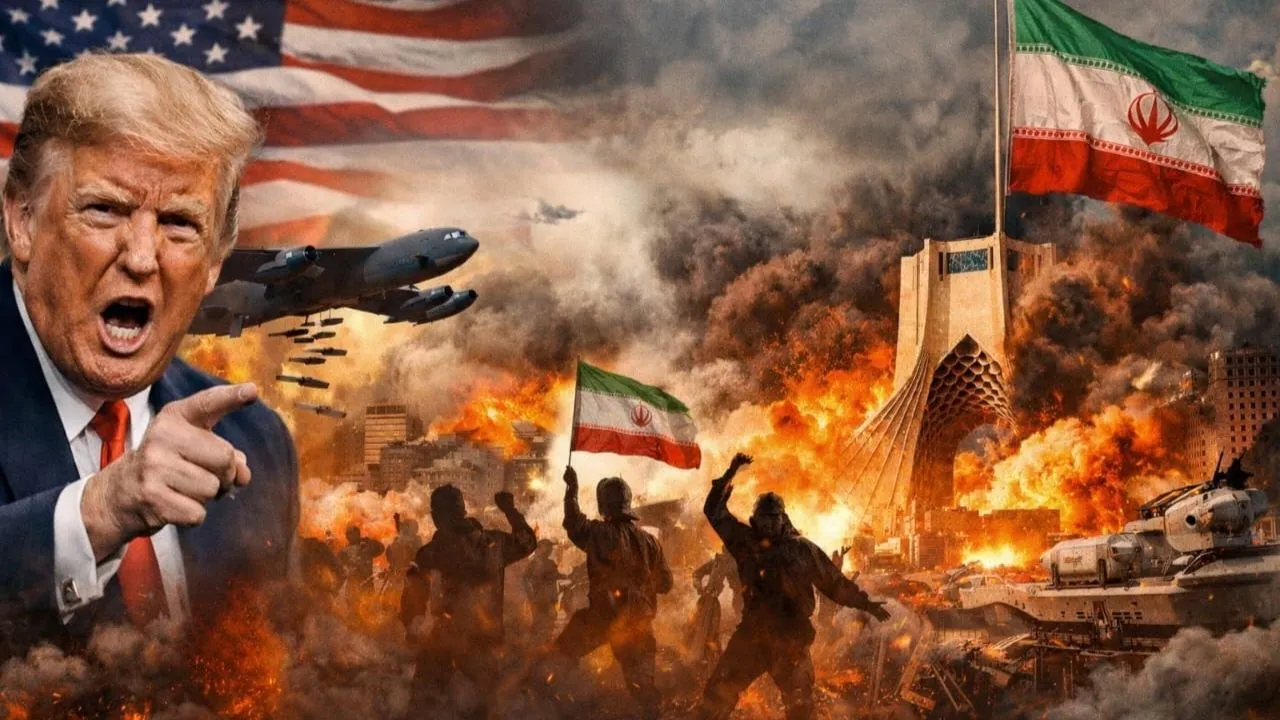
The US-Iran conflict of 2026 crashed oil markets, froze the Strait of Hormuz, and pushed developing nations from Pakistan to Egypt toward economic collapse. A deep analysis of the financial and social fallout.
The Day the World Paid for a War It Did Not Choose
On the morning of March 6, 2026, Ahmed Farouk had already been waiting three hours at a petrol station on the outskirts of Cairo when an attendant walked out and hung a hand-written sign on the pump: No Diesel. Ahmed drives a freight truck for a living. No diesel means no work. No work means no bread — not for him, and not for the forty families whose weekly produce deliveries he hauls from the Nile Delta to the capital. He sat back in his cab, pulled out his phone, and read about a war being fought 2,000 kilometres away — a war, he would tell a journalist later, “that no one asked us about.”
The US-Israel strikes on Iran — launched on February 28, 2026, under the codename Operation Epic Fury — represent one of the most consequential geopolitical decisions of the decade. The immediate military objectives: to degrade Iran’s nuclear facilities and missile infrastructure. The immediate economic consequences: a supply disruption the International Energy Agency described as “the greatest global energy security challenge in history”, the closure of the Strait of Hormuz — through which roughly 20 percent of global oil demand flows daily — and a cascade of financial shocks that have pushed developing nations from Pakistan to sub-Saharan Africa to the edge of economic collapse.
This is not merely a story about oil prices. It is a story about what happens when powerful states choose war and the world’s poorest nations pay the bill.
A Familiar Architecture of Catastrophe
History has seen this before, and its lessons are rarely learned in time.
When the United States invaded Iraq in March 2003, global oil prices climbed steadily from roughly $30 per barrel toward $60 within a year, feeding inflationary pressure across import-dependent economies that were entirely peripheral to the war’s stated purposes. The 1973 Arab oil embargo — itself a retaliatory geopolitical move — triggered a global recession, destroyed a generation of Western consumer confidence, and pushed countless low-income nations into debt spirals from which some never truly recovered. Russia’s invasion of Ukraine in February 2022 sent Brent crude surging to $139 per barrel and precipitated a global food crisis that, according to the World Food Programme, drove an estimated 70 million additional people toward acute hunger.
What distinguishes the 2026 US-Iran conflict from those episodes is not its severity alone — though its severity is historically unprecedented — but its structural architecture. As analysts at Al Jazeera and the World Economic Forum have documented, prior shocks were sanctions-driven or logistical in nature, allowing for rerouting, substitution, and policy intervention. The current crisis is a physical chokepoint crisis: Iran’s retaliatory closure of the Strait of Hormuz has taken offline not merely trade routes but the very capacity of producers to export, pushing markets beyond the reach of conventional adjustment mechanisms.
The logic of escalation that produced this outcome was, in retrospect, grimly predictable. Iran — its economy already battered by sanctions, with inflation exceeding 40 percent in 2025 and its rial in freefall — had little to lose strategically by weaponizing the Strait once strikes began. Unable to match the US and Israel militarily, Tehran chose to internationalize the costs of war, targeting energy infrastructure, shipping lanes, and civilian water supplies across the Gulf. The calculation, as the World Economic Forum’s analysis put it, was blunt: raise the price of escalation until pressure for de-escalation builds.
It worked. The question is who bears the cost of that arithmetic.
The Oil Shock: Numbers That Reshape Economies
By March 4, 2026 — six days after the opening strikes — Iran had effectively closed the Strait of Hormuz to commercial tanker traffic. Brent crude, which had surged 10–13 percent to around $80–82 per barrel in the conflict’s opening days, blew past $120 per barrel as markets began pricing in sustained disruption. QatarEnergy declared force majeure on all exports. The collective oil production of Kuwait, Iraq, Saudi Arabia, and the UAE dropped by a reported 6.7 million barrels per day by March 10, and reached at least 10 million barrels per day by March 12 — the largest supply disruption in the recorded history of global oil markets, according to the IEA.
For context: the 2022 Ukraine crisis, which shocked financial markets worldwide, was primarily a sanctions-driven disruption. Producers could still pump; buyers could still source alternatives. In 2026, the pumps are still running in some Gulf fields, but the oil has nowhere to go. Oilfields forced to shut in across the region as storage capacity fills could take “days or weeks or months” to return to pre-war output levels even after a ceasefire, according to Amir Zaman of Rystad Energy — a detail that markets have begun, belatedly, to price in.
The transmission from crude markets to consumer prices is faster and more brutal than most economic models predict in real time. As certified financial planner Stephen Kates told CNBC, “unlike last year’s higher tariffs, which took months to filter meaningfully into prices, increases in oil prices are quickly reflected” — in gasoline, airline tickets, shipping costs, and anything touched by oil-based inputs. In the United States, the national average gasoline price reached $3.41 per gallon within the first week of the conflict, up $0.43. US crude prices soared more than 35 percent, posting their biggest weekly gain since crude futures began trading in 1983.
For the eurozone, the arithmetic is worse. Capital Economics projected that inflation would peak above 4 percent year-on-year in the euro area, with the ECB likely forced to reverse its rate-cutting trajectory — a painful reversal for economies still navigating post-pandemic debt burdens. Japan, which imports virtually all of its crude, faces a structural dilemma between defending the yen’s purchasing power and supporting domestic growth. Even in the United States, despite record domestic production levels, supply-chain linkages to global markets mean that price insulation is largely illusory — a decade of building export infrastructure has effectively tied American pump prices to the same global benchmarks it once sought to escape.
Equity markets reflected the shock imperfectly but unmistakably. Asian and European indices fell more sharply than US benchmarks — a pattern Frederic Schneider of the Middle East Council on Global Affairs attributed to their greater exposure to the energy crisis and thinner cushion of corporate winners in defense and oil. Russian stocks trended upward, as any oil-price shock that bypasses Moscow’s export routes functions as a windfall for the Kremlin — a grim irony of the geoeconomic landscape.
The Federal Reserve’s Impossible Dilemma
Central banks have been here before, and they have rarely found a good answer.
A supply-side energy shock presents monetary policy with a structural trap. Raising interest rates to contain the inflationary impulse risks choking economic growth and employment. Cutting rates to support activity risks pouring fuel on price pressures. The Federal Reserve, according to Morgan Stanley analysts, is likely to favor a holding pattern — smaller adjustments or outright pauses — while it watches incoming data. But the political pressure to act is enormous: with US midterm elections on the horizon, voters are acutely sensitive to gasoline prices and grocery bills, and a Reuters/Ipsos poll found only about 27 percent approval for the initial strikes.
IMF Managing Director Kristalina Georgieva, speaking at a symposium hosted by Japan’s Ministry of Finance on March 9, warned that a prolonged conflict poses an inflationary risk to the global economy that policymakers must prepare for now. The IMF’s scenarios are not comforting. Capital Economics projected that if conflict is contained to three months, Brent crude could average $150 per barrel over the following six months — a figure that, if realized, would constitute the most prolonged and severe oil price shock since the 1970s Arab embargo.
What begins as a battlefield decision hardens, in the language of financial markets, into a geoeconomic constraint: not a temporary shock to be absorbed but a restructuring of the conditions under which global growth is possible at all.
The Invisible Casualties: Fertilizer, Food, and the Coming Agricultural Crisis
Beyond the oil price charts, a slower and more devastating crisis is taking shape — one that threatens food security for hundreds of millions of people who have never heard of Operation Epic Fury.
The Strait of Hormuz handles roughly 50 percent of global urea and sulfur exports, and 20 percent of global LNG trade — the latter a critical feedstock for nitrogen-based fertilizers. Since the strait’s effective closure, fertilizer exports from the Persian Gulf have dropped precipitously. According to Morningstar projections reported by Reuters, nitrogen fertilizer prices could roughly double from 2024 levels, while phosphate prices may rise by approximately 50 percent.
The timing is catastrophic. These disruptions are coinciding with the Northern Hemisphere’s spring planting season — the window in which farmers in South Asia, the Middle East, and sub-Saharan Africa must apply fertilizers to secure yields for the year. The World Food Programme’s deputy executive director Carl Skau has warned bluntly: “In the worst case, this means lower yields and crop failures next season. In the best case, higher input costs will be included in food prices next year.”
There is no cavalry coming. China, the world’s largest nitrogen and phosphate fertilizer producer, is prioritizing domestic supply and is unlikely to resume urea shipments before May. Russian plants are already running near full capacity. As Máximo Torero, the UN Food and Agriculture Organization’s chief economist, told NPR: “The loss of Gulf exports creates an immediate global shortfall with no quick substitutes.” Unlike oil, there are no strategic international fertilizer stockpiles to release.
Even short delays matter enormously at the farm level. Research from Zambia cited by agricultural analysts suggests that delayed fertilizer application can reduce maize yields by approximately 4 percent per season — a figure that may sound modest in aggregate but translates, at scale, into tens of millions of people facing inadequate caloric intake during the 2026–27 harvest cycle.
The Developing World at the Breaking Point
The architecture of the global economy is not neutral. It distributes the costs of distant decisions in ways that fall heaviest on those least responsible for them.
Pakistan: The Arithmetic of Austerity
In Lahore, motorcyclists queue for hours at filling stations. Pakistan — a country still recovering from the 2022 floods that ravaged a third of its national territory, and from an IMF bailout process that has demanded painful fiscal consolidation — is among the most acutely exposed economies in the world to this particular shock. The government has raised state-controlled energy prices by 20 percent, instituted a four-day work week for public offices, and closed educational institutions for two weeks to conserve fuel. As Khalid Waleed of the Sustainable Development Policy Institute told Al Jazeera, “diesel is the backbone of Pakistan’s freight and agricultural economy. Trucking costs have started climbing, and that will feed into everything from flour to fertiliser in the weeks ahead.”
Pakistan’s foreign exchange reserves were already thin before the conflict. The rupee — like most emerging market currencies — has come under renewed pressure as global investors flee to dollar-denominated safe assets. Pakistan may need to roll over around $1 billion in outstanding eurobonds in the coming year, a burden that becomes structurally harder as the dollar strengthens. Plants producing fertilizer domestically have, in some cases, been forced to halt production entirely as natural gas prices spike. A country already on the edge of balance-of-payments crisis is now absorbing a simultaneous fuel shock, food production threat, and capital outflow.
Bangladesh: Universities Dark, Queues at Every Pump
Bangladesh, which imports approximately 95 percent of its oil and receives roughly 25 percent of the natural gas that fuels its power plants from Qatar, is facing what analysts at Yale’s School of Management have termed an existential energy dependency crisis. The government has closed all universities to conserve electricity, anticipating power shortages as the country’s LNG supply from Qatar has been effectively interrupted. Petrol pumps in some districts have run dry despite fuel rationing measures. The Bangladesh Petroleum Corporation has imposed per-vehicle refueling limits.
These are not abstract economic statistics. They are the contours of daily life for 170 million people, many of whom were only recently climbing toward middle-income status — a fragile trajectory that this war is now threatening to reverse.
Egypt: Suez Losses, Currency Collapse, and the Emergency Declaration
Egypt occupies a uniquely painful position in this crisis. As one of the region’s largest energy importers and most indebted economies, the country was already navigating a grueling IMF stabilization program when the war began. Now it faces simultaneous pressure from multiple directions.
The Egyptian pound has depreciated more than 8 percent against the US dollar since the conflict’s opening days. Reduced traffic through the Suez Canal — caused by war-related shipping disruptions — is costing the country approximately $10 billion in losses according to World Bank estimates. Egypt provides extensive fossil fuel subsidies to its population; with global prices surging, those subsidies have become fiscally unsustainable, but unwinding them risks triggering street-level inflation and political instability. President el-Sisi has ordered malls and cafes to close by 9pm, cut back public lighting, and described his country’s economy as being in a “state of near-emergency.”
Egypt needs to roll over more than $4 billion in outstanding eurobonds within the next year. Against the backdrop of currency depreciation, energy price inflation, and capital outflow, the mathematics of that debt servicing are becoming precarious. The Centre for Global Development in Washington has placed Egypt explicitly on its watch list of countries at serious risk of fiscal crisis if the conflict continues.
Sub-Saharan Africa: Fiscal Buffers Already Gone
The countries least equipped to absorb this shock are those already operating without fiscal margin. Janes analysts have identified Burkina Faso, Burundi, the Central African Republic, the Democratic Republic of Congo, Liberia, and Mozambique as particularly vulnerable — countries that entered this crisis with depleted buffers, high petroleum import reliance, and deep pre-existing poverty.
For smallholder farmers in East Africa, the fertilizer crisis is already tangible. Stephen Muchiri, a Kenyan maize farmer and CEO of the Eastern African Farmers Federation — which represents 25 million smallholders — notes that early heavy rains have left a narrow planting window. Fertilizer shortages and price hikes are forcing farmers to apply less, with knock-on consequences for yields. The UN World Food Programme has explicitly warned that disruptions are driving long-term global food price increases that could replicate or exceed the severity of the 2022 food crisis.
The Remittance Rupture
One dimension of the developing-world impact has received insufficient attention: the collapse of Gulf remittances. Workers in Gulf countries — predominantly from South Asia, Southeast Asia, and sub-Saharan Africa — collectively send home $88 billion annually, according to Centre for Global Development analysis. Egypt, Pakistan, and Jordan each receive more than 4 percent of GDP from Gulf remittances. Nepal and the Philippines receive remittances equivalent to over 25 percent of GDP, with Qatar and the UAE among the largest sources.
As large infrastructure projects in the Gulf are paused or abandoned and the mass evacuation of foreign residents accelerates in the wake of strikes on civilian infrastructure, the construction and service workers who sustain these remittance flows are returning home to economies that cannot absorb them. The social implications — families losing their primary income source, children pulled from school, small businesses shuttered — unfold quietly and are rarely captured in GDP data.
Beyond Economics: The Social Fractures That Wars Ignite
The social implications of this US-Iran conflict 2026 economic impact extend well beyond macroeconomic metrics. They are written on the faces of children eating half-rations in Karachi, on the ledgers of microfinance institutions in Cairo watching loan repayment rates collapse, and in the decisions of families in Dhaka calculating whether to pull their daughters out of school to reduce household expenses.
Research consistently demonstrates that energy and food price shocks have non-linear social effects. The standard economic framing — inflation reduces real income, which reduces consumption — captures only the mechanical surface. What it misses is the deeper structural damage: the interruption of educational trajectories, particularly for girls in societies where female schooling is the first casualty of household fiscal stress; the acceleration of child labor; the erosion of community savings structures that took years to build; the triggering of migration decisions that become permanent.
A Centre for Global Development analysis has documented the risk explicitly: governments facing the double bind of depleted fiscal buffers and surging import costs will initially attempt to subsidize households. “However, with depleted fiscal buffers and shrinking revenues, this becomes unsustainable. The ensuing austerity, combined with hyperinflation, can trigger widespread social unrest and a full-blown fiscal crisis.”
History offers no reassurance here. The Arab Spring of 2010–2012 was preceded by a spike in global wheat prices — itself a product of drought and the Ukraine-Russia breadbasket disruption of that period. The bread riots that preceded Tunisia’s uprising began in the produce markets of provincial towns, not in ideological seminars. What is happening in Egypt, Pakistan, Jordan, and sub-Saharan Africa today is not categorically different in structure. The question is not whether social pressure will build, but how quickly, and whether governments have the legitimacy and institutional capacity to manage it.
The humanitarian crisis in the Gulf adds another layer of complexity. Iranian strikes on desalination plants — which provide 99 percent of drinking water in Kuwait and Qatar — have turned an economic crisis into an existential one for those societies. The mass evacuation of foreign residents from Gulf cities is not only a human tragedy; it is the collapse of the labor architecture that underpins the entire remittance economy stretching from Kathmandu to Nairobi.
Scenarios: The Fork in the Road
Scenario One: Short, Contained Conflict (Resolution within 4–6 Weeks)
If a ceasefire is reached and Iran reopens the Strait within the next month, Capital Economics projects that Brent crude would fall back sharply toward $65 per barrel by year-end. Inflation pressures would ease, emerging market currencies would stabilize, and the fertilizer supply shock — while severe — would be partially mitigated by late-season planting. The economic damage to developing nations would be significant but potentially recoverable with targeted international support. The political damage to the United States — domestically and globally — would be harder to quantify.
Scenario Two: Prolonged Conflict (3–6 Months or Longer)
The scenario that keeps economists awake. If oil prices average $150 per barrel over the next six months, the global inflationary impulse would be comparable to or exceed the 1973 oil shock. The IMF’s emergency financing mechanisms would be overwhelmed by simultaneous requests from multiple vulnerable economies. Fertilizer shortages would translate directly into crop failures across South Asia and sub-Saharan Africa during the 2026–27 harvest cycle. The WFP estimates that this could push tens of millions of people into acute food insecurity. In countries like Bangladesh, Pakistan, and Egypt, fiscal crises would likely materialize, triggering IMF programs that impose the kind of austerity that historically precedes political upheaval.
The IEA has assessed the current episode as the largest supply disruption in the history of the global oil market — larger than the 1973 embargo, larger than the post-Ukraine disruption. In Scenario Two, the tools used in 2022 — diversification, rerouting, strategic reserve releases — simply do not apply. The chokepoint is physical, not logistical.
Policy: What Needs to Happen, and Quickly
The Centre for Global Development’s prescriptions are clear and urgent. The IMF must deploy rapid financing facilities at scale — potentially including a revived Food Shock Window — for vulnerable economies unable to self-finance through this shock. The World Bank should mobilize IDA crisis response financing and consider frontloading IDA 21 disbursements. The G20, under the US presidency, should convene an emergency discussion of debt service relief for the most exposed countries.
For the longer term — a horizon that this crisis has brutally compressed — the lesson is energy system architecture. The 1979 Iranian Revolution drove Japan’s aggressive energy-efficiency transformation; the 2022 Ukraine crisis accelerated European renewable energy investment. The 2026 conflict has simultaneously exposed the dangerous physical concentration of global hydrocarbon flows in a single strait and the absence of any serious equivalent in fertilizer markets. Both vulnerabilities require structural remedies that no amount of military power can substitute for.
Djibouti’s finance minister Ilyas M. Dawaleh put it with unvarnished directness: the fighting will “bring severe economic consequences for developing countries” — nations that had no seat at the table when the decision for war was made, no vote on the calculus of Operation Epic Fury, and no mechanism to claim compensation for the losses now accruing in their petrol queues, their darkened universities, and their half-planted fields.
The Broader Lesson Wars Will Not Teach Themselves
Ahmed Farouk, the Cairo freight driver, eventually got diesel — three days later, from a black-market reseller at nearly double the official price. He passed the cost on in his next delivery, which passed it on to the market vendors, which passed it on to families who were already spending 60 percent of their income on food. By the time the price of a war 2,000 kilometres away reaches a household budget in a Cairo apartment building, it has traveled through oil futures, currency markets, shipping logistics, fertilizer supply chains, and grocery store shelves. It has been amplified, invisibly, at every step.
This is the hidden accounting of intentional and authoritative wars — the ledger that appears in no military briefing, no presidential authorization, no congressional resolution. The formal costs of war are denominated in strategic objectives, casualty counts, and defense budgets. The real costs are denominated in rupees and Egyptian pounds and Zambian kwacha, in missed harvests and interrupted schooling and remittances that no longer arrive.
The International Energy Agency’s description of this crisis as the “greatest global energy security challenge in history” is not hyperbole. It is a precise description of a structural reality: that the world has built an energy system so concentrated in a single 33-kilometre-wide strait that one country’s retaliation for a war it did not start can disrupt the livelihoods of hundreds of millions of people across three continents.
History will record what happened on February 28, 2026. Whether it will also record what was done to prevent the next time — whether the financial and social devastation now radiating outward through developing economies will catalyze the energy system reform, the multilateral financing architecture, and the diplomatic frameworks that might reduce the cost of the next crisis — remains an open and urgent question.
Wars, as the developing world knows better than anyone, rarely end when the shooting stops. Their economic afterlife can last a generation.
References
Al Jazeera. (2026, March 8). Iran war threatens prolonged impact on energy markets as oil prices rise. Al Jazeera. https://www.aljazeera.com/news/2026/3/8/iran-war-threatens-prolonged-impact-on-energy-markets-as-oil-prices-rise
Al Jazeera. (2026, March 16). The tell-tale signs: How bad has the Iran war hit the global economy? Al Jazeera. https://www.aljazeera.com/news/2026/3/16/the-tell-tale-signs-how-bad-has-the-iran-war-hit-the-global-economy
Al Jazeera. (2026, March 23). Why the oil and gas price shock from the Iran war won’t just fade away. Al Jazeera. https://www.aljazeera.com/opinions/2026/3/23/why-the-oil-and-gas-price-shock-from-the-iran-war-wont-just-fade-away
Al Jazeera. (2026, March 25). From Pakistan to Egypt: Iran war drives up fuel prices in the Global South. Al Jazeera. https://www.aljazeera.com/economy/2026/3/25/from-pakistan-to-egypt-iran-war-drives-up-fuel-prices-in-the-global-south
Center for American Progress. (2026). The war in Iran will raise fuel prices and costs throughout the economy. https://www.americanprogress.org/article/the-war-in-iran-will-raise-fuel-prices-and-costs-throughout-the-economy/
Centre for Global Development. (2026). Will the Iran war be the breaking point for vulnerable countries? https://www.cgdev.org/blog/will-iran-war-be-breaking-point-vulnerable-countries
CNBC. (2026, March 10). Iran war spikes oil prices — what consumers need to know. CNBC. https://www.cnbc.com/2026/03/10/iran-war-spikes-oil-prices-consumers.html
Deloitte Insights. (2026). Iran and Middle East conflict: Impacts on the global economy. Deloitte. https://www.deloitte.com/us/en/insights/topics/economy/iran-middle-east-conflict-impacts-global-economy.html
International Food Policy Research Institute. (2026). The Iran war: Potential food security impacts. IFPRI. https://www.ifpri.org/blog/the-iran-war-potential-food-security-impacts/
Janes Defence Intelligence. (2026). Iran conflict 2026: Disruption to Strait of Hormuz increases energy and food production risks. Janes. https://www.janes.com/osint-insights/defence-and-national-security-analysis/iran-conflict-2026-disruption-to-strait-of-hormuz-increases-energy-and-food-production-risks
Morgan Stanley. (2026). Iran war, oil prices, inflation, and the stock market. Morgan Stanley Wealth Management. https://www.morganstanley.com/insights/articles/iran-war-oil-inflation-stock-market-2026
NPR. (2026, March 20). How the Iran war threatens global food supply. NPR. https://www.npr.org/2026/03/20/nx-s1-5750812/how-the-iran-war-threatens-global-food-supply
U.S. News & World Report. (2026, March 26). The war in Iran sparks a global fertilizer shortage and threatens food prices. U.S. News. https://www.usnews.com/news/business/articles/2026-03-26/the-war-in-iran-sparks-a-global-fertilizer-shortage-and-threatens-food-prices
Washington Post. (2026, March 12). Iran, the economy, oil, gas, and inflation. The Washington Post. https://www.washingtonpost.com/business/2026/03/12/iran-economy-oil-gas-inflation/
Wikipedia. (2026). Economic impact of the 2026 Iran war. Wikimedia Foundation. https://en.wikipedia.org/wiki/Economic_impact_of_the_2026_Iran_war
World Economic Forum. (2026, March). The global price tag of war in the Middle East. WEF. https://www.weforum.org/stories/2026/03/the-global-price-tag-of-war-in-the-middle-east/
Yale School of Management. (2026). What are the consequences of the Iran war for the developing world? Yale Insights. https://insights.som.yale.edu/insights/what-are-the-consequences-of-the-iran-war-for-the-developing-world
Discover more from The Economy
Subscribe to get the latest posts sent to your email.



Key Takeaways
- Rolex’s secondary market rose approximately 7.9% year-over-year as of 2026 (per WatchCharts data) — trailing Patek Philippe (+16.2%) and Tudor (+11.4%) but still outperforming Audemars Piguet (+3.4%).
- Rolex raised U.S. retail prices 4–9% in January 2026 (steel models ~5.6%, gold models ~8.7%), narrowing the historical gap between retail and pre-owned pricing.
- Not every model appreciates: steel sports references (Submariner, GMT-Master II, Daytona) have held value far better than two-tone or widely available dress references like the standard Datejust.
- The Lady-Datejust posted the sharpest 2026 gain among tracked collections — up 22.73%, from roughly $9,269 to $11,376 — driven by demand for smaller, “everyday luxury” watches.
- Gold’s rise past $2,400/oz has directly lifted the investment case for Rolex’s precious-metal references (Day-Date, Sky-Dweller, Yacht-Master).
The Model-by-Model Picture
| Category | 2026 Trend |
|---|---|
| Lady-Datejust | +22.73% (strongest performer among tracked collections) |
| Steel sports models (Submariner, GMT-Master II) | Held value well; corrected from 2022 peak but stabilized above retail |
| Daytona | Corrected from highs above $50,000 to the mid-$30,000s; still among the most sought-after references |
| Two-tone/widely available Datejust | Flat to negative — “holds value” is an overstatement for this category |
| Gold references (Day-Date, Sky-Dweller) | Lifted by gold’s rise above $2,400/oz |
Why the “Rolex Always Appreciates” Myth Is Fading
The pandemic-era boom pushed some references — the Daytona above all — to speculative highs disconnected from historical norms. Since the March 2022 peak, steel sports models have compressed meaningfully, and dealers who bought inventory near the top have in some cases faced 20–40% markdowns on liquidation. The lesson for 2026 buyers: Rolex as a category is not a monolith. Value retention depends heavily on specific reference, condition, and whether the piece comes with box and papers (“full set”).
What’s Actually Driving 2026 Strength
- Retail price increases raise the floor. When a new Submariner retails at $10,050 (up from $9,500), a pre-owned example at $11,000–$12,000 suddenly represents a smaller premium — narrowing the gap without secondary prices actually moving.
- Supply discipline remains Rolex’s core lever. The brand has never confirmed production numbers, and secondary-market premiums remain entirely a function of Rolex’s own manufacturing decisions — a risk factor as much as a support.
- Certified Pre-Owned rollout. Rolex’s now fully rolled-out CPO program has changed how buyers transact in the used market, adding a layer of brand-verified legitimacy that supports pricing.
The Case for Rolex as a Portfolio Diversifier
Financial advisors increasingly frame luxury watches not as a replacement for equities or bonds, but as a tangible, historically low-correlation diversifier — one that carries its own risks (illiquidity, condition-dependent pricing, no yield) but has demonstrated multi-decade resilience for specific references.
Is Rolex a good investment in 2026?
It depends heavily on the specific reference. Steel sports models like the Submariner and Daytona have held or grown in value; two-tone and widely available dress models generally have not. Overall, Rolex’s secondary market rose about 7.9% year-over-year in 2026, trailing Patek Philippe but ahead of Audemars Piguet.
Discover more from The Economy
Subscribe to get the latest posts sent to your email.

Navigating Mortgage and Loan Refinancing in a High-Yield Environment
Global public debt crossing critical thresholds has kept central bank policies volatile, resulting in fluctuating US Treasury yields throughout 2026. For homeowners and commercial property holders burdened by previous high-interest borrowing cycles, finding optimal refinance windows has become a high-stakes financial puzzle. Stalled disinflation and stubborn employment numbers mean rate cuts are incremental, requiring borrowers to act with precision.
Timing your mortgage or commercial loan refinance in this environment requires a deep understanding of yield curve movements and lender risk appetites.
Decoding 2026 Refinance Dynamics
The 10-Year Treasury Yield Benchmark
Mortgage rates continue to track closely with the 10-year US Treasury yield. When macroeconomic anxiety spikes debt issuance, yields rise, tightening consumer borrowing capacity. Savvy borrowers monitor weekly Treasury auctions to lock in rates during brief dip windows.
Hybrid ARMs and Alternative Structures
With fixed rates remaining elevated, 7/1 and 10/1 adjustable-rate mortgages (ARMs) have surged in popularity. These products offer lower initial monthly payments, giving borrowers breathing room until central bank easing cycles fully materialize.
| Loan Product | Current Rate Range | Best For | Key Risk Factor |
| 30-Year Fixed Mortgage | 6.2% – 6.8% | Long-term predictability | Higher initial monthly outlay |
| 7/1 Hybrid ARM | 5.5% – 5.9% | Short-term ownership / flipping | Rate reset risk after year 7 |
| Commercial Refinance | 7.0% – 8.2% | Corporate asset restructuring | Strict DSCR lender covenants |
Actionable Steps for Successful Refinancing
To maximize your chances of securing favorable refinance terms in a volatile market, follow a disciplined preparation strategy.
Boost Your Credit Score Immediately: Lenders in 2026 are applying stringent credit tiering; a 20-point increase can drop your APR by a crucial quarter-point.
Shop Regional Credit Unions: Smaller financial institutions often offer portfolio loans with more flexible underwriting than major national banks.
Calculate the Break-Even Point: Ensure your total closing costs are recouped through monthly savings within 24 months of closing.
“Market Strategist View: Refinancing in 2026 is an exercise in opportunistic timing. Borrowers must maintain immaculate financial profiles ready to strike the moment Treasury yields dip.”
Mastering the complexities of today’s debt environment ensures you can successfully lower your debt service costs and protect your long-term financial stability.
Discover more from The Economy
Subscribe to get the latest posts sent to your email.

The days of pulling generic auto insurance quotes based purely on your zip code and age are officially over. In 2026, insurance comparison engines are powered entirely by generative AI and real-time telematics. These platforms digest thousands of live data points—ranging from your driving smoothness via connected vehicle sensors to real-time traffic congestion patterns—to generate hyper-personalized premiums instantly.
For consumers, this evolution represents both a massive opportunity for savings and a hidden trap for penalty pricing. Understanding how AI algorithms evaluate risk is essential for anyone looking to lower their monthly auto insurance premiums.
How AI Comparison Engines Evaluate Your Risk Profile
Behavioral Telematics and Connected Cars
Modern cars stream performance data directly to insurance aggregators. Generative AI models analyze braking sharpness, acceleration curves, cornering G-forces, and phone distraction metrics. Drivers who maintain smooth, defensive habits are rewarded with dynamic rate cuts of up to 40% compared to traditional rating tiers.
Predictive Traffic and Weather Modeling
AI tools now cross-reference your daily commute route with predictive weather and accident probability models. If your standard parking location or driving corridor has a statistically higher incidence of uninsured motorist claims, your quotes will reflect that hyper-local risk assessment.
| Comparison Factor | Traditional Rating Model | 2026 Generative AI Model | Impact on Premium |
| Mileage & Usage | Annual estimated odometer reading | GPS tracking & live trip duration | High (up to 35% savings) |
| Driving Behavior | MVR driving record & accidents | Real-time braking, speed, & G-force | Critical (determines tier) |
| Vehicle Tech | Make, model, and safety rating | ADAS calibration & repair cost data | Moderate |
Strategies to Lower Your AI-Driven Insurance Quote
To outsmart the algorithm and secure the lowest possible premium in 2026, drivers must proactively manage their digital footprint on insurance platforms.
Opt-In for Telematics Trial Periods: Many insurers offer immediate 15% discounts just for installing their driving app; let it track safe habits for 30 days to lock in permanent savings.
Scrub Unverified Public Records: Ensure your motor vehicle report is free of clerical errors that AI risk models misinterpret as reckless behavior.
Compare AI Aggregators: Use platforms that integrate multi-carrier API feeds rather than single-brand comparison sites to find the best risk-adjusted rate.
“Industry Note: AI-driven pricing rewards transparency and precision. Drivers who actively manage their telematics data consistently out-save those relying on legacy quote calculators.”
Embracing AI comparison tools allows savvy policyholders to customize coverage limits precisely to their driving habits, eliminating wasted premium spend while ensuring robust protection.
Discover more from The Economy
Subscribe to get the latest posts sent to your email.

Stock Market Crash in 2026? Warning Signs, Scenarios and a Calm Investor Checklist

Peso Mexicano vs Dólar Estadounidense: A Practical USD/MXN Guide for October 2026

Is the Stock Market Open on Columbus Day 2026? NYSE, Nasdaq and Bonds Explained

Concert Ticket Prices in 2026: Dynamic Pricing, Fees and How to Buy Safely

High-Yield Savings Accounts in 2026: How to Compare APY Without Chasing a Headline

EU-China Trade Deal 2026: How Beijing and Brussels Avoided a Trade War—and Who Wins

Social Security 2027 COLA Announcement: Date, Formula and What Retirees Should Check

China’s AI Microdrama Boom: How Beijing Is Reshaping Global Media

Q3 2026 Earnings Preview: Can Record Profit Expectations Keep Wall Street’s Rally Alive?

Russia Diesel Deal 2026: Oil Prices and Inflation Risks

Fed Rates 2026: Treasury Yields, Bonds and SGOV Explained

S&P 500 Market Breadth 2026: Weak Rally or Rotation?

The AI Capex Boom: Data Centers Reshaping Growth

Palantir Stock in 2026: Extraordinary AI Growth

China Stocks Today: Are Big Economies in Asia Nearing a Market Bottom?

Crypto Daily Outlook: Bitcoin, Altcoins, and the Future of Decentralized Finance

Global Pension Systems Ranked: The World’s Best and Worst Retirement Frameworks

World’s Largest Economies: Ranking the Top Global Powers

Elon Musk’s Next Moves: Disrupting the 2026 Global Economy

Pakistan Economy 2026: Inside the SBP’s Balancing Act

GasBuddy Market Insights: How Crude Price Shifts Impact Local Fuel Cost Averages

World Bank & IMF Reports 2026: Why the “3% Growth” Consensus Is Actually a Debate

Crude Oil & Petroleum Market Analysis: OPEC+ Decisions and Price Forecasts

Global Equity Market Divergence: US Tech vs. European Dividend Stocks vs. Asian Growth

IMF & World Bank Global Economic Outlook: Growth Forecasts Across Europe and Asia

Silver Price Today: Why the Xi-Trump AI Standoff Is Fueling a Safe-Haven Rally

Bitcoin Price Forecast 2026–2027: Will the 4-Year Cycle Hold?

The Future of Silicon: Supply Chain Vulnerabilities in the 2026 Tech Sector
-

 Markets & Finance9 months ago
Top 15 Stocks for Investment in 2026 in PSX: Your Complete Guide to Pakistan’s Best Investment Opportunities
-

 Analysis8 months ago
Johor’s Investment Boom: The Hidden Costs Behind Malaysia’s Most Ambitious Economic Surge
-

 Analysis8 months ago
Top 10 Stocks for Investment in PSX for Quick Returns in 2026
-

 Banks9 months ago
Best Investments in Pakistan 2026: Top 10 Low-Price Shares and Long-Term Picks for the PSX
-

 Analysis8 months ago
Brazil’s Rare Earth Race: US, EU, and China Compete for Critical Minerals as Tensions Rise
-

 Investment9 months ago
Top 10 Mutual Fund Managers in Pakistan for Investment in 2026: A Comprehensive Guide for Optimal Returns
-

 Global Economy10 months ago
15 Most Lucrative Sectors for Investment in Pakistan: A 2025 Data-Driven Analysis
-

 Global Economy10 months ago
Pakistan’s Export Goldmine: 10 Game-Changing Markets Where Pakistani Businesses Are Winning Big in 2025