
Analysis
Crypto Braces for the Quantum Reckoning: A $2.4 Trillion Race Against Time

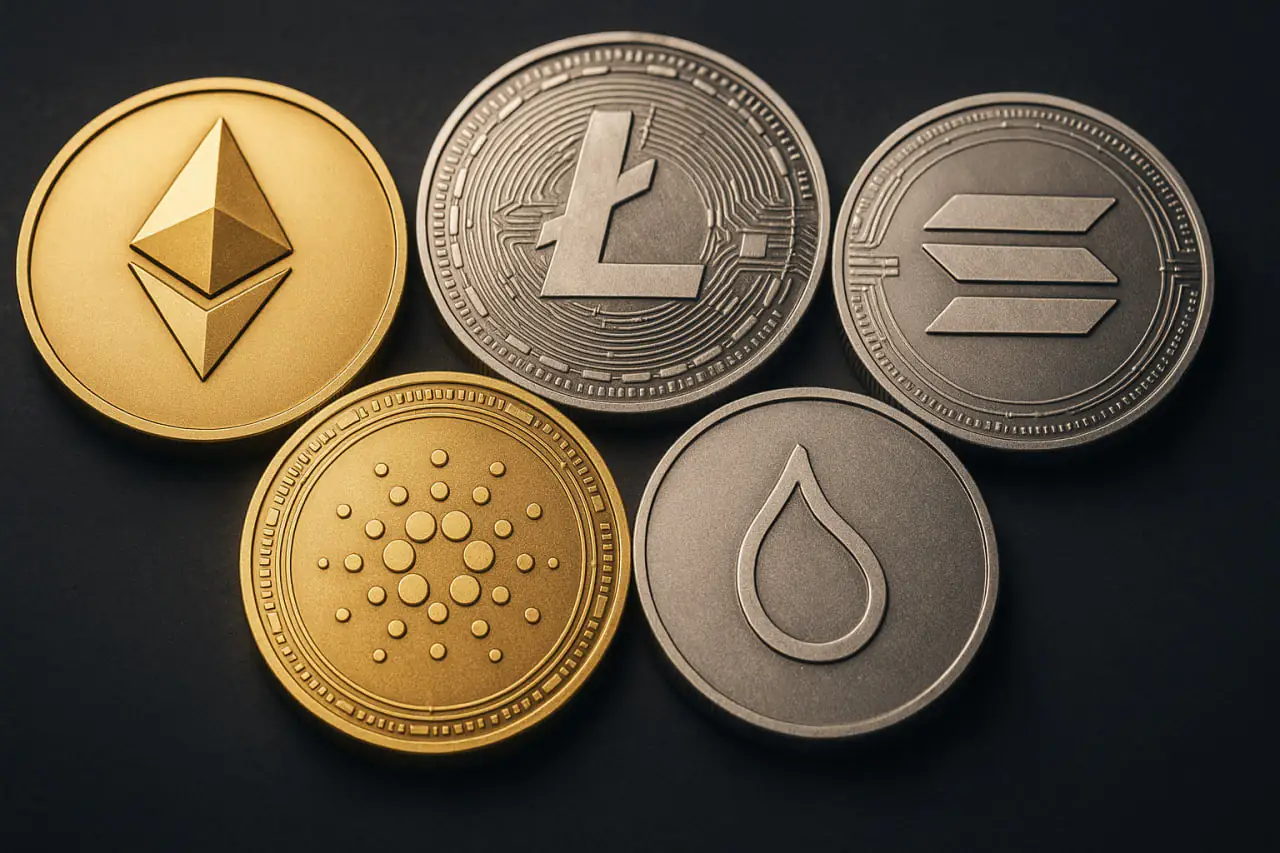
On February 26, 2026, Vitalik Buterin posted a document that few outside the cryptography community would call bedtime reading. It was a clinical, technically dense roadmap — the “Strawmap,” as the Ethereum Foundation called it — outlining how the world’s second-largest blockchain intends to survive the arrival of quantum computers. Buterin identified four distinct cryptographic vulnerabilities in Ethereum’s architecture. The language was measured. The implications were not. If quantum computing advances on its current trajectory, the mathematical foundations securing trillions of dollars in digital assets may not hold.
The Accelerating Countdown to Q-Day
For years, the quantum threat to cryptocurrency was theoretical — a problem for another decade, filed somewhere between climate risk and asteroid insurance. That framing is no longer credible.
Google’s 2026 research demonstrated a 20-fold reduction in the physical resources needed to crack 256-bit elliptic curve cryptography — the very algorithm securing Bitcoin and Ethereum transactions. Where experts once estimated that breaking blockchain encryption would require tens of millions of physical qubits, Google has now lowered that threshold to fewer than 500,000. KuCoin
The hardware milestone behind this shift is Google’s Willow processor. Willow demonstrated quantum error correction below the surface code threshold in late 2024 — the first experimental proof that the noise assumptions underpinning all previous resource estimates are physically achievable. In plain terms: the chip confirmed that larger, more powerful quantum computers will not simply generate proportionally more errors. They can, in theory, get more reliable as they scale. The Quantum Insider
Google’s VP of security engineering, Heather Adkins, wrote in a company blog that the world is on the cusp of a quantum computer emerging and breaking current encryption — moving the widely cited “Q-Day” estimate from the 2030–2035 range to as early as 2029. SDxCentral
That compression of the timeline is what has finally forced the crypto industry’s hand.
1: What the Quantum Computing Threat to Cryptocurrency Actually Means
The quantum computing threat to cryptocurrency is not abstract. It is structural, and it runs through the mathematical bedrock on which every major blockchain is built.
Bitcoin and Ethereum both rely on the Elliptic Curve Digital Signature Algorithm (ECDSA) to authenticate transactions. Every time a user sends funds, they generate a cryptographic signature from a private key. The security assumption is simple: it is computationally infeasible to reverse-engineer the private key from the publicly visible signature. Classical computers honour that assumption. A sufficiently powerful quantum computer, running Peter Shor’s factoring algorithm, would not.
ECDSA, along with RSA and other widely used public-key algorithms, can be broken in polynomial time using Shor’s algorithm on a sufficiently powerful quantum computer. Beyond transaction signatures, Grover’s algorithm poses a secondary threat by accelerating hash generation — potentially enabling an attacker to recreate and manipulate the blockchain’s transaction history. arxiv
The exposure is not uniform across all wallets. Approximately 6.65 million BTC already have permanently exposed public keys — meaning adversaries already possess everything they need to reconstruct private keys, once a capable quantum machine exists. Every transaction is also vulnerable during the brief window it sits in the mempool before confirmation. That figure represents hundreds of billions of dollars in Bitcoin that cannot be migrated without a coordinated network-level intervention. PR Newswire
The U.S. National Institute of Standards and Technology’s standardisation of quantum-resistant cryptographic algorithms marks a significant milestone in the response effort: CRYSTALS-Kyber has been selected for key encapsulation and Dilithium for digital signatures — both lattice-based solutions that provide a framework for implementing quantum-resistant features in blockchain systems. Chainalysis
The standards exist. The question is whether the industry will implement them before the threat arrives.
2: Why the Clock Is Already Running — Even Before Q-Day
What is “harvest now, decrypt later” in cryptocurrency?
In a harvest-now-decrypt-later (HNDL) attack, adversaries download and store encrypted blockchain data today — transactions, wallet addresses, private communications — intending to decrypt it once a cryptographically relevant quantum computer exists. The attack costs almost nothing upfront. All historical Bitcoin blockchain data from 2009 onward is already subject to it.
A Federal Reserve working paper published in September 2025 illustrated the problem precisely: if a cryptocurrency system’s data is harvested in 2025 by a bad actor, and the network migrates to post-quantum cryptography in 2027, but Q-Day arrives in 2030 — the migration offers no protection whatsoever. The attacker simply waits, then decrypts the pre-migration data. Federal Reserve
NIST has made the same point in direct terms: even if post-quantum algorithms are deployed before sufficiently powerful quantum computers are built, a great deal of already-encrypted data remains permanently under threat. Some secrets retain long-term value — financial records, identity data, ownership proofs — making them worth harvesting today for future exploitation. National Institute of Standards and Technology
This matters enormously for blockchain because the ledger is public and permanent. Unlike a corporate email server that can be wiped and rebuilt, the Bitcoin blockchain cannot be retroactively re-encrypted. Every transaction ever broadcast — including early Satoshi-era addresses — sits in plain view, waiting.
The picture is more complicated still on Ethereum. Buterin has warned that Ethereum’s security model could be vulnerable sooner than many expect, and has previously estimated meaningful risk could emerge before 2028. ECDSA, the cryptographic backbone of Ethereum accounts today, is particularly exposed — and migrating away from it requires not just a software patch but a fundamental rethinking of how user accounts authenticate transactions. CoinPedia
Buterin’s solution involves native account abstraction: decoupling user accounts from ECDSA so they can adopt quantum-resistant signature schemes. Adding “frame transactions” would give Ethereum users first-class accounts capable of using any signature algorithm, including those a quantum computer cannot break. The feature is being considered for Hegotá, one of the forks confirmed for the second half of 2026. DL News
3: The Second-Order Stakes — Markets, Policy, and the Migration Problem
The cryptographic risk is tractable. The coordination risk may not be.
Migrating a decentralised network to post-quantum cryptography requires consensus among thousands of independent node operators, wallet developers, exchanges, and institutional custodians — entities with competing incentives and no single authority to compel action. NIST’s own transition report sets a deadline of 2035 for moving systems away from vulnerable cryptographic algorithms, a timeline calibrated to the expectation of a viable quantum technique for breaking current encryption methods. For critical financial infrastructure, nine years sounds generous. For a globally distributed, permissionless network, it’s tight. PQShield
The institutional financial sector is taking notice. The Financial Stability Analysis Centre (part of Citigroup) published a detailed quantum threat report in January 2026, while the Federal Reserve noted that the “harvest now, decrypt later” threat began at the inception of Shor’s algorithm in 1994 and has been ongoing ever since. The National Security Agency’s Commercial National Security Algorithm Suite 2.0, published in May 2025, begins mandating the use of quantum-resistant algorithms for classified systems. Citi
The divergence between Bitcoin and Ethereum in their responses is telling. Ethereum now has a four-year roadmap, a dedicated post-quantum research team, and a co-founder willing to name specific protocol forks where upgrades will ship. Bitcoin has a community debate. The issue has roiled the Bitcoin community, which remains divided over the urgency of the problem — with some developers arguing that meaningful quantum risk is a decade away, and others pointing to the irreversibility of exposed public keys as a reason to act now regardless. DL News
BTQ Technologies has tried to cut through the impasse. The company announced the first successful demonstration of a quantum-resistant Bitcoin implementation using NIST-standardised post-quantum cryptography in October 2025 — replacing Bitcoin’s vulnerable ECDSA signatures with ML-DSA in a full wallet-creation, transaction-signing, and mining flow. Its roadmap includes a 2026 mainnet launch with migration tools and exchange integration. Whether the Bitcoin core development community adopts, ignores, or forks around such proposals will define the network’s risk profile for the rest of the decade. PR Newswire
4: The Case for Measured Urgency — and Why the Alarmists May Be Getting Ahead of Reality
Not everyone is convinced the crisis is imminent.
A16z Crypto’s Justin Thaler argued in December 2025 that a cryptographically relevant quantum computer — meaning one capable of running Shor’s algorithm at scales sufficient to attack elliptic curve cryptography within a reasonable timeframe — is “highly unlikely” in the 2020s by any reasonable reading of public milestones and resource estimates. Thaler’s argument is technical and specific: the gap between demonstrating error correction below a noise threshold and actually running Shor’s algorithm against a 256-bit elliptic curve at scale involves engineering challenges that have not yet been solved, let alone published. a16z crypto
Kostas Kryptos Chalkias, co-founder and chief cryptographer at Mysten Labs, offered a similar assessment after Google’s Willow announcement. “There’s no evidence today that any computer, even a classified one, can break modern cryptography,” he told CoinDesk. “We’re at least 10 years away from that.” CoinDesk
Chainalysis broadly concurs: industry experts generally estimate a five-to-fifteen-year timeline before quantum computers could potentially break current cryptographic standards. Chainalysis
These are not dismissals. They are calibrations. The serious sceptics are not arguing that the threat is fictional — they’re arguing that the transition to post-quantum cryptography should be managed deliberately rather than reactively, and that panic-driven forks risk introducing new vulnerabilities in the rush to eliminate old ones. Quantum-resistant signatures are significantly larger and more computationally expensive than current standards, meaning any migration will carry real performance and cost tradeoffs that need to be stress-tested at scale before deployment on a $2.4 trillion network. Crypto News
That tension — between acting too early and acting too late — is precisely what makes this problem so uncomfortable. The cost of being wrong in either direction is enormous.
The Migration Race Nobody Can Afford to Lose
What the crypto industry faces is a deadline it cannot set, preparing for an adversary it cannot see, on a timeline that experts disagree about by an order of magnitude. That is an unusual kind of systemic risk — not the binary shock of a market crash or a regulatory clampdown, but a slow-moving, probabilistic erosion of the one property that makes decentralised networks worth anything at all: the assurance that cryptographic ownership means something.
The NIST standards are finalised. The Ethereum roadmap is published. The Federal Reserve has issued its warning. What remains is the hard, unglamorous work of implementation: coordinating wallet developers, exchanges, node operators, and institutional custodians across jurisdictions with no single point of command. Bitcoin, in particular, faces a governance problem that no amount of cryptographic elegance can paper over.
Buterin’s Strawmap is an act of institutional seriousness — an acknowledgment that the threat is real enough to begin paying the costs of preparation now, before the cost of inaction becomes unthinkable.
The race isn’t against quantum computers. It’s against complacency.
Discover more from The Economy
Subscribe to get the latest posts sent to your email.



Key Takeaways
- Rolex’s secondary market rose approximately 7.9% year-over-year as of 2026 (per WatchCharts data) — trailing Patek Philippe (+16.2%) and Tudor (+11.4%) but still outperforming Audemars Piguet (+3.4%).
- Rolex raised U.S. retail prices 4–9% in January 2026 (steel models ~5.6%, gold models ~8.7%), narrowing the historical gap between retail and pre-owned pricing.
- Not every model appreciates: steel sports references (Submariner, GMT-Master II, Daytona) have held value far better than two-tone or widely available dress references like the standard Datejust.
- The Lady-Datejust posted the sharpest 2026 gain among tracked collections — up 22.73%, from roughly $9,269 to $11,376 — driven by demand for smaller, “everyday luxury” watches.
- Gold’s rise past $2,400/oz has directly lifted the investment case for Rolex’s precious-metal references (Day-Date, Sky-Dweller, Yacht-Master).
The Model-by-Model Picture
| Category | 2026 Trend |
|---|---|
| Lady-Datejust | +22.73% (strongest performer among tracked collections) |
| Steel sports models (Submariner, GMT-Master II) | Held value well; corrected from 2022 peak but stabilized above retail |
| Daytona | Corrected from highs above $50,000 to the mid-$30,000s; still among the most sought-after references |
| Two-tone/widely available Datejust | Flat to negative — “holds value” is an overstatement for this category |
| Gold references (Day-Date, Sky-Dweller) | Lifted by gold’s rise above $2,400/oz |
Why the “Rolex Always Appreciates” Myth Is Fading
The pandemic-era boom pushed some references — the Daytona above all — to speculative highs disconnected from historical norms. Since the March 2022 peak, steel sports models have compressed meaningfully, and dealers who bought inventory near the top have in some cases faced 20–40% markdowns on liquidation. The lesson for 2026 buyers: Rolex as a category is not a monolith. Value retention depends heavily on specific reference, condition, and whether the piece comes with box and papers (“full set”).
What’s Actually Driving 2026 Strength
- Retail price increases raise the floor. When a new Submariner retails at $10,050 (up from $9,500), a pre-owned example at $11,000–$12,000 suddenly represents a smaller premium — narrowing the gap without secondary prices actually moving.
- Supply discipline remains Rolex’s core lever. The brand has never confirmed production numbers, and secondary-market premiums remain entirely a function of Rolex’s own manufacturing decisions — a risk factor as much as a support.
- Certified Pre-Owned rollout. Rolex’s now fully rolled-out CPO program has changed how buyers transact in the used market, adding a layer of brand-verified legitimacy that supports pricing.
The Case for Rolex as a Portfolio Diversifier
Financial advisors increasingly frame luxury watches not as a replacement for equities or bonds, but as a tangible, historically low-correlation diversifier — one that carries its own risks (illiquidity, condition-dependent pricing, no yield) but has demonstrated multi-decade resilience for specific references.
Is Rolex a good investment in 2026?
It depends heavily on the specific reference. Steel sports models like the Submariner and Daytona have held or grown in value; two-tone and widely available dress models generally have not. Overall, Rolex’s secondary market rose about 7.9% year-over-year in 2026, trailing Patek Philippe but ahead of Audemars Piguet.
Discover more from The Economy
Subscribe to get the latest posts sent to your email.

Navigating Mortgage and Loan Refinancing in a High-Yield Environment
Global public debt crossing critical thresholds has kept central bank policies volatile, resulting in fluctuating US Treasury yields throughout 2026. For homeowners and commercial property holders burdened by previous high-interest borrowing cycles, finding optimal refinance windows has become a high-stakes financial puzzle. Stalled disinflation and stubborn employment numbers mean rate cuts are incremental, requiring borrowers to act with precision.
Timing your mortgage or commercial loan refinance in this environment requires a deep understanding of yield curve movements and lender risk appetites.
Decoding 2026 Refinance Dynamics
The 10-Year Treasury Yield Benchmark
Mortgage rates continue to track closely with the 10-year US Treasury yield. When macroeconomic anxiety spikes debt issuance, yields rise, tightening consumer borrowing capacity. Savvy borrowers monitor weekly Treasury auctions to lock in rates during brief dip windows.
Hybrid ARMs and Alternative Structures
With fixed rates remaining elevated, 7/1 and 10/1 adjustable-rate mortgages (ARMs) have surged in popularity. These products offer lower initial monthly payments, giving borrowers breathing room until central bank easing cycles fully materialize.
| Loan Product | Current Rate Range | Best For | Key Risk Factor |
| 30-Year Fixed Mortgage | 6.2% – 6.8% | Long-term predictability | Higher initial monthly outlay |
| 7/1 Hybrid ARM | 5.5% – 5.9% | Short-term ownership / flipping | Rate reset risk after year 7 |
| Commercial Refinance | 7.0% – 8.2% | Corporate asset restructuring | Strict DSCR lender covenants |
Actionable Steps for Successful Refinancing
To maximize your chances of securing favorable refinance terms in a volatile market, follow a disciplined preparation strategy.
Boost Your Credit Score Immediately: Lenders in 2026 are applying stringent credit tiering; a 20-point increase can drop your APR by a crucial quarter-point.
Shop Regional Credit Unions: Smaller financial institutions often offer portfolio loans with more flexible underwriting than major national banks.
Calculate the Break-Even Point: Ensure your total closing costs are recouped through monthly savings within 24 months of closing.
“Market Strategist View: Refinancing in 2026 is an exercise in opportunistic timing. Borrowers must maintain immaculate financial profiles ready to strike the moment Treasury yields dip.”
Mastering the complexities of today’s debt environment ensures you can successfully lower your debt service costs and protect your long-term financial stability.
Discover more from The Economy
Subscribe to get the latest posts sent to your email.

The days of pulling generic auto insurance quotes based purely on your zip code and age are officially over. In 2026, insurance comparison engines are powered entirely by generative AI and real-time telematics. These platforms digest thousands of live data points—ranging from your driving smoothness via connected vehicle sensors to real-time traffic congestion patterns—to generate hyper-personalized premiums instantly.
For consumers, this evolution represents both a massive opportunity for savings and a hidden trap for penalty pricing. Understanding how AI algorithms evaluate risk is essential for anyone looking to lower their monthly auto insurance premiums.
How AI Comparison Engines Evaluate Your Risk Profile
Behavioral Telematics and Connected Cars
Modern cars stream performance data directly to insurance aggregators. Generative AI models analyze braking sharpness, acceleration curves, cornering G-forces, and phone distraction metrics. Drivers who maintain smooth, defensive habits are rewarded with dynamic rate cuts of up to 40% compared to traditional rating tiers.
Predictive Traffic and Weather Modeling
AI tools now cross-reference your daily commute route with predictive weather and accident probability models. If your standard parking location or driving corridor has a statistically higher incidence of uninsured motorist claims, your quotes will reflect that hyper-local risk assessment.
| Comparison Factor | Traditional Rating Model | 2026 Generative AI Model | Impact on Premium |
| Mileage & Usage | Annual estimated odometer reading | GPS tracking & live trip duration | High (up to 35% savings) |
| Driving Behavior | MVR driving record & accidents | Real-time braking, speed, & G-force | Critical (determines tier) |
| Vehicle Tech | Make, model, and safety rating | ADAS calibration & repair cost data | Moderate |
Strategies to Lower Your AI-Driven Insurance Quote
To outsmart the algorithm and secure the lowest possible premium in 2026, drivers must proactively manage their digital footprint on insurance platforms.
Opt-In for Telematics Trial Periods: Many insurers offer immediate 15% discounts just for installing their driving app; let it track safe habits for 30 days to lock in permanent savings.
Scrub Unverified Public Records: Ensure your motor vehicle report is free of clerical errors that AI risk models misinterpret as reckless behavior.
Compare AI Aggregators: Use platforms that integrate multi-carrier API feeds rather than single-brand comparison sites to find the best risk-adjusted rate.
“Industry Note: AI-driven pricing rewards transparency and precision. Drivers who actively manage their telematics data consistently out-save those relying on legacy quote calculators.”
Embracing AI comparison tools allows savvy policyholders to customize coverage limits precisely to their driving habits, eliminating wasted premium spend while ensuring robust protection.
Discover more from The Economy
Subscribe to get the latest posts sent to your email.

Celeste Frozen Pizza Discontinued: What Conagra Confirmed

US–China Critical Minerals Competition: Why a Trade Deal Cannot Fix Every Supply Risk

Oil Price Outlook 2026: How Supply Risks Reach Fuel Bills, Inflation and Business Costs

AI in Business 2026: Why Faster Employees Do Not Automatically Mean Higher Profits

Mortgage Rates in 2026: Why They Remain High and How to Compare the True Cost

Gold Price Outlook 2026: The Forces Behind the Forecasts—and What Could Reverse Them

Global Economic Outlook 2026: Growth, Inflation and Risks

Trump–Putin Diesel Deal: Why Zelensky Is Angry and What It Means for Fuel Prices

Anthropic Draws the Line: Why Claude’s New Usage Policy Explicitly Bans ‘Cruel Behavior’ Toward AI

Ynon Kreiz & Mattel’s Digital Transformation: Franchise Strategy and Financial Growth

Crude Oil & Petroleum Market Analysis: OPEC+ Decisions and Price Forecasts

Top US Convenience Store Chains: Store Counts, EV Charging, and Sales Trends

Publix Store Closures Tracker: Locations, Rebuild Status, and What’s Changing

How to Find Google Maps Fuel Prices and Save on Every Fill-Up

Oil Prices Break $100 in 2026: Middle East Conflict & Energy Markets

China Stocks Today: Are Big Economies in Asia Nearing a Market Bottom?

Middle East War Economics 2026: Oil Prices & Energy Markets

PSX Forecast 2026: KSE-100, IMF Reviews & Geopolitics

Crypto Daily Outlook: Bitcoin, Altcoins, and the Future of Decentralized Finance

Global Pension Systems Ranked: The World’s Best and Worst Retirement Frameworks

Enterprise AI Platforms Disrupting B2B SaaS in 2026: Full Analysis

World’s Largest Economies: Ranking the Top Global Powers

Elon Musk’s Next Moves: Disrupting the 2026 Global Economy

Pakistan Economy 2026: Inside the SBP’s Balancing Act

GasBuddy Market Insights: How Crude Price Shifts Impact Local Fuel Cost Averages

World Bank & IMF Reports 2026: Why the “3% Growth” Consensus Is Actually a Debate

Global Equity Market Divergence: US Tech vs. European Dividend Stocks vs. Asian Growth

Stock Market Today: Dow Climbs 500 Points as Markets Shake Off Inflation Jitters
-

 Markets & Finance9 months ago
Top 15 Stocks for Investment in 2026 in PSX: Your Complete Guide to Pakistan’s Best Investment Opportunities
-

 Analysis8 months ago
Johor’s Investment Boom: The Hidden Costs Behind Malaysia’s Most Ambitious Economic Surge
-

 Analysis8 months ago
Top 10 Stocks for Investment in PSX for Quick Returns in 2026
-

 Banks9 months ago
Best Investments in Pakistan 2026: Top 10 Low-Price Shares and Long-Term Picks for the PSX
-

 Analysis8 months ago
Brazil’s Rare Earth Race: US, EU, and China Compete for Critical Minerals as Tensions Rise
-

 Investment9 months ago
Top 10 Mutual Fund Managers in Pakistan for Investment in 2026: A Comprehensive Guide for Optimal Returns
-

 Global Economy10 months ago
15 Most Lucrative Sectors for Investment in Pakistan: A 2025 Data-Driven Analysis
-

 Global Economy10 months ago
Pakistan’s Export Goldmine: 10 Game-Changing Markets Where Pakistani Businesses Are Winning Big in 2025