Analysis
Hong Kong’s IPO Crown Is About to Be Snatched — By a Single Deal
It took Hong Kong six years, three rounds of regulatory reform, and a historic wave of Chinese technology listings to reclaim the title of the world’s largest IPO market. It will take Elon Musk approximately one afternoon in June to take it away again.
On Wednesday, SpaceX filed its public prospectus with the US Securities and Exchange Commission, targeting a Nasdaq debut around June 12 under the ticker SPCX. The offering is expected to raise up to $75 billion at a valuation nearing $1.75 trillion — a figure that would make it the largest initial public offering in the history of capital markets, nearly tripling the $29.4 billion Saudi Aramco raised in 2019. That $75 billion sum would also exceed twice the total funds raised by every company that listed in Hong Kong across the entirety of 2025.
The arithmetic is blunt. The implications run considerably deeper.
How Hong Kong Got Here — and Why the Timing Stings
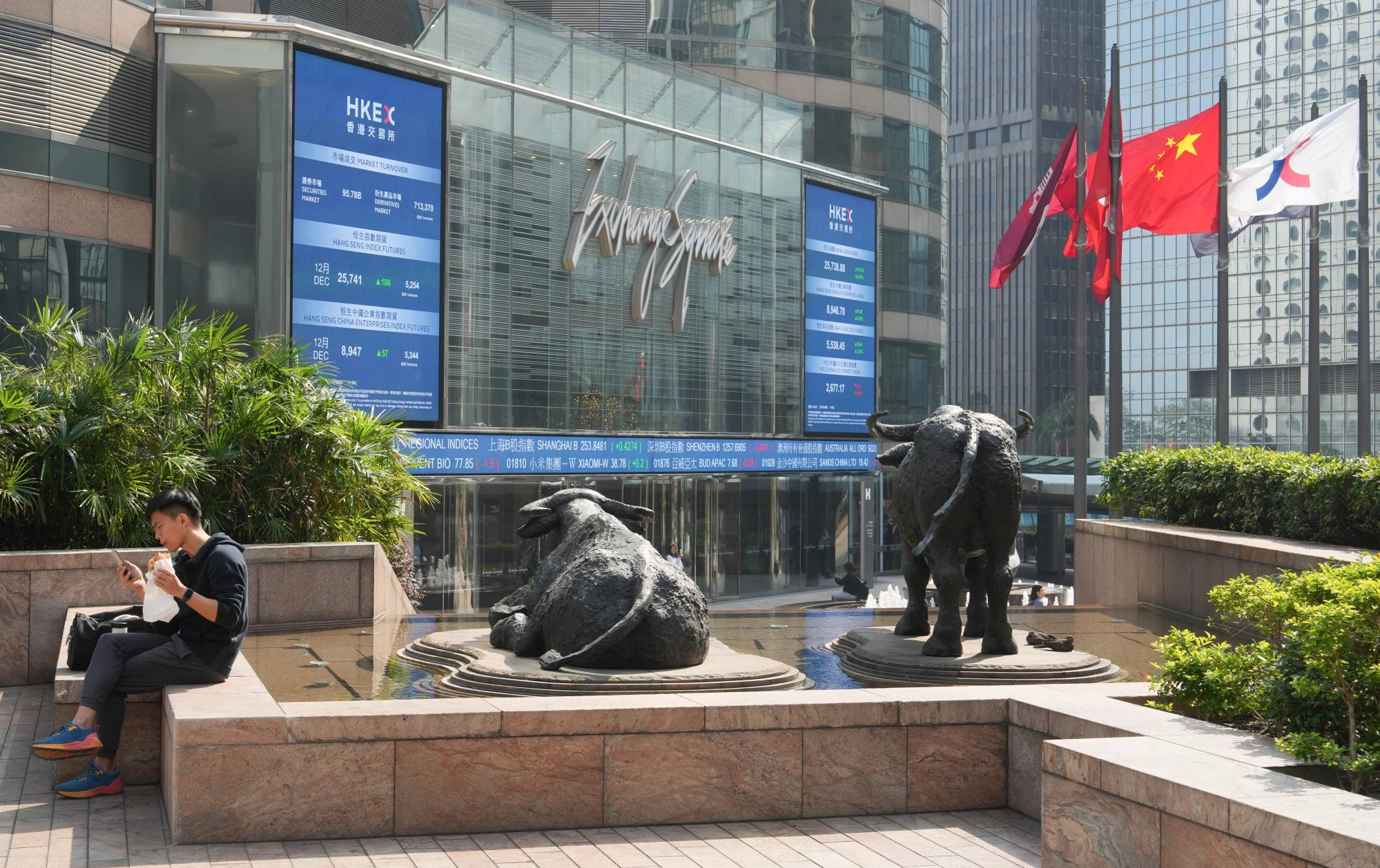
The Hong Kong Exchanges and Clearing’s (HKEX) reclamation of the global IPO crown in 2025 was not a fluke. It was earned, painstakingly, through structural reform and geopolitical tailwinds that converged in ways even optimists hadn’t fully anticipated.
According to data from LSEG, a total of 114 companies raised $37.22 billion on HKEX’s main board in 2025 — a 229% increase from the $11.3 billion raised in 2024. That pushed Hong Kong from fifth place to first globally, the exchange’s highest ranking since the pandemic-era boom of 2019 and 2021. Nasdaq finished second at $27.53 billion; India’s NSE and BSE followed in third and fourth.
The recovery wasn’t a single surge. It was built on a structural realignment. A record wave of A+H listings — companies trading simultaneously on both mainland Chinese exchanges (A-shares) and the Hong Kong exchange (H-shares) — accounted for more than 50% of total funds raised. PwC’s Hong Kong Capital Markets team recorded 76 A+H listings in 2025, up from 30 the year before — a 153% increase that reflected both Beijing’s strategic support for offshore fundraising and a fast-tracked listing process that HKEX had engineered specifically for such deals.
The momentum carried into 2026. By the end of the first quarter, KPMG reported that Hong Kong’s IPO market had raised HK$109.9 billion across 40 new listings — a staggering 489% increase in funds raised year on year, and the strongest first-quarter performance in five years. Nasdaq placed second in the Q1 global ranking with just $5.65 billion from 18 listings. Hong Kong wasn’t merely ahead — it was lapping the field.
Then came Wednesday’s filing.
The SpaceX Effect: When One Deal Reshapes a Market
The single most consequential fact about the SpaceX IPO isn’t the size. It’s the concentration.
At $75 billion, the SpaceX offering would alone represent more than the combined IPO proceeds of the second and third ranked global exchanges in 2025. It would, in a single transaction on a single exchange, transform Nasdaq from a distant runner-up into the unambiguous leader of the 2026 global IPO league table — regardless of what Hong Kong achieves over the remaining seven months of the year.
The prospectus filed in New York reveals a company of genuine complexity. SpaceX generated $18.674 billion in consolidated revenue in 2025, anchored by its Connectivity segment — primarily the Starlink satellite internet service, which now serves more than nine million subscribers and produced a quarterly operating profit of $1.19 billion in Q1 2026. Yet the company also posted a $2.589 billion operating loss for the full year 2025, driven almost entirely by the xAI division that SpaceX absorbed. In the first quarter of 2026 alone, the AI segment swung to a $2.47 billion loss on just $818 million in revenue.
Elon Musk will retain 85.1% of voting power through a dual-class share structure — 12.3% of Class A stock and 93.6% of Class B shares. Georgetown University finance professor Reena Aggarwal has noted that valuing SpaceX is inherently difficult because no comparable peer group exists. Reuters reported the company plans to price shares on June 11 before a June 12 trading debut.
What does this mean for the Hong Kong IPO market 2026 rankings? Straightforwardly: HKEX is almost certain to finish the year in second or third place, not first. Even under PwC’s bullish forecast — HKD 320–350 billion in total 2026 proceeds, approximately $41–45 billion — that figure falls short of SpaceX’s $75 billion target. A single private aerospace company raising more capital than the entire Hong Kong exchange raises in a year is not a competitive scenario; it’s a category event.
John Lee Chen-kwok, vice-chairman and co-head of Asia coverage at UBS in Hong Kong, acknowledged as much while choosing measured optimism: Hong Kong’s main board, he said, could remain in the top three this year even accounting for the challenge posed by US exchanges. That is almost certainly where Hong Kong will land.
What This Reveals About Structural Depth vs. Gravitational Pull
Can Hong Kong maintain its IPO market ranking in 2026?
Hong Kong is highly likely to remain a top-three global IPO market in 2026, supported by a pipeline exceeding 300 active listing applications and structural A+H listing momentum. However, SpaceX’s planned $75 billion Nasdaq offering means the exchange will not retain the top global ranking, which it held in 2025 after a six-year absence. The critical distinction is between a temporary ranking loss — caused by a singular once-in-a-generation listing — and a structural decline. On current evidence, Hong Kong is experiencing the former.
The picture is more complicated, however, than a simple “SpaceX effect.”
There’s a legitimate debate about what IPO market rankings actually measure. Hong Kong’s 2025 triumph owed much to the A+H structure — a mechanism that doesn’t exist on Nasdaq and doesn’t transfer. A+H listings are available exclusively to Chinese mainland companies that are already publicly traded on the Shanghai or Shenzhen exchanges and want offshore capital. They’re structurally embedded in the China-Hong Kong capital corridor in ways that no US exchange can replicate. KPMG’s full-year 2025 analysis found that A+H listings accounted for more than half of total Hong Kong IPO funds raised — a structural bedrock that insulates the market against competition in ways that headline rankings obscure.
Yet the same analysis exposes a vulnerability. A markets ledger built substantially on a single deal type — however structurally sound — remains sensitive to supply-side disruption. Beijing’s pace of approval for A+H candidates, capital controls, US–China geopolitical temperature, and the health of mainland equity markets all exert pressure on the same structural mechanism. The exchange is not diversified in the way, say, the NYSE is diversified.
That asymmetry matters when a US exchange can attract a $75 billion offering in a sector — commercial aerospace — where Hong Kong has essentially no issuer base at all. HKEX’s own March 2026 competitiveness consultation paper acknowledged that Greater China issuers typically choose between Hong Kong and the US, and that US regulatory developments bear more directly on HKEX competitiveness than developments in other non-US markets. The document was an unusually candid self-assessment from a regulator that had just reclaimed a global crown.
The Reform Agenda That SpaceX Just Made More Urgent
The SpaceX filing arrives at a moment when HKEX was already deep in the most ambitious overhaul of its listing rules in nearly a decade.
In March 2026, HKEX proposed a suite of reforms that, taken together, signal genuine structural ambition: halving the minimum valuation threshold for companies with weighted voting rights from HK$40 billion to HK$20 billion (approximately $2.6 billion); reducing the minimum market capitalisation for the revenue-based listing route; and — critically — allowing all IPO applicants to file prospectuses confidentially, a practice already standard in the United States.
That last reform is more significant than it sounds. Confidential filing allows companies to test regulatory appetite and valuation before committing publicly to a listing, reducing reputational risk. It was one of the specific advantages that US exchanges have historically held over Hong Kong in attracting high-growth technology companies wary of the spotlight that public-draft filings create. The irony is that SpaceX — which filed its S-1 confidentially with the SEC in April before going public — is the paradigmatic beneficiary of exactly the kind of process HKEX is now trying to replicate.
The biotech sector tells a similar story of structural deepening. DLA Piper’s 2026 market outlook noted that Hong Kong’s biotech index outperformed its Nasdaq counterpart by a wide margin in 2025 — rising nearly 100% compared to Nasdaq’s 20–30% gain — drawing global investors attracted by both the returns and the comparatively lower entry valuations. Since the introduction of Chapter 18A, which allows pre-revenue biotech companies to list in Hong Kong, more than 80 companies have joined the exchange. That ecosystem has reach in sectors adjacent to the kind of deep-tech companies that HKEX wants to attract through its newest listing channel, the Technology Enterprises Channel (TECH).
Still, the SpaceX listing clarifies the ceiling. HKEX’s structural reforms are necessary but insufficient to compete for capital-raising events of this magnitude. Elon Musk’s company didn’t choose Nasdaq because Hong Kong’s listing rules were too restrictive. It chose Nasdaq because it’s an American company, its investors are American, and the infrastructure — banks, lawyers, institutional relationships — for listing America’s largest companies runs through Wall Street, not Admiralty.
The Case for Not Panicking
Edward Au, southern region managing partner at Deloitte China, put the tension clearly at an April press conference: “The tide could change quickly,” he said, noting that US mega IPOs in AI and the space sector “could shift the global rankings quite easily.” He was right — and that’s precisely the argument for measured perspective rather than alarm.
Rankings are not destiny. Hong Kong finished fifth in 2024, first in 2025, and will likely finish second or third in 2026. What that volatility reveals is not structural fragility but the inherent lumpiness of large-cap IPO activity — a reality that affects every exchange, including Nasdaq, including the NYSE.
The deeper argument for Hong Kong’s resilience rests on the demand side. LSEG data shows more than 300 active IPO applications were in HKEX’s pipeline as of late 2025, including 92 A+H applicants alone. KPMG projects that number could grow. The listing queue for Chinese artificial intelligence companies — including names like Zhipu AI and MiniMax, which passed HKEX listing hearings in late 2025 — represents genuine, durable demand for Hong Kong as an international capital gateway. None of that pipeline disappears because SpaceX lists in New York.
JPMorgan, alongside UBS, has maintained its bullish posture on Hong Kong’s market, noting continued strong investor appetite for mainland technology and other listing candidates driven by the outlook for the Chinese economy.
There is also the question of what global investors actually want. For those seeking exposure to Chinese technology, innovation, and the mainland economy, Hong Kong is not interchangeable with Nasdaq. SpaceX’s Nasdaq listing will attract a specific class of investor with a specific risk appetite. The investors bidding for MiniMax’s Hong Kong IPO are playing a different game entirely.
A Crown, Not a Kingdom
The world’s largest IPO market in any given year is ultimately a title determined by a handful of very large deals. Hong Kong learned this in 2019, when a run of mainland mega-listings briefly carried it to the top. It learned it again in 2021, during the boom. And it’s relearning it now — this time, watching the crown travel in the other direction.
What HKEX has built since 2022, however, is something more durable than a rankings trophy: a reformed listing architecture, a deepening technology pipeline, and a structural A+H corridor with mainland China that no other exchange can replicate. None of that is erased by SpaceX’s June flotation.
The honest assessment is that Hong Kong’s IPO revival was always going to be tested by the gravitational pull of US capital markets when something genuinely historic came along. Something genuinely historic has now come along.
Whether the city’s exchange has built enough structural depth to absorb that gravity — and continue growing in its aftermath — is the question that matters for 2027 and beyond. On current trajectory, the answer looks more durable than the rankings suggest.
The crown moves. The architecture stays.
Discover more from The Economy
Subscribe to get the latest posts sent to your email.
AI
China AI Green Energy Mapping: Data-Centre Demand Surges
On a Wednesday morning in May 2026, a paper landed in the journal Nature that said more about China’s technological ambitions than almost any policy document released this year. Researchers from Peking University and Alibaba Group’s Damo Academy had fed 7.56 terabytes of satellite imagery through a deep-learning model and produced something that had never existed before: a complete national inventory of China’s renewable energy infrastructure, down to the individual turbine and rooftop panel. The algorithm identified 319,972 solar photovoltaic facilities and 91,609 wind turbines spread across a country the size of a continent. “This allows us to see the country’s new-energy landscape from a ‘God’s-eye view’,” said Liu Yu, a professor at Peking University’s School of Earth and Space Sciences. It was not a metaphor. It was a statement of operational intent.
Why the Timing Is No Accident
The Nature publication arrived against a backdrop that gives it unusual urgency. China’s electricity consumption from data centres — the physical infrastructure underpinning every AI model the country trains and deploys — rose 44 percent year-on-year in the first quarter of 2026, according to the China Academy of Information and Communications Technology. That is not a rounding error. It is a structural jolt to a national grid that the government is simultaneously trying to decarbonise.
The broader numbers are equally stark. Data centres in China posted a 38% compound annual growth rate over the past five years and are forecast to maintain a 19% CAGR through 2030, according to Rystad Energy, lifting their share of national electricity consumption from 1.2% today to roughly 2.3% by the end of the decade. The IEA projects that China’s data centre electricity consumption will rise by approximately 175 TWh — a 170% increase on 2024 levels — making it one of the two largest sources of data-centre demand growth globally, alongside the United States. Beijing has enshrined the sector as a strategic priority in the 2026–2030 Fifteenth Five-Year Plan.
The question the Peking University-Alibaba study implicitly answers is: how do you manage a grid of that complexity without first knowing, with precision, what is on it?
China AI Green Energy Mapping: What the Research Actually Did
The conventional way to track renewable energy deployment is through utility filings, government registries, and industry surveys. Each method suffers from the same flaw: it relies on operators to self-report, which introduces lags, underreporting, and geographic ambiguity. China’s solar build-out has been so rapid — the country commissioned more solar photovoltaic capacity in 2023 alone than the entire world did in 2022 — that administrative databases have struggled to keep pace.
The Damo-Peking University framework took a different approach. Using sub-metre satellite imagery and a deep-learning architecture trained to distinguish solar arrays and wind turbines from roads, rooftops, and farmland, the team produced a unified national inventory covering installations as of 2022. The 7.56 terabytes of processed imagery represent, by any measure, one of the most computationally intensive remote-sensing exercises applied to energy infrastructure in the peer-reviewed literature.
What makes the dataset genuinely useful — rather than merely impressive — is its application to what the paper calls solar-wind complementarity. The core finding, published in Nature, is that pairing solar and wind assets reduces generation variability, and that the effectiveness of this pairing increases as the geographic scope of pairing expands. In plain terms: the more widely a grid operator can see and coordinate dispersed renewable assets, the more stable the system becomes. The inventory is the prerequisite for that coordination at national scale.
Professor Liu’s phrase — “God’s-eye view” — captures something real. China has long had ambitions on paper: carbon peak by 2030, carbon neutrality by 2060, renewable capacity targets that consistently overshoot forecasts. What it has often lacked is the granular data infrastructure to translate targets into real-time operational decisions. This study represents a material step toward closing that gap. For grid operators trying to anticipate renewable output, route curtailed electricity, or site new computing hubs, knowing the precise location and configuration of 411,000 generating assets is not an academic exercise. It is operational intelligence.
The Structural Tension: AI as Both the Problem and the Answer
Here is where the story gets complicated. The same AI capabilities that produced the national energy inventory are also the reason China’s grid faces growing stress. Every large language model trained, every image generated, every real-time query processed draws on data centres whose electricity demand is rising faster than almost any other sector. The dual role of AI — as both the cause of surging energy consumption and the tool being deployed to manage it — creates a feedback loop that policy documents rarely acknowledge directly.
How does China plan to use AI to manage renewable energy grid instability? China is deploying AI models to forecast solar and wind output, optimise real-time electricity dispatch, and coordinate demand response — shifting data-centre loads from peak to off-peak periods. In Shanghai, Jiangsu, and Guangdong, data-centre storage is being integrated into virtual power plants. AI-managed demand response is projected to shave 3.5 gigawatts off peak demand in 2026, according to energy consultancy Qianjia, reducing curtailment and improving grid security without new physical infrastructure.
Beijing’s policy architecture reflects this dual logic. A 29-measure action plan issued in May 2026 by China’s National Energy Administration commits to coordinating data-centre expansion with renewable capacity in resource-rich northern and western provinces — Qinghai, Xinjiang, and Heilongjiang are named explicitly. New data centres within China’s eight national computing hubs must source at least 80% of their energy from renewables. The target year for “mutual empowerment and deep integration between AI and energy” is 2030.
The efficiency mandates are already biting. China requires new large and hyperscale data centres to achieve a power usage effectiveness (PUE) — a measure of how much electricity actually reaches computing hardware versus how much is lost to cooling and distribution — of 1.25 or lower, with projects in national computing hubs held to 1.2. For context, top global facilities have achieved PUE levels as low as 1.04 under favourable climatic conditions. That gap is the efficiency frontier China’s operators are being pushed toward.
Still, the picture is more complicated than the policy documents suggest. The IEA notes that most of China’s existing data centres sit in eastern coastal provinces where roughly 70% of electricity supply still derives from coal. Western provinces offer abundant and cheap renewables, but moving computing infrastructure to Xinjiang or Qinghai introduces latency costs and supply-chain complications that operators find commercially uncomfortable.
What This Means for Markets, Grids, and Geopolitics
The downstream implications of China’s AI-enabled energy mapping project extend well beyond grid management software. Three interconnected consequences deserve attention.
First, the inventory positions China’s state and quasi-state entities to make procurement and planning decisions with a precision unavailable to their counterparts in Europe or the United States. When a grid operator in Shanghai knows not just that 319,972 solar facilities exist, but where each one is, how large it is, and how it correlates spatially with wind assets, the economic value of that information for derivatives pricing, capacity auctions, and transmission investment is substantial. China is on course to nearly double its data-centre capacity to 60 gigawatts by 2030, adding 28 GW of new projects to the 32 GW already installed, according to Rystad Energy. Siting those facilities optimally — close to abundant renewables, far from grid bottlenecks — is a billion-dollar decision problem that granular energy mapping helps solve.
Second, the data-centre buildout is reshaping China’s regional economic geography in ways that won’t fully materialise for years. The push toward Qinghai, Inner Mongolia, and Xinjiang is not simply an energy efficiency play. It ties AI infrastructure investment to provinces that Beijing has long struggled to integrate into the coastal technology economy. Green power industrial parks, with dedicated renewable generation and battery storage co-located with compute clusters, create a vertically integrated energy-compute ecosystem that has no obvious parallel outside China’s planning framework.
Third, the geopolitical dimension is impossible to separate from the technical one. China added more wind and solar capacity over the past five years than the rest of the world combined, according to Wood Mackenzie — and it now has a research-grade inventory of that capacity, processed by AI, published in the most prestigious scientific journal in the world. That combination of physical deployment and analytical visibility represents a form of strategic advantage whose implications extend beyond electricity markets. A country that can see its own energy infrastructure with this clarity can plan, hedge, and respond to shocks faster than one that cannot.
The Limits of the View from Above
Not everyone is persuaded that AI-powered optimism about China’s energy transition is fully warranted. Several structural objections deserve a hearing.
The coal baseline is the most persistent. By 2030, China’s data centres are projected to consume between 400 and 600 terawatt-hours of electricity annually, according to Carbon Brief, with associated emissions of roughly 200 million tonnes of CO₂ equivalent. Research firm SemiAnalysis has noted that data centres in China operate at “a significant disadvantage from the emissions perspective” relative to counterparts powered by cleaner grids. Even if the mapping project enables better solar-wind complementarity, the fuel mix feeding the eastern data centres — where most computing actually runs — remains coal-heavy for the foreseeable future.
There is also a question about the gap between inventory and implementation. Knowing where 411,000 renewable assets are located is not the same as having the grid software, trading mechanisms, and regulatory frameworks to optimise them in real time. China’s green power trading market is still maturing. The “green certificate” mechanisms through which data-centre operators procure renewable electricity vary by province and have been criticised for allowing credits to be decoupled from actual physical power flows. Procurement flexibility, in other words, has not yet become procurement integrity.
Critics of the broader AI-in-energy narrative also point to an epistemological limit. The Peking University-Damo dataset maps facilities as of 2022 — a vintage that already feels historical given the pace of installation. China’s solar build-out is adding capacity at a rate that would outpace any static inventory within months. Keeping the map current requires continuous satellite processing at scale, which is exactly the kind of AI compute task that generates the electricity demand the map is meant to help manage. It’s an elegant circle, though not necessarily a virtuous one.
A New Kind of Infrastructure
The Peking University-Alibaba paper will be cited for years in the energy literature. Its immediate value is scientific: it establishes a reproducible, scalable framework for building national-scale renewable energy inventories using satellite imagery and deep learning. Its longer-term significance is strategic.
China is constructing, piece by piece, a data infrastructure for its energy transition that is qualitatively different from the reporting-based systems that most governments rely on. Real-time AI forecasting of renewable output, demand-response programmes that shift data-centre loads to absorb excess generation, and now a high-resolution national asset inventory — these are not standalone initiatives. They are components of a system designed to manage the inherent tension between an AI economy that demands ever more electricity and a climate commitment that demands ever less carbon.
Whether the system will work — whether the efficiency mandates will stick, whether the grid will stay stable as data-centre power demand maintains its 19% annual growth rate, whether the western renewable hubs will genuinely displace coal-fired eastern compute — remains to be seen. What is no longer in doubt is that China has decided to treat energy and AI as a single engineering problem. The God’s-eye view is just the beginning of that project. What happens when the view becomes a command is the question that will define the decade.
Discover more from The Economy
Subscribe to get the latest posts sent to your email.
Analysis
How to Invest in PSX in 2026 for Maximum Profits
The KSE-100 hit 191,032 points in January 2026 — a record. By late May it’s trading around 163,000, bruised by an unexpected rate hike, Middle East oil shocks, and a brief India-Pakistan military standoff that rattled institutional nerves across South Asia. To the undisciplined eye, this looks like a market in retreat. To the structural investor, it looks like an entry point.
The Macro Backdrop: Stability With a Sting in the Tail
Pakistan’s economy entered 2026 in a state of cautious repair. The country had narrowly avoided sovereign default in mid-2023, survived three years of IMF-supervised austerity, and emerged by the second half of FY25 with an equity market that delivered some of the world’s strongest returns — a 57% USD-based return in FY25, according to Arif Habib Limited. Pakistan’s benchmark reached the kind of numbers that make frontier market fund managers sit up and call their brokers in Karachi.
That tailwind ran into several headwinds in rapid succession. The State Bank of Pakistan (SBP), which had cut rates from a peak of 22% to 10.5% through a year-long easing cycle, surprised markets in late April 2026 by hiking the policy rate back to 11.5% as oil price pressures and imported inflation demanded attention. Headline inflation climbed to 7.3% in March 2026. The IMF’s April 2026 World Economic Outlook raised its inflation forecast for Pakistan’s next fiscal year to 8.4%, well above the 7% projected just months earlier.
Yet the foundations underneath remain more solid than the volatility suggests. Real GDP grew at 3.8% in the first half of FY26 — nearly double the 1.9% recorded in the same period a year prior. A staff-level agreement with the IMF was reached on 27 March 2026, unlocking the path to further disbursements from the $7 billion Extended Fund Facility. Pakistan’s SBP FX reserves stood at approximately $15.8 billion as of 24 April 2026, supported by a successful Eurobond issuance — the country’s first re-entry into international capital markets in over four years. The current account posted a small surplus during the July-to-March FY26 period.
These are not the macroeconomic readings of a market to flee. They’re the readings of a market to analyse with discipline.
How to Invest in PSX 2026: Reading the Market’s True Valuation Signal
The single most important number for any investor assessing the Pakistan Stock Exchange right now is not the index level. It’s the price-to-earnings ratio.
With the KSE-100 trading at a price-to-earnings ratio of approximately 7x, the market is pricing in substantial pessimism relative to underlying corporate profitability. For context, the MSCI Frontier Markets average P/E sits materially higher. The PSX’s price-to-book ratio of 1.1x similarly suggests that investors are, in aggregate, paying roughly par for assets that — in a normalising rate environment — ought to command a premium. Topline Securities CEO Mohammed Sohail described the valuation picture plainly following the March 2026 selloff: at these levels, the market offers compelling entry points for medium- and long-term investors.
Fifteen major brokerage houses covering 78 PSX-listed stocks have set a consensus KSE-100 year-end 2026 target of approximately 210,000 points — representing around 40% upside from current levels. AKD Research’s more aggressive estimate sits at 263,800. The variance between these targets matters: it reflects genuine disagreement about the pace of rate normalisation, the durability of the IMF programme, and the trajectory of global oil prices following the US-Iran tensions that rattled energy markets through the spring of 2026.
“Pakistan’s KSE-100 has been among the world’s best-performing markets over the past 12 months. With GDP growth projected at 4–5% in 2026, the rally may only be in its second inning.” — Arif Habib Limited, Strategy FY26
What is the best time to invest in PSX in 2026?
The historically optimal entry windows on the KSE-100 tend to follow periods of macro clarity — specifically, confirmed IMF disbursements, stable SBP rate guidance, and easing of political uncertainty. With the March 2026 IMF staff-level agreement now in place and the India-Pakistan ceasefire brokered in May, the second half of calendar 2026 — particularly Q3 — historically presents more favourable risk-adjusted conditions than the Q1 volatility period. Systematic, staged entry across several weeks reduces timing risk materially.
Sector Strategy: Where the Structural Money Is Moving
For investors asking how to invest in PSX for maximum profits in 2026, the sector question is more consequential than the timing question. Not all of the KSE-100’s 40% consensus upside is distributed equally across industries.
Commercial Banking remains the index’s dominant weight and the most institutionally liquid play on Pakistan’s macro recovery. Banks such as MCB, UBL, and Meezan Bank have benefited simultaneously from high nominal interest rate spreads and growing retail deposit bases. UBL’s share price delivered a 181% one-year return into 2025, supported by revenue growth of 32.8%. Meezan Bank, Pakistan’s largest Islamic lender with a market capitalisation of approximately $2.1 billion, rose 50% in the same period. That said, the April 2026 rate hike introduces a complex dynamic: higher rates sustain near-term spreads but pressure credit growth and loan book quality if held for too long.
Fertilizer is the sector most directly wired to Pakistan’s agricultural economy — and that economy is not optional. Fauji Fertiliser Company (FFC) reported revenue growth of 126% and profit growth of 81% at its last major disclosure, with the stock rallying 140% in a single year. FFC holds a market capitalisation of $1.96 billion and benefits structurally from government subsidy visibility and rural credit expansion. Engro Fertilizers (EFERT) offers a comparable exposure at a somewhat different balance sheet profile. The risk worth monitoring: any policy reversal on fertiliser subsidies or urea pricing could compress margins abruptly.
Technology deserves a separate conversation. Systems Limited (SYS) stands apart as the PSX’s most differentiated growth story — a software exporter earning a significant share of its revenues in US dollars from North American and European clients. That structural dollar revenue provides a natural hedge against rupee weakness that no bank or commodity company can replicate. In a market dominated by cyclicals, SYS represents the rare combination of earnings quality and currency resilience. Its re-rating potential as the global IT outsourcing market expands into Pakistan’s competitive labour market is genuinely underappreciated by domestic institutional consensus.
Energy and E&P present the most complex risk-return profile in 2026. Pakistan Petroleum Limited (PPL), with a market cap of $1.63 billion, and Oil & Gas Development Company (OGDC) both offer compelling dividend yields against a backdrop of elevated global crude prices. Yet the same oil price surge that boosts their revenue lines also feeds Pakistan’s import bill, pressures the current account, and increases the probability of policy rate responses — the very dynamic that triggered April’s rate hike. Energy is a hedge play rather than a pure growth play in this environment.
The Structural Case: Why the Longer Arc Points Up
Pull back from the Q1 2026 noise and a different picture emerges.
Pakistan’s market capitalisation reached a peak of PKR 20.83 trillion in January 2026 — an all-time high. The KSE-100 is approximately 65% higher than it was 12 months ago, even after the spring 2026 correction. The index remains one of the most liquid within the MSCI Frontier Markets universe, with an average daily trading volume of $102 million recorded in FY25.
Retail participation is transforming the market’s composition. Over 500,000 active investor accounts now exist on PSX — a number that was a fraction of this as recently as 2021. Digital brokerage platforms, the Roshan Digital Account ecosystem serving overseas Pakistanis, and Urdu-language financial literacy campaigns are structurally expanding the domestic capital base. This is not a speculative phenomenon. It’s demographic and technological, and it’s not reversing.
Pakistan’s re-entry into the Eurobond market in early 2026 signals something important to international capital allocators: the country can access external financing at market rates again. That re-rating of sovereign credibility takes time to fully translate into equity valuations — but the direction of travel is clear. The IMF projects Pakistan’s GDP growth at 3.6% for FY26, with World Bank forecasts broadly aligned. These are not blockbuster numbers, but they represent genuine recovery momentum from the fiscal trough of 2022-23.
The picture is more complicated, however, when one examines where this growth is sourced. Agriculture and services are doing the heavy lifting; large-scale manufacturing remains sluggish. Infrastructure spend tied to CPEC has faced implementation delays. And Pakistan’s export base — critically important for sustaining foreign exchange inflows — faces headwinds from global trade friction and intensifying competition in textiles and garments from Bangladesh and Vietnam. A structurally narrow export basket is the PSX’s longest-running unresolved vulnerability.
The Case Against: Risks That Deserve Steel-Manning
The bearish thesis on PSX 2026 is not thin. It deserves honest treatment.
First, the crowded consensus risk. Every major brokerage in Pakistan is bullish. When 15 out of 15 research desks point in the same direction, the contrarian question is not whether they’re wrong about the direction — it’s whether the upside is already priced into the positioning of those who entered at 191,032 in January. Academic research on Pakistani retail investors confirms that anchoring, overconfidence, and herding are statistically significant drivers of PSX investment decisions. The investor who arrives at Stage 4 of a consensus cycle — when “everyone knows” the bull story — historically buys near the top.
Second, rate path uncertainty. The April 2026 rate hike to 11.5% was unexpected. It signals that the SBP’s easing cycle — which was the primary fuel for the 2024-25 bull run — may not be as complete as markets assumed. If inflation continues to climb toward the IMF’s projected 8.4% for FY27, the rate environment that powered banking sector margins begins to strain corporate borrowers and consumer sentiment simultaneously.
Third, geopolitical concentration risk. The India-Pakistan military confrontation of May 2025 — sparked by the Pahalgam terror attack — wiped PKR 820 billion in equity value from PSX in three trading days before a US-brokered ceasefire triggered the index’s sharpest single-day rally in 26 years. Brokerage Arif Habib Limited noted the ceasefire as the most significant catalyst for the 9.45% single-day surge. Geopolitics, in other words, can move the PSX 10% in either direction inside a week. That’s a risk profile that demands genuine position sizing discipline — not a reason to stay out, but a compelling reason not to go all in.
Fourth, the current account trajectory. The IMF has more than doubled its current account deficit projection for Pakistan’s FY27 to 0.9% of GDP, up from 0.4% for the current year. A widening external deficit, if combined with softer remittance inflows or delayed official financing, could repressure the rupee — and a weaker rupee erodes the USD-equivalent returns that drove foreign portfolio interest in FY25.
These risks are real. None of them, individually or collectively, constitutes a thesis for avoiding Pakistan’s equity market entirely. But they do constitute a compelling argument for entering with a diversified, staged, and sector-specific approach rather than a concentrated single-tranche bet on the index.
A Practical Framework for the 2026 PSX Investor
The investors who will do best on PSX through the remainder of 2026 are likely those who treat the current corrective phase not as a warning but as a price discovery mechanism doing exactly what it should — stripping out the January euphoria and revealing which companies and sectors hold up on fundamentals alone.
For investors opening positions through a SECP-registered broker, the core allocation logic is straightforward: anchor to large-cap, high-liquidity blue chips within the KSE-100 — banking, fertilizer, and selective E&P — that combine earnings visibility with dividend income as a return floor. Layer in a technology allocation through Systems Limited for currency-resilient, non-cyclical growth. Keep position sizes modest enough to add on dips rather than panic-sell through them.
The PSX in 2026 is not a market for the impatient. It never has been. But for those who understand that a P/E of 7x in a normalising macro environment is not a danger sign — it’s an invitation — the second half of this year may look, in retrospect, like the window that was obvious in hindsight and uncomfortable to act in at the time.
It usually is.
Discover more from The Economy
Subscribe to get the latest posts sent to your email.
Analysis
China Claims the US Agreed to a Tariff Ceiling. Is the Trade War Finally Waning?
Beijing’s Ministry of Commerce says Washington has committed to keeping future levies within the bounds of the Kuala Lumpur arrangement — a declaration that signals a meaningful, if fragile, shift in the world’s most consequential bilateral trade relationship.
On Wednesday, May 20, 2026, China’s Ministry of Commerce issued a statement that was, by the standards of trade diplomacy, unusually direct. Washington would not raise tariffs on Chinese goods above the level stipulated in the October 2025 Kuala Lumpur arrangement, Beijing said — a commitment arising from preparatory talks held in Seoul, hours before US President Donald Trump arrived in Beijing for his closely watched summit with President Xi Jinping. The pledge, Beijing added, was not merely aspirational. It was a ceiling.
Whether Washington views it that way is another matter entirely. But the fact that such a statement could be issued at all — publicly, by name, citing a named bilateral mechanism — marks a different kind of moment in a trade war that, at its April 2025 peak, saw average US tariff rates on Chinese goods reach 127.2 percent, a level that briefly froze bilateral trade and rattled supply chains from Shenzhen to Sacramento.
The Context: From Tariff Shock to Managed Competition
The speed of the reversal has been striking. In the first week of April 2025, the Trump administration layered on 125 percentage points of additional tariffs in three tranches. China retaliated in kind. Average US tariffs on Chinese imports peaked at 127.2 percent before Geneva talks in May 2025 brought them down to 51.8 percent — still historically elevated, but no longer existential for global supply chains.
Then came Kuala Lumpur. The October 30–November 1, 2025 summit in Busan, South Korea, between Trump and Xi produced the so-called Kuala Lumpur Joint Arrangement, which suspended the additional 24 percent reciprocal tariff on Chinese goods for one year, cancelled the 10 percent fentanyl tariff, and extracted Chinese commitments on rare earth export controls and agricultural purchases. The effective rate on a broad swath of Chinese goods fell to approximately 47 percent — still nearly double pre-2025 levels, but a world away from the spring’s peak.
The architecture that has emerged since is, as analysts at PwC described it, a “shift toward managed competition and sector-specific cooperation.” It’s a phrase worth sitting with. It doesn’t mean peace. It means the two sides have decided to fight more predictably.
The US-China Trade War’s Tariff Ceiling: What Beijing Is Claiming
The US-China trade war tariff ceiling claim rests on a specific reading of the Seoul pre-summit talks, which preceded Trump’s May 14 arrival in Beijing. China’s commerce ministry said Washington committed that future tariff actions — regardless of the mechanism invoked, whether Section 301, fentanyl-related levies, or any new instrument — would not push the effective rate above the Kuala Lumpur benchmark.
“We hope the US side will honour its commitment that … US tariff levels on Chinese goods will not exceed those set under the Kuala Lumpur trade consultation arrangements,” a ministry spokesperson said in the Wednesday statement, as reported by the South China Morning Post.
That framing is deliberate. Beijing is not merely citing a goodwill gesture. It’s recording an institutional commitment — the kind of statement designed to function as a reference point in future disputes, a baseline against which unilateral US actions could be characterised as violations.
The ministry went further. Both sides had, in principle, agreed to form a new bilateral trade council and to discuss a framework for reciprocal tariff cuts covering at least $30 billion worth of each other’s goods, according to the statement. Products identified under the arrangement would enjoy most-favoured-nation rates — or even lower. The US called this mechanism a “Board of Trade.” US Trade Representative Jamieson Greer had first floated it in March as a key deliverable for the Beijing summit.
The numbers are modest relative to the scale of the relationship. In 2025, China exported $308.4 billion in goods to the United States. A $30 billion mutual tariff-reduction basket covers roughly ten cents on every dollar of that flow. Yet the significance isn’t purely arithmetical. It’s architectural: Washington is, for the first time, agreeing to manage bilateral trade flows jointly rather than unilaterally shock them.
What Does “Managed Competition” Actually Mean for Markets?
Is the US-China trade war over, or just paused?
The US-China trade war is neither over nor simply paused — it has entered a new phase of managed competition. Both governments have agreed to maintain high tariffs on strategically sensitive sectors (technology, semiconductors, electric vehicles) while selectively reducing levies on non-sensitive consumer and industrial goods. The truce expires November 10, 2026, and its renewal remains subject to political conditions on both sides.
That answer, compressed to its essence, captures why markets have reacted with cautious optimism rather than euphoria. The Trump-Xi summit in Beijing produced a “constructive China-US relationship of strategic stability” framework, with Xi proposing it as the guiding architecture for the next three years. Graham Allison, Harvard professor and former assistant secretary of defense, called the truce’s formalisation “the big word” from the summit — predicting on CNBC’s The China Connection that the two sides would turn the existing arrangement into a standing agreement.
Yet there’s a reason the Council on Foreign Relations’s Rush Doshi was measured in his assessment. The summit reduced near-term escalation risk; it did not remove structural risks. Tariffs on semiconductors, EVs, steel, and aluminium remain at stratospheric levels. Export controls on advanced chips and related technology remain in force. The Board of Trade mechanism has what CFR analyst Zoe Liu described as “very little clarity” on which sectors qualify, whether it can grow beyond $30 billion, and who manages the inevitable lobbying pressure that any approved-goods list will generate.
The picture is more complicated than the headlines suggest. Washington has quietly abandoned the posture it maintained for 25 years — the insistence that China liberalise its state-directed economic model. As Greer put it bluntly at a Semafor conference in April: “We’re not going to do what Washington tried to do for 25 years, which is, go to the Chinese and say, ‘We’re going to pretend they’re going to become a market economy.'” That’s an honest acknowledgement of failure. But it’s also a significant narrowing of US ambitions that has left some trade hawks uneasy about what, precisely, has been won.
Implications: Boeing, Rare Earths, and the Global Supply Chain Reshuffle
The downstream consequences of a stabilised US-China trade relationship are already visible in asset prices and corporate behaviour. Trump confirmed that China has agreed to order 200 Boeing aircraft — more than the 150 units the company had anticipated. For Boeing, battered by years of manufacturing crises and market share erosion to Airbus, the order is a rare genuine upside. For the trade relationship, it functions as the kind of headline purchase commitment that has historically served to paper over structural disagreements.
Rare earths are, arguably, the more consequential thread. The October 2025 Kuala Lumpur arrangement required China to “postpone and effectively eliminate” its export controls on rare earth elements and related technology, according to the White House’s own executive order formalising the deal. That was the concession that fundamentally changed Washington’s leverage calculus. China’s ability to switch off global supply chains for critical minerals — it had activated that capability in April 2025 with extraterritorial effect — gave Beijing an asymmetric tool that counterbalanced US tariff escalation. The truce suspended both sets of weapons.
For global manufacturers, the immediate effect is a recalibration of diversification strategies rather than their reversal. Roughly 25 percent of iPhone production has already shifted to India; Vietnam now handles most US-bound Apple peripheral devices. Those supply chain moves are not reversing. Companies that have invested in Vietnam, Mexico, and India aren’t going to unwind that investment on the basis of a truce that expires in six months. What changes is the urgency: firms that were accelerating their China-exit strategies can now pace those moves rather than sprint.
The IMF’s global growth forecast of approximately 3.3 percent for 2026 carries within it a tariff drag that has not disappeared. US households are still bearing an estimated $1,500 in annual tariff costs. China’s growth projection of 4.2–4.5 percent reflects a successful pivot toward Asian and European export markets, not a return to pre-trade-war dependency on the American consumer. The global trading system has restructured, not recovered.
The Counterargument: Why Scepticism Is Warranted
There are serious grounds for doubting that Beijing’s tariff ceiling claim translates into durable constraint.
The most obvious parallel is Phase One. In January 2020, China committed to purchasing an additional $200 billion in US goods over two years. That commitment was never close to being fulfilled. The current framework — $30 billion in reciprocal tariff cuts, contingent on a “Board of Trade” mechanism that hasn’t been designed yet — is a much smaller ask. But the pattern of vague commitments outpacing delivery is well established.
Sean Stein, president of the US-China Business Council, has flagged that the business community holds “deep reservations about the idea of managed trade.” The concern is structural: a government-approved goods list is an invitation for political interference, lobbying capture, and the kind of industrial policy distortions that free traders regard as precisely the problem they’ve spent three decades trying to dismantle.
The US-China trade relationship isn’t reverting to any prior normal. The tariff infrastructure — elevated Section 301 duties on electric vehicles at 100 percent, on solar cells at 50 percent, and on semiconductors at rates that effectively fence off Chinese supply — remains fully intact. The Board of Trade mechanism, even if it succeeds, will cover a sliver of the trade relationship. The rest stays in the deep freeze of economic nationalism.
Jack Lee, analyst at China Macro Group, offered a sharp observation after the Beijing summit: Beijing is “trying to turn Trump’s transactional willingness to stabilize ties into a longer-term operating framework for US-China relations” — one that could bind the next US president before they’ve taken office. The tariff ceiling claim fits precisely into that strategy. Record it publicly, name it after a bilateral mechanism, and the institutional weight accumulates even without a formal treaty.
Closing
What’s emerging from the wreckage of the 2025 trade war isn’t a new era of openness. It’s something more transactional, more managed, and — in an odd way — more honest. Both governments have acknowledged that economic decoupling in its full form was always a fiction; the supply chains are too entangled, the mutual dependencies too deep, for clean separation. What they’re building instead is a set of managed lanes: high tariffs and export controls on strategic goods, selected tariff relief on non-sensitive goods, and institutional mechanisms to keep the temperature from spiking again.
The Kuala Lumpur arrangement expires on November 10, 2026. Xi Jinping has been invited to visit the United States on September 24. That meeting, not the Beijing summit, will tell us whether the tariff ceiling Beijing just announced is a real constraint — or simply the latest line drawn in sand.
The trade war isn’t waning. It’s being institutionalised.
Discover more from The Economy
Subscribe to get the latest posts sent to your email.
-
Markets & Finance4 months agoTop 15 Stocks for Investment in 2026 in PSX: Your Complete Guide to Pakistan’s Best Investment Opportunities
-
Analysis3 months agoTop 10 Stocks for Investment in PSX for Quick Returns in 2026
-
Analysis3 months agoBrazil’s Rare Earth Race: US, EU, and China Compete for Critical Minerals as Tensions Rise
-
Banks4 months agoBest Investments in Pakistan 2026: Top 10 Low-Price Shares and Long-Term Picks for the PSX
-
Investment4 months agoTop 10 Mutual Fund Managers in Pakistan for Investment in 2026: A Comprehensive Guide for Optimal Returns
-
Global Economy5 months ago15 Most Lucrative Sectors for Investment in Pakistan: A 2025 Data-Driven Analysis
-
Global Economy5 months agoPakistan’s Export Goldmine: 10 Game-Changing Markets Where Pakistani Businesses Are Winning Big in 2025
-
Analysis3 months agoJohor’s Investment Boom: The Hidden Costs Behind Malaysia’s Most Ambitious Economic Surge