Connect with us

Analysis

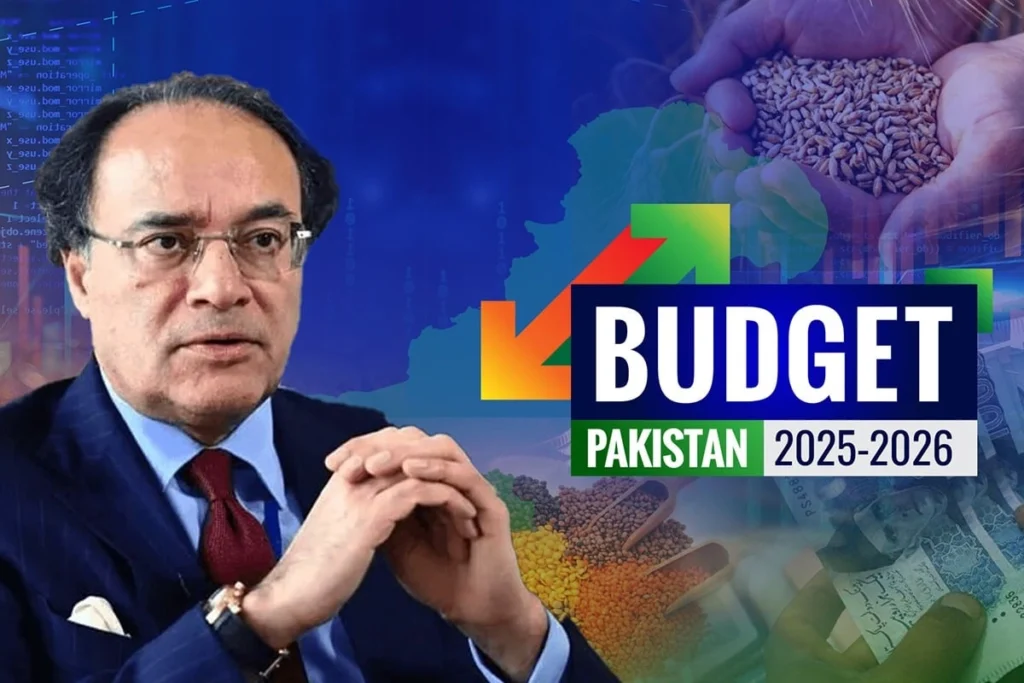
Pakistan Budget 2026-27: Will the Salary Boost Survive Inflation’s Return?

Published

on

Pakistan’s salaried public servant is doing the same arithmetic every June. How much will the number on the payslip change — and will it actually matter? This year, the calculation is harder. Inflation, which had fallen from the calamitous 29.2 percent peak of May 2023 to a fragile single digit, has come roaring back. Pakistan’s headline inflation reached 10.9 percent year-on-year in April 2026, according to Pakistan Bureau of Statistics data, sharply above 7.3 percent in March and vastly ahead of April 2025’s near-zero 0.3 percent. Against that backdrop, the federal government is preparing a budget whose salary provisions — or deliberate absence thereof — will define the real economic lives of more than three million public servants. The budget lands in the first week of June. The clock is running. Pakistan Observer

The Inflation the Ministry Didn’t See Coming

Before discussing what Budget 2026-27 might offer, it helps to understand what it is responding to. The Ministry of Finance’s own April 2026 economic outlook had projected headline inflation at 8 to 9 percent. The actual April figure of 10.9 percent exceeded that forecast by nearly two percentage points. Housing and utilities inflation hit 16.8 percent; transport costs surged 29.9 percent year-on-year. These are not abstractions. For a Grade-16 officer commuting to a federal secretariat or paying rent in Islamabad, these numbers arrive as a monthly statement of purchasing-power erosion. Cssprep

The IMF had already signalled trouble ahead. In its April 2026 World Economic Outlook, the Fund cut Pakistan’s growth forecast for fiscal year 2026-27 to 3.5 percent — down from an earlier estimate of 4.1 percent — and raised the country’s inflation projection to 8.4 percent for the same year, compared with 7.2 percent projected for the current fiscal year. The Fund cited Pakistan’s exposure to Middle East instability, given that the country sources roughly 90 percent of its energy imports from the region. IANS News

Pakistan’s government, for its part, is projecting average CPI-based inflation at 8.6 percent for the coming fiscal year. Finance Minister Muhammad Aurangzeb and the visiting IMF team have reached a broad agreement on the macroeconomic framework, with the Ministry of Finance targeting real GDP growth of 4.1 percent. The gap between those official projections and April’s 10.9 percent print is what makes the salary debate so charged. Geo News

Will Government Employees Get a Salary Increase in Budget 2026-27?

The honest answer is: probably not in the conventional sense.

Pakistan’s government is considering a policy shift in Budget 2026-27, with plans to keep salaries and pensions at the same level while using the resulting fiscal space to provide tax relief to the salaried class. This is not a rumour from an unnamed official. It is the consistent direction emerging from reporting by Dawn, ProPakistani, and Business Recorder over the past fortnight. Daily Pakistan

According to Dawn’s reporting, Finance Minister Muhammad Aurangzeb is in favour of lowering tax rates for salaried individuals and, if possible, increasing the taxable income threshold — a recognition of this segment’s outsized contribution to tax collection compared with sectors such as retail, wholesale, exports, and real estate. ProPakistani

The logic the ministry is using deserves scrutiny, because it is genuinely coherent in parts. Government salaries have increased by more than 60 percent over the past four years. Budget 2025-26, presented by Finance Minister Aurangzeb on June 10, 2025, included a 10 percent salary increase for Grade 1-16 employees and 7 to 15 percent for Grade 17-22, alongside a 30 percent Disparity Reduction Allowance on basic pay. The argument, then, is that nominal pay has been largely restored after the 2022-2023 rupee collapse, and that adjusting the tax structure is now the more efficient instrument. Cssprep

There’s a specific mechanism in mind. The salaried class contributed over Rs425 billion in income tax during the first nine months of fiscal year 2025-26, highlighting their growing importance in overall revenue generation. That contribution — disproportionate relative to traders, exporters, and real estate interests — is the political and moral anchor for the tax relief argument. Pakistan Observer

One exception has been carved out. Officials confirmed that employees working on Public Sector Development Programme-funded projects will receive a 20 to 35 percent salary hike from July 1, 2026, after a four-year gap since their last revision in April 2022. For the broader civil service, the news is less direct. The Opinion

What Tax Relief Actually Means for Take-Home Pay

So if a salary freeze paired with income tax cuts is the chosen instrument, what does that mean in rupees?

The 40-60 word featured snippet answer: Budget 2026-27 is unlikely to include a formal salary increase for most government employees. Instead, the government is expected to cut income tax rates and raise the taxable income threshold. Whether this translates into higher take-home pay depends entirely on the employee’s tax bracket — lower-grade staff stand to benefit most; senior grades will see marginal gains.

The current tax-free annual income threshold sits at Rs600,000 — meaning monthly earnings up to Rs50,000 face no income tax. Officials are reportedly considering raising this ceiling significantly. The tax-free annual income threshold has been proposed to rise to Rs1 million, effectively exempting monthly salaries up to Rs83,000 from income tax, in what would represent a meaningful expansion of the zero-rate band. Pakistan Chronicle

For an employee earning, say, Rs120,000 a month — a figure covering most Grade-17 federal officers — the current effective tax rate under the 2025-26 slabs is approximately 10 to 12 percent. A structural reduction of even four percentage points, as occurred in the FY26 budget when Geo reported the minimum rate dropped from 15 to 11 percent for certain brackets, adds thousands of rupees a month to net income without touching the gross payslip at all.

Yet the government’s own analysis acknowledges the ceiling on that logic. A 7 percent nominal salary increase, if it materialises, would constitute a real-terms pay cut when measured against 10.9 percent inflation. A salary freeze with income tax reduction could deliver a comparable or larger real-money improvement for some employees, depending entirely on which tax bracket they occupy. Cssprep

This is the trap at the heart of the policy. Tax relief is meaningful only for those who pay meaningful tax. A Grade-5 clerical employee earning Rs35,000 a month — below the current tax-free threshold — gains nothing whatsoever from further rate reductions. That employee needs the gross number to rise. For them, the freeze is simply a cut in real terms.

The IMF Shadow Over Every Rupee

Pakistan’s budget negotiations do not happen in a vacuum. Negotiations between Pakistan and the IMF over the federal budget remain underway, with differences persisting on key economic targets. The government has proposed a 4.1 percent growth target, while the IMF estimates growth at 3.5 percent. Pakistan’s government has projected average inflation at 8.6 percent, though officials warn the figure could rise further if Middle East tensions continue affecting energy markets. SAMAA TV

The fiscal architecture is equally constrained. The government is reportedly aiming for a fiscal deficit of around 3.5 percent of GDP, closely aligned with IMF benchmarks, and is targeting a primary surplus — signalling continued fiscal consolidation despite economic headwinds. The IMF has set a primary balance target of 2 percent of GDP, equivalent to Rs2.9 trillion, for the coming budget. Daily PakistanGeo News

Every rupee allocated to a pay raise is a rupee that must be found elsewhere — through additional taxes, reduced development spending, or a widening deficit that the Fund will not countenance. Finance Minister Aurangzeb knows this arithmetic. His recent assurances about super tax reductions, real estate stimulus, and export sector relief suggest a budget that is attempting to animate private-sector demand precisely because public-sector consumption cannot be the growth engine this time. ProPakistani

What follows, however, is an uncomfortable political reality. A pay freeze — however technically justified by reference to prior increases and tax restructuring — will land on the desks of civil servants in July while their electricity bills reflect 16.8 percent utility inflation. The mathematics is right. The lived experience is something different.

The Case Against the Freeze

It is worth steel-manning the critics, because they are not simply voicing grievance.

Labour economists and government employee associations have consistently argued that Pakistan’s public sector wage structure has never fully compensated for the 2022-2023 rupee collapse. Labour unions appreciate the most recent raises but continue to demand automatic, inflation-linked increments each year to protect the real value of income. The argument is straightforward: a 60 percent cumulative increase since 2022 sounds substantial until one measures it against the cumulative CPI increase during the same period — which, by conservative estimates, exceeded 80 percent. Gsthub

There is also a structural distributional concern. Tax relief, by design, benefits those who pay taxes. The lowest-earning public employees — the support staff, the drivers, the Grade-1 through Grade-5 workers — sit below the tax threshold and receive nothing from a rate-cut strategy. They are simultaneously the most exposed to food and utility inflation and the most excluded from the relief mechanism being proposed. If Budget 2026-27 truly freezes salaries while reducing taxes for middle-income earners, it will widen the real-income gap within the civil service.

Economists also question the inflation forecast itself. The government’s projected 8.6 percent average for FY2026-27 was constructed before April’s 10.9 percent print. If inflation remains elevated through the first quarter of the new fiscal year — itself plausible given energy price pressures and a potential rupee depreciation tied to a widening current account deficit — the entire calculus of “tax relief equals better take-home pay” collapses. A salary freeze in a 12 percent inflation environment is a structured impoverishment, regardless of what the tax schedule says.

What Comes Next

Pakistan’s federal budget for 2026-27 will be presented in the National Assembly in the first week of June 2026. By the time Finance Minister Aurangzeb rises to speak, the IMF consultations that began on May 15 will have concluded, and the final contours of salary policy, tax thresholds, and pension adjustments will be fixed.

The early signals point in a clear direction: no broad salary increase, targeted tax relief for the middle of the income distribution, protection for PSDP project employees, and a fiscal framework shaped by the twin pressures of IMF conditionality and a primary surplus target that leaves almost no room for recurrent expenditure growth.

Whether that adds up to meaningful relief depends on a number that nobody controls. If inflation falls back toward 6 percent by December 2026, as the State Bank has projected, a salary freeze paired with tax cuts may well leave an average Grade-17 officer materially better off. If April’s 10.9 percent is not an anomaly but the beginning of a new inflationary cycle — driven by energy pass-throughs, rupee weakness, and a widening current account deficit — it won’t.

Pakistan’s civil servants have spent three years watching nominal gains evaporate against price levels. They’ve learned not to count the rupees until they arrive. June will tell them whether this budget understood what they were counting.


Discover more from The Economy

Subscribe to get the latest posts sent to your email.

Continue Reading
Click to comment

Leave a Reply

Analysis

China Claims the US Agreed to a Tariff Ceiling. Is the Trade War Finally Waning?

Published

on

Beijing’s Ministry of Commerce says Washington has committed to keeping future levies within the bounds of the Kuala Lumpur arrangement — a declaration that signals a meaningful, if fragile, shift in the world’s most consequential bilateral trade relationship.

On Wednesday, May 20, 2026, China’s Ministry of Commerce issued a statement that was, by the standards of trade diplomacy, unusually direct. Washington would not raise tariffs on Chinese goods above the level stipulated in the October 2025 Kuala Lumpur arrangement, Beijing said — a commitment arising from preparatory talks held in Seoul, hours before US President Donald Trump arrived in Beijing for his closely watched summit with President Xi Jinping. The pledge, Beijing added, was not merely aspirational. It was a ceiling.

Whether Washington views it that way is another matter entirely. But the fact that such a statement could be issued at all — publicly, by name, citing a named bilateral mechanism — marks a different kind of moment in a trade war that, at its April 2025 peak, saw average US tariff rates on Chinese goods reach 127.2 percent, a level that briefly froze bilateral trade and rattled supply chains from Shenzhen to Sacramento.

The Context: From Tariff Shock to Managed Competition

The speed of the reversal has been striking. In the first week of April 2025, the Trump administration layered on 125 percentage points of additional tariffs in three tranches. China retaliated in kind. Average US tariffs on Chinese imports peaked at 127.2 percent before Geneva talks in May 2025 brought them down to 51.8 percent — still historically elevated, but no longer existential for global supply chains.

Then came Kuala Lumpur. The October 30–November 1, 2025 summit in Busan, South Korea, between Trump and Xi produced the so-called Kuala Lumpur Joint Arrangement, which suspended the additional 24 percent reciprocal tariff on Chinese goods for one year, cancelled the 10 percent fentanyl tariff, and extracted Chinese commitments on rare earth export controls and agricultural purchases. The effective rate on a broad swath of Chinese goods fell to approximately 47 percent — still nearly double pre-2025 levels, but a world away from the spring’s peak.

The architecture that has emerged since is, as analysts at PwC described it, a “shift toward managed competition and sector-specific cooperation.” It’s a phrase worth sitting with. It doesn’t mean peace. It means the two sides have decided to fight more predictably.

The US-China Trade War’s Tariff Ceiling: What Beijing Is Claiming

The US-China trade war tariff ceiling claim rests on a specific reading of the Seoul pre-summit talks, which preceded Trump’s May 14 arrival in Beijing. China’s commerce ministry said Washington committed that future tariff actions — regardless of the mechanism invoked, whether Section 301, fentanyl-related levies, or any new instrument — would not push the effective rate above the Kuala Lumpur benchmark.

“We hope the US side will honour its commitment that … US tariff levels on Chinese goods will not exceed those set under the Kuala Lumpur trade consultation arrangements,” a ministry spokesperson said in the Wednesday statement, as reported by the South China Morning Post.

That framing is deliberate. Beijing is not merely citing a goodwill gesture. It’s recording an institutional commitment — the kind of statement designed to function as a reference point in future disputes, a baseline against which unilateral US actions could be characterised as violations.

The ministry went further. Both sides had, in principle, agreed to form a new bilateral trade council and to discuss a framework for reciprocal tariff cuts covering at least $30 billion worth of each other’s goods, according to the statement. Products identified under the arrangement would enjoy most-favoured-nation rates — or even lower. The US called this mechanism a “Board of Trade.” US Trade Representative Jamieson Greer had first floated it in March as a key deliverable for the Beijing summit.

The numbers are modest relative to the scale of the relationship. In 2025, China exported $308.4 billion in goods to the United States. A $30 billion mutual tariff-reduction basket covers roughly ten cents on every dollar of that flow. Yet the significance isn’t purely arithmetical. It’s architectural: Washington is, for the first time, agreeing to manage bilateral trade flows jointly rather than unilaterally shock them.

What Does “Managed Competition” Actually Mean for Markets?

Is the US-China trade war over, or just paused?

The US-China trade war is neither over nor simply paused — it has entered a new phase of managed competition. Both governments have agreed to maintain high tariffs on strategically sensitive sectors (technology, semiconductors, electric vehicles) while selectively reducing levies on non-sensitive consumer and industrial goods. The truce expires November 10, 2026, and its renewal remains subject to political conditions on both sides.

That answer, compressed to its essence, captures why markets have reacted with cautious optimism rather than euphoria. The Trump-Xi summit in Beijing produced a “constructive China-US relationship of strategic stability” framework, with Xi proposing it as the guiding architecture for the next three years. Graham Allison, Harvard professor and former assistant secretary of defense, called the truce’s formalisation “the big word” from the summit — predicting on CNBC’s The China Connection that the two sides would turn the existing arrangement into a standing agreement.

Yet there’s a reason the Council on Foreign Relations’s Rush Doshi was measured in his assessment. The summit reduced near-term escalation risk; it did not remove structural risks. Tariffs on semiconductors, EVs, steel, and aluminium remain at stratospheric levels. Export controls on advanced chips and related technology remain in force. The Board of Trade mechanism has what CFR analyst Zoe Liu described as “very little clarity” on which sectors qualify, whether it can grow beyond $30 billion, and who manages the inevitable lobbying pressure that any approved-goods list will generate.

The picture is more complicated than the headlines suggest. Washington has quietly abandoned the posture it maintained for 25 years — the insistence that China liberalise its state-directed economic model. As Greer put it bluntly at a Semafor conference in April: “We’re not going to do what Washington tried to do for 25 years, which is, go to the Chinese and say, ‘We’re going to pretend they’re going to become a market economy.'” That’s an honest acknowledgement of failure. But it’s also a significant narrowing of US ambitions that has left some trade hawks uneasy about what, precisely, has been won.

Implications: Boeing, Rare Earths, and the Global Supply Chain Reshuffle

The downstream consequences of a stabilised US-China trade relationship are already visible in asset prices and corporate behaviour. Trump confirmed that China has agreed to order 200 Boeing aircraft — more than the 150 units the company had anticipated. For Boeing, battered by years of manufacturing crises and market share erosion to Airbus, the order is a rare genuine upside. For the trade relationship, it functions as the kind of headline purchase commitment that has historically served to paper over structural disagreements.

Rare earths are, arguably, the more consequential thread. The October 2025 Kuala Lumpur arrangement required China to “postpone and effectively eliminate” its export controls on rare earth elements and related technology, according to the White House’s own executive order formalising the deal. That was the concession that fundamentally changed Washington’s leverage calculus. China’s ability to switch off global supply chains for critical minerals — it had activated that capability in April 2025 with extraterritorial effect — gave Beijing an asymmetric tool that counterbalanced US tariff escalation. The truce suspended both sets of weapons.

For global manufacturers, the immediate effect is a recalibration of diversification strategies rather than their reversal. Roughly 25 percent of iPhone production has already shifted to India; Vietnam now handles most US-bound Apple peripheral devices. Those supply chain moves are not reversing. Companies that have invested in Vietnam, Mexico, and India aren’t going to unwind that investment on the basis of a truce that expires in six months. What changes is the urgency: firms that were accelerating their China-exit strategies can now pace those moves rather than sprint.

The IMF’s global growth forecast of approximately 3.3 percent for 2026 carries within it a tariff drag that has not disappeared. US households are still bearing an estimated $1,500 in annual tariff costs. China’s growth projection of 4.2–4.5 percent reflects a successful pivot toward Asian and European export markets, not a return to pre-trade-war dependency on the American consumer. The global trading system has restructured, not recovered.

The Counterargument: Why Scepticism Is Warranted

There are serious grounds for doubting that Beijing’s tariff ceiling claim translates into durable constraint.

The most obvious parallel is Phase One. In January 2020, China committed to purchasing an additional $200 billion in US goods over two years. That commitment was never close to being fulfilled. The current framework — $30 billion in reciprocal tariff cuts, contingent on a “Board of Trade” mechanism that hasn’t been designed yet — is a much smaller ask. But the pattern of vague commitments outpacing delivery is well established.

Sean Stein, president of the US-China Business Council, has flagged that the business community holds “deep reservations about the idea of managed trade.” The concern is structural: a government-approved goods list is an invitation for political interference, lobbying capture, and the kind of industrial policy distortions that free traders regard as precisely the problem they’ve spent three decades trying to dismantle.

The US-China trade relationship isn’t reverting to any prior normal. The tariff infrastructure — elevated Section 301 duties on electric vehicles at 100 percent, on solar cells at 50 percent, and on semiconductors at rates that effectively fence off Chinese supply — remains fully intact. The Board of Trade mechanism, even if it succeeds, will cover a sliver of the trade relationship. The rest stays in the deep freeze of economic nationalism.

Jack Lee, analyst at China Macro Group, offered a sharp observation after the Beijing summit: Beijing is “trying to turn Trump’s transactional willingness to stabilize ties into a longer-term operating framework for US-China relations” — one that could bind the next US president before they’ve taken office. The tariff ceiling claim fits precisely into that strategy. Record it publicly, name it after a bilateral mechanism, and the institutional weight accumulates even without a formal treaty.

Closing

What’s emerging from the wreckage of the 2025 trade war isn’t a new era of openness. It’s something more transactional, more managed, and — in an odd way — more honest. Both governments have acknowledged that economic decoupling in its full form was always a fiction; the supply chains are too entangled, the mutual dependencies too deep, for clean separation. What they’re building instead is a set of managed lanes: high tariffs and export controls on strategic goods, selected tariff relief on non-sensitive goods, and institutional mechanisms to keep the temperature from spiking again.

The Kuala Lumpur arrangement expires on November 10, 2026. Xi Jinping has been invited to visit the United States on September 24. That meeting, not the Beijing summit, will tell us whether the tariff ceiling Beijing just announced is a real constraint — or simply the latest line drawn in sand.

The trade war isn’t waning. It’s being institutionalised.


Discover more from The Economy

Subscribe to get the latest posts sent to your email.

Continue Reading

Analysis

Inflation-Protected Bonds: Why Investors Are Avoiding TIPS

Published

on

The trading floor of the New York Federal Reserve contains few hiding places when macroeconomic variables diverge from consensus models. On March 12, 2026, the publication of the latest US consumer price index data sent a familiar shudder through fixed-income desks as core inflation printed at an annualized 3.4%, outstripping projections for the third consecutive month. For global asset allocators, the signal appeared clear: structural forces, from supply chain restructuring to structural fiscal deficits, are entrenching price pressures. Yet, the anticipated stampede into defensive assets never materialized. Instead, institutional capital actively drifted away from the primary vehicles designed to mitigate this exact risk, revealing a profound structural disconnect within modern capital markets.

The macro environment explains the deep anxiety among allocators, who recognize that old playbooks are failing. According to recent data from the Bureau of Labor Statistics inflation reports, price volatility has become structural rather than cyclical, driven by shifts in global trade architecture and green energy transitions. Ordinarily, this backdrop would trigger a historic capital reallocation into sovereign inflation-linked portfolios to preserve purchasing power. Data compiled from recent Federal Reserve economic databases indicates that secondary market trading volumes for inflation-linked instruments have dropped 18% over the past 12 months. This paradox leaves retail wealth managers and institutional pension funds exposed to the corrosive effects of currency depreciation, raising an uncomfortable question: why are the market’s premier inflation shields being left on the rack?

The Valuation Paradox of Inflation-Protected Bonds

The core development anchoring this market anomaly lies in the fundamental mechanics of inflation-protected bonds, known formally in the US as Treasury Inflation-Protected Securities (TIPS). These instruments are designed to preserve purchasing power by adjusting their principal value upward in direct lockstep with changes in the Consumer Price Index for All Urban Consumers. When inflation climbs, the bond’s principal increases, which subsequently increases the coupon payment since the fixed rate is applied to a larger principal base.

[CPI Increases] ──> [Principal Value Adjusts Upward] ──> [Higher Nominal Coupon Payment]

Yet, despite structural anxieties regarding long-term price stability, net capital inflows into these funds have inverted. Analysis published via Bloomberg market analysis portals details how recent Treasury auctions for 10-year inflation-linked notes saw the lowest bid-to-cover ratio since the pandemic, dropping to a mere 2.15. This tepid demand stems from a stark reality: the market has already priced in an aggressive long-term inflation premium, rendering the entry point for new buyers exceptionally penal.

       10-Year Nominal Treasury Yield (4.50%)
                     │
                     ├─> Breakeven Inflation Rate (2.35%)
                     │
                     └─> Real Yield / TIPS Yield (2.15%)

To understand why capital is fleeing these securities, one must dissect the relationship between nominal yields, real yields, and the breakeven inflation rate. The breakeven rate represents the difference between the nominal yield on a standard Treasury and the real yield on an inflation-linked bond of the same maturity. If a nominal 10-year Treasury yields 4.50% and a 10-year inflation-protected bond yields 2.15%, the breakeven rate is exactly 2.35%.

For an investor, this means inflation-linked bonds will only outperform nominal Treasuries if the actual, realized inflation rate averages more than 2.35% over the next decade. If inflation averages 2.20%, the investor who bought the standard nominal bond wins.

Many institutional desks believe that while inflation will remain sticky, the current breakeven rates already reflect this reality, leaving no money on the table for new buyers. The market has transformed from an absolute hedge into a highly localized relative-value bet on whether the Federal Reserve will miss its long-term inflation target.

“The true risk in fixed income today isn’t just that inflation prints hot,” notes a senior rates strategist at a major primary dealer in New York. “The risk is that you pay such a high premium for inflation protection that the cure becomes more expensive than the disease.”

Anatomy of Duration Risk and the Pricing Mirage

Movements across the fixed-income landscape require a deep structural interpretation, particularly regarding how interest rate cycles distort the defensive characteristics of Treasury Inflation-Protected Securities. A common misconception among retail market participants is that because a bond protects against inflation, its market price is immune to monetary policy tightening. The reality is far more punishing.

Why do TIPS lose value when interest rates rise?

Treasury Inflation-Protected Securities carry duration risk, meaning their market prices fall when nominal interest rates rise. If the Federal Reserve raises interest rates aggressively to combat inflation, the discount rate applied to the bond’s future cash flows increases, causing the bond’s current market value to decline, which can easily outweigh the positive principal adjustments from inflation.

This structural vulnerability was vividly illustrated during the monetary tightening cycle, where investors who purchased long-duration inflation-linked vehicles suffered double-digit capital losses. While the principal value of their bonds did adjust upward alongside consumer prices, the concurrent surge in nominal interest rates caused the underlying bond prices to crater. This historical reality has left a scar on institutional balance sheets.

Data tracked by Reuters financial markets desk confirms that long-duration inflation funds experienced drawdowns exceeding 14% during peak tightening windows, completely undermining their status as a low-volatility portfolio anchor.

Federal Reserve Hikes Rates ──> Discount Rate Escalates ──> Bond Prices Decline (Duration Drag)
                                                                       │
                                 Consumer Price Index Rises ──> Principal Adjusts Upward (CPI Lift)
                                                                       │
                         [Net Portfolio Outcome: Duration Drag > CPI Lift = Net Capital Loss]

Furthermore, the structural liquidity of the fixed-income ecosystem creates another headwind. The market for nominal US Treasuries is the deepest and most liquid financial market in the world, facilitating seamless high-frequency execution with minimal transaction costs.

In contrast, the market for inflation-protected bonds is significantly smaller, accounting for less than 10% of total outstanding US sovereign debt. This smaller footprint creates a liquidity premium. During periods of broader market stress or rapid deleveraging, bid-ask spreads on inflation-linked debt can widen rapidly, making it expensive for large macro funds to alter their positions without moving the market against themselves.

The structural headwinds facing these instruments can be categorized across four distinct dimensions:

  • Duration Sensitivity: Long maturities leave portfolios highly vulnerable to capital depreciation when the discount rate rises.
  • The Phantom Tax Burden: Investors are liable for income tax on the principal adjustments of their bonds in the year they occur, even though they do not receive that cash until the bond reaches maturity.
  • Liquidity Disparity: Higher transaction costs and wider bid-ask spreads during market drawdowns relative to nominal sovereign debt.
  • Opportunity Costs: Elevated yields on cash and short-term commercial paper provide a compelling alternative for capital preservation without the lock-up period.

Portfolio Implications and Asset Allocation Shifts

The secular shift away from sovereign inflation-linked portfolios is triggering deep second-order effects across global wealth management and corporate balance sheets. For decades, traditional portfolio models relied on a predictable negative correlation between equities and fixed-income assets to balance risk.

When equities fell on growth fears, bonds rallied; when inflation rose, inflation-protected allocations stabilized the fixed-income portion of the book. Still, the current macroeconomic regime has altered this relationship, forcing institutional allocators to alter their approach to risk management.

What follows, however, is a clear rotation of capital into alternative, tangible expressions of inflation defense. Institutional mandates are increasingly bypassing the sovereign debt market entirely, choosing instead to express their inflation anxieties through direct allocations to private credit, physical infrastructure assets, and global commodities.

These asset classes offer direct revenue pass-through mechanisms—such as inflation-indexed commercial real estate leases or utility pricing models—that hedge against rising costs without exposing the investor to the severe duration risk inherent in a 10-year or 30-year sovereign bond.

This trend is reshaping the structural demand for government debt. If institutional investors structurally reduce their allocations to inflation-protected sovereign debt, the US Treasury will be forced to offer higher real yields at future auctions to attract capital. This development would inevitably increase the government’s debt-servicing costs, complicating fiscal policy and putting upward pressure on long-term borrowing costs across the entire consumer economy, from residential mortgages to corporate credit lines.

The Contrarian Case for Real Yields

To maintain journalistic rigor, it is essential to evaluate the counter-position held by a vocal minority of fixed-income purists. While the broader market has cooled on these vehicles, select long-horizon pools of capital—most notably large sovereign wealth funds and ultra-conservative European family offices—are quietly executing substantial accumulation strategies. Their thesis bypasses short-term price volatility, focusing instead on the historic absolute value of current real yields.

The rationale behind this contrarian stance rests on a simple historical comparison: for the better part of the decade following the global financial crisis, real yields on sovereign inflation-linked debt hovered firmly in negative territory, occasionally dropping below minus 1.0%. During that era, investors were effectively paying the government to protect their capital from inflation.

Today, with real yields on 10-year inflation-linked securities holding steady above 2.0%, investors can secure a guaranteed return that beats inflation over a 10-year horizon, backed by the full faith and credit of the sovereign issuer.

For an institution with multi-decade liabilities that must be met in real terms—such as a defined-benefit pension fund or an endowment supporting university research—a guaranteed real return above 2.0% is a highly compelling proposition. These allocators do not trade their portfolios on a weekly or quarterly basis; they intend to hold the securities to maturity.

By removing intermediate market price fluctuations from their calculation, they insulate their portfolios from duration risk while guaranteeing that their capital will outpace consumer price increases, regardless of how high inflation climbs or how disorderly the Federal Reserve’s policy path becomes.

Rethinking Fixed Income in a Higher-Value Regime

The structural disconnect in the inflation-protected bond market reveals a deeper evolution in how modern investors perceive risk. The traditional assumption that an asset’s nominal label dictates its real-world performance has been thoroughly dismantled by the realities of duration volatility and pre-priced inflation premiums. Investors are not ignoring the threat of rising prices; rather, they have recognized that the classical tools used to combat inflation often carry structural vulnerabilities that can worsen portfolio losses during periods of aggressive monetary tightening.

The market has entered a period where structural inflation coexists with elevated interest rates, a combination that fundamentally penalizes passive fixed-income strategies. Moving forward, the boundary line between effective capital preservation and structural wealth erosion will depend on an allocator’s ability to distinguish between absolute protection and relative value.

The era of relying on simple sovereign indexing to protect purchasing power has drawn to a close, leaving market participants with a clear lesson: when defending capital against structural inflation, the price paid for the shield determines whether you survive the battle.


Discover more from The Economy

Subscribe to get the latest posts sent to your email.

Continue Reading

Analysis

Euro Stablecoin Qivalis Backed by 37 Banks

Published

on

Thirty-Seven Banks and a Single Coin: Europe’s Stablecoin Bet Takes Shape

The Qivalis consortium has tripled its membership in a day, marshalling half a continent’s banking sector behind a MiCA-regulated euro stablecoin it intends to launch before the year is out.

On a Wednesday morning in Amsterdam, a quiet announcement reshaped the geography of digital money. Qivalis — the bank-backed consortium building Europe’s answer to dollar-denominated stablecoins — disclosed that 25 more lenders had joined its ranks, pushing total membership to 37 financial institutions spanning 15 European countries. The new arrivals include ABN AMRO, Rabobank, Intesa Sanpaolo, Nordea, Erste Group and the National Bank of Greece. What began in September 2025 as a twelve-bank working group has, in a single morning, become the most broadly backed euro stablecoin project on the continent — and a pointed statement about where European finance believes digital money is heading.

The Dollar’s Digital Grip

To understand why 37 banks would coordinate around a single token, you need to understand the current state of the stablecoin market — and it’s not a flattering picture for the euro. Dollar-denominated tokens account for roughly 99% of the approximately $305 billion global stablecoin market, with euro-pegged assets representing just €770 million — less than one-third of one per cent of outstanding supply. The only sizable euro stablecoin in existence today is Société Générale’s SG-FORGE product, which carries around €64 million in circulation.

That imbalance isn’t merely a curiosity for crypto traders. As financial institutions accelerate their move into tokenised settlement — bonds, real estate, trade finance — the rails on which those transactions run will increasingly require a stable, on-chain currency. If Europe doesn’t supply one, the dollar fills the gap by default. Jan-Oliver Sell, Qivalis’s chief executive, has a phrase for the scenario he’s trying to prevent: digital dollarisation. “At the moment, if you want to operate onchain, you’re effectively forced into the dollar,” he said in March. The consortium’s expansion, announced today, is the most concrete step yet toward making that a historical footnote rather than a permanent condition.

What Qivalis Is — and What It’s Building

The euro stablecoin banks backing Qivalis aren’t assembling a speculative blockchain experiment. The Amsterdam-headquartered venture is building regulated payment infrastructure, and the membership list reads like a roll call of mainstream European finance. Founding members include BNP Paribas, BBVA, CaixaBank, ING, UniCredit and Danske Bank. The 25 institutions that joined today add geographic depth: Irish lenders AIB and Bank of Ireland, Spain’s Banco Sabadell and Bankinter, Poland’s Bank Pekao, Luxembourg’s state-owned Spuerkeess, Sweden’s Handelsbanken and Nordea, Finland’s OP Pohjola, and several others spread across the euro area’s periphery and core alike.

The token itself will be backed one-to-one with euro-denominated assets. At least 40% of reserves will be held in bank deposits, with the remainder allocated to high-quality, short-term eurozone sovereign bonds diversified across EU member states. Holders will be able to redeem around the clock, seven days a week. The technology layer is being provided by Fireblocks, which will supply tokenisation infrastructure, custody services and compliance tooling — including AML and sanctions screening baked into transaction workflows rather than bolted on afterward.

Qivalis is seeking authorisation as an electronic money institution (EMI) from De Nederlandsche Bank, the Dutch central bank, under the EU’s Markets in Crypto-Assets (MiCA) framework. That licence, once granted, would allow the consortium to passport operations across the entire European Economic Area — a significant structural advantage over any single-bank competitor trying to build the same thing in isolation. The commercial launch is targeted for the second half of 2026, with the Amsterdam team in advanced discussions with regulated crypto exchanges and liquidity providers to ensure deep markets from day one.

Howard Davies, chairman of Qivalis’s supervisory board, framed the stakes plainly on Wednesday: “This infrastructure is essential if Europe is to compete in the global digital economy whilst preserving its strategic autonomy.”

Why Bank Coordination Matters — and What MiCA Makes Possible

How does a euro stablecoin work under MiCA?

Under the EU’s Markets in Crypto-Assets regulation, a euro stablecoin must be issued by a licensed electronic money institution, maintain a one-to-one reserve backing with euro-denominated assets, provide holders with continuous redemption rights, and submit to ongoing prudential supervision. Qivalis is structured to satisfy each of these requirements through its Amsterdam EMI entity, with reserves held across multiple rated credit institutions and sovereign bonds of eurozone member states.

That regulatory architecture matters for a reason beyond compliance theatre. Previous attempts at European stablecoin issuance — including small-scale efforts by individual banks — foundered on a structural problem: fragmentation. A coin issued by one bank has limited distribution and shallow liquidity. It doesn’t become a default settlement layer for the broader market; it becomes a proprietary instrument that clients of competing banks won’t readily use. Sell identified this early. “A couple of banks trying to issue their own coins just fragments the space further,” he said. “Bringing institutions together creates the distribution and liquidity needed to make it usable.”

The consortium model solves that problem by making Qivalis’s token a shared issuance — no individual bank owns the token supply, and all 37 members distribute it to their own corporate and institutional clients. The network effect is immediate: on day one of launch, the stablecoin has reach across much of the European banking system. S&P Global Ratings has projected that the euro stablecoin market could grow from roughly €770 million today to as much as €1.1 trillion by 2030, driven primarily by tokenised finance and institutional adoption. That trajectory depends on exactly the kind of unified, regulated issuance Qivalis is attempting to provide.

“We want to be the main issuer of euro stablecoins globally.” — Jan-Oliver Sell, CEO, Qivalis

Second-Order Effects: Settlement, Sovereignty, and the Race Against Washington

The Qivalis announcement arrives inside a broader contest for dominance in digital payment infrastructure — one in which the United States has moved quickly and with legislative backing. US financial institutions, bolstered by recent federal stablecoin legislation, are accelerating the rollout of dollar-backed tokens. Euro-denominated stablecoins currently remain in circulation of less than €1 billion, compared to roughly $300 billion in dollar-linked tokens, according to the Bank of Italy. That asymmetry, if left uncorrected as on-chain finance scales, will compound — not merely persist.

For European corporates, the practical implications are more immediate than they might appear. A business settling a cross-border invoice, clearing a tokenised bond trade, or managing treasury liquidity on blockchain rails today faces an uncomfortable choice: use a dollar-denominated token and accept currency exposure, or use the euro banking system’s traditional settlement infrastructure, which doesn’t operate on-chain at all. Qivalis is explicitly designed to close that gap — allowing a Spanish manufacturer to pay a Polish supplier in real time, using a euro-native token, without touching correspondent banking intermediaries.

The geopolitical dimension is harder to quantify but increasingly discussed in policy circles. If settlement infrastructure for European financial markets defaults to tokens issued by US companies — Tether or Circle being the most prominent — then a portion of European monetary sovereignty effectively sits on American corporate balance sheets. The ECB has flagged this concern repeatedly. Qivalis’s expansion, with its explicit framing around “strategic autonomy,” lands squarely in that debate.

Sell has also signalled that the 37-bank consortium may not be the final count. He told the Financial Times this week that he’s in discussions with non-European banks that operate in countries with significant remittance flows from Europe — a move that would extend Qivalis’s reach into corridors where dollar stablecoins currently dominate peer-to-peer transfers.

The Case for Scepticism

It’s worth pausing on the ECB’s own position, because it isn’t a straightforward endorsement. European Central Bank officials have consistently expressed concern that private stablecoins — even well-designed, MiCA-compliant ones — could drain bank deposits if they scale significantly. The argument runs roughly as follows: if retail customers shift savings into stablecoin wallets, they’re effectively converting insured bank deposits into electronic money claims, reducing the funding base banks use to extend credit. At scale, that changes monetary transmission in ways central banks find difficult to model.

The ECB has warned that private stablecoins could weaken monetary policy if they grow without guardrails — a warning that applies even to bank-led issuances like Qivalis. The consortium’s response is to pitch its design as inherently different: because reserves are held within the regulated banking system rather than in money-market funds, and because the issuer is supervised by a eurozone central bank, the systemic risk profile is fundamentally lower than an offshore issuer. That argument has more credibility than a typical crypto project could muster — but it hasn’t fully resolved the ECB’s institutional wariness.

The Bank for International Settlements has also cautioned that some dollar stablecoins may function more like investment vehicles than money, given their reliance on short-term securities — a concern Qivalis’s reserve design attempts to pre-empt. Still, the gap between a consortium announcement and an operating, liquid, widely adopted token is wide. Licensing delays, exchange integration friction and the simple fact that dollar stablecoins have a multi-year head start in institutional familiarity all represent genuine headwinds.

Then there is the digital euro itself. The ECB’s own CBDC initiative is unlikely to arrive before 2029, which Sell argues creates the window Qivalis needs. Yet if the ECB’s project eventually displaces or restricts private euro stablecoins, the consortium’s business model faces an existential question it hasn’t fully answered.

The history of monetary infrastructure is largely a history of coordination problems solved too late. Europe spent a decade watching dollar-denominated messaging and payment rails embed themselves so deeply into global finance that alternatives became structurally difficult to build. The stablecoin era presents a second chance — and the fact that 37 banks across 15 countries chose a single May morning to make that case together is itself a form of signal worth attending to.

The question Qivalis has not yet answered — and won’t until its token is live, liquid, and in daily use — is whether the coordination it’s assembled on paper can survive contact with the actual market. Thirty-seven signatures is a beginning, not a conclusion.


Discover more from The Economy

Subscribe to get the latest posts sent to your email.

Continue Reading

Trending

Copyright © 2025 The Economy, Inc . All rights reserved .

Discover more from The Economy

Subscribe now to keep reading and get access to the full archive.

Continue reading