
Analysis
Euro Stablecoin Qivalis Backed by 37 Banks

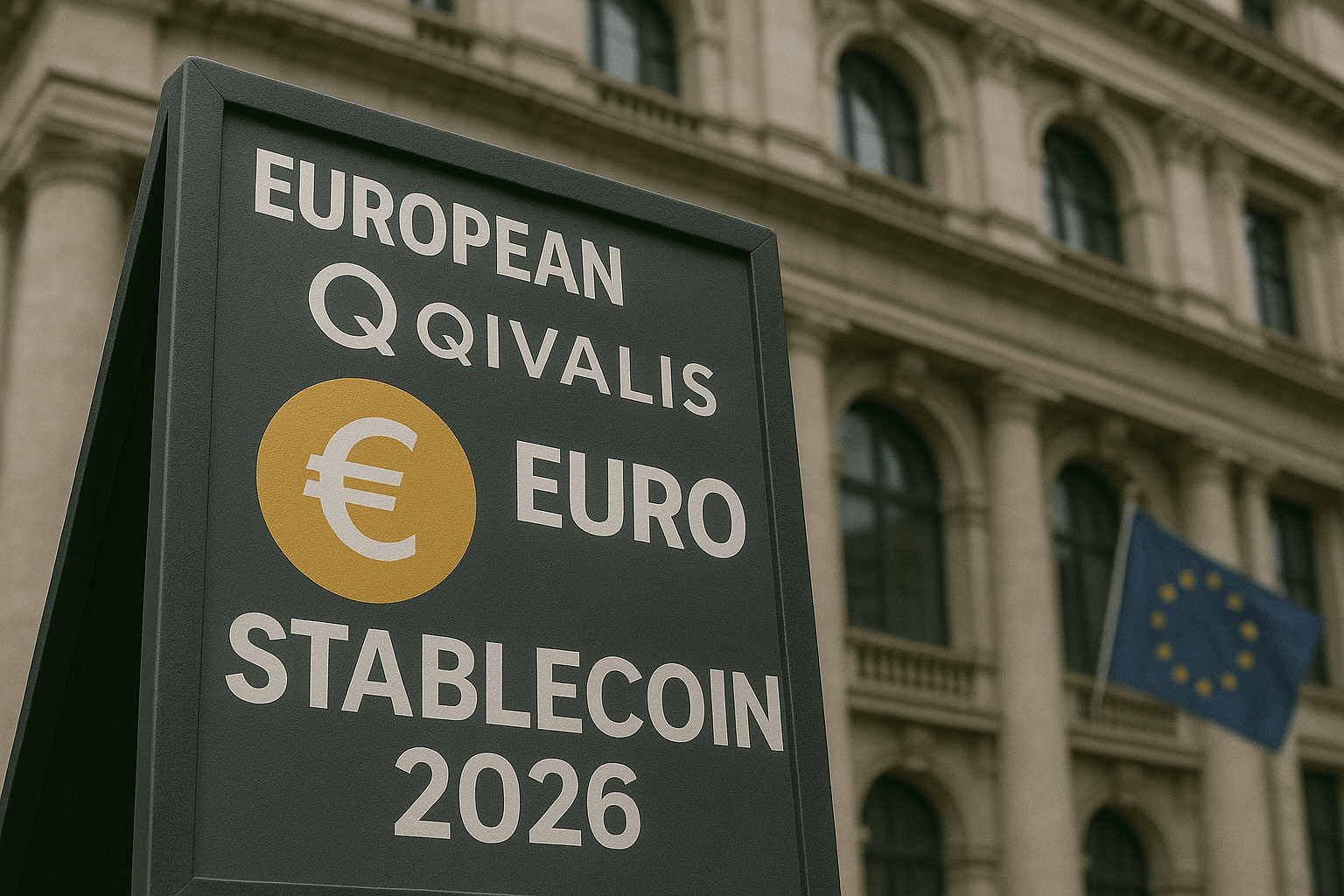
Thirty-Seven Banks and a Single Coin: Europe’s Stablecoin Bet Takes Shape
The Qivalis consortium has tripled its membership in a day, marshalling half a continent’s banking sector behind a MiCA-regulated euro stablecoin it intends to launch before the year is out.
On a Wednesday morning in Amsterdam, a quiet announcement reshaped the geography of digital money. Qivalis — the bank-backed consortium building Europe’s answer to dollar-denominated stablecoins — disclosed that 25 more lenders had joined its ranks, pushing total membership to 37 financial institutions spanning 15 European countries. The new arrivals include ABN AMRO, Rabobank, Intesa Sanpaolo, Nordea, Erste Group and the National Bank of Greece. What began in September 2025 as a twelve-bank working group has, in a single morning, become the most broadly backed euro stablecoin project on the continent — and a pointed statement about where European finance believes digital money is heading.
The Dollar’s Digital Grip
To understand why 37 banks would coordinate around a single token, you need to understand the current state of the stablecoin market — and it’s not a flattering picture for the euro. Dollar-denominated tokens account for roughly 99% of the approximately $305 billion global stablecoin market, with euro-pegged assets representing just €770 million — less than one-third of one per cent of outstanding supply. The only sizable euro stablecoin in existence today is Société Générale’s SG-FORGE product, which carries around €64 million in circulation.
That imbalance isn’t merely a curiosity for crypto traders. As financial institutions accelerate their move into tokenised settlement — bonds, real estate, trade finance — the rails on which those transactions run will increasingly require a stable, on-chain currency. If Europe doesn’t supply one, the dollar fills the gap by default. Jan-Oliver Sell, Qivalis’s chief executive, has a phrase for the scenario he’s trying to prevent: digital dollarisation. “At the moment, if you want to operate onchain, you’re effectively forced into the dollar,” he said in March. The consortium’s expansion, announced today, is the most concrete step yet toward making that a historical footnote rather than a permanent condition.
What Qivalis Is — and What It’s Building
The euro stablecoin banks backing Qivalis aren’t assembling a speculative blockchain experiment. The Amsterdam-headquartered venture is building regulated payment infrastructure, and the membership list reads like a roll call of mainstream European finance. Founding members include BNP Paribas, BBVA, CaixaBank, ING, UniCredit and Danske Bank. The 25 institutions that joined today add geographic depth: Irish lenders AIB and Bank of Ireland, Spain’s Banco Sabadell and Bankinter, Poland’s Bank Pekao, Luxembourg’s state-owned Spuerkeess, Sweden’s Handelsbanken and Nordea, Finland’s OP Pohjola, and several others spread across the euro area’s periphery and core alike.
The token itself will be backed one-to-one with euro-denominated assets. At least 40% of reserves will be held in bank deposits, with the remainder allocated to high-quality, short-term eurozone sovereign bonds diversified across EU member states. Holders will be able to redeem around the clock, seven days a week. The technology layer is being provided by Fireblocks, which will supply tokenisation infrastructure, custody services and compliance tooling — including AML and sanctions screening baked into transaction workflows rather than bolted on afterward.
Qivalis is seeking authorisation as an electronic money institution (EMI) from De Nederlandsche Bank, the Dutch central bank, under the EU’s Markets in Crypto-Assets (MiCA) framework. That licence, once granted, would allow the consortium to passport operations across the entire European Economic Area — a significant structural advantage over any single-bank competitor trying to build the same thing in isolation. The commercial launch is targeted for the second half of 2026, with the Amsterdam team in advanced discussions with regulated crypto exchanges and liquidity providers to ensure deep markets from day one.
Howard Davies, chairman of Qivalis’s supervisory board, framed the stakes plainly on Wednesday: “This infrastructure is essential if Europe is to compete in the global digital economy whilst preserving its strategic autonomy.”
Why Bank Coordination Matters — and What MiCA Makes Possible
How does a euro stablecoin work under MiCA?
Under the EU’s Markets in Crypto-Assets regulation, a euro stablecoin must be issued by a licensed electronic money institution, maintain a one-to-one reserve backing with euro-denominated assets, provide holders with continuous redemption rights, and submit to ongoing prudential supervision. Qivalis is structured to satisfy each of these requirements through its Amsterdam EMI entity, with reserves held across multiple rated credit institutions and sovereign bonds of eurozone member states.
That regulatory architecture matters for a reason beyond compliance theatre. Previous attempts at European stablecoin issuance — including small-scale efforts by individual banks — foundered on a structural problem: fragmentation. A coin issued by one bank has limited distribution and shallow liquidity. It doesn’t become a default settlement layer for the broader market; it becomes a proprietary instrument that clients of competing banks won’t readily use. Sell identified this early. “A couple of banks trying to issue their own coins just fragments the space further,” he said. “Bringing institutions together creates the distribution and liquidity needed to make it usable.”
The consortium model solves that problem by making Qivalis’s token a shared issuance — no individual bank owns the token supply, and all 37 members distribute it to their own corporate and institutional clients. The network effect is immediate: on day one of launch, the stablecoin has reach across much of the European banking system. S&P Global Ratings has projected that the euro stablecoin market could grow from roughly €770 million today to as much as €1.1 trillion by 2030, driven primarily by tokenised finance and institutional adoption. That trajectory depends on exactly the kind of unified, regulated issuance Qivalis is attempting to provide.
“We want to be the main issuer of euro stablecoins globally.” — Jan-Oliver Sell, CEO, Qivalis
Second-Order Effects: Settlement, Sovereignty, and the Race Against Washington
The Qivalis announcement arrives inside a broader contest for dominance in digital payment infrastructure — one in which the United States has moved quickly and with legislative backing. US financial institutions, bolstered by recent federal stablecoin legislation, are accelerating the rollout of dollar-backed tokens. Euro-denominated stablecoins currently remain in circulation of less than €1 billion, compared to roughly $300 billion in dollar-linked tokens, according to the Bank of Italy. That asymmetry, if left uncorrected as on-chain finance scales, will compound — not merely persist.
For European corporates, the practical implications are more immediate than they might appear. A business settling a cross-border invoice, clearing a tokenised bond trade, or managing treasury liquidity on blockchain rails today faces an uncomfortable choice: use a dollar-denominated token and accept currency exposure, or use the euro banking system’s traditional settlement infrastructure, which doesn’t operate on-chain at all. Qivalis is explicitly designed to close that gap — allowing a Spanish manufacturer to pay a Polish supplier in real time, using a euro-native token, without touching correspondent banking intermediaries.
The geopolitical dimension is harder to quantify but increasingly discussed in policy circles. If settlement infrastructure for European financial markets defaults to tokens issued by US companies — Tether or Circle being the most prominent — then a portion of European monetary sovereignty effectively sits on American corporate balance sheets. The ECB has flagged this concern repeatedly. Qivalis’s expansion, with its explicit framing around “strategic autonomy,” lands squarely in that debate.
Sell has also signalled that the 37-bank consortium may not be the final count. He told the Financial Times this week that he’s in discussions with non-European banks that operate in countries with significant remittance flows from Europe — a move that would extend Qivalis’s reach into corridors where dollar stablecoins currently dominate peer-to-peer transfers.
The Case for Scepticism
It’s worth pausing on the ECB’s own position, because it isn’t a straightforward endorsement. European Central Bank officials have consistently expressed concern that private stablecoins — even well-designed, MiCA-compliant ones — could drain bank deposits if they scale significantly. The argument runs roughly as follows: if retail customers shift savings into stablecoin wallets, they’re effectively converting insured bank deposits into electronic money claims, reducing the funding base banks use to extend credit. At scale, that changes monetary transmission in ways central banks find difficult to model.
The ECB has warned that private stablecoins could weaken monetary policy if they grow without guardrails — a warning that applies even to bank-led issuances like Qivalis. The consortium’s response is to pitch its design as inherently different: because reserves are held within the regulated banking system rather than in money-market funds, and because the issuer is supervised by a eurozone central bank, the systemic risk profile is fundamentally lower than an offshore issuer. That argument has more credibility than a typical crypto project could muster — but it hasn’t fully resolved the ECB’s institutional wariness.
The Bank for International Settlements has also cautioned that some dollar stablecoins may function more like investment vehicles than money, given their reliance on short-term securities — a concern Qivalis’s reserve design attempts to pre-empt. Still, the gap between a consortium announcement and an operating, liquid, widely adopted token is wide. Licensing delays, exchange integration friction and the simple fact that dollar stablecoins have a multi-year head start in institutional familiarity all represent genuine headwinds.
Then there is the digital euro itself. The ECB’s own CBDC initiative is unlikely to arrive before 2029, which Sell argues creates the window Qivalis needs. Yet if the ECB’s project eventually displaces or restricts private euro stablecoins, the consortium’s business model faces an existential question it hasn’t fully answered.
The history of monetary infrastructure is largely a history of coordination problems solved too late. Europe spent a decade watching dollar-denominated messaging and payment rails embed themselves so deeply into global finance that alternatives became structurally difficult to build. The stablecoin era presents a second chance — and the fact that 37 banks across 15 countries chose a single May morning to make that case together is itself a form of signal worth attending to.
The question Qivalis has not yet answered — and won’t until its token is live, liquid, and in daily use — is whether the coordination it’s assembled on paper can survive contact with the actual market. Thirty-seven signatures is a beginning, not a conclusion.
Discover more from The Economy
Subscribe to get the latest posts sent to your email.



Key Takeaways
- Rolex’s secondary market rose approximately 7.9% year-over-year as of 2026 (per WatchCharts data) — trailing Patek Philippe (+16.2%) and Tudor (+11.4%) but still outperforming Audemars Piguet (+3.4%).
- Rolex raised U.S. retail prices 4–9% in January 2026 (steel models ~5.6%, gold models ~8.7%), narrowing the historical gap between retail and pre-owned pricing.
- Not every model appreciates: steel sports references (Submariner, GMT-Master II, Daytona) have held value far better than two-tone or widely available dress references like the standard Datejust.
- The Lady-Datejust posted the sharpest 2026 gain among tracked collections — up 22.73%, from roughly $9,269 to $11,376 — driven by demand for smaller, “everyday luxury” watches.
- Gold’s rise past $2,400/oz has directly lifted the investment case for Rolex’s precious-metal references (Day-Date, Sky-Dweller, Yacht-Master).
The Model-by-Model Picture
| Category | 2026 Trend |
|---|---|
| Lady-Datejust | +22.73% (strongest performer among tracked collections) |
| Steel sports models (Submariner, GMT-Master II) | Held value well; corrected from 2022 peak but stabilized above retail |
| Daytona | Corrected from highs above $50,000 to the mid-$30,000s; still among the most sought-after references |
| Two-tone/widely available Datejust | Flat to negative — “holds value” is an overstatement for this category |
| Gold references (Day-Date, Sky-Dweller) | Lifted by gold’s rise above $2,400/oz |
Why the “Rolex Always Appreciates” Myth Is Fading
The pandemic-era boom pushed some references — the Daytona above all — to speculative highs disconnected from historical norms. Since the March 2022 peak, steel sports models have compressed meaningfully, and dealers who bought inventory near the top have in some cases faced 20–40% markdowns on liquidation. The lesson for 2026 buyers: Rolex as a category is not a monolith. Value retention depends heavily on specific reference, condition, and whether the piece comes with box and papers (“full set”).
What’s Actually Driving 2026 Strength
- Retail price increases raise the floor. When a new Submariner retails at $10,050 (up from $9,500), a pre-owned example at $11,000–$12,000 suddenly represents a smaller premium — narrowing the gap without secondary prices actually moving.
- Supply discipline remains Rolex’s core lever. The brand has never confirmed production numbers, and secondary-market premiums remain entirely a function of Rolex’s own manufacturing decisions — a risk factor as much as a support.
- Certified Pre-Owned rollout. Rolex’s now fully rolled-out CPO program has changed how buyers transact in the used market, adding a layer of brand-verified legitimacy that supports pricing.
The Case for Rolex as a Portfolio Diversifier
Financial advisors increasingly frame luxury watches not as a replacement for equities or bonds, but as a tangible, historically low-correlation diversifier — one that carries its own risks (illiquidity, condition-dependent pricing, no yield) but has demonstrated multi-decade resilience for specific references.
Is Rolex a good investment in 2026?
It depends heavily on the specific reference. Steel sports models like the Submariner and Daytona have held or grown in value; two-tone and widely available dress models generally have not. Overall, Rolex’s secondary market rose about 7.9% year-over-year in 2026, trailing Patek Philippe but ahead of Audemars Piguet.
Discover more from The Economy
Subscribe to get the latest posts sent to your email.

Navigating Mortgage and Loan Refinancing in a High-Yield Environment
Global public debt crossing critical thresholds has kept central bank policies volatile, resulting in fluctuating US Treasury yields throughout 2026. For homeowners and commercial property holders burdened by previous high-interest borrowing cycles, finding optimal refinance windows has become a high-stakes financial puzzle. Stalled disinflation and stubborn employment numbers mean rate cuts are incremental, requiring borrowers to act with precision.
Timing your mortgage or commercial loan refinance in this environment requires a deep understanding of yield curve movements and lender risk appetites.
Decoding 2026 Refinance Dynamics
The 10-Year Treasury Yield Benchmark
Mortgage rates continue to track closely with the 10-year US Treasury yield. When macroeconomic anxiety spikes debt issuance, yields rise, tightening consumer borrowing capacity. Savvy borrowers monitor weekly Treasury auctions to lock in rates during brief dip windows.
Hybrid ARMs and Alternative Structures
With fixed rates remaining elevated, 7/1 and 10/1 adjustable-rate mortgages (ARMs) have surged in popularity. These products offer lower initial monthly payments, giving borrowers breathing room until central bank easing cycles fully materialize.
| Loan Product | Current Rate Range | Best For | Key Risk Factor |
| 30-Year Fixed Mortgage | 6.2% – 6.8% | Long-term predictability | Higher initial monthly outlay |
| 7/1 Hybrid ARM | 5.5% – 5.9% | Short-term ownership / flipping | Rate reset risk after year 7 |
| Commercial Refinance | 7.0% – 8.2% | Corporate asset restructuring | Strict DSCR lender covenants |
Actionable Steps for Successful Refinancing
To maximize your chances of securing favorable refinance terms in a volatile market, follow a disciplined preparation strategy.
Boost Your Credit Score Immediately: Lenders in 2026 are applying stringent credit tiering; a 20-point increase can drop your APR by a crucial quarter-point.
Shop Regional Credit Unions: Smaller financial institutions often offer portfolio loans with more flexible underwriting than major national banks.
Calculate the Break-Even Point: Ensure your total closing costs are recouped through monthly savings within 24 months of closing.
“Market Strategist View: Refinancing in 2026 is an exercise in opportunistic timing. Borrowers must maintain immaculate financial profiles ready to strike the moment Treasury yields dip.”
Mastering the complexities of today’s debt environment ensures you can successfully lower your debt service costs and protect your long-term financial stability.
Discover more from The Economy
Subscribe to get the latest posts sent to your email.

The days of pulling generic auto insurance quotes based purely on your zip code and age are officially over. In 2026, insurance comparison engines are powered entirely by generative AI and real-time telematics. These platforms digest thousands of live data points—ranging from your driving smoothness via connected vehicle sensors to real-time traffic congestion patterns—to generate hyper-personalized premiums instantly.
For consumers, this evolution represents both a massive opportunity for savings and a hidden trap for penalty pricing. Understanding how AI algorithms evaluate risk is essential for anyone looking to lower their monthly auto insurance premiums.
How AI Comparison Engines Evaluate Your Risk Profile
Behavioral Telematics and Connected Cars
Modern cars stream performance data directly to insurance aggregators. Generative AI models analyze braking sharpness, acceleration curves, cornering G-forces, and phone distraction metrics. Drivers who maintain smooth, defensive habits are rewarded with dynamic rate cuts of up to 40% compared to traditional rating tiers.
Predictive Traffic and Weather Modeling
AI tools now cross-reference your daily commute route with predictive weather and accident probability models. If your standard parking location or driving corridor has a statistically higher incidence of uninsured motorist claims, your quotes will reflect that hyper-local risk assessment.
| Comparison Factor | Traditional Rating Model | 2026 Generative AI Model | Impact on Premium |
| Mileage & Usage | Annual estimated odometer reading | GPS tracking & live trip duration | High (up to 35% savings) |
| Driving Behavior | MVR driving record & accidents | Real-time braking, speed, & G-force | Critical (determines tier) |
| Vehicle Tech | Make, model, and safety rating | ADAS calibration & repair cost data | Moderate |
Strategies to Lower Your AI-Driven Insurance Quote
To outsmart the algorithm and secure the lowest possible premium in 2026, drivers must proactively manage their digital footprint on insurance platforms.
Opt-In for Telematics Trial Periods: Many insurers offer immediate 15% discounts just for installing their driving app; let it track safe habits for 30 days to lock in permanent savings.
Scrub Unverified Public Records: Ensure your motor vehicle report is free of clerical errors that AI risk models misinterpret as reckless behavior.
Compare AI Aggregators: Use platforms that integrate multi-carrier API feeds rather than single-brand comparison sites to find the best risk-adjusted rate.
“Industry Note: AI-driven pricing rewards transparency and precision. Drivers who actively manage their telematics data consistently out-save those relying on legacy quote calculators.”
Embracing AI comparison tools allows savvy policyholders to customize coverage limits precisely to their driving habits, eliminating wasted premium spend while ensuring robust protection.
Discover more from The Economy
Subscribe to get the latest posts sent to your email.

Celeste Frozen Pizza Discontinued: What Conagra Confirmed

US–China Critical Minerals Competition: Why a Trade Deal Cannot Fix Every Supply Risk

Oil Price Outlook 2026: How Supply Risks Reach Fuel Bills, Inflation and Business Costs

AI in Business 2026: Why Faster Employees Do Not Automatically Mean Higher Profits

Mortgage Rates in 2026: Why They Remain High and How to Compare the True Cost

Gold Price Outlook 2026: The Forces Behind the Forecasts—and What Could Reverse Them

Global Economic Outlook 2026: Growth, Inflation and Risks

Trump–Putin Diesel Deal: Why Zelensky Is Angry and What It Means for Fuel Prices

Anthropic Draws the Line: Why Claude’s New Usage Policy Explicitly Bans ‘Cruel Behavior’ Toward AI

Ynon Kreiz & Mattel’s Digital Transformation: Franchise Strategy and Financial Growth

Crude Oil & Petroleum Market Analysis: OPEC+ Decisions and Price Forecasts

Top US Convenience Store Chains: Store Counts, EV Charging, and Sales Trends

Publix Store Closures Tracker: Locations, Rebuild Status, and What’s Changing

How to Find Google Maps Fuel Prices and Save on Every Fill-Up

Oil Prices Break $100 in 2026: Middle East Conflict & Energy Markets

China Stocks Today: Are Big Economies in Asia Nearing a Market Bottom?

Middle East War Economics 2026: Oil Prices & Energy Markets

PSX Forecast 2026: KSE-100, IMF Reviews & Geopolitics

Crypto Daily Outlook: Bitcoin, Altcoins, and the Future of Decentralized Finance

Global Pension Systems Ranked: The World’s Best and Worst Retirement Frameworks

Enterprise AI Platforms Disrupting B2B SaaS in 2026: Full Analysis

World’s Largest Economies: Ranking the Top Global Powers

Elon Musk’s Next Moves: Disrupting the 2026 Global Economy

Pakistan Economy 2026: Inside the SBP’s Balancing Act

GasBuddy Market Insights: How Crude Price Shifts Impact Local Fuel Cost Averages

World Bank & IMF Reports 2026: Why the “3% Growth” Consensus Is Actually a Debate

Global Equity Market Divergence: US Tech vs. European Dividend Stocks vs. Asian Growth

Stock Market Today: Dow Climbs 500 Points as Markets Shake Off Inflation Jitters
-

 Markets & Finance9 months ago
Top 15 Stocks for Investment in 2026 in PSX: Your Complete Guide to Pakistan’s Best Investment Opportunities
-

 Analysis8 months ago
Johor’s Investment Boom: The Hidden Costs Behind Malaysia’s Most Ambitious Economic Surge
-

 Analysis8 months ago
Top 10 Stocks for Investment in PSX for Quick Returns in 2026
-

 Banks9 months ago
Best Investments in Pakistan 2026: Top 10 Low-Price Shares and Long-Term Picks for the PSX
-

 Analysis8 months ago
Brazil’s Rare Earth Race: US, EU, and China Compete for Critical Minerals as Tensions Rise
-

 Investment9 months ago
Top 10 Mutual Fund Managers in Pakistan for Investment in 2026: A Comprehensive Guide for Optimal Returns
-

 Global Economy10 months ago
15 Most Lucrative Sectors for Investment in Pakistan: A 2025 Data-Driven Analysis
-

 Global Economy10 months ago
Pakistan’s Export Goldmine: 10 Game-Changing Markets Where Pakistani Businesses Are Winning Big in 2025