
Analysis
10 Ways ASEAN Could Be Instrumental in Competing with the US Dollar Through a Common Currency for Economic Stability

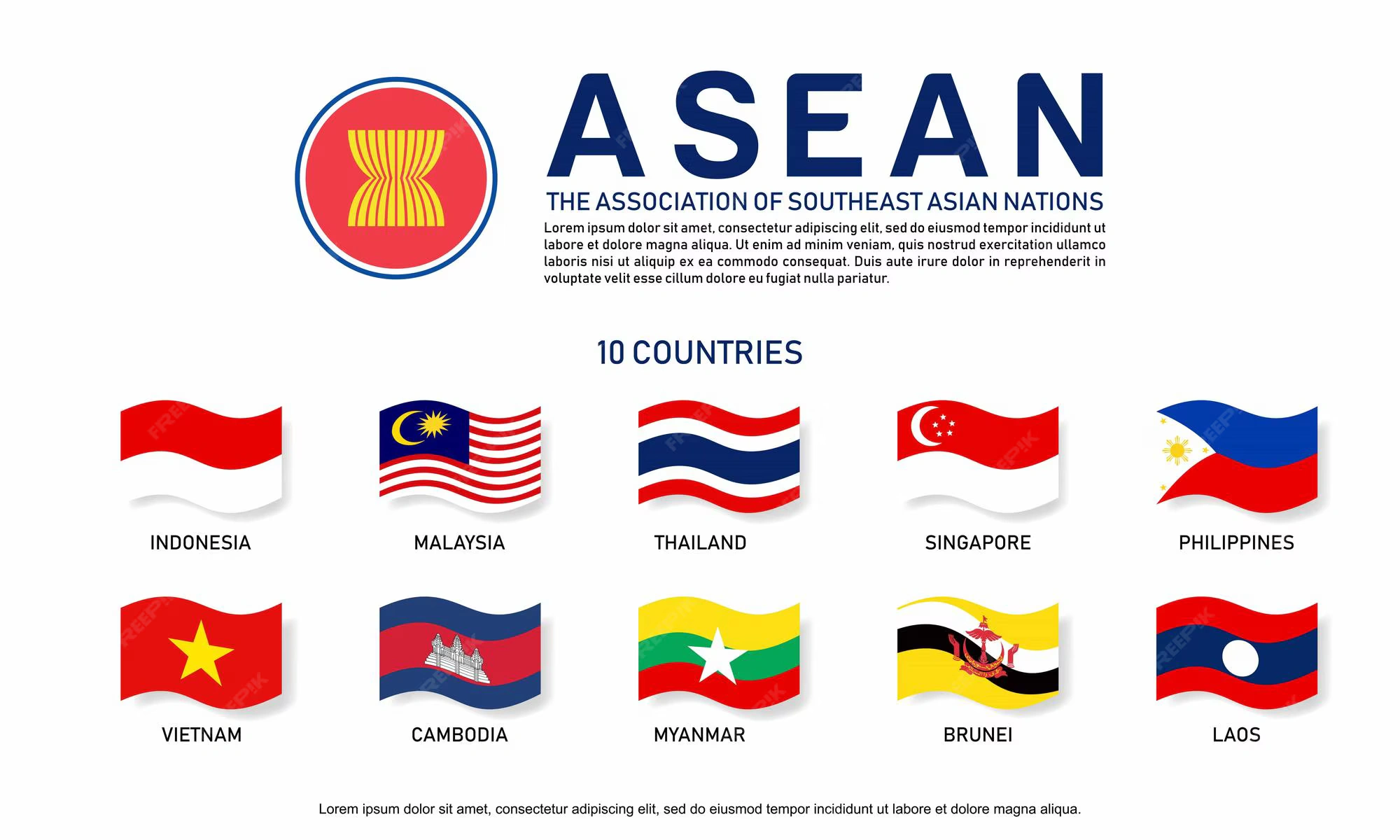
This article discovers 10 powerful ways an ASEAN common currency could challenge US dollar dominance, reduce regional vulnerability, and drive ASEAN economic stability — backed by 2026 data, policy frameworks, and forward-looking analysis.
Introduction: The Dollar’s Grip Is Loosening — And ASEAN Is Watching Closely
For nearly eight decades, the US dollar has been the undisputed axis of global commerce. Roughly 88% of all foreign exchange transactions still involve the greenback, according to the Bank for International Settlements. But across Southeast Asia, something quietly tectonic is underway.
In boardrooms from Jakarta to Kuala Lumpur, and in the policy corridors of the ASEAN Secretariat, a once-fringe conversation has turned urgent: what would it take for Southeast Asia to build a monetary architecture less tethered to Washington’s fiscal cycles, Federal Reserve rate decisions, and geopolitical preferences?
The numbers are compelling. AMRO-ASIA.org’s 2026 Regional Economic Outlook projects ASEAN+3 growth at 4.0% in 2026, outpacing advanced economies by a considerable margin. ASEAN’s digital economy is on track to hit $560 billion by 2030 per the World Economic Forum. Local Currency Settlement (LCS) transactions have more than doubled, now accounting for an estimated 15% of intra-regional trade flows, up from under 7% in 2021.
An ASEAN common currency — or at minimum, a deeply integrated ASEAN currency framework — is no longer a utopian thought experiment. It is a strategic imperative gaining institutional momentum. This analysis explores ten actionable, data-grounded pathways through which ASEAN could leverage monetary integration to challenge dollar dominance and build lasting ASEAN economic stability.
1. Building a Regional Payment Connectivity Infrastructure That Bypasses SWIFT
The most immediate lever available to ASEAN is not a single currency, but a shared payments rail that reduces the transactional footprint of the dollar. The Regional Payment Connectivity (RPC) initiative, linking real-time payment systems across Indonesia, Malaysia, the Philippines, Singapore, and Thailand, is already live. By 2025, QR-code cross-border payments between these nations had processed over $4 billion in cumulative transactions without a single dollar intermediating the exchange.
Project Nexus, developed under the BIS Innovation Hub, takes this further by creating a multilateral, instant payment network across ASEAN member central banks. When payment infrastructure no longer defaults to dollar-clearing, the cognitive and institutional bias toward dollar invoicing weakens — and that behavioral shift is where ASEAN de-dollarization truly begins.
The lesson from Europe is instructive: SEPA (Single Euro Payments Area) preceded full monetary union, normalizing euro-denominated transactions before the currency itself matured as a reserve asset. ASEAN’s RPC is playing that exact role today.
2. Scaling Local Currency Settlement Frameworks Between Bilateral Pairs
Before any multilateral ASEAN monetary union is politically feasible, bilateral local currency frameworks are quietly rewiring trade finance. Japan and Indonesia formalized a yen-rupiah settlement corridor in 2023, allowing direct conversion without dollar intermediation. China-Malaysia ringgit-yuan corridors, Thailand-India baht-rupee agreements, and Singapore’s multi-currency MAS frameworks have followed in rapid succession.
According to the Asian Development Bank’s Asian Economic Integration Report 2025, local currency transactions in ASEAN as a share of total bilateral trade have risen by approximately 8 percentage points since 2020. The key insight: each bilateral corridor reduces the marginal cost of a future multilateral settlement system, essentially pre-building the plumbing of regional monetary union one pipe at a time.
| Framework | Currency Pair | Trade Volume (2025 est.) | USD Bypassed? |
|---|---|---|---|
| Japan-Indonesia LCS | JPY-IDR | ~$18B | Yes |
| China-Malaysia | CNY-MYR | ~$32B | Yes |
| India-Thailand | INR-THB | ~$9B | Yes |
| Singapore MAS Multi-FX | SGD-basket | ~$55B | Partial |
3. Leveraging CBDCs and mBridge to Create a De Facto ASEAN Digital Currency Layer
Central Bank Digital Currencies (CBDCs) may be the most underappreciated vehicle for ASEAN currency integration. The mBridge project — a multi-CBDC platform co-developed by the central banks of China, Hong Kong, Thailand, and the UAE under BIS coordination — has already completed pilot transactions worth over $22 million in wholesale cross-border settlements.
More significantly, Thailand’s Bank of Thailand and Singapore’s MAS are both advancing retail CBDC frameworks with interoperability protocols designed for regional use. If ASEAN’s ten central banks converge on a common CBDC interoperability standard — even without a single currency — the practical effect would be a synthetic “ASEAN digital currency layer” enabling seamless cross-border payments in ASEAN at near-zero cost and without dollar conversion.
The IMF’s 2025 Working Paper on CBDC Cross-Border Implications notes that multi-CBDC arrangements can reduce FX transaction costs by up to 50% and settlement times from two days to under ten seconds. For a region conducting $3.8 trillion in annual intra-regional trade, that efficiency dividend is enormous — and denominated in local currency, not dollars.
4. Establishing an ASEAN Monetary Fund as a Credible Backstop
One of the dollar’s most durable advantages is not transactional but psychological: it is the currency of last resort. When crises hit — as they did for Thailand in 1997, Indonesia in 1998, or regionally during COVID-19 — nations scramble for dollar liquidity. An ASEAN common currency or even a deep currency cooperation framework requires an equally credible regional lender of last resort.
The Chiang Mai Initiative Multilateralisation (CMIM), currently sized at $240 billion, represents the seed of such an institution. But its activation threshold remains politically high — historically requiring IMF co-conditionality — and it has never been fully drawn upon. Reforming CMIM into a more autonomous, rapidly deployable ASEAN Monetary Fund, modeled on the European Stability Mechanism (ESM), would provide the credibility backstop that a regional currency requires.
The ADB estimates that deepening CMIM and reducing its IMF linkage could cut member nations’ precautionary reserve holdings by 15-20% — freeing up hundreds of billions in dollar reserves currently sitting idle as insurance policies.
5. Reducing Commodity Invoicing in Dollars Through Petrochemical and Agricultural Benchmarks
ASEAN is one of the world’s most commodity-rich regions — the top exporter of palm oil, a major LNG producer, and a growing force in critical minerals essential for the energy transition. Yet nearly all of these commodities are priced and invoiced in US dollars, a structural dependency that amplifies currency volatility for producing nations whenever the Fed tightens policy.
An ASEAN commodity pricing benchmark — beginning with palm oil, which Malaysia and Indonesia effectively control as a duopoly — denominated in a basket of regional currencies or an ASEAN unit of account, could begin the process of de-linking commodity flows from dollar pricing. This is not unprecedented: the euro has steadily gained ground as an invoicing currency in European energy markets since the early 2000s, reducing eurozone nations’ exposure to dollar energy shocks.
Indonesia’s President Joko Widodo’s 2022 push to price nickel exports in non-dollar terms was politically bold but logistically premature. By 2026, with deeper regional payment rails in place, the infrastructure conditions for ASEAN vs US dollar dominance in commodity pricing are maturing meaningfully.
6. Harmonizing Capital Market Regulations to Attract Intra-ASEAN Investment in Local Currency
ASEAN financial resilience requires not just payment systems but deep, liquid capital markets denominated in regional currencies. Currently, ASEAN’s bond markets are fragmented, illiquid at the regional level, and heavily reliant on dollar-denominated issuance to attract foreign capital. The ASEAN+3 Bond Market Initiative (ABMI) has made progress, but intra-ASEAN bond holdings remain disproportionately low relative to the region’s economic weight.
A harmonized ASEAN capital market framework — common listing standards, mutual recognition of securities, and a unified clearing infrastructure — would enable pension funds, sovereign wealth funds, and insurers to diversify into ASEAN-currency assets at scale. Singapore’s SGX, Bursa Malaysia, and the Stock Exchange of Thailand collectively manage over $1.2 trillion in market capitalization; deeper integration could create a market rivaling the London Stock Exchange in depth.
The WEF’s 2026 ASEAN Competitiveness Report flags regulatory harmonization as the single highest-return, lowest-cost reform available to reduce US dollar dependence in ASEAN — yet one where political will remains the binding constraint.
7. Using the ACU (ASEAN Currency Unit) as a Basket Reference Unit Before Full Union
History suggests that successful currency unions pass through a reference unit phase before full monetary integration. The European Currency Unit (ECU), a weighted basket of EC member currencies, operated from 1979 to 1999 — a twenty-year normalization period during which markets, contracts, and institutions built comfort with a pan-European monetary reference.
An ASEAN Currency Unit (ACU) — a GDP-weighted or trade-weighted basket of member currencies — could serve a similar bridging function today. It would not require surrendering monetary sovereignty (the ECU never did), but it would provide a common reference for intra-ASEAN contracts, bond issuances, and ultimately central bank reserve allocations. Over time, as ACU-denominated markets deepen, the ACU could organically evolve toward a transactional currency.
Academic research published on ResearchGate by Plummer & Chia (2024) modeling optimal ASEAN currency basket weights suggests that a trade-weighted ACU would have reduced exchange rate volatility for member nations by an estimated 22-31% during the 2020-2024 period of dollar strength — a powerful empirical case for its adoption.
8. Anchoring ASEAN Currency Integration to the Digital Economy Boom
ASEAN’s digital economy is the region’s most compelling growth narrative — and arguably its most powerful argument for ASEAN currency integration. A $560 billion digital economy by 2030 will generate billions of micro-transactions, platform payments, and cross-border digital service flows that are inherently inefficient to route through dollar FX conversion.
Grab, Sea Limited, GoTo, and Lazada together process hundreds of millions of transactions annually across multiple ASEAN currencies. The FX conversion friction in these ecosystems represents both a cost and a strategic vulnerability: dollar strengthening directly erodes the purchasing power of consumers and merchants transacting in baht, rupiah, ringgit, and peso.
A unified ASEAN digital payment token — not necessarily a legal tender replacement, but a layer-two settlement mechanism for digital commerce — could eliminate this friction entirely. Singapore’s MAS has been quietly piloting exactly this through its Project Ubin and subsequent initiatives, and the Financial Times has reported growing private sector appetite among ASEAN fintechs for a regional stablecoin framework backed by a basket of central bank reserves.
9. Coordinating Monetary Policy Through an Enhanced ASEAN+3 Macroeconomic Framework
ASEAN economic stability ultimately requires more than infrastructure — it requires policy coordination. One of the most persistent criticisms of any ASEAN monetary union proposal is the region’s structural heterogeneity: Singapore’s per capita GDP exceeds $80,000; Myanmar’s barely clears $1,200. A one-size-fits-all monetary policy would be genuinely destabilizing for the weaker economies.
But coordinated monetary policy — a middle path between full union and complete independence — is both feasible and urgently needed. The AMRO (ASEAN+3 Macroeconomic Research Office) already serves as a regional surveillance body, publishing quarterly assessments of member economies. Empowering AMRO with formal policy coordination mandates — analogous to the ECB’s role before it assumed full monetary authority — could enable synchronized interest rate corridors, coordinated FX intervention frameworks, and a regional inflation target that reduces policy divergence over time.
AMRO’s 2026 projections showing ASEAN+3 growth at 4.0% amid global headwinds demonstrate that the region already moves with a degree of macroeconomic synchronicity that underpins the case for deeper coordination.
10. Deploying ASEAN’s Geopolitical Moment to Build Institutional Legitimacy
Perhaps the most undervalued driver of ASEAN de-dollarization is geopolitical timing. The fracturing of the post-Cold War US-led financial order — accelerated by the weaponization of dollar-clearing systems against Russia in 2022, US-China decoupling pressures, and the Global South’s growing frustration with IMF conditionality — has created a window of institutional legitimacy for regional monetary alternatives that did not exist a decade ago.
ASEAN’s non-aligned tradition, its “ASEAN Way” of consensus-building, and its position as a credible neutral party in US-China competition make it uniquely placed to lead a monetary architecture that is neither a dollar replacement nor a yuan vehicle, but something genuinely multipolar. The WEF’s 2026 analysis on ASEAN strategic autonomy frames this moment as a “once-in-a-generation” opportunity for the region to shape global financial norms rather than merely comply with them.
Indonesia — the world’s fourth most populous nation, G20 member, and 2023 ASEAN Chair — has increasingly articulated a vision of ASEAN currency leadership as part of its broader Global South positioning. With ASEAN’s combined GDP crossing $4.5 trillion in 2025 and the region on track to become the world’s fourth-largest economic bloc by 2030, the geopolitical credibility to back institutional monetary ambition is materially present.
Conclusion: Not If, But When — And How Carefully
The question facing ASEAN’s finance ministers, central bankers, and heads of government is not whether a common currency or deep monetary integration is desirable in principle. Most economists agree it is. The question is sequencing: building the payment rails first, then the settlement frameworks, then the reference currency unit, then the institutional governance — and doing each step well enough that markets, not just politicians, begin to trust the architecture.
The euro’s cautionary tale is relevant here. Its design flaws — a monetary union without fiscal union — nearly tore the eurozone apart in 2010-2012. ASEAN must learn from that near-catastrophe: any ASEAN common currency must be accompanied by adequate fiscal transfer mechanisms, flexible convergence criteria that respect member diversity, and democratic accountability structures that prevent technocratic overreach.
But the trajectory is unmistakable. Cross-border payments in ASEAN are growing, dollar invoicing is declining at the margin, CBDC interoperability is advancing, and the geopolitical wind is at the region’s back. An ASEAN monetary framework competitive with — not necessarily replacing — the US dollar is not a fantasy. It is a project already underway, gathering institutional mass and market momentum with every bilateral LCS agreement, every mBridge pilot transaction, and every digital payment processed in baht instead of dollars.
The dollar will not fall. But its monopoly is ending. And Southeast Asia is positioning itself to shape what comes next.
Key Sources & Further Reading
- AMRO-ASIA.org — ASEAN+3 Regional Economic Outlook 2026
- IMF.org — Dollar Dominance in Trade and Finance
- ADB.org — Asian Economic Integration Report 2025
- WEF.org — ASEAN Strategic Autonomy 2026
- BIS.org — Project Nexus: Enabling Instant Cross-Border Payments
- FT.com — ASEAN Digital Currency Frameworks
- Economist.com — The Future of the Dollar as Reserve Currency
- ResearchGate — Plummer & Chia (2024): Optimal Currency Areas in ASEAN
- ASEANBriefing.com — Local Currency Trade in ASEAN
- ASEAN Exchanges — Currency Resilience Report 2025
Discover more from The Economy
Subscribe to get the latest posts sent to your email.



Key Takeaways
- Rolex’s secondary market rose approximately 7.9% year-over-year as of 2026 (per WatchCharts data) — trailing Patek Philippe (+16.2%) and Tudor (+11.4%) but still outperforming Audemars Piguet (+3.4%).
- Rolex raised U.S. retail prices 4–9% in January 2026 (steel models ~5.6%, gold models ~8.7%), narrowing the historical gap between retail and pre-owned pricing.
- Not every model appreciates: steel sports references (Submariner, GMT-Master II, Daytona) have held value far better than two-tone or widely available dress references like the standard Datejust.
- The Lady-Datejust posted the sharpest 2026 gain among tracked collections — up 22.73%, from roughly $9,269 to $11,376 — driven by demand for smaller, “everyday luxury” watches.
- Gold’s rise past $2,400/oz has directly lifted the investment case for Rolex’s precious-metal references (Day-Date, Sky-Dweller, Yacht-Master).
The Model-by-Model Picture
| Category | 2026 Trend |
|---|---|
| Lady-Datejust | +22.73% (strongest performer among tracked collections) |
| Steel sports models (Submariner, GMT-Master II) | Held value well; corrected from 2022 peak but stabilized above retail |
| Daytona | Corrected from highs above $50,000 to the mid-$30,000s; still among the most sought-after references |
| Two-tone/widely available Datejust | Flat to negative — “holds value” is an overstatement for this category |
| Gold references (Day-Date, Sky-Dweller) | Lifted by gold’s rise above $2,400/oz |
Why the “Rolex Always Appreciates” Myth Is Fading
The pandemic-era boom pushed some references — the Daytona above all — to speculative highs disconnected from historical norms. Since the March 2022 peak, steel sports models have compressed meaningfully, and dealers who bought inventory near the top have in some cases faced 20–40% markdowns on liquidation. The lesson for 2026 buyers: Rolex as a category is not a monolith. Value retention depends heavily on specific reference, condition, and whether the piece comes with box and papers (“full set”).
What’s Actually Driving 2026 Strength
- Retail price increases raise the floor. When a new Submariner retails at $10,050 (up from $9,500), a pre-owned example at $11,000–$12,000 suddenly represents a smaller premium — narrowing the gap without secondary prices actually moving.
- Supply discipline remains Rolex’s core lever. The brand has never confirmed production numbers, and secondary-market premiums remain entirely a function of Rolex’s own manufacturing decisions — a risk factor as much as a support.
- Certified Pre-Owned rollout. Rolex’s now fully rolled-out CPO program has changed how buyers transact in the used market, adding a layer of brand-verified legitimacy that supports pricing.
The Case for Rolex as a Portfolio Diversifier
Financial advisors increasingly frame luxury watches not as a replacement for equities or bonds, but as a tangible, historically low-correlation diversifier — one that carries its own risks (illiquidity, condition-dependent pricing, no yield) but has demonstrated multi-decade resilience for specific references.
Is Rolex a good investment in 2026?
It depends heavily on the specific reference. Steel sports models like the Submariner and Daytona have held or grown in value; two-tone and widely available dress models generally have not. Overall, Rolex’s secondary market rose about 7.9% year-over-year in 2026, trailing Patek Philippe but ahead of Audemars Piguet.
Discover more from The Economy
Subscribe to get the latest posts sent to your email.

Navigating Mortgage and Loan Refinancing in a High-Yield Environment
Global public debt crossing critical thresholds has kept central bank policies volatile, resulting in fluctuating US Treasury yields throughout 2026. For homeowners and commercial property holders burdened by previous high-interest borrowing cycles, finding optimal refinance windows has become a high-stakes financial puzzle. Stalled disinflation and stubborn employment numbers mean rate cuts are incremental, requiring borrowers to act with precision.
Timing your mortgage or commercial loan refinance in this environment requires a deep understanding of yield curve movements and lender risk appetites.
Decoding 2026 Refinance Dynamics
The 10-Year Treasury Yield Benchmark
Mortgage rates continue to track closely with the 10-year US Treasury yield. When macroeconomic anxiety spikes debt issuance, yields rise, tightening consumer borrowing capacity. Savvy borrowers monitor weekly Treasury auctions to lock in rates during brief dip windows.
Hybrid ARMs and Alternative Structures
With fixed rates remaining elevated, 7/1 and 10/1 adjustable-rate mortgages (ARMs) have surged in popularity. These products offer lower initial monthly payments, giving borrowers breathing room until central bank easing cycles fully materialize.
| Loan Product | Current Rate Range | Best For | Key Risk Factor |
| 30-Year Fixed Mortgage | 6.2% – 6.8% | Long-term predictability | Higher initial monthly outlay |
| 7/1 Hybrid ARM | 5.5% – 5.9% | Short-term ownership / flipping | Rate reset risk after year 7 |
| Commercial Refinance | 7.0% – 8.2% | Corporate asset restructuring | Strict DSCR lender covenants |
Actionable Steps for Successful Refinancing
To maximize your chances of securing favorable refinance terms in a volatile market, follow a disciplined preparation strategy.
Boost Your Credit Score Immediately: Lenders in 2026 are applying stringent credit tiering; a 20-point increase can drop your APR by a crucial quarter-point.
Shop Regional Credit Unions: Smaller financial institutions often offer portfolio loans with more flexible underwriting than major national banks.
Calculate the Break-Even Point: Ensure your total closing costs are recouped through monthly savings within 24 months of closing.
“Market Strategist View: Refinancing in 2026 is an exercise in opportunistic timing. Borrowers must maintain immaculate financial profiles ready to strike the moment Treasury yields dip.”
Mastering the complexities of today’s debt environment ensures you can successfully lower your debt service costs and protect your long-term financial stability.
Discover more from The Economy
Subscribe to get the latest posts sent to your email.

The days of pulling generic auto insurance quotes based purely on your zip code and age are officially over. In 2026, insurance comparison engines are powered entirely by generative AI and real-time telematics. These platforms digest thousands of live data points—ranging from your driving smoothness via connected vehicle sensors to real-time traffic congestion patterns—to generate hyper-personalized premiums instantly.
For consumers, this evolution represents both a massive opportunity for savings and a hidden trap for penalty pricing. Understanding how AI algorithms evaluate risk is essential for anyone looking to lower their monthly auto insurance premiums.
How AI Comparison Engines Evaluate Your Risk Profile
Behavioral Telematics and Connected Cars
Modern cars stream performance data directly to insurance aggregators. Generative AI models analyze braking sharpness, acceleration curves, cornering G-forces, and phone distraction metrics. Drivers who maintain smooth, defensive habits are rewarded with dynamic rate cuts of up to 40% compared to traditional rating tiers.
Predictive Traffic and Weather Modeling
AI tools now cross-reference your daily commute route with predictive weather and accident probability models. If your standard parking location or driving corridor has a statistically higher incidence of uninsured motorist claims, your quotes will reflect that hyper-local risk assessment.
| Comparison Factor | Traditional Rating Model | 2026 Generative AI Model | Impact on Premium |
| Mileage & Usage | Annual estimated odometer reading | GPS tracking & live trip duration | High (up to 35% savings) |
| Driving Behavior | MVR driving record & accidents | Real-time braking, speed, & G-force | Critical (determines tier) |
| Vehicle Tech | Make, model, and safety rating | ADAS calibration & repair cost data | Moderate |
Strategies to Lower Your AI-Driven Insurance Quote
To outsmart the algorithm and secure the lowest possible premium in 2026, drivers must proactively manage their digital footprint on insurance platforms.
Opt-In for Telematics Trial Periods: Many insurers offer immediate 15% discounts just for installing their driving app; let it track safe habits for 30 days to lock in permanent savings.
Scrub Unverified Public Records: Ensure your motor vehicle report is free of clerical errors that AI risk models misinterpret as reckless behavior.
Compare AI Aggregators: Use platforms that integrate multi-carrier API feeds rather than single-brand comparison sites to find the best risk-adjusted rate.
“Industry Note: AI-driven pricing rewards transparency and precision. Drivers who actively manage their telematics data consistently out-save those relying on legacy quote calculators.”
Embracing AI comparison tools allows savvy policyholders to customize coverage limits precisely to their driving habits, eliminating wasted premium spend while ensuring robust protection.
Discover more from The Economy
Subscribe to get the latest posts sent to your email.

VIX Index Explained: How to Trade Wall Street’s Fear Gauge Today

Commercial vs Residential Real Estate: Which Wins in 2026?

Presidential Stock Market Performance: How Trump’s Second Term Compares to History

2026 Real Estate Market News: Are We Heading for a Correction?

Bitcoin Price Forecast 2026–2027: Will the 4-Year Cycle Hold?

Fidelity Crypto vs. Traditional Brokerages: A Guide for Modern Investors

The 2026 Global Smartphone Market: AI Integration and Competitor Analysis

SpaceX IPO: How Aerospace Is Reshaping Tech Startup News

Fidelity Investments Review: Maximizing Returns in a Volatile Stock Market

How Crypto Transformed the Trump Fortune: A $1.4 Billion Financial Breakdown

Global Pension Systems Ranked: The World’s Best and Worst Retirement Frameworks

Global Supply Chain Vulnerabilities: From Eurasian Trade Corridors to Food Consumer Recalls

Why 5% U.S. Treasury Yields Signal a Global Market Regime Shift.

Federal Reserve Defies White House Pressure: Inside Trump’s Demand for Sub-1% Interest Rates After Historic 2026 Rate Hike

State Farm’s $5B Dividend 2026: Who Qualifies & Payout Dates

US-China Relations in Q3 2026: Trade Tariffs and Supply Chain Risks

Top 30 Stocks for Investment in PSX for Massive ROI in 2026

SpaceX Starship Flight 14: First Orbital Attempt & Starlink V3 Launch Explained

The 2026 Crypto Regulatory Shift: What It Means for Institutional Investors

AI Chip Stocks 2026: The Best Semiconductor Investments Beyond Marvell

Tween Back-to-School Trends 2026: What’s Driving the $85B Season

AI-Powered Training: The Next Multi-Billion Dollar Ecosystem in Fitness

Oil Prices Break $100 in 2026: Middle East Conflict & Energy Markets

10-Year Treasury Yield Hits 4.80%: What It Means for Rates & Portfolios

Fidelity Investments Review 2026: SPAXX Yields & Zero-Fee Funds

BRICS+ Cross-Border Payments 2026: Interoperability Explained

Shein Clothes Quality & Safety in 2026: What Lab Tests Show

MRVL Earnings 2026: Why Marvell Sank Despite Beating Estimates
-

 Markets & Finance9 months ago
Top 15 Stocks for Investment in 2026 in PSX: Your Complete Guide to Pakistan’s Best Investment Opportunities
-

 Analysis7 months ago
Johor’s Investment Boom: The Hidden Costs Behind Malaysia’s Most Ambitious Economic Surge
-

 Analysis7 months ago
Top 10 Stocks for Investment in PSX for Quick Returns in 2026
-

 Analysis8 months ago
Brazil’s Rare Earth Race: US, EU, and China Compete for Critical Minerals as Tensions Rise
-

 Banks8 months ago
Best Investments in Pakistan 2026: Top 10 Low-Price Shares and Long-Term Picks for the PSX
-

 Investment8 months ago
Top 10 Mutual Fund Managers in Pakistan for Investment in 2026: A Comprehensive Guide for Optimal Returns
-

 Global Economy9 months ago
15 Most Lucrative Sectors for Investment in Pakistan: A 2025 Data-Driven Analysis
-

 Global Economy9 months ago
Pakistan’s Export Goldmine: 10 Game-Changing Markets Where Pakistani Businesses Are Winning Big in 2025