
Analysis
10 Ways ASEAN Could Be Instrumental in Competing with the US Dollar Through a Common Currency for Economic Stability

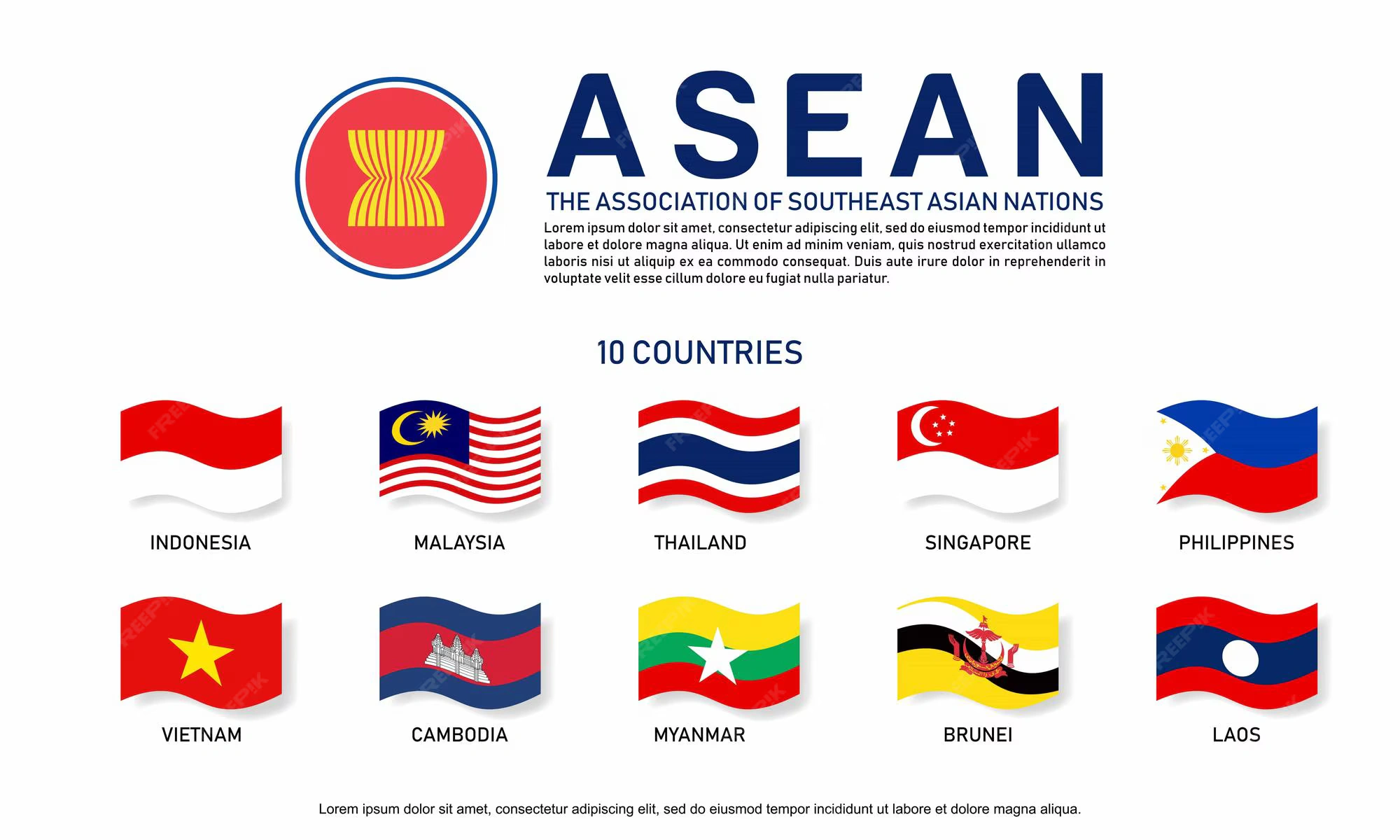
This article discovers 10 powerful ways an ASEAN common currency could challenge US dollar dominance, reduce regional vulnerability, and drive ASEAN economic stability — backed by 2026 data, policy frameworks, and forward-looking analysis.
Introduction: The Dollar’s Grip Is Loosening — And ASEAN Is Watching Closely
For nearly eight decades, the US dollar has been the undisputed axis of global commerce. Roughly 88% of all foreign exchange transactions still involve the greenback, according to the Bank for International Settlements. But across Southeast Asia, something quietly tectonic is underway.
In boardrooms from Jakarta to Kuala Lumpur, and in the policy corridors of the ASEAN Secretariat, a once-fringe conversation has turned urgent: what would it take for Southeast Asia to build a monetary architecture less tethered to Washington’s fiscal cycles, Federal Reserve rate decisions, and geopolitical preferences?
The numbers are compelling. AMRO-ASIA.org’s 2026 Regional Economic Outlook projects ASEAN+3 growth at 4.0% in 2026, outpacing advanced economies by a considerable margin. ASEAN’s digital economy is on track to hit $560 billion by 2030 per the World Economic Forum. Local Currency Settlement (LCS) transactions have more than doubled, now accounting for an estimated 15% of intra-regional trade flows, up from under 7% in 2021.
An ASEAN common currency — or at minimum, a deeply integrated ASEAN currency framework — is no longer a utopian thought experiment. It is a strategic imperative gaining institutional momentum. This analysis explores ten actionable, data-grounded pathways through which ASEAN could leverage monetary integration to challenge dollar dominance and build lasting ASEAN economic stability.
1. Building a Regional Payment Connectivity Infrastructure That Bypasses SWIFT
The most immediate lever available to ASEAN is not a single currency, but a shared payments rail that reduces the transactional footprint of the dollar. The Regional Payment Connectivity (RPC) initiative, linking real-time payment systems across Indonesia, Malaysia, the Philippines, Singapore, and Thailand, is already live. By 2025, QR-code cross-border payments between these nations had processed over $4 billion in cumulative transactions without a single dollar intermediating the exchange.
Project Nexus, developed under the BIS Innovation Hub, takes this further by creating a multilateral, instant payment network across ASEAN member central banks. When payment infrastructure no longer defaults to dollar-clearing, the cognitive and institutional bias toward dollar invoicing weakens — and that behavioral shift is where ASEAN de-dollarization truly begins.
The lesson from Europe is instructive: SEPA (Single Euro Payments Area) preceded full monetary union, normalizing euro-denominated transactions before the currency itself matured as a reserve asset. ASEAN’s RPC is playing that exact role today.
2. Scaling Local Currency Settlement Frameworks Between Bilateral Pairs
Before any multilateral ASEAN monetary union is politically feasible, bilateral local currency frameworks are quietly rewiring trade finance. Japan and Indonesia formalized a yen-rupiah settlement corridor in 2023, allowing direct conversion without dollar intermediation. China-Malaysia ringgit-yuan corridors, Thailand-India baht-rupee agreements, and Singapore’s multi-currency MAS frameworks have followed in rapid succession.
According to the Asian Development Bank’s Asian Economic Integration Report 2025, local currency transactions in ASEAN as a share of total bilateral trade have risen by approximately 8 percentage points since 2020. The key insight: each bilateral corridor reduces the marginal cost of a future multilateral settlement system, essentially pre-building the plumbing of regional monetary union one pipe at a time.
| Framework | Currency Pair | Trade Volume (2025 est.) | USD Bypassed? |
|---|---|---|---|
| Japan-Indonesia LCS | JPY-IDR | ~$18B | Yes |
| China-Malaysia | CNY-MYR | ~$32B | Yes |
| India-Thailand | INR-THB | ~$9B | Yes |
| Singapore MAS Multi-FX | SGD-basket | ~$55B | Partial |
3. Leveraging CBDCs and mBridge to Create a De Facto ASEAN Digital Currency Layer
Central Bank Digital Currencies (CBDCs) may be the most underappreciated vehicle for ASEAN currency integration. The mBridge project — a multi-CBDC platform co-developed by the central banks of China, Hong Kong, Thailand, and the UAE under BIS coordination — has already completed pilot transactions worth over $22 million in wholesale cross-border settlements.
More significantly, Thailand’s Bank of Thailand and Singapore’s MAS are both advancing retail CBDC frameworks with interoperability protocols designed for regional use. If ASEAN’s ten central banks converge on a common CBDC interoperability standard — even without a single currency — the practical effect would be a synthetic “ASEAN digital currency layer” enabling seamless cross-border payments in ASEAN at near-zero cost and without dollar conversion.
The IMF’s 2025 Working Paper on CBDC Cross-Border Implications notes that multi-CBDC arrangements can reduce FX transaction costs by up to 50% and settlement times from two days to under ten seconds. For a region conducting $3.8 trillion in annual intra-regional trade, that efficiency dividend is enormous — and denominated in local currency, not dollars.
4. Establishing an ASEAN Monetary Fund as a Credible Backstop
One of the dollar’s most durable advantages is not transactional but psychological: it is the currency of last resort. When crises hit — as they did for Thailand in 1997, Indonesia in 1998, or regionally during COVID-19 — nations scramble for dollar liquidity. An ASEAN common currency or even a deep currency cooperation framework requires an equally credible regional lender of last resort.
The Chiang Mai Initiative Multilateralisation (CMIM), currently sized at $240 billion, represents the seed of such an institution. But its activation threshold remains politically high — historically requiring IMF co-conditionality — and it has never been fully drawn upon. Reforming CMIM into a more autonomous, rapidly deployable ASEAN Monetary Fund, modeled on the European Stability Mechanism (ESM), would provide the credibility backstop that a regional currency requires.
The ADB estimates that deepening CMIM and reducing its IMF linkage could cut member nations’ precautionary reserve holdings by 15-20% — freeing up hundreds of billions in dollar reserves currently sitting idle as insurance policies.
5. Reducing Commodity Invoicing in Dollars Through Petrochemical and Agricultural Benchmarks
ASEAN is one of the world’s most commodity-rich regions — the top exporter of palm oil, a major LNG producer, and a growing force in critical minerals essential for the energy transition. Yet nearly all of these commodities are priced and invoiced in US dollars, a structural dependency that amplifies currency volatility for producing nations whenever the Fed tightens policy.
An ASEAN commodity pricing benchmark — beginning with palm oil, which Malaysia and Indonesia effectively control as a duopoly — denominated in a basket of regional currencies or an ASEAN unit of account, could begin the process of de-linking commodity flows from dollar pricing. This is not unprecedented: the euro has steadily gained ground as an invoicing currency in European energy markets since the early 2000s, reducing eurozone nations’ exposure to dollar energy shocks.
Indonesia’s President Joko Widodo’s 2022 push to price nickel exports in non-dollar terms was politically bold but logistically premature. By 2026, with deeper regional payment rails in place, the infrastructure conditions for ASEAN vs US dollar dominance in commodity pricing are maturing meaningfully.
6. Harmonizing Capital Market Regulations to Attract Intra-ASEAN Investment in Local Currency
ASEAN financial resilience requires not just payment systems but deep, liquid capital markets denominated in regional currencies. Currently, ASEAN’s bond markets are fragmented, illiquid at the regional level, and heavily reliant on dollar-denominated issuance to attract foreign capital. The ASEAN+3 Bond Market Initiative (ABMI) has made progress, but intra-ASEAN bond holdings remain disproportionately low relative to the region’s economic weight.
A harmonized ASEAN capital market framework — common listing standards, mutual recognition of securities, and a unified clearing infrastructure — would enable pension funds, sovereign wealth funds, and insurers to diversify into ASEAN-currency assets at scale. Singapore’s SGX, Bursa Malaysia, and the Stock Exchange of Thailand collectively manage over $1.2 trillion in market capitalization; deeper integration could create a market rivaling the London Stock Exchange in depth.
The WEF’s 2026 ASEAN Competitiveness Report flags regulatory harmonization as the single highest-return, lowest-cost reform available to reduce US dollar dependence in ASEAN — yet one where political will remains the binding constraint.
7. Using the ACU (ASEAN Currency Unit) as a Basket Reference Unit Before Full Union
History suggests that successful currency unions pass through a reference unit phase before full monetary integration. The European Currency Unit (ECU), a weighted basket of EC member currencies, operated from 1979 to 1999 — a twenty-year normalization period during which markets, contracts, and institutions built comfort with a pan-European monetary reference.
An ASEAN Currency Unit (ACU) — a GDP-weighted or trade-weighted basket of member currencies — could serve a similar bridging function today. It would not require surrendering monetary sovereignty (the ECU never did), but it would provide a common reference for intra-ASEAN contracts, bond issuances, and ultimately central bank reserve allocations. Over time, as ACU-denominated markets deepen, the ACU could organically evolve toward a transactional currency.
Academic research published on ResearchGate by Plummer & Chia (2024) modeling optimal ASEAN currency basket weights suggests that a trade-weighted ACU would have reduced exchange rate volatility for member nations by an estimated 22-31% during the 2020-2024 period of dollar strength — a powerful empirical case for its adoption.
8. Anchoring ASEAN Currency Integration to the Digital Economy Boom
ASEAN’s digital economy is the region’s most compelling growth narrative — and arguably its most powerful argument for ASEAN currency integration. A $560 billion digital economy by 2030 will generate billions of micro-transactions, platform payments, and cross-border digital service flows that are inherently inefficient to route through dollar FX conversion.
Grab, Sea Limited, GoTo, and Lazada together process hundreds of millions of transactions annually across multiple ASEAN currencies. The FX conversion friction in these ecosystems represents both a cost and a strategic vulnerability: dollar strengthening directly erodes the purchasing power of consumers and merchants transacting in baht, rupiah, ringgit, and peso.
A unified ASEAN digital payment token — not necessarily a legal tender replacement, but a layer-two settlement mechanism for digital commerce — could eliminate this friction entirely. Singapore’s MAS has been quietly piloting exactly this through its Project Ubin and subsequent initiatives, and the Financial Times has reported growing private sector appetite among ASEAN fintechs for a regional stablecoin framework backed by a basket of central bank reserves.
9. Coordinating Monetary Policy Through an Enhanced ASEAN+3 Macroeconomic Framework
ASEAN economic stability ultimately requires more than infrastructure — it requires policy coordination. One of the most persistent criticisms of any ASEAN monetary union proposal is the region’s structural heterogeneity: Singapore’s per capita GDP exceeds $80,000; Myanmar’s barely clears $1,200. A one-size-fits-all monetary policy would be genuinely destabilizing for the weaker economies.
But coordinated monetary policy — a middle path between full union and complete independence — is both feasible and urgently needed. The AMRO (ASEAN+3 Macroeconomic Research Office) already serves as a regional surveillance body, publishing quarterly assessments of member economies. Empowering AMRO with formal policy coordination mandates — analogous to the ECB’s role before it assumed full monetary authority — could enable synchronized interest rate corridors, coordinated FX intervention frameworks, and a regional inflation target that reduces policy divergence over time.
AMRO’s 2026 projections showing ASEAN+3 growth at 4.0% amid global headwinds demonstrate that the region already moves with a degree of macroeconomic synchronicity that underpins the case for deeper coordination.
10. Deploying ASEAN’s Geopolitical Moment to Build Institutional Legitimacy
Perhaps the most undervalued driver of ASEAN de-dollarization is geopolitical timing. The fracturing of the post-Cold War US-led financial order — accelerated by the weaponization of dollar-clearing systems against Russia in 2022, US-China decoupling pressures, and the Global South’s growing frustration with IMF conditionality — has created a window of institutional legitimacy for regional monetary alternatives that did not exist a decade ago.
ASEAN’s non-aligned tradition, its “ASEAN Way” of consensus-building, and its position as a credible neutral party in US-China competition make it uniquely placed to lead a monetary architecture that is neither a dollar replacement nor a yuan vehicle, but something genuinely multipolar. The WEF’s 2026 analysis on ASEAN strategic autonomy frames this moment as a “once-in-a-generation” opportunity for the region to shape global financial norms rather than merely comply with them.
Indonesia — the world’s fourth most populous nation, G20 member, and 2023 ASEAN Chair — has increasingly articulated a vision of ASEAN currency leadership as part of its broader Global South positioning. With ASEAN’s combined GDP crossing $4.5 trillion in 2025 and the region on track to become the world’s fourth-largest economic bloc by 2030, the geopolitical credibility to back institutional monetary ambition is materially present.
Conclusion: Not If, But When — And How Carefully
The question facing ASEAN’s finance ministers, central bankers, and heads of government is not whether a common currency or deep monetary integration is desirable in principle. Most economists agree it is. The question is sequencing: building the payment rails first, then the settlement frameworks, then the reference currency unit, then the institutional governance — and doing each step well enough that markets, not just politicians, begin to trust the architecture.
The euro’s cautionary tale is relevant here. Its design flaws — a monetary union without fiscal union — nearly tore the eurozone apart in 2010-2012. ASEAN must learn from that near-catastrophe: any ASEAN common currency must be accompanied by adequate fiscal transfer mechanisms, flexible convergence criteria that respect member diversity, and democratic accountability structures that prevent technocratic overreach.
But the trajectory is unmistakable. Cross-border payments in ASEAN are growing, dollar invoicing is declining at the margin, CBDC interoperability is advancing, and the geopolitical wind is at the region’s back. An ASEAN monetary framework competitive with — not necessarily replacing — the US dollar is not a fantasy. It is a project already underway, gathering institutional mass and market momentum with every bilateral LCS agreement, every mBridge pilot transaction, and every digital payment processed in baht instead of dollars.
The dollar will not fall. But its monopoly is ending. And Southeast Asia is positioning itself to shape what comes next.
Key Sources & Further Reading
- AMRO-ASIA.org — ASEAN+3 Regional Economic Outlook 2026
- IMF.org — Dollar Dominance in Trade and Finance
- ADB.org — Asian Economic Integration Report 2025
- WEF.org — ASEAN Strategic Autonomy 2026
- BIS.org — Project Nexus: Enabling Instant Cross-Border Payments
- FT.com — ASEAN Digital Currency Frameworks
- Economist.com — The Future of the Dollar as Reserve Currency
- ResearchGate — Plummer & Chia (2024): Optimal Currency Areas in ASEAN
- ASEANBriefing.com — Local Currency Trade in ASEAN
- ASEAN Exchanges — Currency Resilience Report 2025
Discover more from The Economy
Subscribe to get the latest posts sent to your email.



Federal Reserve Chair Kevin Warsh is expected to break with recent central bank tradition by withholding the so-called “dot plot” from the Fed’s upcoming rate outlook, according to market reporting. The move, if it happens, would mark a meaningful shift in how the Fed communicates its policy intentions to markets — and investors are already trying to read between the lines.
What the Dot Plot Actually Does
The Fed’s dot plot is a closely watched chart in which individual policymakers anonymously indicate where they expect interest rates to be at various points in the future. It has become one of the most scrutinized pieces of Fed communication, often moving markets within seconds of release as traders parse shifts in the median projection.
Withholding it — even temporarily — would strip markets of a tool they’ve relied on for years to gauge the Fed’s collective thinking on the path of rates.
Why Warsh Might Make This Call
Central bank watchers see a few possible explanations. One is that policymakers themselves are deeply divided on the path forward, given competing pressures: inflation risk tied to energy markets and geopolitical tension, against a backdrop of economic data that has sent mixed signals. Publishing a dot plot under those conditions risks creating a misleading sense of consensus — or worse, an overly wide dispersion of dots that itself becomes a market-moving story.
Another possibility is a deliberate strategic choice by Warsh to reduce the market’s reliance on point-in-time projections that have a track record of being revised significantly as conditions change.
Markets Don’t Like a Vacuum
Whatever the reasoning, removing a key piece of forward guidance tends to inject uncertainty rather than calm it. Traders who have built models and positioning around anticipated dot-plot signals will need to rely more heavily on the Fed’s statement language and the chair’s press conference comments to infer policy intentions — a less precise exercise that could increase volatility around the announcement itself.
What to Watch Next
The real test will come at the actual policy meeting. If Warsh does withhold the dot plot, attention will shift to whether this becomes a one-time decision tied to unusual circumstances, or a more lasting change in how the Powell-era tool is used going forward.
Discover more from The Economy
Subscribe to get the latest posts sent to your email.

Michael Burry, the investor who rose to fame for correctly predicting the 2008 housing market collapse, has revealed he considered betting against Elon Musk’s SpaceX — but ultimately decided against it. The admission, surfacing just as SpaceX moves toward a long-anticipated public listing, has quickly become one of the most talked-about lines in markets this week.
Why Burry’s Words Carry Weight
Few investors generate headlines the way Burry does. His reputation as a contrarian who isn’t afraid to bet against popular narratives means that even a passing comment about being “tempted” to short a company is enough to move conversation across trading desks and social media alike. The fact that he chose not to follow through only adds intrigue, leaving observers to speculate about what gave him pause.
The SpaceX Backdrop
The comments land at a notable moment for SpaceX, which has been the subject of growing market attention as talk of an eventual IPO continues to build. SpaceX has become one of the most closely watched private companies in the world, with a valuation that has climbed steadily on the back of its dominance in commercial launch services and its expanding satellite internet business.
A short bet against a company of SpaceX’s scale and momentum would be a high-risk, high-conviction move — exactly the kind of trade Burry has built his reputation on, which is part of why his decision to pass is drawing as much attention as the idea itself would have.
Reading Between the Lines
Without elaborating on his specific reasoning, Burry’s comment leaves room for interpretation. It could reflect genuine respect for SpaceX’s fundamentals and growth trajectory, or simply an acknowledgment that shorting a company with no current public listing — and significant insider control — is a structurally difficult trade to execute profitably.
The Takeaway
Whether or not Burry ever acts on the instinct, the episode is a reminder of how much weight markets still place on the views of investors with a track record of contrarian calls — even when, as in this case, the headline is really about a bet that didn’t happen.
Discover more from The Economy
Subscribe to get the latest posts sent to your email.

Global financial markets are fixated on a single question this week: will the US-Iran ceasefire hold? The answer carries outsized consequences for oil prices, inflation expectations, and the Federal Reserve’s next move — and investors are already repositioning in anticipation of either outcome.
Why the Ceasefire Matters to Your Portfolio
The logic is straightforward but high-stakes. A breakdown in the truce and renewed military strikes would almost certainly push oil prices sharply higher, reigniting an inflation problem the Federal Reserve is still working to contain. That scenario would complicate the central bank’s policy path just as it appeared to be gaining clarity.
In response, investors have already begun shifting capital out of richly valued technology shares and into steadier, more defensive sectors — a classic risk-off rotation that reflects caution rather than panic.
A Familiar Market Split
That caution showed up clearly in recent trading. A bounce in chip stocks early in the week faded quickly, dragging the technology-heavy Nasdaq down nearly 1%, while financial and industrial names that dominate the Dow Jones Industrial Average held their ground. The Nasdaq slipped 0.97% to 25,678.82 as the chip-stock recovery lost steam, while the S&P 500 dropped 0.26%, with technology and energy the only two sectors finishing in negative territory. The Dow, by contrast, edged up 0.17%.
The Dollar’s Role in the Deal
Beyond the immediate market mechanics, the ceasefire arrangement reportedly carries broader implications for the US dollar’s standing in global trade and reserve systems, with reporting suggesting the deal includes provisions aimed at protecting the dollar’s international role even as the geopolitical landscape shifts.
Treasury Demand Adds to the Unease
The geopolitical uncertainty is landing at an awkward moment for US debt markets. A recent three-year Treasury note auction cleared at a yield of 4.192%, up from 3.965% at the prior auction — the latest in a string of weaker-than-expected demand signals. When the Treasury has to offer higher yields to attract buyers, it typically signals softening appetite for US government debt, adding another layer of complexity for policymakers already juggling geopolitical risk and inflation concerns.
The Bottom Line
For now, markets are in a holding pattern — repositioning rather than panicking, but clearly pricing in the possibility that the ceasefire could unravel. Energy markets, the bond market, and Federal Reserve policy all sit downstream of how the situation develops in the coming days.
Discover more from The Economy
Subscribe to get the latest posts sent to your email.

Fed Chair Warsh Expected to Withhold the ‘Dot Plot’ — Here’s Why That’s a Big Deal

Michael Burry Says He’s Tempted to Short SpaceX — But He’s Passing, For Now

Weak Demand at Treasury Auctions Is Quietly Rattling Bond Investors

Markets Hold Their Breath as US-Iran Ceasefire Faces Its First Real Test

Fiserv Names New CEO as Industry Veteran Takis Georgakopoulos Takes the Helm

Japan’s Property Sector Looks Strong. So Why Are Investors Going Abroad?

17 Fusion Startups Have Now Raised Over $100M Each — and the Total Keeps Climbing

Warren Raises €10M to Fix Belgium’s Broken Workplace Pensions

Finance Bill 2026: Extraction Cannot Deliver

Big Tech and the UK’s Unrest: Algorithm, Not Conspiracy

BankIslami Launches BIPL Exchange: What It Means

ABHI MFB, NADRA Technologies to Accelerate Digital Transformation

Top 7 Banking Stocks for Investment in PSX: Pakistan’s Lenders Are Still Printing Money

Top 5 Best Performing Islamic Banks in Pakistan

China Overhauls the World’s Biggest Surveillance Network with Advanced AI

Kevin Warsh Takes the Fed’s Helm — and Walks Straight Into a Rate-Hike Storm

SpaceX, OpenAI & Anthropic IPOs: Wall Street’s $200B AI Test

How AI Is Forcing McKinsey and Its Peers to Rethink Pricing

SpaceX IPO: Inside the $2 Trillion Market Debut

KPMG Australia CEO Resigns After Whistleblower Claims Exposed Investigation Failures

PwC China Partner Payouts Cut Amid Evergrande Audit Fraud

Broadcom Market Value Loss: Revenue Forecast Disappoints

Pakistan Budget FY 2026-27: Relief, Prospects, and the Tightrope Walk

The Guardrails Are Down: How Meta and Google’s AI Models Fold Under Pressure

Benefitbay Raises $18M to Build the Plumbing for America’s ICHRA Shift

Nasdaq Tumbles 4% as Chip and Memory Stocks Sink: A $1.2 Trillion Wipeout

Here’s How Much It’ll Cost You to Be Part of SpaceX’s Record-Breaking $75 Billion IPO

Japanese Mid-Sized Firms Flock to Southeast Asia for Growth
-

 Markets & Finance5 months ago
Top 15 Stocks for Investment in 2026 in PSX: Your Complete Guide to Pakistan’s Best Investment Opportunities
-

 Analysis4 months ago
Top 10 Stocks for Investment in PSX for Quick Returns in 2026
-

 Analysis4 months ago
Brazil’s Rare Earth Race: US, EU, and China Compete for Critical Minerals as Tensions Rise
-

 Banks5 months ago
Best Investments in Pakistan 2026: Top 10 Low-Price Shares and Long-Term Picks for the PSX
-

 Investment5 months ago
Top 10 Mutual Fund Managers in Pakistan for Investment in 2026: A Comprehensive Guide for Optimal Returns
-

 Analysis4 months ago
Johor’s Investment Boom: The Hidden Costs Behind Malaysia’s Most Ambitious Economic Surge
-

 Global Economy6 months ago
15 Most Lucrative Sectors for Investment in Pakistan: A 2025 Data-Driven Analysis
-

 Global Economy6 months ago
Pakistan’s Export Goldmine: 10 Game-Changing Markets Where Pakistani Businesses Are Winning Big in 2025