
Analysis
The Impact of Rising Gas Prices on Consumer Spending in 2026

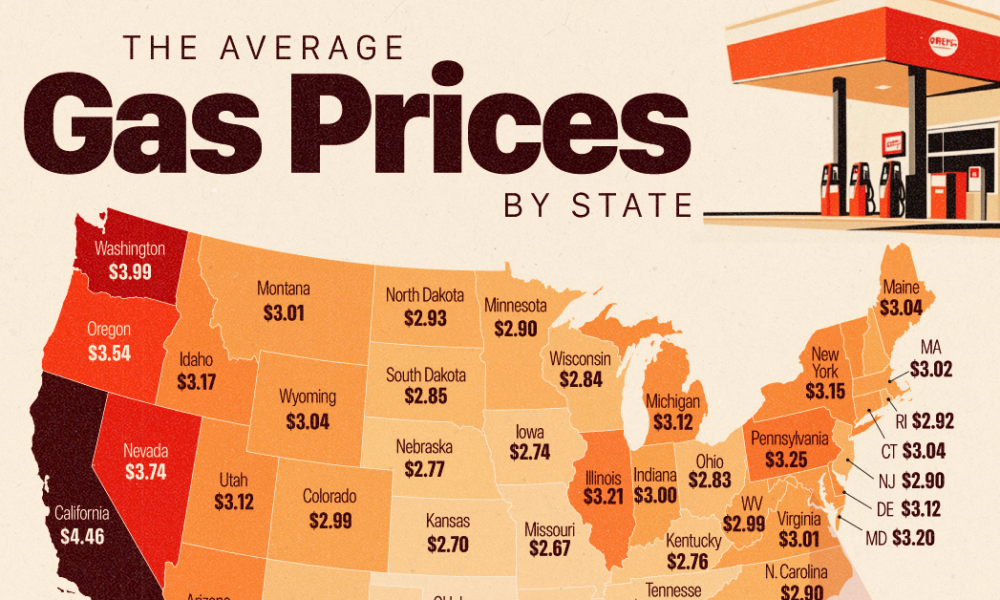
The American gas station sign is a unique psychological weapon. It is the only retail price consistently broadcast in two-foot-tall, illuminated numbers to passing motorists, demanding attention regardless of whether you actually need a fill-up. When those numbers begin a relentless upward march, the effect on the national psyche is immediate and visceral. In recent weeks, the price of regular unleaded has quietly crossed the threshold from a minor annoyance back into a structural household burden.
For the vast majority of the country, driving isn’t a choice; it is the prerequisite for participating in the economy. So, when the cost of commuting spikes, the math at the kitchen table changes abruptly. Families don’t stop driving. They stop buying everything else.
The Macro View: A Squeeze on the Margin
To grasp the current environment, we have to look at the broader economic engine. The Federal Reserve has spent the better part of the last few years attempting to engineer a soft landing, relying heavily on the legendary resilience of the American shopper. For a long time, that reliance paid off. Real wage growth had finally begun to outpace headline inflation, and household balance sheets, while bruised, were largely holding together.
Yet, the sudden surge in global crude prices has thrown a wrench into this delicate equilibrium. By early May 2026, the national average for a gallon of gasoline breached $3.85, up significantly from the winter lows. This is not just a localized spike on the West Coast; it is a nationwide phenomenon driven by tight refinery capacity and geopolitical friction in the crude markets. According to data from the US Energy Information Administration, implied gasoline demand remains stubbornly high even as prices climb, underscoring just how trapped consumers are by their daily commutes.
When you take an extra $40 to $60 out of a middle-class family’s monthly budget just to get to work, that capital has to be extracted from somewhere else. The result is a silent but severe contraction in the aisles of big-box stores.
The Core Development: Trimming the Fat
To understand the true impact of rising gas prices on consumer spending, you have to look at what disappears from the shopping cart first. Americans are not cutting back on groceries or generic medications. Instead, they are quietly abandoning the discretionary purchases that drive high-margin retail growth.
The latest advance monthly retail trade report from the US Census Bureau paints a stark picture of this substitution effect. While overall retail sales figures might appear nominally flat, the underlying composition has fractured. Spending at electronics and appliance stores has contracted, and apparel retailers are reporting unexpected dips in foot traffic. Big-ticket items—patio furniture, high-end electronics, and major appliances—are sitting idle in warehouses.
Consider the reality of a household earning $75,000 a year. If their monthly fuel expenditure increases by 15 percent, they don’t default on their mortgage. They simply cancel the weekend trip to the mall, delay replacing an aging laptop, and trade down from premium brands to private-label alternatives.
This behavioral shift is already manifesting in corporate boardrooms. Retail giants are flashing warning signs about the health of the lower-income consumer. When Doug McMillon and other retail chief executives discuss “wallet share,” they are explicitly talking about the invisible tax levied by the gas pump. Every extra dollar spent on energy is a dollar permanently removed from the retail ecosystem. Retailers are now scrambling to adjust inventory management strategies, deeply discounting non-essential goods to clear shelf space before the crucial back-to-school season.
Still, the cutbacks are highly stratified. The top 20 percent of earners, insulated by stock market gains and fixed-rate mortgages, hardly notice a 40-cent jump at the pump. For the bottom half of the income distribution, however, the spike acts as an immediate, regressive tax.
Analytical Layer: The Economics of the Pump
Why does a relatively small macroeconomic shift in petroleum markets cause such outsized ripples in retail? It comes down to the mechanics of price elasticity.
How do rising gas prices affect consumer spending? When gas prices rise, consumer spending on discretionary goods drops because fuel is an inelastic necessity. Households immediately divert cash from electronics, dining out, and apparel to cover the higher cost of commuting, effectively acting as a regressive tax on middle- and lower-income budgets.
This inelasticity forces an immediate reallocation of resources. Unlike a slow increase in rent or a gradual rise in health insurance premiums, gas prices are volatile and instantly realized. You pay for it right there at the pump, often twice a week.
This creates a unique phenomenon known to behavioral economists as the “gas station effect.” The psychological weight of paying more to fill a tank sours consumer confidence far more effectively than abstract economic data. The University of Michigan’s Surveys of Consumers routinely shows a direct, inverse correlation between pump prices and near-term economic optimism. When people feel poorer at the pump, they act poorer at the store, regardless of what their actual bank balance says.
What follows, however, is a dangerous feedback loop. As consumers pull back on discretionary spending, retail margins compress. Stores order fewer goods, which slows down manufacturing and logistics. The irony is that the very inflation driven by energy costs eventually causes deflation in consumer goods, simply because nobody has the spare cash to buy a new television.
We saw identical mechanics during the fuel shocks of 2008 and the inflation peak of 2022. The difference today is the exhaustion of the consumer buffer. During previous spikes, households either had access to cheap credit or pandemic-era savings. Today, credit card interest rates are punishingly high, and excess savings have largely evaporated. The American consumer is navigating this price shock without a safety net, meaning the translation from higher gas prices to lower retail sales is faster and more brutal than it has been in a decade.
Implications & Second-Order Effects: The Ripple Through the Economy
The downstream consequences of this shift extend far beyond a bad quarter for apparel brands. The most immediate casualty is corporate profit margins.
For the past three years, companies have successfully passed increased costs onto the consumer, protecting their margins under the guise of broad inflation. That era is definitively over. Consumers have hit a wall. When input costs rise—often driven by the same diesel prices that are making unleaded gasoline expensive—companies can no longer risk raising the final retail price. They are forced to absorb the hit.
This dynamic is creating a headache for policymakers in Washington. The Federal Reserve explicitly focuses on “core inflation,” which strips out volatile food and energy prices to gauge the underlying trend of the economy. But you cannot neatly separate energy from the rest of the economy. Energy is in everything. It is in the plastic used for packaging, the fertilizer used for crops, and the diesel burned by the trucks delivering goods to fulfillment centers.
When energy prices remain elevated, they inevitably bleed into core inflation via logistics and freight surcharges. The Bureau of Labor Statistics’ Consumer Price Index has begun to reflect this sticky reality. Even as goods deflation provides some relief, the cost of moving those goods is preventing inflation from cleanly returning to the Fed’s two percent target.
This places the central bank in a terrible bind. If they keep interest rates high to cool the broader economy, they punish the exact same debt-burdened consumers who are already struggling with $4 gas. If they cut rates prematurely, they risk triggering a resurgence in demand that could push commodity prices even higher.
Furthermore, the squeeze on the consumer wallet is reshaping the credit landscape. Delinquency rates on auto loans and credit cards have been slowly creeping up. Families are increasingly using revolving credit not to finance vacations, but to bridge the gap between their paychecks and their basic living expenses. When a tank of gas goes on a credit card carrying a 24 percent annual percentage rate, the financial fragility of the household compounds rapidly.
Competing Perspectives: Are We Misreading the Consumer?
That said, the narrative of the broken American consumer is not universally accepted. A vocal contingent of economists argues that we are misinterpreting the data.
The counterargument suggests that Americans aren’t actually cutting back because they are impoverished by the gas pump; they are simply normalizing their consumption patterns after a historic, pandemic-fueled binge on physical goods.
From this vantage point, the decline in retail sales for electronics and furniture is a natural reversion to the mean. People simply do not need another couch or a third laptop. Instead of retreating, this theory posits that consumers are merely rotating their capital into the “experiences economy.”
There is compelling data to support this view. Despite the pain at the pump, spending on travel, live entertainment, and dining out has shown remarkable resilience. The Bureau of Economic Analysis data on personal consumption expenditures consistently highlights that services spending is holding the economy aloft. If consumers were truly tapped out by gasoline costs, the argument goes, TSA checkpoints wouldn’t be seeing record foot traffic, and Taylor Swift tickets wouldn’t be trading for astronomical premiums.
Energy analysts, including voices like Amrita Sen, point out that gasoline demand itself hasn’t cratered the way it would in a true recessionary environment. If things were truly dire, vehicle miles traveled would plummet. Instead, people are gritting their teeth, paying the price, and finding the money by skipping the local department store.
This perspective frames the current dynamic not as a systemic failure, but as a healthy, albeit painful, rebalancing. Goods inflation is cooling because demand is cooling, and the money being spent on gas is simply money that would have otherwise overheated the retail sector. It is a harsh mechanism, but perhaps a necessary one to drain excess liquidity from the system.
The Final Tally
The picture is more complicated than a simple binary of a thriving or dying middle class. The American consumer is a highly adaptive engine, capable of absorbing tremendous friction before stalling out entirely.
Yet, adaptation has its limits. The reallocation of household capital from discretionary goods to unavoidable energy costs is a zero-sum game for the broader retail economy. The resilience of the services sector may mask the pain temporarily, but the fundamental math remains unchanged: every dollar captured by the gas pump is a dollar denied to the rest of the marketplace.
As we move deeper into the summer driving season, the tension between wages and pump prices will only intensify. Policymakers and retail executives alike would do well to remember that while the American shopper rarely quits completely, they are entirely capable of going on a silent, localized strike. The flashing numbers on the corner gas station sign will dictate exactly when that strike begins.
Discover more from The Economy
Subscribe to get the latest posts sent to your email.



Key Takeaways
- Rolex’s secondary market rose approximately 7.9% year-over-year as of 2026 (per WatchCharts data) — trailing Patek Philippe (+16.2%) and Tudor (+11.4%) but still outperforming Audemars Piguet (+3.4%).
- Rolex raised U.S. retail prices 4–9% in January 2026 (steel models ~5.6%, gold models ~8.7%), narrowing the historical gap between retail and pre-owned pricing.
- Not every model appreciates: steel sports references (Submariner, GMT-Master II, Daytona) have held value far better than two-tone or widely available dress references like the standard Datejust.
- The Lady-Datejust posted the sharpest 2026 gain among tracked collections — up 22.73%, from roughly $9,269 to $11,376 — driven by demand for smaller, “everyday luxury” watches.
- Gold’s rise past $2,400/oz has directly lifted the investment case for Rolex’s precious-metal references (Day-Date, Sky-Dweller, Yacht-Master).
The Model-by-Model Picture
| Category | 2026 Trend |
|---|---|
| Lady-Datejust | +22.73% (strongest performer among tracked collections) |
| Steel sports models (Submariner, GMT-Master II) | Held value well; corrected from 2022 peak but stabilized above retail |
| Daytona | Corrected from highs above $50,000 to the mid-$30,000s; still among the most sought-after references |
| Two-tone/widely available Datejust | Flat to negative — “holds value” is an overstatement for this category |
| Gold references (Day-Date, Sky-Dweller) | Lifted by gold’s rise above $2,400/oz |
Why the “Rolex Always Appreciates” Myth Is Fading
The pandemic-era boom pushed some references — the Daytona above all — to speculative highs disconnected from historical norms. Since the March 2022 peak, steel sports models have compressed meaningfully, and dealers who bought inventory near the top have in some cases faced 20–40% markdowns on liquidation. The lesson for 2026 buyers: Rolex as a category is not a monolith. Value retention depends heavily on specific reference, condition, and whether the piece comes with box and papers (“full set”).
What’s Actually Driving 2026 Strength
- Retail price increases raise the floor. When a new Submariner retails at $10,050 (up from $9,500), a pre-owned example at $11,000–$12,000 suddenly represents a smaller premium — narrowing the gap without secondary prices actually moving.
- Supply discipline remains Rolex’s core lever. The brand has never confirmed production numbers, and secondary-market premiums remain entirely a function of Rolex’s own manufacturing decisions — a risk factor as much as a support.
- Certified Pre-Owned rollout. Rolex’s now fully rolled-out CPO program has changed how buyers transact in the used market, adding a layer of brand-verified legitimacy that supports pricing.
The Case for Rolex as a Portfolio Diversifier
Financial advisors increasingly frame luxury watches not as a replacement for equities or bonds, but as a tangible, historically low-correlation diversifier — one that carries its own risks (illiquidity, condition-dependent pricing, no yield) but has demonstrated multi-decade resilience for specific references.
Is Rolex a good investment in 2026?
It depends heavily on the specific reference. Steel sports models like the Submariner and Daytona have held or grown in value; two-tone and widely available dress models generally have not. Overall, Rolex’s secondary market rose about 7.9% year-over-year in 2026, trailing Patek Philippe but ahead of Audemars Piguet.
Discover more from The Economy
Subscribe to get the latest posts sent to your email.

Navigating Mortgage and Loan Refinancing in a High-Yield Environment
Global public debt crossing critical thresholds has kept central bank policies volatile, resulting in fluctuating US Treasury yields throughout 2026. For homeowners and commercial property holders burdened by previous high-interest borrowing cycles, finding optimal refinance windows has become a high-stakes financial puzzle. Stalled disinflation and stubborn employment numbers mean rate cuts are incremental, requiring borrowers to act with precision.
Timing your mortgage or commercial loan refinance in this environment requires a deep understanding of yield curve movements and lender risk appetites.
Decoding 2026 Refinance Dynamics
The 10-Year Treasury Yield Benchmark
Mortgage rates continue to track closely with the 10-year US Treasury yield. When macroeconomic anxiety spikes debt issuance, yields rise, tightening consumer borrowing capacity. Savvy borrowers monitor weekly Treasury auctions to lock in rates during brief dip windows.
Hybrid ARMs and Alternative Structures
With fixed rates remaining elevated, 7/1 and 10/1 adjustable-rate mortgages (ARMs) have surged in popularity. These products offer lower initial monthly payments, giving borrowers breathing room until central bank easing cycles fully materialize.
| Loan Product | Current Rate Range | Best For | Key Risk Factor |
| 30-Year Fixed Mortgage | 6.2% – 6.8% | Long-term predictability | Higher initial monthly outlay |
| 7/1 Hybrid ARM | 5.5% – 5.9% | Short-term ownership / flipping | Rate reset risk after year 7 |
| Commercial Refinance | 7.0% – 8.2% | Corporate asset restructuring | Strict DSCR lender covenants |
Actionable Steps for Successful Refinancing
To maximize your chances of securing favorable refinance terms in a volatile market, follow a disciplined preparation strategy.
Boost Your Credit Score Immediately: Lenders in 2026 are applying stringent credit tiering; a 20-point increase can drop your APR by a crucial quarter-point.
Shop Regional Credit Unions: Smaller financial institutions often offer portfolio loans with more flexible underwriting than major national banks.
Calculate the Break-Even Point: Ensure your total closing costs are recouped through monthly savings within 24 months of closing.
“Market Strategist View: Refinancing in 2026 is an exercise in opportunistic timing. Borrowers must maintain immaculate financial profiles ready to strike the moment Treasury yields dip.”
Mastering the complexities of today’s debt environment ensures you can successfully lower your debt service costs and protect your long-term financial stability.
Discover more from The Economy
Subscribe to get the latest posts sent to your email.

The days of pulling generic auto insurance quotes based purely on your zip code and age are officially over. In 2026, insurance comparison engines are powered entirely by generative AI and real-time telematics. These platforms digest thousands of live data points—ranging from your driving smoothness via connected vehicle sensors to real-time traffic congestion patterns—to generate hyper-personalized premiums instantly.
For consumers, this evolution represents both a massive opportunity for savings and a hidden trap for penalty pricing. Understanding how AI algorithms evaluate risk is essential for anyone looking to lower their monthly auto insurance premiums.
How AI Comparison Engines Evaluate Your Risk Profile
Behavioral Telematics and Connected Cars
Modern cars stream performance data directly to insurance aggregators. Generative AI models analyze braking sharpness, acceleration curves, cornering G-forces, and phone distraction metrics. Drivers who maintain smooth, defensive habits are rewarded with dynamic rate cuts of up to 40% compared to traditional rating tiers.
Predictive Traffic and Weather Modeling
AI tools now cross-reference your daily commute route with predictive weather and accident probability models. If your standard parking location or driving corridor has a statistically higher incidence of uninsured motorist claims, your quotes will reflect that hyper-local risk assessment.
| Comparison Factor | Traditional Rating Model | 2026 Generative AI Model | Impact on Premium |
| Mileage & Usage | Annual estimated odometer reading | GPS tracking & live trip duration | High (up to 35% savings) |
| Driving Behavior | MVR driving record & accidents | Real-time braking, speed, & G-force | Critical (determines tier) |
| Vehicle Tech | Make, model, and safety rating | ADAS calibration & repair cost data | Moderate |
Strategies to Lower Your AI-Driven Insurance Quote
To outsmart the algorithm and secure the lowest possible premium in 2026, drivers must proactively manage their digital footprint on insurance platforms.
Opt-In for Telematics Trial Periods: Many insurers offer immediate 15% discounts just for installing their driving app; let it track safe habits for 30 days to lock in permanent savings.
Scrub Unverified Public Records: Ensure your motor vehicle report is free of clerical errors that AI risk models misinterpret as reckless behavior.
Compare AI Aggregators: Use platforms that integrate multi-carrier API feeds rather than single-brand comparison sites to find the best risk-adjusted rate.
“Industry Note: AI-driven pricing rewards transparency and precision. Drivers who actively manage their telematics data consistently out-save those relying on legacy quote calculators.”
Embracing AI comparison tools allows savvy policyholders to customize coverage limits precisely to their driving habits, eliminating wasted premium spend while ensuring robust protection.
Discover more from The Economy
Subscribe to get the latest posts sent to your email.

Oil and Diesel Prices in October 2026: How Supply Shocks Can Reach Inflation

AI Chip Demand in 2026: What TSMC, Nvidia and Data-Center Spending Reveal

Q3 2026 Earnings Season: The Bank, AI and Consumer Signals That Really Matter

Treasury Yields in 2026: Why Higher Bond Rates Matter for Stocks, Mortgages and Savings

KOSPI 2026: Why South Korean Stocks Turned Volatile and What AI Investors Should Watch

IREN Stock in 2026: AI Cloud Growth, Bitcoin Transition and the Risks Investors Miss

Stock Market Crash in 2026? Warning Signs, Scenarios and a Calm Investor Checklist

Peso Mexicano vs Dólar Estadounidense: A Practical USD/MXN Guide for October 2026

Is the Stock Market Open on Columbus Day 2026? NYSE, Nasdaq and Bonds Explained

Concert Ticket Prices in 2026: Dynamic Pricing, Fees and How to Buy Safely

High-Yield Savings Accounts in 2026: How to Compare APY Without Chasing a Headline

EU-China Trade Deal 2026: How Beijing and Brussels Avoided a Trade War—and Who Wins

Social Security 2027 COLA Announcement: Date, Formula and What Retirees Should Check

China’s AI Microdrama Boom: How Beijing Is Reshaping Global Media

China Stocks Today: Are Big Economies in Asia Nearing a Market Bottom?

World’s Largest Economies: Ranking the Top Global Powers

Global Pension Systems Ranked: The World’s Best and Worst Retirement Frameworks

Elon Musk’s Next Moves: Disrupting the 2026 Global Economy

Pakistan Economy 2026: Inside the SBP’s Balancing Act

Crude Oil & Petroleum Market Analysis: OPEC+ Decisions and Price Forecasts

GasBuddy Market Insights: How Crude Price Shifts Impact Local Fuel Cost Averages

Global Equity Market Divergence: US Tech vs. European Dividend Stocks vs. Asian Growth

IMF & World Bank Global Economic Outlook: Growth Forecasts Across Europe and Asia

Silver Price Today: Why the Xi-Trump AI Standoff Is Fueling a Safe-Haven Rally

Bitcoin Price Forecast 2026–2027: Will the 4-Year Cycle Hold?

The Future of Silicon: Supply Chain Vulnerabilities in the 2026 Tech Sector

Asian Stock Markets 2026: Japan, China, Pakistan & More

SpaceX IPO: How Aerospace Is Reshaping Tech Startup News
-

 Markets & Finance9 months ago
Top 15 Stocks for Investment in 2026 in PSX: Your Complete Guide to Pakistan’s Best Investment Opportunities
-

 Analysis8 months ago
Johor’s Investment Boom: The Hidden Costs Behind Malaysia’s Most Ambitious Economic Surge
-

 Analysis8 months ago
Top 10 Stocks for Investment in PSX for Quick Returns in 2026
-

 Banks9 months ago
Best Investments in Pakistan 2026: Top 10 Low-Price Shares and Long-Term Picks for the PSX
-

 Analysis8 months ago
Brazil’s Rare Earth Race: US, EU, and China Compete for Critical Minerals as Tensions Rise
-

 Investment9 months ago
Top 10 Mutual Fund Managers in Pakistan for Investment in 2026: A Comprehensive Guide for Optimal Returns
-

 Global Economy10 months ago
15 Most Lucrative Sectors for Investment in Pakistan: A 2025 Data-Driven Analysis
-

 Global Economy10 months ago
Pakistan’s Export Goldmine: 10 Game-Changing Markets Where Pakistani Businesses Are Winning Big in 2025