
Business
EU Greenwashing Enforcement Hits New Peak with €1.2 Billion Fast‑Fashion Fine


The Definitive Guide to the New Green Claims Rules and What They Mean for Business
The European Commission dropped a bombshell on the fast‑fashion industry in late June 2026, fining five major retailers a combined €1.2 billion for systematically misleading consumers about the environmental credentials of their products (European Commission Press Corner, June 2026). The coordinated action, brought by the EU Consumer Protection Cooperation Network, marks the largest EU greenwashing enforcement action in history and signals a new era of aggressive regulation. The companies—whose names have been redacted pending legal review—were found to have used vague terms like “eco‑friendly,” “sustainable choice,” and “green” without substantiating their claims with verifiable lifecycle assessments. One retailer’s “recycled polyester” jackets, which still relied on virgin fossil‑fuel‑based material for 70% of their content, were singled out as “grossly misleading.”
The Legal Framework: Empowering Consumers Directive and Green Claims Directive
This crackdown operationalizes two landmark pieces of legislation. The Empowering Consumers Directive, adopted in March 2024 and transposed into member state law by mid‑2026, amends the Unfair Commercial Practices Directive to explicitly ban generic environmental claims that cannot be proven. The Green Claims Directive, which entered into force in January 2026, requires any explicit environmental claim—such as “carbon‑neutral” or “biodegradable”—to be substantiated by an independent, third‑party‑verified assessment using a product environmental footprint (PEF) methodology. The directive also prohibits claims that a product has a neutral or positive environmental impact based solely on offsetting carbon credits; actual emissions reductions must be demonstrated first.
The June 2026 fines are a direct consequence of this legal framework. The EU’s consumer protection network, working with national authorities, conducted a “sweep” of over 5,000 product webpages and found that 42% contained “vague, false, or deceptive” green claims. The fast‑fashion sector, with its high turnover of styles and marketing built on constant newness, was the worst offender. The €1.2 billion penalty—calculated as 4% of the companies’ annual EU‑wide turnover—is the maximum allowed under the new regime and is intended as a deterrent.
Corporate Sustainability Claims Crackdown: What Must Change
The crackdown is forcing a fundamental rethink of marketing and product development. Companies can no longer rely on a glossy “sustainability” microsite alongside a core business of high‑volume, low‑price disposable fashion. The corporate sustainability claims crackdown requires:
- Lifecycle Transparency: Claims must be supported by a full lifecycle assessment (LCA) that covers raw material extraction, manufacturing, transport, use, and end‑of‑life. The EU is building a centralized registry of verified LCAs, accessible to consumers via a QR code on product labels.
- Digital Product Passports: By 2027, all textile products sold in the EU must carry a digital product passport that details the product’s composition, recycled content, water usage, and carbon footprint. This passport must be updatable and linked to a tamper‑proof blockchain ledger (European Commission, Digital Product Passport Regulation).
- No Offsetting‑Based Neutrality: Statements like “climate‑neutral” or “CO₂‑neutral” are banned unless the company has already achieved deep in‑house emission cuts. Offsetting can only address the final, residual emissions.
- Substantive Change, Not Marketing Spin: Fast‑fashion firms must decouple revenue from resource use. The EU’s Textile Strategy, a parallel policy, mandates that by 2030, textiles placed on the EU market must be durable, repairable, and recyclable. Brands are now investing in recycling infrastructure, bio‑based materials, and rental/resale models.
The Global Precedent
The EU’s action is setting a global precedent. The UK’s Competition and Markets Authority (CMA) has launched a parallel investigation into three fashion retailers, and the US Federal Trade Commission is finalizing its update to the “Green Guides,” which will require similar substantiation for claims made in the American market (FTC, Green Guides Update Notice, June 2026). Australia, Canada, and South Korea have also signaled they will adopt the EU’s PEF methodology. For multinational brands, the EU standard is becoming the de facto global benchmark because supply chains are integrated; it is inefficient to produce one “green” line for Europe and a “conventional” line for the rest of the world.
Business Response and Strategic Advantage
The immediate reaction among fast‑fashion CEOs has been a scramble to hire compliance officers, retrain marketing teams, and audit supply chains. Some are pre‑emptively dropping all environmental claims from their advertising and replacing them with numeric data. “We’re moving from adjectives to numbers,” the chief sustainability officer of a major European retailer told the Financial Times. “Instead of saying ‘eco‑friendly jeans,’ we say ‘These jeans contain 42% recycled cotton and used 20% less water than our baseline in 2022.’ It’s less sexy but more honest.”
Forward‑thinking companies see the regulation as a competitive moat. Those that have already invested in traceability, such as using blockchain to track organic cotton from farm to garment, can verify their claims and will gain consumer trust. The EU Ecolabel is being revamped to incorporate the new criteria, and early adopters are experiencing a “green trust premium” in brand valuation. New entrants are building business models entirely around compliance: repair‑and‑resale platforms, rental subscription services, and circular‑design software are attracting venture capital.
The Bottom Line
The €1.2 billion fine is a watershed moment. It signals that greenwashing is no longer a public‑relations risk; it is a material financial, legal, and reputational liability. Companies that have treated sustainability as a marketing veneer are being exposed, and the cost of non‑compliance—fines, exclusion from public procurement, and damage to brand equity—is now existential. The EU greenwashing enforcement wave is just beginning, and its ripple effects will reshape consumer goods markets for a decade. The takeaway for business leaders is clear: substantiate, digitize, and transform your product design, or face the consequences.
Discover more from The Economy
Subscribe to get the latest posts sent to your email.


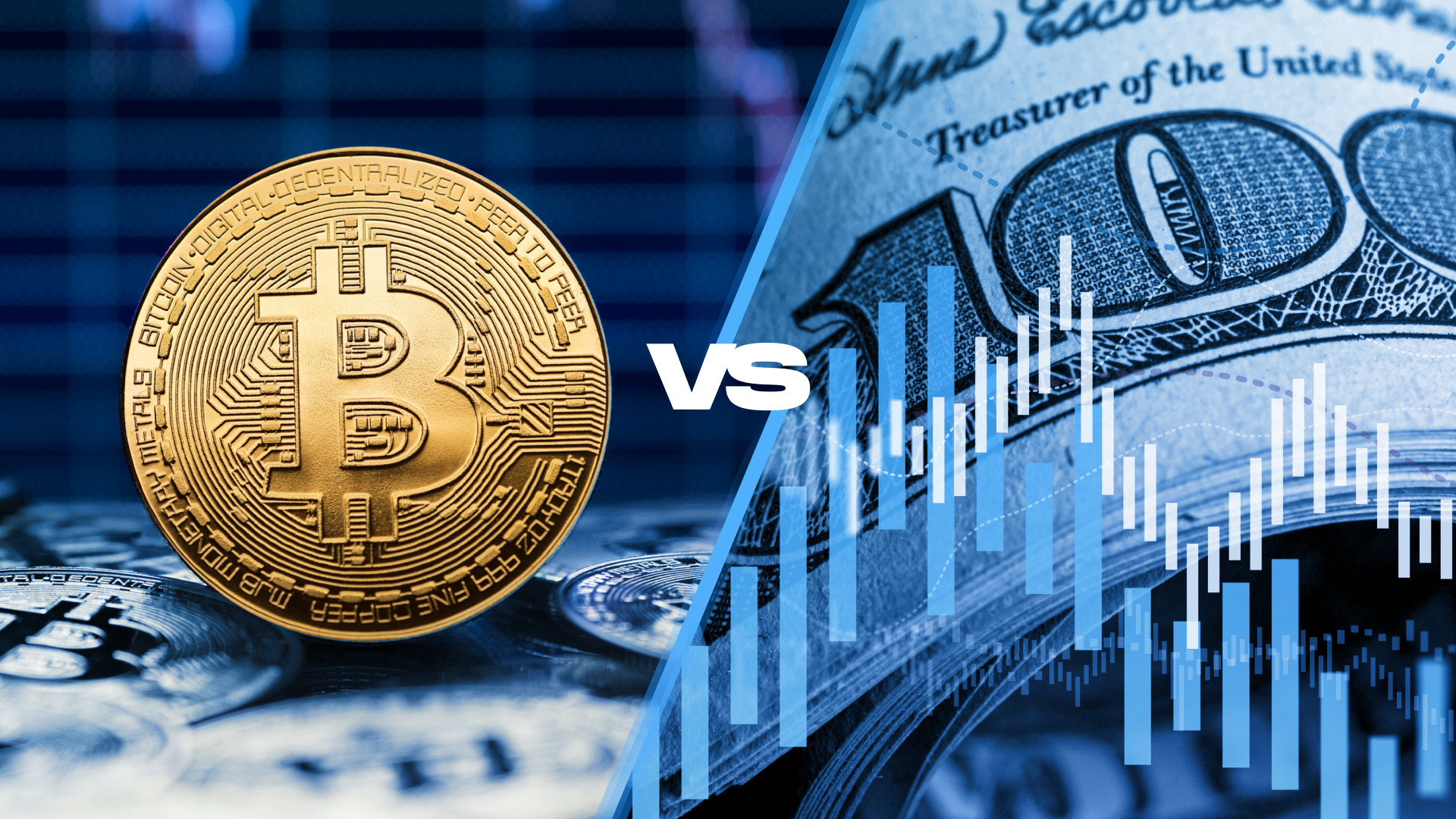
The global economic growth is becoming more uneven, capital is increasingly sensitive to financing costs, and investors must distinguish a convincing story from an investable price. This guide focuses on research methods and risks rather than predictions of guaranteed returns. The IMF October 2026 outlook projects 3.1% global growth and 4.7% inflation for 2026, while the IMF financial-stability assessment warns that market resilience coexists with important vulnerabilities.
Key takeaways
- Match each investment decision to its time horizon, currency and ability to withstand losses.
- Separate observable earnings or contractual cash flows from optimistic forecasts.
- Compare diversification, fees, taxes, liquidity and regulatory restrictions before committing capital.
- Track primary institutional evidence and update assumptions when conditions change.
- Readers in Pakistan should consider rupee exposure and availability of regulated investment channels.
Why this matters now
The central question behind gold vs dollar vs bitcoin 2026 is not merely what may happen next. It is which economic mechanisms could change cash flow, purchasing power or risk. The Bank for International Settlements’ 2026 review describes an economy supported by technological investment but constrained by geopolitical and fiscal pressures. A robust financial plan must therefore survive both a favourable and an adverse scenario.
Three assets, three different economic functions
Gold is a scarce physical asset without a contractual cash flow. The dollar is a currency used for transactions, reserve holdings and dollar liabilities; holding dollars is not the same as owning an inflation-protected investment. Bitcoin is a highly volatile digital asset whose long-run response to inflation cannot be assumed stable. The comparison depends on which inflation and which home currency the investor faces. See the primary institutional research.
For practical analysis, separate the baseline, the upside case and the downside case. Document the specific development that would change your assessment. Assess timing: a promising long-term theme may still be inappropriate for cash needed within twelve months.
Why gold has attracted investment demand
The World Gold Council reported resilient investment demand during 2026 and a recovery in central-bank purchasing in the second quarter. That is evidence of demand, not a promise of rising prices. Gold can fall when real interest rates rise, the dollar strengthens or investors liquidate positions. Storage, spreads and insurance matter for physical buyers. See the primary institutional research.
For practical analysis, separate the baseline, the upside case and the downside case. Document the specific development that would change your assessment. Assess timing: a promising long-term theme may still be inappropriate for cash needed within twelve months.
The dollar: liquidity versus purchasing power
Foreign-currency balances may reduce exposure to a depreciation of the investor’s home currency, but US inflation still erodes dollar purchasing power. Cash in a bank has different legal protection and returns from banknotes held privately. A Pakistani household paying future US-dollar tuition has a genuine dollar liability; a household buying groceries in rupees has different currency matching needs.
For practical analysis, separate the baseline, the upside case and the downside case. Document the specific development that would change your assessment. Assess timing: a promising long-term theme may still be inappropriate for cash needed within twelve months.
Bitcoin: upside narratives and drawdown risk
Bitcoin supply rules do not make its market price stable. Liquidity conditions, leverage, custody arrangements, regulatory changes and speculative activity can dominate short-run returns. Investor.gov warns that crypto assets involve substantial loss and fraud risks. Treat any allocation as a speculative risk decision, not a guaranteed inflation hedge. See the primary institutional research.
For practical analysis, separate the baseline, the upside case and the downside case. Document the specific development that would change your assessment. Assess timing: a promising long-term theme may still be inappropriate for cash needed within twelve months.
How to compare hedges in rupees
Measure the purchase price and exit value after exchange rates, fees and taxes. Consider the needed holding period and worst plausible drawdown. Diversification is more credible than trying to select one universally superior asset. The right benchmark is the real purchasing power of the specific future expense, not whichever asset had the best recent performance. See the primary institutional research.
For practical analysis, separate the baseline, the upside case and the downside case. Document the specific development that would change your assessment. Assess timing: a promising long-term theme may still be inappropriate for cash needed within twelve months.
Comparison and decision framework
| Question | Stronger evidence | Warning sign |
|---|---|---|
| What drives returns? | Audited cash flows, clear contract or transparent index | Undefined or projected returns |
| What can go wrong? | Explicit scenario and downside analysis | Claims of guaranteed gains |
| Is it affordable to hold? | Low transparent fees and adequate liquidity | Leverage, costly spreads or lockups |
| Is access legitimate? | Appropriate licensing and clear legal rights | Unverified brokers or custody |
| Is the exposure diversified? | Multiple independent sources of return | One company, sector or currency |
What it means for Pakistani savers and investors
A Pakistani reader faces both international investment risk and local purchasing-power risk. For example, a foreign asset can rise in US-dollar terms while the rupee conversion and transaction costs alter the realized local outcome. The opposite can also occur. Record the starting exchange rate, applicable taxes, custody charges and capital-transfer restrictions, and confirm current requirements with the State Bank of Pakistan and the relevant securities regulator. Overseas access should not be assumed universally available.
An emergency reserve, expensive consumer debt and near-term family obligations deserve attention before any speculative allocation. A portfolio that cannot meet a sudden cash requirement may force sales at the worst moment. The objective is not to remove risk—impossible in markets—but to choose risks that fit the investor’s actual liabilities.
Risks, limitations and uncertainty
Institutional forecasts are conditional and can change after policy decisions, commodity shocks, conflict escalation or unexpectedly weak earnings. Historic correlations are not binding promises about future asset performance. The analysis does not provide live stock prices, current investment product quotes, real-time exchange rates or individualized tax advice. Prices, regulations and product eligibility should be checked on the transaction date.
Frequently asked questions
Is this a guaranteed investment opportunity?
No. Every financial asset or strategy involves uncertainty. The existence of a popular investment theme is not evidence that an individual security is fairly priced.
What should beginners examine first?
Understand the product, the financial loss you could tolerate, fees and liquidity. Verify the provider and decide whether the money may be needed soon.
How do interest rates affect the analysis?
They influence financing costs, discount rates, exchange rates and demand. The effect differs by sector, maturity and business balance sheet.
Can Pakistani residents invest in foreign markets?
Access depends on current foreign-exchange, banking, brokerage, securities and tax rules, and on the investor’s individual circumstances. Check current regulations and regulated providers rather than assuming access.
How often should this analysis be refreshed?
Review institutional economic releases monthly and re-evaluate immediately after material earnings, regulatory or policy changes. Avoid reacting mechanically to every daily market movement.
Is diversification enough to prevent losses?
No. Diversification may reduce company-specific risk but cannot eliminate broad market, currency, inflation or systemic risks.
Conclusion
Sound financial decisions begin with verifiable evidence, reasonable valuation, awareness of uncertainty and a plan that survives adverse outcomes. Readers should compare multiple independent sources and avoid letting a compelling headline substitute for due diligence.
Discover more from The Economy
Subscribe to get the latest posts sent to your email.
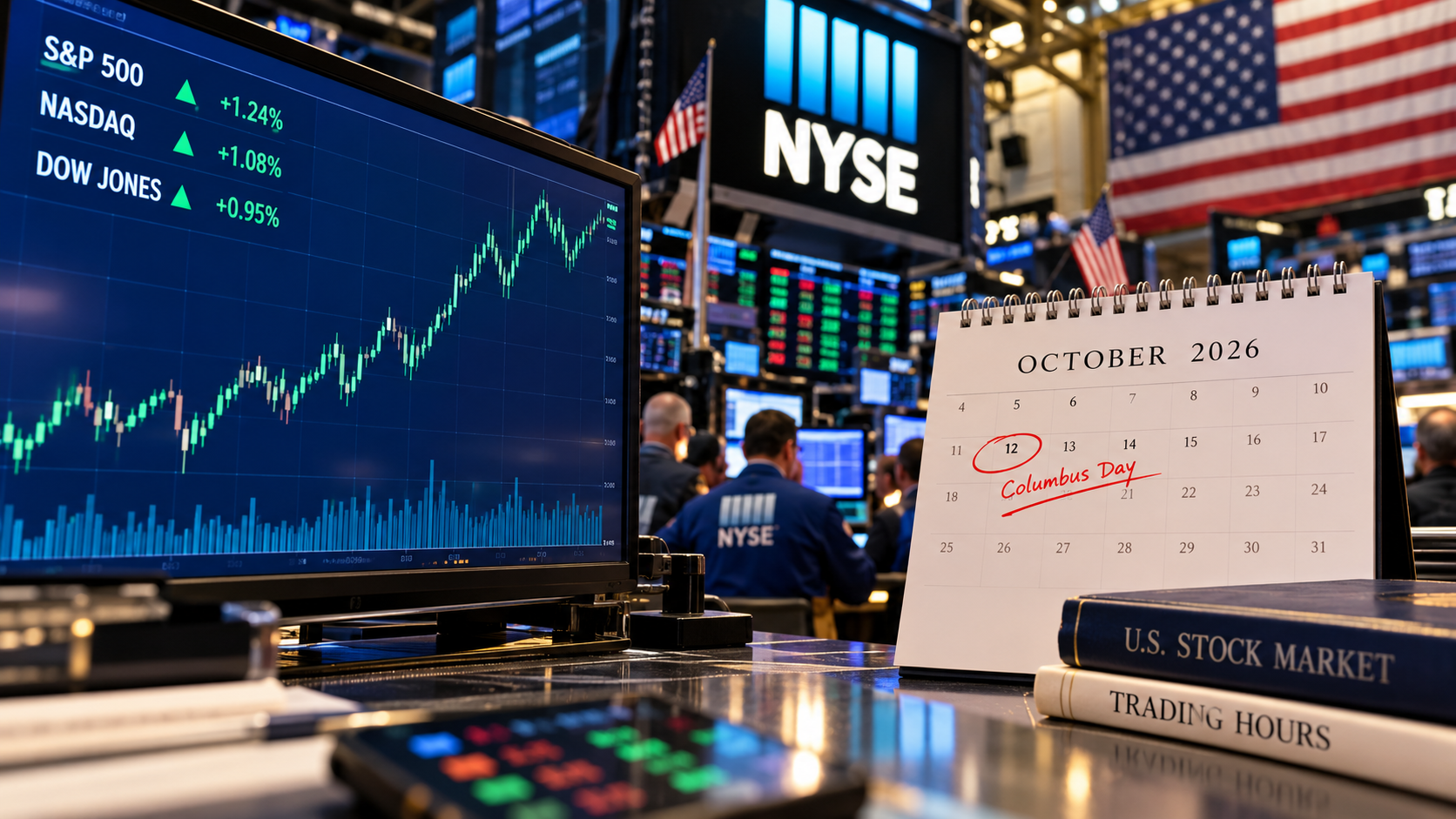
NYSE and Nasdaq are scheduled to trade their regular session on Monday, October 12, 2026, although the U.S. bond-market holiday schedule differs from that for stocks. Research cutoff: October 12, 2026; confirm developing facts before publication.
What is happening and why readers are searching
Yes. Monday, October 12, 2026 is Columbus Day, also observed by many as Indigenous Peoples’ Day, and the New York Stock Exchange and Nasdaq are scheduled to trade during their standard 9:30 a.m.–4 p.m. Eastern session. The bond market follows a different holiday schedule: SIFMA recommends a full closure in U.S. dollar fixed-income trading. Sources: NYSE and SIFMA holiday schedule.
The important context competitors can overlook
This distinction matters for more than trivia. A trader may see stocks move while some bond markets and banks are closed. Brokerage funding, transfer cutoffs and market data from less-liquid products can behave differently from a typical Monday. International exchanges observe their own holidays and may not follow the U.S. calendar. The federal holiday label alone does not tell a reader whether a particular financial instrument trades. For primary-source checks and current reporting, see NYSE and Kiplinger. The key distinction is separate equity, bond, bank and settlement schedules.
A practical way to use this information
Check your brokerage’s trading notice for options, mutual-fund cutoffs, fixed income and account funding. Avoid saying “the market is closed” without naming the asset class. Readers with urgent cash needs should confirm transfer and settlement arrangements directly with their institution. The next scheduled full U.S. stock-market holiday after October 12 is Thanksgiving Day, November 26, according to the exchange holiday calendars.
A holiday-hours comparison worth saving
| Market or service | October 12, 2026 | What to check |
|---|---|---|
| NYSE-listed shares | Regular session scheduled | Your broker and exchange notices |
| Nasdaq-listed shares | Regular session scheduled | Trading hours and order type |
| U.S. dollar bond market | SIFMA recommends closure | Fixed-income trading desk |
| Banks and transfers | Federal holiday may affect services | Your bank’s payment timetable |
NYSE exchange trading hours and the SIFMA holiday recommendation are different types of evidence. Neither establishes that every retail intermediary will offer normal transfer processing.
What to verify before making a decision
The right next step is to identify the source, timestamp and applicable market or jurisdiction. Check whether a number is a historical observation, official announcement, target, forecast or scenario. If you intend to act financially, legally or commercially, use the relevant provider’s current terms and obtain professional advice where appropriate. The sources cited here establish context; they are not a substitute for live prices, individual eligibility checks or binding agreements.
Reader questions
Can I buy U.S. stocks on Columbus Day?
Yes, the regular NYSE and Nasdaq session is scheduled.
Are Treasury bonds trading normally?
SIFMA recommends a U.S. bond-market holiday closure.
What “the market is open” actually means
The NYSE and Nasdaq trading session and the U.S. federal-holiday calendar are separate systems. On Monday, October 12, 2026, their standard core trading hours are scheduled to run from 9:30 a.m. to 4 p.m. Eastern Time. A share of a widely traded U.S. company can therefore change hands while many bank branches and government offices remain closed. But that statement does not tell you whether your brokerage’s customer-service desk is staffed normally, whether a fund values assets at its usual time, or whether a particular bond has a reliable two-sided quote. Those details depend on instrument, venue and broker.
For an investor outside the United States, convert Eastern Time carefully. Some countries move clocks on different dates, while others do not observe daylight saving time. A calendar showing “9:30” without a time zone is insufficient. Use the NYSE official market calendar as the first reference for exchange trading hours and your broker’s order preview for instrument-specific handling.
Stocks, Treasuries, funds and cryptocurrency are not interchangeable
A company’s listed common stock may trade normally even when the recommended U.S. bond-market session is closed. Treasury bonds, municipal bonds and corporate bonds do not operate in exactly the same way as exchange-listed shares. Fixed-income markets are fragmented, and a limited or irregular quoting environment can produce wider bid-ask spreads. Placing a market order in a thinly traded security can be more expensive than expected. Investors considering a bond trade should ask about dealer liquidity, execution timing and whether prices are executable rather than merely indicative.
Mutual funds, exchange-traded funds, stock-index futures and cryptocurrencies each have their own pricing mechanics. An ETF can trade on the stock exchange, but its underlying holdings could include instruments in markets observing a holiday. Mutual funds normally process orders according to their published prospectuses and cutoff policies. Futures venues publish product-specific schedules. Cryptocurrency markets trade around the clock, but uninterrupted availability does not guarantee tight spreads. Checking one “market open” headline is not enough to infer all these schedules.
Order types and settlement around a federal holiday
Imagine an investor who places an order for shares on Monday morning. The exchange may execute it during the ordinary equity session, but settlement and cash-transfer processing can be affected by banking holidays and applicable business-day conventions. A trade confirmation, settled-cash display and withdrawal availability are not the same event. The safest approach is to check the brokerage’s holiday operations notice rather than assuming that an executed trade instantly creates withdrawable cash. Different account types may impose additional restrictions.
For a volatile security, an investor can compare the displayed bid and ask before trading and consider a limit order rather than automatically accepting an uncertain market price. This does not guarantee execution. It does specify the least favorable purchase price or sale price the investor is willing to accept. Orders entered outside the core session may also have distinct participation, duration and execution rules, which a broker should disclose.
The practical Columbus Day checklist
A useful market-hours answer should cover more than the yes-or-no question. Check the exact date and year, the trading venue, the time zone, the security type, your brokerage’s processing calendar and any early-closing notice. For dollar-denominated fixed income, consult the SIFMA holiday schedule. For your specific bank, inspect its branch and electronic-transfer information. Do not assume a bank holiday means cards stop working or electronic trading becomes impossible; these are distinct operations.
Holiday headlines can also expire quickly. A search result from 2025 or 2027 might display the same Columbus Day keywords yet give the wrong weekday or market specifics. Editors should include “Monday, October 12, 2026” near the top and remove any blanket claim that all financial markets are open. If the story is reused next year, the date and all supporting calendars need new verification.
What to do if a trade or transfer is urgent
For an urgent payment, ask the receiving institution about cutoff times and whether it recognizes the holiday as a processing day. For an urgent investment order, verify the specific instrument’s status directly in the broker interface and review the quote rather than trusting a static article. Where timing is not essential, waiting for ordinary liquidity can be more sensible than accepting a large spread. These are general execution considerations, not recommendations to buy or sell any particular security.
The broader lesson is that exchange trading, dealer liquidity and banking settlement are three separate clocks. Columbus Day demonstrates why a short market-hours answer is useful as a starting point but inadequate for every investor’s operational decision.
Discover more from The Economy
Subscribe to get the latest posts sent to your email.
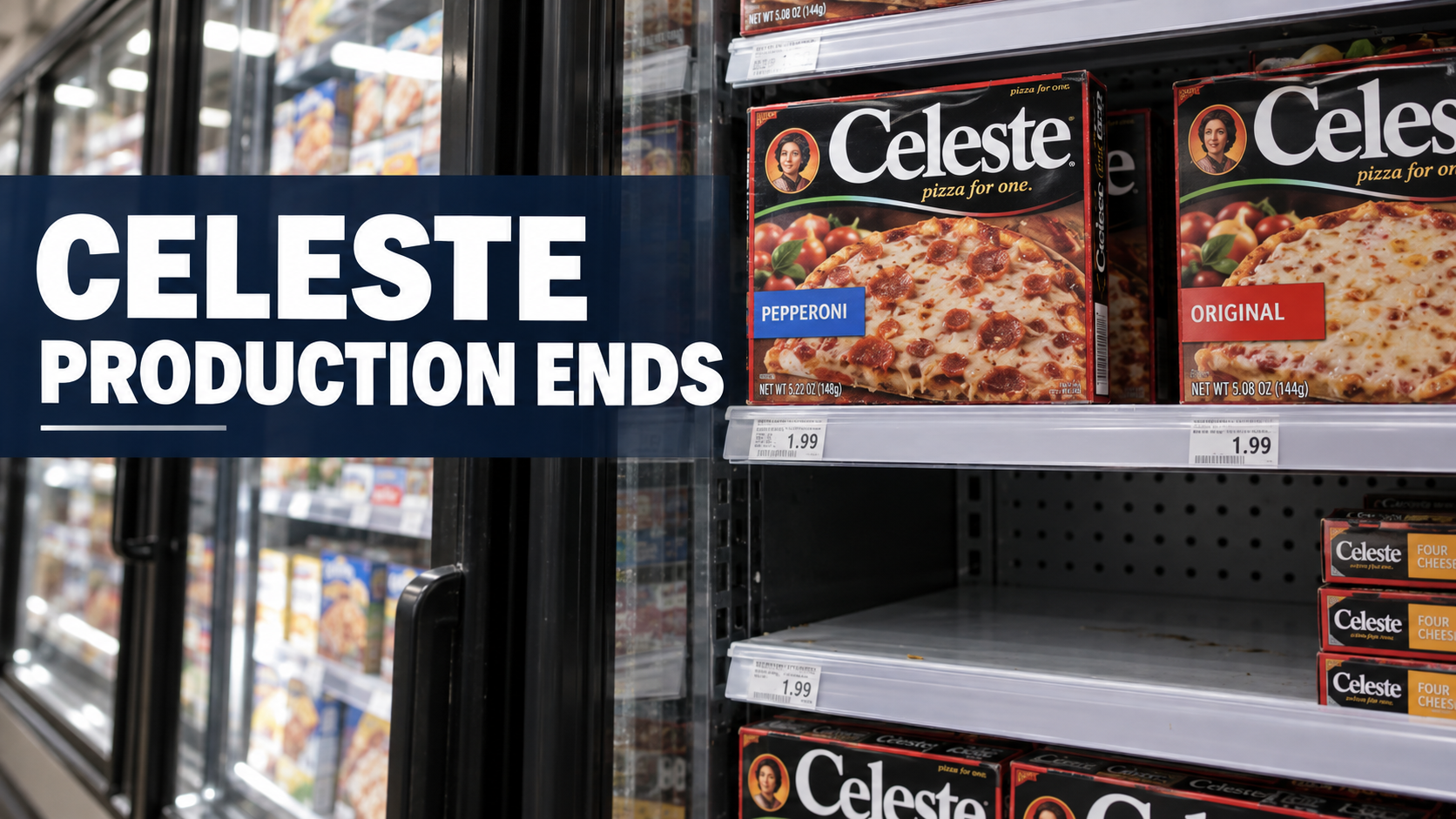
Conagra Brands has stopped producing Celeste frozen pizza, bringing an end to the familiar budget-friendly product line. The company disclosed its decision as part of a wider simplification of its food portfolio during its fiscal first-quarter 2027 earnings cycle. A Conagra representative subsequently confirmed that existing retail inventory can continue to sell, but the company is no longer manufacturing new Celeste pizzas. That means a shopper may still spot a box in a freezer, even though production has ceased. Conagra’s quarterly results and Fox Business’s confirmation from the company establish the basic facts.
Key takeaways:
- The decision is a confirmed discontinuation, not a social-media rumor or temporary nationwide recall.
- Existing products may remain on shelves until inventories run out; availability is local and cannot be guaranteed.
- Conagra’s management presented Celeste as part of a broader effort to simplify underperforming brands and individual product lines.
- A brand’s devoted following does not necessarily make it profitable to produce and distribute nationally.
Did Celeste frozen pizza really stop production?
Yes. During the September 30, 2026 earnings discussion, management identified the exit from Celeste as one example of simplifying Conagra’s assortment. In a statement reported by Fox Business, the company said it had stopped making Celeste and would sell remaining inventory. The same report said Conagra viewed the exit as positive for future margins, despite a small negative contribution to reported quarterly sales.
Two distinctions matter. Production means manufacturing fresh units for shipment. Distribution and retail availability depend on the inventory already in warehouses, on trucks, or in stores. Stopping production does not instantly remove all existing boxes from sale. Nor is there evidence in the reviewed statements of a restart date or replacement product under the same brand.
Shoppers seeking an answer to “Is Celeste discontinued?” should therefore treat the answer as yes, while recognizing that a few locations may continue selling stock for a limited period. Store-listing pages can lag real inventory. Checking a retailer’s stock status or contacting the store is more useful than relying on an old product listing.
Why Conagra made the decision
Conagra is pursuing a leaner mix of products. The company said its fiscal first-quarter reported net sales fell 1.4%, while reported diluted earnings per share rose 5.9% from the year-earlier period. Its earnings announcement also reaffirmed fiscal-year guidance for an organic sales decline of 1% to 3%. Conagra’s September 30 release provides the financial context.
The takeaway is not simply that one pizza sold poorly. Large packaged-food companies face costs across manufacturing capacity, ingredients, packaging, transportation, shelf space and promotional activity. Each different size or variety adds complexity. A low-volume item can consume factory time and distribution attention that might otherwise support a larger brand or faster-growing category.
Industry publication Food Dive described Celeste’s removal as an early sign of a larger portfolio review. Food Processing similarly framed the move as SKU rationalization—industry shorthand for trimming individual products or assortments.
What SKU rationalization means to shoppers
A stock-keeping unit, or SKU, is a specific retail product variation. Cutting SKUs can mean eliminating a flavor, size or entire line. It may improve the manufacturer’s operating efficiency, but it also reduces choice. In Celeste’s case, the reported decision is broader than dropping one variety: the brand’s frozen pizzas are no longer being produced.
This is a trade-off for retailers too. Shelf space is limited; grocers favor products that sell consistently, generate acceptable margins and are easy to replenish. A long-established label can therefore disappear even if a loyal group of customers still buys it.
Celeste’s history explains the reaction
The nostalgic response is not difficult to understand. According to People’s history of the brand, Celeste grew out of the Lizio family’s frozen-pizza business in Illinois in the early 1960s, then gained wider national distribution after its sale to Quaker Oats in 1969. Its single-serving format became part of ordinary freezer routines for generations of customers.
That history has value, but sentimental recognition differs from today’s unit economics. A brand’s cultural footprint captures decades of purchases and memories. A modern annual business review measures recent sales velocity, production costs, distribution economics and likely future performance. Both can be true: consumers can love a product while its owner concludes the business does not justify further investment.
It would be misleading, however, to assign a definitive financial loss to Celeste alone. The public earnings figures reviewed here describe Conagra as a whole and management’s portfolio strategy, not an audited standalone Celeste profit-and-loss statement.
Can customers still buy Celeste pizza?
Possibly, for a limited time. Conagra’s confirmation leaves open the sale of units already produced. Grocery availability can vary across chains, individual stores and locations; stock may disappear at different speeds.
| What a customer sees | What it means |
|---|---|
| Celeste box still in a freezer | Likely remaining inventory; it does not prove production restarted |
| Product displayed on a retailer website | A listing is not a stock guarantee; verify store availability |
| Product shown as out of stock | Could indicate local sell-through; not necessarily a separate recall |
| Social post promising a return | Do not rely on it without a new manufacturer announcement |
| Old coupon or promotion | Terms and actual retailer supply still control |
For any remaining frozen product, follow the labeled storage and preparation instructions. Avoid stockpiling food if storage quality cannot be maintained. Price surges by third-party sellers should not be mistaken for an official recommended retail price.
Does this signal trouble for the wider frozen-pizza market?
Not necessarily. One company’s decision about one brand cannot establish a decline across the entire frozen-pizza category. Portfolio simplification can happen even in categories with viable demand, particularly when individual products fail to justify operational complexity. Conversely, a popular category does not guarantee that every brand or price point performs well.
Conagra’s wider fiscal results show a company navigating sales pressure while trying to maintain profitability. The decision makes sense as part of management’s stated plan. To establish a wider market decline would require independently sourced industry unit sales, dollar sales, pricing and retailer data—none of which should be invented to make a broader headline.
What happens next for Conagra?
Management has signaled a continuing review of its assortment. Investors will watch subsequent quarterly disclosures for signs that lower complexity improves profit margins without causing excessive loss of sales. Customers will watch for further product exits and which remaining brands receive greater shelf presence.
A successful simplification program would ideally improve factory utilization, inventory efficiency and brand investment. But there are risks: removing too many niche products may push loyal customers toward competitors. The outcome is measurable only over future reporting periods.
Frequently asked questions
Is Celeste frozen pizza permanently discontinued?
Conagra has confirmed production stopped and provided no restart plan in the statements reviewed as of October 10, 2026. It is appropriate to describe the product as discontinued; any future return would require a new announcement.
Why did Conagra stop making Celeste?
Conagra presented the exit as part of a strategy to remove smaller, lower-return businesses and simplify its product portfolio. Its earnings materials provide context.
Can I still find Celeste at Walmart or Kroger?
A retailer could still have previously manufactured stock, but availability varies. Check a specific store rather than assuming the product remains nationally stocked.
Was Celeste pizza recalled?
The reporting reviewed here describes a business discontinuation, not a safety recall. If concerned about a specific package, consult the official recall notices and the package details.
Will another company buy or relaunch Celeste?
There is no verified agreement or relaunch timetable in the material reviewed. Speculation about a buyer should not be published as fact.
Who owned Celeste at the end?
Conagra Brands was the manufacturer and brand owner responsible for the discontinuation announcement.
Bottom line
Celeste’s removal illustrates how an iconic grocery brand can be commercially vulnerable in a modern food portfolio. The key consumer fact is straightforward: the manufacturing run has ended, but existing inventory may remain for sale. The larger business story is Conagra’s effort to put resources behind products with stronger expected returns. Readers should look for verified new company disclosures rather than assume the label will return.
Discover more from The Economy
Subscribe to get the latest posts sent to your email.

Global Banking Trends 2026: Digital Banks, AI and Compliance

Gold vs US Dollar vs Bitcoin in 2026: Inflation Hedge Compared

How Global Interest Rates Affect Savings, Loans and Investments

How to Invest During High Inflation: A Global Guide

Best Global Stocks to Watch in 2026: Four Sectors to Research

Pakistan’s 2027 Growth Strategy: Exports, AI, Energy and Jobs

Pakistan Economy FY2027: IMF Reform, Debt and Recovery Outlook

Global Interest Rates 2027: Risks for Pakistan’s Rupee and Debt

Energy Shock 2026–2027: Oil, Gas and Pakistan’s Economy

World Trade 2027: Tariffs, Supply Chains and Pakistan Exports

AI Investment Boom 2026–2027: Can Pakistan Capture the Upside?

Global Economy 2026–2027: What Slower Growth Means for Pakistan

Why Global Inflation Is Rising Again in 2026, and What It Means for Pakistan

Raast Pakistan 2026: Digital Payments, Fintech

Crude Oil & Petroleum Market Analysis: OPEC+ Decisions and Price Forecasts

World’s Largest Economies: Ranking the Top Global Powers

Pakistan Economy 2026: Inside the SBP’s Balancing Act

Silver Price Today: Why the Xi-Trump AI Standoff Is Fueling a Safe-Haven Rally

Oil Prices 2026: Inside the Hormuz Crisis That Won’t End

SpaceX IPO 2026: History’s Biggest Stock Debut?

Algorithmic Dogfights: Why the U.S. and China Must Establish Rules of Engagement for Autonomous Air Power

Top US Convenience Store Chains: Store Counts, EV Charging, and Sales Trends

Who Is Shivon Zilis? The Neuralink Executive at the Center of the Musk–OpenAI Trial

Business Insurance: What Coverage You Actually Need and What It Costs in 2026

Global Economic Outlook 2026: 7 Forces Reshaping Markets, Trade and Business

Corporate America Faces a New Debt Test as US Borrowing Costs Surge

Is AI a Stock Bubble in 2026? What the Data Shows

Social Security Extra $90 Deposit: Who Qualifies for the October 2026 Medicare Rebate?
-

 Markets & Finance10 months ago
Top 15 Stocks for Investment in 2026 in PSX: Your Complete Guide to Pakistan’s Best Investment Opportunities
-

 Analysis8 months ago
Johor’s Investment Boom: The Hidden Costs Behind Malaysia’s Most Ambitious Economic Surge
-

 Analysis8 months ago
Top 10 Stocks for Investment in PSX for Quick Returns in 2026
-

 Banks9 months ago
Best Investments in Pakistan 2026: Top 10 Low-Price Shares and Long-Term Picks for the PSX
-

 Analysis9 months ago
Brazil’s Rare Earth Race: US, EU, and China Compete for Critical Minerals as Tensions Rise
-

 Investment9 months ago
Top 10 Mutual Fund Managers in Pakistan for Investment in 2026: A Comprehensive Guide for Optimal Returns
-

 Global Economy10 months ago
15 Most Lucrative Sectors for Investment in Pakistan: A 2025 Data-Driven Analysis
-

 Global Economy10 months ago
Pakistan’s Export Goldmine: 10 Game-Changing Markets Where Pakistani Businesses Are Winning Big in 2025