
Human Resourcs
America’s Workers Are Vanishing From the Labor Force — And It’s Not the Usual Reasons


The US labor force participation rate has fallen to its lowest level in 50 years outside of the Covid-19 pandemic period, a decline that is reshaping how economists read every other US labor market indicator, according to CNBC’s ongoing coverage of the trend.
Why a Falling Unemployment Rate Can Be Misleading
A shrinking labor force participation rate means fewer working-age Americans are actively employed or looking for work — a dynamic that can mechanically push the headline unemployment rate lower even when underlying labor-market health is deteriorating, since people who stop searching for jobs are no longer counted as unemployed. That distinction matters enormously for how policymakers, including the Federal Reserve under new chair Kevin Warsh, interpret incoming jobs data at a moment when the central bank has explicitly moved away from forward guidance and toward a purely data-driven policy stance.
The AI Overlay on an Already Complex Picture
The participation decline is unfolding against the backdrop of intensifying debate over AI’s labor-market impact. A National Bureau of Economic Research study published in February 2026 found that despite widespread adoption, 90% of firms reported no measurable impact of AI on workplace productivity or employment levels, a finding that has been widely cited by critics of the AI investment boom as evidence that current valuations have outrun genuine productivity gains, according to Wikipedia’s tracking of the AI bubble debate. That gap between AI investment intensity and measured labor-market effects complicates the task of isolating how much of the participation decline, if any, is attributable to automation versus other structural and demographic factors.
A Global Pattern of Labor Market Caution
The US is not alone in exhibiting unusual labor-market dynamics. Canada’s labor market has settled into what Indeed Canada economist Brendon Bernard describes as a “low-hire, low-fire” pattern, where weak hiring and weak layoffs combine to keep the unemployment rate stable even as underlying momentum stays soft, according to Yahoo Finance Canada’s economist survey. The UK has shown a similar caution pattern, with businesses reporting weakened operating conditions and falling revenue expectations even as headline employment figures remain comparatively stable, according to CPA’s coverage of the Institute of Directors’ June sentiment survey.
The Grid and Heat Stress Layer
Compounding the labor-market picture, an extreme heat wave is straining power grids across the eastern United States heading into the July 4 holiday travel period, with the largest US power grid operator, PJM, escalating emergency actions to avoid blackouts, according to CNBC’s reporting on the grid strain. The combination of extreme weather events and elevated electricity demand tied partly to AI data-center growth adds a further layer of complexity for businesses managing both workforce planning and operational continuity through the summer months.
What Economists Are Watching Next
With the Federal Reserve no longer providing forward guidance on its policy path, incoming labor-market data — including the closely watched participation rate — will carry outsized weight in shaping market expectations for the remainder of 2026. Economists caution that a genuinely healthy labor market requires participation, hiring, and wage growth to move together; a scenario in which unemployment appears low purely because discouraged workers have exited the labor force altogether would represent a materially weaker underlying picture than the headline rate suggests, with direct implications for consumer spending forecasts across the US retail, housing, and services sectors heading into the back half of 2026.
Discover more from The Economy
Subscribe to get the latest posts sent to your email.



Britain’s labour market has now been shedding jobs for as long as it did during the depths of the global financial crisis — and this time, employers are explicitly naming artificial intelligence as a reason for the cuts.
The closely watched S&P Global/CIPS Purchasing Managers’ Index showed services firms and the wider private sector reducing headcount for a 22nd consecutive month in July 2026, according to data reported by Bloomberg. That run now equals the length of the downturn seen during the 2008-09 crash in the dominant services sector, and is just one month short of matching it across the wider economy.
A Downturn Two Years in the Making
Unlike the 2008 crisis, which was triggered by a sudden banking collapse, this slump has crept up gradually. The survey shows the pace of job losses easing slightly in July compared with prior months, but the cumulative duration — nearly two full years of continuous headcount reduction — is what has alarmed economists watching the data, as detailed by Staffing Industry Analysts.
Crucially, firms surveyed gave two distinct explanations for the cuts: general cost-reduction efforts, and — increasingly — a reduced need for workers after investing in AI tools to boost productivity. That second factor marks a shift from earlier phases of the downturn, when cost pressure alone dominated employer commentary.
The PMI Numbers Behind the Story
The deterioration has been building for months. Earlier readings from S&P Global’s official PMI release showed the sector losing momentum steadily through the spring, with survey respondents explicitly citing the fallout from the US-Iran conflict as a drag on client confidence, layered on top of already-elevated domestic political uncertainty.
Separate flash data tracked by FX.co showed the UK Services PMI slipping to 48.7 in June — below the 50.0 threshold that separates expansion from contraction, and short of the 50.5 markets had expected. That marked the sharpest downturn since January 2023, driven by weaker new business volumes, shrinking order backlogs and further job cuts, even as input cost inflation — from transport to IT equipment surcharges — continued to squeeze margins.
The survey’s own methodology notes are telling: data collected in June found “a sustained reduction in backlogs of work across the service economy, largely reflecting a lack of pressure on business capacity due to weak demand,” according to the official S&P Global report. In plain terms, companies have less work to do, and they are responding by not replacing staff who leave rather than launching mass redundancy rounds — a slower but more persistent form of labour market erosion.
The Political Backdrop
The prolonged downturn deepens pressure on the Labour government, which took office in the summer of 2024 promising to reinvigorate growth. Nearly two years of continuous private-sector job losses is a difficult data point for any incumbent administration to explain away, particularly as it now sits alongside separately reported gilt market volatility and scrutiny of the Bank of England’s policy path.
Why AI Is a Different Kind of Headwind
What distinguishes this downturn from previous UK labour market slumps is the structural, rather than purely cyclical, nature of some of the job losses. Employers citing AI-driven productivity gains as a reason for not replacing departing staff suggests that even a rebound in demand may not translate into a proportional rebound in hiring — a dynamic that echoes concerns raised in the US, where financial-sector employment — an industry widely seen as exposed to AI adoption — has fallen to a four-year low.
Economists warn this creates a harder policy problem than a conventional cyclical downturn. Interest rate cuts and fiscal stimulus can revive demand, but they do less to reverse a structural shift in how many workers a given level of output requires.
What to Watch Next
Three data points will determine whether Britain’s labour market stabilises or deteriorates further into autumn:
- The August PMI releases, which will show whether July’s slight easing in the pace of job cuts was a genuine inflection point or a one-month pause.
- Bank of England commentary on how much weight it assigns to labour market weakness versus persistent inflation in setting the path for interest rates.
- Sector-level AI adoption data, particularly in financial and professional services, where the productivity-driven hiring freeze appears most entrenched.
The Bottom Line
Two years of continuous UK private-sector job cuts is no longer a temporary post-pandemic adjustment — it has become the longest sustained labour market downturn since the financial crisis. With employers now openly citing AI adoption alongside cost discipline as drivers of headcount reduction, the shape of any eventual recovery may look very different from past cycles: output could recover well before payrolls do.
Discover more from The Economy
Subscribe to get the latest posts sent to your email.
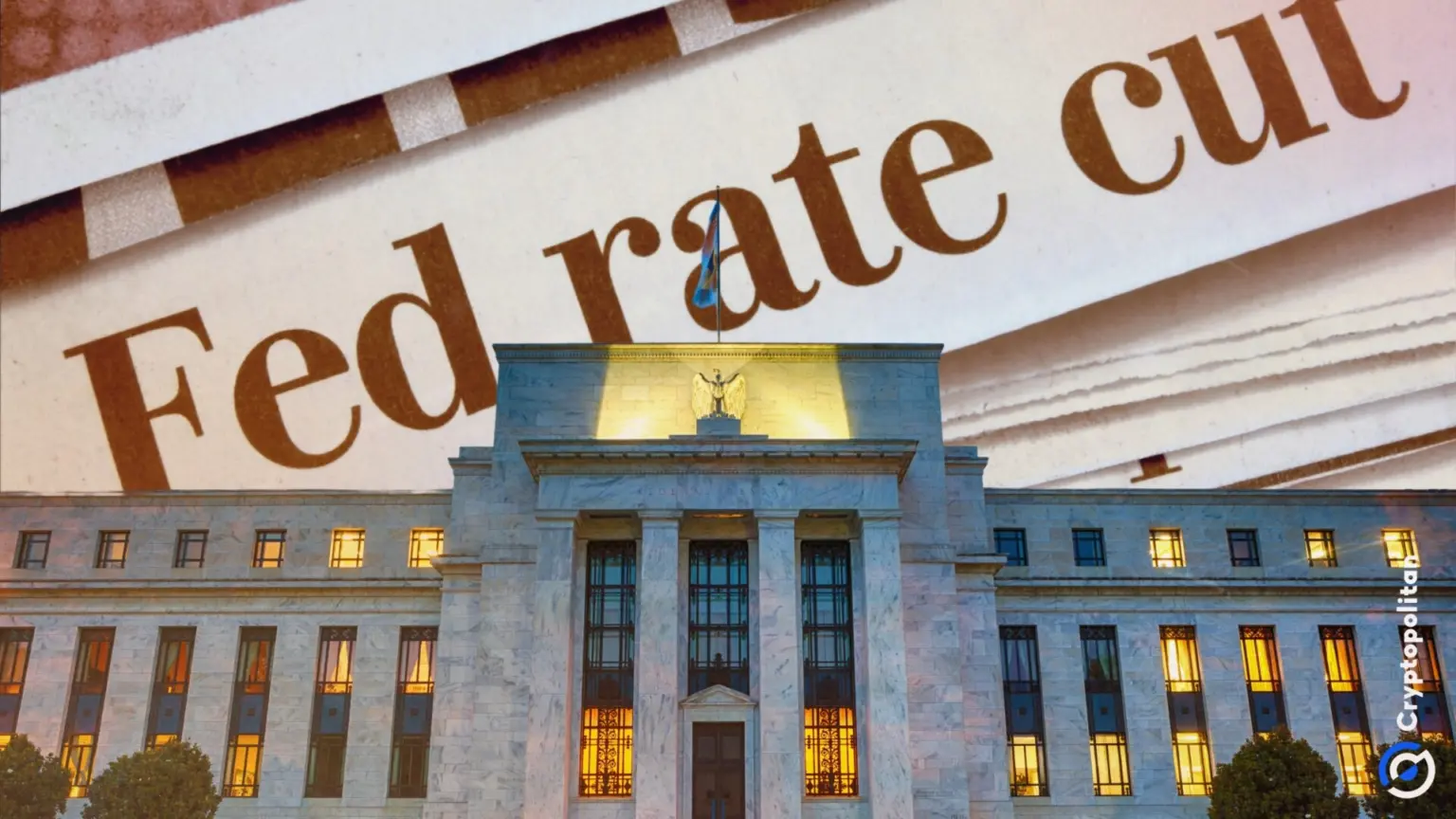
A labor market that looked resilient just weeks ago has cracked, and traders are now wagering the Federal Reserve will have no choice but to cut interest rates as soon as next month.
The US Bureau of Labor Statistics reported on August 7 that nonfarm payrolls fell by a seasonally adjusted 23,000 in July — a stunning miss against the Dow Jones consensus forecast of an 83,000 gain, according to CNBC. Worse, the agency slashed prior estimates for May and June by a combined 103,000 jobs, dragging the trailing 12-month average payroll gain down to just 34,000 — among the weakest stretches outside a recession in over a decade.
A Report That Rewrites the Narrative
For much of 2026, the prevailing story on Wall Street was that the US economy had shrugged off tariff shocks and geopolitical turbulence. That narrative is now under serious strain. The unemployment rate ticked down to 4.1%, but for the wrong reason: the Bureau of Labor Statistics confirmed the labor force participation rate slid to 61.4%, its lowest level in more than five years outside the pandemic, as hundreds of thousands of Americans simply stopped looking for work.
Household employment — the survey used to calculate the jobless rate — actually fell by 87,000, even as the official rate declined. That divergence is a red flag economists watch closely, because it signals discouraged-worker dynamics rather than genuine labor market strength.
“The July employment report solidified that the labor market is not out of the woods quite yet,” ZipRecruiter labor economist Nicole Bachaud told CNBC.
Where the Damage Is Concentrated
The sectoral breakdown tells a story of an economy bifurcating under pressure. According to a detailed Spokesman-Review analysis of the BLS release:
- Leisure and hospitality employment fell to its lowest level in nearly a year, with restaurants and bars shedding staff — a particularly bitter disappointment given forecasters had expected a boost from the FIFA World Cup, which concluded July 19.
- Financial activities payrolls dropped to a four-year low, with the BLS confirming losses concentrated in credit intermediation (-9,000) and insurance carriers (-7,000). The sector — seen as among the most exposed to AI-driven automation — is now down 121,000 jobs since its May 2025 peak.
- Retail trade shed jobs at warehouse clubs, supercenters and general merchandise stores (-21,000), alongside a smaller decline at gasoline stations.
- Manufacturing and construction, by contrast, continued to climb, a trend economists partly attribute to the ongoing AI data-center build-out even as high interest rates keep homebuilding subdued.
The month also arrived alongside a wave of high-profile layoff announcements from Microsoft, Uber and Visa, reinforcing the sense that white-collar hiring caution has broadened beyond tech.
Why the Iran War Keeps Showing Up in Economic Data
Bloomberg’s economics desk framed the report bluntly: a surprise drop in US payrolls has renewed worries about the health of the world’s largest labor market, with employers growing cautious “amid rising prices and fallout from the Iran war,” according to Bloomberg. Elevated energy costs stemming from Middle East supply disruption have fed directly into hiring plans, compounding the drag from tariff-related input cost inflation that has squeezed margins across retail and manufacturing since early in the year.
Notably, the US is not alone. The same Bloomberg dispatch pointed to the UK, where private-sector employment surveys are even more negative — a downturn now rivaling the length of the 2008-09 financial crisis in the country’s dominant services sector.
What It Means for the Federal Reserve
Markets moved fast. Futures pricing shifted decisively toward a September rate cut in the hours following the release, as traders concluded the Fed’s dual mandate now tilts firmly toward the employment side of the ledger. A weakening labor market, combined with a participation rate at generational lows, gives the Federal Open Market Committee cover to ease even with inflation still running above target — a trade-off that will be closely watched at the Fed’s next meeting.
The revisions matter as much as the headline. A downward adjustment of 103,000 jobs across just two months suggests the “resilient” labor market story that dominated the first half of 2026 was, in part, a statistical mirage. Economists now widely expect the upcoming preliminary benchmark revision — due August 28 from the BLS — to confirm further softness in the annual payroll count.
The Investor Playbook
For traders and portfolio managers across the nine markets this publication tracks, the implications cascade quickly:
- Rate-sensitive equities — regional banks, homebuilders, and small caps — are best positioned to benefit from a confirmed dovish pivot.
- The dollar faces downward pressure as rate-cut expectations firm, a dynamic that matters directly for emerging-market currencies from the Pakistani rupee to the Indonesian rupiah, both of which import inflation partly through dollar-denominated debt and energy costs.
- Treasury yields have room to fall further if the September cut is confirmed, which would ease financing costs for governments and corporates globally.
- Gold and other haven assets typically firm on rate-cut expectations paired with geopolitical risk — a combination now squarely in play.
The Bottom Line
The July jobs report did not show a labor market in freefall, but it did puncture the illusion of a soft landing achieved without cost. Falling participation, deep downward revisions, and sector-specific stress in finance and hospitality point to an economy where headline resilience is increasingly propped up by fewer people working, not more people finding jobs. With the Fed’s September meeting now the market’s central focus, the coming weeks of data — including the August 28 benchmark revision — will determine whether this was a one-month air pocket or the start of a genuine slowdown.
Discover more from The Economy
Subscribe to get the latest posts sent to your email.
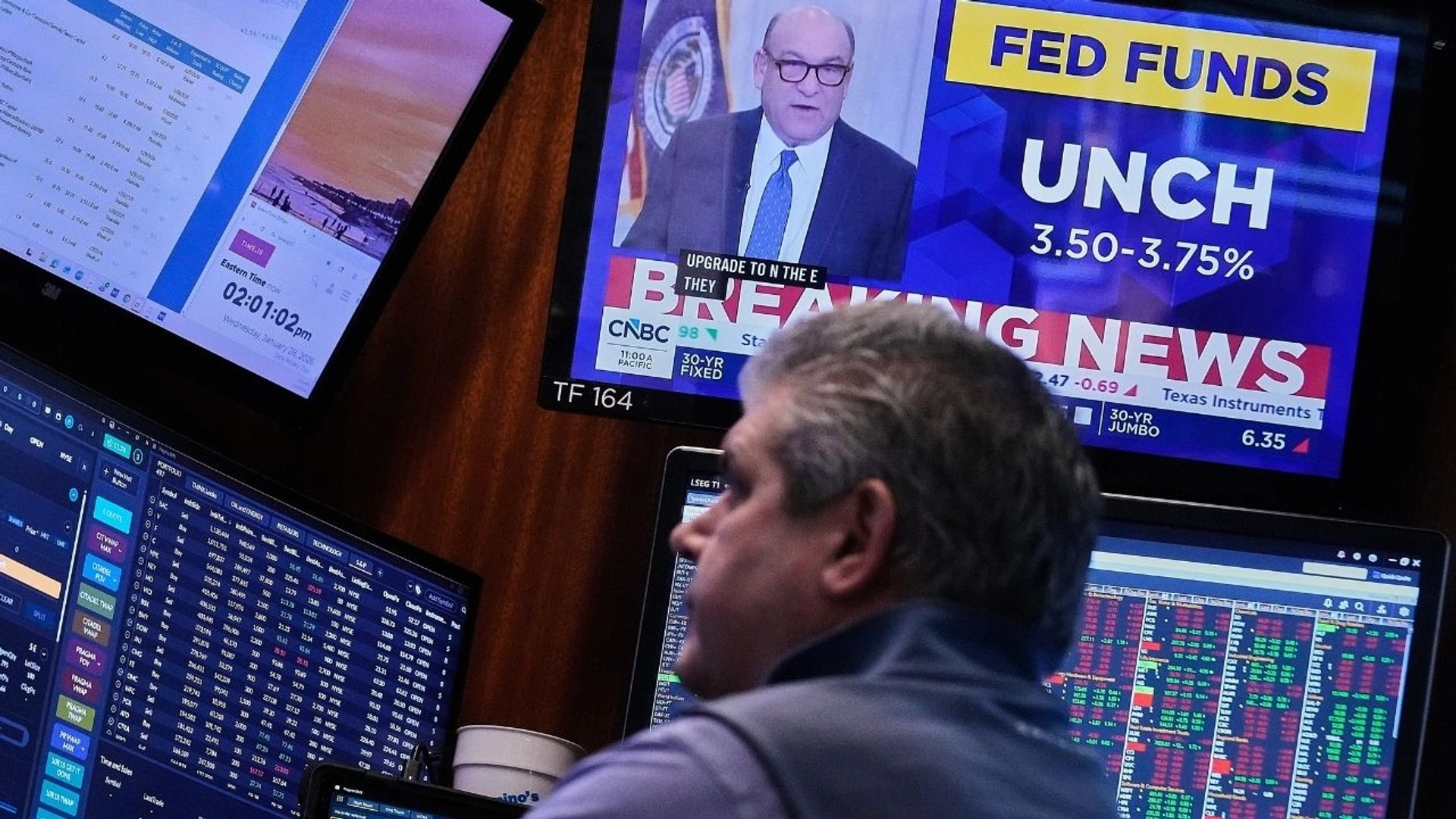
For most of the summer, Wall Street’s working assumption was simple: the US labor market was cooling gently, inflation was easing more slowly than the Fed wanted, and September’s meeting would be a coin-flip between holding steady and one final quarter-point hike. That assumption did not survive contact with the July jobs report.
The Bureau of Labor Statistics reported that US employers cut 23,000 jobs in July — a stark reversal from Wall Street forecasts that had called for a gain of roughly 80,000 positions. It was not an isolated miss. The agency simultaneously slashed its estimates for May and June by a combined 103,000 jobs, meaning the true state of hiring over the past three months is more than a quarter-million jobs weaker than markets believed as recently as Thursday.
The unemployment rate ticked down to 4.1% from 4.2%, but that headline improvement is misleading: it was driven by workers leaving the labor force rather than new hiring, a distinction economists watch closely because it signals discouragement rather than strength.
Why This Report Landed Differently
Soft jobs numbers are not new in 2026 — hiring has been decelerating for months. What makes July’s release different is the scale of the surprise combined with its timing, arriving weeks after the Federal Reserve’s July meeting, where policymakers held rates steady and some officials were still openly discussing the case for a hike given elevated energy costs tied to the ongoing Middle East conflict.
That posture is now obsolete. Within hours of the release, odds on the CME FedWatch tool for the Fed holding rates steady in September jumped sharply, while prediction market Kalshi showed traders assigning roughly a two-thirds probability to a steady-rate outcome — a complete reversal from the near coin-flip odds that prevailed just 24 hours earlier. Separately, Morgan Stanley’s economics team shifted its own call following Fed Chair Jerome Powell’s Jackson Hole remarks, now forecasting a quarter-point cut in September followed by a steady quarterly easing cycle through 2026, targeting a terminal rate near 2.75%–3.00% — down from the current 3.50%–3.75% range.
The reversal wasn’t confined to rates. The 10-year Treasury yield fell as investors priced in a materially weaker growth outlook, while the dollar index came under renewed selling pressure as traders concluded the Fed’s easing runway had just gotten longer, not shorter.
The Sectoral Story: Not All Weakness Is Equal
The composition of the July losses matters as much as the headline. Weakness concentrated in local government education, which cut roughly 50,000 positions, and retail trade, down close to 19,000 — both areas sensitive to seasonal hiring patterns and consumer-facing budget pressure. Healthcare, by contrast, continued adding jobs, extending a multi-year pattern in which medical and social-assistance employment has been the most reliable source of US job growth. Wage growth also missed expectations, with average hourly earnings rising 3.2% year-over-year against a forecast of 3.5% — a sign that whatever residual inflationary pressure exists in the labor market is easing faster than anticipated.
What August 28 and September 4 Mean for Markets
Two dates now sit on every trading desk’s calendar. On August 28, the BLS will release its preliminary annual benchmark revision, using state unemployment insurance tax records to recheck the entire prior year of payroll data — a technical exercise that in past cycles has meaningfully reshaped the market’s understanding of how strong or weak hiring actually was. On September 4, the August jobs report lands just twelve days before the Fed’s September 16 decision, effectively serving as the last major data point policymakers will have in hand.
Richmond Fed President Thomas Barkin offered a measured read following the release, describing the labor market as neither loose nor tight — language that suggests the Fed is not yet panicking, but is clearly recalibrating. Inflation Insights president Omair Sharif cautioned that officials have signaled for months that they view the “breakeven” pace of job growth — the number of jobs the economy needs to add just to keep the unemployment rate flat — as unusually low right now, meaning a soft headline number doesn’t automatically imply outright labor-market distress.
The Global Transmission Channel
For readers outside the US, the mechanics matter more than the headline. A more dovish Fed typically means:
- A softer dollar, which eases imported-inflation pressure for import-heavy economies like the UK and Pakistan but complicates export competitiveness for economies pegged or quasi-pegged to the dollar, including the UAE and much of the Gulf.
- Lower US Treasury yields, which tend to push global capital toward higher-yielding emerging-market and Gulf sovereign debt — a dynamic already visible in DIFC-based fixed-income flows.
- Cheaper dollar-denominated debt servicing for economies like Pakistan and Indonesia that carry significant external, dollar-denominated obligations.
- A complicating factor for the Bank of England and other central banks now weighing their own policy paths against a Fed that appears to be moving faster than expected toward easing, even as UK inflation remains above target.
The Bottom Line
The July jobs report did not just move a single data series — it rewired the market’s central assumption about where US monetary policy is headed into year-end. A Fed that spent mid-2026 debating whether it had room to hike is now managing expectations for a cutting cycle, with September 16 as the first test. For businesses, investors, and policymakers from London to Dubai to Jakarta, the practical question shifts from “will the Fed hike” to “how fast, and how far, will it cut” — and the answer will shape currency, capital-flow, and borrowing-cost decisions well into 2027.
Discover more from The Economy
Subscribe to get the latest posts sent to your email.

BRICS Summit 2026: Economic Implications of the India-China Diplomatic Thaw

Emerging Market Debt: The Ripple Effect of China’s Sovereign Refinancing Role

Dropping Oil & Surging Gold: Navigating Safe-Haven Investments in Q3

2026 AI Stock Frenzy: How to Position Your Portfolio

The AI Disruption in Financial Risk Management: Moving Beyond Record Banking Profits

The Rise of Green Aviation: Balancing High Fuel Prices with Sustainable Infrastructure

US-China Relations in Q3 2026: Trade Tariffs and Supply Chain Risks

Emerging Markets Rebound: Top Stock Strategies for the Gulf and South Asia

Tackling the 2026 Global Food Crisis: Policy Shifts and Market Speculation

Post-Quantum Encryption in Banking: The Next Frontier in Cybersecurity Investments

The Financial Cost of Sanctions: Afghanistan’s Economy 5 Years Under the Taliban

Supply Chain Fragmentation: 10 Trends Reshaping Global Trade This Year

The 2026 Aviation Boom: Investing in Airline Stocks as Passenger Traffic Surges

China’s 2026 Corporate Laws: Western Compliance Guide

China Politburo July 2026: Stimulus Signals Explained

Russia Fuel Shortages 2026: Inside a Cracking War Economy

Top 15 Financial Stocks for Investment in PSX

Pakistan Passed Its Third IMF Review

State Farm’s $5B Dividend 2026: Who Qualifies & Payout Dates

SpaceX Stock Lockup Expiration Explained: Why $123B in Shares Could Hit the Market

Pakistan IMF Program 2026: Inside the Push Toward an Interest-Free Economy

Andy Burnham, UK Gilts and Mortgages: July 2026 Explainer

Russia Oil Revenue 2026: How Sanctions on Rosneft and Lukoil Are Draining the War Chest

Pakistan’s 2026 Monsoon Floods Threaten Fragile Economic Recovery as Inflation Nears 9%

Gold Price 2026: Why Bullion Has Fallen 25% From Its January Record High

Russia Oil Revenue 2026: The Iran War Windfall and What a Hormuz Deal Means for Moscow

Canada US Trade War 2026: Inside Carney’s Push to Cut Ties With Trump’s Tariffs

Russia’s Budget Deficit Blew Past Its Full-Year Target in Three Months
-

 Markets & Finance8 months ago
Top 15 Stocks for Investment in 2026 in PSX: Your Complete Guide to Pakistan’s Best Investment Opportunities
-

 Analysis6 months ago
Johor’s Investment Boom: The Hidden Costs Behind Malaysia’s Most Ambitious Economic Surge
-

 Analysis6 months ago
Top 10 Stocks for Investment in PSX for Quick Returns in 2026
-

 Analysis7 months ago
Brazil’s Rare Earth Race: US, EU, and China Compete for Critical Minerals as Tensions Rise
-

 Banks7 months ago
Best Investments in Pakistan 2026: Top 10 Low-Price Shares and Long-Term Picks for the PSX
-

 Investment8 months ago
Top 10 Mutual Fund Managers in Pakistan for Investment in 2026: A Comprehensive Guide for Optimal Returns
-

 Global Economy8 months ago
15 Most Lucrative Sectors for Investment in Pakistan: A 2025 Data-Driven Analysis
-

 Global Economy8 months ago
Pakistan’s Export Goldmine: 10 Game-Changing Markets Where Pakistani Businesses Are Winning Big in 2025