
Human Resourcs
Sindh’s Payroll Crisis: How a Digital Payment System Collapse Left Thousands of Government Employees Without January Salaries

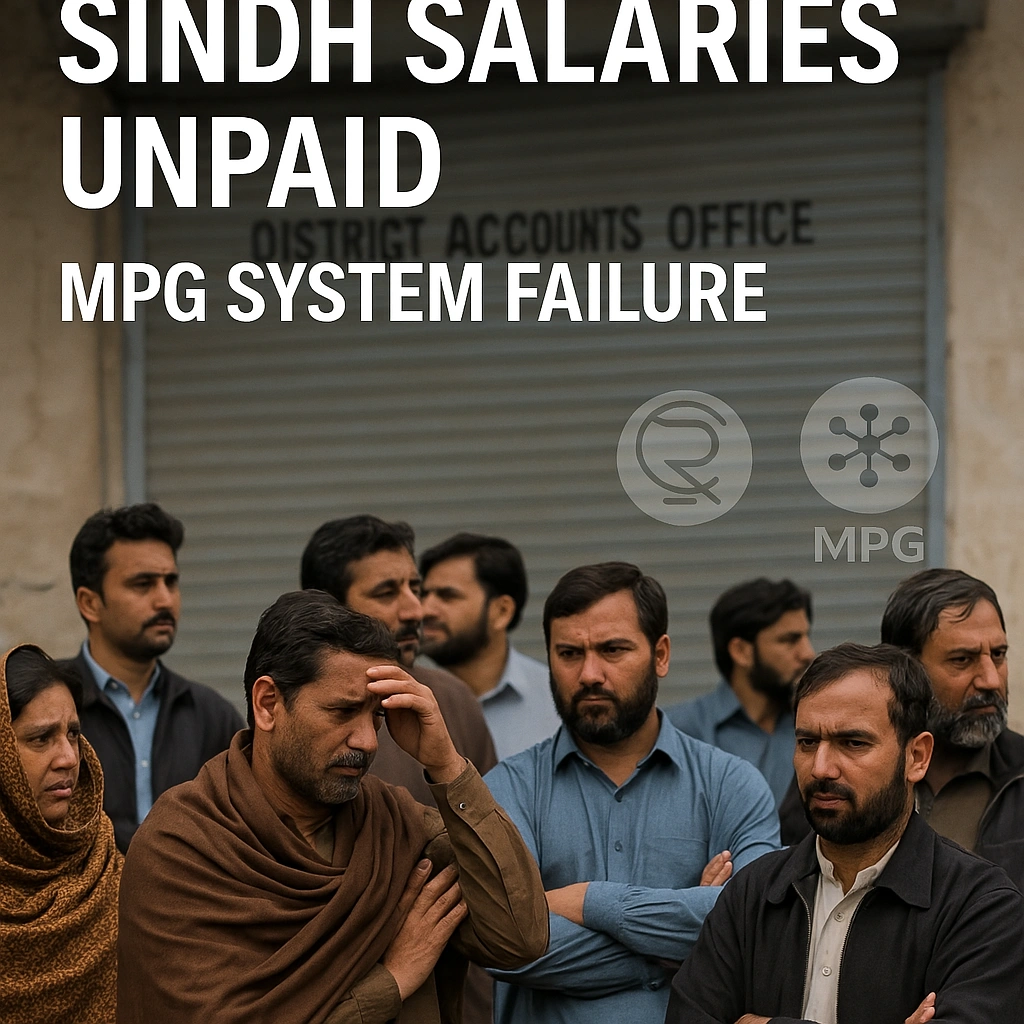
Sindh government employees remain unpaid as MPG payment system fails past January 25th deadline. Exclusive investigation into Pakistan’s digital payment infrastructure breakdown and its human cost.
“The 25th Has Come and Gone—But Salaries Haven’t“
For Muhammad Rasheed, a grade-17 officer in Sindh’s education department, January 28th marks the third day of uncertainty. The 25th—traditionally the day when government salaries illuminate bank accounts across Pakistan—passed without the familiar notification ping. His children’s school fees are overdue. His wife postponed a medical appointment. And like thousands of civil servants across Sindh province, he’s caught in the crossfire of what experts are calling Pakistan’s most significant digital payment system failure in recent memory.
The culprit? The Micro Payment Gateway (MPG), a digital disbursement platform that was supposed to modernize how Sindh pays its 400,000-plus government employees. Instead, it has created a humanitarian and administrative crisis that exposes the fragility of Pakistan’s rush toward digitalization without adequate safeguards.
According to sources within the Accountant General (AG) Sindh office who spoke on condition of anonymity, the system experienced “catastrophic failures” in processing the January 2026 payroll, leaving employees—from junior clerks to senior administrators—in financial limbo. This isn’t merely a technical glitch; it’s a case study in how premature digital transformation can collapse under its own weight.
Understanding the MPG Debacle: What Went Wrong?
The Promise of Digital Transformation
Pakistan’s State Bank of Pakistan (SBP) has been aggressively promoting digital payment infrastructure, including the Raast instant payment system, as part of its National Financial Inclusion Strategy. The MPG was envisioned as Sindh’s answer to efficient, transparent salary disbursement—eliminating intermediaries, reducing corruption, and ensuring timely payments.
The Washington Post recently highlighted Pakistan’s digital ambitions in its Asia economic coverage, noting that “emerging markets face unique challenges in digital payment adoption“—a prescient observation given Sindh’s current predicament.
The Reality: A System Unraveling
Multiple technical failures have compounded since late 2025:
District-Level Breakdowns
- Badin District: Complete payroll processing failure affecting 8,000+ employees
- Dadu District: Partial disbursements with unexplained deductions
- Ghotki District: System rejecting employee bank account validations
Sources indicate the MPG’s integration with the Controller General of Accounts Pakistan (CGA) database encountered synchronization errors, particularly affecting employees receiving the Salaries through MPG .
“The system wasn’t stress-tested for scale,” explains Dr. Ayesha Malik, a digital governance expert at Lahore University of Management Sciences. “When you’re processing 400,000 salaries simultaneously, any latency in API calls or database queries creates cascading failures.”
The Federal-Provincial Divide
The crisis highlights a disturbing disparity. Federal government employees in Islamabad received January salaries on schedule through the tried-and-tested systems managed by the Controller General of Accounts. Punjab province, which piloted a hybrid digital-manual approach, reported 99% on-time disbursement according to data tracked by governance monitoring organizations.
Sindh stands alone in its comprehensive failure—a province that accounts for approximately 22% of Pakistan’s GDP but now cannot pay its own workforce.
The Human Toll: Beyond Statistics and Systems
Stories From the Frontlines
Khadija Bibi, Grade 9 Clerk, Health Department, Hyderabad: “I couldn’t pay my electricity bill. When I went to the school to explain why I couldn’t pay my daughter’s fees, I felt humiliated. They know I’m a government employee. They think I’m making excuses.”
Rashid Ahmed, Grade 16 Officer, Irrigation Department, Sukkur: “We took out high-interest private loans just to buy groceries. The irony? I work in a department that manages water resources for millions, but I can’t manage my own household expenses.”
These aren’t isolated incidents. According to preliminary surveys by civil servant unions, approximately 68% of affected employees have resorted to informal borrowing, often at predatory interest rates exceeding 15% monthly.
The Economist’s recent analysis of emerging market labor dynamics noted that “government employment in South Asia functions as both economic stimulus and social safety net”—making salary delays not just administrative failures but potential triggers for broader economic disruption.
Pension Paralysis
The crisis extends beyond active employees. Thousands of retirees dependent on monthly pensions face similar uncertainty. For many elderly recipients without alternative income sources, this represents an existential threat.
“My father served 35 years in the judiciary,” shares Maryam Khan, daughter of a retired civil judge. “His pension hasn’t come through. He has diabetes medication to buy. This is how we treat our retired public servants?”
Administrative Autopsy: Who’s Accountable?
The Blame Cascade
AG Sindh Office: Claims the State Bank of Pakistan infrastructure experienced “unexpected downtime” during critical processing windows.
State Bank of Pakistan: Points to incomplete data submission from provincial authorities and “non-standard file formats” that violated integration protocols.
Provincial Finance Department: Suggests the Controller General of Accounts delayed authorization for January disbursements due to “budgetary reconciliation issues.”
This circular blame game reveals a fundamental problem: no single entity owns the end-to-end payment process. The MPG system exists in a bureaucratic no-man’s-land where technical failures become administrative hot potatoes.
The Reversion Rumors
Multiple sources confirm that senior Sindh government officials have discussed reverting to manual salary disbursement processes—essentially abandoning the MPG experiment. However, this creates its own complications:
- Data Migration Challenges: Employee records have been partially migrated to the digital system
- Timeline Concerns: Manual processing for 400,000+ employees could take 3-4 business days
- Political Optics: Admitting digital transformation failure before upcoming elections
Financial Times’ coverage of government technology implementations in developing economies warns that “premature abandonment of digital systems after initial failures can create worse long-term outcomes than temporary persistence with fixes”—a dilemma Sindh now faces.
Key Takeaways
- 400,000+ Sindh government employees haven’t received January 2026 salaries due to MPG system failure or Deliberate apathy of Accounts Offices .
- District-level breakdowns in Badin, Dadu,Kashmore and Ghotki compound the crisis
- Federal and Punjab governments disbursed salaries on time, highlighting Sindh’s unique failure
- 68% of affected employees have resorted to high-interest informal borrowing
- Reversion to manual systems being considered but faces logistical and political obstacles
- Broader implications for Pakistan’s digital transformation credibility and economic stability
Comparative Analysis: Lessons From Other Provinces
Punjab’s Hybrid Success
Punjab province implemented a gradual digital transition:
- Pilot program with 10,000 employees (6 months)
- Parallel manual and digital processing (12 months)
- Full digital transition only after 98% success rate achieved
Result? Zero salary delays in the past 18 months.
Federal Government’s Conservative Approach
The federal establishment maintains legacy systems with incremental digital enhancements—prioritizing reliability over innovation. While less efficient, this approach has delivered 100% on-time salary disbursement for 47 consecutive months.
Forbes recently profiled successful government digital transformations in Asia-Pacific, emphasizing that “speed of implementation matters far less than thoroughness of testing and redundancy planning”—wisdom Sindh appears to have ignored.
Broader Implications: Pakistan’s Digital Governance Crossroads
The Credibility Crisis
This failure undermines Pakistan’s broader digital transformation initiatives:
- Raast Payment System Adoption: Banks report declining merchant confidence in government-backed digital platforms
- Tax Digitalization: Concerns about FBR’s planned e-filing mandate
- E-Governance Projects: Provincial governments reconsidering aggressive digital timelines
“One high-profile failure creates systemic skepticism,” notes Farhan Mahmood, a Karachi-based technology governance consultant. “It takes years to rebuild trust in digital government systems.”
The Economic Ripple Effect
When 400,000+ government employees lack purchasing power:
- Local Commerce Disruption: Retailers in government employment hubs (Karachi, Hyderabad, Sukkur) report 30-40% sales declines
- Informal Lending Surge: Private money lenders report unprecedented demand
- Household Debt Accumulation: Long-term financial vulnerability for civil servant families
The Washington Post’s economics desk has documented how public sector salary disruptions in developing economies create “multiplier effects that reduce GDP by 0.3-0.5% quarterly”—a potential scenario for Sindh if delays persist.
The Path Forward: Five Critical Interventions
1. Emergency Manual Disbursement
Activate legacy systems immediately for critical-need employees (grades 1-11, pensioners, medical emergencies) while debugging MPG infrastructure.
2. Independent Technical Audit
Engage international payment system auditors (similar to those used by State Bank of Pakistan for Raast system validation) to identify root causes and recommend fixes.
3. Transparent Communication Protocol
Establish daily public updates on resolution progress—reducing anxiety and rumor circulation among affected employees.
4. Compensatory Measures
Consider:
- Interest-free advance salary loans through government banks
- Automatic reversal of late payment penalties for employee bills
- Hardship grants for lowest-grade employees
5. Accountability Framework
Commission a formal inquiry with public hearings—not for political theater, but genuine systemic learning. The Economist’s governance research emphasizes that “administrative failures require institutional accountability, not individual scapegoating” to prevent recurrence.
Conclusion: A Cautionary Tale for Digital Governance
The Sindh MPG payment system failure represents more than delayed salaries—it’s a referendum on how governments approach digital transformation in resource-constrained environments. The rush to appear technologically progressive, without adequate testing, redundancy planning, and stakeholder preparation, has created precisely the crisis digitalization was meant to prevent.
For Muhammad Rasheed and hundreds of thousands like him, the promise of efficiency has yielded only uncertainty. For Pakistan’s digital governance ambitions, this is a watershed moment: either a catalyst for genuine reform, or the beginning of a retreat to comfortable but inefficient status quo.
The next 72 hours will determine which path employees go for rights . Still no updates for salaries
As Financial Times noted in its recent analysis of emerging market governance challenges: “Technology is only as good as the systems that implement it, and the people who depend on it.” Sindh’s 400,000 government employees are now the unwilling test subjects of that axiom.
The question remains: Will anyone be held accountable before the February salary cycle begins?
Discover more from The Economy
Subscribe to get the latest posts sent to your email.



The boutique fitness studio segment is valued at $51.6 billion and growing at approximately 7.6% annually, according to 2026 Fitness Industry Insights — a segment growing faster than the broader $270 billion global fitness market it sits within, and doing so specifically by selling the personalized, community-focused, lower-intensity experience that large commercial gyms structurally cannot replicate. For enterprise investors and premium wellness operators, boutique low-impact training has evolved from a niche urban trend into a defined, monetizable segment with a specific and expanding customer base.
The Demographic Engine Driving Boutique Growth
Two distinct demographic cohorts are converging to drive boutique fitness demand, and understanding both is essential to monetization strategy. Millennials and Gen Z remain the primary volume drivers — 79% of millennials prioritize health and wellness spending, according to 2026 Fitness Industry Insights. But the more commercially significant signal for luxury wellness specifically is the 45+ age group, identified as one of the fastest-growing gym-membership segments and representing a significant, still largely untapped opportunity, per the same source.
This 45+ cohort is precisely the demographic for whom low-impact training — a positioning built around joint-friendly, recovery-oriented, sustainable-intensity programming rather than high-intensity commercial-gym models — carries genuine product-market fit, not just marketing framing.
Gyms and Health Clubs Remain the Volume Leader, But Boutique Commands the Growth Premium
Gyms and health clubs remain the largest single fitness-market segment, accounting for 40% of the global fitness market and an estimated $110.4 billion in 2026, according to 2026 Fitness Industry Insights. But scale and growth rate are different questions — the boutique segment’s 7.6% annual growth reflects consumers actively selecting personalized, community-focused experiences over undifferentiated commercial-gym access, even at a premium price point.
The survival strategy for large commercial operators is instructive by contrast: hybrid models combining in-person membership with digital access, allowing members to train both at the facility and at home, according to 2026 Fitness Industry Insights — an implicit acknowledgment that pure commercial-gym positioning alone is losing ground to more differentiated models.
The AI-Personalization Layer as a Boutique Monetization Tool
Boutique and luxury wellness operators are increasingly deploying the same AI-personalization infrastructure reshaping mass-market fitness — but applied to premium retention and upsell rather than volume acquisition. Gym operators using AI-powered churn-prediction tools have reported check-ins rising 8% year-over-year and new member joins jumping 27%, with Gen Z driving much of that growth, according to Glofox. For boutique operators specifically, AI churn-prediction functions as a high-leverage retention tool given that boutique studios’ unit economics depend far more heavily on member lifetime value than high-volume commercial gyms.
Monetization Model Comparison: Commercial Gym vs. Boutique Low-Impact Studio
| Dimension | Commercial Gym | Boutique Low-Impact Studio |
|---|---|---|
| 2026 market size | $110.4B (40% of global market) | $51.6B |
| Growth rate | Slower, hybrid-model-dependent | 7.6% annually |
| Primary monetization | Volume membership, low per-member ARPU | Premium per-session/membership, high per-member ARPU |
| Key demographic | Broad, price-sensitive | Millennials (79% prioritize wellness) + fast-growing 45+ cohort |
| Retention lever | Facility access breadth, hybrid digital add-ons | Community, personalization, AI-driven churn prediction |
| Differentiation strategy | Scale, convenience, price | Positioning, low-impact/recovery focus, curated experience |
Sources: 2026 Fitness Industry Insights (Fabglassandmirror), Glofox — see citations above.
The Broader Wellness-Tech Infrastructure Boutique Operators Are Riding
Boutique low-impact studios are not monetizing in isolation — they sit within a rapidly scaling AI-and-wellness technology ecosystem. The AI-in-fitness-and-wellness market specifically is valued at $10.68 billion in 2025, projected to reach $57.8 billion by 2035 at a 19.3% CAGR, according to InsightAce Analytic. The virtual fitness market — the hybrid digital layer boutique studios increasingly bundle with in-person sessions — is projected to grow from $43.78 billion in 2026 to $311.91 billion by 2034, a 27.82% CAGR, according to Fortune Business Insights.
Consumer adoption data confirms this infrastructure has genuine pull-through demand: 49% of consumers use AI-powered fitness and wellness apps daily, and 61% of active fitness consumers use AI fitness-tracking apps, per Glofox — meaning boutique operators layering AI-driven personalization into premium low-impact programming are meeting genuine, already-established consumer technology expectations rather than introducing novel friction.
A Monetization Framework for Premium Wellness Operators
- Price for personalization, not access. Boutique unit economics depend on premium per-session or membership pricing justified by curated, low-impact programming — commodity gym-access pricing models undermine the segment’s core value proposition.
- Build explicit 45+ programming and marketing tracks, distinct from the millennial/Gen Z acquisition funnel — this is the fastest-growing, least-saturated membership segment and responds to distinctly different positioning (recovery, longevity, joint health) than younger-cohort messaging.
- Deploy AI churn-prediction as a retention-economics tool, not just an operational nicety — given boutique studios’ high per-member lifetime-value dependency, the documented 8% check-in and 27% new-member-join improvements from AI tooling translate disproportionately into premium-segment revenue protection.
- Bundle hybrid digital access without diluting in-person premium positioning. The virtual fitness market’s 27.82% CAGR signals genuine consumer demand for digital-physical hybrid models — but boutique operators should structure this as a premium-tier extension, not a discount substitute, to preserve the segment’s pricing power.
- Treat community and curation as the defensible moat. Unlike commercial gyms competing on facility breadth and price, boutique studios’ structural advantage — community-focused, personalized experience — is precisely what large operators’ hybrid pivot cannot fully replicate, and should anchor both product design and premium pricing justification.
The Bottom Line
Luxury wellness and boutique low-impact training have moved beyond lifestyle-trend status into a quantifiable $51.6 billion segment growing faster than the broader fitness market, powered by a genuine demographic tailwind — the underserved, fast-growing 45+ cohort — and increasingly monetized through AI-driven personalization and retention tooling rather than facility scale. For premium wellness investors and operators, the highest-conviction opportunity is explicit 45+-focused programming layered with AI-driven retention economics, positioned and priced as a differentiated experience rather than a discount alternative to commercial gym access.
Discover more from The Economy
Subscribe to get the latest posts sent to your email.

CMS published an interim final rule on June 3, 2026, requiring adult Medicaid enrollees aged 19–64 to meet an 80-hour-per-month work or community-engagement threshold as a condition of continued eligibility, according to Exactrx. The rule took effect July 31, 2026, with full state compliance required by January 1, 2027, per contractingproviders.com. For enterprise hospital systems and revenue-cycle leaders, this is not a distant policy abstraction — it is a payer-mix event with a known start date, a projected enrollment impact, and a direct, quantifiable path into accounts-receivable performance.
The Regulatory Timeline Enterprise Finance Teams Need
| Date | Milestone | Source |
|---|---|---|
| July 4, 2025 | Section 71119 of H.R. 1 (One Big Beautiful Bill Act) signed into law, establishing statutory basis | contractingproviders.com |
| June 3, 2026 | CMS publishes interim final rule detailing 80-hour/month work requirement | Exactrx |
| July 31, 2026 | Work-requirement rule takes effect | contractingproviders.com |
| September 2026 (est.) | Patient inquiries about coverage status begin increasing, per ContinuumCloud | ContinuumCloud |
| December 31, 2026 | Deadline for redetermination workflows to be fully operational | PointCare |
| January 1, 2027 | Full state compliance required; twice-yearly (semiannual) redeterminations begin for expansion adults | PointCare, ContinuumCloud |
Sources: Exactrx, contractingproviders.com, ContinuumCloud, PointCare — see citations above.
The Enrollment-Loss Numbers, Reconciled
Multiple projections exist, and enterprise finance teams should understand why they differ:
- CMS’s own interim final rule projects approximately 2.3 million fewer Medicaid enrollees in fiscal year 2027, rising to over 3 million in subsequent years, per Exactrx.
- The Congressional Budget Office’s earlier, broader estimate projects a reduction of 5.2 million adults by 2034 — a longer time horizon than CMS’s near-term figure, per definitivehc.com.
- A separate CBO estimate cited elsewhere projects 4.8 million people losing coverage over the next decade, per ContinuumCloud — broadly consistent with the CBO’s longer-horizon figures.
- These sit within a larger estimated 15 million people losing health insurance overall under the OBBBA, according to the CBO figures cited by HFMA.
The reconciliation: CMS’s 2.3–3 million figure is the near-term (FY2027) work-requirement-specific impact; the CBO’s 4.8–5.2 million figures represent longer-horizon (through 2034) cumulative effects; and the 15 million figure captures the full scope of the broader legislative package beyond Medicaid work requirements alone.
The Structural Problem: Doubled Administrative Burden, Same Headcount
The operational core of the churn problem is that redetermination frequency is doubling — from annual to semiannual reviews — without a corresponding doubling of enrollment-team headcount, according to PointCare. This structural mismatch is the direct driver of increased “administrative churn” — patients losing and regaining coverage due to paperwork friction rather than genuine eligibility changes.
The scale of this administrative-churn problem is already documented: according to the Commonwealth Fund, cited by RSM, one in ten Medicaid enrollees loses and regains coverage within 12 months, often due to administrative hurdles rather than true eligibility changes — a pattern semiannual redeterminations are projected to intensify.
Quantified Financial Exposure at the Provider Level
A mid-sized provider managing 25,000 Medicaid patients could see an 18% jump in claim denials and a 12% rise in patient churn, potentially resulting in up to $2.4 million in annual uncompensated care losses, according to ContinuumCloud. This is compounded by a broader industry baseline problem: hospitals collectively spent $18 billion fighting claim denials in 2025, with average AR days rising 5.2% despite that spending, per Exactrx.
Beyond Hospitals: The ASC and Outpatient Blind Spot
Revenue-cycle leaders at ambulatory surgery centers and outpatient practices often assume Medicaid churn is primarily a safety-net-hospital and federally-qualified-health-center problem — an assumption worth interrogating, per Exactrx. Medicaid-covered patients represent a meaningful share of elective and semi-elective procedure volume at ASCs in expansion states, and when coverage disappears, those patients don’t vanish from the practice’s patient population — they either shift to commercial/marketplace coverage (requiring new 90–150-day credentialing cycles) or become uninsured, generating direct uncompensated-care exposure regardless of facility type.
An Enterprise Revenue-Cycle Risk Framework
- Verify eligibility at every visit, not just at registration. Point-of-registration-only verification is structurally inadequate under semiannual redetermination cycles; per-visit CHAMPS/HIPAA 270-271 eligibility transactions are becoming operationally necessary, per medsolercm.com.
- Automate re-verification workflows now, ahead of the 2027 deadline. Automated re-verification every five months, aligned to the semiannual cycle, can cut 30–45 days off enrollment-timeline exposure, per ContinuumCloud.
- Diversify payer mix ahead of the enrollment decline, not after. Because commercial-payer credentialing takes 90–150 days, practices waiting until 2027 volume declines materialize will face a revenue gap during the credentialing lag itself, per contractingproviders.com.
- Build patient-facing coverage-retention infrastructure, not just back-office redetermination workflows. Verifying coverage before scheduled services, flagging unconfirmed eligibility, and connecting patients quickly to financial counselors are explicitly recommended proactive steps, per RSM.
- Track license/sanction status continuously. Automated alerts on provider license and sanction changes, aligned to 2026 standards, can materially compress enrollment timelines and reduce compliance risk, per ContinuumCloud.
The Bottom Line for Enterprise Healthcare Finance
Medicaid churn has structurally shifted from an eligibility/enrollment-department problem into a CFO-level revenue-cycle risk with quantified, near-term financial exposure. With semiannual redeterminations doubling administrative workload without a corresponding staffing increase, and CMS’s own projections showing 2.3+ million enrollees losing coverage by FY2027, hospital systems, ASCs, and outpatient practices across all 41 Medicaid-expansion states have a defined, dated window — through December 31, 2026 — to build the automated verification and payer-mix-diversification infrastructure the post-2027 environment will require.
Discover more from The Economy
Subscribe to get the latest posts sent to your email.

Britain’s labour market has now been shedding jobs for as long as it did during the depths of the global financial crisis — and this time, employers are explicitly naming artificial intelligence as a reason for the cuts.
The closely watched S&P Global/CIPS Purchasing Managers’ Index showed services firms and the wider private sector reducing headcount for a 22nd consecutive month in July 2026, according to data reported by Bloomberg. That run now equals the length of the downturn seen during the 2008-09 crash in the dominant services sector, and is just one month short of matching it across the wider economy.
A Downturn Two Years in the Making
Unlike the 2008 crisis, which was triggered by a sudden banking collapse, this slump has crept up gradually. The survey shows the pace of job losses easing slightly in July compared with prior months, but the cumulative duration — nearly two full years of continuous headcount reduction — is what has alarmed economists watching the data, as detailed by Staffing Industry Analysts.
Crucially, firms surveyed gave two distinct explanations for the cuts: general cost-reduction efforts, and — increasingly — a reduced need for workers after investing in AI tools to boost productivity. That second factor marks a shift from earlier phases of the downturn, when cost pressure alone dominated employer commentary.
The PMI Numbers Behind the Story
The deterioration has been building for months. Earlier readings from S&P Global’s official PMI release showed the sector losing momentum steadily through the spring, with survey respondents explicitly citing the fallout from the US-Iran conflict as a drag on client confidence, layered on top of already-elevated domestic political uncertainty.
Separate flash data tracked by FX.co showed the UK Services PMI slipping to 48.7 in June — below the 50.0 threshold that separates expansion from contraction, and short of the 50.5 markets had expected. That marked the sharpest downturn since January 2023, driven by weaker new business volumes, shrinking order backlogs and further job cuts, even as input cost inflation — from transport to IT equipment surcharges — continued to squeeze margins.
The survey’s own methodology notes are telling: data collected in June found “a sustained reduction in backlogs of work across the service economy, largely reflecting a lack of pressure on business capacity due to weak demand,” according to the official S&P Global report. In plain terms, companies have less work to do, and they are responding by not replacing staff who leave rather than launching mass redundancy rounds — a slower but more persistent form of labour market erosion.
The Political Backdrop
The prolonged downturn deepens pressure on the Labour government, which took office in the summer of 2024 promising to reinvigorate growth. Nearly two years of continuous private-sector job losses is a difficult data point for any incumbent administration to explain away, particularly as it now sits alongside separately reported gilt market volatility and scrutiny of the Bank of England’s policy path.
Why AI Is a Different Kind of Headwind
What distinguishes this downturn from previous UK labour market slumps is the structural, rather than purely cyclical, nature of some of the job losses. Employers citing AI-driven productivity gains as a reason for not replacing departing staff suggests that even a rebound in demand may not translate into a proportional rebound in hiring — a dynamic that echoes concerns raised in the US, where financial-sector employment — an industry widely seen as exposed to AI adoption — has fallen to a four-year low.
Economists warn this creates a harder policy problem than a conventional cyclical downturn. Interest rate cuts and fiscal stimulus can revive demand, but they do less to reverse a structural shift in how many workers a given level of output requires.
What to Watch Next
Three data points will determine whether Britain’s labour market stabilises or deteriorates further into autumn:
- The August PMI releases, which will show whether July’s slight easing in the pace of job cuts was a genuine inflection point or a one-month pause.
- Bank of England commentary on how much weight it assigns to labour market weakness versus persistent inflation in setting the path for interest rates.
- Sector-level AI adoption data, particularly in financial and professional services, where the productivity-driven hiring freeze appears most entrenched.
The Bottom Line
Two years of continuous UK private-sector job cuts is no longer a temporary post-pandemic adjustment — it has become the longest sustained labour market downturn since the financial crisis. With employers now openly citing AI adoption alongside cost discipline as drivers of headcount reduction, the shape of any eventual recovery may look very different from past cycles: output could recover well before payrolls do.
Discover more from The Economy
Subscribe to get the latest posts sent to your email.

Macroeconomic Fallout of Middle Eastern Airspace Restrictions: Why U.S. Carriers Are Abandoning Gulf Hubs Through 2027

High-CPM Finance Niches 2026: Publisher Monetization Blueprint

IMF & World Bank 2026 Global Economic Outlook: Growth, Inflation, Debt

Pork Recall 2026: USDA Guanciale Listeria Recall in 8 States Explained

Zelda: Ocarina of Time Switch 2 Remake — Release Date & Everything Confirmed

Social Security Trust Fund 2032: OASI Depletion Timeline Explained

Oracle (ORCL) Stock Analysis: AI Cloud Growth Ahead of Sept 10 Earnings

2027 Social Security COLA: 3.5% Increase Explained

Non-State Actors and AI 2026: The Push for Global Guardrails

Mandatory Lobbying Registers 2026: Corporate Risk Guide

Beyond $100 Oil: Why the Geopolitical Shock at Hormuz Marks a Structural Turning Point

Digitally Deliverable Services: 56% of Global Trade in 2026

AI Data Center Real Estate 2026: Power & Grid Battle Guide

Smart Glasses Privacy Crisis 2026: Regulation & Compliance

State Farm’s $5B Dividend 2026: Who Qualifies & Payout Dates

US-China Relations in Q3 2026: Trade Tariffs and Supply Chain Risks

Gold’s Wild 2026: From a Record $5,600 Peak to a 24% Crash and Back Toward $4,500

Oil Surges as Strait of Hormuz Traffic Collapses Again

The Rocket That Won’t Quit: Inside SpaceX’s Falcon 9 Launch Machine

Bank of England Set to Hold Rates Through Year-End, Reuters Poll Shows

The 2026 Crypto Regulatory Shift: What It Means for Institutional Investors

SpaceX Starship Flight 14: First Orbital Attempt & Starlink V3 Launch Explained

Retail Earnings Week: What Home Depot, Target & Walmart Reveal

AI-Powered Training: The Next Multi-Billion Dollar Ecosystem in Fitness

AI Chip Stocks 2026: The Best Semiconductor Investments Beyond Marvell

Russia’s Black Sea Oil Exports Fall for a Fifth Straight Week

China’s Economy Has a Structural Problem: Factories Are Winning, Households Are Losing

Global Chip Selloff Deepens: What’s Driving the Aug. 19 Semiconductor Rout
-

 Markets & Finance8 months ago
Top 15 Stocks for Investment in 2026 in PSX: Your Complete Guide to Pakistan’s Best Investment Opportunities
-

 Analysis7 months ago
Johor’s Investment Boom: The Hidden Costs Behind Malaysia’s Most Ambitious Economic Surge
-

 Analysis7 months ago
Top 10 Stocks for Investment in PSX for Quick Returns in 2026
-

 Analysis7 months ago
Brazil’s Rare Earth Race: US, EU, and China Compete for Critical Minerals as Tensions Rise
-

 Banks8 months ago
Best Investments in Pakistan 2026: Top 10 Low-Price Shares and Long-Term Picks for the PSX
-

 Investment8 months ago
Top 10 Mutual Fund Managers in Pakistan for Investment in 2026: A Comprehensive Guide for Optimal Returns
-

 Global Economy9 months ago
15 Most Lucrative Sectors for Investment in Pakistan: A 2025 Data-Driven Analysis
-

 Global Economy9 months ago
Pakistan’s Export Goldmine: 10 Game-Changing Markets Where Pakistani Businesses Are Winning Big in 2025