
Analysis
Elon Musk Trillionaire: How the Historic SpaceX IPO Broke Capitalism

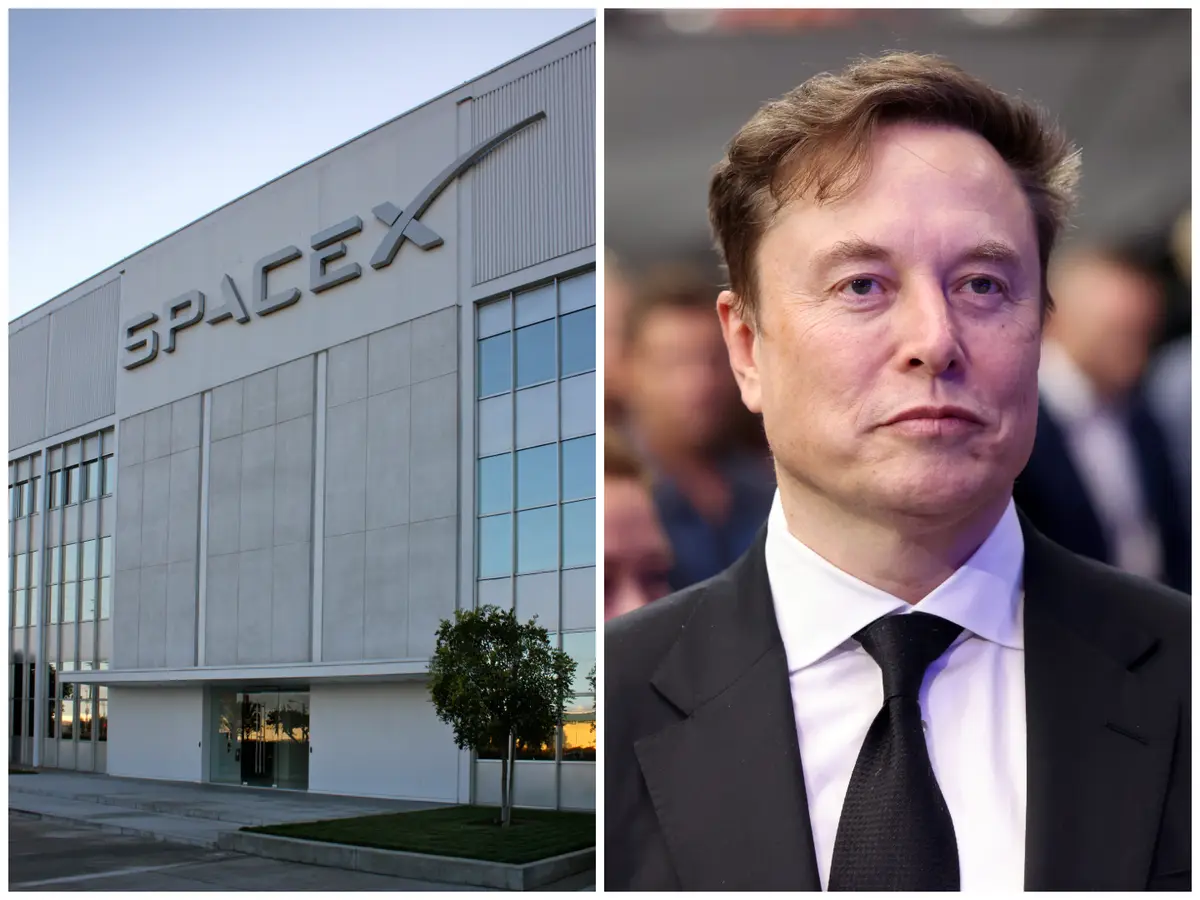
The opening trade on the Nasdaq took exactly three seconds to clear, but it shattered a financial ceiling that had stood since the invention of the joint-stock company. When shares of SpaceX opened at a 42% premium to their initial offering price on Tuesday morning, the underlying math of global capitalism shifted. That single market mechanism officially made Elon Musk a trillionaire. The ticker—SPACE—flashed bright green across the screens above Times Square, signaling not just the most anticipated aerospace debut in history, but the culmination of a two-decade capital aggregation strategy. He has achieved what John D. Rockefeller and Andrew Carnegie could not, crossing a threshold that turns personal net worth into a figure rivaling the gross domestic product of mid-sized nations.
The race to thirteen figures has captivated market analysts since the late 1990s, when Bill Gates briefly touched the $100 billion mark. Yet the leap from a hundred billion to a full trillion requires an entirely different kind of economic gravity. Musk’s ascent bypassed the traditional luxury goods empires and consumer retail monopolies that previously sustained the fortunes of Bernard Arnault and Jeff Bezos. Instead, this wealth was built on hard physical infrastructure, artificial intelligence, and orbital dominance. Data tracked by the Bloomberg Billionaires Index indicates that Musk’s sprawling portfolio—anchored by a stabilized Tesla, a rapidly scaling xAI, and extensive private holdings—required only the liquidity event of the decade to push it over the edge. By bringing his aerospace crown jewel to the public markets, he transformed illiquid, heavily restricted private equity into hard, daily-marked valuation. The implications of this financial event stretch far beyond one man’s personal balance sheet, fundamentally altering how institutional investors value the commercialization of space.
The Mechanics of the Market’s Biggest Debut
To understand the sheer velocity of this wealth creation, one must examine the mechanics of the SpaceX public debut. For years, the company operated as a tightly guarded private fortress, raising capital through exclusive funding rounds that locked out retail investors and strictly limited institutional participation. The strategy created an immense pent-up demand. When the regulatory filings finally dropped last month, they revealed a company generating unprecedented free cash flow, driven largely by its Starlink satellite broadband division and its absolute monopoly on heavy-lift orbital launches.
The primary catalyst for the stock’s massive first-day surge was the revelation of Starlink’s operating margins. Wall Street had long viewed the satellite network as a capital-intensive gamble. What the prospectus showed, however, was a utility-like recurring revenue engine with margins rivaling enterprise software. As soon as the opening bell rang, institutional buyers—led by aggressive allocations from Vanguard and BlackRock—scrambled to secure massive blocks of shares. The stock, priced initially at $112, opened at $159 and continued to climb throughout the morning session.
Because Musk retained a staggering 42% equity stake in the company through a dual-class share structure, his personal net worth violently re-rated in real time. The SpaceX IPO valuation crossed $500 billion within the first hour of trading. Combined with his $400 billion stake in Tesla and the estimated $150 billion valuation of xAI and The Boring Company, his total assets easily eclipsed the trillion-dollar mark. Financial historians will note that this wasn’t a gradual climb; it was a sudden, violent repricing of assets that the public markets had previously been unable to touch.
This debut also permanently alters the landscape for deep-tech financing. Investment banks spent the last five years struggling to price companies that build rockets and orbital infrastructure. Now, they have a highly liquid, half-trillion-dollar benchmark. According to analysis published by Reuters, the immediate success of the SpaceX offering has already prompted three distinct rival aerospace startups to accelerate their own listing timelines. The market has proven it will pay a massive premium for companies that effectively privatize critical domains of human infrastructure.
The Architecture of a Thirteen-Figure Fortune
Moving beyond the immediate spectacle of the trading floor requires dissecting exactly how this specific fortune was built. Wealth at this scale is never merely the result of selling a popular product; it requires capturing entirely new economic ecosystems before regulators or competitors realize they exist. Tesla captured the transition from combustion to electric mobility. SpaceX captured the transition of low-Earth orbit from a scientific commons to a commercial shipping lane.
How did Elon Musk become a trillionaire?
Elon Musk became a trillionaire through the dramatic public market debut of SpaceX. The company’s initial public offering caused its valuation to surge past $500 billion. Combined with his massive equity stakes in Tesla, xAI, and Neuralink, this sudden injection of liquid valuation pushed his total net worth above $1 trillion.
What separates this milestone from previous eras of extreme wealth is the structural integration of his companies. Rockefeller dominated oil refinement, but he didn’t simultaneously own the railroads and the steel mills. Musk’s empire represents a closed-loop technological ecosystem. xAI trains its models on data generated by Tesla’s fleet, while Starlink provides the connectivity required to link those autonomous systems globally. The market is no longer valuing these entities as separate corporate experiments. Investors are placing a massive premium on the synergy between them, treating the “Musk-verse” as a sovereign technological state.
Still, the true engine of this new valuation is launch economics. Before the Falcon 9, the cost to put a kilogram of payload into orbit hovered around $10,000. SpaceX drove that cost down to roughly $1,500, and the fully operational Starship platform is currently threatening to push it below $200. This is not incremental improvement; it is an economic phase change. By controlling the only reliable, reusable heavy-lift vehicles on the planet, SpaceX effectively acts as the tollbooth for the new space economy. If a telecom company, a defense contractor, or a foreign government wants to deploy orbital assets, they must pay Musk’s company to do it.
This absolute pricing power explains why the public markets reacted with such ferocity. Investors are looking at a company that possesses a virtually unassailable moat. It takes a decade and billions of dollars in sunken costs just to build a rocket capable of competing with the decade-old Falcon 9, let alone the current iteration of Starship. The public debut allowed retail and institutional capital to finally purchase a claim on this monopoly, driving the underlying stock—and Musk net worth 2026 projections—into the stratosphere.
Downstream Consequences and Sovereign Power
The creation of the world’s first trillion-dollar fortune carries immediate structural implications for global markets, tax policy, and geopolitical power dynamics. A net worth of $1 trillion gives a single private citizen more financial leverage than the central banks of most developed nations. It fundamentally alters the relationship between the individual and the state.
Consider the aerospace sector. For 60 years, space exploration was the exclusive domain of sovereign governments, driven by Cold War imperatives and funded by massive taxpayer bases. NASA dictated the terms, the timelines, and the hardware. Today, the power dynamic has entirely inverted. The United States government is now just one of many clients waiting in line to purchase capacity on SpaceX’s launch manifest. According to a recent report by the Financial Times, the privatization of low-Earth orbit has effectively transferred control of critical communications and defense infrastructure into the hands of a single publicly traded entity controlled by one man.
This dynamic became glaringly apparent during recent geopolitical conflicts, where Starlink terminals provided the only resilient communications infrastructure for sovereign militaries. Now that SpaceX is public, the fiduciary duty to maximize shareholder value will inevitably clash with national security interests. When a company’s market capitalization relies on expanding its global satellite footprint, how will it navigate demands from adversarial governments? The market is pricing in the assumption that SpaceX operates above traditional geopolitical constraints, acting more like a utility for the entire planet than an American defense contractor.
Furthermore, this trillion-dollar milestone will violently reignite the global debate over wealth inequality and taxation. Current tax frameworks are entirely unequipped to handle fortunes of this magnitude, which are largely shielded from income taxes because they are held in unrealized equity. Policymakers in Washington and Brussels are already drafting proposals targeting loans leveraged against massive stock holdings. As highlighted by the International Monetary Fund, the concentration of trillion-dollar capital pools within a highly insulated technological elite presents novel risks to macroeconomic stability. If a significant portion of a market’s liquidity is tied to the volatile equity of a single founder’s ecosystem, systemic risk increases exponentially.
The Bear Case: Gravity Always Wins
Yet the applause on Wall Street is not universal. Behind the euphoric headlines and the staggering paper wealth, a quiet but influential contingent of institutional skeptics is sounding alarms. Their argument is rooted in financial history: every time the market prices a company for absolute perfection, reality eventually intervenes.
The most potent threat to this trillion-dollar empire is regulatory backlash. The sheer scale of SpaceX’s orbital monopoly makes it a prime target for antitrust scrutiny. Federal regulators have largely ignored the company’s dominance because of its vital role in national security and its undeniable engineering competence. That said, the transition to a massive public corporation changes the optics. Competitors like Blue Origin and United Launch Alliance are aggressively lobbying for legislative intervention, arguing that SpaceX’s control over both the launch vehicles and the dominant satellite constellation (Starlink) constitutes anti-competitive behavior.
There is also the question of valuation mathematics. A $500 billion market capitalization for SpaceX assumes that Starship will fly flawlessly, that the Starlink network will secure hundreds of millions of high-margin enterprise subscribers, and that the company will face zero meaningful competition for the next decade. The Wall Street Journal recently noted that any significant technical failure or unexpected regulatory roadblock could easily wipe 30% off the company’s market cap overnight.
Furthermore, Musk’s wealth is inherently fragile because it is built on highly correlated assets. If consumer sentiment turns sharply against Tesla, or if AI regulation severely kneecaps xAI’s development cycle, the resulting margin calls could force equity liquidations across his entire portfolio. The trillion-dollar figure is a snapshot in time, a high-water mark highly dependent on an environment of massive institutional liquidity and retail exuberance. Gravity, both literal and financial, has a perfect track record of humbling those who believe they have escaped it.
The Final Calculation
What follows, however, is not just a story about numbers on a brokerage screen. The SpaceX public debut forces a fundamental reckoning with how human progress is funded and rewarded in the 21st century. We have entered an era where the most ambitious infrastructure projects in human history—putting thousands of satellites into orbit, establishing interplanetary transport, building autonomous neural networks—are no longer executed by states, but by publicly traded entities engineered to concentrate wealth at the absolute top.
The market has spoken, pricing the privatization of the cosmos at half a trillion dollars and crowning its architect as the wealthiest private citizen in recorded history. Whether this represents the ultimate triumph of free-market innovation or a dangerous abdication of sovereign power remains the defining economic question of our time. The opening bell rang, the ticker updated, and the sky is no longer the limit—it is simply the next asset class.
Discover more from The Economy
Subscribe to get the latest posts sent to your email.



Navigating Mortgage and Loan Refinancing in a High-Yield Environment
Global public debt crossing critical thresholds has kept central bank policies volatile, resulting in fluctuating US Treasury yields throughout 2026. For homeowners and commercial property holders burdened by previous high-interest borrowing cycles, finding optimal refinance windows has become a high-stakes financial puzzle. Stalled disinflation and stubborn employment numbers mean rate cuts are incremental, requiring borrowers to act with precision.
Timing your mortgage or commercial loan refinance in this environment requires a deep understanding of yield curve movements and lender risk appetites.
Decoding 2026 Refinance Dynamics
The 10-Year Treasury Yield Benchmark
Mortgage rates continue to track closely with the 10-year US Treasury yield. When macroeconomic anxiety spikes debt issuance, yields rise, tightening consumer borrowing capacity. Savvy borrowers monitor weekly Treasury auctions to lock in rates during brief dip windows.
Hybrid ARMs and Alternative Structures
With fixed rates remaining elevated, 7/1 and 10/1 adjustable-rate mortgages (ARMs) have surged in popularity. These products offer lower initial monthly payments, giving borrowers breathing room until central bank easing cycles fully materialize.
| Loan Product | Current Rate Range | Best For | Key Risk Factor |
| 30-Year Fixed Mortgage | 6.2% – 6.8% | Long-term predictability | Higher initial monthly outlay |
| 7/1 Hybrid ARM | 5.5% – 5.9% | Short-term ownership / flipping | Rate reset risk after year 7 |
| Commercial Refinance | 7.0% – 8.2% | Corporate asset restructuring | Strict DSCR lender covenants |
Actionable Steps for Successful Refinancing
To maximize your chances of securing favorable refinance terms in a volatile market, follow a disciplined preparation strategy.
Boost Your Credit Score Immediately: Lenders in 2026 are applying stringent credit tiering; a 20-point increase can drop your APR by a crucial quarter-point.
Shop Regional Credit Unions: Smaller financial institutions often offer portfolio loans with more flexible underwriting than major national banks.
Calculate the Break-Even Point: Ensure your total closing costs are recouped through monthly savings within 24 months of closing.
“Market Strategist View: Refinancing in 2026 is an exercise in opportunistic timing. Borrowers must maintain immaculate financial profiles ready to strike the moment Treasury yields dip.”
Mastering the complexities of today’s debt environment ensures you can successfully lower your debt service costs and protect your long-term financial stability.
Discover more from The Economy
Subscribe to get the latest posts sent to your email.

The days of pulling generic auto insurance quotes based purely on your zip code and age are officially over. In 2026, insurance comparison engines are powered entirely by generative AI and real-time telematics. These platforms digest thousands of live data points—ranging from your driving smoothness via connected vehicle sensors to real-time traffic congestion patterns—to generate hyper-personalized premiums instantly.
For consumers, this evolution represents both a massive opportunity for savings and a hidden trap for penalty pricing. Understanding how AI algorithms evaluate risk is essential for anyone looking to lower their monthly auto insurance premiums.
How AI Comparison Engines Evaluate Your Risk Profile
Behavioral Telematics and Connected Cars
Modern cars stream performance data directly to insurance aggregators. Generative AI models analyze braking sharpness, acceleration curves, cornering G-forces, and phone distraction metrics. Drivers who maintain smooth, defensive habits are rewarded with dynamic rate cuts of up to 40% compared to traditional rating tiers.
Predictive Traffic and Weather Modeling
AI tools now cross-reference your daily commute route with predictive weather and accident probability models. If your standard parking location or driving corridor has a statistically higher incidence of uninsured motorist claims, your quotes will reflect that hyper-local risk assessment.
| Comparison Factor | Traditional Rating Model | 2026 Generative AI Model | Impact on Premium |
| Mileage & Usage | Annual estimated odometer reading | GPS tracking & live trip duration | High (up to 35% savings) |
| Driving Behavior | MVR driving record & accidents | Real-time braking, speed, & G-force | Critical (determines tier) |
| Vehicle Tech | Make, model, and safety rating | ADAS calibration & repair cost data | Moderate |
Strategies to Lower Your AI-Driven Insurance Quote
To outsmart the algorithm and secure the lowest possible premium in 2026, drivers must proactively manage their digital footprint on insurance platforms.
Opt-In for Telematics Trial Periods: Many insurers offer immediate 15% discounts just for installing their driving app; let it track safe habits for 30 days to lock in permanent savings.
Scrub Unverified Public Records: Ensure your motor vehicle report is free of clerical errors that AI risk models misinterpret as reckless behavior.
Compare AI Aggregators: Use platforms that integrate multi-carrier API feeds rather than single-brand comparison sites to find the best risk-adjusted rate.
“Industry Note: AI-driven pricing rewards transparency and precision. Drivers who actively manage their telematics data consistently out-save those relying on legacy quote calculators.”
Embracing AI comparison tools allows savvy policyholders to customize coverage limits precisely to their driving habits, eliminating wasted premium spend while ensuring robust protection.
Discover more from The Economy
Subscribe to get the latest posts sent to your email.

Despite decades of bans and strict handling mandates, asbestos remains a silent killer across legacy manufacturing plants, shipyards, and modern green-energy infrastructure retrofits. In 2026, regulatory changes by the EPA and tightened occupational health standards have triggered a fresh wave of mesothelioma litigation. Manufacturers attempting to fast-track industrial transitions are encountering catastrophic oversight, exposing workers to legacy toxins and opening corporate parent companies to unprecedented liability.
Navigating a mesothelioma claim in 2026 requires understanding how modern industrial supply chains intersect with historical exposure. Trusts established decades ago are being audited under stricter transparency laws, altering payout ratios and accelerating fast-track settlements for terminally ill plaintiffs.
Modern Industrial Exposure Hotspots
Green Retrofitting and Renewable Energy Infrastructure
A primary source of 2026 asbestos exposure occurs during the decommissioning and retrofitting of older industrial facilities for renewable energy production. Workers insulating electrical grids, modernizing HVAC systems, or upgrading manufacturing floors frequently disturb encapsulated asbestos materials that were improperly documented or ignored during facility audits.
Automotive and Aerospace Supply Chains
With advanced manufacturing booming, workers handling specialized friction materials, gaskets, and heat shields face ongoing risks. Supply chain tracing has become more sophisticated, allowing legal teams to pinpoint exact corporate entities responsible for raw material distribution across multinational borders.
| Industry Sector | Primary Exposure Risk | Legal Venue / Trust | Avg. Claim Value Range |
| Green Energy Retrofit | Disturbed insulation, pipe lagging | Federal Tort / Manufacturer Trust | $1.2M – $3.5M |
| Shipbuilding & Marine | Boiler insulation, structural seals | Asbestos Bankruptcy Trusts | $800K – $2.4M |
| Automotive Manufacturing | Brake components, high-heat gaskets | Third-Party Product Liability | $600K – $1.8M |
Securing Maximum Compensation: Steps for Plaintiffs
Time is of the essence in mesothelioma cases. Plaintiffs and their families must act decisively to secure financial recovery before statutes of limitations expire.
Retain Specialized Counsel: Work exclusively with national mesothelioma law firms possessing deep historical databases of asbestos-containing products.
Audit Employment History: Document every job site, supervisor name, and equipment brand encountered throughout your career.
Expedite Medical Filings: Secure a formal pathological diagnosis quickly to qualify for expedited trust fund distribution and priority trial settings.
“Expert Insight: Modern asbestos litigation is no longer just about historical tracking; it is about holding modern corporations accountable for failing to conduct rigorous environmental safety audits before initiating industrial retrofits.”
By combining meticulous work history reconstruction with aggressive multi-trust filings, victims can secure substantial financial relief to cover specialized immunotherapy and family support.
Discover more from The Economy
Subscribe to get the latest posts sent to your email.

Crypto Daily Outlook: Bitcoin, Altcoins, and the Future of Decentralized Finance

Anthony Scaramucci’s Crypto Prediction: Why MicroStrategy’s Move Is Bitcoin’s “iPhone Moment”

Best Dividend Stocks 2026: European & Asian Blue Chips

World Bank & IMF Reports 2026: Why the “3% Growth” Consensus Is Actually a Debate

Elon Musk’s Boring Company Hits $23B Valuation After UAE-Led $3 Billion Series D

Middle East War Economics 2026: Oil Prices & Energy Markets

PSX Forecast 2026: KSE-100, IMF Reviews & Geopolitics

Asian Markets Outlook 2026: China, Japan & Singapore Stocks

Global Economy 2026: IMF Growth, Inflation & Private Credit

Current Account Deficit (CAD) : Causes and Impact

Balance of Payments (BOP)

The Falkland Islands Dispute: Sovereign Wealth, Offshore Drilling, and Market Impacts

Gross Domestic Product (GDP): Nominal vs. Real

What is Inflation and the Consumer Price Index (CPI)?

State Farm’s $5B Dividend 2026: Who Qualifies & Payout Dates

US-China Relations in Q3 2026: Trade Tariffs and Supply Chain Risks

Gold’s Wild 2026: From a Record $5,600 Peak to a 24% Crash and Back Toward $4,500

Oil Surges as Strait of Hormuz Traffic Collapses Again

The Rocket That Won’t Quit: Inside SpaceX’s Falcon 9 Launch Machine

Bank of England Set to Hold Rates Through Year-End, Reuters Poll Shows

SpaceX Starship Flight 14: First Orbital Attempt & Starlink V3 Launch Explained

The 2026 Crypto Regulatory Shift: What It Means for Institutional Investors

AI Chip Stocks 2026: The Best Semiconductor Investments Beyond Marvell

Top 30 Stocks for Investment in PSX for Massive ROI in 2026

Retail Earnings Week: What Home Depot, Target & Walmart Reveal

AI-Powered Training: The Next Multi-Billion Dollar Ecosystem in Fitness

Russia’s Black Sea Oil Exports Fall for a Fifth Straight Week

Tween Back-to-School Trends 2026: What’s Driving the $85B Season
-

 Markets & Finance8 months ago
Top 15 Stocks for Investment in 2026 in PSX: Your Complete Guide to Pakistan’s Best Investment Opportunities
-

 Analysis7 months ago
Johor’s Investment Boom: The Hidden Costs Behind Malaysia’s Most Ambitious Economic Surge
-

 Analysis7 months ago
Top 10 Stocks for Investment in PSX for Quick Returns in 2026
-

 Analysis7 months ago
Brazil’s Rare Earth Race: US, EU, and China Compete for Critical Minerals as Tensions Rise
-

 Banks8 months ago
Best Investments in Pakistan 2026: Top 10 Low-Price Shares and Long-Term Picks for the PSX
-

 Investment8 months ago
Top 10 Mutual Fund Managers in Pakistan for Investment in 2026: A Comprehensive Guide for Optimal Returns
-

 Global Economy9 months ago
15 Most Lucrative Sectors for Investment in Pakistan: A 2025 Data-Driven Analysis
-

 Global Economy9 months ago
Pakistan’s Export Goldmine: 10 Game-Changing Markets Where Pakistani Businesses Are Winning Big in 2025