
Analysis
IJM Board Rejects Sunway’s RM11bn Takeover as ‘Not Fair’ — 46% Discount Exposed


A unanimous board rejection, an independent valuation gap that beggars belief, and a political firestorm over Bumiputera rights. Malaysia’s biggest corporate drama of 2026 just reached its watershed moment.
Somewhere between the glass towers of Kuala Lumpur’s financial district and the legal filing rooms of Bursa Malaysia’s exchange, a RM11 billion gambit unravelled in slow motion on Friday. IJM Corporation Bhd’s board unanimously recommended that shareholders reject Sunway Bhd’s conditional voluntary takeover offer of RM3.15 per share, after appointed independent adviser M&A Securities declared the bid “not fair and not reasonable.” Free Malaysia Today The language was clinical. The implications were seismic.
M&A Securities found the offer price represents a discount of between RM2.69 and RM3.33 per share — roughly 46.1% to 51.4% below IJM’s estimated sum-of-parts value Scoop of between RM5.84 and RM6.48 per share. In plain English: Sunway’s opening bid, dressed up as a transformational merger, was asking IJM shareholders to surrender a blue-chip Malaysian conglomerate at roughly half its independently assessed worth. For a deal this size, that is not a negotiating discount. That is a devaluation.
The IJM Sunway takeover rejection now stands as one of the most decisive and well-reasoned rebuffs in Malaysian corporate history — a verdict that reverberates across ASEAN boardrooms, foreign investor portfolios, and the charged political terrain of Bumiputera economic policy.
How the RM11 Billion Bid Was Born — and Why It Was Always Controversial
The origins of this Malaysia construction takeover 2026 saga trace back to 12 January, when Sunway Bhd tabled a conditional voluntary offer to acquire all 3.51 billion outstanding shares in IJM Corp at RM3.15 per share — a total consideration of RM11.04 billion, structured as 10% cash (RM0.315 per share) and 90% via new Sunway shares valued at RM2.835 each, based on an issue price of RM5.65 per new Sunway share. BusinessToday
On paper, the rationale was compelling. A combined Sunway-IJM entity would create Malaysia’s largest integrated property-construction conglomerate, able to compete on a genuinely ASEAN scale at a moment when regional infrastructure spending is entering a multi-decade supercycle. Sunway’s founder and executive chairman, Tan Sri Jeffrey Cheah, framed the deal as a nation-building exercise — a champion ready to bid for mega-projects from Johor’s Forest City development to Indonesia’s new capital, Nusantara.
But the market read it differently. IJM’s shares tumbled as much as 16% on January 19, plunging to a three-month low of RM2.34, prompting Bursa Malaysia to suspend intra-day short-selling of the stock. Free Malaysia Today Investors were not celebrating a strategic premium. They were selling on the belief that the offer undervalued IJM and the political controversy surrounding the deal made its completion far from certain.
Within days, the controversy metastasised. UMNO Youth chief Datuk Dr Akmal Saleh publicly raised concerns that the takeover could dilute the equity interests of the Malaysian government and the rights of the country’s Bumiputera majority, while the Malay Businessmen and Industrialists Association also questioned the deal. Bloomberg For any corporate transaction in Malaysia, where affirmative-equity policies remain politically sensitive and government-linked investment companies (GLICs) serve as the pillars of the capital markets, this kind of political headwind is not incidental noise. It is structural resistance.
The 46–51% Discount: What ‘Not Fair and Not Reasonable’ Actually Means
The phrase “not fair and not reasonable” in Malaysian securities law has a precise, two-limbed meaning. An offer is not fair when the price does not reflect the target company’s intrinsic value; it is not reasonable when accepting shareholders would be worse off than simply remaining shareholders in the status quo. The Sunway RM11 billion IJM bid discount managed to fail both tests simultaneously — an analytical verdict rarely achieved at this magnitude of deal size.
M&A Securities’ circular filed with Bursa Malaysia found the RM3.15 per share offer represents a 46.1% discount to the estimated low value of IJM shares at RM5.84, and a 51.4% discount to the estimated high value of RM6.48. The Star The assessment uses a sum-of-parts valuation methodology — the standard approach for diversified conglomerates — which values each business division individually before aggregating. IJM’s sprawling portfolio spans toll roads, ports (including the strategic Kuantan Port), property development, construction, manufacturing, and plantation assets. Each line generates independently supportable cashflows. The IJM sum-of-parts valuation Sunway gap is not a rounding error. It is a canyon.
To contextualise just how extraordinary this discount is: comparable ASEAN construction and infrastructure mergers typically offer premiums of 15–30% to the pre-announcement share price, not discounts of nearly half. The implied value fell further to RM3.08 per share once Sunway’s two-sen interim dividend — announced on 25 February — was factored in, deepening the effective discount to 47.3% and 52.4% against the low and high valuation estimates respectively. The Star
Structurally, too, the deal’s composition amplified the unfairness argument. Nine-tenths of the consideration is paid not in cash but in newly issued Sunway shares — shares that M&A Securities assessed are already trading at premium multiples that embed substantial future growth expectations. Accepting those shares at that price, in exchange for IJM equity valued at a significant discount, is a double-compression trade that no disciplined institutional investor should accept without resistance.
What Minority Status in Sunway Would Really Cost IJM Shareholders
The control dimension of this story deserves sharper focus than it has received in the local financial press, and it is central to understanding why IJM shareholders should reject Sunway’s offer.
IJM shareholders who accept the offer would transition from being 100% equity holders in IJM — with full voting rights, direct asset exposure, and dividend control — to holding approximately a 20.6% minority stake in the combined Sunway entity. The Star That dilution is not merely numerical. It represents a qualitative transformation in shareholder rights.
As a minority stakeholder in Sunway, an IJM shareholder would have no meaningful ability to influence capital allocation, dividend policy, management decisions, or strategic direction. They would assume exposure to the integration risks of merging two large, culturally distinct conglomerates with different asset compositions. They would lose direct ownership of IJM’s strategic infrastructure — including four toll-road concessions and the Kuantan Port, which sits at the heart of Malaysia’s deepening trade relationship with China under the Belt and Road corridor.
M&A Securities made this point explicitly: as minority shareholders, accepting holders would assume significant integration, execution and transitional risks arising from the combination of two sizeable and diversified conglomerates with distinct operating models, asset compositions, and management cultures. The Star The advisory language, stripped of its legalese, is unambiguous: the deal trades known, direct ownership for uncertain, diluted exposure.
The Shadow Over the Deal: MACC, the UK Fraud Office, and Governance Questions
No analysis of the IJM board recommends reject Sunway takeover story is complete without confronting the extraordinary governance cloud that has hung over IJM throughout the bid process.
By March 4, Malaysia’s Anti-Corruption Commission had opened three separate investigation papers relating to IJM Corporation, including an inquiry into financial transactions and overseas investments worth approximately RM2.5 billion, a bribery case involving a project, and a probe into the Sunway share transaction itself. BERNAMA MACC chief commissioner Tan Sri Azam Baki confirmed active cooperation with the UK’s Serious Fraud Office in what he described as an ongoing, multi-jurisdictional investigation.
Critics including the Malay Chamber of Commerce warned that any takeover could undermine Bumiputera ownership in IJM, where government-linked investment companies currently control more than 50% of the shareholding. The Corporate Secret The Ministry of Finance subsequently confirmed that GLICs held a combined 45% equity interest in IJM as of 30 January 2026 — a figure that frames the deal not as a purely private-sector transaction but as a de facto restructuring of public savings.
For the foreign institutional investors who collectively form a significant slice of both companies’ free float, this combination of valuation uncertainty, regulatory investigation, and political sensitivity is precisely the kind of environment that prompts capital to step back and wait.
The Macro Lens: ASEAN Consolidation, Infrastructure Cycles, and Foreign Capital
The IJM-Sunway saga unfolds against a backdrop that gives it significance beyond two Malaysian companies. Southeast Asia is entering what the Asian Development Bank estimates will be a US$210 billion annual infrastructure investment cycle through the 2030s, driven by energy transition infrastructure, data centre buildouts, urbanisation, and post-pandemic industrial reshoring.
In this environment, the logic of creating regional construction champions has real merit. ASEAN property developers merger Malaysia dynamics are not illusory — consolidation that creates companies capable of competing for billion-dollar projects across Vietnam, Indonesia, the Philippines, and Bangladesh is strategically sound. The question has always been price, governance, and process — not direction.
What the IJM Sunway impasse reveals, however, is that Malaysia’s capital markets are not yet willing to accept large-scale ASEAN consolidation at valuations that disadvantage existing shareholders. The independent adviser’s verdict, the board’s unanimous alignment, and the institutional shareholder base’s likely disposition all point toward a rejection outcome that will reverberate beyond Malaysia’s borders. Foreign fund managers watching from Singapore, Hong Kong, and London will note that Malaysia’s regulatory and advisory infrastructure functioned as designed — providing substantive, independent analysis rather than rubber-stamping a politically connected deal.
That is a positive signal for the long-term credibility of Bursa Malaysia as an investable market. The short-term message, however, is more complicated: Malaysia’s largest infrastructure assets remain fragmented, and the path toward sector champions capable of competing regionally just got harder.
Jeffrey Cheah’s Exit Clause — and What Happens Next
Sunway founder Jeffrey Cheah, speaking to reporters on Friday, confirmed the group is prepared to walk away if IJM shareholders do not accept the offer by the April 6 deadline. “There’s no compulsion for the shareholders to sell to us,” Cheah said, adding simply: “We walk away.” Bloomberg
That equanimity — whether genuine or tactical — suggests Sunway understands the arithmetic. With the IJM board unanimously opposed, independent advice formally on record, GLICs holding a controlling block likely to follow the board’s recommendation, and an active MACC investigation casting a shadow, the conditions for a successful takeover have effectively evaporated. Sunway’s own share price trajectory will now be closely watched: a failed large acquisition attempt can, paradoxically, unlock value for the acquirer by removing the dilution risk embedded in the share issuance component of the offer.
The offer window remains open until 5pm on April 6, 2026. An EGM on March 26 will give shareholders a formal platform to voice their position. But the trajectory is clear. Unless Sunway revises its offer materially — and there is no indication it will — this Malaysia construction takeover 2026 will end in failure, becoming a case study in valuation discipline, governance complexity, and the limits of strategic vision unmatched by fair commercial terms.
The Columnist’s Verdict: A Justified Rejection, and a Missed Opportunity
The IJM board and its independent adviser have done exactly what they should do. The Sunway IJM offer not fair finding is not an ideological verdict; it is a financial one. A 46–51% discount to independently computed sum-of-parts value is not a negotiating position — it is an insult to shareholders who have held IJM through multiple economic cycles, infrastructure downturns, and pandemic-era uncertainty. Institutional investors who hold IJM on behalf of Malaysian pensioners and ordinary savers cannot, in good conscience, accept that exchange.
What makes this story genuinely important, however, is what it leaves unresolved. Malaysia’s construction sector fragmentation is a real competitive disadvantage. The country’s infrastructure ambitions — high-speed rail, the Johor-Singapore Special Economic Zone, renewable energy buildout — require contractors of regional scale and financial depth. The failure of this particular deal does not make the case for consolidation disappear. It makes the need for a better-structured, more fairly priced next attempt more urgent.
Sunway, for its part, remains a formidable operator — financially disciplined, well-governed, and with the operational depth to absorb a large acquisition. Jeffrey Cheah built one of Asia’s most respected property-construction empires over four decades. The vision to create a regional champion is not the problem. The price was.
When the right deal — at the right price, with the right governance protections, free of regulatory clouds — is eventually presented, Malaysia’s capital markets will be watching. For now, the answer from IJM’s board, its independent adviser, and, in all probability, its shareholders is unambiguous: not at RM3.15.
The offer for IJM shares remains open for acceptance until 5pm on 6 April 2026.
Further Reading
- Bursa Malaysia — IJM Corporation Bhd Filings
- Bloomberg: Sunway Willing to Walk Away If IJM Bid Rejected
- Bloomberg: Sunway’s IJM Bid Questioned Over Bumiputera Rights
- Nikkei Asia: Malaysia’s IJM Urges Shareholders to Reject Sunway Takeover Bid
- Bernama: Three Investigation Papers Opened Against IJM Corporation
- The Edge Malaysia: Sunway’s Offer for IJM Not Fair, Not Reasonable
Discover more from The Economy
Subscribe to get the latest posts sent to your email.


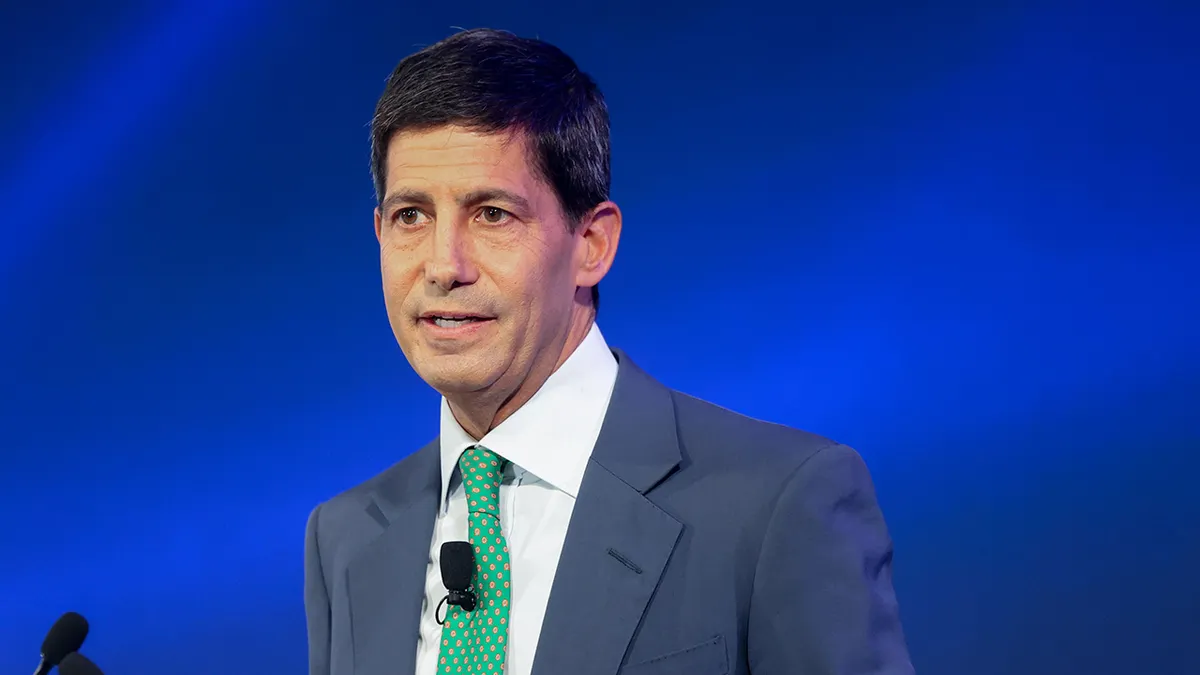
Federal Reserve Chair Kevin Warsh is expected to break with recent central bank tradition by withholding the so-called “dot plot” from the Fed’s upcoming rate outlook, according to market reporting. The move, if it happens, would mark a meaningful shift in how the Fed communicates its policy intentions to markets — and investors are already trying to read between the lines.
What the Dot Plot Actually Does
The Fed’s dot plot is a closely watched chart in which individual policymakers anonymously indicate where they expect interest rates to be at various points in the future. It has become one of the most scrutinized pieces of Fed communication, often moving markets within seconds of release as traders parse shifts in the median projection.
Withholding it — even temporarily — would strip markets of a tool they’ve relied on for years to gauge the Fed’s collective thinking on the path of rates.
Why Warsh Might Make This Call
Central bank watchers see a few possible explanations. One is that policymakers themselves are deeply divided on the path forward, given competing pressures: inflation risk tied to energy markets and geopolitical tension, against a backdrop of economic data that has sent mixed signals. Publishing a dot plot under those conditions risks creating a misleading sense of consensus — or worse, an overly wide dispersion of dots that itself becomes a market-moving story.
Another possibility is a deliberate strategic choice by Warsh to reduce the market’s reliance on point-in-time projections that have a track record of being revised significantly as conditions change.
Markets Don’t Like a Vacuum
Whatever the reasoning, removing a key piece of forward guidance tends to inject uncertainty rather than calm it. Traders who have built models and positioning around anticipated dot-plot signals will need to rely more heavily on the Fed’s statement language and the chair’s press conference comments to infer policy intentions — a less precise exercise that could increase volatility around the announcement itself.
What to Watch Next
The real test will come at the actual policy meeting. If Warsh does withhold the dot plot, attention will shift to whether this becomes a one-time decision tied to unusual circumstances, or a more lasting change in how the Powell-era tool is used going forward.
Discover more from The Economy
Subscribe to get the latest posts sent to your email.

Michael Burry, the investor who rose to fame for correctly predicting the 2008 housing market collapse, has revealed he considered betting against Elon Musk’s SpaceX — but ultimately decided against it. The admission, surfacing just as SpaceX moves toward a long-anticipated public listing, has quickly become one of the most talked-about lines in markets this week.
Why Burry’s Words Carry Weight
Few investors generate headlines the way Burry does. His reputation as a contrarian who isn’t afraid to bet against popular narratives means that even a passing comment about being “tempted” to short a company is enough to move conversation across trading desks and social media alike. The fact that he chose not to follow through only adds intrigue, leaving observers to speculate about what gave him pause.
The SpaceX Backdrop
The comments land at a notable moment for SpaceX, which has been the subject of growing market attention as talk of an eventual IPO continues to build. SpaceX has become one of the most closely watched private companies in the world, with a valuation that has climbed steadily on the back of its dominance in commercial launch services and its expanding satellite internet business.
A short bet against a company of SpaceX’s scale and momentum would be a high-risk, high-conviction move — exactly the kind of trade Burry has built his reputation on, which is part of why his decision to pass is drawing as much attention as the idea itself would have.
Reading Between the Lines
Without elaborating on his specific reasoning, Burry’s comment leaves room for interpretation. It could reflect genuine respect for SpaceX’s fundamentals and growth trajectory, or simply an acknowledgment that shorting a company with no current public listing — and significant insider control — is a structurally difficult trade to execute profitably.
The Takeaway
Whether or not Burry ever acts on the instinct, the episode is a reminder of how much weight markets still place on the views of investors with a track record of contrarian calls — even when, as in this case, the headline is really about a bet that didn’t happen.
Discover more from The Economy
Subscribe to get the latest posts sent to your email.

Global financial markets are fixated on a single question this week: will the US-Iran ceasefire hold? The answer carries outsized consequences for oil prices, inflation expectations, and the Federal Reserve’s next move — and investors are already repositioning in anticipation of either outcome.
Why the Ceasefire Matters to Your Portfolio
The logic is straightforward but high-stakes. A breakdown in the truce and renewed military strikes would almost certainly push oil prices sharply higher, reigniting an inflation problem the Federal Reserve is still working to contain. That scenario would complicate the central bank’s policy path just as it appeared to be gaining clarity.
In response, investors have already begun shifting capital out of richly valued technology shares and into steadier, more defensive sectors — a classic risk-off rotation that reflects caution rather than panic.
A Familiar Market Split
That caution showed up clearly in recent trading. A bounce in chip stocks early in the week faded quickly, dragging the technology-heavy Nasdaq down nearly 1%, while financial and industrial names that dominate the Dow Jones Industrial Average held their ground. The Nasdaq slipped 0.97% to 25,678.82 as the chip-stock recovery lost steam, while the S&P 500 dropped 0.26%, with technology and energy the only two sectors finishing in negative territory. The Dow, by contrast, edged up 0.17%.
The Dollar’s Role in the Deal
Beyond the immediate market mechanics, the ceasefire arrangement reportedly carries broader implications for the US dollar’s standing in global trade and reserve systems, with reporting suggesting the deal includes provisions aimed at protecting the dollar’s international role even as the geopolitical landscape shifts.
Treasury Demand Adds to the Unease
The geopolitical uncertainty is landing at an awkward moment for US debt markets. A recent three-year Treasury note auction cleared at a yield of 4.192%, up from 3.965% at the prior auction — the latest in a string of weaker-than-expected demand signals. When the Treasury has to offer higher yields to attract buyers, it typically signals softening appetite for US government debt, adding another layer of complexity for policymakers already juggling geopolitical risk and inflation concerns.
The Bottom Line
For now, markets are in a holding pattern — repositioning rather than panicking, but clearly pricing in the possibility that the ceasefire could unravel. Energy markets, the bond market, and Federal Reserve policy all sit downstream of how the situation develops in the coming days.
Discover more from The Economy
Subscribe to get the latest posts sent to your email.

Fed Chair Warsh Expected to Withhold the ‘Dot Plot’ — Here’s Why That’s a Big Deal

Michael Burry Says He’s Tempted to Short SpaceX — But He’s Passing, For Now

Weak Demand at Treasury Auctions Is Quietly Rattling Bond Investors

Markets Hold Their Breath as US-Iran Ceasefire Faces Its First Real Test

Fiserv Names New CEO as Industry Veteran Takis Georgakopoulos Takes the Helm

Japan’s Property Sector Looks Strong. So Why Are Investors Going Abroad?

17 Fusion Startups Have Now Raised Over $100M Each — and the Total Keeps Climbing

Warren Raises €10M to Fix Belgium’s Broken Workplace Pensions

Finance Bill 2026: Extraction Cannot Deliver

Big Tech and the UK’s Unrest: Algorithm, Not Conspiracy

BankIslami Launches BIPL Exchange: What It Means

ABHI MFB, NADRA Technologies to Accelerate Digital Transformation

Top 7 Banking Stocks for Investment in PSX: Pakistan’s Lenders Are Still Printing Money

Top 5 Best Performing Islamic Banks in Pakistan

China Overhauls the World’s Biggest Surveillance Network with Advanced AI

Kevin Warsh Takes the Fed’s Helm — and Walks Straight Into a Rate-Hike Storm

SpaceX, OpenAI & Anthropic IPOs: Wall Street’s $200B AI Test

How AI Is Forcing McKinsey and Its Peers to Rethink Pricing

SpaceX IPO: Inside the $2 Trillion Market Debut

KPMG Australia CEO Resigns After Whistleblower Claims Exposed Investigation Failures

PwC China Partner Payouts Cut Amid Evergrande Audit Fraud

Broadcom Market Value Loss: Revenue Forecast Disappoints

Pakistan Budget FY 2026-27: Relief, Prospects, and the Tightrope Walk

The Guardrails Are Down: How Meta and Google’s AI Models Fold Under Pressure

Benefitbay Raises $18M to Build the Plumbing for America’s ICHRA Shift

Nasdaq Tumbles 4% as Chip and Memory Stocks Sink: A $1.2 Trillion Wipeout

Here’s How Much It’ll Cost You to Be Part of SpaceX’s Record-Breaking $75 Billion IPO

Japanese Mid-Sized Firms Flock to Southeast Asia for Growth
-

 Markets & Finance5 months ago
Top 15 Stocks for Investment in 2026 in PSX: Your Complete Guide to Pakistan’s Best Investment Opportunities
-

 Analysis4 months ago
Top 10 Stocks for Investment in PSX for Quick Returns in 2026
-

 Analysis4 months ago
Brazil’s Rare Earth Race: US, EU, and China Compete for Critical Minerals as Tensions Rise
-

 Banks5 months ago
Best Investments in Pakistan 2026: Top 10 Low-Price Shares and Long-Term Picks for the PSX
-

 Investment5 months ago
Top 10 Mutual Fund Managers in Pakistan for Investment in 2026: A Comprehensive Guide for Optimal Returns
-

 Analysis4 months ago
Johor’s Investment Boom: The Hidden Costs Behind Malaysia’s Most Ambitious Economic Surge
-

 Global Economy6 months ago
15 Most Lucrative Sectors for Investment in Pakistan: A 2025 Data-Driven Analysis
-

 Global Economy6 months ago
Pakistan’s Export Goldmine: 10 Game-Changing Markets Where Pakistani Businesses Are Winning Big in 2025