
Analysis
The Strait of Hormuz Gambit: France and Italy Court Tehran as $100 Oil Reshapes Europe’s Energy Calculus

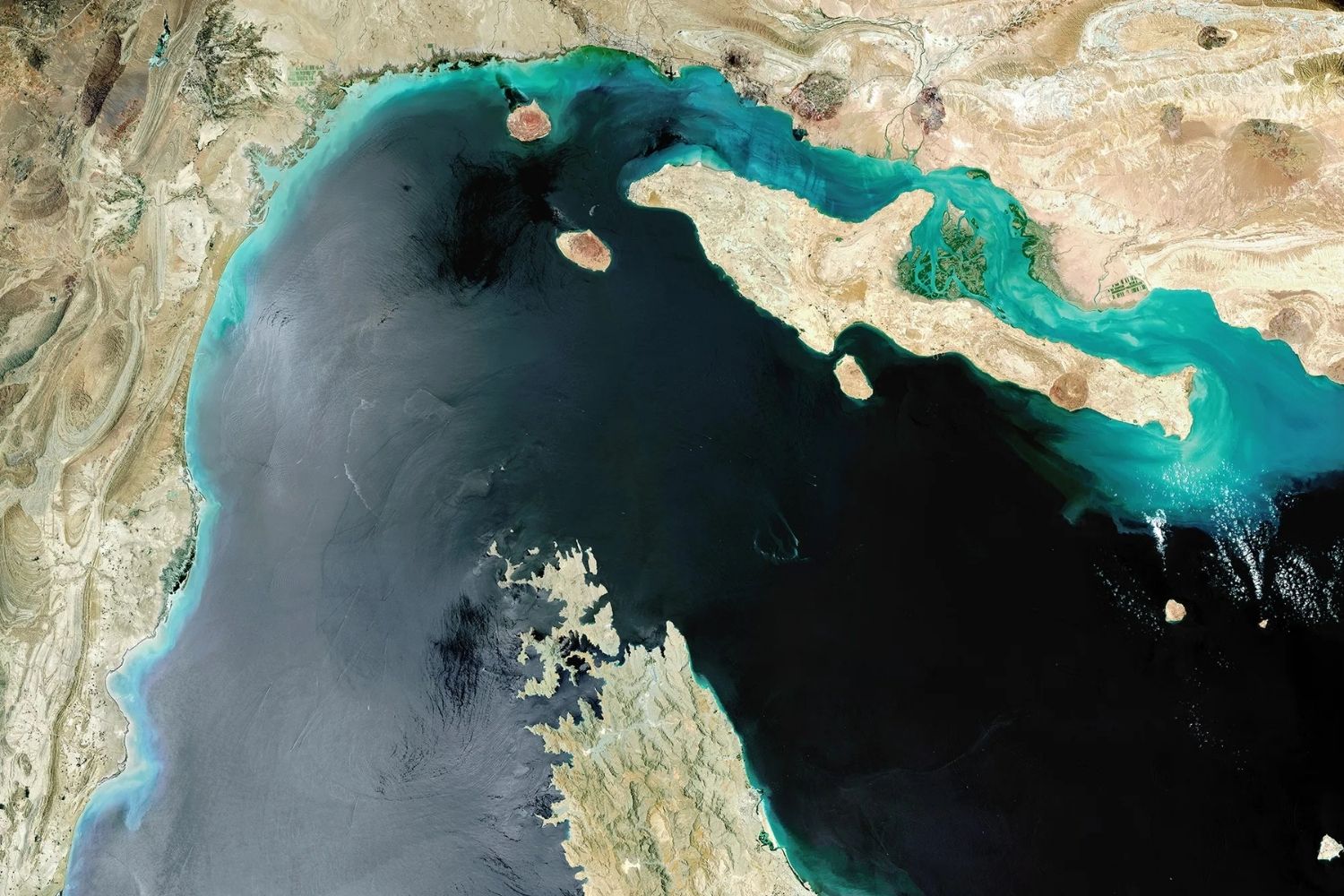
As Iran’s new Supreme Leader Mojtaba Khamenei hardens his vow to keep the world’s most critical chokepoint sealed, Paris and Rome are quietly probing backdoor channels to Tehran — gambling that economic pragmatism can outlast ideological defiance.
It begins, as most modern crises do, with a tanker. The MV Rozana, a Turkish-flagged bulk carrier, sat motionless in the Gulf of Oman for eleven days — impounded, warned off, then finally released — a floating symbol of the geopolitical paralysis that has descended on the most consequential 21 miles of ocean on earth. The Strait of Hormuz blockage 2026 has ceased to be a contingency scenario whispered about in insurance boardrooms. It is, as of this writing, an operative fact of the global economy — and its gravitational pull on European energy policy is becoming impossible to ignore.
Crude oil prices have now surged past $100 per barrel, a threshold that once triggered recessions and reshuffled governments. European natural gas prices have spiked 75 percent since January 1st, according to market data tracked by the International Energy Agency, straining household budgets from Lisbon to Warsaw and throwing a wrench into the European Central Bank’s already fragile inflation projections.
Against this backdrop, two of the eurozone’s largest economies have done something that would have been unthinkable twelve months ago: they have opened, cautiously and without fanfare, exploratory diplomatic talks with the Islamic Republic of Iran — not through formal channels, but through the kind of back-room conversations that rarely appear in official readouts. The stakes, for both sides, could not be higher.
A Closed Strait and a Continent Holding Its Breath
The decision by Iran’s new Supreme Leader, Mojtaba Khamenei, to maintain his predecessor’s posture of maximum pressure — and indeed to double down on it with a formal vow that the strait will remain closed to vessels deemed complicit with U.S.-Israeli operations — has effectively transformed the Hormuz crisis from a military standoff into a long-term structural shock. Roughly 20 percent of the world’s traded oil and a significant share of liquefied natural gas flows through the strait. Every additional week of closure compounds the damage.
The European energy crisis Iran has exposed the limits of the continent’s post-Ukraine diversification strategy. European buyers rerouted toward American LNG and Norwegian pipeline gas after 2022; those supplies are now strained, over-contracted, and insufficiently elastic to absorb the Gulf shock. Storage levels in Germany, France, and Italy — typically robust heading into spring — are running below their five-year seasonal averages.
For Italy in particular, the exposure is acute. Rome has over recent years cultivated significant energy trade relationships with Gulf producers, and the abrupt disruption of those flows has landed with particular force on industrial consumers in the Po Valley. Italy’s Defense Minister Guido Crosetto, a pragmatist by instinct and a straight-talker by reputation, has become an unexpectedly prominent voice in framing the terms of Europe’s dilemma.
| “We are not naive about who we are dealing with. But a closed Hormuz is not in anyone’s interest — including Iran’s. There are conversations worth having.” — Italy’s Defence Minister Guido Crosetto, in remarks to Italian broadcasters, March 2026 |
The French Equation: Macron’s ‘Defensive’ Pivot
French President Emmanuel Macron has been characteristically careful with his public framing. In a statement delivered following an Élysée briefing with senior defense and energy advisers, Macron described France’s posture in the region as strictly “defensive” — emphasizing the protection of commercial shipping and European crews rather than any offensive alignment with the U.S.-Israeli operation. He pointedly left the door open to France providing naval escorts to commercial vessels, “should conditions allow and tensions meaningfully ease.”
That conditional phrasing is doing considerable diplomatic work. Read one way, it signals to Tehran that Paris is not irrevocably committed to a militarized approach — that there remains a lane for negotiation. Read another way, it reassures domestic audiences and NATO allies that France has not abandoned solidarity with Western partners. This studied ambiguity is a Macron signature, and in the current context it functions as an invitation to talk.
Behind the scenes, according to sources familiar with the discussions who declined to be named given their sensitivity, French diplomatic envoys have made informal contact with Iranian interlocutors through third-country intermediaries — a channel that has historically run through Oman and, more recently, through Qatar. The substance of those contacts, if substantive at all, has not been disclosed. But their mere existence marks a significant departure from the EU’s public stance of solidarity with sanctions enforcement.
The EU Aspides Mission: Naval Shield or Diplomatic Liability?
The EU’s Operation Aspides, the naval protection mission currently deployed in the Red Sea, was designed to guard commercial shipping against Houthi drone and missile attacks — a mission whose mandate does not formally extend to the Persian Gulf. Its presence has, however, created a complicated optics problem for European capitals now seeking to signal non-belligerence toward Tehran.
Iran’s foreign ministry has repeatedly characterized Aspides as a de facto extension of the U.S.-Israeli operational posture — a charge European commanders categorically reject, pointing to Aspides’ defensive rules of engagement and its documented refusals to intercept Houthi assets targeting non-European vessels. The distinction may be legally sound and operationally meaningful, but it carries little weight in the information environment that shapes Tehran’s calculus.
For France and Italy, the challenge is to decouple their energy diplomacy from their security posture without appearing to fracture NATO or EU cohesion. Both governments have signaled, with varying degrees of subtlety, that they are willing to explore a functional separation: Aspides continues its mandated mission in the Red Sea, while separate bilateral diplomatic tracks pursue safe passage Iran talks focused on restoring civilian shipping through Hormuz under a temporary, negotiated framework.
What Would a ‘Safe Passage’ Framework Actually Look Like?
The theoretical architecture being discussed — according to three diplomatic sources and one senior EU official spoken to for this piece — would involve a time-limited, monitored arrangement under which designated commercial vessels carrying European cargo would be granted passage through the strait in exchange for a package of economic inducements to Iran. These could include the unfreezing of certain EU-held Iranian assets, partial suspension of specific financial sanctions, and a European commitment to formally distance itself from any expanded military operations in the Gulf theater.
The model draws, loosely, on historical precedents: the 1987-88 convoy arrangements during the first Tanker War, and more recently on the JCPOA’s phased confidence-building mechanisms. Whether Mojtaba Khamenei — whose authority is still consolidating and whose ideological positioning has been markedly harder than his father’s in recent months — would entertain such an arrangement is deeply uncertain.
Energy market analysts at Wood Mackenzie and S&P Global Commodity Insights are currently assigning a less than 30 percent probability to a meaningful Hormuz reopening within the next 90 days. That number is doing serious work in European government budget offices, where the fiscal cost of sustained high energy prices is now being modeled as a structural rather than transitory shock.
$100 Oil and the European Fiscal Reckoning
The economic arithmetic is brutal and familiar. The crude oil price surge Middle East has pushed headline inflation figures in the eurozone back above 4 percent after two years of painstaking disinflation — a development the ECB’s governing council will be forced to address at its next scheduled meeting. Rate cut expectations that were fully priced in for the second quarter of 2026 have now been effectively repriced out, dealing a secondary blow to heavily indebted sovereigns like Italy, which carries a debt-to-GDP ratio comfortably above 140 percent.
France is navigating its own version of fiscal constraint. The government’s 2026 budget, already the subject of a bruising parliamentary fight, was constructed on an oil-price assumption of $75 per barrel. Every $10 increment above that baseline translates into approximately €4 billion in additional subsidy and relief expenditure if Paris chooses to shield consumers — which, heading into a domestic political cycle, it almost certainly will.
The German economy, still digesting the structural trauma of the 2022 energy shock, is particularly exposed through its industrial sector. German industrial output data published by the Federal Statistics Office showed a renewed contraction in February — the third consecutive monthly decline — with energy-intensive manufacturers citing input cost volatility as the primary brake on investment decisions. The Hormuz crisis has, in other words, arrived at the worst possible moment for European economic momentum.
| “The strait is not merely a geographic fact. It is a lever. And right now, Tehran is the only hand on it.” — Senior EU energy security official, speaking on background, Brussels, March 2026 |
Tehran’s Leverage — and Its Limits
It would be a mistake to read Iran’s position as one of pure strategic strength. The Hormuz closure has inflicted significant self-harm on the Iranian economy, which depends on the strait not only for its own oil exports — currently illegal under sanctions but practically disrupted regardless — but for the import of essential goods including foodstuffs and industrial inputs. The humanitarian and economic pressure on the Iranian population, already considerable after years of sanctions, has intensified sharply.
Mojtaba Khamenei’s vow to keep the strait closed is as much a consolidation move as it is a strategic calculation — a signal to hardliners within the Islamic Revolutionary Guard Corps that the new supreme leadership will not repeat what they characterize as his predecessor’s willingness to make concessions under pressure. Walking back that vow, even partially, carries significant domestic political risk. Any framework that Europe proposes must therefore offer Tehran a face-saving mechanism — language that frames any reopening as a sovereign Iranian decision rather than a capitulation to foreign pressure.
That framing challenge is, arguably, where European diplomacy has its most distinctive comparative advantage. Unlike Washington, which is formally a party to the ongoing conflict, or Jerusalem, whose relationship with Tehran is structurally zero-sum, Paris and Rome can present themselves as neutral economic interlocutors — parties whose primary interest is the restoration of commercial normality rather than regime change or strategic containment. Whether Tehran finds that framing credible is another matter entirely.
The Broader Geopolitical Fault Lines
Washington’s Shadow
Any European diplomatic initiative toward Iran will need to navigate the weight of the transatlantic relationship. Washington has not publicly objected to European exploratory contacts with Tehran — partly because the Biden-era diplomatic architecture never entirely foreclosed dialogue tracks, and partly because the current administration has its own quiet interest in off-ramps that do not require a formal U.S. climbdown. But private communications from the State Department to European capitals have been notably pointed about the risks of being seen to undercut coordinated pressure.
The Gulf Arab Calculus
Saudi Arabia and the UAE — both of which have significant economic interests in the restoration of Hormuz traffic — are watching the European initiative with a mixture of hope and anxiety. Riyadh has its own backchannel to Tehran, normalized through the 2023 Chinese-brokered rapprochement, but that channel has gone cold since the current conflict escalated. A successful European mediation that restored Hormuz passage without addressing Iran’s regional posture more broadly would leave Gulf states in a structurally worse position — bearing the geopolitical cost without benefiting from the strategic reconfiguration.
China’s Quiet Role
Beijing, characteristically, is playing a longer game. China remains Iran’s largest oil customer and has the most direct economic interest in Hormuz reopening. Its influence over Tehran is real but not unlimited, and it has been notably reluctant to spend that influence in ways that benefit European or American interests without reciprocal concessions on Taiwan or South China Sea policy. The absence of Chinese pressure on Tehran has been, from a European perspective, one of the more frustrating strategic facts of the past three months.
The Road Ahead: Scenarios and Probabilities
Three broad scenarios are worth mapping. The first — a relatively rapid negotiated framework producing a partial Hormuz reopening within 60 days — remains possible but requires alignment between European economic incentives, Iranian domestic politics, and U.S. acquiescence that is difficult to engineer simultaneously. Energy market futures are not currently pricing this scenario.
The second scenario — a prolonged closure lasting through Q3 2026, with intermittent partial openings tied to tactical Iranian leverage plays — is where the balance of probability currently sits. In this scenario, European governments face sustained fiscal pressure, the ECB’s pivot is delayed further, and the diplomatic initiatives from Paris and Rome produce incremental but insufficient progress.
The third scenario — an escalation that extends the conflict into the broader Gulf theater, potentially drawing in additional regional actors and further disrupting global energy infrastructure — is the tail risk that keeps energy security planners awake. Its probability is low but non-negligible, and its consequences would dwarf the current disruption.
Conclusion: The Limits of Backdoor Diplomacy in an Age of Hard Constraints
France and Italy’s tentative courtship of Tehran is less a coherent diplomatic strategy than an improvised response to an energy emergency with no clean solutions. It reflects the structural vulnerability of European economies to Middle Eastern energy dynamics — a vulnerability that two decades of diversification initiatives have ameliorated but not eliminated. It also reflects a harder truth: that in a multipolar world where the United States has chosen active belligerence and China has chosen studied abstention, Europe’s window of diplomatic utility may be narrower than its ambitions.
The Strait of Hormuz blockage 2026 is, in the final analysis, a stress test of European strategic autonomy — not in the military sense that has dominated EU defence debates, but in the more fundamental sense: can European governments translate economic weight and diplomatic credibility into influence over a crisis they did not create and cannot unilaterally resolve? The answer, over the coming weeks, will carry consequences extending well beyond the energy balance sheets of Paris and Rome.
For international economists and strategic risk analysts, the key variable to watch is not the headline oil price — which is a lagging indicator of decisions already made — but the state of the Omani and Qatari intermediary channels. When those channels begin to produce substantive rather than exploratory dialogue, markets will know before governments announce it. And the shape of that dialogue will determine whether 2026 is remembered as the year Europe finally converted economic interdependence into geopolitical leverage, or the year it discovered, again, how far those two things can diverge.
KEY SOURCES & FURTHER READING
• Reuters: Oil Markets & Hormuz Closure Coverage (March 2026)
• Financial Times: Europe’s Backdoor Iran Talks (FT Energy Security)
• S&P Global Commodity Insights: Hormuz Risk Assessment Q1 2026
• Reuters: German Industrial Output Contraction, March 2026
Discover more from The Economy
Subscribe to get the latest posts sent to your email.



Key Takeaways
- Rolex’s secondary market rose approximately 7.9% year-over-year as of 2026 (per WatchCharts data) — trailing Patek Philippe (+16.2%) and Tudor (+11.4%) but still outperforming Audemars Piguet (+3.4%).
- Rolex raised U.S. retail prices 4–9% in January 2026 (steel models ~5.6%, gold models ~8.7%), narrowing the historical gap between retail and pre-owned pricing.
- Not every model appreciates: steel sports references (Submariner, GMT-Master II, Daytona) have held value far better than two-tone or widely available dress references like the standard Datejust.
- The Lady-Datejust posted the sharpest 2026 gain among tracked collections — up 22.73%, from roughly $9,269 to $11,376 — driven by demand for smaller, “everyday luxury” watches.
- Gold’s rise past $2,400/oz has directly lifted the investment case for Rolex’s precious-metal references (Day-Date, Sky-Dweller, Yacht-Master).
The Model-by-Model Picture
| Category | 2026 Trend |
|---|---|
| Lady-Datejust | +22.73% (strongest performer among tracked collections) |
| Steel sports models (Submariner, GMT-Master II) | Held value well; corrected from 2022 peak but stabilized above retail |
| Daytona | Corrected from highs above $50,000 to the mid-$30,000s; still among the most sought-after references |
| Two-tone/widely available Datejust | Flat to negative — “holds value” is an overstatement for this category |
| Gold references (Day-Date, Sky-Dweller) | Lifted by gold’s rise above $2,400/oz |
Why the “Rolex Always Appreciates” Myth Is Fading
The pandemic-era boom pushed some references — the Daytona above all — to speculative highs disconnected from historical norms. Since the March 2022 peak, steel sports models have compressed meaningfully, and dealers who bought inventory near the top have in some cases faced 20–40% markdowns on liquidation. The lesson for 2026 buyers: Rolex as a category is not a monolith. Value retention depends heavily on specific reference, condition, and whether the piece comes with box and papers (“full set”).
What’s Actually Driving 2026 Strength
- Retail price increases raise the floor. When a new Submariner retails at $10,050 (up from $9,500), a pre-owned example at $11,000–$12,000 suddenly represents a smaller premium — narrowing the gap without secondary prices actually moving.
- Supply discipline remains Rolex’s core lever. The brand has never confirmed production numbers, and secondary-market premiums remain entirely a function of Rolex’s own manufacturing decisions — a risk factor as much as a support.
- Certified Pre-Owned rollout. Rolex’s now fully rolled-out CPO program has changed how buyers transact in the used market, adding a layer of brand-verified legitimacy that supports pricing.
The Case for Rolex as a Portfolio Diversifier
Financial advisors increasingly frame luxury watches not as a replacement for equities or bonds, but as a tangible, historically low-correlation diversifier — one that carries its own risks (illiquidity, condition-dependent pricing, no yield) but has demonstrated multi-decade resilience for specific references.
Is Rolex a good investment in 2026?
It depends heavily on the specific reference. Steel sports models like the Submariner and Daytona have held or grown in value; two-tone and widely available dress models generally have not. Overall, Rolex’s secondary market rose about 7.9% year-over-year in 2026, trailing Patek Philippe but ahead of Audemars Piguet.
Discover more from The Economy
Subscribe to get the latest posts sent to your email.

Navigating Mortgage and Loan Refinancing in a High-Yield Environment
Global public debt crossing critical thresholds has kept central bank policies volatile, resulting in fluctuating US Treasury yields throughout 2026. For homeowners and commercial property holders burdened by previous high-interest borrowing cycles, finding optimal refinance windows has become a high-stakes financial puzzle. Stalled disinflation and stubborn employment numbers mean rate cuts are incremental, requiring borrowers to act with precision.
Timing your mortgage or commercial loan refinance in this environment requires a deep understanding of yield curve movements and lender risk appetites.
Decoding 2026 Refinance Dynamics
The 10-Year Treasury Yield Benchmark
Mortgage rates continue to track closely with the 10-year US Treasury yield. When macroeconomic anxiety spikes debt issuance, yields rise, tightening consumer borrowing capacity. Savvy borrowers monitor weekly Treasury auctions to lock in rates during brief dip windows.
Hybrid ARMs and Alternative Structures
With fixed rates remaining elevated, 7/1 and 10/1 adjustable-rate mortgages (ARMs) have surged in popularity. These products offer lower initial monthly payments, giving borrowers breathing room until central bank easing cycles fully materialize.
| Loan Product | Current Rate Range | Best For | Key Risk Factor |
| 30-Year Fixed Mortgage | 6.2% – 6.8% | Long-term predictability | Higher initial monthly outlay |
| 7/1 Hybrid ARM | 5.5% – 5.9% | Short-term ownership / flipping | Rate reset risk after year 7 |
| Commercial Refinance | 7.0% – 8.2% | Corporate asset restructuring | Strict DSCR lender covenants |
Actionable Steps for Successful Refinancing
To maximize your chances of securing favorable refinance terms in a volatile market, follow a disciplined preparation strategy.
Boost Your Credit Score Immediately: Lenders in 2026 are applying stringent credit tiering; a 20-point increase can drop your APR by a crucial quarter-point.
Shop Regional Credit Unions: Smaller financial institutions often offer portfolio loans with more flexible underwriting than major national banks.
Calculate the Break-Even Point: Ensure your total closing costs are recouped through monthly savings within 24 months of closing.
“Market Strategist View: Refinancing in 2026 is an exercise in opportunistic timing. Borrowers must maintain immaculate financial profiles ready to strike the moment Treasury yields dip.”
Mastering the complexities of today’s debt environment ensures you can successfully lower your debt service costs and protect your long-term financial stability.
Discover more from The Economy
Subscribe to get the latest posts sent to your email.

The days of pulling generic auto insurance quotes based purely on your zip code and age are officially over. In 2026, insurance comparison engines are powered entirely by generative AI and real-time telematics. These platforms digest thousands of live data points—ranging from your driving smoothness via connected vehicle sensors to real-time traffic congestion patterns—to generate hyper-personalized premiums instantly.
For consumers, this evolution represents both a massive opportunity for savings and a hidden trap for penalty pricing. Understanding how AI algorithms evaluate risk is essential for anyone looking to lower their monthly auto insurance premiums.
How AI Comparison Engines Evaluate Your Risk Profile
Behavioral Telematics and Connected Cars
Modern cars stream performance data directly to insurance aggregators. Generative AI models analyze braking sharpness, acceleration curves, cornering G-forces, and phone distraction metrics. Drivers who maintain smooth, defensive habits are rewarded with dynamic rate cuts of up to 40% compared to traditional rating tiers.
Predictive Traffic and Weather Modeling
AI tools now cross-reference your daily commute route with predictive weather and accident probability models. If your standard parking location or driving corridor has a statistically higher incidence of uninsured motorist claims, your quotes will reflect that hyper-local risk assessment.
| Comparison Factor | Traditional Rating Model | 2026 Generative AI Model | Impact on Premium |
| Mileage & Usage | Annual estimated odometer reading | GPS tracking & live trip duration | High (up to 35% savings) |
| Driving Behavior | MVR driving record & accidents | Real-time braking, speed, & G-force | Critical (determines tier) |
| Vehicle Tech | Make, model, and safety rating | ADAS calibration & repair cost data | Moderate |
Strategies to Lower Your AI-Driven Insurance Quote
To outsmart the algorithm and secure the lowest possible premium in 2026, drivers must proactively manage their digital footprint on insurance platforms.
Opt-In for Telematics Trial Periods: Many insurers offer immediate 15% discounts just for installing their driving app; let it track safe habits for 30 days to lock in permanent savings.
Scrub Unverified Public Records: Ensure your motor vehicle report is free of clerical errors that AI risk models misinterpret as reckless behavior.
Compare AI Aggregators: Use platforms that integrate multi-carrier API feeds rather than single-brand comparison sites to find the best risk-adjusted rate.
“Industry Note: AI-driven pricing rewards transparency and precision. Drivers who actively manage their telematics data consistently out-save those relying on legacy quote calculators.”
Embracing AI comparison tools allows savvy policyholders to customize coverage limits precisely to their driving habits, eliminating wasted premium spend while ensuring robust protection.
Discover more from The Economy
Subscribe to get the latest posts sent to your email.

Global Pension Systems Ranked: The World’s Best and Worst Retirement Frameworks

Global Supply Chain Vulnerabilities: From Eurasian Trade Corridors to Food Consumer Recalls

Why 5% U.S. Treasury Yields Signal a Global Market Regime Shift.

Federal Reserve Defies White House Pressure: Inside Trump’s Demand for Sub-1% Interest Rates After Historic 2026 Rate Hike

How Rising Interest Rates Impact Gig Economy Apps: DoorDash, Uber, and Urban Services

GasBuddy Market Insights: How Crude Price Shifts Impact Local Fuel Cost Averages

DoorDash Driver Payouts, Fee Structures, and Market Competition Analysis

OPINION:Breaking the 3.5% Growth Trap: How Pakistan Can Build a High-Productivity Export Economy

Global Equity Market Divergence: US Tech vs. European Dividend Stocks vs. Asian Growth

Asian Markets Analysis: Navigating Volatility in China, Japan, and Singapore Stocks

Stagflation vs. Soft Landing: How Central Bank Rates Are Reshaping European and Asian Economies

IMF & World Bank Global Economic Outlook: Growth Forecasts Across Europe and Asia

Fed Rate Hike Projections vs. Trump’s Interest Rate Policy: What Global Markets Expect Next

Singapore Stocks: The Ultimate Safe Haven for Markets and Finance in 2026?

State Farm’s $5B Dividend 2026: Who Qualifies & Payout Dates

US-China Relations in Q3 2026: Trade Tariffs and Supply Chain Risks

SpaceX Starship Flight 14: First Orbital Attempt & Starlink V3 Launch Explained

Top 30 Stocks for Investment in PSX for Massive ROI in 2026

The 2026 Crypto Regulatory Shift: What It Means for Institutional Investors

AI Chip Stocks 2026: The Best Semiconductor Investments Beyond Marvell

AI-Powered Training: The Next Multi-Billion Dollar Ecosystem in Fitness

Tween Back-to-School Trends 2026: What’s Driving the $85B Season

10-Year Treasury Yield Hits 4.80%: What It Means for Rates & Portfolios

Oil Prices Break $100 in 2026: Middle East Conflict & Energy Markets

Shein Clothes Quality & Safety in 2026: What Lab Tests Show

Fidelity Investments Review 2026: SPAXX Yields & Zero-Fee Funds

MRVL Earnings 2026: Why Marvell Sank Despite Beating Estimates

China’s US$10.8 Billion Trade Shortcut: Why the Pinglu Canal Matters
-

 Markets & Finance9 months ago
Top 15 Stocks for Investment in 2026 in PSX: Your Complete Guide to Pakistan’s Best Investment Opportunities
-

 Analysis7 months ago
Johor’s Investment Boom: The Hidden Costs Behind Malaysia’s Most Ambitious Economic Surge
-

 Analysis7 months ago
Top 10 Stocks for Investment in PSX for Quick Returns in 2026
-

 Analysis7 months ago
Brazil’s Rare Earth Race: US, EU, and China Compete for Critical Minerals as Tensions Rise
-

 Banks8 months ago
Best Investments in Pakistan 2026: Top 10 Low-Price Shares and Long-Term Picks for the PSX
-

 Investment8 months ago
Top 10 Mutual Fund Managers in Pakistan for Investment in 2026: A Comprehensive Guide for Optimal Returns
-

 Global Economy9 months ago
15 Most Lucrative Sectors for Investment in Pakistan: A 2025 Data-Driven Analysis
-

 Global Economy9 months ago
Pakistan’s Export Goldmine: 10 Game-Changing Markets Where Pakistani Businesses Are Winning Big in 2025