
Analysis
Pakistan SOE Salary Cuts of Up to 30%: Austerity, Oil Shock, and the IMF Tightrope

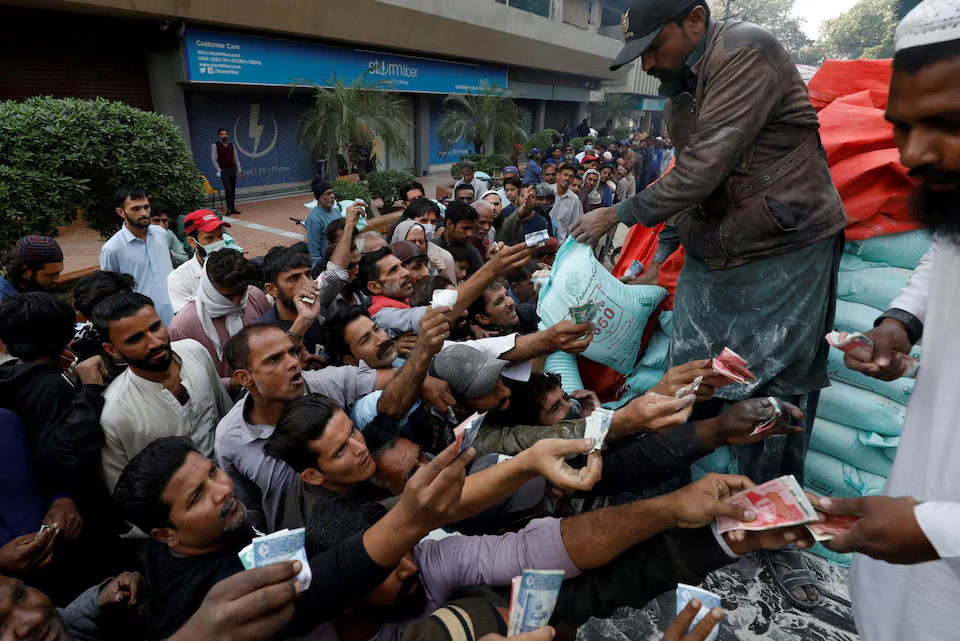
When a geopolitical earthquake in the Gulf meets a fragile emerging-market economy, the tremors travel fast — and reach deep into the pay packets of millions of public workers.
The Man at the Pump — and the Policy Behind It
Sohail Ahmed, a 27-year-old delivery rider in Karachi supporting a family of seven, is blunt about the government’s emergency measures. “There is no benefit to me if they work three days or five days a week,” he told Al Jazeera. “For me, the main concern is the fuel price because that increases the cost of every little thing.” Al Jazeera
Ahmed’s frustration is both viscerally human and economically precise. On the morning of Saturday, March 14, 2026, Prime Minister Shehbaz Sharif chaired a high-level review meeting in Islamabad. The outcome was stark: salary deductions of between 5% and 30% approved for employees of state-owned enterprises (SOEs) and autonomous institutions — extending austerity cuts already applied to the civil service — as part of a drive to mitigate the fallout from the ongoing Middle East war. Geo News
The announcement formalised a fiscal posture that has been hardening for a fortnight. It also sent an unmistakable signal to Islamabad’s most important creditor: the International Monetary Fund.
What SOEs Are — and Why They Matter So Much
To understand what is at stake, it helps to understand what state-owned enterprises actually are. In Pakistan, SOEs are government-owned or government-controlled companies spanning power generation, aviation, railways, ports, petrochemicals, steel, and telecommunications. They are simultaneously the backbone of essential services and, for decades, the most persistent drain on public finances. Unlike a civil servant whose salary comes from tax revenues, SOE workers are technically employed by commercial entities — many of which run structural losses that are ultimately underwritten by the exchequer.
Pakistan’s SOEs bled the exchequer over Rs 600 billion in just six months of FY2025 alone. Todaystance The IMF has made SOE governance reform a pillar of every engagement with Pakistan for years, and the current $7 billion Extended Fund Facility (EFF), approved in September 2024, is no exception. The 37-month programme explicitly requires the authorities to improve SOE operations and management as well as privatisation, and strengthen transparency and governance. International Monetary Fund
When a government imposes salary discipline on those same entities during a crisis, it is doing two things at once: cutting costs in the present, and — at least symbolically — demonstrating to Washington and Washington-adjacent institutions that reform intent is real.
The Scale and Mechanics of the Cuts
At a Glance — Pakistan’s March 2026 Austerity Package
- SOE/autonomous institution employees: 5%–30% salary reduction (tiered, based on pay grade)
- Federal cabinet ministers and advisers: full salaries foregone for two months
- Members of Parliament: 25% salary cut for two months
- Grade-20+ civil servants earning over Rs 300,000/month: two days’ salary redirected to public relief
- Government vehicle fleet: 60% grounded; fuel allocations cut by 50%
- Foreign visits by officials: banned (economy class only for obligatory trips)
- Board meeting fees for government-board representatives: eliminated
- March 23 Pakistan Day embassy celebrations: directed to be observed with utmost simplicity
- All savings: ring-fenced exclusively for public relief
The meeting also decided that government representatives serving on the boards of corporations and other institutions would not receive board meeting fees, which will instead be added to the savings pool. The Express Tribune The prime minister directed concerned secretaries to implement and monitor all austerity measures, submitting daily reports to a review committee. Geo News
The tiered structure — 5% at the lower end, 30% at the top — reflects a political calculation as much as a fiscal one. Flat cuts hit low-income workers hardest and generate the most social friction. A progressive scale preserves a veneer of equity. Whether that veneer survives contact with household budgets in the coming weeks remains to be seen.
Why Now? The Strait of Hormuz and Pakistan’s Achilles Heel
The proximate cause of Islamabad’s emergency posture is a crisis that began not in Pakistan but in the Persian Gulf. On February 28, 2026, the United States and Israel initiated coordinated airstrikes on Iran under Operation Epic Fury, targeting military facilities, nuclear sites, and leadership, resulting in the death of Supreme Leader Khamenei. Iran’s Islamic Revolutionary Guard Corps declared the Strait of Hormuz closed, and within days tanker traffic through the world’s most important oil chokepoint had ground to a near halt, with over 150 ships anchoring outside the strait. Wikipedia
The strait is a 21-mile-wide waterway separating Iran from Oman. In 2024, oil flow through the strait averaged 20 million barrels per day, the equivalent of about 20% of global petroleum liquids consumption. U.S. Energy Information Administration For Pakistan, the chokepoint is existential: the country relies on imports for more than 80% of its oil needs, and between July 2025 and February 2026, its oil imports totalled $10.71 billion. Al Jazeera
As of March 13, 2026, Brent crude has risen 13% since the war began, hitting $100 a barrel. If the situation does not move towards resolution, Brent could reach $120 a barrel in the coming weeks. IRU
The LNG exposure is equally severe. Qatar and the UAE account for 99% of Pakistan’s LNG imports. Seatrade Maritime LNG now provides nearly a quarter of Pakistan’s electricity supply. A Qatar production stoppage following Iranian drone strikes on Ras Laffan has thus hit Pakistan in the electricity sector and the fuel sector simultaneously — a dual shock for which the country has limited storage buffers and virtually no domestic alternative.
“Pakistan and Bangladesh have limited storage and procurement flexibility, meaning disruption would likely trigger fast power-sector demand destruction rather than aggressive spot bidding,” said Go Katayama, principal insight analyst at Kpler. CNBC
Pakistan has responded with speed if not sophistication. On March 4, Pakistan officially requested that Saudi Arabia reroute oil supplies through Yanbu’s Red Sea oil port, with Saudi Arabia providing assurances and arranging at least one crude shipment to bypass the closed strait. Wikipedia
The Embassy Directive: Austerity as Theatre and as Signal
Perhaps no single measure in the package better illustrates the dual logic of crisis governance than the instruction to Pakistani embassies worldwide. PM Shehbaz directed all Pakistani embassies worldwide to observe March 23 celebrations with utmost simplicity. Geo News
Pakistan Day — commemorating the 1940 Lahore Resolution that set the country on its path to independence — is typically marked by receptions at missions abroad that range from modest gatherings to elaborately catered affairs. This year, the message from Islamabad is: not now.
The directive is, on one level, symbolic. The savings generated by cutting embassy receptions are financially immaterial. But symbolism in fiscal signalling is rarely immaterial. Pakistan’s government is communicating — to citizens at home who are queueing at petrol stations and adjusting Eid budgets, and to investors and creditors watching from afar — that the state is willing to absorb visible sacrifice. The IMF counts perception as well as arithmetic.
Geopolitical Stress-Testing an Already Fragile Fiscal Framework
Pakistan’s public finances were already under acute pressure before the Hormuz crisis struck. Tax collection remained Rs 428 billion below the revised FBR target during the first eight months of the fiscal year, and the country may find it difficult to achieve its previously agreed tax-to-GDP ratio target of 11% for FY2025–26. Pakistan Observer
Against that backdrop, the IMF’s most recent reviews present a mixed picture. Pakistan achieved a primary surplus of 1.3% of GDP in FY25 in line with targets, gross reserves stood at $14.5 billion at end-FY25, and the country recorded its first current account surplus in 14 years. International Monetary Fund These are genuine achievements, hard-won through painful monetary tightening and a depreciation-induced adjustment.
But an oil shock of this magnitude — Brent crude rising from around $70 to over $110 per barrel within days of the conflict’s escalation, with analysts forecasting potential rises to $100 per barrel or higher if disruptions persisted Wikipedia — could erase months of fiscal progress in weeks. Every $10 per barrel rise in global crude prices adds roughly $1.5–2 billion to Pakistan’s annual import bill, according to analysts. A $40 spike, even partially absorbed, threatens the current account surplus, the reserve-rebuilding trajectory, and the primary surplus target in one stroke.
The government’s response — grounding vehicles, cutting salaries, banning foreign travel — is essentially a demand-side shock absorber. While some measures aim to show solidarity, their effectiveness on actual fuel demand remains in question, since the stopping of Cabinet members’ salaries and cuts to parliamentarians’ pay are essentially meant to demonstrate solidarity rather than conserve fuel in any meaningful way. Pakistan Today The analysis is correct. Energy analyst Amer Zafar Durrani, a former World Bank official, noted that roughly 80% of petroleum products are used in transport, meaning the country’s oil dependence is fundamentally a mobility problem Al Jazeera — one that no amount of reduced official-vehicle usage can meaningfully address.
Social Impact: Who Actually Bears the Cost
The SOE salary cuts will land on a workforce that is already under financial strain. Pakistan’s inflation, while having fallen dramatically from its 2023 peak of over 38%, is being pushed back up by the petrol price shock. The recent energy crisis triggered the largest fuel price increase in the country’s history, with petrol costing $1.15 a litre and diesel at $1.20 a litre — a 20% jump from the prior week. Al Jazeera
State-owned enterprises in Pakistan employ hundreds of thousands of workers, many in lower-middle-income brackets. A bus driver at Pakistan Railways, a junior technician at WAPDA (Water and Power Development Authority), or a clerk at the Steel Mills — all will see monthly take-home pay contract by between 5% and 30%, at precisely the moment transport costs and grocery bills are climbing. The government’s pledge that all savings will be ring-fenced for public relief offers some rhetorical comfort, but the mechanisms for distribution remain unspecified.
This asymmetry — pain certain for workers, relief uncertain for the poor — has been the structural weakness of every Pakistani austerity programme in living memory.
Historical Parallels and Reform Precedents
Pakistan has deployed austerity rhetoric many times before. It has also, many times before, proved unable to sustain it. The country has entered IMF programmes on 25 separate occasions since joining the Fund in 1950, often reversing structural reforms once the immediate crisis passed. The circular debt in Pakistan’s power sector has crossed Rs 4.9 trillion, largely due to inefficiencies, poor recovery ratios, and delays in tariff rationalisation. Meanwhile, SOEs continue to bleed financially, and on the political front, frequent changes in policy direction, weak enforcement of reforms, and resistance from vested interest groups pose major risks to continuity. Todaystance
The global parallel most instructive is not another emerging market crisis but rather a structural pattern: when oil shocks hit import-dependent countries with high SOE employment, the response typically oscillates between genuine reform opportunity and short-term retrenchment. Indonesia’s restructuring after the 1997-98 Asian financial crisis — which included painful but ultimately durable SOE privatisations — offers one model. Argentina’s repeated failure to hold fiscal consolidation gains through successive oil and commodity shocks offers the cautionary counterpoint.
Pakistan’s current challenge is to use this external shock as a reform accelerant rather than a mere political prop. The IMF’s third review under the current EFF, which will assess progress in the coming months, will determine whether the Fund sees these measures as sufficient structural movement or as cosmetic gestures.
What Comes Next: The IMF Review, Privatisation, and Credibility
According to the IMF, upcoming review discussions will assess Pakistan’s progress on agreed reform benchmarks and determine the next phase of loan disbursements. The implementation of the Governance and Corruption Diagnostic Report and the National Fiscal Pact will be central to the talks, particularly for the release of the next loan tranche. Energy Update
The current austerity measures, if implemented with the rigor of the daily reporting mechanism the prime minister has mandated, offer two potential gains. First, they provide a quantifiable demonstration of demand compression that the IMF values in its assessment of programme adherence. Second, extending salary discipline to SOEs — entities that operate in the nominally commercial rather than the governmental sphere — is a step, however modest, toward the SOE governance reforms that Washington has been pushing Islamabad to adopt since at least 2019.
The privatisation agenda is the harder test. The IMF has explicitly called for SOE governance reforms and privatisation, with the publication of a Governance and Corruption Diagnostic Report as a welcome step. International Monetary Fund Salary cuts keep workers in post and institutions intact; privatisation means structural change that generates permanent fiscal relief but also generates political resistance. The Pakistan Sovereign Wealth Fund, created to manage privatisation proceeds, remains operationally nascent.
A Measured Verdict
Pakistan’s March 2026 austerity package is simultaneously more than it appears and less than is needed.
It is more than it appears because the extension of salary cuts to SOEs — entities that have historically been treated as patronage preserves immune to market discipline — marks a genuinely wider perimeter for fiscal tightening than previous exercises. The daily reporting mandate, the board-fee elimination, the embassy directive: these collectively suggest a government that has at least understood the optics of credibility, if not yet fully operationalised its substance.
It is less than is needed because the structural drivers of Pakistan’s oil vulnerability — import dependence exceeding 80%, an LNG supply chain concentrated in a now-disrupted region, a transport sector consuming four-fifths of petroleum products — are entirely untouched by the package. Salary cuts and grounded ministerial vehicles are fiscal band-aids on an energy-architecture wound.
The coming weeks will clarify how durable the measures are and how seriously the IMF assesses them. A credible, sustained austerity programme — even one born of external shock rather than endogenous reform will — would improve Pakistan’s negotiating posture for the next tranche, steady foreign exchange reserves, and marginally restore the fiscal space that the oil shock is burning away.
Whether that translates into the deeper SOE privatisation and energy diversification that the country’s long-run fiscal sustainability actually demands is the question that March 23’s simplified embassy celebrations will not answer — but that every subsequent IMF review will insist on asking.
Discover more from The Economy
Subscribe to get the latest posts sent to your email.



Key Takeaways
- Rolex’s secondary market rose approximately 7.9% year-over-year as of 2026 (per WatchCharts data) — trailing Patek Philippe (+16.2%) and Tudor (+11.4%) but still outperforming Audemars Piguet (+3.4%).
- Rolex raised U.S. retail prices 4–9% in January 2026 (steel models ~5.6%, gold models ~8.7%), narrowing the historical gap between retail and pre-owned pricing.
- Not every model appreciates: steel sports references (Submariner, GMT-Master II, Daytona) have held value far better than two-tone or widely available dress references like the standard Datejust.
- The Lady-Datejust posted the sharpest 2026 gain among tracked collections — up 22.73%, from roughly $9,269 to $11,376 — driven by demand for smaller, “everyday luxury” watches.
- Gold’s rise past $2,400/oz has directly lifted the investment case for Rolex’s precious-metal references (Day-Date, Sky-Dweller, Yacht-Master).
The Model-by-Model Picture
| Category | 2026 Trend |
|---|---|
| Lady-Datejust | +22.73% (strongest performer among tracked collections) |
| Steel sports models (Submariner, GMT-Master II) | Held value well; corrected from 2022 peak but stabilized above retail |
| Daytona | Corrected from highs above $50,000 to the mid-$30,000s; still among the most sought-after references |
| Two-tone/widely available Datejust | Flat to negative — “holds value” is an overstatement for this category |
| Gold references (Day-Date, Sky-Dweller) | Lifted by gold’s rise above $2,400/oz |
Why the “Rolex Always Appreciates” Myth Is Fading
The pandemic-era boom pushed some references — the Daytona above all — to speculative highs disconnected from historical norms. Since the March 2022 peak, steel sports models have compressed meaningfully, and dealers who bought inventory near the top have in some cases faced 20–40% markdowns on liquidation. The lesson for 2026 buyers: Rolex as a category is not a monolith. Value retention depends heavily on specific reference, condition, and whether the piece comes with box and papers (“full set”).
What’s Actually Driving 2026 Strength
- Retail price increases raise the floor. When a new Submariner retails at $10,050 (up from $9,500), a pre-owned example at $11,000–$12,000 suddenly represents a smaller premium — narrowing the gap without secondary prices actually moving.
- Supply discipline remains Rolex’s core lever. The brand has never confirmed production numbers, and secondary-market premiums remain entirely a function of Rolex’s own manufacturing decisions — a risk factor as much as a support.
- Certified Pre-Owned rollout. Rolex’s now fully rolled-out CPO program has changed how buyers transact in the used market, adding a layer of brand-verified legitimacy that supports pricing.
The Case for Rolex as a Portfolio Diversifier
Financial advisors increasingly frame luxury watches not as a replacement for equities or bonds, but as a tangible, historically low-correlation diversifier — one that carries its own risks (illiquidity, condition-dependent pricing, no yield) but has demonstrated multi-decade resilience for specific references.
Is Rolex a good investment in 2026?
It depends heavily on the specific reference. Steel sports models like the Submariner and Daytona have held or grown in value; two-tone and widely available dress models generally have not. Overall, Rolex’s secondary market rose about 7.9% year-over-year in 2026, trailing Patek Philippe but ahead of Audemars Piguet.
Discover more from The Economy
Subscribe to get the latest posts sent to your email.

Navigating Mortgage and Loan Refinancing in a High-Yield Environment
Global public debt crossing critical thresholds has kept central bank policies volatile, resulting in fluctuating US Treasury yields throughout 2026. For homeowners and commercial property holders burdened by previous high-interest borrowing cycles, finding optimal refinance windows has become a high-stakes financial puzzle. Stalled disinflation and stubborn employment numbers mean rate cuts are incremental, requiring borrowers to act with precision.
Timing your mortgage or commercial loan refinance in this environment requires a deep understanding of yield curve movements and lender risk appetites.
Decoding 2026 Refinance Dynamics
The 10-Year Treasury Yield Benchmark
Mortgage rates continue to track closely with the 10-year US Treasury yield. When macroeconomic anxiety spikes debt issuance, yields rise, tightening consumer borrowing capacity. Savvy borrowers monitor weekly Treasury auctions to lock in rates during brief dip windows.
Hybrid ARMs and Alternative Structures
With fixed rates remaining elevated, 7/1 and 10/1 adjustable-rate mortgages (ARMs) have surged in popularity. These products offer lower initial monthly payments, giving borrowers breathing room until central bank easing cycles fully materialize.
| Loan Product | Current Rate Range | Best For | Key Risk Factor |
| 30-Year Fixed Mortgage | 6.2% – 6.8% | Long-term predictability | Higher initial monthly outlay |
| 7/1 Hybrid ARM | 5.5% – 5.9% | Short-term ownership / flipping | Rate reset risk after year 7 |
| Commercial Refinance | 7.0% – 8.2% | Corporate asset restructuring | Strict DSCR lender covenants |
Actionable Steps for Successful Refinancing
To maximize your chances of securing favorable refinance terms in a volatile market, follow a disciplined preparation strategy.
Boost Your Credit Score Immediately: Lenders in 2026 are applying stringent credit tiering; a 20-point increase can drop your APR by a crucial quarter-point.
Shop Regional Credit Unions: Smaller financial institutions often offer portfolio loans with more flexible underwriting than major national banks.
Calculate the Break-Even Point: Ensure your total closing costs are recouped through monthly savings within 24 months of closing.
“Market Strategist View: Refinancing in 2026 is an exercise in opportunistic timing. Borrowers must maintain immaculate financial profiles ready to strike the moment Treasury yields dip.”
Mastering the complexities of today’s debt environment ensures you can successfully lower your debt service costs and protect your long-term financial stability.
Discover more from The Economy
Subscribe to get the latest posts sent to your email.

The days of pulling generic auto insurance quotes based purely on your zip code and age are officially over. In 2026, insurance comparison engines are powered entirely by generative AI and real-time telematics. These platforms digest thousands of live data points—ranging from your driving smoothness via connected vehicle sensors to real-time traffic congestion patterns—to generate hyper-personalized premiums instantly.
For consumers, this evolution represents both a massive opportunity for savings and a hidden trap for penalty pricing. Understanding how AI algorithms evaluate risk is essential for anyone looking to lower their monthly auto insurance premiums.
How AI Comparison Engines Evaluate Your Risk Profile
Behavioral Telematics and Connected Cars
Modern cars stream performance data directly to insurance aggregators. Generative AI models analyze braking sharpness, acceleration curves, cornering G-forces, and phone distraction metrics. Drivers who maintain smooth, defensive habits are rewarded with dynamic rate cuts of up to 40% compared to traditional rating tiers.
Predictive Traffic and Weather Modeling
AI tools now cross-reference your daily commute route with predictive weather and accident probability models. If your standard parking location or driving corridor has a statistically higher incidence of uninsured motorist claims, your quotes will reflect that hyper-local risk assessment.
| Comparison Factor | Traditional Rating Model | 2026 Generative AI Model | Impact on Premium |
| Mileage & Usage | Annual estimated odometer reading | GPS tracking & live trip duration | High (up to 35% savings) |
| Driving Behavior | MVR driving record & accidents | Real-time braking, speed, & G-force | Critical (determines tier) |
| Vehicle Tech | Make, model, and safety rating | ADAS calibration & repair cost data | Moderate |
Strategies to Lower Your AI-Driven Insurance Quote
To outsmart the algorithm and secure the lowest possible premium in 2026, drivers must proactively manage their digital footprint on insurance platforms.
Opt-In for Telematics Trial Periods: Many insurers offer immediate 15% discounts just for installing their driving app; let it track safe habits for 30 days to lock in permanent savings.
Scrub Unverified Public Records: Ensure your motor vehicle report is free of clerical errors that AI risk models misinterpret as reckless behavior.
Compare AI Aggregators: Use platforms that integrate multi-carrier API feeds rather than single-brand comparison sites to find the best risk-adjusted rate.
“Industry Note: AI-driven pricing rewards transparency and precision. Drivers who actively manage their telematics data consistently out-save those relying on legacy quote calculators.”
Embracing AI comparison tools allows savvy policyholders to customize coverage limits precisely to their driving habits, eliminating wasted premium spend while ensuring robust protection.
Discover more from The Economy
Subscribe to get the latest posts sent to your email.

Global Pension Systems Ranked: The World’s Best and Worst Retirement Frameworks

Global Supply Chain Vulnerabilities: From Eurasian Trade Corridors to Food Consumer Recalls

Why 5% U.S. Treasury Yields Signal a Global Market Regime Shift.

Federal Reserve Defies White House Pressure: Inside Trump’s Demand for Sub-1% Interest Rates After Historic 2026 Rate Hike

How Rising Interest Rates Impact Gig Economy Apps: DoorDash, Uber, and Urban Services

GasBuddy Market Insights: How Crude Price Shifts Impact Local Fuel Cost Averages

DoorDash Driver Payouts, Fee Structures, and Market Competition Analysis

OPINION:Breaking the 3.5% Growth Trap: How Pakistan Can Build a High-Productivity Export Economy

Global Equity Market Divergence: US Tech vs. European Dividend Stocks vs. Asian Growth

Asian Markets Analysis: Navigating Volatility in China, Japan, and Singapore Stocks

Stagflation vs. Soft Landing: How Central Bank Rates Are Reshaping European and Asian Economies

IMF & World Bank Global Economic Outlook: Growth Forecasts Across Europe and Asia

Fed Rate Hike Projections vs. Trump’s Interest Rate Policy: What Global Markets Expect Next

Singapore Stocks: The Ultimate Safe Haven for Markets and Finance in 2026?

State Farm’s $5B Dividend 2026: Who Qualifies & Payout Dates

US-China Relations in Q3 2026: Trade Tariffs and Supply Chain Risks

SpaceX Starship Flight 14: First Orbital Attempt & Starlink V3 Launch Explained

Top 30 Stocks for Investment in PSX for Massive ROI in 2026

The 2026 Crypto Regulatory Shift: What It Means for Institutional Investors

AI Chip Stocks 2026: The Best Semiconductor Investments Beyond Marvell

AI-Powered Training: The Next Multi-Billion Dollar Ecosystem in Fitness

Tween Back-to-School Trends 2026: What’s Driving the $85B Season

10-Year Treasury Yield Hits 4.80%: What It Means for Rates & Portfolios

Oil Prices Break $100 in 2026: Middle East Conflict & Energy Markets

Shein Clothes Quality & Safety in 2026: What Lab Tests Show

Fidelity Investments Review 2026: SPAXX Yields & Zero-Fee Funds

MRVL Earnings 2026: Why Marvell Sank Despite Beating Estimates

China’s US$10.8 Billion Trade Shortcut: Why the Pinglu Canal Matters
-

 Markets & Finance9 months ago
Top 15 Stocks for Investment in 2026 in PSX: Your Complete Guide to Pakistan’s Best Investment Opportunities
-

 Analysis7 months ago
Johor’s Investment Boom: The Hidden Costs Behind Malaysia’s Most Ambitious Economic Surge
-

 Analysis7 months ago
Top 10 Stocks for Investment in PSX for Quick Returns in 2026
-

 Analysis7 months ago
Brazil’s Rare Earth Race: US, EU, and China Compete for Critical Minerals as Tensions Rise
-

 Banks8 months ago
Best Investments in Pakistan 2026: Top 10 Low-Price Shares and Long-Term Picks for the PSX
-

 Investment8 months ago
Top 10 Mutual Fund Managers in Pakistan for Investment in 2026: A Comprehensive Guide for Optimal Returns
-

 Global Economy9 months ago
15 Most Lucrative Sectors for Investment in Pakistan: A 2025 Data-Driven Analysis
-

 Global Economy9 months ago
Pakistan’s Export Goldmine: 10 Game-Changing Markets Where Pakistani Businesses Are Winning Big in 2025