
Analysis
The Strait of Hormuz: The World’s Most Dangerous Energy Chokepoint

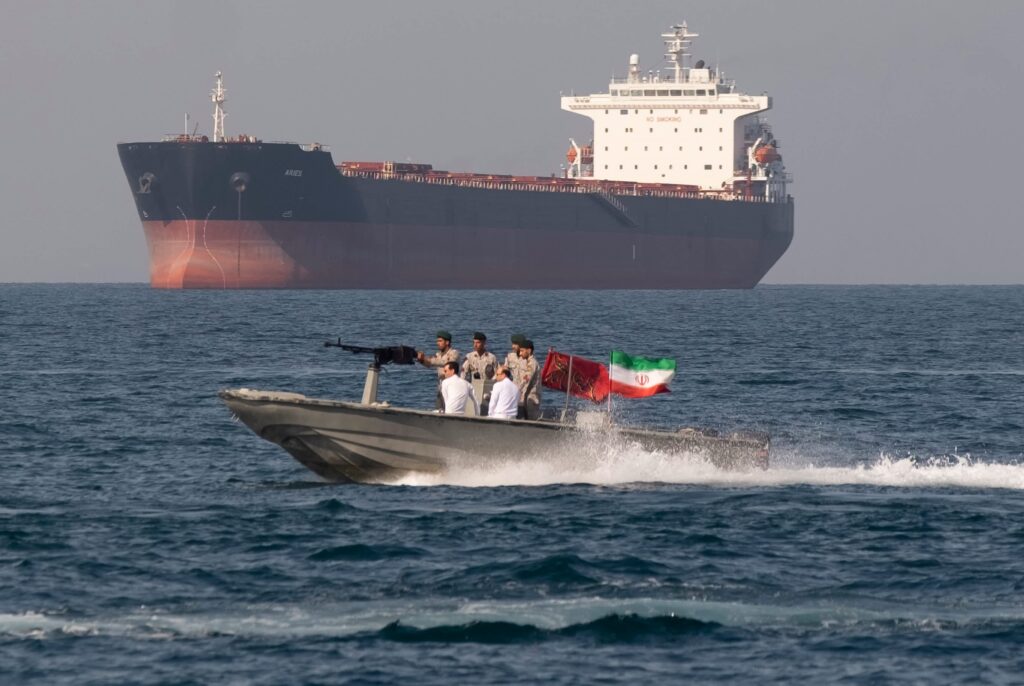
There is a strip of seawater — twenty-one miles wide at its narrowest, wedged between the Iranian coastline and the Omani shore — that has long been described by energy analysts as the single most consequential geographic feature in the global economy. For decades, that description felt like an abstraction. A risk. A theoretical vulnerability that strategists pencilled into worst-case scenarios and then quietly filed away.
The events of late February 2026 have made that abstraction brutally, expensively concrete.
On 28 February, the United States and Israel initiated coordinated airstrikes on Iran under Operation Epic Fury, targeting military facilities, nuclear sites, and leadership. Within hours, at least three oil tankers had been struck near the strait, shipping companies began suspending transits, and oil prices were moving with a velocity not seen in modern market history. Brent crude crossed $100 per barrel on 8 March — for the first time in four years — before surging to a peak of $126 per barrel. Wikipedia
The Strait of Hormuz crisis of 2026 has since been characterized by the head of the International Energy Agency, Fatih Birol, as “the largest supply disruption in the history of the global oil market.” World Economic Forum That is not hyperbole. That is the understated language of a man watching the architecture of global energy security collapse in real time.
This essay is not another news dispatch. It is an argument — an urgent, evidence-based argument — that the Hormuz crisis has exposed structural failures so profound, and dependencies so reckless, that incremental policy responses are no longer sufficient. The world needs radical rethinking. And it needed it twenty years ago.
The Anatomy of a Chokepoint: Why Hormuz Was Always the Most Dangerous Fault Line
The Strait of Hormuz is the world’s pre-eminent energy chokepoint not because of its width but because of its irreplaceability. Its two unidirectional sea lanes facilitate the transit of around 20 million barrels of oil per day, representing roughly 20% of global seaborne oil trade, primarily from producers like Saudi Arabia, the United Arab Emirates, Iraq, and Qatar. Wikipedia
But the implications of Strait of Hormuz closure on the world energy economy extend far beyond crude oil — and this is precisely what the shallow reporting of prior crises failed to capture. While focus rightly falls on the 11 million barrels of oil and 140 billion cubic metres of gas in daily global circulation, the impact extends far beyond energy. World Economic Forum The strait is simultaneously an artery for liquefied natural gas, fertilizers, aluminium, methanol, sulfur, helium, and petrochemical feedstocks — a supply chain polymath that quietly underpins everything from the plastic packaging on your groceries to the nitrogen fertilizer that grew the corn in your food.
The U.S. Energy Information Administration has long designated Hormuz as a “world oil transit chokepoint,” noting in successive annual reports that no viable substitute exists at comparable volume. The EIA’s warnings were consistent, authoritative, and largely ignored by policymakers who preferred optimism to contingency planning.
The Strait’s geopolitical risks are equally structural. It is, uniquely among major chokepoints, bordered on one side by a state — Iran — with both the capability and the demonstrated willingness to weaponize the waterway in pursuit of strategic objectives. The Strait of Suez has Egypt. The Strait of Malacca has Malaysia and Indonesia. Hormuz has Iran. That asymmetry has always made it the most dangerous fault line in global energy logistics.
February–April 2026: How the Crisis Unfolded
The immediate trigger was Operation Epic Fury, but the conditions for catastrophe had been accumulating for years. Tensions between Iran, the United States, and Israel had escalated in the lead-up to 2026, stemming from failed nuclear negotiations in Geneva and a prior 12-day air conflict in 2025. Wikipedia In the weeks before the strikes, war-risk ship insurance premiums for the strait increased from 0.125% to between 0.2% and 0.4% of the ship insurance value per transit — for very large oil tankers, an increase of a quarter of a million dollars per crossing. Wikipedia
What followed February 28 was a cascade of compounding failures that no strategic reserve or pipeline bypass could adequately address.
The warnings and subsequent attacks on vessels caused tanker traffic to drop first by approximately 70%, with over 150 ships anchoring outside the strait. Traffic subsequently dropped to near zero. Wikipedia Major container shipping companies — Maersk, Hapag-Lloyd, and CMA CGM — suspended operations, rerouting vessels around Africa’s southern tip. CNBC War-risk insurers followed, cancelling protection and indemnity insurance for Gulf transits from 5 March. Carra Globe The result, as commodity intelligence firm Kpler diagnosed with clinical precision, was a de facto closure for most of the global shipping community — insurance withdrawal doing the work that a physical blockade had not. Kpler
Vessel tracking data indicate that 16 million barrels per day of crude oil and oil products have stopped flowing through the Strait — a staggering decline of 80 percent compared to the 2025 average, with only 10 vessel crossings recorded over a four-day period, against a typical daily average of 70 to 80. Gulf International Forum
On 27 March, the IRGC formally declared the strait closed to vessels bound to or from the ports of the United States, Israel, and their allies. By early April, Brent crude had climbed to $127.61 per barrel — nearly double the $71.32 price recorded the day before Operation Epic Fury. USNI News
The Economic and Geopolitical Implications: A Multi-Layered Shock
Hormuz Blockade Impact on Oil Prices and the Spectre of Stagflation
The oil price shock alone would constitute a significant macroeconomic event. But the Federal Reserve Bank of Dallas has modelled the full GDP consequences with sobering precision. A complete cessation of oil exports from the Gulf amounts to removing close to 20 percent of global oil supplies from the market. The Dallas Fed model implies this raises the average WTI price to $98 per barrel and lowers global real GDP growth by an annualized 2.9 percentage points in Q2 2026. Dallas Fed If the disruption extends to three quarters, oil prices could reach $132 per barrel and global real GDP growth could fall 1.3 percentage points for the year. Dallas Fed
The even grimmer scenario circulating among Wall Street analysts cited by Bloomberg is $200 per barrel — a number that, if realized, would constitute not merely a recession trigger but a structural shattering of the post-pandemic global recovery.
European gas markets have been hit through a separate but reinforcing channel: historically low gas storage levels — estimated at just 30% capacity following a harsh 2025–2026 winter — meant that QatarEnergy’s force majeure declaration sent Dutch TTF gas benchmarks nearly doubling to over €60/MWh by mid-March. Wikipedia The echoes of 2022, when Russia’s invasion of Ukraine upended European energy, were unmistakable and humiliating: the continent had, once again, failed to structurally wean itself from a single fragile supply corridor.
Hormuz Blockade Impact on Asian Oil Imports: The Existential Exposure
If Europe’s predicament is severe, Asia’s is existential. The Strait of Hormuz as a chokepoint creates geopolitical risks that are disproportionately concentrated in the Asia-Pacific region — and the 2026 crisis has exposed that vulnerability with a candour that decades of diplomatic optimism obscured.
In 2024, 84% of the crude oil and condensate and 83% of the LNG that moved through the Strait went to Asian markets, with China, India, Japan, and South Korea accounting for a combined 69% of all Hormuz crude flows. Seatrade Maritime
The individual country exposure is jaw-dropping. Japan relies on the strait for close to three-quarters of its oil imports; South Korea sources roughly 60% of its crude via the same route; almost half of India’s crude oil imports and about 60% of its natural gas supplies move through Hormuz. Seatrade Maritime Around 84% of the crude oil and 83% of the LNG passing through the Strait went to Asia in 2024. Wikipedia
For the LNG market — where there are genuinely no alternative routes for stranded Gulf production — the situation is even more extreme. Unlike oil, there are no alternative routes to get the gas to market and very few strategic stockpiles to cushion the shortfall. Bloomberg LNG spot prices in Asia increased by over 140% as QatarEnergy declared force majeure on its contracts and shut down gas liquefaction at Ras Laffan, with analysts warning that restarting would take weeks. Wikipedia
South Korean petrochemical producers cut run rates by up to 50 percent. Japan, sourcing roughly 4 in every 10 barrels of its crude from the Gulf, faced comparable pressure. Atlantic Council Meanwhile, China — the largest crude importer on earth — discovered that its buffers, while more substantial than its neighbours’, were not inexhaustible. China’s LNG inventories as of end-February stood at 7.6 million tonnes, providing short-term cover, but Beijing would need to compete for Atlantic cargoes if the outage persisted. CNBC
Chart suggestion: Pre- and Post-Crisis Daily Flows Through the Strait of Hormuz (barrels/day, LNG volumes, Q4 2025 vs. March 2026)
The Fertilizer and Food Security Cascade: The Crisis Nobody Saw Coming
The most underappreciated dimension of the 2026 Hormuz crisis is not its energy dimensions — it is its agricultural ones.
The Arabian Gulf is the central hub for global agriculture, accounting for at least 20% of all seaborne fertilizer exports. The dependency is even more acute for urea, the world’s most widely used nitrogen fertilizer, with 46% of global trade originating from the region. World Economic Forum This supply is critical for India (which accounts for 18% of global urea imports), Brazil (10%), and China (8%).
About one-third of global seaborne trade in fertilizers typically passes through the Strait of Hormuz. The disruption affects not only export markets such as Sudan, Brazil, or Sri Lanka, but also fertilizer producers elsewhere that lack key ingredients. Carnegie Endowment for International Peace The Gulf produces roughly a quarter of global sulfur — a byproduct of oil refining that phosphate producers worldwide need to convert rock phosphate into a plant-absorbable nutrient. With Gulf refineries offline, that input supply has simply ceased.
The price shock and shortage of fertilizer during spring planting season could reduce the planting and yields of corn in the US — the main feedstock for US beef, poultry, and dairy — and potentially increase global food prices into 2027. Wikipedia The urea benchmark is up about 30 percent in the last month. Carnegie Endowment for International Peace Fertilizer plants have paused operations in Bangladesh, schools have closed in Pakistan, and India and Japan are turning to coal wherever possible. Time
The deeper structural problem, as the Carnegie Endowment for International Peace has noted, is that G7 countries do not maintain strategic fertilizer reserves to match their oil stockpiles. Carnegie Endowment for International Peace The geopolitical architecture of critical commodity security was designed for petroleum. It was not designed for the agricultural inputs that petroleum-adjacent economies also happen to produce in abundance. That is a failure of imagination that is now measurable in calories.
Why Bypass Pipelines and Alternative Routes Are Not the Answer
The default technocratic response to any Hormuz crisis has always involved pointing to bypass infrastructure — and the bypass infrastructure has always fallen grotesquely short of requirements.
Saudi Arabia increasingly diverted oil to the Red Sea port of Yanbu via the East–West Crude Oil Pipeline, while the UAE diverted oil via the Abu Dhabi Crude Oil Pipeline to Fujairah on the Arabian Sea. Iraq has an alternative route via the Kirkuk–Ceyhan Pipeline to the Mediterranean through Turkey. The combined capacity of these pipelines is 9 million barrels per day — compared to the 20 million that ordinarily transits the strait. Wikipedia
That arithmetic is damning enough. But the picture is worse. The Red Sea route is vulnerable to potential attacks by the Houthis Wikipedia, who announced a resumption of attacks on commercial shipping contemporaneously with the Hormuz closure, forcing Suez Canal traffic to reroute around Africa’s Cape of Good Hope, adding weeks to transit times and increasing shipping costs. Wikipedia
For LNG, there is no bypass solution whatsoever. Pipeline infrastructure does not exist to redirect Qatari or Emirati gas exports to Asia in the event of Hormuz closure. The rerouting of LNG tankers around the Cape adds weeks — weeks during which Asian countries run through reserves and industrial facilities shut down. By March 22, Dun & Bradstreet’s analysis had identified 7,716 businesses that had experienced at least one shipment cancellation since February 28, with more than 44,000 businesses across 174 economies having at least one shipment exposed. Dun & Bradstreet
The seductive promise of alternatives to Strait of Hormuz oil transit has always obscured one fundamental reality: the strait was never just an oil route. It is the central node of a complex energy and commodities system that evolved, over fifty years, to run through that single chokepoint. You cannot reroute a system. You can only redesign it.
An Honest Reckoning: Why This Was Always Coming
Let me say something that the diplomatic language of think-tank reports tends to avoid: the Hormuz crisis of 2026 is a failure of political will, not a failure of intelligence.
Every credible scenario exercise run by the Brookings Institution, the Centre for Strategic and International Studies, or the Council on Foreign Relations in the past twenty years identified Hormuz as the single largest structural vulnerability in global energy security. Every IEA annual report since the early 2000s flagged the concentration of oil transit through a single choke point controlled by a potentially hostile state. Every geopolitical stress test modelled this exact scenario — an Iran-US confrontation triggering a de facto closure — and generated results that looked very much like the data we are reading today.
The world was warned. Repeatedly. In precise technical language by credentialed institutions with significant policy access. And the world — its energy ministries, its central banks, its insurance markets, its shipping consortia — collectively decided that the costs of reducing Hormuz dependency were higher than the probability-weighted costs of a crisis.
That calculation was wrong. And it was wrong not because the probability was misjudged, but because the magnitude of the crisis was systematically underestimated. The assumption was that Hormuz disruptions would be brief, partial, and primarily confined to oil prices. No model adequately captured the simultaneous fertilizer shock, the LNG supply collapse, the insurance market withdrawal, the compounding Red Sea disruption, or the cascading food security crisis across three continents. The system turned out to be dramatically more interconnected than the models assumed.
In conversations with more than three dozen oil and gas traders, executives, brokers, shippers, and advisers, one message was repeated over and over: the world still hasn’t grasped the severity of the situation. Bloomberg That, perhaps, is the most chilling line to emerge from this crisis. If the energy professionals closest to the system believe its severity is still underestimated, then every policy response calibrated to “managing” rather than “redesigning” the global energy architecture is starting from the wrong premise.
The Way Forward After the Hormuz Crisis: Energy Security That Doesn’t Rely on a Single Lane
1. A Hormuz Transit Initiative: Multilateral Legal Architecture for Chokepoints
The most immediate need is political, not technical. The Black Sea Grain Initiative offers a lesson: even in the midst of war, diplomacy can still make room for necessity. Time What is needed is a standing international legal regime — call it a Hormuz Transit Initiative — that establishes permanent protocols for the safe passage of food, fertilizers, and energy commodities through internationally critical straits, backed by multilateral guarantees and enforceable under UNCLOS.
Iran’s closure of the strait constitutes a violation of the UN Convention on the Law of the Sea by denying transit passage through a strait used for international navigation. Wikipedia The international community’s failure to enforce that principle in real time reflects the absence of a pre-negotiated institutional mechanism. A Hormuz Transit Initiative would not require the resolution of the US-Iran conflict. It would require only the recognition of a shared global interest in preventing cascading humanitarian crises — an interest that, as the International Crisis Group has argued, is real even for adversarial states.
2. Diversified Strategic Reserve Coordination: Extending SPR Logic to LNG and Fertilizers
The strategic petroleum reserve system, coordinated through the IEA, is the only institutional mechanism that has provided any meaningful buffer to this crisis — and its limitations have been nakedly exposed. G7 countries maintain no strategic fertilizer reserves to match their oil stockpiles. Carnegie Endowment for International Peace There are no internationally coordinated LNG strategic reserves.
This must change. The IEA framework should be extended, urgently, to encompass minimum mandatory LNG storage commitments for net-importing nations, and a G20 fertilizer reserve coordination mechanism should be established before the next Northern Hemisphere planting season. These are not radical proposals; they are the application of fifty-year-old strategic reserve logic to commodities that the 21st-century economy has made equally critical.
3. Accelerated Energy Transition as Strategic Security Policy
The long-term answer to Hormuz dependency is not more pipelines. It is fewer hydrocarbons. The structural reduction of global dependence on Persian Gulf oil and gas is simultaneously the most effective climate policy and the most effective energy security policy available.
The current crisis has, ironically, made the economic case for the energy transition more compelling than any carbon price or regulatory mandate. Analysts warn that if disruptions persist, the world will have to significantly reduce its oil and gas consumption — with some in the industry warning that the energy transition will be “forced on us in a very painful way.” CNBC
Japan and South Korea — among the most Hormuz-exposed economies on earth — should treat accelerated offshore wind, advanced nuclear, and hydrogen infrastructure not as energy policy but as national security investments. The World Economic Forum’s Global Risks Report 2026 notes that geoeconomic confrontation is now a key driver of economic and industrial policy. World Economic Forum Energy transition investment is the most effective hedge against that confrontation.
4. Gulf-Asia Energy Diplomacy: New Long-Term Architecture
For Asian economies that will remain hydrocarbon-dependent for the next decade, the strategic response to 2026 must include a fundamental restructuring of their energy supply relationships. The Gulf International Forum has noted that Gulf national oil companies can leverage the current crisis to accelerate long-term supply agreements with Asian buyers now acutely aware of their vulnerability to spot market volatility. Gulf International Forum
Long-term offtake agreements, co-investment in bypass infrastructure, and the strategic diversification of supply sources — toward US LNG, Australian LNG, East African oil, and Atlantic basin producers — should now be treated as non-negotiable elements of Asian energy security planning. The era of comfortable spot market dependence on a single chokepoint region is over.
5. Petrochemical and Fertilizer Supply Chain Resilience
The crisis could enable Beijing to establish new chokepoints over near-term or more enduring petrochemical supply chains Atlantic Council — a geopolitical consequence that democracies in Asia and Europe have been slow to recognize. Western industrial policy, already pivoting toward critical mineral supply chain resilience, must now explicitly encompass petrochemical feedstocks, fertilizer inputs, and LNG.
The US Inflation Reduction Act and the EU’s Critical Raw Materials Act were steps in the right direction. A Hormuz-aware industrial policy would extend this logic to the full spectrum of commodities that transit this chokepoint — and invest accordingly in domestic production capacity, allied-nation supply agreements, and stockpiling.
What This Crisis Has Already Changed — Permanently
It would be a mistake to treat the 2026 Hormuz crisis as an event from which the world simply recovers and returns to a previous equilibrium. That equilibrium is gone.
Insurance markets have permanently repriced Gulf transit risk. Shipping companies have begun investing in Cape of Good Hope routing infrastructure. Asian governments have initiated emergency reviews of their Hormuz exposure, and some — Japan and South Korea most urgently — are accelerating alternative energy investments that would previously have faced years of political resistance.
As of April 2026, there are ongoing concerns about energy security as well as food security related to fertiliser shortages and costs. Wikipedia These concerns will not resolve when the Strait reopens. They will persist — and they should persist — as the animating force behind an overdue restructuring of global energy architecture.
The crisis has also, finally, forced a honest public accounting of the degree to which the global food system runs on Gulf hydrocarbons. The fertilizer supply chain, the nitrogen cycle, the spring planting season in the Northern Hemisphere — all of these depend, in ways most consumers have never been asked to understand, on smooth passage through a twenty-one-mile bottleneck controlled by a nation currently at war.
That is not a sustainable arrangement. It was never a sustainable arrangement. The difference between 2006 and 2026 is that the consequences of sustaining it are no longer hypothetical.
Conclusion: The Strait Has Spoken — Now Policymakers Must Act
The Strait of Hormuz has always been more than a shipping lane. It is a test — a recurring, high-stakes examination of whether the international community has the strategic foresight and political will to manage its own dependencies.
For fifty years, the world has failed that test by passing it narrowly enough to avoid catastrophe. The disruptions of 2011, 2012, 2019, and 2020 were warnings. Each time, the system held — barely — and the warnings were filed under “risk management” rather than “structural reform.”
The 2026 crisis may be different. Not because the immediate shock is unique — it was always predictable — but because the second and third-order consequences are now visible in ways that are genuinely unprecedented. Fertilizer shortages during planting season. LNG rationing in Pakistan and Bangladesh. South Korean factories cutting production by half. European gas prices doubling into spring. A possible $200 barrel of oil that would constitute the largest single economic disruption since the 2008 financial crisis.
The main message from the energy industry insiders closest to the crisis is that the world will get the energy transition forced on it in a very painful way that will happen very quickly. Bloomberg That is not, ultimately, an oil trader’s message. It is a policymaker’s instruction.
The way forward is not to reopen the Strait and return to the comfortable dependency that created this crisis. The way forward is to use this rupture — this painful, expensive, globally disruptive moment — to build a global energy architecture that no longer has a single point of failure.
Twenty-one miles of water should not hold the world to ransom. The fact that it does, in 2026, is a policy choice. And policy choices can be unmade.
Discover more from The Economy
Subscribe to get the latest posts sent to your email.



Key Takeaways
- Rolex’s secondary market rose approximately 7.9% year-over-year as of 2026 (per WatchCharts data) — trailing Patek Philippe (+16.2%) and Tudor (+11.4%) but still outperforming Audemars Piguet (+3.4%).
- Rolex raised U.S. retail prices 4–9% in January 2026 (steel models ~5.6%, gold models ~8.7%), narrowing the historical gap between retail and pre-owned pricing.
- Not every model appreciates: steel sports references (Submariner, GMT-Master II, Daytona) have held value far better than two-tone or widely available dress references like the standard Datejust.
- The Lady-Datejust posted the sharpest 2026 gain among tracked collections — up 22.73%, from roughly $9,269 to $11,376 — driven by demand for smaller, “everyday luxury” watches.
- Gold’s rise past $2,400/oz has directly lifted the investment case for Rolex’s precious-metal references (Day-Date, Sky-Dweller, Yacht-Master).
The Model-by-Model Picture
| Category | 2026 Trend |
|---|---|
| Lady-Datejust | +22.73% (strongest performer among tracked collections) |
| Steel sports models (Submariner, GMT-Master II) | Held value well; corrected from 2022 peak but stabilized above retail |
| Daytona | Corrected from highs above $50,000 to the mid-$30,000s; still among the most sought-after references |
| Two-tone/widely available Datejust | Flat to negative — “holds value” is an overstatement for this category |
| Gold references (Day-Date, Sky-Dweller) | Lifted by gold’s rise above $2,400/oz |
Why the “Rolex Always Appreciates” Myth Is Fading
The pandemic-era boom pushed some references — the Daytona above all — to speculative highs disconnected from historical norms. Since the March 2022 peak, steel sports models have compressed meaningfully, and dealers who bought inventory near the top have in some cases faced 20–40% markdowns on liquidation. The lesson for 2026 buyers: Rolex as a category is not a monolith. Value retention depends heavily on specific reference, condition, and whether the piece comes with box and papers (“full set”).
What’s Actually Driving 2026 Strength
- Retail price increases raise the floor. When a new Submariner retails at $10,050 (up from $9,500), a pre-owned example at $11,000–$12,000 suddenly represents a smaller premium — narrowing the gap without secondary prices actually moving.
- Supply discipline remains Rolex’s core lever. The brand has never confirmed production numbers, and secondary-market premiums remain entirely a function of Rolex’s own manufacturing decisions — a risk factor as much as a support.
- Certified Pre-Owned rollout. Rolex’s now fully rolled-out CPO program has changed how buyers transact in the used market, adding a layer of brand-verified legitimacy that supports pricing.
The Case for Rolex as a Portfolio Diversifier
Financial advisors increasingly frame luxury watches not as a replacement for equities or bonds, but as a tangible, historically low-correlation diversifier — one that carries its own risks (illiquidity, condition-dependent pricing, no yield) but has demonstrated multi-decade resilience for specific references.
Is Rolex a good investment in 2026?
It depends heavily on the specific reference. Steel sports models like the Submariner and Daytona have held or grown in value; two-tone and widely available dress models generally have not. Overall, Rolex’s secondary market rose about 7.9% year-over-year in 2026, trailing Patek Philippe but ahead of Audemars Piguet.
Discover more from The Economy
Subscribe to get the latest posts sent to your email.

Navigating Mortgage and Loan Refinancing in a High-Yield Environment
Global public debt crossing critical thresholds has kept central bank policies volatile, resulting in fluctuating US Treasury yields throughout 2026. For homeowners and commercial property holders burdened by previous high-interest borrowing cycles, finding optimal refinance windows has become a high-stakes financial puzzle. Stalled disinflation and stubborn employment numbers mean rate cuts are incremental, requiring borrowers to act with precision.
Timing your mortgage or commercial loan refinance in this environment requires a deep understanding of yield curve movements and lender risk appetites.
Decoding 2026 Refinance Dynamics
The 10-Year Treasury Yield Benchmark
Mortgage rates continue to track closely with the 10-year US Treasury yield. When macroeconomic anxiety spikes debt issuance, yields rise, tightening consumer borrowing capacity. Savvy borrowers monitor weekly Treasury auctions to lock in rates during brief dip windows.
Hybrid ARMs and Alternative Structures
With fixed rates remaining elevated, 7/1 and 10/1 adjustable-rate mortgages (ARMs) have surged in popularity. These products offer lower initial monthly payments, giving borrowers breathing room until central bank easing cycles fully materialize.
| Loan Product | Current Rate Range | Best For | Key Risk Factor |
| 30-Year Fixed Mortgage | 6.2% – 6.8% | Long-term predictability | Higher initial monthly outlay |
| 7/1 Hybrid ARM | 5.5% – 5.9% | Short-term ownership / flipping | Rate reset risk after year 7 |
| Commercial Refinance | 7.0% – 8.2% | Corporate asset restructuring | Strict DSCR lender covenants |
Actionable Steps for Successful Refinancing
To maximize your chances of securing favorable refinance terms in a volatile market, follow a disciplined preparation strategy.
Boost Your Credit Score Immediately: Lenders in 2026 are applying stringent credit tiering; a 20-point increase can drop your APR by a crucial quarter-point.
Shop Regional Credit Unions: Smaller financial institutions often offer portfolio loans with more flexible underwriting than major national banks.
Calculate the Break-Even Point: Ensure your total closing costs are recouped through monthly savings within 24 months of closing.
“Market Strategist View: Refinancing in 2026 is an exercise in opportunistic timing. Borrowers must maintain immaculate financial profiles ready to strike the moment Treasury yields dip.”
Mastering the complexities of today’s debt environment ensures you can successfully lower your debt service costs and protect your long-term financial stability.
Discover more from The Economy
Subscribe to get the latest posts sent to your email.

The days of pulling generic auto insurance quotes based purely on your zip code and age are officially over. In 2026, insurance comparison engines are powered entirely by generative AI and real-time telematics. These platforms digest thousands of live data points—ranging from your driving smoothness via connected vehicle sensors to real-time traffic congestion patterns—to generate hyper-personalized premiums instantly.
For consumers, this evolution represents both a massive opportunity for savings and a hidden trap for penalty pricing. Understanding how AI algorithms evaluate risk is essential for anyone looking to lower their monthly auto insurance premiums.
How AI Comparison Engines Evaluate Your Risk Profile
Behavioral Telematics and Connected Cars
Modern cars stream performance data directly to insurance aggregators. Generative AI models analyze braking sharpness, acceleration curves, cornering G-forces, and phone distraction metrics. Drivers who maintain smooth, defensive habits are rewarded with dynamic rate cuts of up to 40% compared to traditional rating tiers.
Predictive Traffic and Weather Modeling
AI tools now cross-reference your daily commute route with predictive weather and accident probability models. If your standard parking location or driving corridor has a statistically higher incidence of uninsured motorist claims, your quotes will reflect that hyper-local risk assessment.
| Comparison Factor | Traditional Rating Model | 2026 Generative AI Model | Impact on Premium |
| Mileage & Usage | Annual estimated odometer reading | GPS tracking & live trip duration | High (up to 35% savings) |
| Driving Behavior | MVR driving record & accidents | Real-time braking, speed, & G-force | Critical (determines tier) |
| Vehicle Tech | Make, model, and safety rating | ADAS calibration & repair cost data | Moderate |
Strategies to Lower Your AI-Driven Insurance Quote
To outsmart the algorithm and secure the lowest possible premium in 2026, drivers must proactively manage their digital footprint on insurance platforms.
Opt-In for Telematics Trial Periods: Many insurers offer immediate 15% discounts just for installing their driving app; let it track safe habits for 30 days to lock in permanent savings.
Scrub Unverified Public Records: Ensure your motor vehicle report is free of clerical errors that AI risk models misinterpret as reckless behavior.
Compare AI Aggregators: Use platforms that integrate multi-carrier API feeds rather than single-brand comparison sites to find the best risk-adjusted rate.
“Industry Note: AI-driven pricing rewards transparency and precision. Drivers who actively manage their telematics data consistently out-save those relying on legacy quote calculators.”
Embracing AI comparison tools allows savvy policyholders to customize coverage limits precisely to their driving habits, eliminating wasted premium spend while ensuring robust protection.
Discover more from The Economy
Subscribe to get the latest posts sent to your email.

The Global South: Debt, Climate Finance and Investment in 2026

Energy Security Is the New Economic Security

Can Global Tourism Survive Geopolitical Shocks?

Global Maritime Hegemony: How China Secured Over 81% of All New Shipbuilding Orders

The Coming Battle Over AI, Jobs and Wages

Why Developing Economies Face a Sharper Inflation Problem

The New Geography of Trade: Are Supply Chains Coming Home?

Is AI Saving Global Growth or Creating the Next Bubble?

Global Banking Trends 2026: Digital Banks, AI and Compliance

Gold vs US Dollar vs Bitcoin in 2026: Inflation Hedge Compared

How Global Interest Rates Affect Savings, Loans and Investments

How to Invest During High Inflation: A Global Guide

Best Global Stocks to Watch in 2026: Four Sectors to Research

Pakistan’s 2027 Growth Strategy: Exports, AI, Energy and Jobs

Crude Oil & Petroleum Market Analysis: OPEC+ Decisions and Price Forecasts

World’s Largest Economies: Ranking the Top Global Powers

Silver Price Today: Why the Xi-Trump AI Standoff Is Fueling a Safe-Haven Rally

Top US Convenience Store Chains: Store Counts, EV Charging, and Sales Trends

Algorithmic Dogfights: Why the U.S. and China Must Establish Rules of Engagement for Autonomous Air Power

Who Is Shivon Zilis? The Neuralink Executive at the Center of the Musk–OpenAI Trial

Corporate America Faces a New Debt Test as US Borrowing Costs Surge

Business Insurance: What Coverage You Actually Need and What It Costs in 2026

Global Economic Outlook 2026: 7 Forces Reshaping Markets, Trade and Business

Social Security Extra $90 Deposit: Who Qualifies for the October 2026 Medicare Rebate?

Gold Falls 3.7% as Yields Surge: Is Gold Still a Safe Haven in 2026?

MAS Allocates S$1.45 Billion to Five Asset Managers in Third EQDP Batch: Total Deployment Reaches S$5.4 Billion

Stock Market Today: Dow, S&P 500, and Nasdaq Retreat as Treasury Yields

US 10-Year Yield Hits 5.24%: What the Historic Bond Market Sell off Means for Mortgages and Investors
-

 Markets & Finance10 months ago
Top 15 Stocks for Investment in 2026 in PSX: Your Complete Guide to Pakistan’s Best Investment Opportunities
-

 Analysis8 months ago
Johor’s Investment Boom: The Hidden Costs Behind Malaysia’s Most Ambitious Economic Surge
-

 Analysis8 months ago
Top 10 Stocks for Investment in PSX for Quick Returns in 2026
-

 Banks9 months ago
Best Investments in Pakistan 2026: Top 10 Low-Price Shares and Long-Term Picks for the PSX
-

 Analysis9 months ago
Brazil’s Rare Earth Race: US, EU, and China Compete for Critical Minerals as Tensions Rise
-

 Investment10 months ago
Top 10 Mutual Fund Managers in Pakistan for Investment in 2026: A Comprehensive Guide for Optimal Returns
-

 Global Economy10 months ago
15 Most Lucrative Sectors for Investment in Pakistan: A 2025 Data-Driven Analysis
-

 Global Economy10 months ago
Pakistan’s Export Goldmine: 10 Game-Changing Markets Where Pakistani Businesses Are Winning Big in 2025