Connect with us

Analysis

Wall Street’s Blockchain Gold Rush Has a Fatal Flaw the IMF Just Named

Published

on

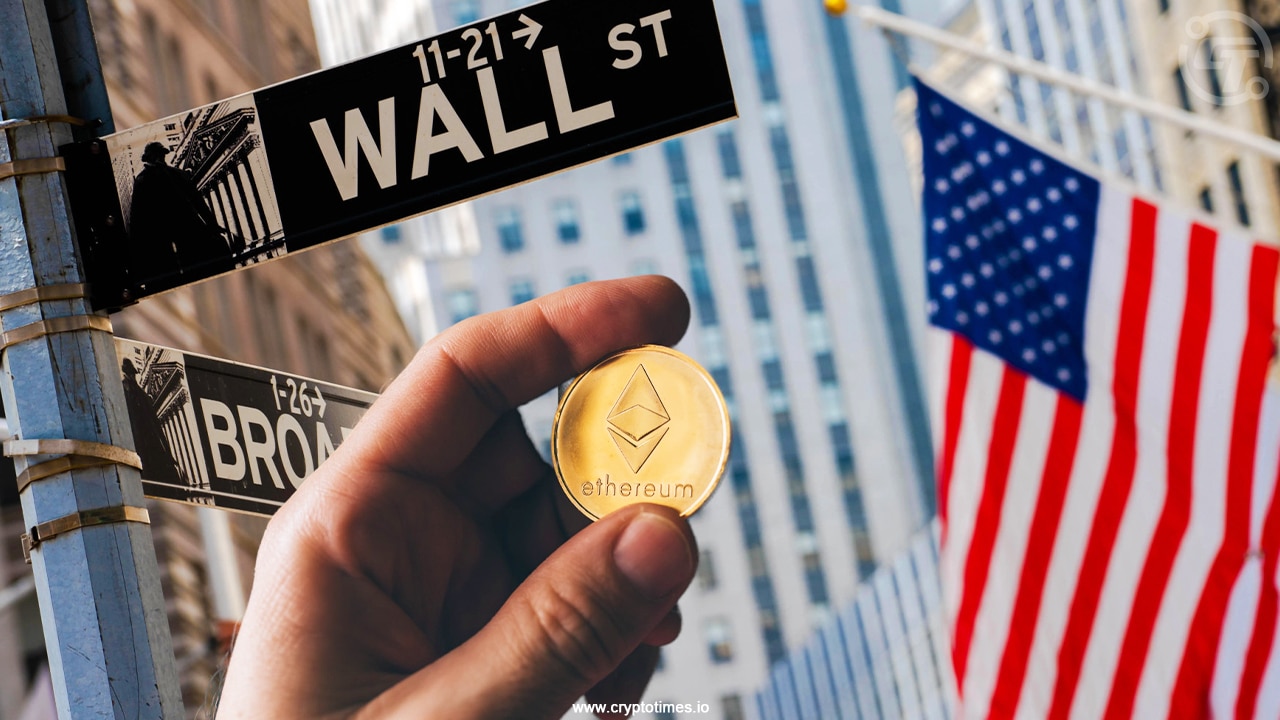
As BlackRock, JPMorgan, and the NYSE race to tokenise everything, the fund that guards global financial stability is issuing a quiet but urgent warning: build this wrong, and the next market crisis won’t just spread faster — it will be structurally impossible to stop.

There is a particular kind of danger in making financial systems too efficient. The history of modern finance is, in some essential way, the story of buffers — the friction, the delay, the human pause between a decision and its consequence. Margin calls that took hours to process. Settlement cycles that ran two business days. Clearing houses that smoothed out the chaos of simultaneous trades. These inefficiencies were not design flaws. They were, in the language of systems engineering, shock absorbers. And Wall Street has spent the last three years engineering a future in which they no longer exist.

That future now has a name — tokenised finance — and it is accelerating with the kind of momentum that tends to outpace regulatory architecture by a decade. BlackRock’s BUIDL fund, launched in 2024 on the Ethereum blockchain and now managing over $2.5 billion in assets, has become the flagship of a movement. JPMorgan’s Kinexys platform — which powers the bank’s new My OnChain Net Yield Fund, known as MONY — made JPMorgan the largest globally systemically important bank to launch a tokenised money-market fund on a public blockchain. Earlier this year, the New York Stock Exchange announced plans for a blockchain-based venue that would allow investors to trade tokenised stocks and ETFs around the clock — no settlement delay, no market hours, no pause. According to data from rwa.xyz, tokenised real-world assets have now crossed $27.5 billion on-chain, with U.S. Treasury products alone accounting for more than $12 billion of that total.

This is not speculative anymore. This is infrastructure being built in real-time, at systemic scale, by institutions that sit at the very centre of the global financial plumbing.

And now the IMF wants you to pay attention to what happens when the plumbing has no pressure-relief valve.

What Tobias Adrian Actually Said — and Why It Matters More Than Headlines Suggest

On April 1, 2026, the IMF published a note that deserves to be read in full rather than summarised in a press release. Authored by Tobias Adrian, the Fund’s Financial Counsellor and Director of the Monetary and Capital Markets Department, “Tokenized Finance” does not read like a bureaucratic warning. It reads like a structural diagnosis.

Adrian’s central argument is precisely the one that Wall Street’s boosters tend to dismiss: that tokenisation is not a marginal efficiency improvement. It is, as the note puts it, “a structural shift in financial architecture” — one that fundamentally alters how trust, settlement, and risk management function at the system level. The distinction matters enormously. You can regulate a product. Regulating an architecture requires thinking several orders of magnitude further ahead.

The paper identifies four specific risk categories that deserve unpacking, because each one is more counterintuitive than it first appears.

The Four Risks: Why Speed Is the Most Dangerous Efficiency of All

1. The Temporal Buffer Problem

Traditional finance has always embedded time into its risk management. When a bank faces a margin call in a T+2 settlement system, it has approximately 48 hours to locate liquidity, assess counterparty exposure, and if necessary, contact a regulator. Central banks are designed around this rhythm — their liquidity tools, their emergency facilities, their intervention protocols — all calibrated to business-day cycles.

As the IMF note warns, tokenised systems replace this architecture with automated margin calls, continuous settlement, and algorithmic feedback loops that compress the intervention window to near-zero. Think about what that means in practice. A stress event that currently gives a regulator 48 hours to respond might, in a fully tokenised system, leave a window of 48 minutes — or less. The irony is acute: the feature Wall Street is selling as a benefit (instant settlement, 24/7 operation) is precisely the feature that turns a liquidity problem into a systemic cascade.

This is not theoretical. The crypto markets have already run this experiment, repeatedly. In May 2022, the collapse of the Terra/Luna ecosystem wiped out approximately $40 billion in value in 72 hours — a speed of contagion that no traditional market mechanism could have produced. Tokenised finance, at institutional scale, with real-world assets as collateral, would be playing the same game with significantly higher stakes.

2. Concentration and Shared Infrastructure Risk

The second risk is one that financial stability analysts recognise from the pre-2008 era — but with a modern twist. When multiple institutions route through the same ledger infrastructure, errors in smart contracts or infrastructure failures can affect all participants simultaneously, rather than in the sequential fashion that allows for containment. The IMF calls this a concentration risk embedded in shared ledger architecture — a form of correlated exposure that has no real precedent in traditional finance.

One bug in a smart contract governing a trillion-dollar collateral ecosystem is not an operational nuisance. It is a systemic event.

3. Fragmentation and the Liquidity Silo Problem

Here is where the picture becomes genuinely paradoxical. Tokenisation promises to improve market liquidity — and in narrow, isolated conditions, it does. But if multiple platforms emerge with incompatible standards and siloed liquidity pools, the aggregate effect is the opposite. The IMF warns that fragmentation across platforms reduces netting efficiency and impairs the par convertibility between assets — the ability to treat different instruments as equivalent for settlement purposes — which is a foundational assumption of modern financial plumbing.

Imagine ten competing tokenisation platforms, each hosting its own version of tokenised Treasuries, each with slightly different legal frameworks and redemption mechanisms. In a calm market, they coexist. In a stress event — when institutions rush simultaneously to redeem and convert — the absence of common standards turns a manageable liquidity event into a multi-front crisis with no coordinating mechanism.

4. Cross-Border Chaos and the Jurisdictional Void

Tokenised transactions are, by their nature, borderless. A smart contract executing on Ethereum does not consult a legal jurisdiction before settling. But dispute resolution mechanisms remain stubbornly national — and the legal status of tokenised assets remains, in most jurisdictions, profoundly uncertain. Who owns a tokenised bond during an insolvency? Under which country’s law? In which court? The IMF flags that the principle of “code is law” — beloved by blockchain maximalists — is not a substitute for legal certainty, especially for instruments sitting inside systemically important institutions.

The Emerging Market Dimension: Who Bears the Tail Risk?

If you are reading this from London, New York, or Frankfurt, the systemic risks of tokenised finance feel abstract — contained, perhaps, to the corridors of Canary Wharf or Wall Street. That is a dangerous perspective.

For economies in Latin America, sub-Saharan Africa, and South and Southeast Asia, the tokenisation wave carries a specific and asymmetric danger: monetary sovereignty. A previous IMF analysis documented how dollar-backed stablecoins are already accelerating currency substitution in high-inflation economies — Argentina, Turkey, and Venezuela are the textbook cases. Privately issued global stablecoins, if they become dominant settlement assets in tokenised markets, could displace local currencies in exactly the jurisdictions where central banks have least capacity to respond.

This is the emerging market dimension of tokenisation risk that most Western commentary ignores entirely: the possibility that the infrastructure of the next financial crisis will be built in New York but the worst of its consequences will be felt in Nairobi, Jakarta, or Buenos Aires. The capital-flow volatility implications alone — tokenised assets enabling frictionless cross-border movement — could destabilise exchange rates in ways that make the 1997 Asian financial crisis look well-cushioned by comparison.

Why This Is Not Anti-Innovation Scaremongering

Let us be precise about what this argument is not.

The efficiency gains from tokenisation are real and measurable. Atomic settlement — the simultaneous exchange of asset and payment — eliminates counterparty risk in a way that the T+2 system never could. Embedded compliance through programmable assets reduces the cost of regulatory reporting. Continuous liquidity management allows institutions to optimise collateral use in ways that genuinely benefit end investors. BlackRock’s Larry Fink has called for the entire financial system to run on a common blockchain — and while the maximalism of that vision invites scepticism, the underlying logic about settlement efficiency is sound.

The IMF note, to its credit, does not dispute any of this. Adrian explicitly acknowledges the benefits. His argument — and mine — is architectural, not ideological. The question is not whether to tokenise finance. That ship has already sailed, and the $27.5 billion on-chain today is merely the early tide. The question is how the foundational infrastructure is built, and who bears the systemic risk when it fails.

A high-speed train is not inherently dangerous. A high-speed train without adequate braking systems, operating on tracks without standardised gauges, running through tunnels with no emergency protocols — that is a different proposition entirely.

The IMF’s Five-Pillar Prescription: A Policy Architecture Worth Taking Seriously

Adrian proposes a five-part framework that is more rigorous than most regulatory roadmaps currently circulating in parliamentary committees and central banking briefing rooms.

First, anchor settlement in safe money — specifically, wholesale central bank digital currencies (wCBDCs) or equivalent public-sector settlement assets. The principle is straightforward: the trust that makes financial systems function cannot be fully outsourced to private infrastructure. Settlement in private stablecoins, however well-designed, creates a dependency on entities that lack the public accountability and unconditional backing of a central bank.

Second, apply consistent regulation to economically equivalent activities. A tokenised money-market fund that functions identically to a traditional money-market fund should face the same regulatory requirements — regardless of the technology underlying it. This sounds obvious. In practice, regulatory arbitrage between tokenised and traditional instruments is already emerging, and the IMF is right to call it out early.

Third, establish legal certainty for tokenised assets — clarifying ownership rights, creditor protections, and jurisdictional applicability before the scale of these markets makes retroactive legal reform prohibitively complex.

Fourth, promote interoperability standards that prevent the fragmentation of liquidity across incompatible platforms. This is a role for standard-setting bodies — the BIS Innovation Hub, IOSCO, the Financial Stability Board — rather than individual institutions, and it requires coordination across jurisdictions that rarely cooperate at speed.

Fifth, and most ambitiously, adapt central bank liquidity tools to a 24/7 automated environment. This is the deepest structural challenge. The Federal Reserve, the European Central Bank, the Bank of England — all of them are currently calibrated to intervene at business-day frequency. A financial system that settles continuously requires lender-of-last-resort tools that operate continuously. That is not a software update. It is a fundamental reimagining of what central banking looks like in the digital age.

The Window Is Open — For Now

There is a line near the end of Adrian’s note that should be quoted wherever serious people discuss financial architecture: “The window for shaping the architecture of the tokenised financial system is open, but it will not remain so indefinitely.”

That is not bureaucratic boilerplate. It is a precise statement about the path-dependency of infrastructure decisions. Once JPMorgan’s MONY fund has $100 billion under management. Once the NYSE’s tokenised equities platform is processing ten million trades a day. Once the legal precedents that emerge from the first tokenisation-related insolvency have hardened into case law in six different jurisdictions simultaneously — at that point, the architecture is largely fixed. You can regulate at the margins. You cannot redesign the plumbing while the city runs on it.

Policymakers — at the Federal Reserve, the Bank for International Settlements, the Financial Stability Board, and in finance ministries from Washington to Brussels to Singapore — have a narrow window to establish the public infrastructure and coordination frameworks that could make tokenised finance genuinely safe. What that requires, practically, is not regulatory hostility to innovation but something considerably harder: regulatory ambition. The willingness to build public infrastructure ahead of private demand. The discipline to enforce interoperability before fragmentation becomes entrenched. The foresight to extend central bank tools into a 24/7 world before the first crisis demonstrates why it was necessary.

The private sector is moving fast. BlackRock, JPMorgan, the NYSE — they are not waiting. The public sector, historically, moves slower. In this case, the asymmetry between those two speeds is itself the systemic risk.

The IMF has named it. The architecture remains, for now, unbuilt. That is the most important financial stability question of 2026 — and the one that will define the next crisis when it comes.


Discover more from The Economy

Subscribe to get the latest posts sent to your email.

Analysis

Wall Street Is Betting Against Private Credit — and That Should Worry Everyone

Published

on

When the architects of the private credit boom begin selling instruments that profit from its distress, the market has entered a new and more dangerous phase.

There is an old rule of thumb in credit markets: the moment the banks that helped build a structure start quietly pricing in its failure, it is time to pay very close attention. That moment arrived on April 13, 2026, when the S&P CDX Financials Index — ticker FINDX — began trading, giving Wall Street its first standardised credit-default swap benchmark explicitly linked to the private credit market. JPMorgan Chase, Bank of America, Barclays, Deutsche Bank, Goldman Sachs, and Morgan Stanley are all distributing the product. These are not peripheral players hedging tail risks. These are the same institutions that have spent a decade co-investing in, lending to, and marketing the very asset class they now offer clients a streamlined mechanism to short.

That is the headline. The deeper story is more unsettling.

The Product Nobody Was Supposed to Need

Credit-default swaps are, at their most basic, financial insurance contracts — the buyer pays a premium; the seller compensates the buyer if a specified borrower defaults. They became infamous in 2008, when an entire shadow banking system imploded partly because CDS had been written so liberally, by parties with no direct exposure to the underlying risk, that protection was illusory rather than real. What is remarkable about the CDX Financials launch is not the instrument itself but what its very existence confesses: private credit has grown so large, so interconnected, and now so stressed that the market has concluded it needs — finally — a public, liquid, standardised mechanism to hedge against its unravelling.

According to S&P Dow Jones Indices, the new FINDX comprises 25 North American financial entities, including banks, insurers, real estate investment trusts, and business development companies (BDCs). Approximately 12% of the equally weighted index is tied to private credit fund managers — specifically Apollo Global Management, Ares Management, and Blackstone. The index rises in value as credit sentiment toward its constituent entities deteriorates. In practical terms: buy protection on FINDX, and you profit when the private credit ecosystem comes under pressure.

Nicholas Godec, head of fixed income tradables and commodities at S&P Dow Jones Indices, described the launch as “the first instance of CDS linked to BDCs, thereby providing CDS linked to the private credit market.” That phrasing — careful, bureaucratic, almost bloodless — belies the signal embedded in the timing.

The Numbers Behind the Anxiety

To understand why this product exists, you need to understand the scale and velocity of the stress currently moving through private credit. The numbers, as of Q1 2026, are striking.

The Financial Times reported that U.S. private credit fund investors submitted a total of $20.8 billion in redemption requests in the first quarter alone — roughly 7% of the approximately $300 billion in assets held by the relevant non-traded BDC vehicles. This is not a trickle. Carlyle’s flagship Tactical Private Credit Fund (CTAC) received redemption requests equivalent to 15.7% of its assets in Q1, more than three times its 5% quarterly limit. Carlyle, like many of its peers, honoured only the cap and deferred the rest. Blue Owl’s Credit Income Corp saw shareholders request withdrawals equivalent to 21.9% of its shares in the three months to March 31 — an extraordinary figure that prompted Moody’s to revise its outlook on the fund from stable to negative. Blue Owl, Blackstone, KKR, Apollo, and Ares have all faced redemption queues this cycle.

Moody’s has since downgraded its outlook on the entire U.S. BDC sector from “stable” to “negative” — a formal acknowledgement that what was once a bull-market darling is now contending with structural liquidity stresses that its semi-liquid product architecture was never fully designed to survive.

Meanwhile, the credit quality of the underlying loans is deteriorating in ways that the sector’s historical marketing materials simply did not anticipate. UBS strategists have projected that private credit default rates could rise by as much as 3 percentage points in 2026, far outpacing the expected 1-percentage-point rise in leveraged loans and high-yield bonds. Morgan Stanley has warned that direct lending default rates could surge as high as 8%, compared with a historical average of 2–2.5%. Payment-in-kind loans — where borrowers pay interest in additional debt rather than cash — are rising, a classic signal of borrowers under duress who are conserving liquidity at the expense of lender economics.

Perhaps most damning: in late 2025, BlackRock’s TCP Capital Corp reported that writedowns on certain portfolio loans reduced its net asset value by 19% in a single quarter.

The AI Dislocation: A Crisis Within the Crisis

No serious analysis of this stress cycle can ignore the role of artificial intelligence in accelerating it. Roughly 20% of BDC portfolio exposure, according to Jefferies research, is concentrated in software businesses — predominantly SaaS companies that private credit firms financed at generous valuations during the zero-interest-rate boom years. The rapid advance of AI tools capable of automating software workflows has sparked a brutal re-evaluation of those companies’ competitive moats, revenue durability, and, ultimately, their debt-service capacity.

Blue Owl, one of the largest direct lenders to the tech-software sector, has faced redemption requests that are — in the words of its own investor communications — reflective of “heightened negative sentiment towards direct lending” driven in part by AI-sector uncertainty. The irony is profound: private credit funds that rushed to finance the digital economy are now discovering that the same technological disruption they helped capitalise is undermining the creditworthiness of their borrowers.

This is not a transient sentiment shock. According to Man Group’s private credit team, private credit loans are originated with the “express purpose of being held to maturity.” That structural illiquidity — the attribute that was once marketed as a yield premium — is now the attribute that makes the sector’s stress harder to contain. When your borrowers are software companies facing existential competitive threats and your investors are retail wealth clients who were sold on liquidity promises, the collision produces exactly what we are now observing: gating, deferred redemptions, and a derivatives market emerging to price what the underlying funds cannot.

What Wall Street Is Really Saying

The CDX Financials launch is not merely a new product. It is a confession.

When the Wall Street Journal first reported the index’s development, analysts initially framed it as a neutral hedging tool — a risk management mechanism that sophisticated market participants had long wanted access to. And in the narrow technical sense, that framing is accurate. Hedge funds with concentrated exposure to BDC equity positions, pension funds with indirect private credit allocations, and banks with syndicated loan books have legitimate demand for an instrument that allows them to offset their exposure.

But consider the posture this represents. JPMorgan, Goldman Sachs, Morgan Stanley, and Barclays built, distributed, and marketed private credit products to institutional and retail clients throughout the 2015–2024 expansion. They collected billions in fees doing so. They celebrated the asset class’s growth — the private credit market has expanded to more than $3 trillion in AUM — as evidence of financial innovation serving real-economy borrowers who couldn’t access public markets. Those same institutions have now co-created a benchmark instrument whose primary utility is to profit, or hedge risk, when that market contracts.

This is not cynicism — it is rational risk management. But it is also a market signal of extraordinary clarity: the largest, best-informed participants in global credit markets have concluded that the probability-weighted downside in private credit is now large enough to justify the cost and complexity of derivative infrastructure. You do not build a CDX index for a market in good health.

Regulatory Fault Lines and the Retail Investor Problem

Perhaps the most underappreciated dimension of this crisis is distributional. Private credit’s expansion over the last decade was partly funded by a deliberate push by asset managers into the wealth management channel — retail and high-net-worth investors who were attracted by the yield premium over public credit and the low apparent volatility of funds that mark their assets infrequently and to model rather than to market.

That low apparent volatility, as analysts at Robert A. Stanger & Co. have pointed out, was partly a function of the valuation methodology rather than the underlying risk. BDCs in the non-listed space can appear stable in their net asset values right up until the moment they are not — and the quarterly redemption gates now being enforced create a first-mover advantage for those who recognise the stress earliest. Institutional investors — the “small but wealthy group” who have been demanding exits — have done exactly that. Retail investors, who typically receive quarterly statements and rely on fund managers’ own assessments of value, are disproportionately likely to be last out.

The Securities and Exchange Commission has been examining BDC valuation practices and the structural question of whether semi-liquid products are appropriately matched to the liquidity expectations of retail investors. The CDX Financials launch materially increases the regulatory pressure surface. It is considerably harder to argue that private credit is a stable, low-volatility asset class suitable for retail distribution when the major banks are simultaneously selling derivatives that facilitate bearish bets on its constitutent managers.

The regulatory trajectory points toward tighter disclosure requirements on BDC valuation methodologies, stricter rules on redemption queue transparency, and potentially new suitability standards for the sale of semi-liquid alternatives to retail investors. None of these changes will arrive in time to protect those already queuing to exit.

The European and EM Dimension

The stress in U.S. private credit has a global undertow that commentary focused on Wall Street mechanics tends to underweight. European direct lenders — many of them subsidiaries or affiliates of the same U.S. managers now under pressure — have similarly expanded into software, healthcare services, and leveraged buyout financing across France, Germany, the Nordics, and the UK. The Bank for International Settlements has flagged the opacity and rapid growth of private credit in advanced economies as a potential systemic risk vector, precisely because the infrequent and model-dependent valuation of these assets makes cross-border contagion difficult to detect in real time.

Emerging market economies face a different but related challenge. Domestic sovereign and corporate borrowers who were priced out of traditional bank lending and public bond markets during periods of dollar strength and risk-off sentiment found private credit as an alternative source of capital. As U.S. private credit funds come under redemption pressure and face potential portfolio de-risking, the marginal withdrawal of credit availability to EM borrowers represents a secondary shock that will not appear in U.S. financial statistics but will very much appear in the economic data of the borrowing countries.

The CDX Financials, for now, is a North American product focused on North American entities. But if the private credit stress deepens, the transmission mechanism to European and EM markets will operate through the same channel it always does: abrupt, disorderly credit withdrawal by institutions that had presented themselves to borrowers as patient, relationship-oriented capital.

The 2026–2027 Outlook: Three Scenarios

Scenario one: Controlled decompression. The redemption pressure peaks in mid-2026 as Q1 earnings are digested, valuations are reset modestly, and AI sector concerns stabilise. The CDX Financials remains a niche hedging tool with modest trading volumes. Default rates rise but remain below 5%. Fund managers gradually improve their liquidity management frameworks, and the episode is remembered as a stress test that the sector passed — awkwardly, but passed.

Scenario two: Structural repricing. Default rates reach the 6–8% range forecast by Morgan Stanley. Fund managers are forced to sell assets to meet redemptions, creating mark-to-market pressure that triggers further investor withdrawals — a slow-motion version of the bank run dynamic. The CDX Financials becomes a liquid, actively traded instrument as hedge funds build short theses against specific managers. The SEC intervenes with new rules. The retail wealth channel for private credit permanently contracts, and the asset class re-professionalises toward institutional-only distribution.

Scenario three: Systemic cascade. A rapid confluence of AI-driven borrower defaults, leveraged BDC balance sheets, and sudden insurance company mark-to-market requirements — recall that insurers have become significant private credit allocators — creates a feedback loop that overwhelms the quarterly gate mechanisms. This scenario remains tail-risk rather than base case, but it is materially more probable today than it was eighteen months ago, and the CDX Financials market, whatever its current illiquidity, provides the mechanism through which this scenario’s probability will be priced in real time.

The Signal in the Noise

There is a temptation, in moments like this, to reach for the 2008 parallel — the credit-default swaps written on mortgage-backed securities, the opacity, the interconnection, the eventual reckoning. That parallel is not fully appropriate. Private credit, for all its stress, is not leveraged to the degree that pre-crisis structured finance was, and the counterparties on the other side of these loans are corporate borrowers rather than millions of individual homeowners facing income shocks. The system is not on the edge of a cliff.

But the more honest framing is this: private credit grew from approximately $500 billion to more than $3 trillion in a decade, fuelled by zero interest rates, a regulatory environment that pushed lending off bank balance sheets, and an institutional appetite for yield that sometimes outpaced rigour. It attracted retail investors on the promise of bond-like returns with equity-like stability. It financed technology businesses at valuations that assumed a competitive landscape that artificial intelligence is now radically disrupting. And it did all of this in a structure — the non-traded BDC, the evergreen fund — that made liquidity appear more plentiful than it was.

The CDX Financials is what happens when the market runs the numbers on all of that and concludes it wants an exit option. For investors still inside these funds, that signal deserves very careful attention.

Conclusion: What Sophisticated Investors Should Do Now

The launch of private credit derivatives is not, by itself, a crisis. It is a maturation — the belated arrival of price discovery infrastructure into a corner of credit markets that had, until now, avoided the bracing discipline of public market scrutiny. In that sense, the CDX Financials is a healthy development. Transparency, even painful transparency, is preferable to opacity.

But for investors with allocations to non-traded BDCs, evergreen private credit funds, or insurance products with significant private credit exposure, several questions now demand answers that fund managers may be reluctant to provide. What is the true liquidity profile of the underlying loan portfolio? What percentage of the portfolio is in payment-in-kind status? How much of the nominal NAV reflects model-based valuations that have not been stress-tested against the current AI-driven sector disruption? And — most importantly — what is the fund’s plan if redemption requests in Q2 and Q3 2026 do not moderate?

The banks selling CDX Financials protection have already decided how to answer those questions for their own books. Investors would do well to ask the same questions of their own.


Discover more from The Economy

Subscribe to get the latest posts sent to your email.

Continue Reading

Analysis

Pakistan’s Call for the Swift Restoration of Normal Shipping in the Strait of Hormuz Is the Most Important Diplomatic Voice in the World Right Now

Published

on

As the worst energy supply shock since the Arab oil embargo of 1973 cascades through global markets — costing an estimated $20 billion a day in lost economic output — Islamabad’s principled stand for de-escalation and dialogue at the United Nations may be the last offramp before catastrophe becomes permanent.

Consider the geography of catastrophe. Twenty-one miles wide at its narrowest point. Flanked on one side by Iran, on the other by Oman and the United Arab Emirates. And through that sliver of contested water, until the morning of February 28, 2026, flowed roughly a quarter of the world’s seaborne oil trade and a fifth of its liquefied natural gas — the circulatory system of the modern global economy, reduced now to a near-standstill. Ship transits through the Strait of Hormuz fell from around 130 per day in February to just six in March — a 95-percent collapse. The head of the International Energy Agency, Fatih Birol, called it “the largest supply disruption in the history of the global oil market.” History, not hyperbole.

Into this silence — the silence of anchored tankers, shuttered trade corridors, and a Security Council paralysed by superpower vetoes — one country has spoken with consistent clarity, moral seriousness, and something rare in contemporary diplomacy: genuine principle uncontaminated by bloc loyalty. That country is Pakistan.

On April 7, Ambassador Asim Iftikhar Ahmad stood before the United Nations Security Council and, even as he abstained from a draft resolution he considered fatally flawed, called for the swift restoration of normal navigation through the Strait, demanded an end to hostilities, and spotlighted a concrete five-point plan for regional peace. Nine days later, on April 16, as the General Assembly convened its mandatory veto debate — triggered by the double veto of China and Russia that killed the Bahrain-sponsored resolution — Pakistan’s voice returned to the chamber, making the same case. Not Washington’s case. Not Tehran’s. Not Beijing’s. Pakistan’s own: that the Strait must reopen, that dialogue is the only viable exit, and that the world’s most vulnerable cannot afford another day of delay.

This is why that voice matters — economically, diplomatically, and morally — more than almost any other being raised in New York right now.

I. Why Every Economy on Earth Has a Stake in the Strait of Hormuz

The Strait of Hormuz is not merely a shipping lane. It is, as the UN Trade and Development agency (UNCTAD) has observed, a concentrated expression of the world’s energy and commodity architecture — one whose blockage does not merely raise oil prices but triggers cascading failures across fertiliser markets, aluminium supply chains, LNG contracts, and food systems simultaneously.

MetricFigure
Global seaborne oil trade through the Strait (pre-closure)~25%
Brent crude peak price$126/barrel — largest monthly rise ever recorded
Estimated daily global GDP losses at peak disruption$20 billion
Global seaborne urea fertilizer trade originating in the Gulf46%

The Atlantic Council’s commodity analysis makes sobering reading: beyond energy, the closure has throttled methanol exports critical to Asia’s plastics industries, strangled sulfur exports on which global agriculture depends, and disrupted the petroleum coke supply chains that feed electric vehicle battery manufacturing. The crisis has not spared the green energy transition; it has set it back. Federal Reserve Bank of Dallas researchers estimate that if the disruption persists for three quarters, fourth-quarter-over-fourth-quarter global GDP growth could fall by 1.3 percentage points — a recession-triggering shock for dozens of emerging economies with no fiscal buffer to absorb it.

The cruelest arithmetic of all belongs to food. The Arabian Gulf region supplies at least 20 percent of all seaborne fertiliser exports globally. Countries like India, Brazil, and China — which collectively import over a third of global urea — have scrambled to find alternatives. Analysts have warned that a prolonged disruption will tighten fertiliser availability in import-dependent regions, potentially raising global food production costs at precisely the moment when inflation is already eroding household incomes across the Global South. The UNCTAD has been characteristically restrained in its language; the underlying reality is not: 3.4 billion people live in countries already spending more on debt service than on health or education. An energy and food shock of this magnitude does not inconvenience them. It can devastate them.

II. Pakistan at the Security Council — and Beyond

When China and Russia vetoed the Bahrain-led Security Council resolution on April 7, it was easy for commentators to read Pakistan’s abstention as fence-sitting — a small power hedging between Washington’s alliance structures and Beijing’s economic embrace. That reading is lazy and wrong.

Pakistan’s representative made Islamabad’s reasoning explicit before the Council: “Time and space must be allowed for ongoing diplomatic efforts.” The draft resolution, even in its heavily watered-down final form after six rounds of revision, retained language that Pakistan — along with China and several other non-permanent members — feared could be interpreted as a legal veneer for expanded military operations. Earlier versions had invoked Chapter VII of the UN Charter, which authorises the use of force; that language was removed, but residual ambiguities remained. Abstaining was not neutrality. It was a deliberate signal that Islamabad supports the objective — the swift restoration of normal shipping in the Strait of Hormuz — while refusing to bless a mechanism that could achieve the opposite of de-escalation.

“The ongoing situation in the Strait of Hormuz has resulted in one of the largest energy supply shocks in modern history. The impact is felt not only in terms of energy flows but also fertilisers and other essential commodities, thus affecting food security, cost of living and squeezing the livelihood of the most vulnerable.”

— Ambassador Asim Iftikhar Ahmad, Pakistan’s Permanent Representative to the UN, Security Council, April 7, 2026

That abstention was preceded and followed by concrete diplomatic action. In late March, Pakistan hosted the foreign ministers of Egypt, Saudi Arabia, and Türkiye in Islamabad — a remarkable convening, given the divergent interests at the table — in a coordinated effort to build a diplomatic off-ramp. Pakistan and China jointly issued a Five-Point Initiative for Restoring Peace and Stability in the Gulf and the Middle East region, a framework that deserves far more international attention than it has received. The five points were:

  1. Immediate cessation of all hostilities
  2. Launch of inclusive peace talks
  3. Protection of civilians and critical infrastructure
  4. Restoration of maritime security in the Strait of Hormuz
  5. Firm reaffirmation of the UN Charter and international law as the basis for resolution

Then, on April 11 and 12, Pakistan hosted the Islamabad Talks — a gruelling 21-hour mediation session between American and Iranian delegations, led by Vice President JD Vance and Foreign Minister Abbas Araghchi respectively, with Prime Minister Shehbaz Sharif and Field Marshal Asim Munir anchoring Pakistan’s mediation team. The talks produced a temporary ceasefire. It has, since, frayed at its edges — the Strait has not fully reopened, Iran reportedly lost track of mines it had laid — but the ceasefire was nonetheless a diplomatic achievement of the first order, and it happened because Islamabad was willing to absorb the political risk of hosting it.

Then came April 16 and the General Assembly’s mandatory veto debate — convened under the 2022 “Uniting for Peace” mechanism requiring the Assembly to review any exercise of the permanent-member veto within ten working days. Pakistan returned to the chamber with the same message it has carried throughout: de-escalate, restore shipping, return to dialogue. General Assembly President Annalena Baerbock declared that debate must move “to action” on stabilising the Middle East. Pakistan’s position, in both chambers, has been exactly that — an insistence on translating words into a tangible, enforceable return to normal navigation.

III. The Catastrophic Cost of Continued Closure

Prolonging the closure of the Strait of Hormuz is not a geopolitical bargaining chip. It is economic self-harm on a global scale — and the pain falls most heavily on those least responsible for the conflict that caused it.

Global merchandise trade, which grew at 4.7 percent in 2025, is now projected by UNCTAD to slow to between 1.5 and 2.5 percent in 2026. The Gulf Cooperation Council states, which rely on the Strait for over 80 percent of their caloric intake through imported food, face something approaching a humanitarian emergency of their own making — the maritime blockade triggered a food supply crisis, with 70 percent of the region’s food imports disrupted by mid-March, forcing retailers to airlift staples at costs that have produced a 40 to 120 percent spike in consumer prices. Kuwait and Qatar, whose populations depend on desalination plants for 99 percent of their drinking water, saw those plants targeted by strikes. No actor in this conflict has been insulated from its consequences.

Pakistan itself has absorbed the shock with particular intensity. As a country reliant on imported energy, Islamabad formally requested Saudi Arabia in early March to reroute oil supplies through the Red Sea port of Yanbu, bypassing the closed Strait — a logistical improvisation that illustrates both the creativity and the fragility of Pakistan’s energy security. Iran subsequently granted Pakistani-flagged vessels limited passage through the Strait as part of a “friendly nations” arrangement, a concession that reflected both goodwill and the utility of Pakistan’s diplomatic positioning. But exceptions for individual flags are not a substitute for the universal freedom of navigation that international law guarantees and global commerce requires.

Economic modelling by SolAbility estimates total global GDP losses ranging from $2.41 trillion in an optimistic scenario to $6.95 trillion under full escalation — figures that dwarf any conceivable strategic benefit to any party. This is not a crisis with winners. It is a crisis that compounds, daily, the suffering of billions of people who had no vote in any of the decisions that produced it.

IV. The Strategic Case for De-Escalation

There is a tempting narrative, audible in Washington and in certain Gulf capitals, that the Strait of Hormuz crisis admits a military solution — that sufficient force, applied with sufficient resolve, can reopen the shipping lanes and restore the status quo ante. This narrative is wrong, and dangerously so.

Iran’s ability to impose costs in the Strait is not a function of its conventional military strength relative to the United States. It is a function of geography and asymmetric warfare. Cheap drones and sea mines — not advanced warships — are the instruments of blockade, and they remain effective even against superior firepower. A military reopening, even if temporarily successful, would deepen the political conditions that produced the closure in the first place, guarantee future disruptions, and — in the worst case — widen a regional conflict that has already demonstrated its capacity to destabilise global commodity markets from aluminum to fertiliser to jet fuel.

The only durable solution is political. The IEA, UNCTAD, the Atlantic Council, and now the UN General Assembly President have all arrived at the same conclusion: reducing risks to global trade and development requires de-escalation, safeguarding maritime transport, and maintaining secure trade corridors in line with international law. This is not naivety. It is the hard logic of a crisis in which every alternative to dialogue has already been tried and found wanting.

Pakistan’s five-point framework addresses this logic directly. It does not pretend that the underlying conflict — the US-Israeli strikes on Iran, Tehran’s retaliation, the cascade of regional consequences — can be wished away. It acknowledges root causes while insisting that the Strait itself, a global commons on which billions depend, must be decoupled from the bilateral grievances of belligerents. Freedom of navigation is not a concession to any party. It is a prerequisite for civilised international order.

V. The Veto, the Assembly, and the Future of Multilateralism

The double veto of April 7 was not simply a geopolitical manoeuvre. It was a stress test of the entire post-1945 multilateral architecture — and the architecture is showing cracks.

China and Russia argued, not without legal logic, that the draft resolution failed to address root causes and risked providing cover for expanded military action. The United States and its allies argued, equally not without logic, that freedom of navigation cannot be held hostage to geopolitical disagreements about who started a war. Both positions contain truth. Neither resolves the crisis. The result, as Bahrain’s Foreign Minister Abdullatif Al-Zayani observed, is a signal that “threats to international navigation could pass without a firm response” — a signal with implications that extend far beyond the Strait of Hormuz.

Ambassador Asim Iftikhar Ahmad has been equally clear-eyed about the structural problem. Speaking at the Intergovernmental Negotiations on Security Council reform, he described the veto as increasingly “anachronistic” in the context of modern global governance, calling for its abolition or severe restriction. “The paralysis that we see often at the Security Council,” he told member states, “stems from the misuse or abuse of the veto power by the permanent members.” This is a position of principle, not of convenience — Pakistan has held it consistently, and the Hormuz crisis has given it new and terrible urgency.

The General Assembly veto debate of April 16 is, in this sense, more than a procedural exercise. It is the broader membership of the United Nations asserting its right to address failures that the Security Council cannot or will not fix. Pakistan’s participation in that debate — as both a voice for de-escalation and as the nation that physically hosted the only peace talks to produce even a temporary ceasefire — gives Islamabad’s words a weight that purely rhetorical contributions lack. Pakistan is not merely commenting on the crisis. It is trying, actively and at real political cost, to resolve it.

VI. Pakistan’s Quiet Diplomacy and the Road Ahead

Pakistan’s positioning in this crisis reflects a foreign policy reality that Western analysts have often underestimated: Islamabad is one of the very few capitals with functioning diplomatic relationships across the entire spectrum of principals in the Middle East conflict. It has deep historical ties to Saudi Arabia and the Gulf states. It has a complex but open channel to Iran, sharpened by geography and decades of bilateral engagement. It has a strategic partnership with China. It has a defence relationship with the United States. And it has recently demonstrated the capacity to leverage all of these simultaneously in the service of a single objective: ending the war and reopening the Strait.

That capacity should not be taken for granted — it is the product of deliberate diplomatic work, not structural inevitability. Pakistan remained in contact with both Washington and Tehran following the Islamabad Talks, seeking to facilitate a second round of negotiations before the ceasefire’s expiration. Reports in mid-April indicated that US and Iranian teams were in discussions about returning to Islamabad for a further round. Whether those talks materialise, and whether they produce an agreement that genuinely reopens the Strait and restrains both sides, remains deeply uncertain. But the diplomatic infrastructure that Pakistan has built — with genuine credibility on both sides of the conflict — is a resource that the international community cannot afford to waste.

The restoration of normal shipping in the Strait of Hormuz is not a Pakistani interest. It is a global interest — for energy importers from Japan to Germany, for food-importing nations from Egypt to Bangladesh, for the three-and-a-half billion people living in countries already straining under debt loads that leave them no margin for a commodity price shock of this magnitude. Pakistan’s voice at the United Nations, consistent and principled from the Security Council on April 7 to the General Assembly on April 16, has been making exactly this case.

Conclusion: The World Cannot Afford to Ignore This

The Strait of Hormuz crisis is, at its core, a story about the failure of great powers to subordinate their bilateral grievances to global responsibilities. The United States and Israel chose military action with incomplete accounting of its maritime consequences. Iran chose a blockade that punishes the world’s most vulnerable economies for decisions made in Washington and Jerusalem. China and Russia chose a veto that, whatever its legal justifications, left the Security Council unable to articulate even a minimal framework for shipping protection. All of these decisions compound daily into a crisis whose total cost — measured in higher food prices, stunted developing-world growth, and cascading supply chain failures — is already measured in the trillions.

Pakistan has not been a bystander. It has been a mediator, a host, a co-author of peace frameworks, and a consistent voice at the United Nations calling for what the situation so obviously requires: a swift restoration of normal shipping in the Strait of Hormuz, cessation of hostilities, and return to dialogue. Ambassador Asim Iftikhar Ahmad’s interventions at the Security Council and the General Assembly have been models of what multilateral diplomacy can be when it is driven by principle rather than by bloc loyalty or bilateral calculation.

The Strait must reopen. Not because any single party deserves to win the argument about who caused this war — but because the alternative, a world in which critical maritime chokepoints can be weaponised indefinitely without consequence, is a world none of us want to inhabit. Pakistan understands this with particular clarity, because it lives it. Its citizens pay higher energy costs, its farmers face fertiliser shortages, its diplomats work overtime to build the bridges that others are burning. The least the world can do is listen to what Islamabad is saying — and act on it.


Discover more from The Economy

Subscribe to get the latest posts sent to your email.

Continue Reading

Analysis

Reed Hastings Leaves Netflix: End of an Era

Published

on

There is a particular kind of departure that announces itself not with a bang but with a line buried inside a quarterly earnings letter — neat, unassuming, and quietly seismic. On April 16, 2026, Netflix slipped exactly such a line into its first-quarter shareholder report: Reed Hastings, co-founder, former chief executive, and current board chairman, would not stand for re-election at the June annual meeting. After 29 years, the last founder’s hand on the tiller is finally coming free. The Reed Hastings steps down Netflix board story has been written in a hundred ways in the hours since, but almost none of them ask the harder question: not what this means for Netflix today, but what it reveals about the peculiar alchemy that built the most consequential entertainment company of the 21st century — and whether that alchemy can be bottled without the chemist.

Key Takeaways

  • Hastings formally notified Netflix on April 10, 2026; he will depart at the June annual meeting after 29 years.
  • The departure was disclosed alongside Q1 2026 earnings: revenue $12.25B (+16% YoY), EPS $1.23 — both beating consensus.
  • Stock fell ~9% after-hours, driven primarily by soft Q2 guidance, not the leadership change itself.
  • Netflix’s succession plan is multi-year, deliberate, and structurally robust under the Sarandos-Peters co-CEO model.
  • Three risks to monitor: cultural drift without the founder, AI disruption of content economics, and geopolitical navigation in high-growth emerging markets.
  • Hastings’ next act — Anthropic board, philanthropy, Powder Mountain — signals confidence in, not anxiety about, the company he leaves behind.

From Stamped Envelopes to Global Streaming Dominance

The timeline of Reed Hastings’ Netflix is worth reciting not as nostalgia, but as context for the scale of what is now changing hands. In 1997, Hastings and co-founder Marc Randolph conceived a company in the unglamorous gap between late fees and convenience. By 1999, Netflix had launched its subscription DVD-by-mail model — a marginal curiosity in a world of Blockbuster megastores and Hollywood’s iron grip on home video windows. When Netflix finally went public in 2002, almost nobody outside Silicon Valley was paying attention.

What happened next is the stuff of business school mythology. Netflix’s pivot to streaming in 2007 was not merely a product decision; it was a civilisational one. The company didn’t just change how people watched television — it changed what television was. It collapsed the distinction between film and episodic narrative, funded auteurs who couldn’t get a studio meeting, and, with House of Cards in 2013, proved that an algorithm-driven platform could not only predict taste but manufacture prestige. By January 2016 — Hastings’ own “all-time favourite memory,” he noted this week — Netflix was live in nearly every country on earth simultaneously. The company had, in a single night, become the first truly global television network.

Over the past 20 years, Netflix stock has generated a compound annual growth rate of 32%, producing total gains of approximately 99,841% for long-term shareholders — a figure that requires a moment of silence. For context, the S&P 500 returned roughly 460% in the same period. Hastings did not merely build a company; he compounded human attention on an industrial scale.

The Governance Architecture of a Graceful Exit

What makes the Netflix leadership transition 2026 so instructive is not the departure itself, but the architecture of its execution. Hastings has been engineering his own obsolescence with unusual intentionality since at least 2020. He elevated Ted Sarandos to co-CEO in July of that year, a move widely read at the time as a talent-retention play but which now reads as deliberate succession landscaping. In January 2023, he took a further step back, stepping down as co-CEO and anointing Greg Peters — then the company’s chief operating officer — as Sarandos’s co-equal partner, while himself assuming the role of executive chairman.

According to an SEC Form 8-K filed by Netflix, Hastings formally informed the company on April 10, 2026 of his decision not to stand for re-election as a director at the 2026 annual meeting of stockholders, and the filing explicitly states his decision was not the result of any disagreement with the company. In the world of corporate governance, that boilerplate language is often a fig leaf. Here, the broader evidence suggests it is genuinely true.

During the Q1 2026 earnings call, the last analyst question — posed by Rich Greenfield of LightShed Partners — probed the obvious rumour: had Netflix’s failed bid to acquire Warner Bros. Discovery assets, and Hastings’ reported preference for organic growth over acquisition, driven a wedge between founder and management? Sarandos was unequivocal: “Sorry for anyone who was looking for some palace intrigue here — not so. Reed was a big champion for that deal. He championed it with the board. The board unanimously supported the deal.” Netflix had walked away from Warner Bros. not because of internal conflict, but because Paramount Skydance outbid them — and Netflix wisely drew the line. Netflix received a $2.8 billion breakup fee from Warner Bros. Discovery after withdrawing from the bidding contest. Hastings’ departure, it seems, is genuinely what it claims to be: the clean, unhurried conclusion of a plan conceived long ago.

What the Market’s Reaction Actually Tells Us

Netflix stock fell approximately 8% in after-hours trading on April 16, even as the company reported Q1 revenue of $12.25 billion — up 16% year-over-year — and adjusted earnings per share of $1.23, well above the consensus estimate of $0.76. Analysts and headlines rushed to assign the selloff to the Netflix board changes Hastings announcement. The truth is messier and more instructive.

The real culprit was softer-than-expected guidance: Q2 revenue forecast of $12.57 billion fell below Wall Street’s $12.64 billion estimate, while earnings per share guidance of $0.78 missed the $0.84 expected, and the operating income outlook of $4.11 billion came in well below the $4.34 billion the Street had anticipated. Bloomberg Intelligence senior media analyst Geetha Ranganathan noted that the guidance miss did little to assuage investor concerns about growth momentum, a sentiment compounded by the fact that Netflix shares had already risen 15% year-to-date before Thursday’s report — leaving little cushion for disappointment.

This dynamic — a founder departure landing atop a guidance miss — is a particular kind of market stress test. It forces investors to disaggregate genuine structural concern from sentiment-driven noise. The answer, in this case, is mostly noise. Netflix’s underlying trajectory remains enviable: the ad-supported tier represented 60% of all Q1 signups in countries where the company offers advertising, and Netflix said it remains on track to double its advertising revenue to $3 billion in 2026, up from $1.5 billion in 2025, with advertising clients up 70% year-over-year to more than 4,000. A company executing that kind of commercial transformation does not need its founder’s continued presence to validate the thesis.

The Strategic Implications: Three Fault Lines to Watch

The what Reed Hastings departure means for Netflix question has generated predictably shallow commentary. Here is a more honest mapping of the fault lines that actually matter.

The Culture Carrier Problem

Hastings was not primarily a financial engineer. He was, above all, a culture architect — the author of the Netflix Culture Memo, a document so influential that Sheryl Sandberg once called it “the most important document ever to come out of Silicon Valley.” Its precepts — radical transparency, freedom with responsibility, no “brilliant jerks” — are not policies that survive their author automatically. They must be performed by leadership, daily and visibly, to remain operational. Sarandos has been performing them alongside Hastings for more than two decades; Peters for over a decade. But there is a meaningful difference between internalising a culture and constituting it. Without Hastings present — even in the background, even as a non-executive reference point — the risk of cultural drift is real. Not imminent, but real.

The AI Reckoning

In a recent interview, Hastings himself identified what he believes is Netflix’s biggest existential risk: the threat of AI-generated video transforming content creation in ways the company cannot control. This is not a paranoid concern. The economics of content production are structurally threatened by generative AI in ways that could compress Netflix’s most durable competitive advantage — exclusive, high-production-value, globally distributed storytelling — into something more easily replicated. The company’s response to this challenge will be the defining strategic question of the next decade. Hastings leaves at precisely the moment that challenge is becoming acute, and his absence removes the kind of contrarian, first-principles thinking that originally enabled Netflix to see around corners its competitors could not.

The Succession That Has Already Happened

Here is the structurally optimistic read, and it deserves equal weight: unlike the chaotic founder-exits at Twitter, WeWork, Uber, or early-period Apple, Netflix’s Netflix succession planning has been a multi-year, deliberate, and remarkably un-dramatic process. Sarandos noted on the earnings call that Hastings, as far back as the company’s founding days, was already talking about building “a company that would be around long after him,” and that succession planning was baked into the organisation’s DNA from its earliest stages. The co-CEO structure — unusual in corporate America, but increasingly recognised as effective for companies that must balance creative and operational excellence simultaneously — has been tested under real conditions: a pandemic, a catastrophic subscriber loss in 2022, a Wall Street rout, a failed M&A campaign, and a successful strategic pivot to advertising. Sarandos and Peters have governed capably through all of it.

On the earnings call, Sarandos described Hastings as “a singular source of inspiration, personally and professionally,” and said he and Peters had the privilege of working for “a true history maker.” Peters added that Hastings “will always be Netflix’s founder and biggest champion — he is a part of our DNA.” This is the language of inheritance, not of rupture.

The Global Stakes of a Streaming Power Shift

International readers should not underestimate how much of the streaming industry power shift now in motion runs through this moment. Netflix operates in over 190 countries. Its annual content spend rivals the GDP of small nations. Its pricing decisions — the company raised its Standard ad-free plan to $19.99 per month and its Premium tier to $26.99 per month earlier this year — ripple through household budgets from Karachi to Kansas City.

The transition away from founder governance also matters for how Netflix navigates increasingly fraught geopolitical terrain. India, Southeast Asia, and Sub-Saharan Africa remain the company’s highest-growth opportunity corridors, and each requires a kind of nimble, relationship-driven market entry that benefits from an executive chairman’s imprimatur. Hastings, who was personally involved in many of those early market pushes, leaves a vacuum in that domain that is less easily filled by institutional structure than by individual authority.

Meanwhile, the competitive landscape has shifted dramatically from the streaming wars of 2019–2022. The consolidation that was expected — and partially delivered — has produced a duopoly structure at the top of premium streaming: Netflix on one side, with Disney+ and Max competing for second position. Apple TV+ remains a boutique anomaly. Amazon Prime Video is a bundle play. The insurgent aggression that once threatened Netflix has largely dissipated. What remains is a grind for engagement share and advertising dollars — and in that grind, Netflix currently holds most of the strongest cards.

Forward Look: Hastings’ Legacy and the Next Chapter

The Hastings legacy Netflix is not in doubt. It will be taught in business schools for a generation, and rightly so. But the more interesting question is what Hastings will do next, and what it signals about where he believes the action is.

Since leaving the CEO role in 2023, Hastings has accepted a board seat at leading AI firm Anthropic, purchased the Powder Mountain ski resort in Utah, and deepened his involvement in educational philanthropy through organisations including KIPP, City Fund, and the Charter School Growth Fund. The Anthropic board seat, in particular, is worth dwelling on. Hastings, who spent 29 years disrupting incumbent entertainment, is now a governance voice at the company most directly challenging the foundations of knowledge work and creative production. If he believes AI-generated content is the existential risk for Netflix, his choice of next chapter suggests he intends to be on the other side of that disruption — shaping it rather than absorbing it.

That, in itself, is a kind of institutional vote of confidence in the team he leaves behind. A founder who feared his company could not manage without him would not make such a decisive break. Hastings is not hedging. He is exiting cleanly because he believes the machine is running. The future of Netflix after Hastings, in his own implicit judgment, is not a crisis. It is an execution challenge. And execution, it turns out, is what Sarandos and Peters have been hired — and tested — to deliver.

The Art of Knowing When to Leave

There is a moment in almost every great company’s life when the founder’s continued presence stops being an asset and starts being a constraint — not because they have become less brilliant, but because institutions need room to grow beyond their origins. The great founders are those who can feel that moment approaching and act before it arrives. Watson at IBM could not. Jobs at Apple, the second time, could — barely, and only because illness forced his hand. Bezos stepped back from Amazon at a moment of his choosing. Hastings has now done the same at Netflix, and done it more cleanly than almost any comparable figure in modern corporate history.

His farewell statement, included in the Q1 shareholder letter, was characteristically precise and unflashy: “My real contribution at Netflix wasn’t a single decision; it was a focus on member joy, building a culture that others could inherit and improve, and building a company that could be both beloved by members and wildly successful for generations to come.” That sentence is the whole thesis. The mark of a truly great builder is not the product they ship on a given day; it is the institution they leave behind that goes on shipping without them.

Reed Hastings has, by that measure, succeeded. The question now belongs to Greg Peters, Ted Sarandos, and the 280 million households worldwide that have made Netflix part of the fabric of their evenings. Whether they prove the founder’s faith justified is the next act of a story he began writing in 1997 — and which, for the first time, he will watch from the audience.


Discover more from The Economy

Subscribe to get the latest posts sent to your email.

Continue Reading

Trending

Copyright © 2025 The Economy, Inc . All rights reserved .

Discover more from The Economy

Subscribe now to keep reading and get access to the full archive.

Continue reading