
Analysis
Wall Street’s Blockchain Gold Rush Has a Fatal Flaw the IMF Just Named

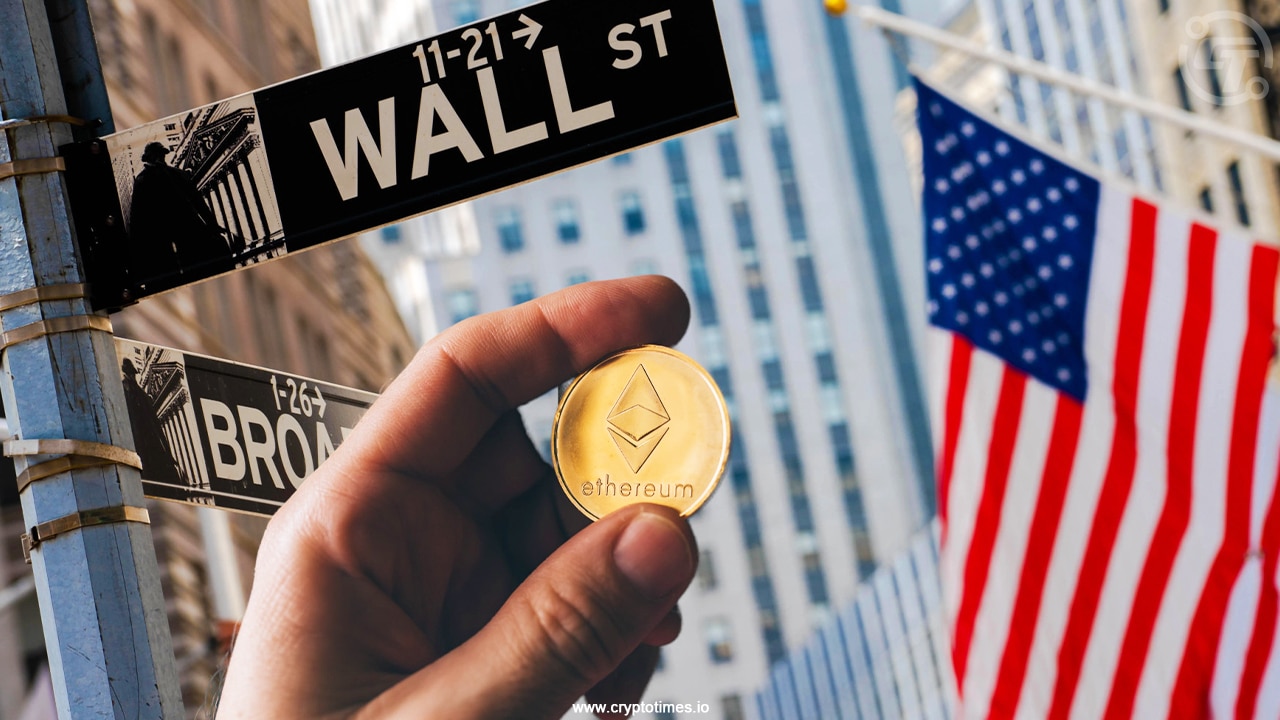
As BlackRock, JPMorgan, and the NYSE race to tokenise everything, the fund that guards global financial stability is issuing a quiet but urgent warning: build this wrong, and the next market crisis won’t just spread faster — it will be structurally impossible to stop.
There is a particular kind of danger in making financial systems too efficient. The history of modern finance is, in some essential way, the story of buffers — the friction, the delay, the human pause between a decision and its consequence. Margin calls that took hours to process. Settlement cycles that ran two business days. Clearing houses that smoothed out the chaos of simultaneous trades. These inefficiencies were not design flaws. They were, in the language of systems engineering, shock absorbers. And Wall Street has spent the last three years engineering a future in which they no longer exist.
That future now has a name — tokenised finance — and it is accelerating with the kind of momentum that tends to outpace regulatory architecture by a decade. BlackRock’s BUIDL fund, launched in 2024 on the Ethereum blockchain and now managing over $2.5 billion in assets, has become the flagship of a movement. JPMorgan’s Kinexys platform — which powers the bank’s new My OnChain Net Yield Fund, known as MONY — made JPMorgan the largest globally systemically important bank to launch a tokenised money-market fund on a public blockchain. Earlier this year, the New York Stock Exchange announced plans for a blockchain-based venue that would allow investors to trade tokenised stocks and ETFs around the clock — no settlement delay, no market hours, no pause. According to data from rwa.xyz, tokenised real-world assets have now crossed $27.5 billion on-chain, with U.S. Treasury products alone accounting for more than $12 billion of that total.
This is not speculative anymore. This is infrastructure being built in real-time, at systemic scale, by institutions that sit at the very centre of the global financial plumbing.
And now the IMF wants you to pay attention to what happens when the plumbing has no pressure-relief valve.
What Tobias Adrian Actually Said — and Why It Matters More Than Headlines Suggest
On April 1, 2026, the IMF published a note that deserves to be read in full rather than summarised in a press release. Authored by Tobias Adrian, the Fund’s Financial Counsellor and Director of the Monetary and Capital Markets Department, “Tokenized Finance” does not read like a bureaucratic warning. It reads like a structural diagnosis.
Adrian’s central argument is precisely the one that Wall Street’s boosters tend to dismiss: that tokenisation is not a marginal efficiency improvement. It is, as the note puts it, “a structural shift in financial architecture” — one that fundamentally alters how trust, settlement, and risk management function at the system level. The distinction matters enormously. You can regulate a product. Regulating an architecture requires thinking several orders of magnitude further ahead.
The paper identifies four specific risk categories that deserve unpacking, because each one is more counterintuitive than it first appears.
The Four Risks: Why Speed Is the Most Dangerous Efficiency of All
1. The Temporal Buffer Problem
Traditional finance has always embedded time into its risk management. When a bank faces a margin call in a T+2 settlement system, it has approximately 48 hours to locate liquidity, assess counterparty exposure, and if necessary, contact a regulator. Central banks are designed around this rhythm — their liquidity tools, their emergency facilities, their intervention protocols — all calibrated to business-day cycles.
As the IMF note warns, tokenised systems replace this architecture with automated margin calls, continuous settlement, and algorithmic feedback loops that compress the intervention window to near-zero. Think about what that means in practice. A stress event that currently gives a regulator 48 hours to respond might, in a fully tokenised system, leave a window of 48 minutes — or less. The irony is acute: the feature Wall Street is selling as a benefit (instant settlement, 24/7 operation) is precisely the feature that turns a liquidity problem into a systemic cascade.
This is not theoretical. The crypto markets have already run this experiment, repeatedly. In May 2022, the collapse of the Terra/Luna ecosystem wiped out approximately $40 billion in value in 72 hours — a speed of contagion that no traditional market mechanism could have produced. Tokenised finance, at institutional scale, with real-world assets as collateral, would be playing the same game with significantly higher stakes.
2. Concentration and Shared Infrastructure Risk
The second risk is one that financial stability analysts recognise from the pre-2008 era — but with a modern twist. When multiple institutions route through the same ledger infrastructure, errors in smart contracts or infrastructure failures can affect all participants simultaneously, rather than in the sequential fashion that allows for containment. The IMF calls this a concentration risk embedded in shared ledger architecture — a form of correlated exposure that has no real precedent in traditional finance.
One bug in a smart contract governing a trillion-dollar collateral ecosystem is not an operational nuisance. It is a systemic event.
3. Fragmentation and the Liquidity Silo Problem
Here is where the picture becomes genuinely paradoxical. Tokenisation promises to improve market liquidity — and in narrow, isolated conditions, it does. But if multiple platforms emerge with incompatible standards and siloed liquidity pools, the aggregate effect is the opposite. The IMF warns that fragmentation across platforms reduces netting efficiency and impairs the par convertibility between assets — the ability to treat different instruments as equivalent for settlement purposes — which is a foundational assumption of modern financial plumbing.
Imagine ten competing tokenisation platforms, each hosting its own version of tokenised Treasuries, each with slightly different legal frameworks and redemption mechanisms. In a calm market, they coexist. In a stress event — when institutions rush simultaneously to redeem and convert — the absence of common standards turns a manageable liquidity event into a multi-front crisis with no coordinating mechanism.
4. Cross-Border Chaos and the Jurisdictional Void
Tokenised transactions are, by their nature, borderless. A smart contract executing on Ethereum does not consult a legal jurisdiction before settling. But dispute resolution mechanisms remain stubbornly national — and the legal status of tokenised assets remains, in most jurisdictions, profoundly uncertain. Who owns a tokenised bond during an insolvency? Under which country’s law? In which court? The IMF flags that the principle of “code is law” — beloved by blockchain maximalists — is not a substitute for legal certainty, especially for instruments sitting inside systemically important institutions.
The Emerging Market Dimension: Who Bears the Tail Risk?
If you are reading this from London, New York, or Frankfurt, the systemic risks of tokenised finance feel abstract — contained, perhaps, to the corridors of Canary Wharf or Wall Street. That is a dangerous perspective.
For economies in Latin America, sub-Saharan Africa, and South and Southeast Asia, the tokenisation wave carries a specific and asymmetric danger: monetary sovereignty. A previous IMF analysis documented how dollar-backed stablecoins are already accelerating currency substitution in high-inflation economies — Argentina, Turkey, and Venezuela are the textbook cases. Privately issued global stablecoins, if they become dominant settlement assets in tokenised markets, could displace local currencies in exactly the jurisdictions where central banks have least capacity to respond.
This is the emerging market dimension of tokenisation risk that most Western commentary ignores entirely: the possibility that the infrastructure of the next financial crisis will be built in New York but the worst of its consequences will be felt in Nairobi, Jakarta, or Buenos Aires. The capital-flow volatility implications alone — tokenised assets enabling frictionless cross-border movement — could destabilise exchange rates in ways that make the 1997 Asian financial crisis look well-cushioned by comparison.
Why This Is Not Anti-Innovation Scaremongering
Let us be precise about what this argument is not.
The efficiency gains from tokenisation are real and measurable. Atomic settlement — the simultaneous exchange of asset and payment — eliminates counterparty risk in a way that the T+2 system never could. Embedded compliance through programmable assets reduces the cost of regulatory reporting. Continuous liquidity management allows institutions to optimise collateral use in ways that genuinely benefit end investors. BlackRock’s Larry Fink has called for the entire financial system to run on a common blockchain — and while the maximalism of that vision invites scepticism, the underlying logic about settlement efficiency is sound.
The IMF note, to its credit, does not dispute any of this. Adrian explicitly acknowledges the benefits. His argument — and mine — is architectural, not ideological. The question is not whether to tokenise finance. That ship has already sailed, and the $27.5 billion on-chain today is merely the early tide. The question is how the foundational infrastructure is built, and who bears the systemic risk when it fails.
A high-speed train is not inherently dangerous. A high-speed train without adequate braking systems, operating on tracks without standardised gauges, running through tunnels with no emergency protocols — that is a different proposition entirely.
The IMF’s Five-Pillar Prescription: A Policy Architecture Worth Taking Seriously
Adrian proposes a five-part framework that is more rigorous than most regulatory roadmaps currently circulating in parliamentary committees and central banking briefing rooms.
First, anchor settlement in safe money — specifically, wholesale central bank digital currencies (wCBDCs) or equivalent public-sector settlement assets. The principle is straightforward: the trust that makes financial systems function cannot be fully outsourced to private infrastructure. Settlement in private stablecoins, however well-designed, creates a dependency on entities that lack the public accountability and unconditional backing of a central bank.
Second, apply consistent regulation to economically equivalent activities. A tokenised money-market fund that functions identically to a traditional money-market fund should face the same regulatory requirements — regardless of the technology underlying it. This sounds obvious. In practice, regulatory arbitrage between tokenised and traditional instruments is already emerging, and the IMF is right to call it out early.
Third, establish legal certainty for tokenised assets — clarifying ownership rights, creditor protections, and jurisdictional applicability before the scale of these markets makes retroactive legal reform prohibitively complex.
Fourth, promote interoperability standards that prevent the fragmentation of liquidity across incompatible platforms. This is a role for standard-setting bodies — the BIS Innovation Hub, IOSCO, the Financial Stability Board — rather than individual institutions, and it requires coordination across jurisdictions that rarely cooperate at speed.
Fifth, and most ambitiously, adapt central bank liquidity tools to a 24/7 automated environment. This is the deepest structural challenge. The Federal Reserve, the European Central Bank, the Bank of England — all of them are currently calibrated to intervene at business-day frequency. A financial system that settles continuously requires lender-of-last-resort tools that operate continuously. That is not a software update. It is a fundamental reimagining of what central banking looks like in the digital age.
The Window Is Open — For Now
There is a line near the end of Adrian’s note that should be quoted wherever serious people discuss financial architecture: “The window for shaping the architecture of the tokenised financial system is open, but it will not remain so indefinitely.”
That is not bureaucratic boilerplate. It is a precise statement about the path-dependency of infrastructure decisions. Once JPMorgan’s MONY fund has $100 billion under management. Once the NYSE’s tokenised equities platform is processing ten million trades a day. Once the legal precedents that emerge from the first tokenisation-related insolvency have hardened into case law in six different jurisdictions simultaneously — at that point, the architecture is largely fixed. You can regulate at the margins. You cannot redesign the plumbing while the city runs on it.
Policymakers — at the Federal Reserve, the Bank for International Settlements, the Financial Stability Board, and in finance ministries from Washington to Brussels to Singapore — have a narrow window to establish the public infrastructure and coordination frameworks that could make tokenised finance genuinely safe. What that requires, practically, is not regulatory hostility to innovation but something considerably harder: regulatory ambition. The willingness to build public infrastructure ahead of private demand. The discipline to enforce interoperability before fragmentation becomes entrenched. The foresight to extend central bank tools into a 24/7 world before the first crisis demonstrates why it was necessary.
The private sector is moving fast. BlackRock, JPMorgan, the NYSE — they are not waiting. The public sector, historically, moves slower. In this case, the asymmetry between those two speeds is itself the systemic risk.
The IMF has named it. The architecture remains, for now, unbuilt. That is the most important financial stability question of 2026 — and the one that will define the next crisis when it comes.
Discover more from The Economy
Subscribe to get the latest posts sent to your email.



Key Takeaways
- Rolex’s secondary market rose approximately 7.9% year-over-year as of 2026 (per WatchCharts data) — trailing Patek Philippe (+16.2%) and Tudor (+11.4%) but still outperforming Audemars Piguet (+3.4%).
- Rolex raised U.S. retail prices 4–9% in January 2026 (steel models ~5.6%, gold models ~8.7%), narrowing the historical gap between retail and pre-owned pricing.
- Not every model appreciates: steel sports references (Submariner, GMT-Master II, Daytona) have held value far better than two-tone or widely available dress references like the standard Datejust.
- The Lady-Datejust posted the sharpest 2026 gain among tracked collections — up 22.73%, from roughly $9,269 to $11,376 — driven by demand for smaller, “everyday luxury” watches.
- Gold’s rise past $2,400/oz has directly lifted the investment case for Rolex’s precious-metal references (Day-Date, Sky-Dweller, Yacht-Master).
The Model-by-Model Picture
| Category | 2026 Trend |
|---|---|
| Lady-Datejust | +22.73% (strongest performer among tracked collections) |
| Steel sports models (Submariner, GMT-Master II) | Held value well; corrected from 2022 peak but stabilized above retail |
| Daytona | Corrected from highs above $50,000 to the mid-$30,000s; still among the most sought-after references |
| Two-tone/widely available Datejust | Flat to negative — “holds value” is an overstatement for this category |
| Gold references (Day-Date, Sky-Dweller) | Lifted by gold’s rise above $2,400/oz |
Why the “Rolex Always Appreciates” Myth Is Fading
The pandemic-era boom pushed some references — the Daytona above all — to speculative highs disconnected from historical norms. Since the March 2022 peak, steel sports models have compressed meaningfully, and dealers who bought inventory near the top have in some cases faced 20–40% markdowns on liquidation. The lesson for 2026 buyers: Rolex as a category is not a monolith. Value retention depends heavily on specific reference, condition, and whether the piece comes with box and papers (“full set”).
What’s Actually Driving 2026 Strength
- Retail price increases raise the floor. When a new Submariner retails at $10,050 (up from $9,500), a pre-owned example at $11,000–$12,000 suddenly represents a smaller premium — narrowing the gap without secondary prices actually moving.
- Supply discipline remains Rolex’s core lever. The brand has never confirmed production numbers, and secondary-market premiums remain entirely a function of Rolex’s own manufacturing decisions — a risk factor as much as a support.
- Certified Pre-Owned rollout. Rolex’s now fully rolled-out CPO program has changed how buyers transact in the used market, adding a layer of brand-verified legitimacy that supports pricing.
The Case for Rolex as a Portfolio Diversifier
Financial advisors increasingly frame luxury watches not as a replacement for equities or bonds, but as a tangible, historically low-correlation diversifier — one that carries its own risks (illiquidity, condition-dependent pricing, no yield) but has demonstrated multi-decade resilience for specific references.
Is Rolex a good investment in 2026?
It depends heavily on the specific reference. Steel sports models like the Submariner and Daytona have held or grown in value; two-tone and widely available dress models generally have not. Overall, Rolex’s secondary market rose about 7.9% year-over-year in 2026, trailing Patek Philippe but ahead of Audemars Piguet.
Discover more from The Economy
Subscribe to get the latest posts sent to your email.

Navigating Mortgage and Loan Refinancing in a High-Yield Environment
Global public debt crossing critical thresholds has kept central bank policies volatile, resulting in fluctuating US Treasury yields throughout 2026. For homeowners and commercial property holders burdened by previous high-interest borrowing cycles, finding optimal refinance windows has become a high-stakes financial puzzle. Stalled disinflation and stubborn employment numbers mean rate cuts are incremental, requiring borrowers to act with precision.
Timing your mortgage or commercial loan refinance in this environment requires a deep understanding of yield curve movements and lender risk appetites.
Decoding 2026 Refinance Dynamics
The 10-Year Treasury Yield Benchmark
Mortgage rates continue to track closely with the 10-year US Treasury yield. When macroeconomic anxiety spikes debt issuance, yields rise, tightening consumer borrowing capacity. Savvy borrowers monitor weekly Treasury auctions to lock in rates during brief dip windows.
Hybrid ARMs and Alternative Structures
With fixed rates remaining elevated, 7/1 and 10/1 adjustable-rate mortgages (ARMs) have surged in popularity. These products offer lower initial monthly payments, giving borrowers breathing room until central bank easing cycles fully materialize.
| Loan Product | Current Rate Range | Best For | Key Risk Factor |
| 30-Year Fixed Mortgage | 6.2% – 6.8% | Long-term predictability | Higher initial monthly outlay |
| 7/1 Hybrid ARM | 5.5% – 5.9% | Short-term ownership / flipping | Rate reset risk after year 7 |
| Commercial Refinance | 7.0% – 8.2% | Corporate asset restructuring | Strict DSCR lender covenants |
Actionable Steps for Successful Refinancing
To maximize your chances of securing favorable refinance terms in a volatile market, follow a disciplined preparation strategy.
Boost Your Credit Score Immediately: Lenders in 2026 are applying stringent credit tiering; a 20-point increase can drop your APR by a crucial quarter-point.
Shop Regional Credit Unions: Smaller financial institutions often offer portfolio loans with more flexible underwriting than major national banks.
Calculate the Break-Even Point: Ensure your total closing costs are recouped through monthly savings within 24 months of closing.
“Market Strategist View: Refinancing in 2026 is an exercise in opportunistic timing. Borrowers must maintain immaculate financial profiles ready to strike the moment Treasury yields dip.”
Mastering the complexities of today’s debt environment ensures you can successfully lower your debt service costs and protect your long-term financial stability.
Discover more from The Economy
Subscribe to get the latest posts sent to your email.

The days of pulling generic auto insurance quotes based purely on your zip code and age are officially over. In 2026, insurance comparison engines are powered entirely by generative AI and real-time telematics. These platforms digest thousands of live data points—ranging from your driving smoothness via connected vehicle sensors to real-time traffic congestion patterns—to generate hyper-personalized premiums instantly.
For consumers, this evolution represents both a massive opportunity for savings and a hidden trap for penalty pricing. Understanding how AI algorithms evaluate risk is essential for anyone looking to lower their monthly auto insurance premiums.
How AI Comparison Engines Evaluate Your Risk Profile
Behavioral Telematics and Connected Cars
Modern cars stream performance data directly to insurance aggregators. Generative AI models analyze braking sharpness, acceleration curves, cornering G-forces, and phone distraction metrics. Drivers who maintain smooth, defensive habits are rewarded with dynamic rate cuts of up to 40% compared to traditional rating tiers.
Predictive Traffic and Weather Modeling
AI tools now cross-reference your daily commute route with predictive weather and accident probability models. If your standard parking location or driving corridor has a statistically higher incidence of uninsured motorist claims, your quotes will reflect that hyper-local risk assessment.
| Comparison Factor | Traditional Rating Model | 2026 Generative AI Model | Impact on Premium |
| Mileage & Usage | Annual estimated odometer reading | GPS tracking & live trip duration | High (up to 35% savings) |
| Driving Behavior | MVR driving record & accidents | Real-time braking, speed, & G-force | Critical (determines tier) |
| Vehicle Tech | Make, model, and safety rating | ADAS calibration & repair cost data | Moderate |
Strategies to Lower Your AI-Driven Insurance Quote
To outsmart the algorithm and secure the lowest possible premium in 2026, drivers must proactively manage their digital footprint on insurance platforms.
Opt-In for Telematics Trial Periods: Many insurers offer immediate 15% discounts just for installing their driving app; let it track safe habits for 30 days to lock in permanent savings.
Scrub Unverified Public Records: Ensure your motor vehicle report is free of clerical errors that AI risk models misinterpret as reckless behavior.
Compare AI Aggregators: Use platforms that integrate multi-carrier API feeds rather than single-brand comparison sites to find the best risk-adjusted rate.
“Industry Note: AI-driven pricing rewards transparency and precision. Drivers who actively manage their telematics data consistently out-save those relying on legacy quote calculators.”
Embracing AI comparison tools allows savvy policyholders to customize coverage limits precisely to their driving habits, eliminating wasted premium spend while ensuring robust protection.
Discover more from The Economy
Subscribe to get the latest posts sent to your email.

Anthropic Bans Sustained Abuse of Claude AI Under New Usage Policy Effective November 12, 2026

Jeff Bezos Three-Day Workweek View: What He Really Said

Celeste Frozen Pizza Discontinued: What Conagra Confirmed

US–China Critical Minerals Competition: Why a Trade Deal Cannot Fix Every Supply Risk

Oil Price Outlook 2026: How Supply Risks Reach Fuel Bills, Inflation and Business Costs

AI in Business 2026: Why Faster Employees Do Not Automatically Mean Higher Profits

Mortgage Rates in 2026: Why They Remain High and How to Compare the True Cost

Gold Price Outlook 2026: The Forces Behind the Forecasts—and What Could Reverse Them

Global Economic Outlook 2026: Growth, Inflation and Risks

Trump–Putin Diesel Deal: Why Zelensky Is Angry and What It Means for Fuel Prices

Anthropic Draws the Line: Why Claude’s New Usage Policy Explicitly Bans ‘Cruel Behavior’ Toward AI

Ynon Kreiz & Mattel’s Digital Transformation: Franchise Strategy and Financial Growth

Crude Oil & Petroleum Market Analysis: OPEC+ Decisions and Price Forecasts

Top US Convenience Store Chains: Store Counts, EV Charging, and Sales Trends

Oil Prices Break $100 in 2026: Middle East Conflict & Energy Markets

China Stocks Today: Are Big Economies in Asia Nearing a Market Bottom?

Middle East War Economics 2026: Oil Prices & Energy Markets

PSX Forecast 2026: KSE-100, IMF Reviews & Geopolitics

Crypto Daily Outlook: Bitcoin, Altcoins, and the Future of Decentralized Finance

Global Pension Systems Ranked: The World’s Best and Worst Retirement Frameworks

Enterprise AI Platforms Disrupting B2B SaaS in 2026: Full Analysis

World’s Largest Economies: Ranking the Top Global Powers

Elon Musk’s Next Moves: Disrupting the 2026 Global Economy

Pakistan Economy 2026: Inside the SBP’s Balancing Act

GasBuddy Market Insights: How Crude Price Shifts Impact Local Fuel Cost Averages

World Bank & IMF Reports 2026: Why the “3% Growth” Consensus Is Actually a Debate

Global Equity Market Divergence: US Tech vs. European Dividend Stocks vs. Asian Growth

Stock Market Today: Dow Climbs 500 Points as Markets Shake Off Inflation Jitters
-

 Markets & Finance9 months ago
Top 15 Stocks for Investment in 2026 in PSX: Your Complete Guide to Pakistan’s Best Investment Opportunities
-

 Analysis8 months ago
Johor’s Investment Boom: The Hidden Costs Behind Malaysia’s Most Ambitious Economic Surge
-

 Analysis8 months ago
Top 10 Stocks for Investment in PSX for Quick Returns in 2026
-

 Banks9 months ago
Best Investments in Pakistan 2026: Top 10 Low-Price Shares and Long-Term Picks for the PSX
-

 Analysis8 months ago
Brazil’s Rare Earth Race: US, EU, and China Compete for Critical Minerals as Tensions Rise
-

 Investment9 months ago
Top 10 Mutual Fund Managers in Pakistan for Investment in 2026: A Comprehensive Guide for Optimal Returns
-

 Global Economy10 months ago
15 Most Lucrative Sectors for Investment in Pakistan: A 2025 Data-Driven Analysis
-

 Global Economy10 months ago
Pakistan’s Export Goldmine: 10 Game-Changing Markets Where Pakistani Businesses Are Winning Big in 2025