
Analysis
France opposes ‘anglicisation’ of EU trade talks

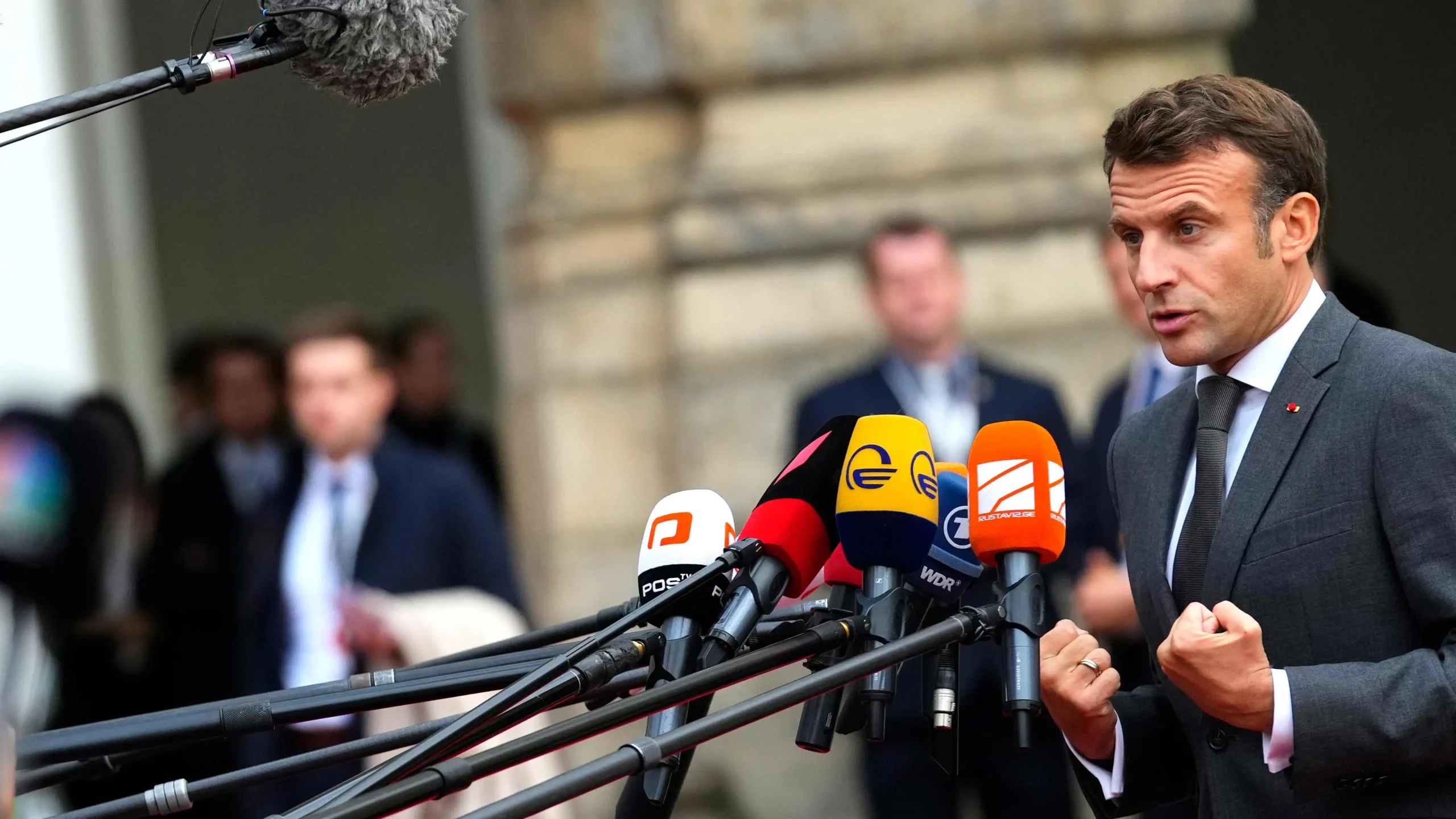
BRUSSELS — When the European Commission’s trade negotiators sat down last week to map out the next phase of talks with Mercosur, a familiar diplomatic tremor rippled through the room. It had nothing to do with tariff schedules or agricultural quotas. On the table was a procedural proposal to streamline the bloc’s negotiation practice by adopting English as the single working language for all trade talks. France’s deputy permanent representative, Anne-Marie Descôtes, scanned the document, then rose to speak. “This is not a technical adjustment,” she said, according to two officials present. “It is a cultural surrender.”
The proposal was shelved before the coffee arrived. By the end of the day, Paris had made clear it would veto any formal move toward what it calls the “anglicisation” of EU trade diplomacy. The episode, which might look like Brussels arcana, cuts to the marrow of a struggle that has intensified since Brexit removed the bloc’s largest native-English-speaking member: the contest over whose language shapes the terms of European power.
The dispute is not new. What has changed is the context. The departure of the United Kingdom in 2020 left English without a major state patron inside the Union, yet its institutional dominance only grew. English remains the lingua franca of the Commission’s trade directorate, the default language of legal drafting, and the working tongue of most technical committees. Ireland and Malta, the two remaining members with English as an official language, together account for less than 1% of the EU population. The irony is stark: a language that no longer belongs to any large member state now governs the bloc’s most sensitive external negotiations. For France, this is both a strategic wound and an ideological rallying cry.
A recent report by the French Senate’s European affairs committee estimates that French-language usage in EU institutions has fallen by 30% since 2004, with the steepest declines in the Commission’s trade and competition arms. Meanwhile, the EU spends roughly €1.1 billion annually on translation and interpretation services across all institutions, according to the European Court of Auditors’ 2025 language audit. The figure is often cited by proponents of linguistic streamlining, who argue that adopting a single working language for trade talks could save up to €180 million a year. French officials counter that the calculation is not merely financial.
The core development: a veto that signals a doctrine
French opposition to the English-only proposal crystallised on 9 June, when trade ministers gathered in Luxembourg for a Council meeting ostensibly focused on market access tools and WTO reform. What few expected was that Paris would use the session to lay down a red line that had been quietly hardening for months. According to a Reuters report on the closed-door exchange, French Trade Minister Sophie Primas told her counterparts that “linguistic diversity is not a barrier to be removed but a constitutional principle of the Union,” and that “any move to make English the sole procedural language would be challenged before the European Court of Justice.”
The statement was no rhetorical flourish. France has been building a legal and political architecture to defend multilingualism as a fundamental right of member states. Article 55 of the Treaty on European Union already guarantees equal linguistic status for all official languages, but its application to internal working practices has been murky. Primas’s intervention signalled that Paris is ready to test that ambiguity in court, a move that could drag trade negotiations into procedural paralysis for years.
The immediate trigger was a 45-page Commission discussion paper, seen by the Financial Times, that argued monolingual trade talks would cut negotiation timelines by up to 20%, reduce the risk of interpretative errors in legal texts, and align the EU with the practice of trade partners like the United States, Japan, and Australia — all of whom negotiate exclusively in English. The paper was careful to note that final treaty texts would still be translated into all 24 official languages before signature, but the working phase — often lasting four to six years — would function in a single language.
French officials were not mollified. “The distinction between ‘working language’ and ‘official language’ is a semantic trap,” one senior French diplomat told the Economist on condition of anonymity. “What happens in the working phase determines what is possible in the final phase. Excluding a language from the room is excluding the people who think in that language.”
The French position has gathered tacit support from Spain, Italy, and Germany — though Berlin’s enthusiasm is tempered by its business community’s preference for English as a neutral, efficient tool. A Bloomberg report noted that German Chancellor Friedrich Merz privately sympathises with the French cultural argument but will not jeopardise the Mercosur ratification timeline, which is already years behind schedule.
Why language is not merely a tool
The French resistance is often caricatured as nostalgic pique, but the strategic logic runs deeper. Language is a carrier of legal concepts, negotiating frames, and power asymmetries. A trade negotiation conducted entirely in English favours those who have mastered not just the vocabulary but the rhetorical conventions of Anglo-American legal and economic thought. A negotiator from a civil-law tradition, trained in French or German legal categories, can find herself forced to argue inside a conceptual grid that does not fully accommodate her own juridical instincts.
Why does France want French to remain a working language in EU trade talks? France argues that using English as the sole procedural language disadvantages non-native speakers, undermines linguistic diversity, and grants an unearned advantage to negotiators from Anglophone legal cultures. The French view holds that language shapes thought; when a trade rule is conceptualised in English, it tends to import common-law assumptions into a predominantly civil-law union. The linguistic choice, from this perspective, is never neutral.
That view is not fringe. A 2024 OECD trade policy paper found that language barriers can add the equivalent of a 9% to 15% tariff to trade in services, and that the effect is most pronounced in legal and financial services — precisely the sectors most sensitive to regulatory nuance. The study notes that when negotiators work in a non-native language, the risk of “conceptual misalignment” in final treaties rises measurably. The paper stops short of recommending any specific linguistic policy but makes clear that the costs of monolingualism are not zero.
Beyond economics, the French case draws on a broader European unease about cultural erosion. In a 2025 Eurobarometer survey, 62% of EU citizens said that “maintaining linguistic diversity is essential to European identity,” while only 31% agreed that “English should be the single working language of EU institutions.” The sentiment runs strongest in southern and eastern member states, where English proficiency remains lower than in the Nordic and Benelux countries. France has been quietly building a coalition of the linguistically disenfranchised, framing its position not as French exceptionalism but as a defence of pluralism.
Yet the picture is more complicated than a straightforward culture-versus-efficiency binary. The Commission’s internal surveys show that younger diplomats across the EU increasingly prefer English as a common working medium, not out of cultural submission but out of pragmatism. A 2026 internal staff poll, leaked to Politico Europe, indicated that 74% of trade-unit officials under 40 believe switching to a single working language would improve their professional effectiveness. For many Eastern European and Nordic capitals, the French position looks like an attempt to impose a linguistic hierarchy that benefits Paris and Brussels insiders who were educated in French-language grandes écoles.
Second-order effects: what a multilingual mandate would cost
If France succeeds in blocking the anglicisation of trade talks, the practical consequences will ripple across the EU’s negotiating machinery. The most immediate effect would be the retention — and likely expansion — of interpretation and translation services during the working phase of trade negotiations. Currently, the Commission uses a “pivot language” system for many internal meetings: interpretation is provided into French, German, and English, but smaller languages are covered only upon request. A French victory would probably force the Commission to provide full interpretation in at least the three procedural languages for all trade-related working groups, adding an estimated €240 million to the EU budget over the next seven-year cycle, according to an IMF working paper on institutional language costs.
The timeline implications are harder to quantify but potentially far larger. Trade negotiations are already glacial. The EU’s deal with Mercosur took more than two decades from initial talks to political agreement, and ratification is still pending in several member states. If every drafting session must accommodate simultaneous interpretation and cross-checking of legal terms in multiple languages, the median negotiation timeline could stretch by 18 to 24 months, according to a World Bank policy research note published in March. For agreements like the ongoing EU-India talks, where speed is seen as a geopolitical imperative to counter Chinese influence, that delay could have strategic costs that dwarf the financial ones.
Business groups are already signalling alarm. BusinessEurope, the continent’s largest employer federation, warned in a position paper this month that “any measure that prolongs trade negotiations weakens the EU’s ability to secure market access at a time when protectionist pressures are mounting globally.” The federation’s director-general, Markus Beyrer, cited the example of the EU’s stalled free trade agreement with Australia, where linguistic friction — particularly over the French translation of agricultural origin rules — contributed to a 14-month delay in 2024–25. “We cannot afford to make language another non-tariff barrier,” Beyrer said.
The legal dimension adds another layer of risk. Primas’s threat of a Court of Justice challenge is not empty. The Court has ruled before on linguistic rights in the EU — notably in Kik v OHIM (2003) — but has rarely been asked to adjudicate the internal working practices of the Commission in trade matters. A ruling that enshrines a broad right to multilingual working procedures could constrain the EU’s institutional flexibility for decades, creating a precedent that extends beyond trade to competition policy, financial regulation, and even the European Central Bank’s operational language. Legal scholars at the Max Planck Institute for Comparative Public Law have argued that such a case would force the Court to weigh the principle of linguistic equality against the treaty-recognised objective of an efficient common commercial policy — a balancing act with no clear doctrinal solution.
The pragmatic case for English: a counterargument worth steel-manning
The argument for adopting English as a single working language in trade negotiations is neither philistine nor intellectually unserious. It rests on three empirical pillars: efficiency, legal certainty, and global interoperability.
Efficiency is the most straightforward. The EU negotiates trade agreements with over 70 countries and blocs, and in virtually all of them the counterpart prefers English as the negotiating medium. Even China, which has invested heavily in French-language diplomacy in Africa, conducts its EU trade dialogue in English. Maintaining a multilingual negotiation framework means that every document must be translated, every oral intervention interpreted, and every legal term cross-checked against multiple linguistic versions — not just at the end but throughout the process. The Commission’s own impact assessment from January 2026 estimated that a shift to English-only working would reduce the average trade negotiation duration from 7.3 to 5.8 years.
Legal certainty is the second pillar. Trade agreements are technically bilingual or trilingual in their authentic versions, but when the working language is English, the English text tends to become the de facto master version, reducing the risk that courts or arbitration panels will later find irreconcilable differences between languages. The EU-Singapore Free Trade Agreement, for example, faced a three-month delay in 2022 when the French and English versions of the intellectual property chapter were found to contain a discrepancy that would have altered the scope of copyright protection. “One language from drafting to signature is not linguistic imperialism,” said Anu Bradford, a trade law professor at Columbia Law School, in a recent interview with the Peterson Institute. “It is a risk-management tool. Multilingualism in legal drafting has produced more arbitral disputes than any other single procedural factor.”
The third pillar is global interoperability. The multilateral trading system is an English-language system. WTO dispute panels, UNCITRAL arbitration, and ISDS tribunals operate overwhelmingly in English. A European trade negotiator who cannot think and argue fluently in English is professionally handicapped not because of Anglo-American hegemony but because of path dependency. The EU’s own trade defence instruments — anti-dumping investigations, safeguard proceedings — already function almost entirely in English. Singling out the negotiation phase for special linguistic treatment is, from this perspective, an inconsistency that serves no one’s interest except that of a small cadre of French-language diplomats who, as one unnamed Commission official told the Wall Street Journal, “are defending their own relevance more than any cultural principle.”
This pragmatic case does not dismiss cultural identity, but it draws a sharp distinction between areas where identity should govern and areas where function should govern. A trade negotiation is not a parliamentary debate or a citizen-facing regulatory process; it is a technical exercise in maximising joint welfare under constraint. To burden it with symbolic politics, proponents argue, is to make the EU slower, less coherent, and less competitive at a moment when it can afford none of those things.
The synthesis, and what comes next
The French veto, for now, holds. The Commission has no appetite for a fight it would likely lose in the Council, where the linguistic coalition Paris has assembled — even if soft — makes a qualified majority improbable. The proposal for a single working language is effectively dead, though officials say it may resurface in a diluted form, perhaps as a pilot programme for minor trade dialogues with English-speaking partners. That would allow Paris to save face while letting the Commission claim a modest efficiency gain.
The episode, however, is about more than procedure. It exposes a fault line that runs through the European project at a moment of profound external pressure. The Union is trying to position itself as a geopolitical actor capable of striking strategic trade deals at speed, yet it remains constitutionally committed to a vision of linguistic equality that makes speed structurally difficult. Both commitments are genuine. Neither can be casually discarded.
What follows, however, is not a simple trade-off. Linguistic diversity is not merely ornamental; it is a mechanism that distributes power among member states, shapes the cognitive frames of policy, and connects the technocratic work of Brussels to the domestic publics that must ultimately ratify its results. To strip it away in the name of efficiency would be to centralise influence among those who are already linguistically privileged — a move that would almost certainly deepen the legitimacy deficit the EU suffers in precisely those regions where Euroscepticism is most virulent.
On a rain-slicked afternoon in the European quarter, a young French trade attaché, who had spent the morning arguing the case for multilingualism with his German and Danish counterparts, offered a thought that cut through the institutional noise. “We are not asking everyone to speak French,” he said. “We are asking that the room be large enough for more than one way of thinking.” The sentence lingers because it captures the true stakes of the dispute, which are not about languages at all but about whether a union of 27 distinct nations can negotiate as one without losing the distinctiveness that makes the union worth preserving.
Discover more from The Economy
Subscribe to get the latest posts sent to your email.



Navigating Mortgage and Loan Refinancing in a High-Yield Environment
Global public debt crossing critical thresholds has kept central bank policies volatile, resulting in fluctuating US Treasury yields throughout 2026. For homeowners and commercial property holders burdened by previous high-interest borrowing cycles, finding optimal refinance windows has become a high-stakes financial puzzle. Stalled disinflation and stubborn employment numbers mean rate cuts are incremental, requiring borrowers to act with precision.
Timing your mortgage or commercial loan refinance in this environment requires a deep understanding of yield curve movements and lender risk appetites.
Decoding 2026 Refinance Dynamics
The 10-Year Treasury Yield Benchmark
Mortgage rates continue to track closely with the 10-year US Treasury yield. When macroeconomic anxiety spikes debt issuance, yields rise, tightening consumer borrowing capacity. Savvy borrowers monitor weekly Treasury auctions to lock in rates during brief dip windows.
Hybrid ARMs and Alternative Structures
With fixed rates remaining elevated, 7/1 and 10/1 adjustable-rate mortgages (ARMs) have surged in popularity. These products offer lower initial monthly payments, giving borrowers breathing room until central bank easing cycles fully materialize.
| Loan Product | Current Rate Range | Best For | Key Risk Factor |
| 30-Year Fixed Mortgage | 6.2% – 6.8% | Long-term predictability | Higher initial monthly outlay |
| 7/1 Hybrid ARM | 5.5% – 5.9% | Short-term ownership / flipping | Rate reset risk after year 7 |
| Commercial Refinance | 7.0% – 8.2% | Corporate asset restructuring | Strict DSCR lender covenants |
Actionable Steps for Successful Refinancing
To maximize your chances of securing favorable refinance terms in a volatile market, follow a disciplined preparation strategy.
Boost Your Credit Score Immediately: Lenders in 2026 are applying stringent credit tiering; a 20-point increase can drop your APR by a crucial quarter-point.
Shop Regional Credit Unions: Smaller financial institutions often offer portfolio loans with more flexible underwriting than major national banks.
Calculate the Break-Even Point: Ensure your total closing costs are recouped through monthly savings within 24 months of closing.
“Market Strategist View: Refinancing in 2026 is an exercise in opportunistic timing. Borrowers must maintain immaculate financial profiles ready to strike the moment Treasury yields dip.”
Mastering the complexities of today’s debt environment ensures you can successfully lower your debt service costs and protect your long-term financial stability.
Discover more from The Economy
Subscribe to get the latest posts sent to your email.

The days of pulling generic auto insurance quotes based purely on your zip code and age are officially over. In 2026, insurance comparison engines are powered entirely by generative AI and real-time telematics. These platforms digest thousands of live data points—ranging from your driving smoothness via connected vehicle sensors to real-time traffic congestion patterns—to generate hyper-personalized premiums instantly.
For consumers, this evolution represents both a massive opportunity for savings and a hidden trap for penalty pricing. Understanding how AI algorithms evaluate risk is essential for anyone looking to lower their monthly auto insurance premiums.
How AI Comparison Engines Evaluate Your Risk Profile
Behavioral Telematics and Connected Cars
Modern cars stream performance data directly to insurance aggregators. Generative AI models analyze braking sharpness, acceleration curves, cornering G-forces, and phone distraction metrics. Drivers who maintain smooth, defensive habits are rewarded with dynamic rate cuts of up to 40% compared to traditional rating tiers.
Predictive Traffic and Weather Modeling
AI tools now cross-reference your daily commute route with predictive weather and accident probability models. If your standard parking location or driving corridor has a statistically higher incidence of uninsured motorist claims, your quotes will reflect that hyper-local risk assessment.
| Comparison Factor | Traditional Rating Model | 2026 Generative AI Model | Impact on Premium |
| Mileage & Usage | Annual estimated odometer reading | GPS tracking & live trip duration | High (up to 35% savings) |
| Driving Behavior | MVR driving record & accidents | Real-time braking, speed, & G-force | Critical (determines tier) |
| Vehicle Tech | Make, model, and safety rating | ADAS calibration & repair cost data | Moderate |
Strategies to Lower Your AI-Driven Insurance Quote
To outsmart the algorithm and secure the lowest possible premium in 2026, drivers must proactively manage their digital footprint on insurance platforms.
Opt-In for Telematics Trial Periods: Many insurers offer immediate 15% discounts just for installing their driving app; let it track safe habits for 30 days to lock in permanent savings.
Scrub Unverified Public Records: Ensure your motor vehicle report is free of clerical errors that AI risk models misinterpret as reckless behavior.
Compare AI Aggregators: Use platforms that integrate multi-carrier API feeds rather than single-brand comparison sites to find the best risk-adjusted rate.
“Industry Note: AI-driven pricing rewards transparency and precision. Drivers who actively manage their telematics data consistently out-save those relying on legacy quote calculators.”
Embracing AI comparison tools allows savvy policyholders to customize coverage limits precisely to their driving habits, eliminating wasted premium spend while ensuring robust protection.
Discover more from The Economy
Subscribe to get the latest posts sent to your email.

Despite decades of bans and strict handling mandates, asbestos remains a silent killer across legacy manufacturing plants, shipyards, and modern green-energy infrastructure retrofits. In 2026, regulatory changes by the EPA and tightened occupational health standards have triggered a fresh wave of mesothelioma litigation. Manufacturers attempting to fast-track industrial transitions are encountering catastrophic oversight, exposing workers to legacy toxins and opening corporate parent companies to unprecedented liability.
Navigating a mesothelioma claim in 2026 requires understanding how modern industrial supply chains intersect with historical exposure. Trusts established decades ago are being audited under stricter transparency laws, altering payout ratios and accelerating fast-track settlements for terminally ill plaintiffs.
Modern Industrial Exposure Hotspots
Green Retrofitting and Renewable Energy Infrastructure
A primary source of 2026 asbestos exposure occurs during the decommissioning and retrofitting of older industrial facilities for renewable energy production. Workers insulating electrical grids, modernizing HVAC systems, or upgrading manufacturing floors frequently disturb encapsulated asbestos materials that were improperly documented or ignored during facility audits.
Automotive and Aerospace Supply Chains
With advanced manufacturing booming, workers handling specialized friction materials, gaskets, and heat shields face ongoing risks. Supply chain tracing has become more sophisticated, allowing legal teams to pinpoint exact corporate entities responsible for raw material distribution across multinational borders.
| Industry Sector | Primary Exposure Risk | Legal Venue / Trust | Avg. Claim Value Range |
| Green Energy Retrofit | Disturbed insulation, pipe lagging | Federal Tort / Manufacturer Trust | $1.2M – $3.5M |
| Shipbuilding & Marine | Boiler insulation, structural seals | Asbestos Bankruptcy Trusts | $800K – $2.4M |
| Automotive Manufacturing | Brake components, high-heat gaskets | Third-Party Product Liability | $600K – $1.8M |
Securing Maximum Compensation: Steps for Plaintiffs
Time is of the essence in mesothelioma cases. Plaintiffs and their families must act decisively to secure financial recovery before statutes of limitations expire.
Retain Specialized Counsel: Work exclusively with national mesothelioma law firms possessing deep historical databases of asbestos-containing products.
Audit Employment History: Document every job site, supervisor name, and equipment brand encountered throughout your career.
Expedite Medical Filings: Secure a formal pathological diagnosis quickly to qualify for expedited trust fund distribution and priority trial settings.
“Expert Insight: Modern asbestos litigation is no longer just about historical tracking; it is about holding modern corporations accountable for failing to conduct rigorous environmental safety audits before initiating industrial retrofits.”
By combining meticulous work history reconstruction with aggressive multi-trust filings, victims can secure substantial financial relief to cover specialized immunotherapy and family support.
Discover more from The Economy
Subscribe to get the latest posts sent to your email.

Crypto Daily Outlook: Bitcoin, Altcoins, and the Future of Decentralized Finance

Anthony Scaramucci’s Crypto Prediction: Why MicroStrategy’s Move Is Bitcoin’s “iPhone Moment”

Best Dividend Stocks 2026: European & Asian Blue Chips

World Bank & IMF Reports 2026: Why the “3% Growth” Consensus Is Actually a Debate

Elon Musk’s Boring Company Hits $23B Valuation After UAE-Led $3 Billion Series D

Middle East War Economics 2026: Oil Prices & Energy Markets

PSX Forecast 2026: KSE-100, IMF Reviews & Geopolitics

Asian Markets Outlook 2026: China, Japan & Singapore Stocks

Global Economy 2026: IMF Growth, Inflation & Private Credit

Current Account Deficit (CAD) : Causes and Impact

Balance of Payments (BOP)

The Falkland Islands Dispute: Sovereign Wealth, Offshore Drilling, and Market Impacts

Gross Domestic Product (GDP): Nominal vs. Real

What is Inflation and the Consumer Price Index (CPI)?

State Farm’s $5B Dividend 2026: Who Qualifies & Payout Dates

US-China Relations in Q3 2026: Trade Tariffs and Supply Chain Risks

Gold’s Wild 2026: From a Record $5,600 Peak to a 24% Crash and Back Toward $4,500

Oil Surges as Strait of Hormuz Traffic Collapses Again

The Rocket That Won’t Quit: Inside SpaceX’s Falcon 9 Launch Machine

Bank of England Set to Hold Rates Through Year-End, Reuters Poll Shows

SpaceX Starship Flight 14: First Orbital Attempt & Starlink V3 Launch Explained

The 2026 Crypto Regulatory Shift: What It Means for Institutional Investors

AI Chip Stocks 2026: The Best Semiconductor Investments Beyond Marvell

Top 30 Stocks for Investment in PSX for Massive ROI in 2026

Retail Earnings Week: What Home Depot, Target & Walmart Reveal

AI-Powered Training: The Next Multi-Billion Dollar Ecosystem in Fitness

Russia’s Black Sea Oil Exports Fall for a Fifth Straight Week

Tween Back-to-School Trends 2026: What’s Driving the $85B Season
-

 Markets & Finance8 months ago
Top 15 Stocks for Investment in 2026 in PSX: Your Complete Guide to Pakistan’s Best Investment Opportunities
-

 Analysis7 months ago
Johor’s Investment Boom: The Hidden Costs Behind Malaysia’s Most Ambitious Economic Surge
-

 Analysis7 months ago
Top 10 Stocks for Investment in PSX for Quick Returns in 2026
-

 Analysis7 months ago
Brazil’s Rare Earth Race: US, EU, and China Compete for Critical Minerals as Tensions Rise
-

 Banks8 months ago
Best Investments in Pakistan 2026: Top 10 Low-Price Shares and Long-Term Picks for the PSX
-

 Investment8 months ago
Top 10 Mutual Fund Managers in Pakistan for Investment in 2026: A Comprehensive Guide for Optimal Returns
-

 Global Economy9 months ago
15 Most Lucrative Sectors for Investment in Pakistan: A 2025 Data-Driven Analysis
-

 Global Economy9 months ago
Pakistan’s Export Goldmine: 10 Game-Changing Markets Where Pakistani Businesses Are Winning Big in 2025