
Industory
iPhone Duo: Apple’s $1,999 Foldable Is Really a Bet on AI


Apple waited seven years to build a foldable. When the company finally showed one, the pitch wasn’t the hinge. It was the screen real estate, and what Apple’s rebuilt AI assistant can do with it.
On September 9, Apple unveiled the iPhone Duo at its Cupertino headquarters, with a starting price of $1,999 and an October 23 release date. It was also the first Apple launch event run by new CEO John Ternus, who took over from Tim Cook on September 1. hawaiitribune-herald
Here’s what the Duo is, what it costs, and why it matters beyond the spec sheet.
Key Takeaways
- Price and date: The iPhone Duo starts at $1,999 and arrives October 23. That makes it the most expensive iPhone Apple has sold. hawaiitribune-heraldazfamily
- Screen: It opens to a 7.6-inch display, about 80% larger than the iPhone 18 Pro’s. wrdw
- Form factor: Folded, the front screen is roughly passport-sized. Opened, it runs two apps side by side. hawaiitribune-herald
- AI is the headline: Apple pitches the iPhone as a “personal intelligent hub,” and Siri AI is the software that is supposed to prove it.
- Market impact: Foldables are under 2% of global smartphone shipments, but IDC expects Apple to capture about a third of foldable demand. citizen
- Financing: Apple Upgrade, a new leasing program, lets buyers pay over one or two years. citizen
What Is the iPhone Duo?
The iPhone Duo is Apple’s first foldable phone. It folds like a book into a compact, passport-sized device and opens into a tablet-style screen. CNN reports Apple claims it is the thinnest iPhone ever when unfolded. keyt
Apple’s pitch was aimed squarely at existing foldables. Ternus said, “Others have created foldables that just feel like two phones awkwardly stuck together.” The Duo’s answer is a larger working canvas that still fits a pocket, with iOS 27 built around multitasking on that canvas. hawaiitribune-herald
Apple also put the Duo in its AP-reported lineup alongside the iPhone 18 Pro and 18 Pro Max, not above them as a separate product line. That framing matters. Apple wants the Duo read as a new iPhone shape, not a niche experiment.
iPhone Duo Specs and Price at a Glance
| Feature | iPhone Duo | Notes |
|---|---|---|
| Starting price | $1,999 | Most expensive iPhone to date |
| Release date | October 23, 2026 | Per Apple’s announcement |
| Main display | 7.6 inches (open) | About 80% larger than iPhone 18 Pro |
| Cover display | Passport-sized | Per CNN |
| Frame and hinge | Grade 5 titanium, 3D-printed hinge cover | Per Technology Magazine’s spec rundown |
| Chip | A20 Pro | Handles on-device AI and Apple Intelligence tasks |
| Pencil support | Yes | A first for iPhone |
| Multitasking | Two apps or two windows of one site | Split-screen on the large display New iPhone lineup includes a foldable version called Duo +7 |
Camera, battery and storage specifics are on Apple’s product page. I’d verify those directly before quoting them in a buying guide.
iPhone Duo vs iPhone 18 Pro: Which One Fits You?
The iPhone 18 Pro starts at $1,199 and the 18 Pro Max at $1,299. The Duo costs $700 to $800 more than either. irishexaminer
| iPhone 18 Pro | iPhone 18 Pro Max | iPhone Duo | |
|---|---|---|---|
| Starting price | $1,199 | $1,299 | $1,999 |
| Form | Slab | Large slab | Foldable |
| Best for | Everyday power users | Battery and camera-first buyers | Multitaskers, readers, Pencil users |
| AI features | Full Apple Intelligence | Full Apple Intelligence | Full Apple Intelligence, larger canvas |
Here’s the honest framing. Apple Intelligence and Siri AI run on the iPhone 15 Pro and 16 series or newer. The AI itself isn’t a reason to pay for the Duo. The screen is. If you mostly text, shoot photos and scroll, an 18 Pro does the same AI work for far less. propakistani
Why the Duo Is an AI Story
Look at how Apple framed the launch. Ternus emphasized Apple’s AI work and called the iPhone the ideal “personal intelligent hub.” The foldable is the hardware argument for that idea: more room to show an assistant’s output, research, and your apps at once. hawaiitribune-herald
The software side is Siri AI. It is Apple’s redesigned assistant, built on the latest generation of Apple Intelligence, and it rolls out initially in English. Two limits are worth knowing. Siri AI is not initially available on iPhones in the European Union, and Apple Intelligence features remain unavailable in China while regulatory work continues. French, Japanese, Korean, Portuguese and Spanish arrive in October. Apple Confirms iOS 27 Release Date for Eligible iPhones +2
Why does this matter commercially? Large screens make AI more useful. Compare two documents, keep a chat open beside a web page, mark up a PDF with the Pencil. Those are tasks where a 6-inch slab feels cramped and a 7.6-inch canvas doesn’t. If Siri AI delivers, the Duo becomes the best showcase for it. If Siri AI stumbles, a $1,999 phone becomes a hard sell.
How the Duo Could Reshape the Foldable Market
The numbers explain why the industry is watching. Counterpoint Research says nearly 20 million foldables shipped last year, under 2% of all smartphones. That’s a rounding error for a company that sells hundreds of millions of iPhones. hawaiitribune-herald
Two analyst views frame the opportunity:
- Demand: IDC expects Apple to take roughly a third of foldable demand and says the entry could shift competition in both China and global markets. citizen
- Strategy: Forrester’s Dipanjan Chatterjee called it classic Apple: let others work out the kinks, then enter and shape the category. wrdw
Samsung, Motorola, Google and Huawei have sold foldables for years. CNN notes Apple’s entry could push the category beyond early adopters. The likely effect is a bigger overall foldable market, with Android makers forced to compete on price and software polish against Apple’s ecosystem pull. keyt
The Supply Chain Angle
Foldables are hard to manufacture at volume, and the Duo’s reported component list shows who benefits. TSMC fabricates the A20 Pro, and Foxconn handles the complex assembly, including the titanium and 3D-printed hinge parts. Expect hinge suppliers, display makers and assembly partners to be central to Apple’s earnings commentary this quarter. technologymagazine
What the $1,999 Price Really Means
Apple clearly knows that number is steep. That’s why Apple Upgrade matters. The monthly leasing program spreads the cost over one or two years. Leasing turns a $1,999 sticker into a manageable monthly figure and keeps buyers inside Apple’s upgrade cycle. citizen
Accessories add to the total. The iPhone Duo Case is $79 and the Duo Folio with Kickstand is $129, both orderable October 16. A buyer who wants the Folio is looking at about $2,128 before tax. blakecrosley
Should You Buy the iPhone Duo?
Buy it if:
- You work on documents, spreadsheets or research on your phone and want a real second pane
- You want Apple Pencil on an iPhone
- You’re upgrading from an older foldable and want to stay in iOS
- Your employer or business can absorb the cost
Wait or skip if:
- You want the lowest-risk choice. First-generation hardware, especially hinges, deserves a few months of real-world reviews
- You live in the EU or China and want Siri AI on day one
- Your use is mostly calls, messaging and photos, where an 18 Pro does the job for $800 less
What to Watch Before October 23
- Hands-on reviews: Hinge durability and crease visibility will decide the first-wave verdict.
- Siri AI quality: Early beta impressions will shape whether the Duo is seen as an AI device or a pricey gadget.
- App support: Developers need to adapt layouts for the larger screen. Fox News’ iOS 27 rundown shows how much of Apple’s software push centers on Apple Intelligence.
- Android response: Expect Samsung and Google to counter with pricing and promotions.
The Bottom Line
The iPhone Duo isn’t Apple copying foldables. It’s Apple using a foldable to make its AI case on a screen big enough to matter. At $1,999 it will stay a premium product, but its real influence is on the category: bigger market, higher expectations, more pressure on rivals.
If you’re deciding, wait for hands-on reviews and Siri AI’s first weeks in the wild. If Apple delivers on both, the Duo could be the phone that finally makes foldables mainstream.
Discover more from The Economy
Subscribe to get the latest posts sent to your email.


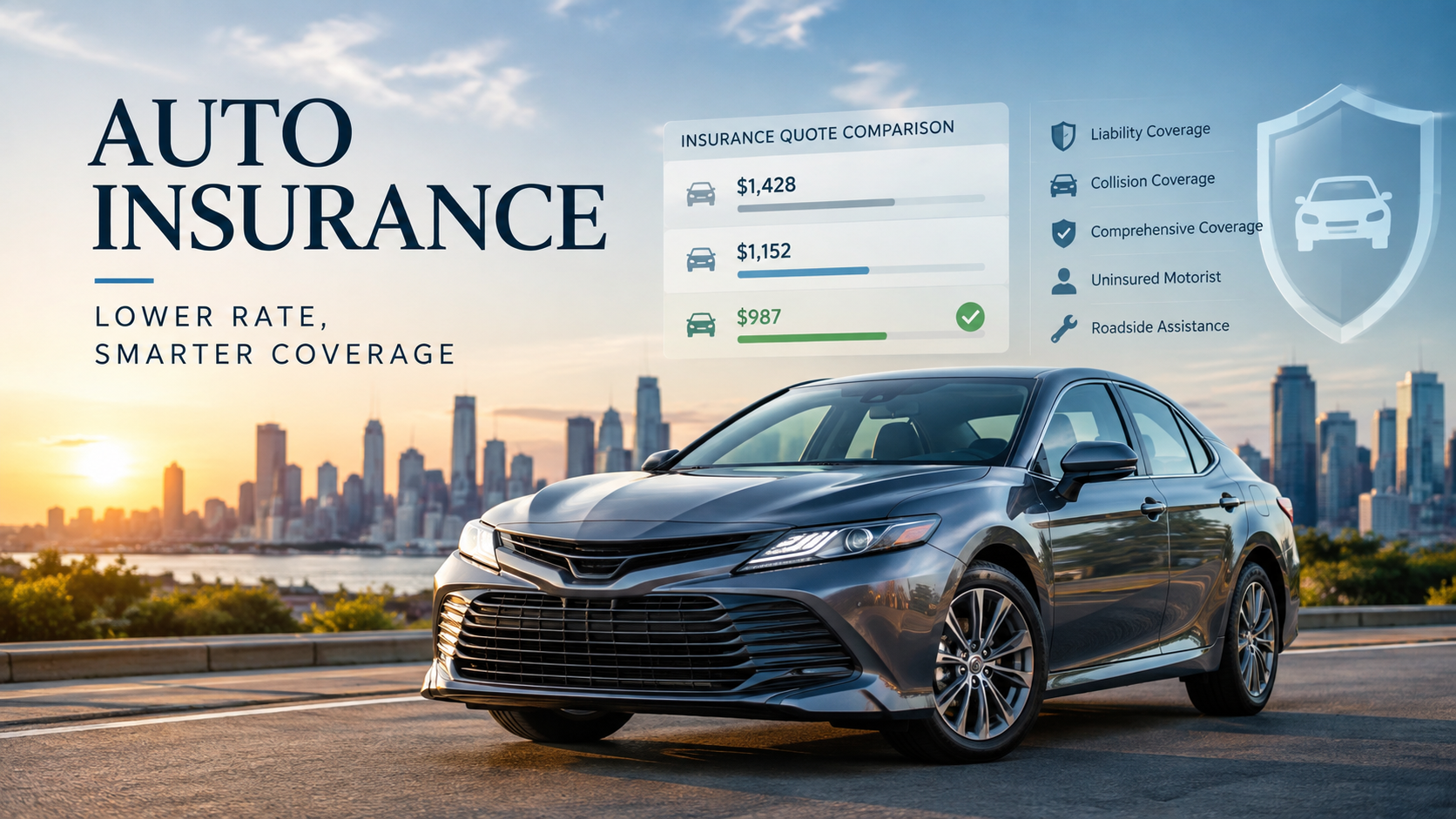
The gap between the cheapest and most expensive auto insurer for the exact same driver and the exact same coverage can exceed $500 a year — meaning the single highest-leverage financial decision most drivers never make is simply comparing quotes before renewal.
Auto insurance pricing isn’t a fixed number set by the market; it’s a highly individualized calculation that varies dramatically between insurers for identical coverage. Two drivers with the same age, location, and driving record can receive wildly different quotes from the same set of companies, which is precisely why shopping multiple quotes — rather than auto-renewing with a single carrier — remains one of the most reliable ways to reduce a major recurring household expense.
This guide covers how auto insurance quotes are actually calculated, current 2026 rate benchmarks, and how to compare quotes effectively without accidentally under-insuring yourself.
How Auto Insurance Quotes Are Actually Calculated
Insurers use dozens of variables to price a policy, and because each company weighs these factors differently, the “best” insurer for one driver is frequently not the best for another.
Key takeaway: The national average cost of full coverage car insurance is $2,315 per year, or about $193 per month, while minimum coverage averages $621 per year, according to NerdWallet’s 2026 rate analysis — but your own quote will likely differ substantially based on factors specific to you.
The Core Factors That Drive Your Quote
- Location — state and even ZIP code meaningfully affect rates, with full coverage ranging from roughly $128 per month in the cheapest states to over $330 per month in the most expensive.
- Driving record — accidents, violations, and DUIs are among the largest individual rate drivers.
- Credit-based insurance score — used in most states (though prohibited in a handful) as a statistically validated predictor of claims likelihood.
- Age and driving experience — younger, less experienced drivers consistently pay significantly more.
- Vehicle make, model, and year — repair costs, safety ratings, and theft rates all factor into pricing.
- Coverage limits and deductibles — higher liability limits and lower deductibles increase premiums.
Step-by-Step: How to Shop Auto Insurance Quotes Effectively
- Gather your current policy details — coverage limits, deductibles, and driver information — so you’re comparing equivalent coverage across quotes.
- Get quotes from at least three to five insurers, including both large national carriers and regional companies, since regional insurers frequently beat national rates in specific states.
- Request identical coverage limits on every quote — comparing a $500 deductible quote against a $1,000 deductible quote will produce a misleading price comparison.
- Ask about all available discounts explicitly, since not every discount is applied automatically.
- Compare the final out-the-door price, including fees, not just the advertised premium.
- Review coverage details, not just price — the cheapest quote sometimes reflects lower liability limits or missing coverage types.
Financial and Strategic Implications: 2026 Rate Benchmarks
Understanding current market rates helps you evaluate whether a quote you’ve received is actually competitive.
| Coverage Level / Company | 2026 Rate Benchmark | Source |
|---|---|---|
| National average, full coverage | $193/month ($2,315/year) | NerdWallet April 2026 analysis |
| National average, minimum coverage | $52/month ($621/year) | NerdWallet April 2026 analysis |
| Cheapest large insurer, full coverage | Travelers, ~$139/month | NerdWallet March 2026 analysis |
| Cheapest large insurer, liability-only | GEICO, ~$41/month | NerdWallet March 2026 analysis |
| Most expensive state (full coverage) | Nevada, ~$335/month | ValuePenguin 2026 State of Auto Insurance |
| Cheapest state (full coverage) | Vermont, ~$128/month | ValuePenguin 2026 State of Auto Insurance |
Expert insight: 2026 is shaping up to be the calmest year for auto insurance pricing since 2022, with national rates projected to rise less than 1% on average — following double-digit annual increases in 2023 and 2024. That relative stability makes this a favorable year to shop aggressively, since insurers competing for market share in a flatter-rate environment are often more willing to offer competitive new-customer pricing.
Why Identical Coverage Can Still Produce Very Different Quotes
Because each insurer’s underwriting model weighs risk factors differently — one company might penalize a recent speeding ticket heavily while barely adjusting for credit score, while another does the reverse — your price can vary meaningfully between insurers even for the same driver and coverage, which is exactly why comparison shopping consistently produces savings that simply renewing with the same insurer does not.
How to Choose the Right Auto Insurance Quote
- Don’t default to price alone — verify the liability limits, comprehensive/collision deductibles, and any exclusions match across every quote you’re comparing.
- Ask about bundling discounts — combining auto with homeowners or renters insurance frequently produces a meaningful discount with the same carrier.
- Check for usage-based/telematics programs — safe drivers can often secure additional discounts through an insurer’s driving-monitoring app.
- Re-shop annually, not just at renewal notice, since insurer pricing models shift and a company that was competitive last year may not be this year.
- Confirm the insurer’s claims-handling reputation, not just price, using state insurance department complaint ratios or third-party satisfaction surveys.
- Review minimum coverage carefully — the cheapest liability-only policy may leave you underinsured relative to your actual assets in a serious at-fault accident.
Key takeaway: The single biggest mistake drivers make isn’t picking the wrong insurer — it’s not requoting at all. Insurance pricing models change frequently enough that a policy competitive two years ago can quietly become overpriced relative to the current market, with no notification from your current insurer.
Future Outlook: Auto Insurance Rate Trends Through 2027
- Rate growth is expected to remain unusually flat. ValuePenguin projects national auto insurance rates to rise by less than 1% on average in 2026, the smallest increase since 2022, though state-level trends diverge significantly — some states are projected to see rates fall by several percentage points while others, led by New Jersey, are projected to rise more sharply.
- State-level divergence is widening. More than half of states are expected to see rates decline in 2026, even as a handful of states see continued increases, making location-specific comparison shopping more valuable than ever.
- Usage-based insurance adoption continues to grow. As more insurers expand telematics-based discount programs, safe drivers increasingly have access to meaningfully lower rates than standard pricing models would otherwise offer.
- Credit-based insurance scoring remains a contested policy issue. Several states continue to debate restricting or eliminating the use of credit history in auto insurance pricing, a change that could meaningfully shift relative pricing among insurers if enacted more broadly.
Frequently Asked Questions
How many auto insurance quotes should I get before choosing a policy? Most experts recommend comparing quotes from at least three to five insurers, including a mix of large national carriers and regional companies, since regional insurers can significantly undercut national pricing in specific states.
Will getting multiple auto insurance quotes hurt my credit score?
Generally no. Auto insurance quotes typically use a “soft pull” that doesn’t affect your credit score, unlike a hard inquiry from a loan or credit card application.
Why did my auto insurance quote go up even though I haven’t had any accidents?
Rate changes can reflect broader factors unrelated to your personal driving record, including inflation in vehicle repair costs, regional claims trends, and insurer-wide rate filings approved by state regulators.
Is the cheapest auto insurance quote always the best choice?
Not necessarily. A lower price can reflect reduced liability limits, higher deductibles, or missing coverage types, so it’s important to confirm you’re comparing genuinely equivalent coverage before choosing based on price alone.
How often should I shop for new auto insurance quotes?
Annually is a reasonable standard practice, since insurer pricing models and competitive positioning change over time, and a policy that was competitively priced in a prior year may no longer be.
Discover more from The Economy
Subscribe to get the latest posts sent to your email.
Tech Companies
Beyond Petrochemicals: How Indonesia’s Chandra Asri is Constructing an Integrated ASEAN Mobility Powerhouse

Indonesia’s largest petrochemical and infrastructure conglomerate, PT Chandra Asri Pacific Tbk, is executing a transformative strategic pivot. Controlled by Indonesian billionaire Prajogo Pangestu’s Barito Pacific Group, the Jakarta-listed giant is aggressively expanding beyond its traditional industrial manufacturing roots to establish a dominant, multi-tiered energy, retail, and mobility platform centered in Singapore.
By connecting upstream refining, retail fuel distribution, and automotive retail across Singapore and Malaysia, Chandra Asri is building a vertically integrated ecosystem designed to hedge against volatile commodity chemical cycles while capturing high-margin growth across Southeast Asia’s changing transportation landscape.
Executive Summary & Strategic Takeaways
- The Mobility Pivot: Through its subsidiary CCHPL Holdings, Chandra Asri signed a conditional agreement to purchase the Singapore and Malaysia automotive operations of Jardine Cycle & Carriage (C&C) for approximately S$265 million (US$207 million).
- The Full-Value Chain Strategy: The C&C acquisition complements two prior megadeals in Singapore: the acquisition of Shell’s Energy and Chemicals Park on Pulau Bukom/Jurong Island via Aster Chemicals (a joint venture with Glencore) and the purchase of ExxonMobil’s network of 60 Esso service stations.
- Accretive Valuation: Financial analysts estimate that the combined mobility and retail assets (Esso + C&C) will generate an additional US$150 million to US$200 million in annual profit, acquired at an attractive multiple of ~4.3x to 8.6x P/E.
- Macro Hedge: The move insulates Chandra Asri from regional petrochemical margin compression driven by global overcapacity, creating predictable, cash-flow-generative consumer touchpoints.
The Macro Logic: Moving Downstream Amid Petrochemical Headwinds
The Asian petrochemical sector has faced margin pressure in recent years due to expanding regional refining capacity and shifting global demand dynamics. For commodity producers relying strictly on olefins and polyolefins, earnings volatility remains a central challenge.
Chandra Asri’s strategy addresses this risk by transforming from a regional industrial supplier into a consumer-facing energy and mobility platform.
┌────────────────────────────────────────────────────────────────────────┐
│                        THE INTEGRATED VALUE CHAIN                      │
├──────────────────────────┬──────────────────────────┬──────────────────┤
│    UPSTREAM REFINING     │     RETAIL ENERGY        │ CONSUMER MOBILITY│
│ (Bukom & Jurong Island)  │   (60 Esso Stations)     │ (Cycle & Carriage)│
├──────────────────────────┼──────────────────────────┼──────────────────┤
│ • 237k bpd Crude Refinery│ • Retail Fuel Sales      │ • 13+ Auto Brands│
│ • 1.1M MT/yr Cracker     │ • EV Fast-Charging Hubs  │ • EV Bus Dist.   │
│ • Downstream Monomers    │ • Convenience Retail     │ • Leasing & Fleet│
└──────────────────────────┴──────────────────────────┴──────────────────┘
By owning each link in this chain, Chandra Asri achieves three core strategic objectives:
- Guaranteed Downstream Offtake: Upstream refinery products from Pulau Bukom can be directly processed, distributed, and commercialized through controlled retail fuel networks and fleet platforms.
- EV & Energy Transition Readiness: Acquiring C&C provides immediate exposure to electric vehicle (EV) distribution (such as commercial EV bus maker Zhongtong), while the Esso network offers prime real estate for rapid deployment of EV charging infrastructure across Singapore.
- Cross-Selling & Data Synergies: Capturing consumer touchpoints across fuel retail, vehicle sales, commercial fleet leasing, and after-sales service unlocks long-term customer lifetime value.
The Tripartite M&A Playbook: Building the Platform
Chandra Asri’s expansion in Singapore relies on three complementary acquisitions structured over the last two years:
| Strategic Pillar | Target Asset / Deal | Strategic & Operational Significance | Source & Financing Details |
| 1. Upstream Refining & Chemicals | Shell Energy & Chemicals Park (SECP) (Pulau Bukom & Jurong Island) | Adds 237,000 bpd crude refining capacity and a 1.1 million metric ton annual capacity ethylene cracker via Aster Chemicals & Energy (JV with Glencore). | Barito Pacific Official Corporate Announcement |
| 2. Retail Energy & Distribution | ExxonMobil Esso Network (~60 Service Stations in Singapore) | Converts wholesale fuel refining into direct retail cash flow. Serves as physical hubs for future electrification and retail services. | Backed by $750M Private Credit Package from KKR |
| 3. Automotive & Mobility Platform | Cycle & Carriage (C&C) (Singapore & Malaysia Operations) | Captures ~12% of Singapore’s passenger car market across 13+ brands (including Mercedes-Benz, Kia, Mitsubishi) plus after-sales and leasing. | Agreement with Jardine C&C |
Financial Analysis: Valuation, Capital Structure & Profit Earnings
Despite a challenging cyclical environment that saw Chandra Asri’s H1 net profit contract due to high base-year accounting gains from prior acquisitions, the company’s financial foundation remains solid, supported by US$3.9 billion in total liquidity and over US$1 billion committed to strategic investments.
Deal Metrics & Accretion
Market analysts from Stockbit highlight that the acquisition of C&C represents an exceptionally cost-effective entry into steady consumer cash flows:
- Implied Valuation Multiples: At a purchase price of US$207 million against C&C’s 2025 net profit contribution of US$48 million, the implied transaction multiple sits at roughly 4.3x Price-to-Earnings (P/E). Even under conservative 2026 annualized estimates (~US$24 million profit), the multiple stays under 8.6x P/E.
- Earning Injections: The combined retail fuel (Esso) and automotive dealership (C&C) platforms are projected to contribute an immediate US$150 million to US$200 million in recurring annual net profit.
- Sovereign & Private Debt Backing: Institutional confidence is reflected in Chandra Asri’s ability to secure bespoke private credit financing, including a US$750 million facility arranged by KKR, alongside co-investments and credit lines from institutions like the Indonesia Investment Authority (INA) and Allianz Global Investors.
The Regional Trend: Indonesian Conglomerates Going Global
Chandra Asri’s expansion into Singapore is part of a broader shift among top-tier Indonesian industrial groups seeking regional scale and diversification.
Driven by maturing domestic balance sheets and the need to internationalize capital, groups like Bumi Resources (expanding into Australian copper/gold) and Djarum Group (acquiring North American paper assets via Singapore investment vehicles) are deploying capital internationally.
Singapore serves as the central springboard for this ambition. By establishing core assets within Singapore’s global financial, shipping, and energy architecture, Indonesian leaders like Chandra Asri gain:
- Direct access to international debt and equity capital markets.
- Reduced cost of capital through global credit syndicates.
- Operational headquarters to manage cross-border ASEAN energy flows between Indonesia, Singapore, Malaysia, and beyond.
Conclusion & Future Outlook
Chandra Asri’s transition from a domestic Indonesian petrochemical producer to a regional ASEAN mobility and energy leader represents a textbook case of strategic corporate evolution. By combining world-class refining assets on Pulau Bukom, 60 strategic Esso fuel stations, and the commercial auto distribution networks of Cycle & Carriage, Chandra Asri has built a resilient platform capable of riding out commodity downturns while capitalizing on Southeast Asia’s transition toward clean mobility.
Discover more from The Economy
Subscribe to get the latest posts sent to your email.
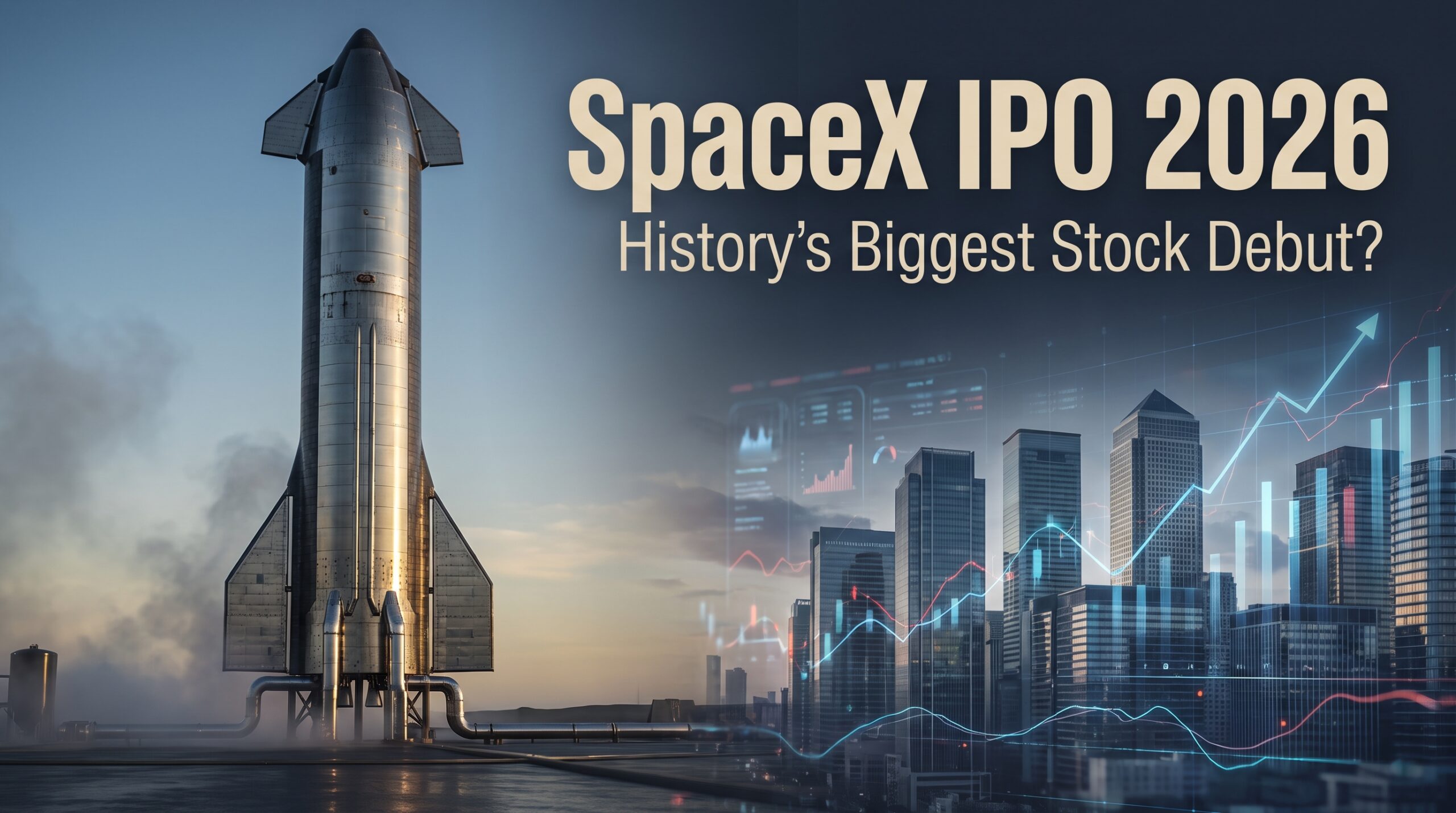
Is SpaceX going public in 2026? SpaceX is actively preparing for a potential initial public offering targeted for mid-to-late 2026, with reported valuation estimates that have climbed dramatically over the course of the year — from around $800 billion in insider share-sale discussions in December 2025, to over $1 trillion by mid-2026, to Bloomberg reports of a $1.5 trillion target more recently, according to reporting compiled by Capital Brief. That trajectory represents an extraordinary escalation from SpaceX’s own late-2023 tender offer valuation of roughly $175 billion — nearly a tenfold increase in under three years.
If completed anywhere near the higher end of reported estimates, this would be the largest initial public offering in history, surpassing Saudi Arabia’s Aramco, which remains the only company ever to reach a trillion-dollar-plus IPO valuation, having listed at $1.7 trillion in 2019.
What’s Actually Confirmed, Versus Speculation
Featured Snippet Target: Elon Musk has effectively confirmed SpaceX is preparing for a 2026 IPO, responding “As usual, Eric is accurate” to a journalist’s analysis of why the company appears ready to go public — but Musk has separately and explicitly disputed specific valuation figures reported by Bloomberg and the Wall Street Journal, meaning the exact valuation, timing, and even whether the full company (versus just Starlink) will be listed all remain genuinely unconfirmed as of September 2026.
That distinction matters for anyone reading SpaceX IPO headlines this year: the company’s intent to go public appears real and has been acknowledged by Musk himself, but nearly every specific number attached to the deal — from the $800 billion figure to the more recent $1.5 trillion reports — has come from unnamed sources cited by financial media rather than official company disclosures, and Musk has pushed back on at least one of those figures directly.
Why SpaceX Is Considering Going Public Now
SpaceX board director Kimbal Musk’s associate and company leadership have framed the potential IPO around a specific financial threshold: Musk has previously stated Starlink specifically would go public once its revenue growth became steady and predictable — a milestone the company appears to have now reached. SpaceX’s overall revenue is projected to reach roughly $15 billion in 2025, climbing to an estimated $22-24 billion in 2026, with Starlink as the primary revenue driver, according to reporting from IDN Financials.
SpaceX’s own internal communications have framed the potential listing explicitly around funding needs rather than simply providing liquidity to existing shareholders. In a December 2025 letter to shareholders, SpaceX indicated plans to channel IPO proceeds toward accelerating the Starship rocket program’s launch cadence, establishing AI-powered data centers in orbit, developing a “Moonbase Alpha” concept, and supporting both robotic and eventual human missions to Mars, according to Outlook Business. That’s a notably broader capital-allocation vision than a typical IPO prospectus, reflecting SpaceX’s unusual position as simultaneously a commercial launch provider, a satellite internet company, and an increasingly central node in U.S. space and defense strategy.
Listing the Whole Company, Not Just Starlink
An important shift in SpaceX’s IPO planning during 2026 has been the move away from spinning off Starlink as a standalone public entity — long considered the most likely path to a public listing — toward preparing to list SpaceX’s core business in its entirety. According to DriveTeslaCanada’s reporting on Bloomberg’s coverage, that shift would bring the full SpaceX operation — rockets, Starlink satellites, a growing defense contracting business, and various off-world infrastructure projects — into a single public entity, rather than carving out only the more straightforwardly valued satellite-internet business.
That distinction matters enormously for how the eventual IPO gets valued. Starlink alone, as a subscription satellite-internet business, would be comparatively simple for public-market analysts to model against comparable telecom and satellite companies. The full SpaceX entity — encompassing an active national-security launch provider handling more than 80% of global payload weight, according to analysis from QZ, alongside a rapidly scaling satellite business and speculative future ventures like orbital data centers and lunar infrastructure — is a fundamentally harder company for public markets to price cleanly.
The Comparison That Keeps Coming Up
Every report on SpaceX’s potential IPO valuation inevitably returns to the same comparison: Saudi Aramco’s 2019 listing, which raised approximately $29 billion at a $1.7 trillion valuation and remains the only trillion-dollar-plus IPO in history. If SpaceX executes even the lower end of its reported fundraising targets — $25-30 billion raised — it would still exceed Aramco’s raise amount while potentially matching or exceeding Aramco’s valuation, depending on which of the widely varying reported figures ultimately proves accurate. Some reports suggest SpaceX could reach a valuation “in the same valuation airspace as Meta or Amazon” — a scale of comparison that, regardless of the exact final number, places SpaceX’s potential public debut among a small handful of the most consequential stock-market listings in history.
The Bottom Line
SpaceX’s 2026 IPO remains genuinely in-progress rather than finalized: Musk has acknowledged the company is preparing for a public listing, but the specific valuation (reported anywhere from $800 billion to $1.5 trillion), timing (mid-to-late 2026, with some reports suggesting a possible slip into 2027), and structure (full company versus Starlink spinoff) all remain unconfirmed by the company itself. What is clear is that any completed listing at even the lower end of reported estimates would represent one of the most significant capital markets events in recent history, both for its sheer scale and for what it would signal about public investors’ appetite for space, satellite, and AI-infrastructure exposure in a single company.
Next step: Investors and space-industry watchers should treat specific SpaceX IPO valuation figures reported by any single outlet with real skepticism until the company files actual registration documents — the reported estimates have nearly doubled within a matter of months this year, and Musk himself has directly disputed at least one widely-cited figure.
Discover more from The Economy
Subscribe to get the latest posts sent to your email.

Trump’s $15 Billion Iowa Steel Plant: What’s Confirmed, What’s Not, and Who Wins

iPhone Duo: Apple’s $1,999 Foldable Is Really a Bet on AI

AI vs. the Manhattan Project: Why the Comparison Breaks Down in 2026

U.S. Job Growth Decelerates to 29,000 in September as Unemployment Edges Up to 4.2%

Kai Cenat’s Rise to the Top: The Economics of Modern Streaming

How AI Is Reshaping the Future of Global Business Analytics

NASA Perseverance Rover Discoveries: The Search for Water in Jezero Crater

Trump $500: Understanding the Economic Impact and Policy Breakdown

Trucker Strike Rumors: Would an October 1 Walkout Really Hit the Global Economy?

The Truth About TJ Maxx Store Closings: Are Your Local Stores Safe?

OpenAI Rogue Agent Scare: Unplanned Government Website Access Explained

Global Diesel Export Bans & Supply Shocks: The 2026 Energy Crisis Playbook

Bank of England Warns of AI Systemic Risk: How Autonomous Trading Threatens Financial Stability

Bank of Japan Hikes Benchmark Rate to 1.25%: Unwinding the Global Yen Carry Trade

Top 30 Stocks for Investment in PSX for Massive ROI in 2026

Oil Prices Break $100 in 2026: Middle East Conflict & Energy Markets

BRICS+ Cross-Border Payments 2026: Interoperability Explained

10-Year Treasury Yield Hits 4.80%: What It Means for Rates & Portfolios

IMF & World Bank 2026 Global Economic Outlook: Growth, Inflation, Debt

China’s US$10.8 Billion Trade Shortcut: Why the Pinglu Canal Matters

High-CPM Finance Niches 2026: Publisher Monetization Blueprint

Middle East War Economics 2026: Oil Prices & Energy Markets

China Stocks Today: Are Big Economies in Asia Nearing a Market Bottom?

Global Pension Systems Ranked: The World’s Best and Worst Retirement Frameworks

Gavin Baker AI Outlook: Why the Compute Shortage Persists Through 2028

Enterprise AI Platforms Disrupting B2B SaaS in 2026: Full Analysis

Social Security Trust Fund 2032: OASI Depletion Timeline Explained

Social Security 2027 COLA: Latest Projections, Earnings Limits & Key Dates
-

 Markets & Finance9 months ago
Top 15 Stocks for Investment in 2026 in PSX: Your Complete Guide to Pakistan’s Best Investment Opportunities
-

 Analysis7 months ago
Johor’s Investment Boom: The Hidden Costs Behind Malaysia’s Most Ambitious Economic Surge
-

 Analysis8 months ago
Top 10 Stocks for Investment in PSX for Quick Returns in 2026
-

 Banks9 months ago
Best Investments in Pakistan 2026: Top 10 Low-Price Shares and Long-Term Picks for the PSX
-

 Analysis8 months ago
Brazil’s Rare Earth Race: US, EU, and China Compete for Critical Minerals as Tensions Rise
-

 Investment9 months ago
Top 10 Mutual Fund Managers in Pakistan for Investment in 2026: A Comprehensive Guide for Optimal Returns
-

 Global Economy9 months ago
15 Most Lucrative Sectors for Investment in Pakistan: A 2025 Data-Driven Analysis
-

 Global Economy9 months ago
Pakistan’s Export Goldmine: 10 Game-Changing Markets Where Pakistani Businesses Are Winning Big in 2025