
Insurance
Auto Insurance Quotes: How to Get the Lowest Rate Without Losing Coverage

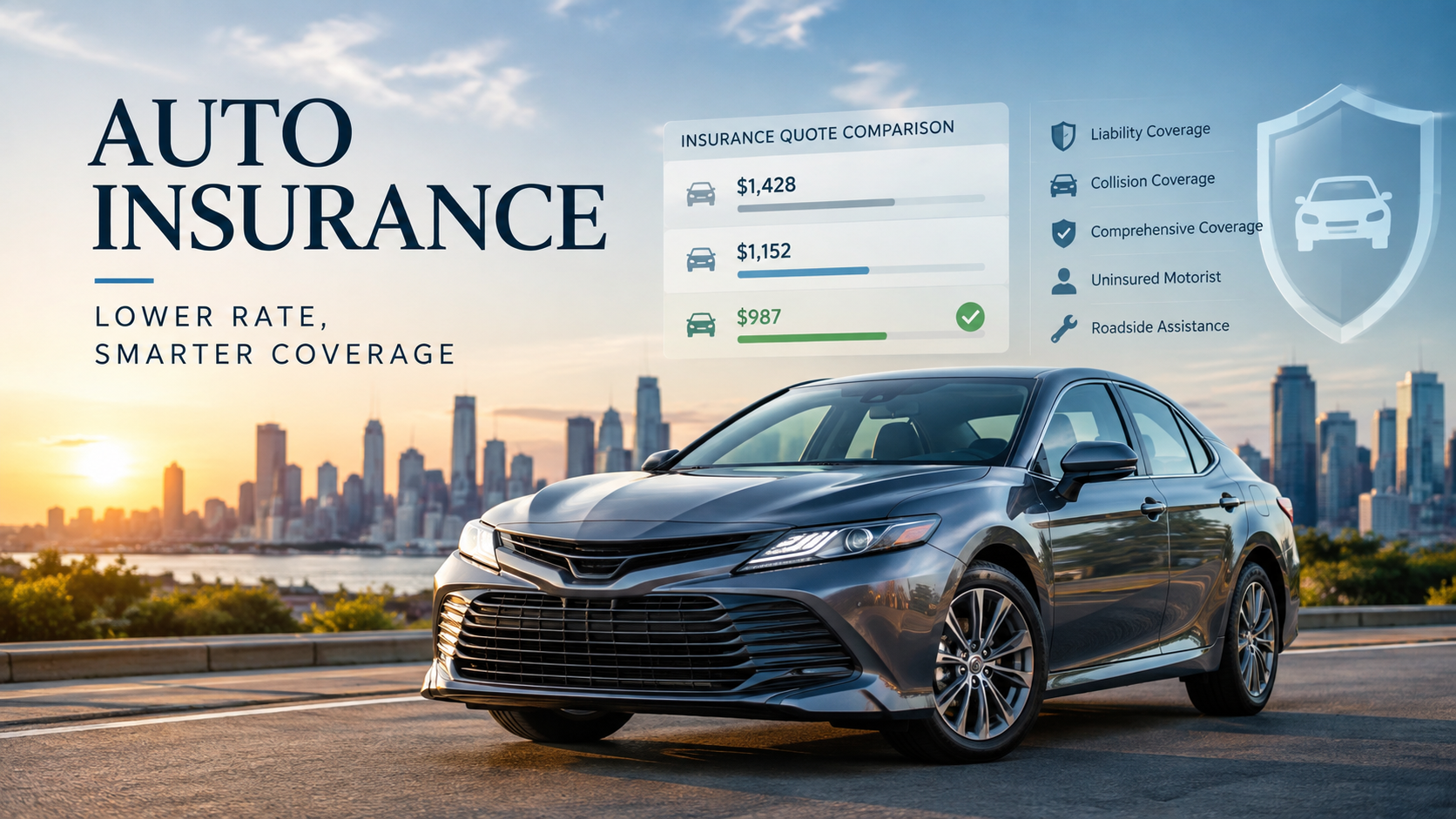
The gap between the cheapest and most expensive auto insurer for the exact same driver and the exact same coverage can exceed $500 a year — meaning the single highest-leverage financial decision most drivers never make is simply comparing quotes before renewal.
Auto insurance pricing isn’t a fixed number set by the market; it’s a highly individualized calculation that varies dramatically between insurers for identical coverage. Two drivers with the same age, location, and driving record can receive wildly different quotes from the same set of companies, which is precisely why shopping multiple quotes — rather than auto-renewing with a single carrier — remains one of the most reliable ways to reduce a major recurring household expense.
This guide covers how auto insurance quotes are actually calculated, current 2026 rate benchmarks, and how to compare quotes effectively without accidentally under-insuring yourself.
How Auto Insurance Quotes Are Actually Calculated
Insurers use dozens of variables to price a policy, and because each company weighs these factors differently, the “best” insurer for one driver is frequently not the best for another.
Key takeaway: The national average cost of full coverage car insurance is $2,315 per year, or about $193 per month, while minimum coverage averages $621 per year, according to NerdWallet’s 2026 rate analysis — but your own quote will likely differ substantially based on factors specific to you.
The Core Factors That Drive Your Quote
- Location — state and even ZIP code meaningfully affect rates, with full coverage ranging from roughly $128 per month in the cheapest states to over $330 per month in the most expensive.
- Driving record — accidents, violations, and DUIs are among the largest individual rate drivers.
- Credit-based insurance score — used in most states (though prohibited in a handful) as a statistically validated predictor of claims likelihood.
- Age and driving experience — younger, less experienced drivers consistently pay significantly more.
- Vehicle make, model, and year — repair costs, safety ratings, and theft rates all factor into pricing.
- Coverage limits and deductibles — higher liability limits and lower deductibles increase premiums.
Step-by-Step: How to Shop Auto Insurance Quotes Effectively
- Gather your current policy details — coverage limits, deductibles, and driver information — so you’re comparing equivalent coverage across quotes.
- Get quotes from at least three to five insurers, including both large national carriers and regional companies, since regional insurers frequently beat national rates in specific states.
- Request identical coverage limits on every quote — comparing a $500 deductible quote against a $1,000 deductible quote will produce a misleading price comparison.
- Ask about all available discounts explicitly, since not every discount is applied automatically.
- Compare the final out-the-door price, including fees, not just the advertised premium.
- Review coverage details, not just price — the cheapest quote sometimes reflects lower liability limits or missing coverage types.
Financial and Strategic Implications: 2026 Rate Benchmarks
Understanding current market rates helps you evaluate whether a quote you’ve received is actually competitive.
| Coverage Level / Company | 2026 Rate Benchmark | Source |
|---|---|---|
| National average, full coverage | $193/month ($2,315/year) | NerdWallet April 2026 analysis |
| National average, minimum coverage | $52/month ($621/year) | NerdWallet April 2026 analysis |
| Cheapest large insurer, full coverage | Travelers, ~$139/month | NerdWallet March 2026 analysis |
| Cheapest large insurer, liability-only | GEICO, ~$41/month | NerdWallet March 2026 analysis |
| Most expensive state (full coverage) | Nevada, ~$335/month | ValuePenguin 2026 State of Auto Insurance |
| Cheapest state (full coverage) | Vermont, ~$128/month | ValuePenguin 2026 State of Auto Insurance |
Expert insight: 2026 is shaping up to be the calmest year for auto insurance pricing since 2022, with national rates projected to rise less than 1% on average — following double-digit annual increases in 2023 and 2024. That relative stability makes this a favorable year to shop aggressively, since insurers competing for market share in a flatter-rate environment are often more willing to offer competitive new-customer pricing.
Why Identical Coverage Can Still Produce Very Different Quotes
Because each insurer’s underwriting model weighs risk factors differently — one company might penalize a recent speeding ticket heavily while barely adjusting for credit score, while another does the reverse — your price can vary meaningfully between insurers even for the same driver and coverage, which is exactly why comparison shopping consistently produces savings that simply renewing with the same insurer does not.
How to Choose the Right Auto Insurance Quote
- Don’t default to price alone — verify the liability limits, comprehensive/collision deductibles, and any exclusions match across every quote you’re comparing.
- Ask about bundling discounts — combining auto with homeowners or renters insurance frequently produces a meaningful discount with the same carrier.
- Check for usage-based/telematics programs — safe drivers can often secure additional discounts through an insurer’s driving-monitoring app.
- Re-shop annually, not just at renewal notice, since insurer pricing models shift and a company that was competitive last year may not be this year.
- Confirm the insurer’s claims-handling reputation, not just price, using state insurance department complaint ratios or third-party satisfaction surveys.
- Review minimum coverage carefully — the cheapest liability-only policy may leave you underinsured relative to your actual assets in a serious at-fault accident.
Key takeaway: The single biggest mistake drivers make isn’t picking the wrong insurer — it’s not requoting at all. Insurance pricing models change frequently enough that a policy competitive two years ago can quietly become overpriced relative to the current market, with no notification from your current insurer.
Future Outlook: Auto Insurance Rate Trends Through 2027
- Rate growth is expected to remain unusually flat. ValuePenguin projects national auto insurance rates to rise by less than 1% on average in 2026, the smallest increase since 2022, though state-level trends diverge significantly — some states are projected to see rates fall by several percentage points while others, led by New Jersey, are projected to rise more sharply.
- State-level divergence is widening. More than half of states are expected to see rates decline in 2026, even as a handful of states see continued increases, making location-specific comparison shopping more valuable than ever.
- Usage-based insurance adoption continues to grow. As more insurers expand telematics-based discount programs, safe drivers increasingly have access to meaningfully lower rates than standard pricing models would otherwise offer.
- Credit-based insurance scoring remains a contested policy issue. Several states continue to debate restricting or eliminating the use of credit history in auto insurance pricing, a change that could meaningfully shift relative pricing among insurers if enacted more broadly.
Frequently Asked Questions
How many auto insurance quotes should I get before choosing a policy? Most experts recommend comparing quotes from at least three to five insurers, including a mix of large national carriers and regional companies, since regional insurers can significantly undercut national pricing in specific states.
Will getting multiple auto insurance quotes hurt my credit score?
Generally no. Auto insurance quotes typically use a “soft pull” that doesn’t affect your credit score, unlike a hard inquiry from a loan or credit card application.
Why did my auto insurance quote go up even though I haven’t had any accidents?
Rate changes can reflect broader factors unrelated to your personal driving record, including inflation in vehicle repair costs, regional claims trends, and insurer-wide rate filings approved by state regulators.
Is the cheapest auto insurance quote always the best choice?
Not necessarily. A lower price can reflect reduced liability limits, higher deductibles, or missing coverage types, so it’s important to confirm you’re comparing genuinely equivalent coverage before choosing based on price alone.
How often should I shop for new auto insurance quotes?
Annually is a reasonable standard practice, since insurer pricing models and competitive positioning change over time, and a policy that was competitively priced in a prior year may no longer be.
Discover more from The Economy
Subscribe to get the latest posts sent to your email.



A single slip-and-fall lawsuit against an uninsured small business can wipe out years of profit in one settlement — yet a large share of small business owners still operate without even basic general liability coverage, often simply because no one ever explained clearly what’s actually required versus optional.
Business insurance isn’t a single product — it’s a category spanning general liability, workers’ compensation, professional liability, commercial property, and more, each protecting against different risks. Figuring out which coverage your specific business actually needs, and what it should reasonably cost, is one of the most commonly delayed and misunderstood decisions small business owners face.
This guide breaks down the core types of business insurance, current 2026 cost benchmarks, and how to build the right coverage package without overpaying.
How Business Insurance Actually Works: The Core Coverage Types
Most small businesses don’t need every type of commercial insurance — the right combination depends heavily on industry, whether you have employees, and whether you interact with the public or handle client data.
Key takeaway: General liability insurance isn’t legally required in most states, but it’s often necessary to secure a client contract, obtain a business license, or sign a commercial lease — meaning many business owners end up needing it as a practical requirement of doing business, even without a legal mandate.
The Core Business Insurance Types
- General liability insurance — covers third-party bodily injury, property damage, and personal injury claims arising from your business operations.
- Workers’ compensation insurance — required in most states once you hire employees, covering medical costs and lost wages for work-related injuries.
- Professional liability insurance (errors & omissions) — protects service-based businesses against claims of negligence, mistakes, or failure to deliver promised services.
- Commercial property insurance — covers physical business assets (equipment, inventory, the building itself) against fire, theft, and other covered perils.
- Business Owner’s Policy (BOP) — bundles general liability and commercial property coverage into a single, typically discounted policy.
- Cyber liability insurance — increasingly essential for businesses handling customer payment data or sensitive personal information.
Step-by-Step: Building Your Business Insurance Package
- Assess your specific risk profile — client-facing businesses, those with employees, and those handling sensitive data each face different primary risks.
- Determine legal and contractual requirements — workers’ comp is state-mandated once you have employees, and many commercial leases and client contracts require proof of general liability coverage.
- Get quotes for a Business Owner’s Policy first, since bundling liability and property coverage is typically more cost-effective than purchasing separately.
- Add specialized coverage as needed — professional liability for advice-based businesses, cyber liability for data-handling businesses, commercial auto for businesses with vehicles.
- Review coverage limits against your actual risk exposure, not just the cheapest available policy, since underinsurance can be as costly as no insurance in a serious claim.
- Reassess annually as your business grows, since coverage needs — and available discounts — change as revenue, staff count, and operations evolve.
Financial and Strategic Implications: 2026 Business Insurance Cost Benchmarks
Costs vary substantially by industry, business size, and claims history, but understanding typical ranges helps set realistic budget expectations.
| Coverage Type | Typical Monthly Cost (2026) | Notes |
|---|---|---|
| General liability insurance | $40–$100/month for most small businesses | Median new-customer rate around $55/month per Progressive Commercial data |
| Workers’ compensation | $45–$70/month median, varies heavily by industry risk | Office-based businesses pay far less than construction or manual-labor industries |
| Business Owner’s Policy (BOP) | $57–$150/month | Bundled liability + property, typically cheaper than separate policies |
| Professional liability (E&O) | Varies by profession and revenue | Higher for advice-heavy professions (consulting, financial services, healthcare-adjacent) |
Expert insight: Most small businesses pay roughly $500 to $2,000 a year for general liability or a BOP, with total costs climbing meaningfully once workers’ compensation, commercial auto, or professional liability are added — meaning a realistic total insurance budget should account for the full coverage stack your business actually needs, not just a single policy.
Why Cost Varies So Much by Industry
A home-based bookkeeper and a residential construction crew face fundamentally different risk profiles, and insurers price accordingly. A small consulting firm with a clean claims history might pay $750 to $1,200 per year for general liability coverage, while a construction company with similar revenue could pay $3,000 to $5,000 or more for the same coverage type, reflecting the materially higher claims frequency and severity in higher-risk industries.
Bundling and Discount Strategies
Bundling multiple policies with a single insurer commonly produces automatic discounts of 10% to 15%, and choosing a higher deductible — when cash flow allows — can meaningfully lower monthly premiums for businesses confident in their ability to absorb a modest out-of-pocket cost in the event of a claim.
How to Choose the Right Business Insurance
- Start with a Business Owner’s Policy if you qualify — most small businesses without significant specialized risk exposure fit within a standard BOP more cost-effectively than piecing together separate policies.
- Don’t skip workers’ compensation once you hire employees — it’s legally required in nearly every state and the penalties for non-compliance can be severe.
- Get quotes from at least three insurers, since — as with other insurance categories — identical coverage can price very differently between carriers for the same business profile.
- Work with an independent broker for complex risk profiles, since brokers can shop multiple insurers and identify industry-specific coverage gaps a single-carrier quote might miss.
- Review your policy annually as your business changes — added employees, new locations, or expanded services can all create coverage gaps if the policy isn’t updated.
- Don’t assume a personal umbrella policy covers business activity — business risks generally require dedicated commercial coverage, and mixing personal and business insurance can leave real gaps.
Key takeaway: The businesses that get burned by inadequate insurance are rarely the ones that skipped coverage entirely — they’re far more often the ones that bought a policy years ago and never revisited it as the business grew, leaving real gaps between what’s covered and what the business now actually does.
Future Outlook: Business Insurance Trends Through 2027
- “Social inflation” continues to pressure premiums upward. Rising litigation costs and larger jury awards continue to put upward pressure on general liability premiums nationally, a trend insurers refer to as social inflation, meaning even businesses with clean claims histories may see gradual rate increases independent of their own risk profile.
- Cyber liability coverage is shifting from optional to expected. As data breach costs and regulatory penalties continue rising, more commercial leases, client contracts, and vendor agreements are beginning to require proof of cyber liability coverage alongside traditional general liability.
- Digital-first insurers continue to compress quote-to-bind timelines. More small business insurance providers now offer instant online quotes and same-day coverage, reducing a process that historically took days or weeks through a traditional broker.
- State-level regulatory divergence on liability rules continues. States with joint-and-several-liability frameworks and higher litigation rates continue to see meaningfully higher general liability premiums than lower-litigation states, reinforcing the value of location-aware comparison shopping.
Frequently Asked Questions
Is business insurance legally required?
It depends on the type. Workers’ compensation is legally required in nearly every state once you have employees, while general liability insurance is not legally mandated in most states but is frequently required by landlords, lenders, and client contracts.
What’s the difference between general liability and professional liability insurance? General liability covers third-party bodily injury and property damage claims, while professional liability (errors & omissions) covers claims of negligence, mistakes, or failure to deliver services as promised — the coverage most relevant to service and advice-based businesses.
How much does small business insurance typically cost?
Most small businesses pay roughly $500 to $2,000 a year for general liability or a bundled Business Owner’s Policy, with total costs increasing once workers’ compensation, professional liability, or commercial auto coverage is added.
What is a Business Owner’s Policy (BOP)?
It’s a bundled policy combining general liability and commercial property coverage into a single, typically discounted package, well-suited to most small businesses without highly specialized risk exposure.
Do I need cyber liability insurance for a small business?
Increasingly yes, particularly if your business handles customer payment information or sensitive personal data, as data breach costs and related legal exposure have grown substantially in recent years.
Discover more from The Economy
Subscribe to get the latest posts sent to your email.

Insurance renewal season is landing on households at the worst possible moment: auto insurance quotes are climbing again after a brief 2025 reprieve, health insurance plans on the ACA marketplace are seeing the steepest premium jump since 2018, and inflation in medical, repair, and litigation costs is compounding across every line of coverage simultaneously. This is not a single-cause story. It is three distinct inflationary engines — repair-cost inflation, medical-cost inflation, and legal/regulatory disruption — converging on the same renewal notices at the same time.
Key Takeaways
- Auto insurance premiums are projected to rise in 32 states by the end of 2026, reversing 2025’s national 6% decline, with the average full-coverage premium reaching approximately $2,158–$2,256 annually.
- ACA marketplace health insurance plans show a 26% average premium increase for 2026 — the largest since 2018 — driven by rising hospital costs, GLP-1 weight-management drug spending, and the expiration of enhanced premium tax credits.
- If enhanced subsidies are not extended, marketplace enrollees could see net premium payments more than double, with some households spending over half their income on coverage.
- Employer-sponsored health coverage costs are projected to rise another 6–7% in 2026 after already increasing 5.6% in 2025.
- High-risk driver categories (DUI history, low credit, teen drivers) are seeing disproportionately large increases even in states where average premiums are stabilizing.
Auto Insurance: The 2025 Relief Was Temporary
After auto insurance quotes fell nationally by about 6% in 2025 — with 39 states seeing declines and several cutting rates by more than 20% — 2026 has reversed that trend. Insurify’s midyear data shows 27 states already recording increases in the first half of the year, with 32 states projected to see higher rates by year-end. The average full-coverage premium is tracking toward $2,158–$2,256 annually, a modest 1–3% increase depending on the data source, but the state-level variance tells the real story.
| State Trend | Example States | Driver |
|---|---|---|
| Largest projected increases | Connecticut (+4%), West Virginia (+3%) | Rate “normalization” after historically low pricing |
| Largest historical 3-year increases | Illinois (+41% over 3 years) | Nearly double the national average pace |
| States still seeing relief | New York (-13% past 12 months) | Falling fatal crash rates, improved loss ratios |
| Highest absolute premiums | Washington D.C. (~$4,017/year in 2025) | Density, litigation costs, claims frequency |
Three structural forces are driving the reversal:
- Repair-cost inflation tied to tariffs. Auto insurers have publicly flagged that tariff-driven increases in parts costs have not yet been fully passed through to consumers — meaning 2026 premium filings are likely understating the eventual impact.
- Rising medical/bodily-injury claim costs. Medical inflation has pushed up the cost of bodily injury liability claims substantially through 2024–2026, with higher ER visits and long-term treatment costs flowing directly into liability coverage pricing.
- “Social inflation.” Rising jury awards and legal settlement costs, particularly concentrated in states like Louisiana and Florida, are pushing insurers to reprice risk more aggressively regardless of an individual driver’s claims history.
A Widening Risk-Based Pricing Gap
The most important trend for consumers shopping auto insurance quotes in Q4 2026 is the divergence between low-risk and high-risk pricing. While full-coverage premiums for clean-record drivers dipped modestly, DUI-related premiums jumped roughly 35% and teen driver premiums rose about 17% in the same period. Insurers are moving away from broad, blanket rate hikes toward sharply targeted, risk-based pricing — meaning the “average premium” figure increasingly understates what any specific household will actually pay.
Health Insurance: The Subsidy Cliff Returns
The health insurance plans story for 2026 is dominated by one policy event: the expiration of enhanced Affordable Care Act premium tax credits that have kept marketplace coverage affordable since 2021. The numbers are stark:
| Metric | 2026 Figure |
|---|---|
| Average ACA marketplace premium increase | 26% (30% in federal Healthcare.gov states, 17% in state-run exchanges) |
| Median proposed insurer rate increase | 18% |
| Portion of increase attributable to subsidy-expiration assumptions | ~4 percentage points |
| Potential net premium increase for subsidized enrollees if credits expire fully | 114%+ (more than double) |
| Subsidy eligibility cliff | 400% of Federal Poverty Level ($62,600 individual / $128,600 family of four) |
| Marketplace enrollees currently receiving subsidies | ~87–92% |
This is the largest ACA rate increase since 2018, the last time comparable federal policy uncertainty disrupted the market. The mechanism is a textbook “adverse selection” spiral: as premiums rise for those losing subsidies, healthier enrollees are expected to exit the marketplace at a disproportionately higher rate than sicker enrollees, which pushes insurers to price in an even less healthy risk pool — a dynamic insurers and policy experts have explicitly warned could become a “death spiral” without legislative intervention.
Illustrative case: A 40-year-old in Indianapolis earning $65,000 on a mid-tier Silver plan saw their subsidized monthly premium of $316 (versus an unsubsidized $388) climb sharply once the enhanced credits expired — with some households above the 400% FPL threshold facing bronze-plan costs exceeding half their household income.
Employer-Sponsored Coverage Is Not Immune
While ACA marketplace changes dominate headlines, employer-sponsored health insurance plans are compounding the same underlying cost pressures. Average annual premiums reached roughly $9,300 for single coverage and $27,000 for family coverage in 2025 — up 5.6% — with a further 6–7% increase projected for 2026, driven by specialty drug costs (notably GLP-1 medications), higher utilization, and healthcare wage inflation. Employers passing along even a portion of that increase means higher payroll deductions, higher deductibles, and narrower networks for millions of covered workers who never touch the ACA marketplace at all.
Life Insurance: The Quiet Line in an Inflationary Environment
Term life insurance has been less volatile than auto or health coverage in 2026, but it is not immune to the same underlying cost pressures. Underwriting costs tied to medical examination and actuarial mortality assumptions are gradually reflecting the same medical-cost inflation hitting health insurers, while insurers’ own investment portfolios — sensitive to the same Treasury yield volatility driving mortgage rates — affect how aggressively term life products are priced and how competitively insurers can guarantee long-duration rate locks. For consumers, the practical implication is straightforward: locking in a term life policy sooner rather than later insulates against future underwriting-cost inflation, particularly for buyers over 50, where premiums are most sensitive to medical-cost trends.
A Household Insurance Cost-Management Framework for Q4 2026
| Coverage Type | Primary 2026 Risk | Recommended Action |
|---|---|---|
| Auto insurance | Risk-based repricing; state-level variance | Shop annually; ask specifically about DUI/teen-driver surcharges |
| ACA health insurance | Subsidy-cliff exposure above 400% FPL | Model both subsidized and full-price scenarios before open enrollment |
| Employer health insurance | Passthrough of 6–7% cost growth | Review HSA/FSA contribution levels; evaluate high-deductible tradeoffs |
| Term life insurance | Gradual underwriting-cost inflation | Lock in coverage now rather than deferring to a later renewal cycle |
FAQ
Why are auto insurance quotes rising again in 2026 after falling in 2025? 2025’s rate declines were largely a correction after insurers had already repriced for pandemic-era claims inflation. In 2026, rising repair costs (partly tariff-driven), medical-cost inflation on bodily injury claims, and “social inflation” from rising legal settlements are pushing rates back up in most states.
How much will my ACA health insurance plan premium increase in 2026? The average marketplace premium increase is 26%, but the actual impact depends heavily on your income relative to 400% of the federal poverty level. Enrollees below that threshold retain some subsidy protection; those above it face the full, unsubsidized rate increase.
Is now a good time to buy term life insurance? Yes — underwriting costs are gradually rising alongside broader medical-cost inflation, so locking in a term life policy now generally secures a more favorable long-term rate than waiting for a future renewal cycle.
Which drivers are seeing the biggest auto insurance increases? High-risk categories are seeing disproportionate increases: DUI-related premiums rose roughly 35% and teen driver premiums rose roughly 17% in the most recent reporting period, even in states where average premiums for low-risk drivers were flat or falling.
Discover more from The Economy
Subscribe to get the latest posts sent to your email.

The days of pulling generic auto insurance quotes based purely on your zip code and age are officially over. In 2026, insurance comparison engines are powered entirely by generative AI and real-time telematics. These platforms digest thousands of live data points—ranging from your driving smoothness via connected vehicle sensors to real-time traffic congestion patterns—to generate hyper-personalized premiums instantly.
For consumers, this evolution represents both a massive opportunity for savings and a hidden trap for penalty pricing. Understanding how AI algorithms evaluate risk is essential for anyone looking to lower their monthly auto insurance premiums.
How AI Comparison Engines Evaluate Your Risk Profile
Behavioral Telematics and Connected Cars
Modern cars stream performance data directly to insurance aggregators. Generative AI models analyze braking sharpness, acceleration curves, cornering G-forces, and phone distraction metrics. Drivers who maintain smooth, defensive habits are rewarded with dynamic rate cuts of up to 40% compared to traditional rating tiers.
Predictive Traffic and Weather Modeling
AI tools now cross-reference your daily commute route with predictive weather and accident probability models. If your standard parking location or driving corridor has a statistically higher incidence of uninsured motorist claims, your quotes will reflect that hyper-local risk assessment.
| Comparison Factor | Traditional Rating Model | 2026 Generative AI Model | Impact on Premium |
| Mileage & Usage | Annual estimated odometer reading | GPS tracking & live trip duration | High (up to 35% savings) |
| Driving Behavior | MVR driving record & accidents | Real-time braking, speed, & G-force | Critical (determines tier) |
| Vehicle Tech | Make, model, and safety rating | ADAS calibration & repair cost data | Moderate |
Strategies to Lower Your AI-Driven Insurance Quote
To outsmart the algorithm and secure the lowest possible premium in 2026, drivers must proactively manage their digital footprint on insurance platforms.
Opt-In for Telematics Trial Periods: Many insurers offer immediate 15% discounts just for installing their driving app; let it track safe habits for 30 days to lock in permanent savings.
Scrub Unverified Public Records: Ensure your motor vehicle report is free of clerical errors that AI risk models misinterpret as reckless behavior.
Compare AI Aggregators: Use platforms that integrate multi-carrier API feeds rather than single-brand comparison sites to find the best risk-adjusted rate.
“Industry Note: AI-driven pricing rewards transparency and precision. Drivers who actively manage their telematics data consistently out-save those relying on legacy quote calculators.”
Embracing AI comparison tools allows savvy policyholders to customize coverage limits precisely to their driving habits, eliminating wasted premium spend while ensuring robust protection.
Discover more from The Economy
Subscribe to get the latest posts sent to your email.

Business Insurance: What Coverage You Actually Need and What It Costs in 2026

Auto Insurance Quotes: How to Get the Lowest Rate Without Losing Coverage

Huntington Online Banking: Full Features, Fees, and How It Compares in 2026

Apply for a Bank Account Online: What You Need and How Long It Actually Takes

World’s Largest Economies: Ranking the Top Global Powers

Business Loan: A Complete 2026 Guide to Rates, Types, and Qualifying

Fast Invoice Factoring: How to Turn Unpaid Invoices Into Cash Within 24 Hours

Investment Banking Services: What They Cost and How to Choose the Right Firm in 2026

Structured Settlement Loan: What “Cash Now” Offers Actually Cost You

DUI Attorney: Why Your First Call After an Arrest Should Never Be to the Court

Personal Injury Lawyer: A Complete Guide to Filing Your Claim in 2026

Commercial Vehicle Accident Lawyer: Holding Companies Accountable Beyond the Driver

Inside the White House Feud: How Trump’s Allies Are Painting Anthropic’s Dario Amodei as the Face of ‘AI Doomerism’

Truck Collision Attorney: What Your Case Is Really Worth After a Semi-Truck Crash

Top 30 Stocks for Investment in PSX for Massive ROI in 2026

SpaceX Starship Flight 14: First Orbital Attempt & Starlink V3 Launch Explained

Oil Prices Break $100 in 2026: Middle East Conflict & Energy Markets

Fidelity Investments Review 2026: SPAXX Yields & Zero-Fee Funds

AI Chip Stocks 2026: The Best Semiconductor Investments Beyond Marvell

Tween Back-to-School Trends 2026: What’s Driving the $85B Season

BRICS+ Cross-Border Payments 2026: Interoperability Explained

10-Year Treasury Yield Hits 4.80%: What It Means for Rates & Portfolios

Shein Clothes Quality & Safety in 2026: What Lab Tests Show

China’s US$10.8 Billion Trade Shortcut: Why the Pinglu Canal Matters

MRVL Earnings 2026: Why Marvell Sank Despite Beating Estimates

IMF & World Bank 2026 Global Economic Outlook: Growth, Inflation, Debt

Middle East War Economics 2026: Oil Prices & Energy Markets

High-CPM Finance Niches 2026: Publisher Monetization Blueprint
-

 Markets & Finance9 months ago
Top 15 Stocks for Investment in 2026 in PSX: Your Complete Guide to Pakistan’s Best Investment Opportunities
-

 Analysis7 months ago
Johor’s Investment Boom: The Hidden Costs Behind Malaysia’s Most Ambitious Economic Surge
-

 Analysis7 months ago
Top 10 Stocks for Investment in PSX for Quick Returns in 2026
-

 Banks8 months ago
Best Investments in Pakistan 2026: Top 10 Low-Price Shares and Long-Term Picks for the PSX
-

 Analysis8 months ago
Brazil’s Rare Earth Race: US, EU, and China Compete for Critical Minerals as Tensions Rise
-

 Investment9 months ago
Top 10 Mutual Fund Managers in Pakistan for Investment in 2026: A Comprehensive Guide for Optimal Returns
-

 Global Economy9 months ago
15 Most Lucrative Sectors for Investment in Pakistan: A 2025 Data-Driven Analysis
-

 Global Economy9 months ago
Pakistan’s Export Goldmine: 10 Game-Changing Markets Where Pakistani Businesses Are Winning Big in 2025