
Tech Companies
Beyond Petrochemicals: How Indonesia’s Chandra Asri is Constructing an Integrated ASEAN Mobility Powerhouse

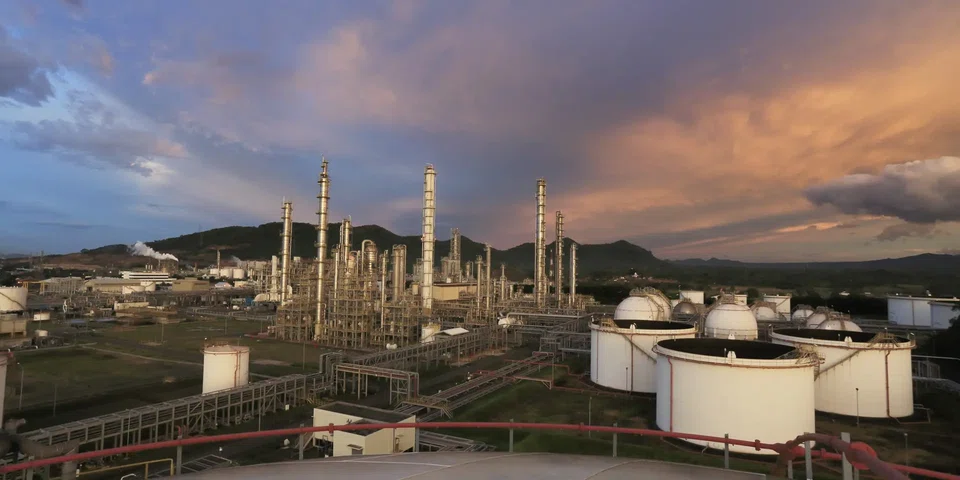
Indonesia’s largest petrochemical and infrastructure conglomerate, PT Chandra Asri Pacific Tbk, is executing a transformative strategic pivot. Controlled by Indonesian billionaire Prajogo Pangestu’s Barito Pacific Group, the Jakarta-listed giant is aggressively expanding beyond its traditional industrial manufacturing roots to establish a dominant, multi-tiered energy, retail, and mobility platform centered in Singapore.
By connecting upstream refining, retail fuel distribution, and automotive retail across Singapore and Malaysia, Chandra Asri is building a vertically integrated ecosystem designed to hedge against volatile commodity chemical cycles while capturing high-margin growth across Southeast Asia’s changing transportation landscape.
Executive Summary & Strategic Takeaways
- The Mobility Pivot: Through its subsidiary CCHPL Holdings, Chandra Asri signed a conditional agreement to purchase the Singapore and Malaysia automotive operations of Jardine Cycle & Carriage (C&C) for approximately S$265 million (US$207 million).
- The Full-Value Chain Strategy: The C&C acquisition complements two prior megadeals in Singapore: the acquisition of Shell’s Energy and Chemicals Park on Pulau Bukom/Jurong Island via Aster Chemicals (a joint venture with Glencore) and the purchase of ExxonMobil’s network of 60 Esso service stations.
- Accretive Valuation: Financial analysts estimate that the combined mobility and retail assets (Esso + C&C) will generate an additional US$150 million to US$200 million in annual profit, acquired at an attractive multiple of ~4.3x to 8.6x P/E.
- Macro Hedge: The move insulates Chandra Asri from regional petrochemical margin compression driven by global overcapacity, creating predictable, cash-flow-generative consumer touchpoints.
The Macro Logic: Moving Downstream Amid Petrochemical Headwinds
The Asian petrochemical sector has faced margin pressure in recent years due to expanding regional refining capacity and shifting global demand dynamics. For commodity producers relying strictly on olefins and polyolefins, earnings volatility remains a central challenge.
Chandra Asri’s strategy addresses this risk by transforming from a regional industrial supplier into a consumer-facing energy and mobility platform.
┌────────────────────────────────────────────────────────────────────────┐
│                        THE INTEGRATED VALUE CHAIN                      │
├──────────────────────────┬──────────────────────────┬──────────────────┤
│    UPSTREAM REFINING     │     RETAIL ENERGY        │ CONSUMER MOBILITY│
│ (Bukom & Jurong Island)  │   (60 Esso Stations)     │ (Cycle & Carriage)│
├──────────────────────────┼──────────────────────────┼──────────────────┤
│ • 237k bpd Crude Refinery│ • Retail Fuel Sales      │ • 13+ Auto Brands│
│ • 1.1M MT/yr Cracker     │ • EV Fast-Charging Hubs  │ • EV Bus Dist.   │
│ • Downstream Monomers    │ • Convenience Retail     │ • Leasing & Fleet│
└──────────────────────────┴──────────────────────────┴──────────────────┘
By owning each link in this chain, Chandra Asri achieves three core strategic objectives:
- Guaranteed Downstream Offtake: Upstream refinery products from Pulau Bukom can be directly processed, distributed, and commercialized through controlled retail fuel networks and fleet platforms.
- EV & Energy Transition Readiness: Acquiring C&C provides immediate exposure to electric vehicle (EV) distribution (such as commercial EV bus maker Zhongtong), while the Esso network offers prime real estate for rapid deployment of EV charging infrastructure across Singapore.
- Cross-Selling & Data Synergies: Capturing consumer touchpoints across fuel retail, vehicle sales, commercial fleet leasing, and after-sales service unlocks long-term customer lifetime value.
The Tripartite M&A Playbook: Building the Platform
Chandra Asri’s expansion in Singapore relies on three complementary acquisitions structured over the last two years:
| Strategic Pillar | Target Asset / Deal | Strategic & Operational Significance | Source & Financing Details |
| 1. Upstream Refining & Chemicals | Shell Energy & Chemicals Park (SECP) (Pulau Bukom & Jurong Island) | Adds 237,000 bpd crude refining capacity and a 1.1 million metric ton annual capacity ethylene cracker via Aster Chemicals & Energy (JV with Glencore). | Barito Pacific Official Corporate Announcement |
| 2. Retail Energy & Distribution | ExxonMobil Esso Network (~60 Service Stations in Singapore) | Converts wholesale fuel refining into direct retail cash flow. Serves as physical hubs for future electrification and retail services. | Backed by $750M Private Credit Package from KKR |
| 3. Automotive & Mobility Platform | Cycle & Carriage (C&C) (Singapore & Malaysia Operations) | Captures ~12% of Singapore’s passenger car market across 13+ brands (including Mercedes-Benz, Kia, Mitsubishi) plus after-sales and leasing. | Agreement with Jardine C&C |
Financial Analysis: Valuation, Capital Structure & Profit Earnings
Despite a challenging cyclical environment that saw Chandra Asri’s H1 net profit contract due to high base-year accounting gains from prior acquisitions, the company’s financial foundation remains solid, supported by US$3.9 billion in total liquidity and over US$1 billion committed to strategic investments.
Deal Metrics & Accretion
Market analysts from Stockbit highlight that the acquisition of C&C represents an exceptionally cost-effective entry into steady consumer cash flows:
- Implied Valuation Multiples: At a purchase price of US$207 million against C&C’s 2025 net profit contribution of US$48 million, the implied transaction multiple sits at roughly 4.3x Price-to-Earnings (P/E). Even under conservative 2026 annualized estimates (~US$24 million profit), the multiple stays under 8.6x P/E.
- Earning Injections: The combined retail fuel (Esso) and automotive dealership (C&C) platforms are projected to contribute an immediate US$150 million to US$200 million in recurring annual net profit.
- Sovereign & Private Debt Backing: Institutional confidence is reflected in Chandra Asri’s ability to secure bespoke private credit financing, including a US$750 million facility arranged by KKR, alongside co-investments and credit lines from institutions like the Indonesia Investment Authority (INA) and Allianz Global Investors.
The Regional Trend: Indonesian Conglomerates Going Global
Chandra Asri’s expansion into Singapore is part of a broader shift among top-tier Indonesian industrial groups seeking regional scale and diversification.
Driven by maturing domestic balance sheets and the need to internationalize capital, groups like Bumi Resources (expanding into Australian copper/gold) and Djarum Group (acquiring North American paper assets via Singapore investment vehicles) are deploying capital internationally.
Singapore serves as the central springboard for this ambition. By establishing core assets within Singapore’s global financial, shipping, and energy architecture, Indonesian leaders like Chandra Asri gain:
- Direct access to international debt and equity capital markets.
- Reduced cost of capital through global credit syndicates.
- Operational headquarters to manage cross-border ASEAN energy flows between Indonesia, Singapore, Malaysia, and beyond.
Conclusion & Future Outlook
Chandra Asri’s transition from a domestic Indonesian petrochemical producer to a regional ASEAN mobility and energy leader represents a textbook case of strategic corporate evolution. By combining world-class refining assets on Pulau Bukom, 60 strategic Esso fuel stations, and the commercial auto distribution networks of Cycle & Carriage, Chandra Asri has built a resilient platform capable of riding out commodity downturns while capitalizing on Southeast Asia’s transition toward clean mobility.
Discover more from The Economy
Subscribe to get the latest posts sent to your email.


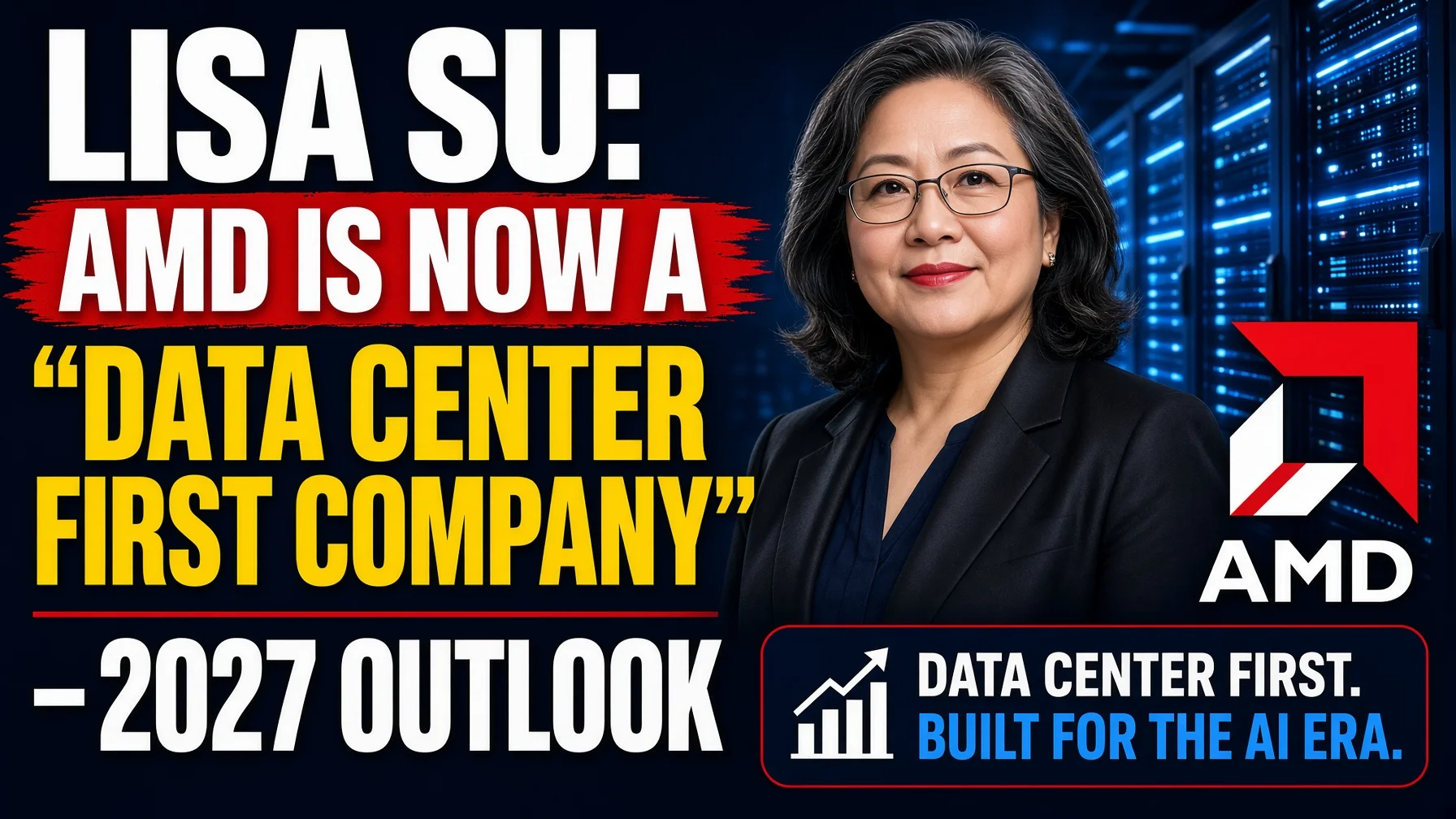
AMD Chief Executive Officer Lisa Su has explicitly repositioned the company as a “data center first” enterprise after the data-center segment nearly doubled year-over-year and reached approximately two-thirds of total revenue. Speaking after the third-quarter 2026 results, she stated that server revenue is expected to double in 2027 and that data-center AI revenue will grow even faster than the already-elevated expectations set only 90 days earlier. Yahoo Finance
Third-quarter revenue reached $13.4 billion, up 45 percent year-over-year, with data-center sales of roughly $8.5 billion. Gaming revenue fell about 40 percent, underscoring the internal shift in priorities. Large multi-year GPU agreements, some accompanied by warrants that give major customers potential equity upside, further illustrate the strategic bet on AI infrastructure. Observer
Table of Contents
- What Did Lisa Su Mean by “Data Center First”?
- How Strong Has Recent Data-Center Performance Been?
- What Is the Detailed 2027 Financial and Product Outlook?
- How Do the Customer Warrants and Multi-Year Deals Work?
- What Supply, Cost and Capacity Constraints Remain?
- How Does AMD’s Position Compare with Nvidia’s?
- What Are the Principal Risks to the 2027 Targets?
- What Does the Shift Mean for Consumer GPUs and Other Segments?
- Key Takeaways
- Frequently Asked Questions
What Did Lisa Su Mean by “Data Center First”?
In a Yahoo Finance interview days after the earnings release, Su stated: “We are a data center first company; that is our profile.” She added that customers need substantially more computing power to run AI applications and that AMD’s ambition is to be the best partner to the largest users of compute in the world. The remark reflects both the current revenue mix and the allocation of engineering, supply-chain and capital resources going forward. PCMag
How Strong Has Recent Data-Center Performance Been?
Data-center revenue rose nearly 100 percent year-over-year in the third quarter and accounted for approximately 64 percent of AMD’s total sales. Management guided for a further sequential increase of roughly 50 percent in the fourth quarter. Growth is being driven by Instinct GPU accelerators and EPYC server CPUs. The sharp decline in gaming revenue highlights the deliberate reallocation of priorities and wafer capacity. VideoCardz summary of Yahoo Finance interview
What Is the Detailed 2027 Financial and Product Outlook?
Su told investors that overall server revenue is expected to double year-over-year in 2027. Data-center AI revenue is projected to grow faster than the forecast given one quarter earlier. By 2027 the data-center business is expected to represent more than 80 percent of company-wide revenue. The company is already seeing demand run ahead of available supply for its latest accelerators and rack-scale systems. Yahoo Finance
How Do the Customer Warrants and Multi-Year Deals Work?
AMD has signed multi-year supply agreements that include warrants allowing certain customers to purchase AMD shares if volume and stock-price conditions are met. The arrangement with Meta, for example, covers up to six gigawatts of GPUs and includes warrants for up to 160 million shares. Similar structures have been discussed with other large buyers. The warrants give hyperscalers a direct economic interest in AMD’s success as their deployments scale, aligning incentives beyond a pure supplier-customer relationship. Observer
What Supply, Cost and Capacity Constraints Remain?
Advanced packaging, high-bandwidth memory, substrates and overall wafer capacity remain tight. Su has acknowledged that customer demand currently exceeds AMD’s ability to supply and that the company is working aggressively to expand output through 2027. These constraints, rather than lack of design wins, are the principal limit on near-term revenue growth.
How Does AMD’s Position Compare with Nvidia’s?
Nvidia continues to hold the majority of spending on the highest-end AI training GPUs and benefits from a mature software ecosystem. AMD is growing faster off a smaller base, gaining credible design wins in both training and inference, and using commercial structures such as warrants to deepen customer relationships. The “data center first” framing signals an intent to compete more directly for large-scale deployments rather than remain a secondary supplier.
What Are the Principal Risks to the 2027 Targets?
- Inability to expand supply (packaging, memory, wafers) quickly enough
- A slowdown or deferral in hyperscaler and sovereign AI capital expenditure
- Intensifying competition or pricing pressure from Nvidia
- Execution risk on new rack-scale systems and software improvements
- Export-control or geopolitical restrictions that affect certain customers
What Does the Shift Mean for Consumer GPUs and Other Segments?
With data-center products receiving priority for advanced process nodes, packaging and memory, availability and pricing of consumer graphics cards are likely to remain constrained. Gaming and client revenues are not being abandoned, but they are no longer the primary drivers of investment or growth targets.
Revenue Mix and Outlook Snapshot
| Segment | Q3 2026 Approximate Share | 2027 Direction | Primary Driver |
|---|---|---|---|
| Data Center | ~64 % | >80 % of total revenue | AI GPUs + EPYC CPUs |
| Client | Modest | Stable to moderate | Ryzen processors |
| Gaming | Declining | Secondary priority | Consoles & discrete GPUs |
Key Takeaways
- Lisa Su has explicitly labeled AMD a “data center first” company.
- Data-center revenue nearly doubled year-over-year and already represents roughly two-thirds of sales.
- 2027 guidance calls for server revenue to double and AI revenue to grow even faster than previously expected.
- Data center is projected to exceed 80 percent of total company revenue in 2027.
- Multi-year deals with customer warrants align hyperscaler incentives with AMD’s growth.
- Supply constraints remain the main near-term bottleneck.
- Consumer GPU availability is likely to stay tight as data-center priority rises.
Frequently Asked Questions
Is AMD exiting the gaming or client PC markets?
No. Those businesses continue, but data center is now the clear strategic, financial and resource-allocation priority.
How fast is the AI-specific portion of data-center revenue growing?
Faster than management projected 90 days earlier; Su highlighted clear acceleration.
Will the customer warrants dilute existing shareholders?
Dilution occurs only if the large purchase-volume and stock-price conditions are met—i.e., only if substantial growth materializes.
What is the single biggest risk to the 2027 outlook?
The ability to expand supply of advanced packaging, high-bandwidth memory and wafers quickly enough to meet demand.
How does AMD’s 2027 guidance compare with Nvidia’s trajectory?
Both companies are capacity-constrained. AMD is growing from a smaller base and is explicitly targeting share gains in large-scale AI deployments.
Does “data center first” mean consumer graphics cards will become more expensive or scarce?
Prioritization of data-center products for leading-edge capacity makes continued tightness in consumer GPU supply a reasonable expectation.
When did Su make the “data center first” statement?
In a Yahoo Finance interview in early November 2026, immediately after the Q3 earnings release.
Conclusion
Lisa Su’s declaration that AMD is now a “data center first” company crystallizes a transformation already visible in the financial results. For technology investors and industry observers the quantitative 2027 targets—server revenue doubling and data center exceeding 80 percent of sales—together with the innovative customer-warrant structures, provide clear milestones against which progress can be measured. Supply expansion remains the critical execution variable. If AMD can convert its current design wins and capacity additions into sustained shipments through 2027, the strategic pivot will have succeeded in establishing the company as a credible large-scale competitor in AI infrastructure. The next several quarters of delivery against both customer commitments and internal supply plans will be decisive.
Discover more from The Economy
Subscribe to get the latest posts sent to your email.

SoftBank Group recorded an approximately $3.7 billion loss from advance payments and contract adjustments for power-generation equipment intended for artificial-intelligence data-centre projects in the United States. The charge was a principal contributor to a fiscal second-quarter net loss of roughly $7 billion—the company’s first quarterly loss in nearly two years. Reuters
Through a related entity, SoftBank had reserved substantial gas-turbine manufacturing capacity at a time of acute scarcity. Reports indicated reservations exceeding 13 gigawatts—more than the output of six Hoover Dams. When project specifications later changed, SoftBank wrote down large non-refundable advances and associated modification costs. Days earlier Elon Musk had publicly claimed SoftBank was defaulting on turbine orders; SoftBank’s chief financial officer categorically rejected the assertion. Wall Street Journal
The episode supplies one of the clearest financial illustrations to date of both the scarcity value of power equipment in the AI build-out and the execution risk of over-committing capital before designs are finalised.
Table of Contents
- How Did the $3.7 Billion Loss Arise?
- What Volume of Turbines and Capacity Had SoftBank Reserved?
- Which Entity and Projects Were Involved?
- How Does This Relate to AI Data-Center Power Demand?
- What Did Management Say About the “Default” Allegations?
- Are There Any Offsetting Recoveries or Future Rebates?
- What Does the Loss Signal for the Broader AI Infrastructure Build-Out?
- How Have Markets and Analysts Reacted?
- Key Takeaways
- Frequently Asked Questions
How Did the $3.7 Billion Loss Arise?
A SoftBank-affiliated vehicle made cumulative advance payments of approximately $9.5 billion for US power-generation equipment by 30 September 2026. When technical requirements and project timelines evolved, a substantial portion of those advances could not be refunded. The recognised loss comprised roughly $2.85 billion of non-refundable advances plus approximately $0.88 billion of contract-modification and settlement costs, totalling near $3.7 billion. Reuters
The charge was recorded in the fiscal second quarter and formed part of the wider ¥1.12 trillion ($7.1 billion) net loss. Bloomberg
What Volume of Turbines and Capacity Had SoftBank Reserved?
Contemporary reporting, led by The Wall Street Journal, indicated that SoftBank had reserved more than 13 gigawatts of gas-turbine capacity between late 2025 and early 2026. That volume equates to the output of more than six Hoover Dams and exceeded the immediate needs of projects then under firm development. The majority of the reservations were placed with GE Vernova. Wall Street Journal
Which Entity and Projects Were Involved?
The procurement vehicle has been identified in reporting as Silver Bands 7 LLC (or a similarly named SoftBank- and Vision Fund II-backed entity). The equipment was destined for multiple US AI data-center developments, including a large-scale project in Ohio linked to broader Japan–US energy and technology arrangements. SoftBank later clarified that the specific $3.7 billion charge was not solely attributable to any single named project. Reuters
How Does This Relate to AI Data-Center Power Demand?
Training and inference clusters for frontier AI models consume extraordinary amounts of electricity. Developers have competed aggressively to secure both grid connections and on-site generation equipment. SoftBank’s large early reservations were an attempt to guarantee supply in a market where turbine lead times had lengthened dramatically and reservation fees had risen. The subsequent write-down demonstrates that final engineering specifications and construction timelines can diverge materially from the assumptions used when capacity was first locked in. Underlying demand for power has not disappeared; the loss reflects a mismatch of scale and timing. Bloomberg
What Did Management Say About the “Default” Allegations?
On 6 November 2026 Elon Musk posted that SoftBank was “defaulting on their turbine orders.” During the subsequent earnings briefing, Chief Financial Officer Yoshimitsu Goto stated that the claim was “simply not correct at all” and that no default had occurred. Management characterised the actions as a deliberate review and resizing of procurement commitments as project requirements evolved, not a failure to honour contractual obligations. Reuters
Are There Any Offsetting Recoveries or Future Rebates?
SoftBank retains contractual rights to conditional rebates of up to $2.1 billion on future equipment purchases over ten years. These potential rebates have not been recognised as assets in the current financial statements because their realisation depends on subsequent order volumes and the satisfaction of specified conditions. Any future recovery would therefore appear in later periods. Reuters
What Does the Loss Signal for the Broader AI Infrastructure Build-Out?
The charge is a concrete data point on execution risk inside the AI power supply chain. Turbine manufacturers have enjoyed strong pricing power; customers that place oversized, non-refundable reservations can face stranded costs when plans change. Other hyperscalers, data-center developers and infrastructure investors are likely to re-examine the cancellation terms, phasing and sizing of their own advance commitments. At the same time, the episode does not imply that the fundamental shortage of power for AI workloads has eased.
How Have Markets and Analysts Reacted?
The earnings miss and the turbine-related charge added to existing investor caution about the pace, cost and return profile of AI infrastructure spending. SoftBank’s shares and those of related AI-exposed names experienced volatility around the release. Analysts have focused on whether the remaining reservations and any future rebates can improve the economics of the US projects, and on the wider implications for power-equipment pricing and availability.
Approximate Composition of the $3.7 Billion Charge
| Component | Approximate Amount | Accounting Treatment |
|---|---|---|
| Non-refundable advance payments | $2.85 billion | Written down |
| Contract modifications and settlements | $0.88 billion | Expensed |
| Total recognised loss | ~$3.7 billion | Included in Q2 results |
| Potential future rebates | Up to $2.1 billion | Contingent, not recognised |
Key Takeaways
- SoftBank recorded a roughly $3.7 billion loss on scaled-back reservations of power-generation equipment for US AI data centers.
- The charge helped drive a quarterly net loss of about $7 billion.
- Reservations reportedly exceeded 13 GW—well above the needs of then-finalised projects.
- Management explicitly denied any default on turbine orders.
- Conditional rebates of up to $2.1 billion on future purchases exist but remain unbooked.
- The episode highlights both the scarcity of gas turbines and the financial risk of over-ordering before specifications are locked.
- Underlying AI-related electricity demand remains robust; the loss is one of timing and scale.
Frequently Asked Questions
Did SoftBank default on its gas-turbine orders?
No. Chief Financial Officer Yoshimitsu Goto stated clearly that no default occurred and that the claim was incorrect.
How much of the advance payments can still be recovered?
SoftBank holds rights to conditional rebates of up to $2.1 billion over ten years; realisation is uncertain and has not been recognised.
Which US projects were linked to the equipment?
Multiple AI data-center developments, including frequent references to a large Ohio site. SoftBank has clarified that the charge is not tied exclusively to any single project.
Does the write-down mean demand for AI data-center power is weakening?
No. It reflects an over-reservation relative to finalised specifications, not a collapse in electricity demand.
Who was the main turbine supplier?
Reporting has identified GE Vernova as the primary counterparty for the bulk of the reservations.
How did Elon Musk’s comment affect the story?
Musk’s public claim of default drew additional attention; SoftBank’s immediate and categorical denial on the earnings call became part of the official record.
What should other data-center developers learn from this?
Advance payments for long-lead power equipment carry material cancellation or resizing risk. Phased commitments, flexible contractual terms and tighter alignment between reservations and final engineering are prudent.
Will the loss affect SoftBank’s ability to fund future AI projects?
The company retains substantial resources and continues to pursue large-scale infrastructure investments; the charge is significant but not described as existential.
Conclusion
SoftBank’s $3.7 billion turbine-related loss is among the most tangible financial consequences yet recorded of the global race to power artificial-intelligence data centers. For finance, energy and technology audiences the episode demonstrates both the extreme scarcity value of gas turbines and the real cost of committing capital at scale before project specifications are final. While management has rejected any suggestion of default and retains the possibility of future rebates, the charge stands as a cautionary marker for every participant in the AI infrastructure build-out. Subsequent reporting on rebate realisation, the status of remaining reservations and the progress of the underlying US projects will determine whether the loss remains an isolated mis-calculation or becomes a broader reference point for execution risk in the sector.
Discover more from The Economy
Subscribe to get the latest posts sent to your email.
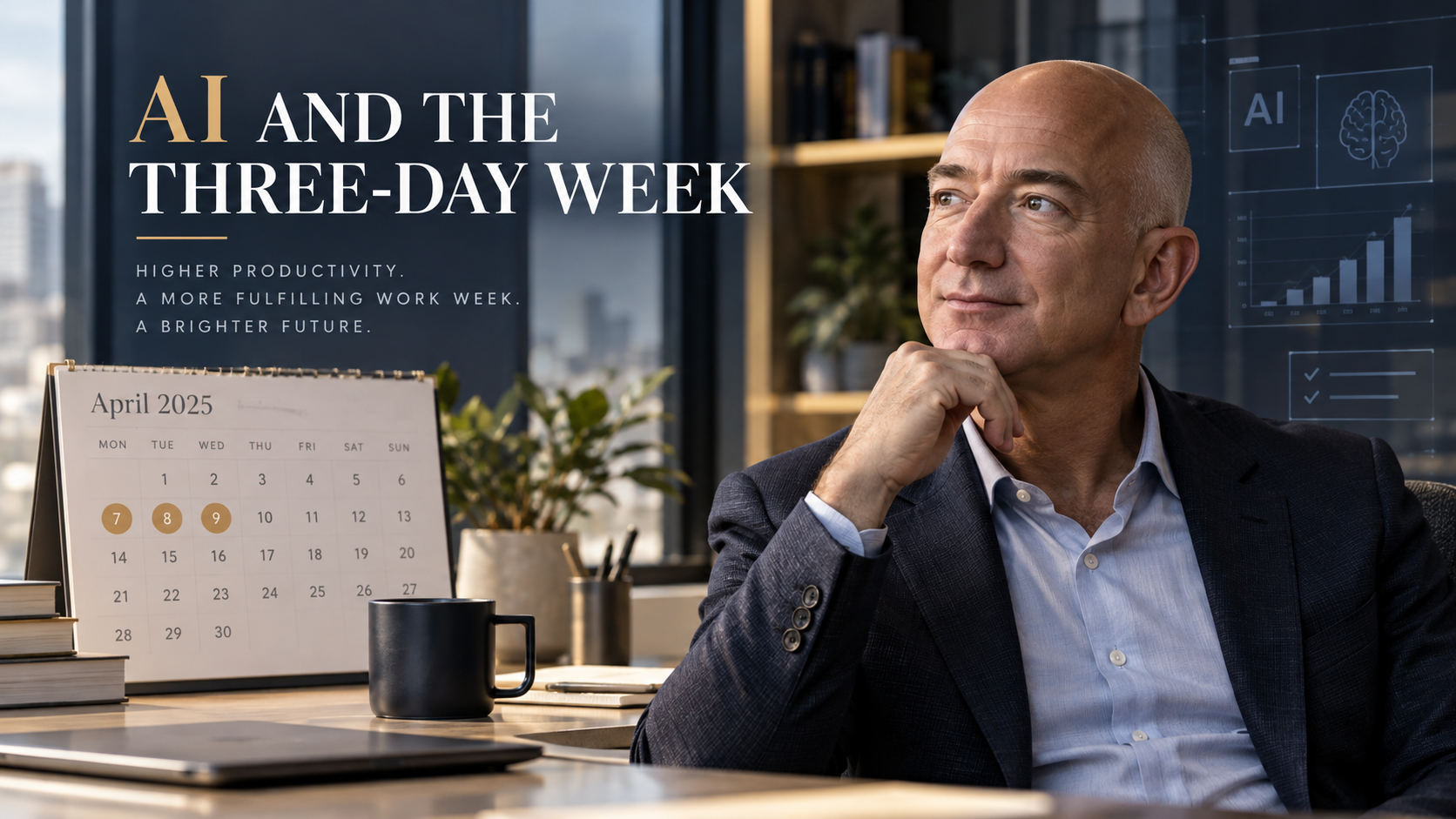
Jeff Bezos has floated a future in which artificial intelligence makes workers productive enough that some people might choose a three-day workweek while still supporting their families. The Amazon founder made the point during an October 7, 2026 interview with Fox News. He did not announce that Amazon is adopting a three-day schedule or that AI guarantees shorter hours for everyone. The underlying distinction is crucial: Bezos was describing a possible long-term economic outcome, not a new employment policy. Fox News’s account of the interview and Fast Company’s focused coverage make that clear.
Key takeaways:
- Bezos linked the possibility of fewer working days to future gains in AI-driven productivity.
- He suggested greater output could make single-income households or shorter working schedules financially feasible for some families.
- There is no evidence in the cited interview of a universal three-day-workweek plan at Amazon.
- Research shows AI can save time on some tasks, but broad effects on compensation and employment remain unsettled.
What did Jeff Bezos say?
In the Fox interview, Bezos discussed an optimistic vision of technological progress. His argument was that powerful AI tools could raise economic output enough to expand people’s choices. If a person can generate greater value in less time—and share financially in that improvement—working fewer days could become an option rather than a forced reduction in income.
That scenario is different from predicting every office will close on Thursdays and Fridays. It is also different from a government-mandated reduction in work hours. Fast Company reported Bezos’s additional concern that firms might face labor shortages if people respond to higher productivity by choosing more leisure time.
The prediction has attracted attention because it reverses the most alarming version of the AI-and-jobs debate. Instead of imagining machines replacing so many workers that employment vanishes, Bezos emphasized the possibility of prosperity, shorter hours and tighter labor supply.
Why the productivity argument matters
Labor productivity is commonly measured as output per hour worked. That is the U.S. Bureau of Labor Statistics’ definition. A software developer completing work that used to require ten hours in six may produce more per hour. A customer-service team handling routine requests faster may serve more customers without increasing headcount at the same rate.
But greater task efficiency does not automatically mean that an employee receives proportionally higher wages or fewer shifts. Businesses choose how to allocate productivity gains among pricing, investment, expansion, profits, compensation and staffing. Workers’ bargaining power, competition, management priorities and public policy can all shape the outcome.
A simple illustration—not a forecast
Imagine an employee currently produces 40 units of useful output during a 40-hour week. Productivity is one unit per hour. If technology raises the rate to 1.67 units an hour, a 24-hour week could, arithmetically, produce approximately 40 units.
That calculation only shows a technical possibility. It assumes the tasks can be reorganized, demand stays sufficiently steady, management accepts the schedule, and pay arrangements remain favorable. Healthcare, aviation, emergency services, logistics and many other occupations require coverage across specific hours; AI cannot simply eliminate the need for people to be present.
The important question is not whether an AI tool sometimes saves time. It is whether the gain is widespread, reliable and shared in a way that makes shorter schedules financially sustainable.
What does current research show about AI and jobs?
The evidence is more restrained than the boldest predictions. A June 2026 International Labour Organization review found evidence of real but uneven productivity gains. It also concluded that large-scale job displacement had remained limited in the material reviewed, while warning about inequality, weakened entry-level pathways and shifting job quality.
Separately, Yale’s Budget Lab tracker, updated September 15, 2026, reported no clear economy-wide labor-market disruption attributable to AI in the indicators it examined. Its researchers cautioned that the findings could change as technology adoption and data evolve.
These results do not prove Bezos wrong. They show that the conditions for a large-scale three-day week have not yet been demonstrated by broad labor data. Firms are experimenting with AI, but productivity effects differ among tasks, occupations and organizations.
Task savings are not the same as job transformation
An AI assistant might draft a first version of a memo quickly, but a professional still needs to check accuracy, speak with clients, make decisions and accept responsibility. A factory might improve planning efficiency while remaining constrained by physical machinery. A hospital might automate paperwork yet still need the same number of nurses for bedside care.
This distinction between automating tasks and replacing whole jobs is essential. Headlines suggesting a direct line from better chatbots to a nationwide three-day week skip multiple economic steps.
Could workers keep the same pay while working less?
They could in some workplaces, but that would require an employer decision, collective agreement, regulatory change or a labor-market environment supportive of higher effective hourly compensation. An employee moving from five eight-hour days to three eight-hour days would cut weekly hours from 40 to 24—a 40% reduction in hours. Keeping weekly pay unchanged would require compensation per hour to increase by about 67%, before considering other changes in productivity or operating costs.
That is a much larger adjustment than ordinary schedule flexibility. The arithmetic does not make it impossible; it makes the necessary improvement explicit. By contrast, a four-day, 32-hour schedule requires a 20% reduction in hours, a different benchmark entirely.
Any employer trial must ask whether output, service quality, employee retention and customer coverage are maintained. Studies of particular programs may be promising, but results do not transfer uniformly to every industry.
What about Amazon employees?
There is no verified connection between Bezos’s prediction and an official companywide Amazon three-day-workweek policy. Bezos is Amazon’s founder and executive chair, but his personal economic forecast should not be presented as a company announcement.
Amazon operates a mixture of offices, warehouses, cloud-computing facilities, transportation networks and other businesses. Working-hour patterns depend on the role and contract. A broad change in hours would require formal employee communications and operational planning, not merely comments in a television interview.
Readers searching “Is Amazon switching to three days?” should therefore receive an unambiguous answer: not on the basis of this interview.
Could AI create a labor shortage instead of mass unemployment?
Bezos’s labor-shortage concern is plausible as a scenario, but it is not an established forecast. If incomes rose while more workers elected to reduce hours, businesses might face greater competition for labor. Yet other forces could push the opposite way: some jobs could be automated, employers could reduce hiring, or new industries might absorb displaced workers.
The net result will depend on adoption speed, which tasks AI performs reliably, the cost of computing and energy, economic growth and how governments and companies manage the transition. Reuters’ October 2026 discussion of AI at work also emphasized that AI is changing tasks within jobs, with younger and experienced workers potentially affected differently.
Frequently asked questions
Did Jeff Bezos predict a three-day workweek?
Yes. He discussed it as a possible consequence of greater AI productivity during an October 7, 2026 Fox News interview. It was not a commitment to a timetable.
Is Amazon moving to a three-day workweek?
No companywide shift was announced in the interview. Any claimed policy should be verified against Amazon’s official employment communications.
Would a three-day workweek mean three eight-hour days?
Not necessarily. A three-day schedule could mean 24 hours, longer shifts or another arrangement. Bezos did not establish a universal definition or wage agreement.
Will AI eliminate the need to work?
There is no evidence supporting that as an inevitable outcome. The ILO’s 2026 review describes heterogeneous gains and risks rather than the disappearance of work.
Could AI make one-income households more common?
It could in theory if household purchasing power rises materially, but wages, housing costs, childcare, benefits and employment security also matter. The claim remains a scenario, not a confirmed demographic trend.
When could three-day workweeks become common?
No defensible national timetable can be inferred from the cited interview. Some employers may experiment sooner than others.
The bigger economic question
The provocative part of Bezos’s vision is not whether software can perform individual tasks faster. It is whether future productivity gains become broadly shared prosperity. If workers capture enough benefit, shorter schedules may become more feasible. If gains are concentrated in profits or paired with job insecurity, fewer working hours could instead mean lower household income. Those are fundamentally different futures, and the evidence today does not settle which will dominate.
Discover more from The Economy
Subscribe to get the latest posts sent to your email.

Open Banking Trends 2026: What Consumers Should Know

Nvidia After the Selloff: What to Watch Before Earnings

Black Friday 2026 Early Deals: A Data-Driven Shopping Guide

Fed Policy Path 2027: Rate Expectations After the Hold

Asia’s Economic Resilience in 2026: The Strategic Blueprint for Sustaining the Global Growth Engine

Credit Scoring Changes 2026: What Mortgage Buyers Need to Know

10-Year Treasury Yield Outlook for 2027 After the Democratic Sweep

Is the AI Infrastructure Boom Sustainable? A Reality Check

Disability Insurance Demand in 2026: Who’s Buying and Why

What the 2026 Midterms Mean for Treasury Yields and Bond Markets

Payroll Outlook After the Midterms: 2027 Tax Changes, Compliance Risks and AI Trends

Lisa Su: AMD Is Now a “Data Center First Company” – 2027 Outlook

Reasons for Falling US Gas Prices in November 2026: A Seasonal Shift

SoftBank’s $3.7 Billion Turbine Loss: What the AI Power Bet Reveals

Dow Jones Today: Dow Slips 237 Points After the Worst Day Since April 2025

US–Iran Conflict in October 2026: Hormuz, Oil Prices and Diplomacy

Pakistan IMF Programme 2026: Why Bailouts Keep Returning

SSI November 2026 Payment: Why Benefits Arrive October 30

Singapore Stock Market Outlook 2027: The STI’s Bank-and-Yield Test

2027 Federal Tax Brackets: New IRS Rates and Standard Deductions Explained

IMF Global Outlook 2027: The Recovery Is Real, but the Divide Is Growing

World Bank Debt Report 2026: The $9.4 Trillion Burden Behind the Recovery

Stock Market Crash 2026? What the November Rout Actually Tells Us

KSE-100 Index 2026: Is Pakistan’s Stock-Market Recovery Sustainable?

Germany–France ‘Made in Europe’ Deal Could Reshape China’s EV Ambitions

Global Markets Today: The AI Sell-Off Has Become a Test of Liquidity

Zhuhai Airshow 2026: How China’s Stealth Jets, Drones and Missiles Are Redrawing Global Air Power

Democrats Won Congress. Can They Fix the U.S. Economy
-

 Markets & Finance10 months ago
Top 15 Stocks for Investment in 2026 in PSX: Your Complete Guide to Pakistan’s Best Investment Opportunities
-

 Analysis9 months ago
Johor’s Investment Boom: The Hidden Costs Behind Malaysia’s Most Ambitious Economic Surge
-

 Analysis9 months ago
Top 10 Stocks for Investment in PSX for Quick Returns in 2026
-

 Banks10 months ago
Best Investments in Pakistan 2026: Top 10 Low-Price Shares and Long-Term Picks for the PSX
-

 Analysis9 months ago
Brazil’s Rare Earth Race: US, EU, and China Compete for Critical Minerals as Tensions Rise
-

 Investment10 months ago
Top 10 Mutual Fund Managers in Pakistan for Investment in 2026: A Comprehensive Guide for Optimal Returns
-

 Global Economy11 months ago
15 Most Lucrative Sectors for Investment in Pakistan: A 2025 Data-Driven Analysis
-

 Global Economy11 months ago
Pakistan’s Export Goldmine: 10 Game-Changing Markets Where Pakistani Businesses Are Winning Big in 2025