
Legal
Personal Injury Lawyer: A Complete Guide to Filing Your Claim in 2026

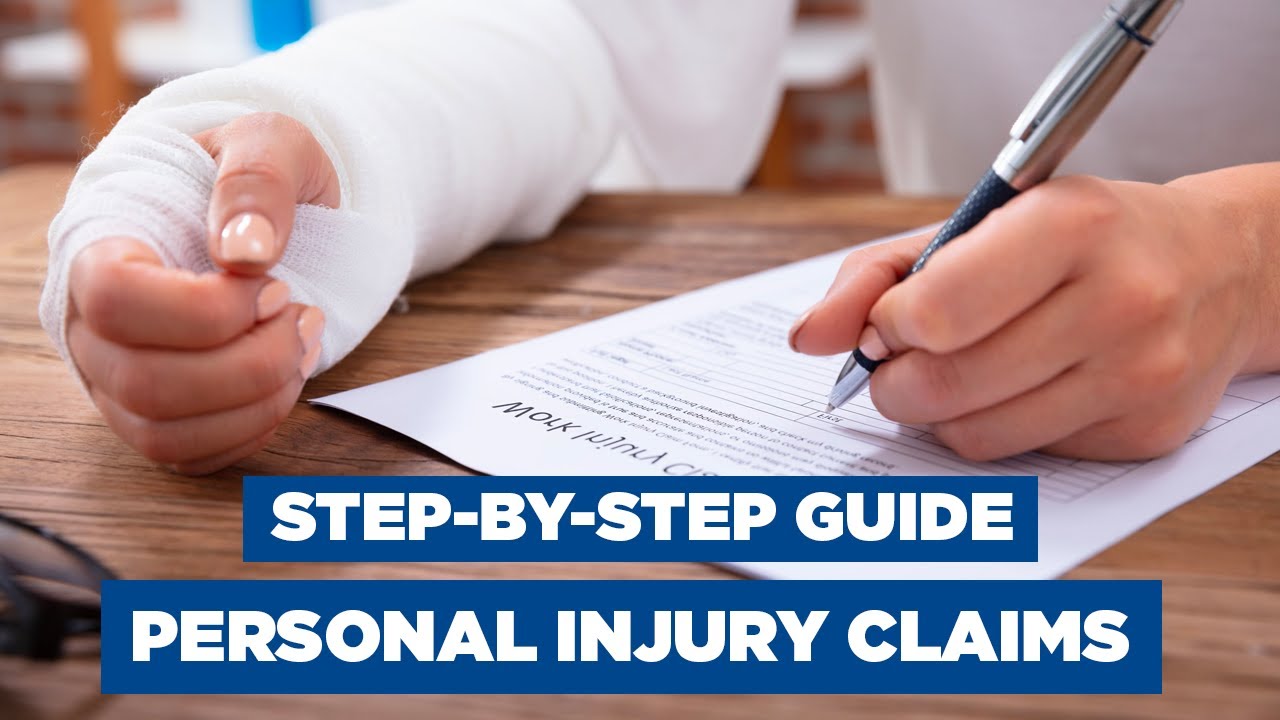
The clock on your right to compensation starts ticking the moment you’re injured — and in most states, you have as little as one to three years to act before that right disappears permanently.
Personal injury law covers an enormous range of harm: car accidents, slip-and-falls, medical malpractice, defective products, dog bites, and workplace injuries all fall under this single legal umbrella. What they share is a common legal foundation — negligence — and a common process for pursuing compensation. Yet most people only learn how the system actually works after they’re already injured and under pressure from insurance adjusters to settle quickly.
This guide walks through how personal injury claims are built, what drives settlement value, and how to evaluate an attorney before you sign a retainer.
How Personal Injury Claims Work: The Core Legal Framework
Nearly every personal injury case rests on proving four elements: the defendant owed you a duty of care, they breached that duty, the breach caused your injury, and you suffered quantifiable damages as a result. Missing any one of these elements can sink an otherwise sympathetic case.
Key takeaway: The vast majority of personal injury claims never reach a courtroom. Most cases are resolved through negotiated settlement — frequently in the weeks or days before a scheduled trial — because both sides generally prefer the certainty of a settlement to the unpredictability and expense of trial.
The Most Common Categories of Personal Injury Claims
- Motor vehicle accidents — car, motorcycle, pedestrian, and bicycle collisions caused by another driver’s negligence.
- Premises liability (slip-and-fall) — injuries caused by a property owner’s failure to maintain safe conditions.
- Medical malpractice — harm caused by a healthcare provider’s deviation from the accepted standard of care.
- Product liability — injuries caused by a defectively designed, manufactured, or labeled product.
- Dog bites and animal attacks — often governed by strict liability rules that don’t require proving the owner’s negligence.
- Workplace injuries — which may involve both a workers’ compensation claim and a separate third-party liability claim.
Step-by-Step: How a Personal Injury Case Typically Proceeds
- Initial consultation and case evaluation — nearly always free, used to assess liability and potential damages.
- Investigation and evidence gathering — accident reports, medical records, witness statements, and, where relevant, expert analysis.
- Demand letter and negotiation — the attorney submits a formal demand to the at-fault party’s insurer, backed by documented damages.
- Filing suit, if necessary — done before the statute of limitations expires, often as a strategic step to apply pressure even when settlement remains the goal.
- Discovery and continued negotiation — the vast majority of cases still settle during this phase.
- Trial, if the case doesn’t settle — a small minority of cases proceed all the way to a jury verdict.
Financial and Strategic Implications: What Determines Your Settlement
Settlement value in personal injury cases hinges on a combination of economic damages (medical bills, lost wages) and non-economic damages (pain and suffering, diminished quality of life), weighted against the strength of the liability evidence and available insurance coverage.
| Factor | How It Affects Settlement Value |
|---|---|
| Severity and permanence of injury | The single largest driver — permanent or catastrophic injuries command significantly higher non-economic damages |
| Clarity of liability | Clear-cut fault accelerates settlement and reduces the discount insurers apply for “litigation risk” |
| Available insurance coverage | Settlement is practically capped by the at-fault party’s policy limits absent additional assets to pursue |
| Comparative/contributory negligence rules | States that reduce or bar recovery based on the claimant’s own fault percentage can significantly affect final payout |
| Quality of documentation | Thorough medical records and consistent treatment history materially strengthen a claim’s credibility |
| Legal representation | Represented claimants typically recover more than unrepresented claimants, even after accounting for attorney fees |
Expert insight: Insurance adjusters are trained to make an early, modest settlement offer before a claimant has fully documented the extent of their injuries. Accepting an offer before reaching maximum medical improvement — the point where your condition has stabilized — is one of the most common and costly mistakes injury victims make.
Statutes of Limitations Vary Significantly by State
Personal injury statutes of limitations generally range from one to six years depending on the state, with most states clustering around two to three years from the date of injury. Kentucky and Tennessee have among the shortest windows at one year, while a handful of states extend to as long as six years — underscoring why confirming your specific state’s deadline early is critical.
Contingency Fees: How Personal Injury Attorneys Are Paid
Contingency fee arrangements are standard practice in U.S. personal injury litigation: the attorney is paid a percentage of the recovery only if the case succeeds, with no upfront cost to the client. This “no win, no fee” structure is precisely what allows injury victims — regardless of financial means — to access experienced legal representation.
How to Choose the Right Personal Injury Lawyer
- Relevant case-type experience — a lawyer who regularly handles your specific type of claim (auto accident, malpractice, product liability) will understand the nuances that generalists often miss.
- Trial readiness, not just settlement history — insurers negotiate more seriously with firms known to be willing and able to take a case to trial.
- Transparent fee structure — confirm the contingency percentage and how case costs are handled in writing before signing.
- Direct access and communication — ask who will actually be handling your case day-to-day, particularly at high-volume firms.
- Verified track record — ask for examples of comparable case outcomes, understanding that past results don’t guarantee future ones.
- Free initial consultation — standard across the industry; be wary of any firm charging for an initial case evaluation.
Key takeaway: The most consequential decision in a personal injury case often happens in the first two weeks — before medical treatment is complete and before you’ve spoken to an insurance adjuster. Early legal guidance, even before hiring counsel, materially changes downstream leverage.
Future Outlook: Personal Injury Litigation Trends Through 2027
- Rising medical costs are increasing claim values. As healthcare costs continue to climb, the economic-damages component of personal injury claims — medical bills and future treatment costs — is trending upward across most injury categories.
- Nuclear verdicts continue to influence settlement negotiations. A pattern of unusually large jury awards in recent years has made insurers more inclined to settle higher-exposure claims before trial, benefiting well-represented claimants.
- Litigation funding and case-cost financing are expanding. More claimants are using pre-settlement funding to cover living expenses during litigation, though these products carry high costs and require careful evaluation alongside your attorney.
- State-level tort reform remains an active legislative battleground. Several states have debated or enacted changes to damage caps, comparative negligence rules, and statute-of-limitations periods — meaning the legal landscape in any given state can shift from year to year.
Frequently Asked Questions
How much does it cost to hire a personal injury lawyer?
Nearly all personal injury attorneys work on contingency, meaning there is no upfront fee. The attorney is paid a percentage of the settlement or verdict — commonly 25%–40% — only if the case succeeds.
How long do I have to file a personal injury claim?
Statutes of limitations vary by state, generally ranging from one to six years, with most states falling between two and three years from the date of injury. Confirm your state’s specific deadline as early as possible.
Do most personal injury cases go to trial? No. The large majority of personal injury claims are resolved through negotiated settlement, often shortly before a scheduled trial date, rather than proceeding to a jury verdict.
What’s the difference between economic and non-economic damages?
Economic damages cover quantifiable losses like medical bills and lost wages. Non-economic damages compensate for pain, suffering, and diminished quality of life, and are typically the more negotiable component of a settlement.
Will hiring a lawyer actually get me more money than settling on my own?
Represented claimants typically recover meaningfully more than unrepresented claimants, even after accounting for attorney fees, largely because insurers negotiate differently once litigation becomes a credible threat.
Discover more from The Economy
Subscribe to get the latest posts sent to your email.



The administrative clock on your driver’s license starts running the moment you’re arrested for DUI — often just 10 days — and it moves independently of, and much faster than, your criminal case.
Drunk driving remains one of the most heavily enforced and consequential offenses in the U.S. legal system. Drunk driving killed 11,904 people in 2024, accounting for roughly 30% of all U.S. traffic fatalities, according to National Highway Traffic Safety Administration data cited by Mothers Against Drunk Driving. Against that backdrop, DUI enforcement, prosecution, and administrative license penalties have become more aggressive — and more procedurally complex — making experienced legal representation critical for anyone facing a charge.
This guide covers how DUI cases actually proceed, the twin-track legal exposure (criminal and administrative) most defendants don’t realize they’re facing, and what to look for in an attorney.
How a DUI Case Actually Works: Two Separate Legal Tracks
Most people charged with DUI assume they’re facing a single case. In reality, a DUI arrest typically triggers two parallel proceedings that operate on entirely different timelines and rules.
Key takeaway: The administrative license suspension process (handled by your state’s DMV or equivalent agency) and the criminal DUI prosecution (handled by the court) are separate. Missing the administrative appeal deadline — often as short as 7 to 10 days after arrest — can result in an automatic license suspension regardless of the outcome of your criminal case.
The Two Tracks Explained
1. Criminal Prosecution This is the case most people think of: arraignment, potential plea negotiation, and, if necessary, trial. Penalties can include fines, probation, mandatory alcohol education programs, ignition interlock device requirements, and in repeat or aggravated cases, jail time.
2. Administrative License Proceedings Run independently of the criminal court, this process determines whether your driving privileges are suspended pending or regardless of the criminal outcome. Requesting an administrative hearing within the short statutory window is often the only way to contest the suspension or preserve limited driving privileges.
Step-by-Step: What Happens After a DUI Arrest
- Arrest and chemical testing — breath, blood, or urine testing to determine blood alcohol concentration (BAC), typically measured against the standard .08 g/dL legal limit for non-commercial drivers.
- Administrative suspension notice — most states issue an immediate temporary license and a short window to request a hearing challenging the suspension.
- Arraignment — formal charges are read and an initial plea is entered.
- Evidence review and motion practice — an attorney examines whether the traffic stop, field sobriety tests, and chemical testing were conducted lawfully, since procedural errors can lead to evidence being excluded.
- Plea negotiation or trial — many cases resolve through negotiated plea agreements, though the strength of the evidence and the defendant’s prior record significantly shape outcomes.
- Sentencing — penalties vary widely by state, BAC level, and whether the case involves a repeat offense, injury, or a minor passenger.
Financial and Strategic Implications: The True Cost of a DUI Conviction
A DUI conviction’s cost extends far beyond the initial fine, and the cumulative financial impact is frequently underestimated by defendants weighing whether to hire counsel.
| Cost Category | Typical Range | Notes |
|---|---|---|
| Court fines and fees | Several hundred to several thousand dollars | Varies significantly by state and BAC level |
| License reinstatement fees | Roughly $100–$500 | Required after any suspension period ends |
| Ignition interlock device | Roughly $70–$150 installation plus $60–$100/month | Often mandatory even for first offenses in many states |
| Auto insurance increase | Often 50%–100%+ for several years | One of the largest long-term costs of a conviction |
| Mandatory alcohol education/treatment programs | Several hundred to over a thousand dollars | Court-ordered in most jurisdictions |
| Legal defense costs | Varies by case complexity | Frequently offset by reduced fines, avoided license suspension, or a reduced charge |
Expert insight: The insurance-rate increase following a DUI conviction is often the single largest long-term financial consequence — frequently exceeding the court fine itself when compounded over several years of higher premiums. This is one of the strongest financial arguments for contesting a charge rather than simply accepting a plea.
Why the Traffic Stop and Testing Procedure Matter So Much
A meaningful share of DUI defenses hinge not on disputing that the defendant had been drinking, but on whether the stop, field sobriety testing, and chemical testing were conducted in strict compliance with procedural requirements. Improperly calibrated breathalyzer equipment, a stop lacking reasonable suspicion, or a chain-of-custody gap in blood testing can each independently undermine the prosecution’s case — which is precisely why early attorney involvement matters more in DUI cases than in many other criminal matters.
How to Choose the Right DUI Attorney
- DUI-specific trial and negotiation experience — DUI law involves specialized scientific and procedural issues (breathalyzer calibration standards, field sobriety test protocols) that general criminal defense attorneys may not handle regularly.
- Familiarity with your state’s administrative license process — given the short filing windows, a firm needs to move immediately after your first call.
- A track record of both negotiated outcomes and trial verdicts — prosecutors and courts respond differently to attorneys known to be prepared for trial.
- Clear, upfront explanation of likely penalty exposure — based on your BAC, prior record, and jurisdiction, not generic reassurance.
- Transparent fee structure — unlike personal injury cases, criminal defense (including DUI defense) is typically billed as a flat fee or hourly rate rather than contingency, so confirm total cost expectations at the outset.
Key takeaway: Because the administrative license suspension clock starts immediately and runs independently of the criminal case, the value of contacting a DUI attorney within the first 24–48 hours after arrest is measured in preserved legal options, not just eventual case outcome.
Future Outlook: DUI Enforcement and Legal Trends Through 2027
- Drunk driving fatalities remain elevated despite recent improvement. Alcohol-related crash deaths fell about 7.6% between 2022 and 2023, but remain up roughly 25% compared to a decade earlier, keeping enforcement funding and penalty severity elevated in most states.
- State-level trends are diverging. Some states saw significant year-over-year increases in drunk-driving deaths even as the national trend improved, suggesting enforcement intensity and legislative response will likely vary more by state going forward.
- Passive impaired-driving detection technology is advancing. Continued advocacy for in-vehicle passive alcohol-detection technology, including federally mandated systems under recent legislation, points toward a longer-term shift from post-incident enforcement toward prevention — a trend that may eventually affect how DUI cases are investigated and prosecuted.
- Ignition interlock requirements continue to expand.
- A growing number of states now mandate interlock devices even for first-time offenders, increasing both the compliance burden and the associated cost for anyone convicted.
Frequently Asked Questions
What’s the legal blood alcohol limit for driving?
The standard legal limit is .08 g/dL BAC for non-commercial drivers in all states, though commercial drivers face a stricter .04 g/dL threshold, and many states apply zero-tolerance standards for drivers under 21.
Can a DUI charge be reduced or dismissed?
Yes, depending on the facts. Procedural issues with the traffic stop, field sobriety testing, or chemical testing can lead to reduced charges, case dismissal, or evidence being excluded, which is why early legal review of the arrest procedure matters.
How quickly do I need to act to protect my driver’s license?
Very quickly. Administrative license suspension appeal windows are often as short as 7 to 10 days after arrest and run independently of your criminal case timeline.
Will a DUI conviction affect my insurance rates?
Almost certainly. Insurance premium increases of 50% or more for several years following a conviction are common, frequently making this the largest long-term financial consequence of a DUI.
Do DUI attorneys work on contingency like personal injury lawyers?
No. Criminal defense, including DUI representation, is typically billed as a flat fee or hourly rate rather than contingency, since there’s no monetary “recovery” involved as there is in a civil injury case.
Discover more from The Economy
Subscribe to get the latest posts sent to your email.
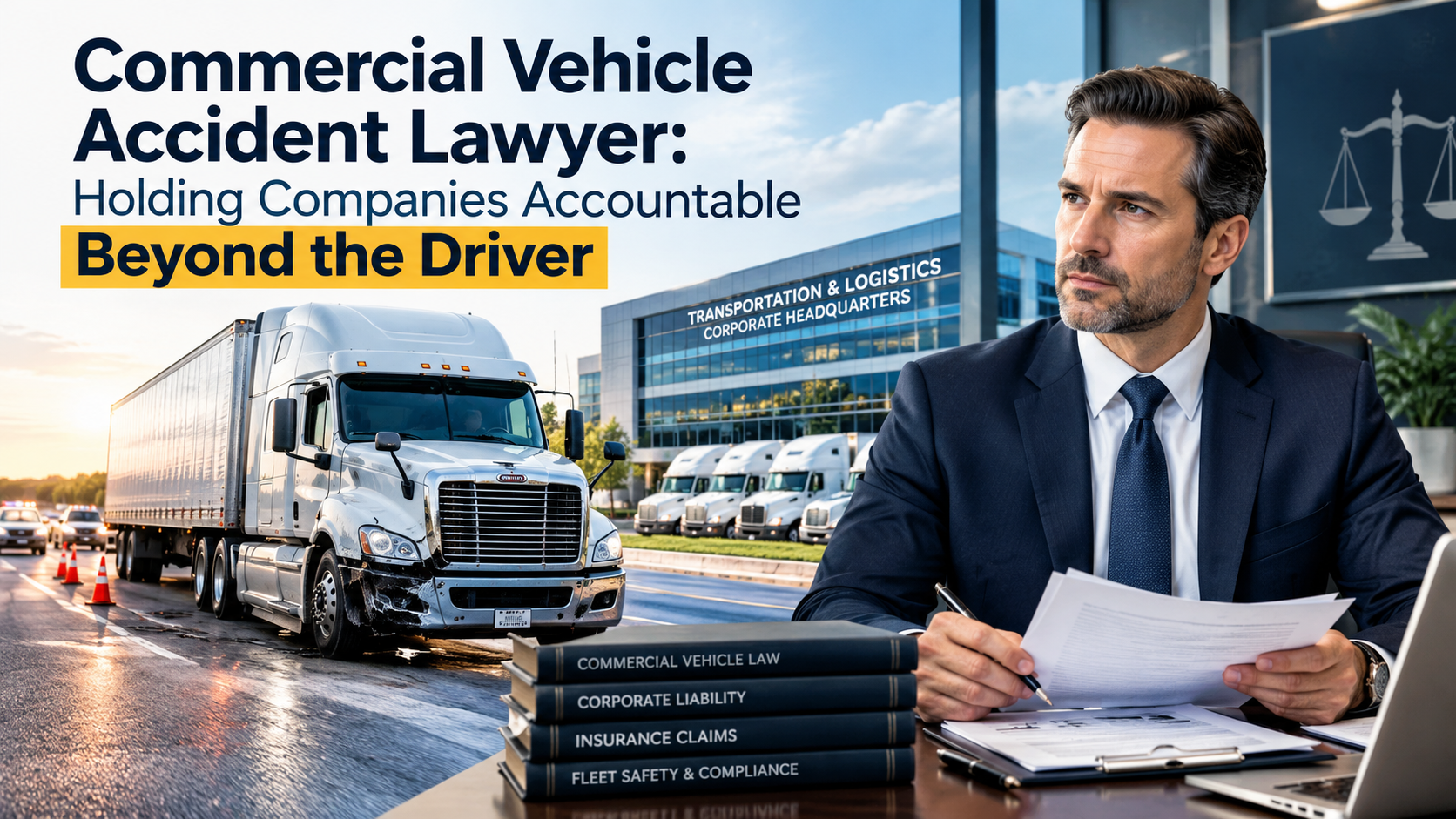
When a company delivery van, rideshare car, or work truck causes a crash, the driver behind the wheel is rarely the only party who should be paying — and knowing how to reach the employer’s insurance is often the difference between a modest payout and full compensation.
Commercial vehicle accidents cover a much broader category than semi-trucks: delivery vans, utility trucks, company fleet sedans, rideshare vehicles operating commercially, and contractor pickups all fall under this umbrella. What unites them legally is a single concept — employer liability — that most injury victims don’t realize applies to their case until an experienced commercial vehicle accident lawyer explains it.
This guide covers how liability, insurance, and settlement value work when the at-fault vehicle was being operated for business purposes, and what separates a commercial vehicle claim from an ordinary car accident case.
How Commercial Vehicle Liability Actually Works
The foundational legal doctrine in these cases is respondeat superior — Latin for “let the superior answer” — which holds an employer liable for the negligent acts of an employee committed within the scope of employment. In practice, this means a delivery company, contractor, or fleet operator can be held directly responsible for a crash caused by one of its drivers while on the job.
Key takeaway: The critical legal question in almost every commercial vehicle case is scope of employment — was the driver performing a work-related task at the time of the crash? A driver commuting to work is generally not “on the job” for liability purposes, but a driver making a delivery, running a work errand, or operating a company vehicle during business hours almost always is.
Common Categories of Commercial Vehicle Accidents
- Delivery and courier vehicles — package delivery vans, food delivery drivers, and freight couriers under tight scheduling pressure.
- Rideshare and taxi services — vehicles operating under a transportation network company’s commercial insurance policy while a passenger is booked or in transit.
- Contractor and utility vehicles — construction, plumbing, electrical, and utility company trucks, often involving employer negligence in vehicle maintenance or driver training.
- Company fleet vehicles — sales reps, service technicians, or any employee driving a business-owned or business-leased vehicle during work duties.
- Government and municipal vehicles — a distinct category with different procedural rules, since claims against government entities typically require a formal notice of claim within a short statutory window.
Step-by-Step: Establishing a Commercial Vehicle Claim
- Confirm employment and scope-of-employment status. Was the driver clocked in, performing a delivery, or otherwise acting on the employer’s behalf?
- Identify the correct commercial insurance policy. Commercial auto policies typically carry far higher limits than personal auto policies and may be layered with an umbrella policy.
- Investigate independent negligence by the employer. Beyond vicarious liability, the company itself may be liable for negligent hiring, inadequate training, unsafe scheduling, or poor vehicle maintenance.
- Preserve dispatch and telematics records. Many commercial fleets use GPS tracking and driver-behavior monitoring that can independently establish speed, braking, and route data at the time of the crash.
- Negotiate against corporate defense counsel. Companies typically deploy experienced defense attorneys and adjusters from the outset, which is precisely why matching legal representation matters.
Financial and Strategic Implications: What Commercial Coverage Means for Claim Value
Commercial auto insurance policies are structured very differently from personal auto policies, and that difference is often the single biggest driver of settlement size.
| Vehicle/Driver Type | Typical Commercial Liability Coverage | Key Liability Consideration |
|---|---|---|
| Personal auto (for comparison) | Often as low as state-mandated minimums (commonly $25,000–$50,000 per person) | Single-driver negligence only |
| Rideshare/TNC vehicle (passenger in car) | Commonly $1 million combined single limit while a ride is active | Coverage tier depends on driver app status at time of crash |
| Delivery/courier company vehicle | Often $500,000–$1 million or more | Employer vicarious liability plus potential negligent-hiring claim |
| Contractor/utility fleet vehicle | Often $500,000–$1 million, sometimes higher with umbrella coverage | Maintenance and training records frequently central to liability |
| Interstate trucking (for comparison) | Federally mandated $750,000–$5 million depending on cargo | FMCSA regulatory framework applies |
Expert insight: Rideshare cases are particularly nuanced — coverage tiers change depending on whether the driver’s app was off, on but waiting for a ride request, or actively transporting a passenger. Identifying the correct coverage tier at the moment of the crash is often the first and most consequential step in the claim.
Contingency Fees and Case Costs
As with most personal injury practice areas, commercial vehicle accident lawyers typically work on contingency, commonly in the 25%–40% range, with no upfront cost to the client and case expenses advanced by the firm and reimbursed from the recovery.
Statutes of Limitations Still Apply — and Can Be Shorter Against Government Entities
Personal injury statutes of limitations generally range from one to six years depending on the state, with most states falling between two and three years. However, claims against a government-operated commercial vehicle (a municipal bus, a city utility truck) frequently require a formal notice of claim within a much shorter window — sometimes as little as 90 days — making prompt legal consultation essential when a public entity is involved.
How to Choose the Right Commercial Vehicle Accident Lawyer
- Experience against corporate and institutional defendants — this is materially different from negotiating with an individual driver’s personal insurer.
- Familiarity with the relevant industry — rideshare, delivery logistics, construction fleets, and municipal vehicles each carry distinct insurance structures and regulatory frameworks.
- Investigative resources for telematics and dispatch data — GPS logs, dash-cam footage, and driver-app data are often decisive evidence and can be difficult to obtain without formal legal process.
- A track record of pursuing employer negligence claims, not just driver negligence — this is frequently where the largest additional recovery is found.
- Transparent, written contingency-fee terms confirmed at the initial consultation, which is standard and free across the industry.
Key takeaway: The biggest mistake injury victims make in commercial vehicle cases is accepting a quick settlement offer from the driver’s personal insurer before confirming whether the vehicle and driver were covered under a separate, much larger commercial policy.
Future Outlook: Commercial Vehicle Liability Trends Through 2027
- E-commerce delivery volume continues to expand fleet exposure. As last-mile delivery growth persists, delivery-vehicle crash claims — against both dedicated courier companies and gig-economy delivery platforms — represent a growing share of commercial vehicle litigation.
- Telematics and dash-cam evidence are becoming standard in litigation. More fleets now equip vehicles with continuous recording and driver-behavior scoring, giving plaintiff attorneys richer evidence but also giving defense counsel new tools to contest fault.
- Rideshare insurance-tier disputes remain a frequent litigation flashpoint. Coverage-tier ambiguity at the moment of a crash continues to generate disputes between transportation network companies and their insurers, directly affecting how quickly injury victims are compensated.
- Nuclear verdicts in commercial fleet cases are prompting earlier settlements. As with trucking litigation, a pattern of large jury verdicts against corporate fleet operators has made insurers more willing to settle high-exposure claims before trial.
Frequently Asked Questions
Can I sue a company if their employee caused my accident? Generally yes. Under the doctrine of respondeat superior, employers can be held liable for crashes caused by employees acting within the scope of their employment, in addition to any direct negligence by the company itself, such as inadequate driver training.
Is a rideshare accident treated differently than a regular car accident? Yes. Rideshare accidents involve tiered insurance coverage that depends on whether the driver’s app was off, on and waiting, or actively transporting a passenger at the time of the crash, which directly affects which policy and coverage limit applies.
What if the commercial vehicle was owned by the government? Claims against government-operated vehicles typically require a formal notice of claim within a much shorter deadline than standard personal injury statutes of limitations, sometimes as little as 90 days, making prompt legal action critical.
How is a commercial vehicle accident settlement different from a personal auto accident settlement? Commercial vehicles typically carry substantially higher insurance limits than personal auto policies, and cases often involve additional claims against the employer for negligent hiring, training, or maintenance, which can increase total recoverable compensation.
Do commercial vehicle accident lawyers charge upfront fees? No. Most work on a contingency-fee basis, typically 25%–40% of the recovery, with no payment required unless the case succeeds.
Discover more from The Economy
Subscribe to get the latest posts sent to your email.

A fully loaded semi-truck can weigh 20 times more than the sedan it hits — and that single fact, more than any other, is why truck collision claims settle for dramatically more than ordinary car accident claims.
In 2024, large trucks were involved in 168,118 crashes nationwide, resulting in 74,314 injuries and 4,868 fatalities, according to Federal Motor Carrier Safety Administration data. Seventy percent of the people killed in large-truck crashes were occupants of the other vehicle — not the truck driver — which is the core reason truck collision litigation looks so different from a standard auto accident claim.
This guide explains how truck collision liability actually works, what determines settlement value, and why hiring an attorney who specializes specifically in commercial trucking — not general auto accidents — materially changes the outcome.
Why Truck Collisions Are a Different Legal Category Entirely
A car accident claim usually involves one driver, one insurance policy, and a fairly contained set of facts. A truck collision claim can involve the driver, the trucking company, the vehicle owner (if leased), a cargo loading company, a maintenance contractor, and even the truck or parts manufacturer — each potentially carrying separate insurance and separate liability exposure.
Key takeaway: Federal law requires interstate trucking companies to carry liability insurance ranging from $750,000 to $5 million depending on cargo type — far above the $25,000–$100,000 minimums typical for passenger vehicles. That’s precisely why truck collision settlements can be dramatically larger: there is simply more coverage available to draw from.
Who Can Be Held Liable in a Truck Collision
- The truck driver — for direct negligence such as speeding, fatigue, distraction, or failure to follow safety regulations.
- The trucking company — under vicarious liability (respondeat superior) for its employee-driver’s actions, and directly for negligent hiring, training, or dispatch practices.
- The vehicle/trailer owner — if the tractor or trailer was leased or owned separately from the operating carrier.
- A cargo loading or logistics company — where improper loading caused a rollover, jackknife, or load-shift event.
- A maintenance contractor — where mechanical failure (brakes, tires, steering) traces back to inadequate servicing.
- A parts or vehicle manufacturer — in cases involving defective components under product liability law.
Step-by-Step: Building a Truck Collision Claim
- Preserve the evidence immediately. Trucking companies are only required to retain electronic logging device (ELD) and dashcam data for a limited period; a specialized attorney sends a spoliation letter within days to legally compel preservation.
- Pull the driver’s qualification and safety file. This includes hours-of-service logs, drug and alcohol testing records, and prior FMCSA violations.
- Identify every layer of insurance. Commercial policies are frequently “stacked” across the motor carrier, the owner-operator, and an umbrella policy.
- Document medical damages comprehensively. Because truck collisions frequently cause catastrophic injury, future medical needs and lost earning capacity — not just current bills — drive claim value.
- Negotiate or litigate. Most claims resolve through settlement, though litigation may be necessary where a carrier disputes liability or the claim exceeds available coverage.
Financial and Strategic Implications: What Determines Settlement Value
Settlement figures for truck collisions vary enormously depending on injury severity, liability clarity, and available insurance. Federal regulations set minimum financial responsibility levels that put a practical ceiling — and, in serious cases, a starting point — on negotiations.
| Injury Category | Typical Settlement Range | Primary Cost Drivers |
|---|---|---|
| Minor injuries (soft tissue, whiplash) | Tens of thousands of dollars | Short-term medical treatment, minor lost wages |
| Moderate injuries (fractures, herniated discs) | Roughly $100,000–$500,000 | Surgery, extended recovery, moderate lost wages |
| Severe injuries (traumatic brain injury, spinal damage, amputation) | Roughly $500,000–$2 million+ | Long-term care, permanent disability, diminished earning capacity |
| Catastrophic injury or wrongful death | Seven figures and up, occasionally into the tens of millions in extreme cases | Lifetime care costs, loss of financial support, punitive damages where gross negligence is shown |
Expert insight: Insurance adjusters and defense counsel almost always cite “average” settlement figures pulled from a broad mix of minor and catastrophic cases. A specialized truck collision attorney evaluates your case against comparable injury-matched outcomes and available policy limits — not a blended national average — which is where most of the negotiating leverage actually comes from.
Why Truck Cases Move Slower Than Car Accident Claims
Because multiple defendants and layered insurance policies are frequently involved, truck collision claims typically take longer to resolve than a standard fender-bender — often 12 to 18 months for cases that proceed toward litigation, compared to a few months for straightforward auto claims. Firms that specialize in trucking litigation build in early investigation specifically to compress this timeline where possible.
Contingency Fees Remain Standard
As with most personal injury litigation, truck collision attorneys typically work on a contingency-fee basis, commonly in the 25%–40% range, meaning the client owes nothing upfront and the fee is paid only from a successful recovery.
How to Choose the Right Truck Collision Attorney
- Trucking-specific case experience — ask directly how many commercial trucking cases (not general auto claims) the firm has handled and resolved.
- In-house accident reconstruction resources — the ability to independently analyze ELD data, black-box (event data recorder) output, and skid patterns is critical in disputed-liability cases.
- Knowledge of Federal Motor Carrier Safety Regulations (FMCSRs) — hours-of-service rules, driver qualification standards, and inspection requirements are frequently the basis for proving negligence.
- Willingness to litigate, not just settle — carriers and their insurers negotiate harder when they know a firm is prepared to take a case to trial.
- Free initial consultation and contingency terms in writing — standard industry practice; confirm both before signing.
Key takeaway:The fastest-moving evidence in a truck collision case — ELD data, dashcam footage, and hours-of-service logs — can be erased or overwritten within days if not formally preserved. Speed in hiring counsel is often the single biggest factor in how strong the eventual claim turns out to be.
Future Outlook: Truck Collision Litigation Trends Heading Into 2027
- Crash volumes remain elevated relative to a decade ago. Large trucks involved in fatal crashes are up roughly 30% over the last 10 years, according to National Safety Council analysis of federal data, even as year-over-year totals have edged down slightly since 2023.
- Nuclear verdicts continue to reshape carrier risk. A small but growing number of catastrophic-injury trucking verdicts have reached eight and nine figures in recent years, prompting carriers and insurers to settle high-exposure claims earlier rather than risk a jury outcome.
- Electronic logging and telematics data are central to litigation strategy. As more fleets adopt advanced telematics, plaintiff attorneys increasingly rely on granular driving-behavior data — hard-braking events, speed logs, route deviations — to establish negligence beyond the police report.
- Regulatory scrutiny of driver qualification is intensifying. Continued FMCSA enforcement emphasis on hours-of-service compliance and driver drug/alcohol testing means violation histories are becoming an even more central piece of liability evidence.
Frequently Asked Questions
Who is liable when a truck driver causes a collision?
Liability commonly extends beyond the driver to the trucking company under vicarious liability, and potentially to a cargo loader, maintenance contractor, or parts manufacturer depending on the cause of the crash.
How much insurance do trucking companies carry?
Federal law requires interstate motor carriers to carry liability coverage ranging from $750,000 to $5 million depending on cargo type, substantially more than typical passenger-vehicle minimums.
How long does a truck collision claim take to settle?
Straightforward claims can resolve in a few months, but cases involving disputed liability, multiple defendants, or catastrophic injury commonly take 12–18 months or longer to reach resolution.
Do I need a lawyer who specializes in trucking cases specifically?
It’s strongly advisable. Truck collision cases involve federal safety regulations, electronic logging data, and layered commercial insurance that general auto-accident attorneys typically have limited experience navigating.
What percentage does a truck accident attorney take?
Most work on contingency, typically in the 25%–40% range of the final settlement or verdict, with no upfront legal fees.
Discover more from The Economy
Subscribe to get the latest posts sent to your email.

Structured Settlement Loan: What “Cash Now” Offers Actually Cost You

DUI Attorney: Why Your First Call After an Arrest Should Never Be to the Court

Personal Injury Lawyer: A Complete Guide to Filing Your Claim in 2026

Commercial Vehicle Accident Lawyer: Holding Companies Accountable Beyond the Driver

Inside the White House Feud: How Trump’s Allies Are Painting Anthropic’s Dario Amodei as the Face of ‘AI Doomerism’

Truck Collision Attorney: What Your Case Is Really Worth After a Semi-Truck Crash

Beyond Petrochemicals: How Indonesia’s Chandra Asri is Constructing an Integrated ASEAN Mobility Powerhouse

Pakistan Moves From Stabilization to Recovery as IMF Review Puts Reform Momentum in Focus

Mesothelioma Attorney: How to Choose the Right Lawyer to Maximize Your 2026 Asbestos Settlement

SpaceX IPO 2026: History’s Biggest Stock Debut?

Pakistan Economy 2026: Inside the SBP’s Balancing Act

Is AI a Stock Bubble in 2026? What the Data Shows

Oil Prices 2026: Inside the Hormuz Crisis That Won’t End

Gold Price 2026: Inside the Wildest Rally in Decades

Top 30 Stocks for Investment in PSX for Massive ROI in 2026

SpaceX Starship Flight 14: First Orbital Attempt & Starlink V3 Launch Explained

Oil Prices Break $100 in 2026: Middle East Conflict & Energy Markets

AI Chip Stocks 2026: The Best Semiconductor Investments Beyond Marvell

Fidelity Investments Review 2026: SPAXX Yields & Zero-Fee Funds

Tween Back-to-School Trends 2026: What’s Driving the $85B Season

BRICS+ Cross-Border Payments 2026: Interoperability Explained

10-Year Treasury Yield Hits 4.80%: What It Means for Rates & Portfolios

Shein Clothes Quality & Safety in 2026: What Lab Tests Show

China’s US$10.8 Billion Trade Shortcut: Why the Pinglu Canal Matters

MRVL Earnings 2026: Why Marvell Sank Despite Beating Estimates

Leveraging Viral AI & Climate Hashtags for Brand Growth on X

IMF & World Bank 2026 Global Economic Outlook: Growth, Inflation, Debt

Middle East War Economics 2026: Oil Prices & Energy Markets
-

 Markets & Finance9 months ago
Top 15 Stocks for Investment in 2026 in PSX: Your Complete Guide to Pakistan’s Best Investment Opportunities
-

 Analysis7 months ago
Johor’s Investment Boom: The Hidden Costs Behind Malaysia’s Most Ambitious Economic Surge
-

 Analysis7 months ago
Top 10 Stocks for Investment in PSX for Quick Returns in 2026
-

 Banks8 months ago
Best Investments in Pakistan 2026: Top 10 Low-Price Shares and Long-Term Picks for the PSX
-

 Analysis8 months ago
Brazil’s Rare Earth Race: US, EU, and China Compete for Critical Minerals as Tensions Rise
-

 Investment9 months ago
Top 10 Mutual Fund Managers in Pakistan for Investment in 2026: A Comprehensive Guide for Optimal Returns
-

 Global Economy9 months ago
15 Most Lucrative Sectors for Investment in Pakistan: A 2025 Data-Driven Analysis
-

 Global Economy9 months ago
Pakistan’s Export Goldmine: 10 Game-Changing Markets Where Pakistani Businesses Are Winning Big in 2025