Analysis
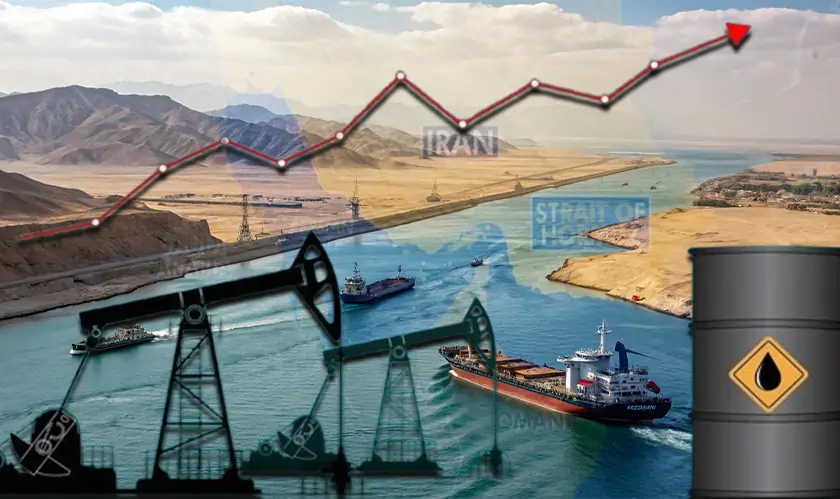
Beyond the Strait: Why Global Trade Is Learning to Live Without Hormuz
There is a peculiar irony embedded in the current catastrophe. The Strait of Hormuz, that 34-kilometre sliver of contested water between Iran and Oman, is right now the most consequential geography on earth. Brent crude briefly touched $126 a barrel in March 2026 — its highest level in four years — as tanker traffic through the strait collapsed toward zero, Iranian drones struck Fujairah’s storage tanks, and Washington threatened to “obliterate” Iranian power plants unless shipping resumed within 48 hours. The head of the International Energy Agency, Fatih Birol, called it the largest supply disruption in the history of the global oil market. He is probably right.
And yet, the thesis this crisis appears to confirm — that the Strait of Hormuz is an eternal, irreplaceable artery of civilisation — is precisely the thesis that the crisis itself is demolishing. Pain concentrates the mind. When 150 tankers anchored off Fujairah and the world scrambled for alternatives, it exposed not just the Strait’s centrality but the desperate fragility of any system built around a single chokepoint. The question that matters is not “how do we get oil through Hormuz today?” It is the one no panicked government in a war room is asking: “Will we still need to?”
The answer, over the arc of the next two decades, is increasingly no. And understanding why requires looking not at what is flowing through the Strait right now, but at what is flowing around it — in pipelines, rail corridors, liquefied natural gas tankers from Louisiana and Alberta, and electrons streaming through intercontinental fibre cables.
The Chokepoint That Could Never Be Replaced — Until It Suddenly Must Be
The numbers are genuinely staggering. According to the IEA, an average of 20 million barrels per day of crude and petroleum products transited the Strait in 2025 — representing roughly 25% of all seaborne oil trade and about 20% of global petroleum liquids consumption. Five countries — Iraq, Kuwait, Qatar, Bahrain, and Iran — have no meaningful pipeline bypass infrastructure whatsoever. The EIA estimates that roughly 14 million barrels per day are structurally locked to the maritime passage with no alternative route to global markets. Qatar and the UAE together account for nearly 20% of global LNG exports, almost all of it transiting Hormuz. Even fertiliser — that unglamorous linchpin of food security — flows through in quantity, representing up to 30% of internationally traded supply.
This dependency did not arise from carelessness. It arose from geology, economics, and decades of compounding infrastructure decisions. The Persian Gulf states sit atop the world’s most concentrated reserves, and the Strait is simply the only door out of the room. You cannot argue yourself out of geography.
But geography is only the stage. What plays out on it is a function of technology, capital, political will, and time. On all four dimensions, the structural case for Hormuz’s long-term indispensability is weakening — faster than most analysts, trapped in the urgent present, are willing to acknowledge.
The Energy Transition Is Not a Political Slogan. It Is a Supply Curve.
Start with demand. The IEA’s Oil 2025 report projects that demand for oil from combustible fossil fuels — the stuff that actually moves through tankers and pipelines — may peak as early as 2027. Global oil demand overall is forecast to reach a plateau around 105.5 million barrels per day by 2030, with annual growth already slowing from roughly 700,000 barrels per day in 2025–26 to a near-trickle thereafter. China — which absorbed more than two-thirds of global oil demand growth over the past decade and whose appetite once seemed boundless — is on track to see its oil demand peak before 2030, driven by an extraordinary surge in electric vehicle adoption, high-speed rail expansion, and structural economic rebalancing.
The numbers on clean energy investment are equally telling. In 2025, clean energy investment — renewables, nuclear, grids, storage, and electrification — reached roughly $2.2 trillion, twice the $1.1 trillion flowing to oil, natural gas, and coal combined. Global investment in data centres alone is expected to hit $580 billion in 2025, surpassing the entire annual budget for global oil supply. The energy system that those data centres will eventually run on is solar, wind, and nuclear — not crude from Kharg Island.
None of this means oil demand collapses overnight. The IEA’s Current Policies Scenario, restored in the 2025 World Energy Outlook, projects that global oil could continue growing until 2050 under today’s policy settings — a sobering reminder that transition is a trajectory, not a switch. But “trajectory” is the operative word. The direction is unambiguous. Every electric vehicle on the road — and the global EV fleet is projected to grow sixfold by 2035 in the IEA’s Stated Policies Scenario — is a barrel of oil that will never load onto a tanker and never transit the Strait of Hormuz. At scale, those barrels accumulate into a structural reduction in the Strait’s gravitational pull on global commerce.
The Corridors Rising in the Strait’s Shadow
Even before a single barrel of oil demand falls permanently, the physical architecture of global trade is being redrawn by corridors that deliberately circumvent Hormuz and its neighbourhood.
The most ambitious is the India-Middle East-Europe Economic Corridor (IMEC), which received a significant boost when President Trump and Prime Minister Modi jointly declared it “one of the greatest trade routes in all of history” in February 2025. A landmark EU-India trade deal signed in January 2026 further accelerated IMEC’s momentum, with construction on key rail, port, and highway segments having commenced in April 2025. IMEC is not just an oil bypass. It is a multimodal corridor linking Indian Ocean shipping to Gulf rail networks to Mediterranean ports — carrying container cargo, digital infrastructure (fibre cables), and clean energy flows. For the Gulf states, it represents something strategically profound: a pathway to becoming trade and green energy hubs rather than merely hydrocarbon exporters.
Turkey, meanwhile, is positioning itself as the indispensable energy corridor for a post-Hormuz world. Turkish Energy Minister Alparslan Bayraktar cited the Kirkuk-Ceyhan pipeline’s 1.5 million barrel-per-day capacity as a viable alternative, while flagging longer-term concepts including Qatari gas reaching Europe via Turkish pipeline infrastructure. TurkStream gas flows to Europe rose 22% year-on-year in March 2026, even as Hormuz choked. The current crisis is not disrupting Turkey’s corridor ambitions. It is turbocharging them.
Then there is LNG — the great wildcard in global energy trade. The very nature of liquefied natural gas makes it geographically flexible in a way that crude oil pipelines never can be. A cargo of LNG can load in Sabine Pass, Louisiana, and deliver to Tokyo, Marseille, or Mumbai, entirely indifferent to what happens in any given strait. New LNG projects surged in 2025, with approximately 300 billion cubic metres of new annual export capacity expected to come online by 2030 — a 50% increase — with roughly half being built in the United States. American LNG, arriving in Asia and Europe via the Atlantic and Pacific rather than the Persian Gulf, is quietly restructuring the energy map. When Qatari LNG is stranded behind a closed Hormuz, a cargo from Corpus Christi feels not like a supplement but like a successor.
What the Crisis Is Actually Teaching Us
Here is what the 2026 crisis reveals in sharp relief: the system’s Achilles heel is not the Strait itself, but the failure to invest seriously in alternatives before the emergency.
Saudi Arabia’s East-West pipeline (Petroline) reportedly has design capacity of up to 7 million barrels per day, yet was running at only 2 million barrels per day as of early 2026 — meaning five million barrels of daily bypass capacity sat idle for years due to infrastructure bottlenecks and the absence of political urgency. The UAE’s ADCOP pipeline to Fujairah, capable of 1.8 million barrels per day, is similarly underutilised — and its terminal has now been struck by drones. Iraq’s southern fields, which produce the bulk of its exportable crude, have no meaningful inland pipeline connection to the northern Kirkuk-Ceyhan route. Roughly 14 million barrels per day remain structurally dependent on a waterway that Iran can threaten to close — and periodically does.
The lesson is not that alternatives are impossible. It is that alternatives require decades of sustained political commitment to mature. The countries now scrambling are paying the compound interest on decisions deferred since 2019, when Houthi drones struck Aramco’s facilities and the world briefly panicked before moving on. The world should not move on this time.
The Digital Trade Revolution: Routes Without Geography
There is a third dimension to this shift that rarely appears in energy columns, because it is invisible, weightless, and does not require a tanker: the explosive growth of digital trade and the services economy.
Digital commerce — software, financial services, intellectual property, telemedicine, AI-enabled business services — now accounts for a substantial and rapidly growing share of global economic value. It flows through submarine cables and spectrum, not through straits. IMEC’s digital pillar — a network of new intercontinental fibre-optic cables — is explicitly designed to create an alternative data corridor that bypasses choke geographies entirely. As the share of economic activity that is digital continues to expand — accelerated by AI, remote work, and platform economies — the share of global GDP that depends on physical chokepoints like the Strait of Hormuz will shrink, structurally and inexorably.
This is not a utopian projection. It is already happening. India’s digital services exports exceeded $200 billion in 2025. Southeast Asian e-commerce platforms transact trillions annually. None of it cares whether tankers can get through 34 kilometres of contested Gulf waters.
Recommendations for Policymakers: The Strategic Imperatives
The 2026 crisis is a forcing function. The question is whether governments will use it. Here is what they should do:
Accelerate pipeline bypass capacity in the Gulf. Saudi Arabia should fast-track the Petroline to its announced 7 million barrel-per-day capacity and actively negotiate with Iraq and Kuwait to begin engineering — not just discussing — northern corridor alternatives. The infrastructure gap between design capacity and utilised capacity is, at this moment, unconscionable.
Fund IMEC, not just endorse it. India has yet to establish a dedicated implementing body or commit specific funds to IMEC. That must change. The corridor needs a multilateral financing mechanism — modelled on the Bretton Woods institutions but purpose-built for twenty-first-century connectivity — not merely high-level communiqués.
Accelerate the LNG diversification that already works. The U.S., Canada, Australia, and Qatar (where pipeline exports to Turkey could reduce Hormuz dependency) should be treated as a strategic consortium for global energy security. New LNG infrastructure approvals should be fast-tracked under energy security frameworks.
Price the risk of Hormuz dependency into investment decisions. Insurers and sovereign wealth funds should be required to model Hormuz-closure scenarios in energy asset valuations. The underpricing of chokepoint risk — as this crisis has devastatingly illustrated — is a market failure with systemic consequences.
Invest in demand-side transition with strategic urgency. Every percentage-point reduction in global oil demand reduces Hormuz’s leverage over the world economy. EV incentives, renewable energy deployment in emerging economies, and energy efficiency standards are not merely climate policies. They are geopolitical risk management.
The Arc of the Argument
Crises have a way of feeling permanent in their midst. The 1973 oil embargo reshaped energy policy for a generation. The 1979 Iranian revolution convinced analysts that Persian Gulf dependency was an eternal condition of industrial civilisation. Neither prognosis proved correct. Alternatives emerged. Technologies shifted. Demand patterns evolved.
The 2026 Hormuz crisis is the most serious test of the global energy system since the 1970s. The World Economic Forum’s Global Risks Report 2026 already identifies geoeconomic confrontation as a key driver reshaping global supply chains, noting that “securing access to critical inputs is increasingly being treated as a matter of economic and national security.” Governments and industries are hearing that message with a clarity that previous near-misses never produced.
The Strait of Hormuz will matter enormously for years — perhaps decades — to come. To claim otherwise would be to misread the current data. But its structural importance to the global economy is on a long, slow, inexorable decline, driven by the energy transition, the rise of alternative corridors, the geography-defying nature of digital commerce, and the hardwired human instinct to find another road when the old one is blocked.
The future of global trade will not be decided in the narrow waters between Oman and Iran. It will be decided in solar farms in Rajasthan, LNG terminals in Louisiana, fibre cable landing stations in Haifa and Marseille, and EV factories in Hefei. The chokepoint is a reminder of where we came from. What we build next determines where we go.
Discover more from The Economy
Subscribe to get the latest posts sent to your email.
AI
How AI Is Forcing McKinsey and Its Peers to Rethink Pricing
nThe hour is up
For the better part of a century, the economics of management consulting have rested on a beautiful fiction: that the value of advice can be measured in time. An analyst’s hours, a partner’s days, a team’s weeks on site — these were the denominator around which entire firms were built, pyramids of talent whose profitability depended on billing more hours than competitors at rates clients would reluctantly accept. The fiction held because nobody had a better alternative.
Artificial intelligence has now supplied one.
The pressure is visible in the numbers, in restructured partner pay, and in the quiet desperation with which firms like McKinsey, BCG, and Bain are repositioning themselves not as advisers but as delivery partners. The consultancy industry’s pricing model — the bedrock of a $700 billion global market — is cracking. The question is not whether it will change. It already is. The question is who benefits.
A familiar disruption, an unfamiliar pace
The consulting industry has survived disruptions before. Offshoring squeezed margins in the 2000s. The post-2008 austerity wave hammered public-sector mandates. The pandemic briefly collapsed travel-dependent engagement models. Each time, the billable-hour survived, battered but intact.
This time is structurally different. What AI is compressing is not demand for advice — that remains robust — but the labour input required to produce it. The Management Consultancies Association’s January 2026 member survey found that 77% of UK consulting firms have already integrated AI into their systems, with 76% deploying it specifically for research tasks and 68% having increased automation of core workflows. Meanwhile, the global AI consulting and support services market, valued at $14 billion in 2024, is forecast to expand at a compound annual growth rate of 31.6% to reach $72.8 billion by 2030 — a trajectory that reflects how thoroughly the tools are reshaping both supply and demand.
When AI compresses the time required to produce work, hourly billing stops being a proxy for value. It becomes a liability.
The AI consulting pricing model is already shifting — and McKinsey is leading it
In November 2025, Michael Birshan, McKinsey’s managing partner for the UK, Ireland, and Israel, made an admission that would have been unthinkable five years ago. Speaking at a media briefing in London, Birshan told reporters that clients were no longer arriving with a scope and asking for a fee. Instead, they were arriving with an outcome they wanted to reach and expecting the fee to be contingent on McKinsey’s ability to deliver it. “We’re doing more performance-based arrangements with our clients,” he said. About a quarter of McKinsey’s global fees now flow from this outcomes-based pricing model.
That 25% figure is both significant and revealing — significant because it marks a genuine departure from decades of billable-hour orthodoxy, revealing because it shows that three quarters of McKinsey’s revenue remains anchored to the old model. The transition is real. It is not complete.
The driver is largely internal. McKinsey’s Lilli platform — an enterprise AI tool rolled out firm-wide in July 2023 — is now used by 72% of the firm’s roughly 45,000 employees. It handles over 500,000 prompts a month, auto-generates PowerPoint decks and reports from simple instructions, and draws on a proprietary corpus of more than 100,000 documents, case studies, and playbooks. By McKinsey’s own reckoning, Lilli is saving consultants 30% of their time on research and knowledge synthesis. When a tool saves 30% of the hours that used to justify an invoice, the invoice requires a different rationale.
BCG has pursued a parallel path. Its internal assistant “Deckster” drafts initial client presentations from structured datasets in minutes. BCG disclosed in April 2026 that roughly 25% of its $14.4 billion 2025 revenue — approximately $3.6 billion — derived from AI-related work, the first time any Big Three strategy firm has made that figure visible. Bain’s “Sage” platform performs comparable functions. PwC, which became OpenAI’s first enterprise reseller, committed $1 billion to generative AI in 2023 and subsequently deployed ChatGPT Enterprise to 100,000 employees. KPMG followed with a $2 billion alliance with Microsoft.
Collectively, the Big Four and major strategy houses poured more than $10 billion into AI infrastructure between 2023 and 2025. The investments were real. The pricing implications they’re now confronting were perhaps underestimated.
What is outcome-based pricing in consulting — and why does AI accelerate it?
Outcome-based pricing ties a consulting firm’s compensation to measurable results — revenue growth, cost reduction, market-share gains — rather than to the hours or scope of work delivered. It existed before AI, but AI transformation projects suit it naturally: they are multi-year, multidisciplinary, and generate data that makes performance tracking tractable.
As Kate Smaje, McKinsey’s global leader of technology and AI, noted in November 2025, the shift “developed over the past several years as McKinsey started doing more multi-year, multidisciplinary, transformation-based work.” AI didn’t originate the model. It made it commercially necessary.
The structural problem no press release addresses
Here is where the analysis must get uncomfortable for the firms themselves.
The productivity gains AI is generating inside McKinsey, BCG, and Bain are not, in any consistent way, being passed on to clients. One detailed analysis of MBB pricing practices published in 2025 concluded bluntly: firms’ external pricing “hasn’t moved” even as internal AI tools have displaced significant analyst labour. Clients are still paying as if junior consultants spent 80-hour weeks building the models from scratch. In many cases, Lilli or Deckster did it in an afternoon.
This creates a credibility problem that compounds over time. Sophisticated procurement teams at large corporations are beginning to ask questions about methodology, tool usage, and the provenance of deliverables. Deloitte Australia’s AU$440,000 refund to a government client over unverified AI-generated outputs — reported in 2025 — turned what had been a theoretical concern into a profit-and-loss event. Ninety percent of enterprise buyers, according to subsequent surveys, now want explicit AI governance disclosures built into contracts.
The Financial Times has reported that McKinsey is already adjusting its internal partnership economics in response, planning to shift a greater share of partner remuneration into equity as AI-driven outcome-based pricing makes consulting revenues more volatile and harder to predict quarter-to-quarter. Partners, in other words, are being asked to absorb the risk that used to sit with clients. That is a profound structural change — and one the recruitment and retention of top talent will have to accommodate.
The Amazon McKinsey Group launched in January 2026 — a joint venture combining McKinsey’s strategy capability with AWS cloud infrastructure and AI tooling — represents the most explicit attempt yet to fuse the advisory and implementation roles into a single, outcome-accountable offer. Engagements are scoped for transformations expected to deliver at least $1 billion in measurable client impact. It is a bet that scale and technology integration can justify premium fees in ways that billable hours increasingly cannot.
The counterargument: not all hours are created equal
It would be wrong to read this as consulting’s obituary. The critics of outcome-based pricing are not wrong to worry.
The model introduces its own distortions. When fees depend on measured outcomes, consultants have an incentive to define those outcomes narrowly, to work on problems whose success is easily attributable, and to avoid the ambiguous, long-horizon strategic work that generates the least data but often the most genuine value. A firm paid to raise revenue by 8% in 18 months may not tell a CEO that the business model is structurally broken. A firm paid by the hour has no such structural inhibition.
There is also the question of risk allocation. Outcome-based contracts push downside exposure onto the consulting firm, which sounds appealing to clients until they realise that firms will price that risk into their upside. McKinsey isn’t offering to share downside and cap upside. The performance-based arrangements being described are, in practice, hybrid structures — some fixed base, performance kickers on top — not pure contingency. That’s a meaningful distinction.
Sceptics within the industry point to a second problem: attribution. Did McKinsey’s intervention raise the client’s revenue, or did a favourable macroeconomic tailwind? Determining causality in complex business environments is genuinely hard, and the history of performance-based arrangements in other professional services — notably investment banking and private equity advisory — suggests that disputes over attribution tend to be costly and corrosive.
“Outcomes-based pricing didn’t start because of AI,” Smaje acknowledged in November 2025. The honest implication of that statement is that it won’t be resolved by AI either.
What firms, clients, and the talent market face next
The second-order effects of this pricing shift will ripple well beyond contract structures.
The consulting pyramid — the hierarchy of analysts, associates, managers, partners, and senior partners whose labour cost structure has remained largely stable for three decades — is under genuine pressure. McKinsey’s own research has estimated that approximately 45% of activities traditionally performed by consultants could be automated with existing technology. If Lilli handles research, synthesis, and deck generation, the case for the analyst class — the bottom of the pyramid that cross-subsidises partner economics — becomes harder to sustain.
Hiring data from 2025 suggests firms are already adjusting. The UK Management Consultancies Association survey projected 5.7% consulting revenue growth in 2026 and 7.4% in 2027, with AI services driving the greatest expansion for 66% of firms. Yet headcount growth is not tracking revenue growth — a gap that implies productivity gains are being captured by existing staff rather than expanded teams.
For clients, the shift creates genuine leverage — but only for those sophisticated enough to use it. Enterprise buyers who understand what AI can and cannot do, who can write performance metrics that are both meaningful and attributable, and who are prepared to challenge deliverable provenance will extract real value from the new model. Those who outsource that judgment to the firms themselves will find that outcome-based pricing, in practice, looks a lot like billable hours with better marketing.
The talent market will bifurcate. Consultants who can manage AI-augmented workflows, design outcome metrics, and demonstrate delivery accountability will command premiums. Those whose competitive advantage was research bandwidth and slide-deck velocity — tasks now automated at scale — face a more difficult conversation. Research published in late 2025 found that consultants using AI tools completed tasks 25% faster at 40% higher quality, but the strategic thinking, relationship management, and client judgment that justify senior fees remain, for now, distinctly human.
The tension that will define the next decade
There is a phrase circulating in elite consulting circles that captures the bind precisely: firms are being asked to be accountable for outcomes they do not fully control, using tools whose productivity gains they have not fully disclosed, in a market where clients are only beginning to understand what to demand.
The billable hour was imperfect. But it had the great virtue of simplicity: time spent, time charged. What replaces it will be messier, more contested, and more lucrative for the firms that define the terms before their clients do.
McKinsey’s quiet overhaul of partner pay is the most honest signal of what the industry privately believes: that the revenue model is becoming structurally volatile, and that the people at the top of the pyramid need to share in the uncertainty their AI tools have created. That is not a reassuring message dressed up as progress. It is a reckoning.
The hour was always a fiction. The question now is what honest accounting looks like when a machine has done the work.
Discover more from The Economy
Subscribe to get the latest posts sent to your email.
Analysis
Turkish Airlines Targets the Global Hub Crown After Gulf Rivals Stumble
When Qatar’s airspace slammed shut on 28 February 2026, the global aviation order shifted overnight — and Istanbul was ready.
The U.S.-Israeli strikes on Iran that Saturday triggered simultaneous airspace closures across eight countries: Iran, Israel, Iraq, Qatar, Bahrain, Kuwait, the UAE, and parts of Syria. About 24 percent of all flights to the Middle East were cancelled on the opening day of the conflict, with carriers halting roughly half their services to Qatar and Israel, according to aviation monitor Cirium. The Gulf super-connectors — Emirates, Qatar Airways, Etihad — were grounded or severely curtailed. For Turkish Airlines, the crisis arrived not as a disruption but as an opportunity decades in the making. Al Jazeera
The carrier had already been growing faster than almost any network airline on earth. What the Iran conflict did was accelerate a structural shift that Turkish Airlines’ own executives had been engineering through billions of dollars of infrastructure investment and an audacious long-term fleet programme. The question now is whether Istanbul can convert a geopolitical windfall into something more permanent — a position at the very top of global aviation that was, until recently, thought to belong irrevocably to Dubai or Doha.
How Turkish Airlines Capitalised on Gulf Disruption in 2026
The numbers are stark. Turkish Airlines carried 21.3 million passengers in the first quarter of 2026, up 13 percent from 18.9 million in the same period a year earlier. In March alone, passenger numbers rose 16 percent annually to 7.2 million, while the passenger load factor — the share of seats occupied by paying travellers — climbed to nearly 84 percent. Those figures came despite the airline itself suspending routes into several conflict-affected destinations through March. AGBI
The mechanism is straightforward. Qatar Airways suspended Doha operations on 28 February when Qatari airspace closed amid escalating Iran-related regional tensions. Emirates reduced Dubai frequencies due to airspace constraints. Routes that had for years flowed through the Gulf — London to Bangkok, New York to Singapore, Frankfurt to Mumbai — required immediate rerouting. Istanbul, sitting at the intersection of Europe, Asia, and Africa, was the only major hub capable of absorbing the volume without significant operational restructuring. Air Traveler Club
Turkish Airlines responded with speed. The carrier increased frequencies on Europe-Asia corridors and pushed capacity onto transatlantic segments it already served. Istanbul Airport had handled a 15–20 percent traffic surge during the 2022 Russia-Ukraine airspace closures, a pattern now repeating at larger scale. The institutional muscle memory was there. Air Traveler Club
Yet this was not simply opportunism. Turkish Airlines entered 2026 with a fleet of 528 aircraft, a 12 percent year-on-year increase, serving 358 destinations. It had spent the previous year building the load-factor foundation — annual load factor reached 83.2 percent in 2025, with available seat kilometres growing 7.5 percent to 273.2 billion as the full-year passenger count hit a record 92.6 million, up 8.8 percent over 2024. A carrier running those numbers doesn’t stumble when a crisis redistributes demand. It absorbs it. AGBITS2
Chairman Ahmet Bolat had already signalled the ambition. Announcing more than 100 billion Turkish lira — roughly $2.32 billion at current exchange rates — in infrastructure commitments at Istanbul Airport earlier this year, he said the investments were designed to ensure that “fleet growth is matched by sufficient infrastructure and skilled personnel.” That wasn’t a response to the Iran conflict. The projects were announced in January 2026, six weeks before the first strike.
Why Istanbul Is the Hub the Gulf Crisis Revealed
How does Turkish Airlines compete with Emirates and Qatar Airways? The honest answer is: differently.
Emirates built its dominance on the sheer scale of Dubai International, a single mega-hub optimised for long-haul transfers, and a widebody fleet — primarily the A380 and 777 — configured for premium-cabin revenue on trunk routes. Qatar Airways pursued a similar model via Hamad International in Doha, consistently winning Skytrax awards and maintaining the highest hub transfer percentage among Gulf carriers at 84 percent. Both strategies depend on stable, open Gulf airspace.
Turkish Airlines’ model is structurally distinct. The airline operates in more countries than any other carrier and ranks twelfth globally by capacity, but climbs to ninth when measured by available seat kilometres — a reflection of longer-than-average sector lengths that define a true intercontinental network. Its domestic Turkish operations, the AJet low-cost subsidiary, and the long-haul international network together create a three-layered system that insulates the carrier from single-market shocks. When Gulf traffic collapsed, Turkish Airlines could redirect fleet and crew because those resources were already distributed across a far wider operational canvas. OAG
Istanbul’s geography does the rest. The city sits roughly equidistant between London and Delhi, between Nairobi and Tokyo. Unlike Dubai or Doha, whose geographic advantage over Europe-Asia routes depends on overflight rights through Iranian and Iraqi airspace, Istanbul sits to the north of that corridor — meaning it was never dependent on Persian Gulf overflights in the first place. Istanbul is now the only major hub capable of connecting South, East, and West without major detours during periods of Gulf airspace constraint. Etu Bonews
That structural reality is also the answer to the featured snippet question: Istanbul is becoming a dominant aviation hub because it combines geographic neutrality — sitting north of conflict-sensitive Middle Eastern airspace — with Turkish Airlines’ dense network of 358 destinations across 132 countries, a growing fleet exceeding 528 aircraft, and an airport infrastructure capable of absorbing diverted intercontinental demand at scale.
The $2.32 Billion Infrastructure Bet and the 2033 Vision
The traffic surge of early 2026 is the near-term story. The more consequential one is structural — a decade-long transformation that Turkish Airlines is funding whether or not the Iran conflict ever fully resolves.
The airline’s 10-year strategic roadmap calls for expanding its fleet to more than 800 aircraft by 2033, growing annual passenger numbers to around 170 million, and roughly doubling its economic contribution to Türkiye’s economy from approximately $65 billion today to $144 billion by the end of the period. CEO Bilal Ekşi has publicly stated the ambition is to rank among the world’s top five airlines by that centenary year. The Traveler
The infrastructure investments underpinning those projections are now underway. Additional aircraft maintenance hangars due to be completed in 2026 will increase Turkish Technic’s simultaneous heavy maintenance capacity by around 20 percent, enabling work on up to 12 aircraft at a time. A new main catering facility expected to enter service during 2027–2028 is designed to handle meals for more than 500,000 passengers per day. A dedicated e-commerce complex supporting Turkish Cargo’s Widect door-to-door freight platform is set for 2026 completion. Europe’s largest widebody aircraft engine maintenance facility is also under construction. Aerospace Global News
These infrastructure projects are expected to create 26,000 new jobs in 2026 and more than 36,000 jobs once all phases are complete. Travel And Tour World
The network recalibration is proceeding in parallel. In the second half of 2026, Turkish Airlines is upgrading its São Paulo-Santiago-Istanbul service to daily A350-900 operations, expanding Lisbon frequencies to 21 times weekly, and growing Sydney service to six weekly rotations via Kuala Lumpur. These are not emergency diversions. They are long-planned moves by a carrier that has been building South American and Asia-Pacific density for years, and which now operates the routes on aircraft purpose-built for ultra-long-haul efficiency.
International-to-international passenger traffic — the critical transfer metric — climbed 12.8 percent in 2025 to 35.7 million, highlighting the airline’s role as a transfer gateway for long-haul and regional journeys. That number, not the raw passenger total, is the clearest signal that Istanbul’s hub function is deepening. FTN News
The Complications the Headlines Omit
Still, the picture is more complicated than a simple narrative of Turkish Airlines ascending while Gulf rivals recede.
Turkish Airlines only hedges around 40 to 50 percent of its fuel, well below the 70 to 85 percent that top European carriers lock in — meaning the revenue from extra passengers could end up being partially absorbed by higher fuel bills driven by the very conflict redirecting demand to Istanbul. The Royal Aeronautical Society has noted that for the remainder of 2026, the industry can anticipate increased financial stress particularly among weaker carriers from high fuel prices, broader regional airspace closures, and potential airline industry-wide deterioration. Turkish Airlines is not a weak carrier. But its fuel hedging gap is a genuine vulnerability that competitors with deeper treasury operations can exploit. RTÉRoyal Aeronautical Society
There is also the question of permanence. Emirates and Qatar Airways are not structurally impaired. Emirates posted a $6.2 billion profit before tax in 2026 despite the disruptions, cementing its position as the world’s most profitable airline. Qatar Airways, operating at reduced capacity through Doha, still posted $1.7 billion in profit. These carriers have the balance sheets to rebuild quickly once Gulf airspace normalises, and their premium-cabin product — Emirates’ retrofitted suites, Qatar’s forthcoming QSuite Next Gen — targets a segment where Turkish Airlines has historically competed at a discount. Travel And Tour World
Aviation analysts also point to a structural ceiling. Turkish Airlines benefits enormously from its hub model, but Istanbul Airport operates under slot and infrastructure constraints that limit theoretical throughput. Unlike Dubai International or Hamad International — both purpose-engineered for transfer-optimised mega-hub operations — Istanbul Airport was built as a replacement for an older facility and is still maturing its gate capacity and ground-handling systems. The airline has trimmed 18 international destinations from its summer 2026 schedule precisely to concentrate resources and manage hub complexity during a period of extraordinary demand.
The geopolitical angle cuts in multiple directions too. The same Iran conflict that diverted Gulf traffic to Istanbul also forced Turkish Airlines to suspend its own routes into Iran, Iraq, Syria, Lebanon, and Jordan through March. Türkiye’s diplomatic positioning — non-aligned on the conflict, but maintaining operational ties with both Western and regional partners — gives it unusual flexibility. It does not, however, guarantee immunity from escalation.
What the Race for the Hub Crown Really Means
Turkish Airlines has not beaten Emirates, Qatar Airways, or Lufthansa. Not yet, and perhaps not on every metric that matters to investors. What it has done is demonstrate that the Istanbul model — geographically diversified, domestically anchored, relentlessly expanding its intercontinental transfer share — is resilient in exactly the conditions that expose the fragility of pure Gulf-hub dependency.
The 2026 crisis is, in a sense, the first real stress test of a competition that aviation analysts have been anticipating for a decade. Turkish Airlines passed it by growing 13 percent quarter-on-year during one of the most disruptive periods in regional aviation history. Its rivals, constrained by closed airspace and curtailed operations, mostly watched.
Turkish Airlines’ investment programme to transform Istanbul Airport into a world-leading aviation hub is projected to contribute over $144 billion to the Turkish economy by 2033. That ambition preceded the Iran crisis. The crisis may simply have given the airline its clearest argument yet that Istanbul belongs in the same sentence as Dubai and Doha — not as an understudy, but as an equal. Travel And Tour World
The race for the hub crown was never purely about passenger numbers or Skytrax stars. It’s about which city owns the world’s connecting traffic when the geopolitical ground shifts. Right now, the answer — increasingly, undeniably — is Istanbul.
Discover more from The Economy
Subscribe to get the latest posts sent to your email.
Analysis
Commerzbank UniCredit Takeover Bid: Why Shareholders Said No
Bettina Orlopp stepped onto the stage in Wiesbaden on 20 May 2026 to something rare in German banking: applause. Shareholders rose to cheer the chief executive as she dismissed UniCredit’s €35 billion takeover bid as an opportunistic attempt to seize control without paying for it. The moment crystallised a rebellion. Despite months of pressure from Italy’s second-largest lender, only 0.02% of Commerzbank shares had been tendered by 19 May. The hostile offer wasn’t merely unwelcome. It was, in the words of the board’s formal reasoned statement, financially inadequate and strategically hollow.
The battle for Commerzbank is unfolding at a precarious moment for European finance. The European Central Bank has long championed cross-border consolidation to deepen the banking union and equip continental lenders to compete with American megabanks. Yet the Franco-German axis that once drove integration has frayed, and national capitals have rediscovered their appetite for financial sovereignty.
Commerzbank, which finances roughly 30% of German foreign trade and serves 24,000 corporate client groups, sits at the intersection of these colliding forces. A spokesman for Germany’s Finance Ministry reiterated Berlin’s position in early May: a “hostile, aggressive takeover” of a systemically important bank would be unacceptable. The statement was not diplomatic nuance. It was a warning shot. Behind it lies a harder reality. Germany’s federal government still holds a 12.7% stake in Commerzbank, a residual from the €18.2 billion bailout during the 2008 financial crisis, and has openly considered raising that holding to secure a blocking position. What looks like a standard M&A contest is, in fact, a stress test for whether European banking union can survive national interest.
Inside the Commerzbank UniCredit Takeover Bid
On 5 May 2026, UniCredit published its offer document for the Commerzbank UniCredit takeover bid, proposing an exchange ratio of 0.485 new UniCredit shares for each Commerzbank share. Based on the three-month volume-weighted average price determined by BaFin, the implied value stood at €34.56 per share by mid-May. That figure sat almost 5% below Commerzbank’s closing price of €36.48 on 15 May, and well under the €41.50 median target price assigned by independent equity analysts. The Economist promptly labelled it a “lowball bid,” noting that the terms valued the whole bank at roughly €35 billion ($41 billion) yet offered more than an 8% discount to the market price prevailing the day before publication. It was, by any conventional standard, an opportunistic opening gambit rather than a generous proposal.
Commerzbank’s board needed less than two weeks to reach a verdict. On 18 May, the Board of Managing Directors and the Supervisory Board issued a formal reasoned statement pursuant to Section 27 of Germany’s Securities Acquisition and Takeover Act. Their conclusion was unambiguous: shareholders should reject the offer. The document argued that UniCredit’s plan was “neither sound nor convincing,” that synergy assumptions were described by UniCredit itself as “speculative,” and that the proposed dismantling of Commerzbank’s international network would gut its ability to finance the export-oriented German Mittelstand. Jens Weidmann, chairman of the Supervisory Board and former Bundesbank president, warned that the share-exchange structure meant Commerzbank shareholders who accepted would simply inherit the execution risk as future UniCredit owners.
The market listened. By 19 May, a negligible 0.02% of shares had been tendered. At the AGM in Wiesbaden the following day, Orlopp strode onto the stage to applause. She told the hall that UniCredit’s bid was “an attempt to take over Commerzbank at a price that does not properly reflect the fundamental value and potential of our bank.” Employees held signs reading “UniCredit Go Away!” The message was unmistakable. This was not a target negotiating for a better price. It was a management team and workforce that genuinely believed the standalone future was brighter than the combined one.
Why the Commerzbank Momentum 2030 Strategy Makes UniCredit’s Math Look Shaky
The analytical case against UniCredit’s bid rests on a simple proposition: Commerzbank is already delivering what Orcel promises, and it is doing so without the trauma of a merger. On 8 May, the bank unveiled its updated “Momentum 2030” roadmap alongside first-quarter results that beat expectations. Operating profit rose 11% year-on-year to a record €1.4 billion. Net profit climbed 9% to €913 million. Revenues reached €3.2 billion, driven by a 9% surge in net commission income to an all-time high of €1.1 billion. The cost-income ratio improved three percentage points to 53%. These were not projections. They were settled facts from the first three months of 2026.
Why is Commerzbank rejecting UniCredit’s offer? The board argues the bid provides no adequate premium and lacks a credible plan. The implied €34.56 value falls short of the €36.48 share price and far below analyst targets near €41.50. The board believes its standalone “Momentum 2030” strategy creates greater value with lower execution risk than UniCredit’s vague restructuring proposal.
Building on this momentum, Commerzbank raised its full-year 2026 net profit target to at least €3.4 billion, up from the previous “more than €3.2 billion.” By 2028, it now expects a net return on tangible equity of around 17%, rising to roughly 21% by 2030. Net profit is targeted to reach €4.6 billion in 2028 and €5.9 billion in 2030, while revenues should grow from €13.2 billion this year to €16.8 billion by decade’s end. That implies a 6% compound annual growth rate. The bank also plans to invest €600 million in artificial intelligence through 2030, expecting €500 million in annual efficiency gains from 2030 onwards and a 10% redeployment of capacity toward customer-facing roles. Perhaps most tellingly for shareholders, Commerzbank intends to return approximately half of its current market capitalisation through dividends and buybacks by 2030, maintaining a 100% payout ratio until its CET 1 ratio reaches 13.5%. The record dividend of €1.10 per share approved at the AGM is the down payment on that promise.
The picture is more complicated for UniCredit. Its own outside-in analysis, published in April as “Commerzbank Unlocked,” projected that Commerzbank could reach a net profit of €5.1 billion by 2028 under UniCredit’s stewardship. Yet Commerzbank’s board dismissed that presentation as “highly aggressive” and hostile, arguing it inaccurately assessed revenue losses, IT integration costs, and headcount reductions. The Banker reported that the board viewed the plan as undermining “the fundamental trust essential to the banking business.” When a target’s management disputes not just your price but your industrial logic, the bidder has a credibility problem that no exchange ratio can fix.
What a Hostile Takeover Would Mean for German Banking and European M&A
If UniCredit somehow prevails, the consequences would ripple far beyond Frankfurt and Milan. Commerzbank is not a generic mid-tier lender. It is the leading bank for Germany’s Corporate Clients business, accounting for approximately 30% of the country’s foreign trade financing. Its international network spans more than 40 countries, and its Polish subsidiary mBank serves around 6 million customers. Dismantling that network, as UniCredit’s plan reportedly envisages, would weaken the financial plumbing that supports Germany’s export-driven Mittelstand. That is why Berlin has drawn a line. The Finance Ministry’s spokesman did not mince words in early May: a hostile takeover of a systemically relevant bank was “unacceptable.”
The political defence may harden further. Berlin retains a 12.7% stake and has shown no inclination to sell into UniCredit’s offer. A blocking position would transform that residual crisis-era holding into an active defensive weapon. It would also signal that Germany, once the architect of European banking union, now views cross-border consolidation through the lens of national interest first and supranational efficiency second. That shift carries risks for the entire continent. If every major bank merger triggers a race between capitals to protect domestic champions, the ECB’s vision of a unified European banking market will remain a theoretical construct.
For Commerzbank’s 40,000-plus employees, the immediate risk is more tangible. The works council has warned that UniCredit’s integration could eliminate thousands of jobs. Commerzbank’s own analysis cited substantial headcount reductions envisaged by UniCredit, complex IT integration, and revenue losses from overlaps in the Corporate Clients business. Either scenario would represent a seismic shock to Frankfurt’s labour market and to the bank’s internal culture. The transformation agreement already negotiated with employee representatives for Commerzbank’s standalone 3,000-position reduction looks modest by comparison, and it was concluded with social safeguards and redeployment programmes that a hostile acquirer would have little incentive to honour.
Regulatory timelines add another layer of uncertainty. Even if acceptance levels rose, UniCredit has stated that closing would not occur before the first half of 2027, pending ECB, BaFin, and competition clearances. The offer document cites 2 July 2027 as the outer limit. In an environment where interest rates, geopolitics, and German electoral politics could shift dramatically within 14 months, that is an eternity. Shareholders who accept today would lock in an illiquid, uncertain consideration denominated in UniCredit shares, exposed to every twitch in Italian sovereign risk and eurozone sentiment. The structure alone is a deterrent.
UniCredit’s Counter: Scale, Synergy, and the Case for European Consolidation
To steel-man UniCredit’s position is to start from a premise that Commerzbank’s board rejects but many institutional investors once accepted: that the German bank had underperformed for years before Orlopp’s turnaround. Andrea Orcel, UniCredit’s chief executive and a veteran of Goldman Sachs, Merrill Lynch, and UBS, has pursued this deal since 2024. He argues that Commerzbank’s “Momentum” plan is merely catching up to where the bank should already be, and that true competitiveness requires scale. UniCredit’s April presentation projected that Commerzbank could achieve a net return on tangible equity above 19% by 2028 and roughly 23% by 2030 under its ownership, figures that exceed even Commerzbank’s newly raised standalone targets. The industrial logic is not frivolous. Combining Commerzbank with UniCredit’s existing German subsidiary, HypoVereinsbank, would create the country’s largest lender by certain measures, surpassing Deutsche Bank in selected corporate segments. Cost synergies from overlapping IT systems, branch networks, and back-office functions could, in theory, reach billions of euros. And Orcel is correct that European banking remains fragmented relative to the American market, where JPMorgan Chase alone commands a market capitalisation greater than the sum of Europe’s top five lenders. The ECB, under Christine Lagarde, has consistently welcomed cross-border tie-ups as a means to deepen the banking union and improve global competitiveness. There is also a shareholder-level argument. UniCredit’s own stock has re-rated strongly since Orcel took the helm, and the bank has returned billions through buybacks and dividends. Investors who trust his execution record might reasonably conclude that he could do for Commerzbank what he has done for his own institution. Yet the offer’s structure betrays a lack of conviction. By proposing a bare-minimum exchange ratio with no cash alternative and no clarity on ultimate control, UniCredit is asking Commerzbank shareholders to swap a surging standalone equity story for a speculative merger script with a 14-month settlement horizon. It’s a lot to ask for no premium.
The stand-off between Commerzbank and UniCredit is therefore not merely a quarrel over price. It is a contest between two competing visions of European finance. One vision, championed by Orcel and the ECB, holds that scale and cross-border integration are prerequisites for global relevance. The other, articulated by Orlopp and backed by a surprisingly assertive Berlin, insists that a profitable, systemically important national champion can deliver superior returns to shareholders while preserving strategic autonomy. Both sides can marshal data to their cause. Yet the burden of proof in any takeover lies with the bidder, and UniCredit has so far failed to meet it. Its offer is underwater, its acceptance rate is negligible, and its strategic plan has been dismissed by the target’s board as speculative. What follows, however, is unlikely to be graceful retreat. Orcel has spent two years and billions of euros building a stake that now approaches 30%. He didn’t come this far to fold. The summer of 2026 will determine whether European banking union advances by force or stalls on the barricades of national interest. For now, the yellow flag of Commerzbank still flies over Wiesbad
Discover more from The Economy
Subscribe to get the latest posts sent to your email.
-
Markets & Finance5 months agoTop 15 Stocks for Investment in 2026 in PSX: Your Complete Guide to Pakistan’s Best Investment Opportunities
-
Analysis3 months agoTop 10 Stocks for Investment in PSX for Quick Returns in 2026
-
Analysis4 months agoBrazil’s Rare Earth Race: US, EU, and China Compete for Critical Minerals as Tensions Rise
-
Banks4 months agoBest Investments in Pakistan 2026: Top 10 Low-Price Shares and Long-Term Picks for the PSX
-
Investment4 months agoTop 10 Mutual Fund Managers in Pakistan for Investment in 2026: A Comprehensive Guide for Optimal Returns
-
Global Economy5 months ago15 Most Lucrative Sectors for Investment in Pakistan: A 2025 Data-Driven Analysis
-
Analysis3 months agoJohor’s Investment Boom: The Hidden Costs Behind Malaysia’s Most Ambitious Economic Surge
-
Global Economy5 months agoPakistan’s Export Goldmine: 10 Game-Changing Markets Where Pakistani Businesses Are Winning Big in 2025