
Analysis
SpaceX Starship Flight 14: First Orbital Attempt & Starlink V3 Launch Explained

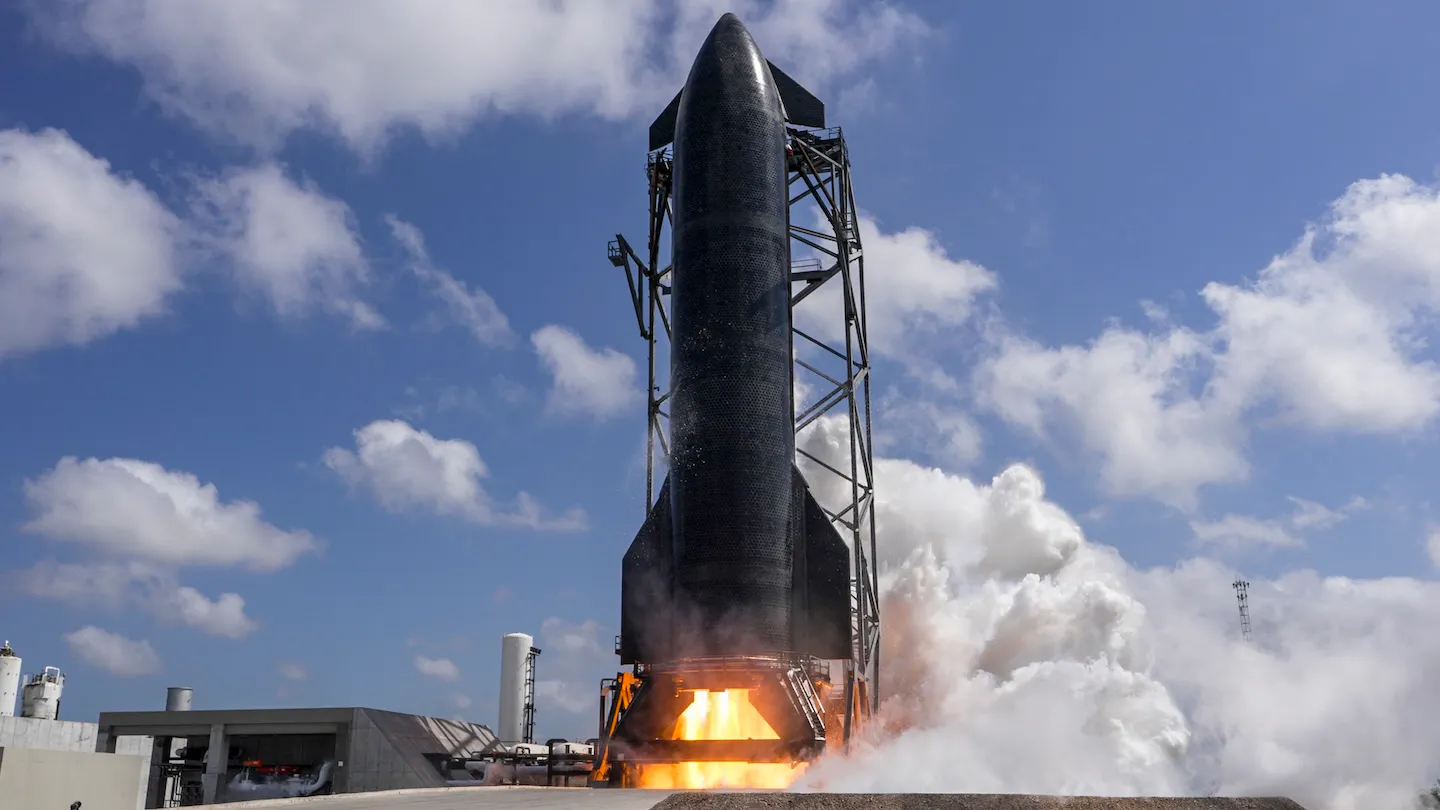
SpaceX Starship Flight 14 targets Starship’s first full orbital run and operational V3 Starlink deployment. Here’s what it means for markets, NASA, and the space economy. (159 chars)
Executive Summary
TL;DR: Starship Flight 14 (IFT-14), expected no earlier than late August/September 2026 from Starbase, Texas, is set to be the first Starship mission to reach a genuine orbital trajectory and deploy operational-orbit Starlink V3 satellites — rather than the suborbital deployments of Flight 13. SpaceX will also attempt, pending FAA sign-off, its first-ever “catch” of the Ship stage back at the launch tower. The flight comes weeks after SpaceX’s first earnings call as a newly public company, valued near $1.77 trillion, making Flight 14’s outcome a market-moving event for aerospace suppliers, satellite-broadband competitors, and the broader “enterprise AI and orbital infrastructure” investment thesis Elon Musk has attached to Starlink and Starship.
Why Flight 14 Is Different From Everything Before It
Every prior Starship test — 13 flights and counting — has been a suborbital hop: loft, coast, reenter, and either splash down or blow up trying. Flight 13, which launched July 24, 2026, was widely regarded internally at SpaceX as the cleanest V3 test to date. Booster 20 fired all 33 Raptor 3 engines cleanly through ascent, hot-staging, and boostback, and Ship 40 deployed 20 operational-design Starlink V3 satellites before completing an intact splashdown in the Indian Ocean — the first time a Ship survived splashdown without breaking apart. The booster’s landing burn was messier: only 10 of 13 center engines relit, five of those subsequently failed, and Booster 20 hit the Gulf of Mexico hard rather than softly.
Flight 14 raises the stakes considerably. Because Flight 13 flew a suborbital trajectory, its Starlink V3 satellites reentered the atmosphere along with the Ship rather than reaching a stable orbit. Flight 14 is designed to close that gap: SpaceX intends to insert Starship into a genuine orbital trajectory for the first time and release V3 satellites into an operational orbit where they can actually join the constellation and start beaming broadband.
The Musk Earnings-Call Framing
The mission’s importance was elevated on August 4, 2026, when SpaceX held its first quarterly earnings call as a publicly traded company following its June 12 IPO. CEO Elon Musk told analysts plainly: “Flight 14 will be our first flight to fly our version three Starlink satellites, our communication satellites, to operational orbit.” He also confirmed the company would, regulatory approval permitting, attempt to catch the returning Ship stage at the launch tower for the first time — a maneuver SpaceX has so far reserved exclusively for the Super Heavy booster.
Musk further characterized Starship’s heatshield problems, long a bottleneck to reusability, as a “solved problem,” a claim that will be tested in real time as Ship 41 endures reentry heating on a genuine orbital-return trajectory rather than a shorter suborbital arc.
Hardware and Timeline
As of late August 2026, Booster 21 had rolled to Pad 2 at Starbase for static-fire testing, with Ship 41 completing its own proof and engine-installation campaign in parallel. Flight-readiness trackers listed the mission as roughly two-thirds complete on pre-launch checklist items, with a launch window officially “no earlier than” the end of August, sliding toward September 2026 as static-fire attempts were scrubbed and repeated. SpaceX’s stated ambition — a cadence approaching one flight per day within roughly a year — depends heavily on Flight 14 validating the orbital and recovery architecture that all subsequent operational missions will use.
What Operational V3 Means for the Constellation
The Starlink constellation has grown to roughly 12,900 satellites launched and nearly 10,900 actively serving customers, the vast majority launched on Falcon 9. V3 satellites are a generational leap: larger, heavier, and far more capable per unit than the V2 Mini satellites that make up most of the current fleet, but they are also too large and heavy for Falcon 9 to launch in bulk — they require Starship’s far greater payload volume and mass capacity to reach orbit economically. In that sense, Flight 14 is not just a rocket test; it is the opening of the only launch vehicle capable of deploying the next generation of SpaceX’s core revenue product at scale.
Financial and Market Impact Section
A Trillion-Dollar Valuation Riding on Reusability
SpaceX’s June 2026 IPO valued the company at approximately $1.77 trillion, an extraordinary figure for a company still posting net losses, if narrowing ones — SpaceX reported a $541 million net loss in the most recent quarter against $7.8 billion in quarterly revenue, roughly $1.1 billion ahead of consensus. Adjusted EBITDA came in at $3.5 billion. Wall Street’s willingness to underwrite that valuation rests substantially on the market’s belief that Starship will eventually make launch costs low enough to deploy tens of thousands of V3 satellites, operate an orbital data-center business (a segment SpaceX executives explicitly flagged alongside launch and connectivity on the August earnings call), and eventually service NASA’s Artemis lunar lander contract.
A clean orbital insertion and successful Ship catch on Flight 14 would be read by analysts as de-risking that valuation thesis; a repeat of Booster 20’s rough landing, or worse, a loss of vehicle during ascent, would reignite skepticism about the gap between SpaceX’s cadence promises and its execution reality — a skepticism that has already cost the stock some ground since the IPO, according to secondary-market trackers.
Ripple Effects Across the Supply Chain and Competing Constellations
A successful operational-orbit V3 deployment has second-order consequences across the aerospace and telecom sectors. Component suppliers tied to Raptor 3 engine production, heat-shield tile manufacturing, and stainless-steel airframe fabrication stand to see demand accelerate if SpaceX moves toward its stated goal of near-daily flights. On the competitive side, AST SpaceMobile — which flew three BlueBird direct-to-device satellites on a separate Falcon 9 mission the same week — and other low-Earth-orbit broadband contenders will be watching V3’s on-orbit performance closely, since a materially more capable Starlink satellite raises the competitive bar for direct-to-cell and enterprise broadband contracts globally.
Government and defense-adjacent markets are a further consideration: SpaceX’s Starlink and Starshield businesses already carry significant government revenue, and a validated heavy-lift, rapidly reusable Starship changes the economics of national security launch procurement, a topic likely to surface in coming Pentagon budget cycles.
Key Takeaways
- Starship Flight 14 is scheduled from Starbase, Texas, targeting late August/September 2026, and will be the vehicle’s first genuine orbital-trajectory attempt after 13 suborbital test flights.
- The mission will deploy Starlink V3 satellites into an actual operational orbit for the first time; Flight 13’s V3 satellites reentered with the suborbital Ship rather than reaching orbit.
- SpaceX will attempt, subject to FAA approval, its first tower “catch” of the Ship stage, building on Super Heavy booster catches already demonstrated.
- The flight follows SpaceX’s first earnings call as a public company (August 4, 2026) after a June 12 IPO that valued the company near $1.77 trillion, with Q2 revenue of $7.8 billion and a narrowing $541 million net loss.
- Booster 21 and Ship 41 completed static-fire and stacking campaigns through late August 2026, with launch pushed by repeated scrub cycles.
- Outcome carries direct financial-market weight: a successful catch and orbital deployment would validate the reusability thesis underpinning SpaceX’s record-setting valuation; a failure would reinforce investor skepticism about execution timelines.
Discover more from The Economy
Subscribe to get the latest posts sent to your email.



Key Takeaways
- Rolex’s secondary market rose approximately 7.9% year-over-year as of 2026 (per WatchCharts data) — trailing Patek Philippe (+16.2%) and Tudor (+11.4%) but still outperforming Audemars Piguet (+3.4%).
- Rolex raised U.S. retail prices 4–9% in January 2026 (steel models ~5.6%, gold models ~8.7%), narrowing the historical gap between retail and pre-owned pricing.
- Not every model appreciates: steel sports references (Submariner, GMT-Master II, Daytona) have held value far better than two-tone or widely available dress references like the standard Datejust.
- The Lady-Datejust posted the sharpest 2026 gain among tracked collections — up 22.73%, from roughly $9,269 to $11,376 — driven by demand for smaller, “everyday luxury” watches.
- Gold’s rise past $2,400/oz has directly lifted the investment case for Rolex’s precious-metal references (Day-Date, Sky-Dweller, Yacht-Master).
The Model-by-Model Picture
| Category | 2026 Trend |
|---|---|
| Lady-Datejust | +22.73% (strongest performer among tracked collections) |
| Steel sports models (Submariner, GMT-Master II) | Held value well; corrected from 2022 peak but stabilized above retail |
| Daytona | Corrected from highs above $50,000 to the mid-$30,000s; still among the most sought-after references |
| Two-tone/widely available Datejust | Flat to negative — “holds value” is an overstatement for this category |
| Gold references (Day-Date, Sky-Dweller) | Lifted by gold’s rise above $2,400/oz |
Why the “Rolex Always Appreciates” Myth Is Fading
The pandemic-era boom pushed some references — the Daytona above all — to speculative highs disconnected from historical norms. Since the March 2022 peak, steel sports models have compressed meaningfully, and dealers who bought inventory near the top have in some cases faced 20–40% markdowns on liquidation. The lesson for 2026 buyers: Rolex as a category is not a monolith. Value retention depends heavily on specific reference, condition, and whether the piece comes with box and papers (“full set”).
What’s Actually Driving 2026 Strength
- Retail price increases raise the floor. When a new Submariner retails at $10,050 (up from $9,500), a pre-owned example at $11,000–$12,000 suddenly represents a smaller premium — narrowing the gap without secondary prices actually moving.
- Supply discipline remains Rolex’s core lever. The brand has never confirmed production numbers, and secondary-market premiums remain entirely a function of Rolex’s own manufacturing decisions — a risk factor as much as a support.
- Certified Pre-Owned rollout. Rolex’s now fully rolled-out CPO program has changed how buyers transact in the used market, adding a layer of brand-verified legitimacy that supports pricing.
The Case for Rolex as a Portfolio Diversifier
Financial advisors increasingly frame luxury watches not as a replacement for equities or bonds, but as a tangible, historically low-correlation diversifier — one that carries its own risks (illiquidity, condition-dependent pricing, no yield) but has demonstrated multi-decade resilience for specific references.
Is Rolex a good investment in 2026?
It depends heavily on the specific reference. Steel sports models like the Submariner and Daytona have held or grown in value; two-tone and widely available dress models generally have not. Overall, Rolex’s secondary market rose about 7.9% year-over-year in 2026, trailing Patek Philippe but ahead of Audemars Piguet.
Discover more from The Economy
Subscribe to get the latest posts sent to your email.

Navigating Mortgage and Loan Refinancing in a High-Yield Environment
Global public debt crossing critical thresholds has kept central bank policies volatile, resulting in fluctuating US Treasury yields throughout 2026. For homeowners and commercial property holders burdened by previous high-interest borrowing cycles, finding optimal refinance windows has become a high-stakes financial puzzle. Stalled disinflation and stubborn employment numbers mean rate cuts are incremental, requiring borrowers to act with precision.
Timing your mortgage or commercial loan refinance in this environment requires a deep understanding of yield curve movements and lender risk appetites.
Decoding 2026 Refinance Dynamics
The 10-Year Treasury Yield Benchmark
Mortgage rates continue to track closely with the 10-year US Treasury yield. When macroeconomic anxiety spikes debt issuance, yields rise, tightening consumer borrowing capacity. Savvy borrowers monitor weekly Treasury auctions to lock in rates during brief dip windows.
Hybrid ARMs and Alternative Structures
With fixed rates remaining elevated, 7/1 and 10/1 adjustable-rate mortgages (ARMs) have surged in popularity. These products offer lower initial monthly payments, giving borrowers breathing room until central bank easing cycles fully materialize.
| Loan Product | Current Rate Range | Best For | Key Risk Factor |
| 30-Year Fixed Mortgage | 6.2% – 6.8% | Long-term predictability | Higher initial monthly outlay |
| 7/1 Hybrid ARM | 5.5% – 5.9% | Short-term ownership / flipping | Rate reset risk after year 7 |
| Commercial Refinance | 7.0% – 8.2% | Corporate asset restructuring | Strict DSCR lender covenants |
Actionable Steps for Successful Refinancing
To maximize your chances of securing favorable refinance terms in a volatile market, follow a disciplined preparation strategy.
Boost Your Credit Score Immediately: Lenders in 2026 are applying stringent credit tiering; a 20-point increase can drop your APR by a crucial quarter-point.
Shop Regional Credit Unions: Smaller financial institutions often offer portfolio loans with more flexible underwriting than major national banks.
Calculate the Break-Even Point: Ensure your total closing costs are recouped through monthly savings within 24 months of closing.
“Market Strategist View: Refinancing in 2026 is an exercise in opportunistic timing. Borrowers must maintain immaculate financial profiles ready to strike the moment Treasury yields dip.”
Mastering the complexities of today’s debt environment ensures you can successfully lower your debt service costs and protect your long-term financial stability.
Discover more from The Economy
Subscribe to get the latest posts sent to your email.

The days of pulling generic auto insurance quotes based purely on your zip code and age are officially over. In 2026, insurance comparison engines are powered entirely by generative AI and real-time telematics. These platforms digest thousands of live data points—ranging from your driving smoothness via connected vehicle sensors to real-time traffic congestion patterns—to generate hyper-personalized premiums instantly.
For consumers, this evolution represents both a massive opportunity for savings and a hidden trap for penalty pricing. Understanding how AI algorithms evaluate risk is essential for anyone looking to lower their monthly auto insurance premiums.
How AI Comparison Engines Evaluate Your Risk Profile
Behavioral Telematics and Connected Cars
Modern cars stream performance data directly to insurance aggregators. Generative AI models analyze braking sharpness, acceleration curves, cornering G-forces, and phone distraction metrics. Drivers who maintain smooth, defensive habits are rewarded with dynamic rate cuts of up to 40% compared to traditional rating tiers.
Predictive Traffic and Weather Modeling
AI tools now cross-reference your daily commute route with predictive weather and accident probability models. If your standard parking location or driving corridor has a statistically higher incidence of uninsured motorist claims, your quotes will reflect that hyper-local risk assessment.
| Comparison Factor | Traditional Rating Model | 2026 Generative AI Model | Impact on Premium |
| Mileage & Usage | Annual estimated odometer reading | GPS tracking & live trip duration | High (up to 35% savings) |
| Driving Behavior | MVR driving record & accidents | Real-time braking, speed, & G-force | Critical (determines tier) |
| Vehicle Tech | Make, model, and safety rating | ADAS calibration & repair cost data | Moderate |
Strategies to Lower Your AI-Driven Insurance Quote
To outsmart the algorithm and secure the lowest possible premium in 2026, drivers must proactively manage their digital footprint on insurance platforms.
Opt-In for Telematics Trial Periods: Many insurers offer immediate 15% discounts just for installing their driving app; let it track safe habits for 30 days to lock in permanent savings.
Scrub Unverified Public Records: Ensure your motor vehicle report is free of clerical errors that AI risk models misinterpret as reckless behavior.
Compare AI Aggregators: Use platforms that integrate multi-carrier API feeds rather than single-brand comparison sites to find the best risk-adjusted rate.
“Industry Note: AI-driven pricing rewards transparency and precision. Drivers who actively manage their telematics data consistently out-save those relying on legacy quote calculators.”
Embracing AI comparison tools allows savvy policyholders to customize coverage limits precisely to their driving habits, eliminating wasted premium spend while ensuring robust protection.
Discover more from The Economy
Subscribe to get the latest posts sent to your email.

KOSPI Crash October 2026: What Korea’s Chip Selloff Reveals

CoreWeave Stock 2026: CRWV, AI Infrastructure Debt and the Selloff Explained

OP-ED:The AI Race Has No Single Winner — And Pakistan Must Choose Its Own Future

VA Disability Rates Increase 2027: The Confirmed 3.6% COLA Explained

US–China AI Export Controls in 2026: Chips, Testing Rules and Corporate Risk

World Trade in 2026: Tariffs, Supply Chains and the Cost of Fragmentation

Global Economy Outlook 2026–27: What to Watch Ahead of the IMF October Report

Strait of Hormuz in 2026: Why Shipping Risks Matter for Oil, Insurance and Food Prices

US–China Critical Minerals Competition in 2026: Who Controls the Supply Chain?

Oil and Diesel Prices in October 2026: How Supply Shocks Can Reach Inflation

AI Chip Demand in 2026: What TSMC, Nvidia and Data-Center Spending Reveal

Q3 2026 Earnings Season: The Bank, AI and Consumer Signals That Really Matter

Treasury Yields in 2026: Why Higher Bond Rates Matter for Stocks, Mortgages and Savings

KOSPI 2026: Why South Korean Stocks Turned Volatile and What AI Investors Should Watch

World’s Largest Economies: Ranking the Top Global Powers

Global Pension Systems Ranked: The World’s Best and Worst Retirement Frameworks

Crude Oil & Petroleum Market Analysis: OPEC+ Decisions and Price Forecasts

Pakistan Economy 2026: Inside the SBP’s Balancing Act

GasBuddy Market Insights: How Crude Price Shifts Impact Local Fuel Cost Averages

Global Equity Market Divergence: US Tech vs. European Dividend Stocks vs. Asian Growth

IMF & World Bank Global Economic Outlook: Growth Forecasts Across Europe and Asia

Bitcoin Price Forecast 2026–2027: Will the 4-Year Cycle Hold?

Silver Price Today: Why the Xi-Trump AI Standoff Is Fueling a Safe-Haven Rally

The Future of Silicon: Supply Chain Vulnerabilities in the 2026 Tech Sector

Asian Stock Markets 2026: Japan, China, Pakistan & More

Stagflation vs. Soft Landing: How Central Bank Rates Are Reshaping European and Asian Economies

SpaceX IPO: How Aerospace Is Reshaping Tech Startup News

SpaceX IPO 2026: History’s Biggest Stock Debut?
-

 Markets & Finance9 months ago
Top 15 Stocks for Investment in 2026 in PSX: Your Complete Guide to Pakistan’s Best Investment Opportunities
-

 Analysis8 months ago
Johor’s Investment Boom: The Hidden Costs Behind Malaysia’s Most Ambitious Economic Surge
-

 Analysis8 months ago
Top 10 Stocks for Investment in PSX for Quick Returns in 2026
-

 Banks9 months ago
Best Investments in Pakistan 2026: Top 10 Low-Price Shares and Long-Term Picks for the PSX
-

 Analysis8 months ago
Brazil’s Rare Earth Race: US, EU, and China Compete for Critical Minerals as Tensions Rise
-

 Investment9 months ago
Top 10 Mutual Fund Managers in Pakistan for Investment in 2026: A Comprehensive Guide for Optimal Returns
-

 Global Economy10 months ago
15 Most Lucrative Sectors for Investment in Pakistan: A 2025 Data-Driven Analysis
-

 Global Economy10 months ago
Pakistan’s Export Goldmine: 10 Game-Changing Markets Where Pakistani Businesses Are Winning Big in 2025