
Analysis
Commerzbank UniCredit Takeover Bid: Why Shareholders Said No

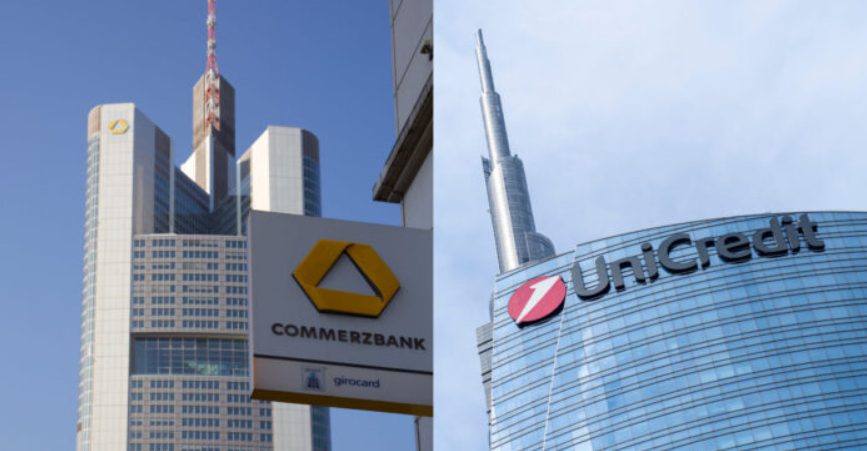
Bettina Orlopp stepped onto the stage in Wiesbaden on 20 May 2026 to something rare in German banking: applause. Shareholders rose to cheer the chief executive as she dismissed UniCredit’s €35 billion takeover bid as an opportunistic attempt to seize control without paying for it. The moment crystallised a rebellion. Despite months of pressure from Italy’s second-largest lender, only 0.02% of Commerzbank shares had been tendered by 19 May. The hostile offer wasn’t merely unwelcome. It was, in the words of the board’s formal reasoned statement, financially inadequate and strategically hollow.
The battle for Commerzbank is unfolding at a precarious moment for European finance. The European Central Bank has long championed cross-border consolidation to deepen the banking union and equip continental lenders to compete with American megabanks. Yet the Franco-German axis that once drove integration has frayed, and national capitals have rediscovered their appetite for financial sovereignty.
Commerzbank, which finances roughly 30% of German foreign trade and serves 24,000 corporate client groups, sits at the intersection of these colliding forces. A spokesman for Germany’s Finance Ministry reiterated Berlin’s position in early May: a “hostile, aggressive takeover” of a systemically important bank would be unacceptable. The statement was not diplomatic nuance. It was a warning shot. Behind it lies a harder reality. Germany’s federal government still holds a 12.7% stake in Commerzbank, a residual from the €18.2 billion bailout during the 2008 financial crisis, and has openly considered raising that holding to secure a blocking position. What looks like a standard M&A contest is, in fact, a stress test for whether European banking union can survive national interest.
Inside the Commerzbank UniCredit Takeover Bid
On 5 May 2026, UniCredit published its offer document for the Commerzbank UniCredit takeover bid, proposing an exchange ratio of 0.485 new UniCredit shares for each Commerzbank share. Based on the three-month volume-weighted average price determined by BaFin, the implied value stood at €34.56 per share by mid-May. That figure sat almost 5% below Commerzbank’s closing price of €36.48 on 15 May, and well under the €41.50 median target price assigned by independent equity analysts. The Economist promptly labelled it a “lowball bid,” noting that the terms valued the whole bank at roughly €35 billion ($41 billion) yet offered more than an 8% discount to the market price prevailing the day before publication. It was, by any conventional standard, an opportunistic opening gambit rather than a generous proposal.
Commerzbank’s board needed less than two weeks to reach a verdict. On 18 May, the Board of Managing Directors and the Supervisory Board issued a formal reasoned statement pursuant to Section 27 of Germany’s Securities Acquisition and Takeover Act. Their conclusion was unambiguous: shareholders should reject the offer. The document argued that UniCredit’s plan was “neither sound nor convincing,” that synergy assumptions were described by UniCredit itself as “speculative,” and that the proposed dismantling of Commerzbank’s international network would gut its ability to finance the export-oriented German Mittelstand. Jens Weidmann, chairman of the Supervisory Board and former Bundesbank president, warned that the share-exchange structure meant Commerzbank shareholders who accepted would simply inherit the execution risk as future UniCredit owners.
The market listened. By 19 May, a negligible 0.02% of shares had been tendered. At the AGM in Wiesbaden the following day, Orlopp strode onto the stage to applause. She told the hall that UniCredit’s bid was “an attempt to take over Commerzbank at a price that does not properly reflect the fundamental value and potential of our bank.” Employees held signs reading “UniCredit Go Away!” The message was unmistakable. This was not a target negotiating for a better price. It was a management team and workforce that genuinely believed the standalone future was brighter than the combined one.
Why the Commerzbank Momentum 2030 Strategy Makes UniCredit’s Math Look Shaky
The analytical case against UniCredit’s bid rests on a simple proposition: Commerzbank is already delivering what Orcel promises, and it is doing so without the trauma of a merger. On 8 May, the bank unveiled its updated “Momentum 2030” roadmap alongside first-quarter results that beat expectations. Operating profit rose 11% year-on-year to a record €1.4 billion. Net profit climbed 9% to €913 million. Revenues reached €3.2 billion, driven by a 9% surge in net commission income to an all-time high of €1.1 billion. The cost-income ratio improved three percentage points to 53%. These were not projections. They were settled facts from the first three months of 2026.
Why is Commerzbank rejecting UniCredit’s offer? The board argues the bid provides no adequate premium and lacks a credible plan. The implied €34.56 value falls short of the €36.48 share price and far below analyst targets near €41.50. The board believes its standalone “Momentum 2030” strategy creates greater value with lower execution risk than UniCredit’s vague restructuring proposal.
Building on this momentum, Commerzbank raised its full-year 2026 net profit target to at least €3.4 billion, up from the previous “more than €3.2 billion.” By 2028, it now expects a net return on tangible equity of around 17%, rising to roughly 21% by 2030. Net profit is targeted to reach €4.6 billion in 2028 and €5.9 billion in 2030, while revenues should grow from €13.2 billion this year to €16.8 billion by decade’s end. That implies a 6% compound annual growth rate. The bank also plans to invest €600 million in artificial intelligence through 2030, expecting €500 million in annual efficiency gains from 2030 onwards and a 10% redeployment of capacity toward customer-facing roles. Perhaps most tellingly for shareholders, Commerzbank intends to return approximately half of its current market capitalisation through dividends and buybacks by 2030, maintaining a 100% payout ratio until its CET 1 ratio reaches 13.5%. The record dividend of €1.10 per share approved at the AGM is the down payment on that promise.
The picture is more complicated for UniCredit. Its own outside-in analysis, published in April as “Commerzbank Unlocked,” projected that Commerzbank could reach a net profit of €5.1 billion by 2028 under UniCredit’s stewardship. Yet Commerzbank’s board dismissed that presentation as “highly aggressive” and hostile, arguing it inaccurately assessed revenue losses, IT integration costs, and headcount reductions. The Banker reported that the board viewed the plan as undermining “the fundamental trust essential to the banking business.” When a target’s management disputes not just your price but your industrial logic, the bidder has a credibility problem that no exchange ratio can fix.
What a Hostile Takeover Would Mean for German Banking and European M&A
If UniCredit somehow prevails, the consequences would ripple far beyond Frankfurt and Milan. Commerzbank is not a generic mid-tier lender. It is the leading bank for Germany’s Corporate Clients business, accounting for approximately 30% of the country’s foreign trade financing. Its international network spans more than 40 countries, and its Polish subsidiary mBank serves around 6 million customers. Dismantling that network, as UniCredit’s plan reportedly envisages, would weaken the financial plumbing that supports Germany’s export-driven Mittelstand. That is why Berlin has drawn a line. The Finance Ministry’s spokesman did not mince words in early May: a hostile takeover of a systemically relevant bank was “unacceptable.”
The political defence may harden further. Berlin retains a 12.7% stake and has shown no inclination to sell into UniCredit’s offer. A blocking position would transform that residual crisis-era holding into an active defensive weapon. It would also signal that Germany, once the architect of European banking union, now views cross-border consolidation through the lens of national interest first and supranational efficiency second. That shift carries risks for the entire continent. If every major bank merger triggers a race between capitals to protect domestic champions, the ECB’s vision of a unified European banking market will remain a theoretical construct.
For Commerzbank’s 40,000-plus employees, the immediate risk is more tangible. The works council has warned that UniCredit’s integration could eliminate thousands of jobs. Commerzbank’s own analysis cited substantial headcount reductions envisaged by UniCredit, complex IT integration, and revenue losses from overlaps in the Corporate Clients business. Either scenario would represent a seismic shock to Frankfurt’s labour market and to the bank’s internal culture. The transformation agreement already negotiated with employee representatives for Commerzbank’s standalone 3,000-position reduction looks modest by comparison, and it was concluded with social safeguards and redeployment programmes that a hostile acquirer would have little incentive to honour.
Regulatory timelines add another layer of uncertainty. Even if acceptance levels rose, UniCredit has stated that closing would not occur before the first half of 2027, pending ECB, BaFin, and competition clearances. The offer document cites 2 July 2027 as the outer limit. In an environment where interest rates, geopolitics, and German electoral politics could shift dramatically within 14 months, that is an eternity. Shareholders who accept today would lock in an illiquid, uncertain consideration denominated in UniCredit shares, exposed to every twitch in Italian sovereign risk and eurozone sentiment. The structure alone is a deterrent.
UniCredit’s Counter: Scale, Synergy, and the Case for European Consolidation
To steel-man UniCredit’s position is to start from a premise that Commerzbank’s board rejects but many institutional investors once accepted: that the German bank had underperformed for years before Orlopp’s turnaround. Andrea Orcel, UniCredit’s chief executive and a veteran of Goldman Sachs, Merrill Lynch, and UBS, has pursued this deal since 2024. He argues that Commerzbank’s “Momentum” plan is merely catching up to where the bank should already be, and that true competitiveness requires scale. UniCredit’s April presentation projected that Commerzbank could achieve a net return on tangible equity above 19% by 2028 and roughly 23% by 2030 under its ownership, figures that exceed even Commerzbank’s newly raised standalone targets. The industrial logic is not frivolous. Combining Commerzbank with UniCredit’s existing German subsidiary, HypoVereinsbank, would create the country’s largest lender by certain measures, surpassing Deutsche Bank in selected corporate segments. Cost synergies from overlapping IT systems, branch networks, and back-office functions could, in theory, reach billions of euros. And Orcel is correct that European banking remains fragmented relative to the American market, where JPMorgan Chase alone commands a market capitalisation greater than the sum of Europe’s top five lenders. The ECB, under Christine Lagarde, has consistently welcomed cross-border tie-ups as a means to deepen the banking union and improve global competitiveness. There is also a shareholder-level argument. UniCredit’s own stock has re-rated strongly since Orcel took the helm, and the bank has returned billions through buybacks and dividends. Investors who trust his execution record might reasonably conclude that he could do for Commerzbank what he has done for his own institution. Yet the offer’s structure betrays a lack of conviction. By proposing a bare-minimum exchange ratio with no cash alternative and no clarity on ultimate control, UniCredit is asking Commerzbank shareholders to swap a surging standalone equity story for a speculative merger script with a 14-month settlement horizon. It’s a lot to ask for no premium.
The stand-off between Commerzbank and UniCredit is therefore not merely a quarrel over price. It is a contest between two competing visions of European finance. One vision, championed by Orcel and the ECB, holds that scale and cross-border integration are prerequisites for global relevance. The other, articulated by Orlopp and backed by a surprisingly assertive Berlin, insists that a profitable, systemically important national champion can deliver superior returns to shareholders while preserving strategic autonomy. Both sides can marshal data to their cause. Yet the burden of proof in any takeover lies with the bidder, and UniCredit has so far failed to meet it. Its offer is underwater, its acceptance rate is negligible, and its strategic plan has been dismissed by the target’s board as speculative. What follows, however, is unlikely to be graceful retreat. Orcel has spent two years and billions of euros building a stake that now approaches 30%. He didn’t come this far to fold. The summer of 2026 will determine whether European banking union advances by force or stalls on the barricades of national interest. For now, the yellow flag of Commerzbank still flies over Wiesbad
Discover more from The Economy
Subscribe to get the latest posts sent to your email.



The X algorithm changed significantly in late 2025 and has continued evolving through 2026 — and the single most important shift for brand marketers is this: replies are now weighted 27 times more heavily than likes, according to Teract.ai’s 2026 algorithm analysis. A tweet with 50 thoughtful replies now outperforms one with 500 likes. For brands building AI and climate content strategies on X in 2026, this single mechanical change invalidates most of the hashtag-volume advice still circulating from pre-2025 playbooks.
The Hashtag Myth Correction Every Brand Marketer Needs
Perhaps the most consequential — and least understood — shift is that X’s algorithm no longer relies on hashtags to determine what a post is about. The algorithm reads a post’s actual text content to categorize it topically, whether or not a hashtag is attached, according to Teract.ai. A tweet discussing “AI tools for founders” gets correctly categorized whether or not it includes #AI or #Founders.
After xAI open-sourced its Grok-based recommendation algorithm in 2026, independent code analysis confirmed hashtags now function as neutral-to-negative signals rather than reach amplifiers, according to Postory. The system scores posts on direct engagement and content quality — replies, reposts, and bookmarks carry far more algorithmic weight than likes, while negative signals (blocks, mutes, “show less” actions) carry heavy penalties.
The Actual Hashtag Data for 2026
Despite the algorithm no longer using hashtags as a categorization tool, empirical engagement data still shows a measurable — but narrow — effect:
| Hashtag Count | Engagement Effect vs. Zero Hashtags |
|---|---|
| 0 hashtags | Baseline (not optimal for accounts under 500K followers) |
| 1–2 hashtags | +21% engagement (the sweet spot) |
| 3 hashtags | -17% engagement |
| 5+ hashtags | -40% engagement |
Source: Hashtagtools.io 2026 research report.
The “zero hashtags is a viral hack” narrative circulating in some marketing content is a correlation-causation error — it comes from observing mega-accounts like Elon Musk’s, whose reach comes from built-in audience size, not hashtag abstinence, per Hashtagtools.io. For accounts under 500,000 followers — the overwhelming majority of enterprise brand accounts — 1–2 well-chosen hashtags integrated naturally into post text still outperform zero hashtags by roughly 21%.
Why AI and Climate Content Specifically Benefit From This Shift
AI and climate change are named among X’s core evergreen topical hashtag categories in 2026, alongside crypto, sports, and entertainment, according to SocialRails’ hashtag generator data. Both categories share a structural advantage under the reply-weighted algorithm: they are inherently debate-generating topics that naturally produce the conversation-quality signals (thoughtful replies) the 2026 algorithm now prioritizes over passive engagement (likes).
Hashtag Placement Mechanics That Actually Move Engagement
Mid-tweet hashtag placement performs best for engagement — for example, embedding a hashtag naturally within a results-oriented sentence (“This strategy boosted our #ClimateFinance conversions by 37%”) consistently outperforms hashtags front-loaded at the start of a post, according to ContentStudio. Starting a tweet with a hashtag is specifically flagged as an underperforming pattern.
A Three-Category Hashtag Framework for Brand Strategy
Effective 2026 hashtag strategy separates into three distinct categories that should not be mixed indiscriminately, per Hashtagtools.io:
- Trending (real-time moments): High reach, short window — appropriate for brands commenting on breaking AI policy news or climate summit outcomes in real time.
- Evergreen topical (industry tags): Moderate, steady reach — #AI, #ClimateChange, #Sustainability-category tags appropriate for always-on brand content.
- Branded (campaign-specific): Built for tracking and community-building rather than discovery — appropriate for proprietary campaign hashtags tied to specific initiatives.
The recommended combination for news-cycle-adjacent content (e.g., a brand responding to a climate summit or AI regulation announcement): one trending + one evergreen topical hashtag, reserving pure branded tags for owned-campaign content rather than reactive posts.
Content Strategy Implications for Enterprise Brands
Given the 27x reply-weighting, brand content strategy for AI and climate topics should shift measurably toward content designed to generate substantive replies rather than passive approval:
- Publish defensible, specific claims (with data, not vague sentiment) on AI capability or climate commitments — specific claims generate substantive disagreement or validation replies; vague statements generate likes without replies.
- Engineer the first-30-minutes window deliberately. Engagement velocity in the first 30 minutes determines whether a post gets amplified — 10+ engagements in that window triggers broader algorithmic amplification, according to Teract.ai. Brands should coordinate initial-response teams or stakeholder networks to seed early replies on strategically important posts.
- Avoid spam-trigger patterns explicitly flagged by the 2026 algorithm: excessive hashtags, repetitive content, external links in the first tweet of a thread, and engagement-bait phrasing, per Teract.ai.
What Brands Should Avoid in 2026
- Hijacking unrelated trending hashtags to attach an AI or climate message to unrelated viral moments — explicitly flagged as a shadowban risk factor by SocialRails.
- Hashtag stuffing on climate or AI announcement posts — 5+ hashtags produces a documented 40% engagement penalty, directly counterproductive for high-stakes brand announcements.
- Treating hashtag strategy as a substitute for content quality. Per AutoTweet’s 2026 guide, a post with the perfect hashtag but poor content won’t go anywhere — hashtags open the door, but reply-generating content quality is what keeps it open.
The Bottom Line
The brands winning AI and climate visibility on X in 2026 are not the ones deploying the most hashtags — they’re the ones building specific, defensible content that generates substantive reply threads, using 1–2 well-placed evergreen or trending hashtags as a modest discovery boost rather than a primary growth lever. Any brand strategy still built around hashtag volume or front-loaded hashtag placement is optimizing for an algorithm that no longer exists.
Discover more from The Economy
Subscribe to get the latest posts sent to your email.
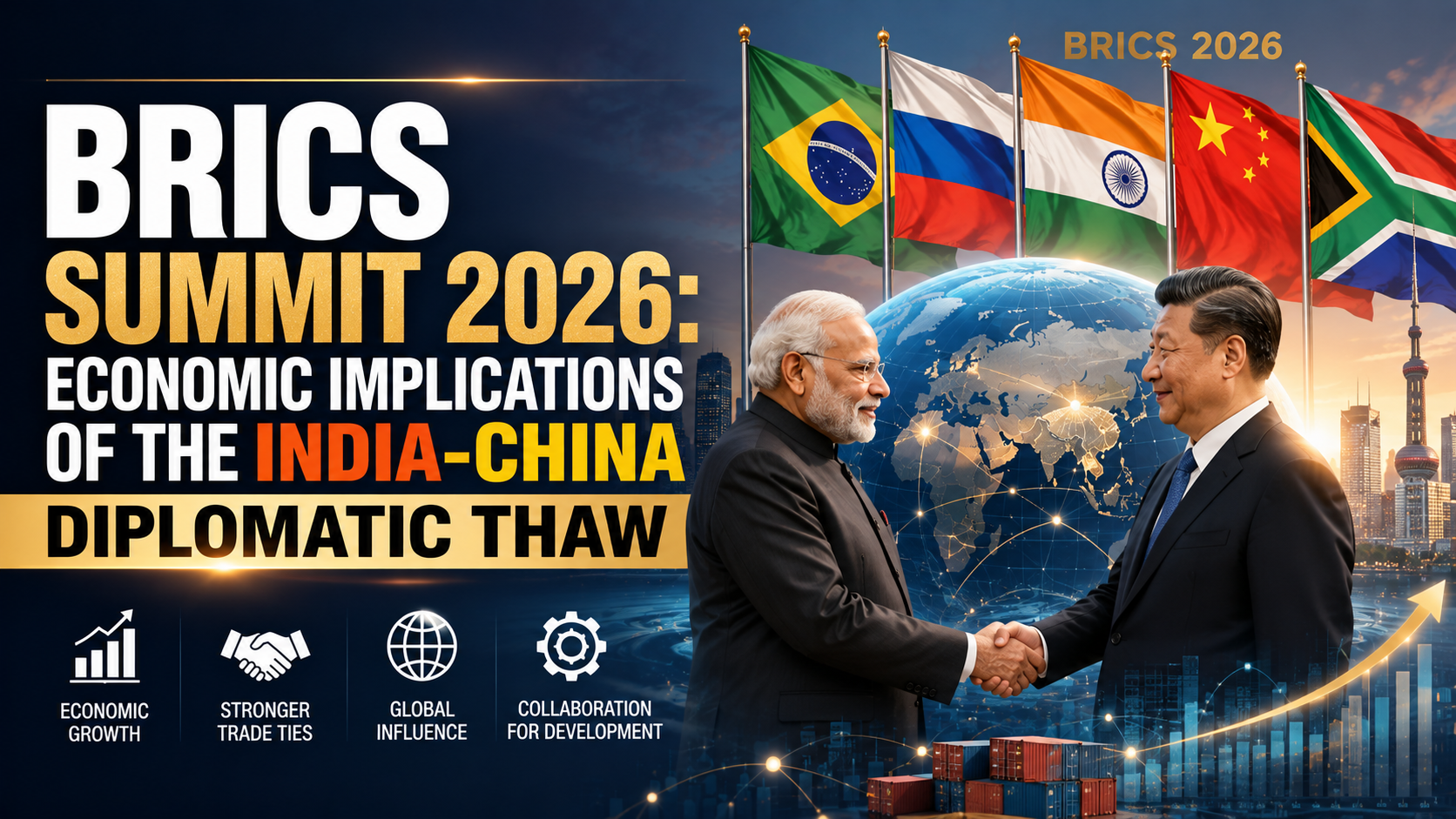
Chinese President Xi Jinping is expected to travel to New Delhi on September 12–13, 2026, for the 18th BRICS Summit — his first visit to India in six years, and the clearest signal yet that Beijing and New Delhi are prepared to move past the 2020 Galwan Valley border clash, according to Indian Defence News. For enterprise strategists and investors positioned across South Asian and Chinese supply chains, this is not a symbolic handshake — it is a signal event with direct implications for trade flows, tariff exposure, and capital competition across the Global South.
From Galwan to Kazan to New Delhi: The Timeline
The normalization process has moved in deliberate stages, not a single reset:
- October 2024 — Kazan, Russia: Modi and Xi meet on the sidelines of the BRICS summit, the first formal meeting since 2019, following a border disengagement agreement, according to The Diplomat.
- 2025 — Resumption of high-level visits: India’s defense and external affairs ministers visited Beijing; China’s Foreign Minister Wang Yi visited New Delhi, producing several bilateral agreements, per The Diplomat.
- August 2025 — Tianjin SCO Summit: Modi and Xi met again, described as the culmination of the resumed high-level engagement.
- May 2025 — India-Pakistan conflict stress test: The thaw survived Beijing providing military and political support to Islamabad against India during a brief conflict — evidence the normalization is now resilient to shocks, per The Diplomat.
- September 12–13, 2026 — New Delhi BRICS Summit: India chairs BRICS for a fourth time, hosting Xi for the first time since 2019, per Indian Defence News.
Why Now: The Strategic Logic on Both Sides
For Beijing, sustaining a frozen conflict with a rising economic power while simultaneously managing friction with Washington over the South China Sea and Taiwan Strait has become strategically costly, per Indian Defence News. For New Delhi, hosting Xi under the multilateral BRICS umbrella allows Modi to project global statesmanship while engaging Beijing without appearing to unilaterally concede on unresolved border issues.
Crucially, analysts at the China-Global South Project note the 2026 dynamic is being shaped primarily by regional realities and a deliberate decoupling of economic cooperation from security disputes — not by U.S. trade pressure, even though Trump-era tariff policy has often been cited as a contributing factor.
Where the Economic Exposure Sits
Import Dependency: India’s Structural Vulnerability
India’s supply chains remain heavily dependent on Chinese intermediate goods, particularly in pharmaceuticals and electronics, according to Indian Defence News. Any further normalization of technology-investment restrictions — India banned a range of Chinese tech applications and tightened border-nation investment rules after Galwan — would be the single highest-impact policy shift for enterprise B2B supply chain planners in the region.
The BRICS Bloc Itself: Expanded and More Consequential
The 2026 summit occurs against a materially expanded BRICS bloc. Since the original five-member group, Egypt, Ethiopia, Iran, Saudi Arabia, and the UAE joined in 2024, and Indonesia joined in 2025, per the official BRICS 2026 site — with ten additional partner countries (Belarus, Bolivia, Cuba, Kazakhstan, Malaysia, Nigeria, Thailand, Uganda, Uzbekistan, Vietnam) joining in 2025. The bloc’s prior Rio summit produced a Leaders’ Framework Declaration proposing to mobilize $300 billion annually by 2035 for climate finance, according to Business Standard.
Trade & Investment Exposure Matrix
| Sector | Pre-Thaw Position (2020–2024) | Post-Thaw Trajectory (2025–2026) | Enterprise Risk/Opportunity |
|---|---|---|---|
| Pharmaceuticals (API imports) | Heavy Indian dependency on Chinese active pharmaceutical ingredients | Potential easing of investment friction | Opportunity: supply diversification talks; Risk: continued single-source dependency |
| Electronics/consumer tech | Chinese app bans, investment screening for border-sharing nations | Selective, cautious relaxation possible | Watch for FDI rule changes ahead of/after the summit |
| Border trade | Suspended since 2020 | Partial resumption of trade at three border outposts | Direct logistics opportunity for regional trade B2B services |
| Africa infrastructure/capital | Parallel, competing Chinese BRI and Indian maritime/digital investment | Continued competition, not cooperation | Africa remains contested capital-deployment theatre, per Indian Defence News |
| AI governance | No joint framework | BRICS Leaders’ Statement on Global AI Governance (Rio) | Multilateral framework emphasizing Global South inclusion, UN-led process |
Sources: Indian Defence News, The Diplomat, Business Standard — see citations above.
What to Watch at the September Summit
- Border trade mechanics: Whether the Working Mechanism for Consultation and Coordination produces concrete friction-point resolutions in eastern Ladakh ahead of the summit, per Indian Defence News.
- Investment-screening rule changes: Any signal India will ease its border-nation FDI restrictions would be the most direct enterprise-relevant outcome.
- Africa positioning: Whether joint statements address, rather than paper over, competing Chinese BRI and Indian maritime-security/digital-investment strategies across the continent.
- AI governance follow-through: Concrete mechanisms building on the Rio AI governance statement, relevant to any enterprise operating AI infrastructure across BRICS-aligned markets.
The Caveat: This Is a Thaw, Not a Resolution
Independent policy analysis from the ISAS Brief is explicit that the Kazan-era thaw has not resolved bilateral mistrust or delivered progress on sensitive issues — it has stabilized the border and eased some economic restrictions without addressing the underlying territorial dispute. The China-Global South Project similarly notes India continues to treat Beijing with caution in the security domain even as it normalizes economic engagement. Investors should read the September summit as confirmation of a durable, deliberate de-escalation track — not as a signal that structural India-China rivalry has been resolved.
The Bottom Line
The India-China thaw formalized at the New Delhi BRICS Summit represents a genuine, multi-year, deliberately sequenced de-politicization of economic relations between two of the world’s largest economies — but one that leaves core security and territorial disputes unresolved. For enterprise and investment strategists, the actionable signal is narrower than “US-China rapprochement” headlines suggest: watch FDI screening rules, pharmaceutical/electronics supply-chain diversification announcements, and border-trade resumption specifics, not broad geopolitical sentiment.
Discover more from The Economy
Subscribe to get the latest posts sent to your email.
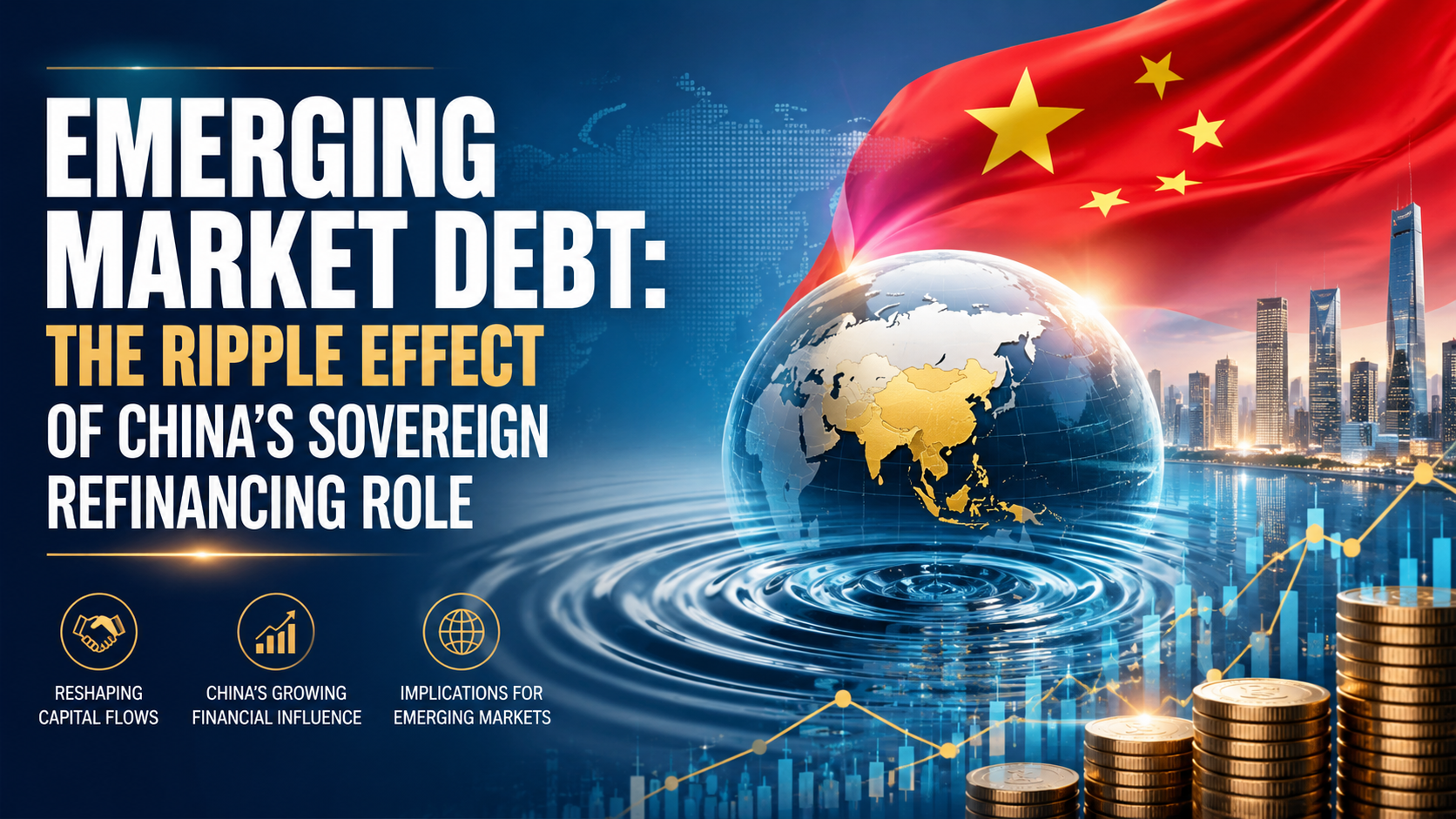
Emerging and developing economies face refinancing needs of more than $9 trillion in 2026, according to the Institute of International Finance’s Global Debt Monitor — the largest wall of maturing sovereign and corporate debt these markets have ever faced simultaneously. At the center of that system sits China, now the single largest issuer of emerging-market sovereign debt and, increasingly, the largest bilateral lender of last resort when smaller economies can’t refinance on their own. For institutional investors and foreign-policy-adjacent business strategists, understanding China’s dual role — dominant issuer and dominant creditor — is now a prerequisite for pricing emerging-market risk correctly.
Editorial note on sourcing: a specific figure describing a discrete “$1.3 billion” China sovereign refinancing transaction could not be independently verified against primary reporting at the time of writing. This article instead builds its analysis on verified, dated figures from the OECD, IIF, Moody’s, and peer-reviewed research, and any deal-level claim should be confirmed against primary sources (finance ministry statements, rating-agency releases) before publication or citation.
China’s Dual Role: Issuer and Creditor of Last Resort
China accounted for 45% of total EMDE sovereign bond issuance in 2024, up sharply from just 17% in the 2007–2014 period, according to the OECD’s Global Debt Report 2025. By 2025, China remained the top borrower among a concentrated group — China, India, Brazil, Egypt, and Argentina together represented 78% of EMDE central-government borrowing, per the OECD’s Global Debt Report 2026.
Domestically, Beijing has simultaneously executed one of the largest local-government debt refinancing programs in history: a 6 trillion yuan (roughly $839 billion) swap of “hidden” local-government debt into standardized bonds, approved in late 2024 and implemented through 2026, according to VOA News. By mid-2026, Chinese provinces had used nearly 94% of that swap allowance, according to Bloomberg.
Internationally, China has also re-entered dollar sovereign bond markets at scale — its 2026 international offering was reported as its largest ever, oversubscribed well beyond target, according to Business Standard/Reuters reporting on the prior comparable issuance. This dual positioning — massive domestic refinancing plus expanding international issuance — gives China outsized influence over EM bond-market liquidity and pricing benchmarks that smaller sovereigns then reference for their own issuance.
The $9 Trillion Wall: Why 2026 Is Different
The scale of what’s coming due matters more than any single deal. Key figures from the IIF’s Global Debt Monitor and OECD’s 2026 report:
- Gross EMDE central-government borrowing crossed $4 trillion in 2025, up from roughly $3 trillion in 2024.
- Around 36% of outstanding EMDE bond stock matures within three years.
- Low-income countries face the sharpest cliff: 52% of their outstanding bonds mature by 2028, with 29% due by the end of 2026 alone.
- Secondary-market yields on maturing debt now exceed 10% for non-investment-grade sovereigns, meaning refinancing at current rates locks in materially higher debt-service costs than the original issuance.
Refinancing Cost Comparison: Then vs. Now
| Issuer Tier | Original Issuance Yield (illustrative range) | 2026 Refinancing Yield | Refinancing Risk |
|---|---|---|---|
| Investment-grade EMDEs (e.g., select Gulf, Southeast Asia sovereigns) | 3–5% | 5–7% | Moderate — absorbable within fiscal space |
| Non-investment-grade EMDEs | 6–8% | 10%+ | High — debt-service costs rising faster than revenue growth |
| Low-income issuers (heavy China bilateral exposure) | Concessional/below-market | Market-rate or restructured terms | Severe — 29% of debt stock matures by end of 2026 |
Source: OECD Global Debt Report 2025/2026 (see citations above); ranges are illustrative of documented tier-level trends, not specific bond issues.
The Restructuring Precedent: What Happens When Refinancing Fails
China’s response to sovereign distress has evolved into a distinct pattern that investors increasingly price into risk premiums. Research published via the National Bureau of Economic Research documents a rising trend of “re-structurings” — repeated restructurings of the same debt with the same creditor — echoing the drawn-out resolution patterns of prior global debt crises. Angola, Ecuador, Seychelles, Sri Lanka, and Venezuela have each undergone two or more restructurings with Chinese state creditors.
Sri Lanka’s case is illustrative of the mechanics: China Development Bank extended a $500 million financing facility in 2020, and a subsequent equity-linked arrangement brought in $1.12 billion in cash that Colombo used to repay non-Chinese creditors, according to Oxford Academic’s International Affairs journal. These bilateral bridge arrangements illustrate how China’s rescue lending functions as a parallel track to traditional Paris Club-style restructuring — often faster to arrange, but less transparent to third-party bondholders pricing the same sovereign’s risk.
Regional Ripple Effects: Where Investors Should Watch Closely
Direct Exposure Zones
- Sub-Saharan Africa: Heaviest concentration of low-income issuers facing near-term maturity walls and prior China restructuring history (Angola, Zambia).
- South Asia: Sri Lanka’s precedent shapes how markets price Pakistan and Bangladesh refinancing risk.
- Latin America: Ecuador and Venezuela carry documented repeat-restructuring histories; Argentina remains among the top-five EMDE borrowers by volume.
Indirect / Second-Order Exposure
- Gulf and Southeast Asian investment-grade sovereigns face rising benchmark yields even without direct restructuring risk, simply because China’s issuance volume moves the EM bond-pricing benchmark broadly.
- Enterprise B2B lenders and trade-finance providers operating in these corridors should treat sovereign-refinancing stress as a leading indicator of counterparty and currency risk, not a lagging one.
An Investor Risk-Monitoring Framework
- Track maturity-wall concentration, not headline debt-to-GDP. A country with moderate debt-to-GDP but a heavy 2026–2028 maturity cliff carries more near-term risk than a higher-leverage country with a smoothed maturity profile.
- Distinguish China’s domestic refinancing (yuan-denominated, largely contained) from its role as an external EM creditor (dollar/foreign-currency exposure, higher spillover risk).
- Watch for repeat-restructuring signals. Countries with a prior China restructuring are statistically more likely to require another, per the NBER research above — treat this as a standing risk flag, not a one-time resolved event.
- Monitor secondary-market yield spreads on maturing debt versus issuance-year yields as the clearest real-time signal of refinancing stress building in a specific sovereign.
The Bottom Line
China’s simultaneous role as the largest domestic debt-refinancer in EM history and the most influential external creditor to distressed sovereigns makes it the single most important variable in the 2026 emerging-market debt outlook. The $9 trillion refinancing wall isn’t a uniform risk — it’s concentrated in low-income issuers with the heaviest prior China bilateral exposure, and that concentration is exactly where enterprise investors, trade-finance providers, and sovereign-risk analysts should be focusing due diligence through the remainder of 2026.
Discover more from The Economy
Subscribe to get the latest posts sent to your email.

Luxury Wellness: The Monetization and Expansion of Boutique Low-Impact Training

Leveraging Viral AI & Climate Hashtags for Brand Growth on X

The Medicaid Churn: Front-End Revenue Cycle Risks for Enterprise Hospitals

The 2026 Crypto Regulatory Shift: What It Means for Institutional Investors

AI-Powered Training: The Next Multi-Billion Dollar Ecosystem in Fitness

BRICS Summit 2026: Economic Implications of the India-China Diplomatic Thaw

Emerging Market Debt: The Ripple Effect of China’s Sovereign Refinancing Role

Dropping Oil & Surging Gold: Navigating Safe-Haven Investments in Q3

2026 AI Stock Frenzy: How to Position Your Portfolio

The AI Disruption in Financial Risk Management: Moving Beyond Record Banking Profits

The Rise of Green Aviation: Balancing High Fuel Prices with Sustainable Infrastructure

US-China Relations in Q3 2026: Trade Tariffs and Supply Chain Risks

Emerging Markets Rebound: Top Stock Strategies for the Gulf and South Asia

Tackling the 2026 Global Food Crisis: Policy Shifts and Market Speculation

China Politburo July 2026: Stimulus Signals Explained

State Farm’s $5B Dividend 2026: Who Qualifies & Payout Dates

Russia Fuel Shortages 2026: Inside a Cracking War Economy

Top 15 Financial Stocks for Investment in PSX

Pakistan Passed Its Third IMF Review

SpaceX Stock Lockup Expiration Explained: Why $123B in Shares Could Hit the Market

Pakistan IMF Program 2026: Inside the Push Toward an Interest-Free Economy

Russia Oil Revenue 2026: How Sanctions on Rosneft and Lukoil Are Draining the War Chest

Andy Burnham, UK Gilts and Mortgages: July 2026 Explainer

Gold Price 2026: Why Bullion Has Fallen 25% From Its January Record High

Pakistan’s 2026 Monsoon Floods Threaten Fragile Economic Recovery as Inflation Nears 9%

Russia Oil Revenue 2026: The Iran War Windfall and What a Hormuz Deal Means for Moscow

Canada US Trade War 2026: Inside Carney’s Push to Cut Ties With Trump’s Tariffs

Russia’s Budget Deficit Blew Past Its Full-Year Target in Three Months
-

 Markets & Finance8 months ago
Top 15 Stocks for Investment in 2026 in PSX: Your Complete Guide to Pakistan’s Best Investment Opportunities
-

 Analysis6 months ago
Johor’s Investment Boom: The Hidden Costs Behind Malaysia’s Most Ambitious Economic Surge
-

 Analysis6 months ago
Top 10 Stocks for Investment in PSX for Quick Returns in 2026
-

 Analysis7 months ago
Brazil’s Rare Earth Race: US, EU, and China Compete for Critical Minerals as Tensions Rise
-

 Banks7 months ago
Best Investments in Pakistan 2026: Top 10 Low-Price Shares and Long-Term Picks for the PSX
-

 Investment8 months ago
Top 10 Mutual Fund Managers in Pakistan for Investment in 2026: A Comprehensive Guide for Optimal Returns
-

 Global Economy8 months ago
15 Most Lucrative Sectors for Investment in Pakistan: A 2025 Data-Driven Analysis
-

 Global Economy8 months ago
Pakistan’s Export Goldmine: 10 Game-Changing Markets Where Pakistani Businesses Are Winning Big in 2025