
Analysis
EAEU Public Opinion: What Armenians, Kazakhs, and Kyrgyz Really Think

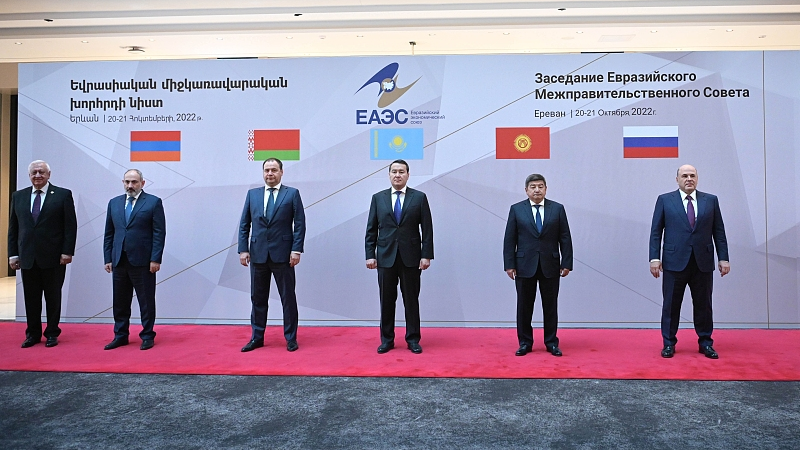
A landmark 2026 study reveals eroding trust, sovereignty anxieties, and a bloc struggling to justify its existence to the very peoples it claims to serve.
When Nursultan Nazarbayev first sketched the outlines of a Eurasian economic union in the early 1990s, he imagined something elegant: a voluntary commonwealth of post-Soviet nations, bound not by Moscow’s imperial gravity but by rational self-interest, shared infrastructure, and frictionless trade. Three decades later, the Eurasian Economic Union (EAEU) he helped conjure into existence marks its tenth anniversary as a functioning institution—complete with a common customs tariff, a nominal single labor market, and $20 billion in cumulative intra-bloc investment. On paper, those are real achievements. On the streets of Bishkek, Yerevan, and Almaty, the mood is something else entirely.
New research published in February 2026 in Eurasian Geography and Economics by Dr. Zhanibek Arynov of Nazarbayev University and his co-author Diyas Takenov offers the most systematic public-perception audit of the EAEU to date—drawing on focus groups and survey data across all three smaller member states. The findings are striking, occasionally counterintuitive, and should unsettle anyone who believes that post-Soviet integration can survive on institutional inertia and official enthusiasm alone. Across Armenia, Kazakhstan, and Kyrgyzstan, positive perceptions of the EAEU are in measurable decline. Economic grievances have deepened. Sovereignty anxieties have sharpened, supercharged by Russia’s full-scale invasion of Ukraine. And in one of the study’s most surprising findings, it is Kazakhstan—the EAEU’s co-founder and most economically capable member—that harbors the strongest sentiment in favor of eventual withdrawal.
The Ten-Year Ledger: What the Numbers Say
The Eurasian Economic Commission’s own data tells a story of institutional progress that would be impressive if viewed in isolation. Over the past decade, the EAEU’s combined GDP has grown by nearly 18%, industrial production has risen by 29%, and cumulative intra-union foreign direct investment has reached $20 billion. Intra-bloc trade has climbed steadily, and the union now boasts free trade agreements with Singapore, Vietnam, Serbia, and—as of 2023—Iran, with negotiations ongoing with India and Egypt.
Yet the EAEU’s own registry of internal market obstacles tells a different story. As of the bloc’s tenth anniversary, the organization still officially lists one barrier, 35 limitations, and 33 exemptions to the supposed free flow of goods, capital, and labor—figures that represent not a success story but a confession. A truly integrated common market doesn’t require a bureaucratic catalogue of its own failures.
The Carnegie Endowment for International Peace and Chatham House have both documented this structural paradox: the EAEU’s institutional architecture is more developed than its predecessor organizations, yet its member states have shown persistent reluctance to transfer genuine sovereignty to supranational bodies. The EAEU Court in Minsk, for instance, cannot initiate cases or issue preliminary rulings the way the European Court of Justice can—a design feature that reflects, rather than corrects, the political will of its members.
It is within this gap between rhetoric and reality that Arynov and Takenov have done their most important work.
Kazakhstan: The Founder’s Doubt
No country’s EAEU story is more psychologically complex than Kazakhstan’s. This was the nation whose founding president claimed intellectual paternity of the entire project, whose government remained, as Arynov noted in a February 2025 commentary for the Italian Institute for International Political Studies (ISPI), “strongly enthusiastic” about the union even as public sentiment shifted beneath its feet.
And shift it has. The trajectory of Kazakhstani public opinion on the EAEU is a cautionary tale about what geopolitical trauma can do to an integration project’s legitimacy. In 2015, surveys recorded roughly 80% approval among Kazakhstanis for the bloc. By 2017, that figure had dipped slightly. Today, based on the Arynov-Takenov focus group research, scepticism has become the dominant public sentiment—and it operates on two distinct registers.
The first is geopolitical. Russia’s 2022 invasion of Ukraine shattered whatever pretense remained that the EAEU was a purely economic organization, insulated from Moscow’s military and political ambitions. Kazakhstani focus group participants repeatedly cited Russian politicians’ inflammatory rhetoric questioning Kazakhstan’s territorial integrity—a visceral and deeply personal grievance in a country that shares a 7,500-kilometer border with Russia and has a substantial ethnic Russian minority. Many now view membership in the EAEU not as a source of economic opportunity but as a vector for geopolitical exposure: a mechanism through which secondary sanctions risk could spill over from Russia’s pariah status onto Kazakhstani businesses and banks. Kazakhstan’s own government has walked an extraordinary tightrope since 2022, publicly refusing to endorse Russia’s war, providing humanitarian assistance to Ukraine, and accelerating economic diversification—all while remaining formally embedded in Moscow’s preferred institutional architecture.
The second register is economic. Focus group participants in Kazakhstan cited the EAEU’s failure to deliver on its core promises: persistent non-tariff barriers, asymmetric market access that has benefited Russia far more than smaller members, and the absence of meaningful sectoral coordination. Kazakhstan’s industrial base—the most diversified among the smaller EAEU members—has expanded its exports within the union, but critics argue the terms of trade systematically favor the bloc’s hegemon.
What makes the Arynov-Takenov finding genuinely surprising is its comparative dimension. Despite Kazakhstan’s historical ownership of the Eurasian project, its public registers more intense withdrawal sentiment than Armenia—a country that has spent the past three years openly pursuing European Union membership and freezing its participation in the parallel CSTO security organization. The researchers interpret this counterintuitive result as a product of Kazakhstan’s relative economic confidence: a country with more options feels more emboldened to contemplate exit.
Armenia: The Ambivalent Western Pivot
If Kazakhstan’s EAEU skepticism is rooted in geopolitical anxiety, Armenia’s is shaped by an identity crisis that predates 2022. Yerevan joined the EAEU in 2015 not out of Eurasian conviction but under what most analysts describe as coercive Russian pressure—President Serzh Sargsyan reversed a near-completed EU Association Agreement in 2013 following a meeting with Vladimir Putin, a U-turn that Nikol Pashinyan—then an opposition parliamentarian—voted against.
That original reluctance has since hardened into something more structured. In March 2025, Armenia’s parliament passed the EU Integration Act with 64 votes in favor, formally enshrining the country’s aspiration for European membership in law. Prime Minister Pashinyan has since stated publicly that simultaneous membership in the EU and EAEU is impossible, and that Armenia will eventually face a binary choice. Russian Deputy Prime Minister Alexei Overchuk was direct in his response: the EU accession process, he said, would mark the beginning of Armenia’s EAEU withdrawal.
Yet for all this diplomatic theatre, the Arynov-Takenov research reveals something more nuanced: Armenian public sentiment, while clearly disillusioned with the EAEU, stops short of demanding immediate exit. A 2023 survey found that only 40% of Armenians expressed inclination to trust the EAEU, while 47% said they did not—a notable trust deficit, but not an overwhelming mandate for departure. Armenia’s economic dependency on Russia remains a profound constraint: Moscow is Yerevan’s largest trading partner, accounting for over a third of total foreign trade, and Russia controls critical infrastructure sectors including electricity distribution and natural gas supply.
Arynov’s research frames this as the logic of vulnerability over principle: states with fewer economic alternatives tend to prefer reform of existing arrangements over the risk of exit. Armenia’s trade with Russia reached record highs in 2024—a perverse consequence of post-Ukraine sanctions, as Yerevan became a key re-export corridor for goods flowing toward the Russian market. Leaving the EAEU would mean not only sacrificing that trade volume but potentially triggering Russian economic retaliation at a moment when the peace process with Azerbaijan remains fragile and a formal EU candidacy is still years away. As one analyst writing for CIDOB assessed in 2025, the EU integration law was widely understood as a pre-election political gesture rather than an imminent foreign-policy reorientation.
The result is a population that has grown deeply ambivalent about the EAEU on normative grounds—viewing it as an instrument of Russian influence and a structural impediment to European integration—while pragmatically accepting that the exit costs may be prohibitive in the near term. Armenia, the research suggests, is a case study in EAEU skepticism without EAEU exit—a condition the bloc’s architects never anticipated and have no institutional mechanism to address.
Kyrgyzstan: When the Labor Market Promise Breaks Down
Kyrgyzstan’s relationship with the EAEU has always been the most transactional. When Bishkek joined in 2015, the primary draw was not abstract Eurasian solidarity but concrete economics: frictionless access to the Russian labor market, automatic recognition of professional qualifications, and the right to work in Russia without a permit or quota. For a country in which remittances have at times constituted over 30% of GDP, those were not minor benefits. They were the entire rationale.
A decade later, that rationale is in serious trouble. The Arynov-Takenov research documents a Kyrgyz public increasingly aware of the gap between what the EAEU’s common labor market promised and what it delivers. Since Russia’s full-scale invasion of Ukraine in 2022 and the Crocus City Hall terrorist attack in 2024—which prompted a massive anti-Central Asian backlash in Russian public discourse—Moscow has systematically tightened restrictions on migrant workers. More than 208,000 individuals were placed on Russia’s migration control lists. Tens of thousands of Kyrgyz nationals were blacklisted. New regulations require one-year employment contracts that create legal uncertainty and reduce the incentive for long-term labor migration.
In January 2026, the breach became institutional: Kyrgyzstan filed a formal lawsuit against Russia at the EAEU Court in Minsk, accusing Moscow of violating union treaty obligations by refusing to provide compulsory health insurance to the family members of Kyrgyz migrant workers—protections that the EAEU’s founding documents explicitly guarantee. That Bishkek chose to take the dispute to a supranational forum rather than quiet bilateral channels represents an unusual escalation for a country that has typically sought to manage its relationship with Russia with extreme discretion.
Border frictions add another layer of grievance. Kyrgyz exporters must cross into Kazakhstan to reach any other EAEU market—a structural vulnerability that leaves them subject to inconsistent technical inspections, shifting regulatory requirements, and effectively unilateral trade barriers. Despite EAEU membership, Kyrgyz traders report that the promised single market remains aspirational rather than operational.
Yet here, too, the research underscores the reform-over-exit logic. Remittances from Russia still constitute approximately 24% of Kyrgyz GDP—in the first five months of 2025, Russia accounted for 94% of all inward remittance flows. No realistic alternative labor market of that scale exists. The Kyrgyz public, the Arynov-Takenov data suggests, wants the EAEU to be fixed, not abandoned. Their grievances are pointed and specific: protect our migrants, remove border frictions, fulfill the promises of the common market. What they display is not Eurasian fatalism but consumer frustration with a product that has underdelivered—a distinction the bloc’s leadership would do well to internalize.
What a Legitimacy Deficit Looks Like
Taken together, the Arynov-Takenov findings paint a picture of an institution navigating a slow-burning legitimacy crisis across precisely the member states where popular consent matters most. Russia and Belarus, the EAEU’s two largest economies, are not meaningfully constrained by public opinion in the conventional sense. But Armenia, Kazakhstan, and Kyrgyzstan are—to varying degrees—responsive to domestic political sentiment, and that sentiment is turning.
The Brookings Institution and Foreign Affairs have both noted the structural tension at the heart of post-Soviet integration projects: they are designed to function as technical economic arrangements while carrying enormous geopolitical freight. The EAEU was never purely an economic organization—its conception was entangled from the outset with Russia’s strategic goal of maintaining a sphere of privileged influence in the former Soviet space. That entanglement, largely invisible to ordinary citizens during years of oil-fueled growth, has become glaringly apparent in the era of Ukraine sanctions, territorial rhetoric, and migration crackdowns.
The research by Arynov and Takenov—who has also examined the oscillating trajectory of Russia-Kazakhstan relations in Horizons: Journal of International Relations and Sustainable Development—fills a significant gap in what has been a state-centric and Russia-centric literature. By focusing on citizens rather than governments, focus groups rather than official communiqués, the study reveals the EAEU as its actual publics experience it: not as an elegant integration architecture but as a daily reality of border queues, disputed remittance rights, and sovereignty traded away for economic promises that have been only partially kept.
The Policy Horizon
What should policymakers take from this analysis? Three things stand out.
First, the distinction between exit sentiment and reform preference is politically significant—and fragile. In Kyrgyzstan and Armenia, publics currently prefer fixing the EAEU over leaving it. But that preference is conditional on the belief that improvement is possible. If Russia continues to restrict migrant workers while EAEU dispute mechanisms prove toothless, the reform constituency will erode and the exit constituency will grow.
Second, Kazakhstan is the swing state. Its combination of relative economic strength, intense post-Ukraine sovereignty anxieties, and stronger-than-expected withdrawal sentiment makes it the member most likely to redefine the bloc’s political trajectory over the next decade. President Tokayev has so far managed the balance skillfully—publicly distancing Kazakhstan from Russia’s war while remaining formally embedded in Moscow’s institutions. But that balance cannot be maintained indefinitely if Russian behavior continues to erode the bloc’s credibility with Kazakhstani citizens.
Third, the EAEU’s legitimacy problem cannot be solved by economic commissions alone. The organization publishes detailed technical reports, maintains an elaborate institutional structure, and generates impressive aggregate statistics. None of that addresses what Arynov and Takenov’s research identifies as the core public grievance: the perception that the EAEU is less a common market than a vehicle for Russian geopolitical interest, managed by a supranational body with insufficient autonomy to enforce its own rules against its dominant member.
Ten years after the Treaty came into force, the Eurasian Economic Union faces a choice it has never been designed to confront: whether it can reform itself substantively enough to rebuild public legitimacy in states that joined it for practical reasons and are now questioning whether those reasons still apply. The research of Arynov and Takenov does not answer that question. But it asks it with a clarity and precision that neither EAEU bureaucrats nor Kremlin strategists should be comfortable ignoring.
Discover more from The Economy
Subscribe to get the latest posts sent to your email.



Key Takeaways
- Rolex’s secondary market rose approximately 7.9% year-over-year as of 2026 (per WatchCharts data) — trailing Patek Philippe (+16.2%) and Tudor (+11.4%) but still outperforming Audemars Piguet (+3.4%).
- Rolex raised U.S. retail prices 4–9% in January 2026 (steel models ~5.6%, gold models ~8.7%), narrowing the historical gap between retail and pre-owned pricing.
- Not every model appreciates: steel sports references (Submariner, GMT-Master II, Daytona) have held value far better than two-tone or widely available dress references like the standard Datejust.
- The Lady-Datejust posted the sharpest 2026 gain among tracked collections — up 22.73%, from roughly $9,269 to $11,376 — driven by demand for smaller, “everyday luxury” watches.
- Gold’s rise past $2,400/oz has directly lifted the investment case for Rolex’s precious-metal references (Day-Date, Sky-Dweller, Yacht-Master).
The Model-by-Model Picture
| Category | 2026 Trend |
|---|---|
| Lady-Datejust | +22.73% (strongest performer among tracked collections) |
| Steel sports models (Submariner, GMT-Master II) | Held value well; corrected from 2022 peak but stabilized above retail |
| Daytona | Corrected from highs above $50,000 to the mid-$30,000s; still among the most sought-after references |
| Two-tone/widely available Datejust | Flat to negative — “holds value” is an overstatement for this category |
| Gold references (Day-Date, Sky-Dweller) | Lifted by gold’s rise above $2,400/oz |
Why the “Rolex Always Appreciates” Myth Is Fading
The pandemic-era boom pushed some references — the Daytona above all — to speculative highs disconnected from historical norms. Since the March 2022 peak, steel sports models have compressed meaningfully, and dealers who bought inventory near the top have in some cases faced 20–40% markdowns on liquidation. The lesson for 2026 buyers: Rolex as a category is not a monolith. Value retention depends heavily on specific reference, condition, and whether the piece comes with box and papers (“full set”).
What’s Actually Driving 2026 Strength
- Retail price increases raise the floor. When a new Submariner retails at $10,050 (up from $9,500), a pre-owned example at $11,000–$12,000 suddenly represents a smaller premium — narrowing the gap without secondary prices actually moving.
- Supply discipline remains Rolex’s core lever. The brand has never confirmed production numbers, and secondary-market premiums remain entirely a function of Rolex’s own manufacturing decisions — a risk factor as much as a support.
- Certified Pre-Owned rollout. Rolex’s now fully rolled-out CPO program has changed how buyers transact in the used market, adding a layer of brand-verified legitimacy that supports pricing.
The Case for Rolex as a Portfolio Diversifier
Financial advisors increasingly frame luxury watches not as a replacement for equities or bonds, but as a tangible, historically low-correlation diversifier — one that carries its own risks (illiquidity, condition-dependent pricing, no yield) but has demonstrated multi-decade resilience for specific references.
Is Rolex a good investment in 2026?
It depends heavily on the specific reference. Steel sports models like the Submariner and Daytona have held or grown in value; two-tone and widely available dress models generally have not. Overall, Rolex’s secondary market rose about 7.9% year-over-year in 2026, trailing Patek Philippe but ahead of Audemars Piguet.
Discover more from The Economy
Subscribe to get the latest posts sent to your email.

Navigating Mortgage and Loan Refinancing in a High-Yield Environment
Global public debt crossing critical thresholds has kept central bank policies volatile, resulting in fluctuating US Treasury yields throughout 2026. For homeowners and commercial property holders burdened by previous high-interest borrowing cycles, finding optimal refinance windows has become a high-stakes financial puzzle. Stalled disinflation and stubborn employment numbers mean rate cuts are incremental, requiring borrowers to act with precision.
Timing your mortgage or commercial loan refinance in this environment requires a deep understanding of yield curve movements and lender risk appetites.
Decoding 2026 Refinance Dynamics
The 10-Year Treasury Yield Benchmark
Mortgage rates continue to track closely with the 10-year US Treasury yield. When macroeconomic anxiety spikes debt issuance, yields rise, tightening consumer borrowing capacity. Savvy borrowers monitor weekly Treasury auctions to lock in rates during brief dip windows.
Hybrid ARMs and Alternative Structures
With fixed rates remaining elevated, 7/1 and 10/1 adjustable-rate mortgages (ARMs) have surged in popularity. These products offer lower initial monthly payments, giving borrowers breathing room until central bank easing cycles fully materialize.
| Loan Product | Current Rate Range | Best For | Key Risk Factor |
| 30-Year Fixed Mortgage | 6.2% – 6.8% | Long-term predictability | Higher initial monthly outlay |
| 7/1 Hybrid ARM | 5.5% – 5.9% | Short-term ownership / flipping | Rate reset risk after year 7 |
| Commercial Refinance | 7.0% – 8.2% | Corporate asset restructuring | Strict DSCR lender covenants |
Actionable Steps for Successful Refinancing
To maximize your chances of securing favorable refinance terms in a volatile market, follow a disciplined preparation strategy.
Boost Your Credit Score Immediately: Lenders in 2026 are applying stringent credit tiering; a 20-point increase can drop your APR by a crucial quarter-point.
Shop Regional Credit Unions: Smaller financial institutions often offer portfolio loans with more flexible underwriting than major national banks.
Calculate the Break-Even Point: Ensure your total closing costs are recouped through monthly savings within 24 months of closing.
“Market Strategist View: Refinancing in 2026 is an exercise in opportunistic timing. Borrowers must maintain immaculate financial profiles ready to strike the moment Treasury yields dip.”
Mastering the complexities of today’s debt environment ensures you can successfully lower your debt service costs and protect your long-term financial stability.
Discover more from The Economy
Subscribe to get the latest posts sent to your email.

The days of pulling generic auto insurance quotes based purely on your zip code and age are officially over. In 2026, insurance comparison engines are powered entirely by generative AI and real-time telematics. These platforms digest thousands of live data points—ranging from your driving smoothness via connected vehicle sensors to real-time traffic congestion patterns—to generate hyper-personalized premiums instantly.
For consumers, this evolution represents both a massive opportunity for savings and a hidden trap for penalty pricing. Understanding how AI algorithms evaluate risk is essential for anyone looking to lower their monthly auto insurance premiums.
How AI Comparison Engines Evaluate Your Risk Profile
Behavioral Telematics and Connected Cars
Modern cars stream performance data directly to insurance aggregators. Generative AI models analyze braking sharpness, acceleration curves, cornering G-forces, and phone distraction metrics. Drivers who maintain smooth, defensive habits are rewarded with dynamic rate cuts of up to 40% compared to traditional rating tiers.
Predictive Traffic and Weather Modeling
AI tools now cross-reference your daily commute route with predictive weather and accident probability models. If your standard parking location or driving corridor has a statistically higher incidence of uninsured motorist claims, your quotes will reflect that hyper-local risk assessment.
| Comparison Factor | Traditional Rating Model | 2026 Generative AI Model | Impact on Premium |
| Mileage & Usage | Annual estimated odometer reading | GPS tracking & live trip duration | High (up to 35% savings) |
| Driving Behavior | MVR driving record & accidents | Real-time braking, speed, & G-force | Critical (determines tier) |
| Vehicle Tech | Make, model, and safety rating | ADAS calibration & repair cost data | Moderate |
Strategies to Lower Your AI-Driven Insurance Quote
To outsmart the algorithm and secure the lowest possible premium in 2026, drivers must proactively manage their digital footprint on insurance platforms.
Opt-In for Telematics Trial Periods: Many insurers offer immediate 15% discounts just for installing their driving app; let it track safe habits for 30 days to lock in permanent savings.
Scrub Unverified Public Records: Ensure your motor vehicle report is free of clerical errors that AI risk models misinterpret as reckless behavior.
Compare AI Aggregators: Use platforms that integrate multi-carrier API feeds rather than single-brand comparison sites to find the best risk-adjusted rate.
“Industry Note: AI-driven pricing rewards transparency and precision. Drivers who actively manage their telematics data consistently out-save those relying on legacy quote calculators.”
Embracing AI comparison tools allows savvy policyholders to customize coverage limits precisely to their driving habits, eliminating wasted premium spend while ensuring robust protection.
Discover more from The Economy
Subscribe to get the latest posts sent to your email.

Oil and Diesel Prices in October 2026: How Supply Shocks Can Reach Inflation

AI Chip Demand in 2026: What TSMC, Nvidia and Data-Center Spending Reveal

Q3 2026 Earnings Season: The Bank, AI and Consumer Signals That Really Matter

Treasury Yields in 2026: Why Higher Bond Rates Matter for Stocks, Mortgages and Savings

KOSPI 2026: Why South Korean Stocks Turned Volatile and What AI Investors Should Watch

IREN Stock in 2026: AI Cloud Growth, Bitcoin Transition and the Risks Investors Miss

Stock Market Crash in 2026? Warning Signs, Scenarios and a Calm Investor Checklist

Peso Mexicano vs Dólar Estadounidense: A Practical USD/MXN Guide for October 2026

Is the Stock Market Open on Columbus Day 2026? NYSE, Nasdaq and Bonds Explained

Concert Ticket Prices in 2026: Dynamic Pricing, Fees and How to Buy Safely

High-Yield Savings Accounts in 2026: How to Compare APY Without Chasing a Headline

EU-China Trade Deal 2026: How Beijing and Brussels Avoided a Trade War—and Who Wins

Social Security 2027 COLA Announcement: Date, Formula and What Retirees Should Check

China’s AI Microdrama Boom: How Beijing Is Reshaping Global Media

China Stocks Today: Are Big Economies in Asia Nearing a Market Bottom?

World’s Largest Economies: Ranking the Top Global Powers

Global Pension Systems Ranked: The World’s Best and Worst Retirement Frameworks

Elon Musk’s Next Moves: Disrupting the 2026 Global Economy

Pakistan Economy 2026: Inside the SBP’s Balancing Act

Crude Oil & Petroleum Market Analysis: OPEC+ Decisions and Price Forecasts

GasBuddy Market Insights: How Crude Price Shifts Impact Local Fuel Cost Averages

Global Equity Market Divergence: US Tech vs. European Dividend Stocks vs. Asian Growth

IMF & World Bank Global Economic Outlook: Growth Forecasts Across Europe and Asia

Silver Price Today: Why the Xi-Trump AI Standoff Is Fueling a Safe-Haven Rally

Bitcoin Price Forecast 2026–2027: Will the 4-Year Cycle Hold?

The Future of Silicon: Supply Chain Vulnerabilities in the 2026 Tech Sector

Asian Stock Markets 2026: Japan, China, Pakistan & More

SpaceX IPO: How Aerospace Is Reshaping Tech Startup News
-

 Markets & Finance9 months ago
Top 15 Stocks for Investment in 2026 in PSX: Your Complete Guide to Pakistan’s Best Investment Opportunities
-

 Analysis8 months ago
Johor’s Investment Boom: The Hidden Costs Behind Malaysia’s Most Ambitious Economic Surge
-

 Analysis8 months ago
Top 10 Stocks for Investment in PSX for Quick Returns in 2026
-

 Banks9 months ago
Best Investments in Pakistan 2026: Top 10 Low-Price Shares and Long-Term Picks for the PSX
-

 Analysis8 months ago
Brazil’s Rare Earth Race: US, EU, and China Compete for Critical Minerals as Tensions Rise
-

 Investment9 months ago
Top 10 Mutual Fund Managers in Pakistan for Investment in 2026: A Comprehensive Guide for Optimal Returns
-

 Global Economy10 months ago
15 Most Lucrative Sectors for Investment in Pakistan: A 2025 Data-Driven Analysis
-

 Global Economy10 months ago
Pakistan’s Export Goldmine: 10 Game-Changing Markets Where Pakistani Businesses Are Winning Big in 2025