Climate Change
Climate Change Is No Longer a Future Risk to Finance. It Has Arrived.

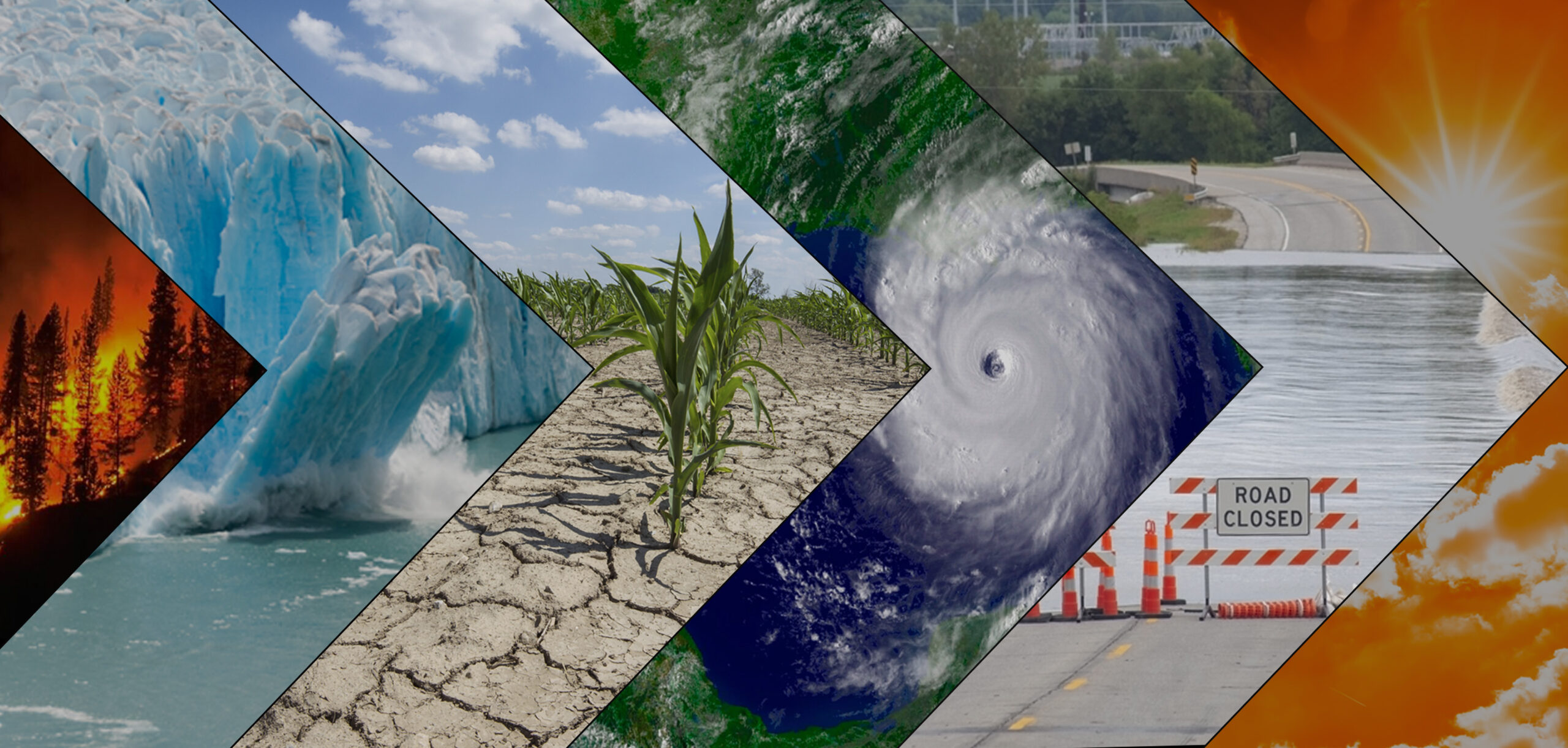
The language of climate risk in financial regulation has, for the better part of a decade, been organised around a future tense: risks that will materialise, costs that will accumulate, transitions that must occur. That framing is no longer accurate. The costs are arriving now, the financial losses are being reported now, and central banks are moving from scenario modelling to real-time policy adjustments in response to climate-driven disruptions that are already shaping inflation and output.
The Losses Are Already Here
CDP’s analysis of 11,261 companies that disclosed full environmental data through its 2025 cycle found that extreme weather caused nearly $3 billion in real losses in 2025 alone — primarily through direct cost increases and supply chain disruption. Only 35 percent of those companies identified extreme weather as a material financial risk, despite 62 percent of cities, states, and regions already reporting impacts. The cost of mitigating those risks was found to be nearly 13 times lower than their actual financial impact.
In Europe, the economic projections are starker. Analysis cited by The Telegraph found that extreme weather could cost some European countries the entirety of their projected economic growth by 2029. While political debate across the continent has focused on symbolic cultural battles over air conditioning and energy labelling, central banks have been quietly running stress tests that model the intersection of climate shocks with existing fiscal fragilities.
Central Banks Move From Modelling to Action
The BIS and ECB have positioned climate risk as a direct challenge to their core mandates — not an expansion of those mandates, but a constraint on their ability to deliver on them. Extreme weather events can simultaneously reduce output and raise headline inflation, particularly through food and energy prices. That stagflationary combination is precisely the scenario that central bank frameworks are least equipped to handle.
Standard monetary policy tools cannot fix a supply disruption caused by a drought or a flood. Raising interest rates to contain food-price inflation driven by a failed harvest suppresses demand without restoring supply — and imposes additional economic cost on households already bearing the physical consequences of climate events. The result is a growing gap between what central bank frameworks were designed to do and what the economic environment requires.
The Bank for International Settlements has incorporated climate scenarios into its global financial stability assessments. The ECB has made climate stress testing a standard element of bank supervision in the eurozone. The Bank of England has run climate biennial exploratory scenarios to assess the exposure of UK banks and insurers.
The United States moved in the opposite direction. The Federal Reserve, the Office of the Comptroller of the Currency, and the Federal Deposit Insurance Corporation withdrew from the Network for Greening the Financial System in 2025, citing changed agency priorities. The withdrawal leaves a gap in international regulatory coordination at precisely the moment when the network’s work has become most directly relevant.
The Physical Risk Transmission Mechanism
The channels through which climate risk enters the financial system are now well-documented. Extreme weather events can reduce repayment capacity among borrowers — farmers, homeowners, small businesses — increasing credit default risk. Uninsured losses create concentrated balance sheet damage. Infrastructure disruption reduces productivity and supply capacity.
At the insurance level, the repricing of climate risk is creating coverage gaps. Property insurers are withdrawing from markets where expected losses exceed premium capacity, leaving households and businesses without the risk transfer mechanisms that have historically contained financial system contagion from physical shocks.
Finance Watch has calculated that the underinsurance of climate damage costs could more than double the financial burden borne by households in affected regions: first through direct loss, then through rising insurance premia or loss of coverage, and then through bank balance sheet stress if defaults accumulate. People, in its formulation, pay three times over.
The Monetary Policy Complication
For central banks targeting price stability, climate-related supply shocks present a specific difficulty. They are non-linear — effects can be sudden and severe rather than gradual. They are correlated — a heat wave or drought affects multiple economies simultaneously. And they are state-dependent — their impact is amplified by existing financial vulnerabilities.
The most recent BIS research found that climate shocks can influence asset valuations, credit conditions, and risk premia in ways that complicate both financial stability assessments and monetary policy transmission. When banks’ loan books deteriorate due to climate-related defaults, their capacity to transmit central bank rate decisions to the real economy is compromised — a second-order effect that standard crisis frameworks do not model.
The conclusion is uncomfortable but increasingly unavoidable: climate change is not a long-term policy problem that finance ministers and central bankers can address in the next cycle. It is an active, compounding stress on the financial system — arriving faster than the models predicted, accelerating faster than adaptation policy has responded, and interacting with existing fiscal and financial vulnerabilities in ways that are only beginning to be properly assessed.
Discover more from The Economy
Subscribe to get the latest posts sent to your email.



The Global South: Debt, Climate Finance and Investment in 2026

Energy Security Is the New Economic Security

Can Global Tourism Survive Geopolitical Shocks?

Global Maritime Hegemony: How China Secured Over 81% of All New Shipbuilding Orders

The Coming Battle Over AI, Jobs and Wages

Why Developing Economies Face a Sharper Inflation Problem

The New Geography of Trade: Are Supply Chains Coming Home?

Is AI Saving Global Growth or Creating the Next Bubble?

Global Banking Trends 2026: Digital Banks, AI and Compliance

Gold vs US Dollar vs Bitcoin in 2026: Inflation Hedge Compared

How Global Interest Rates Affect Savings, Loans and Investments

How to Invest During High Inflation: A Global Guide

Best Global Stocks to Watch in 2026: Four Sectors to Research

Pakistan’s 2027 Growth Strategy: Exports, AI, Energy and Jobs

Crude Oil & Petroleum Market Analysis: OPEC+ Decisions and Price Forecasts

World’s Largest Economies: Ranking the Top Global Powers

Silver Price Today: Why the Xi-Trump AI Standoff Is Fueling a Safe-Haven Rally

Top US Convenience Store Chains: Store Counts, EV Charging, and Sales Trends

Algorithmic Dogfights: Why the U.S. and China Must Establish Rules of Engagement for Autonomous Air Power

Who Is Shivon Zilis? The Neuralink Executive at the Center of the Musk–OpenAI Trial

Corporate America Faces a New Debt Test as US Borrowing Costs Surge

Social Security Extra $90 Deposit: Who Qualifies for the October 2026 Medicare Rebate?

Business Insurance: What Coverage You Actually Need and What It Costs in 2026

Global Economic Outlook 2026: 7 Forces Reshaping Markets, Trade and Business

MAS Allocates S$1.45 Billion to Five Asset Managers in Third EQDP Batch: Total Deployment Reaches S$5.4 Billion

Gold Falls 3.7% as Yields Surge: Is Gold Still a Safe Haven in 2026?

Stock Market Today: Dow, S&P 500, and Nasdaq Retreat as Treasury Yields

US 10-Year Yield Hits 5.24%: What the Historic Bond Market Sell off Means for Mortgages and Investors
-

 Markets & Finance10 months ago
Top 15 Stocks for Investment in 2026 in PSX: Your Complete Guide to Pakistan’s Best Investment Opportunities
-

 Analysis8 months ago
Johor’s Investment Boom: The Hidden Costs Behind Malaysia’s Most Ambitious Economic Surge
-

 Analysis8 months ago
Top 10 Stocks for Investment in PSX for Quick Returns in 2026
-

 Banks9 months ago
Best Investments in Pakistan 2026: Top 10 Low-Price Shares and Long-Term Picks for the PSX
-

 Analysis9 months ago
Brazil’s Rare Earth Race: US, EU, and China Compete for Critical Minerals as Tensions Rise
-

 Investment10 months ago
Top 10 Mutual Fund Managers in Pakistan for Investment in 2026: A Comprehensive Guide for Optimal Returns
-

 Global Economy10 months ago
15 Most Lucrative Sectors for Investment in Pakistan: A 2025 Data-Driven Analysis
-

 Global Economy10 months ago
Pakistan’s Export Goldmine: 10 Game-Changing Markets Where Pakistani Businesses Are Winning Big in 2025