
Remittance
Remittances 2026: Global Trends, Household Resilience & Economic Lifeline for Developing Nations

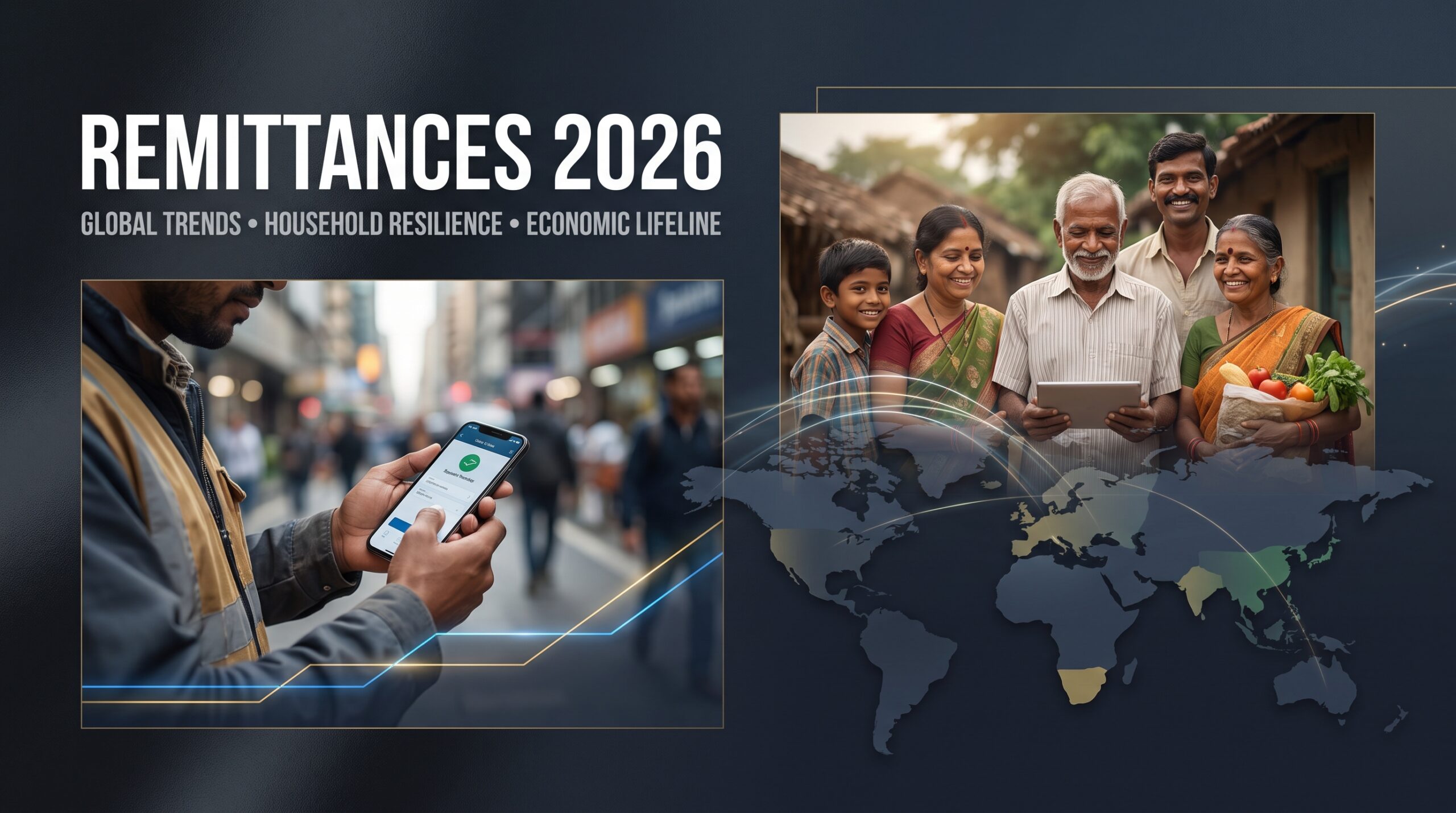
The Economic Lifeline of Developing Nations and Household Resilience
Remittances are financial transfers sent by migrant workers living and working abroad directly to individuals, families, or communities in their home countries. Unlike foreign direct investment (FDI) or sovereign loans, remittances are private, unrequited capital flows that do not create future debt liabilities or foreign ownership stakes in domestic enterprises.
For developing economies across South Asia, Africa, and Latin America—and for platforms like Thefinance.pk and Economy.com.pk—remittances are nothing short of an economic lifeline. They represent one of the largest sources of foreign exchange earnings, frequently eclipsing total merchandise export revenues and foreign aid combined.
The Macroeconomic Impact of Remittances
While remittances are initiated at the microeconomic level by individual families, their cumulative macroeconomic impact is staggering:
- Alleviating the Current Account Deficit: In countries burdened by heavy trade deficits (importing far more than they export), inward remittances act as a vital balancing mechanism. They inject hard currency into the banking system, directly strengthening the central bank’s foreign exchange reserves and providing essential import cover.
- Stabilizing the Local Currency: The constant inflow of US Dollars, Euros, and Gulf Dinars through official remittance channels helps supply the foreign exchange market, reducing downward pressure on the local currency and curbing imported inflation.
- Poverty Reduction and Social Safety Net: Remittances go directly into the hands of households. They are immediately utilized for basic necessities such as food, healthcare, school tuition, and housing construction. In many developing regions, remittances lift millions out of absolute poverty without requiring government bureaucracy or welfare programs.
- Boosting Domestic Consumption: Because remittance recipients spend their funds locally on retail goods, utilities, and construction services, these transfers stimulate domestic demand and support local small-and-medium enterprises (SMEs).
Official vs. Informal Channels (Hawala/Hundi)
A major challenge for governments and central banks tracking remittances is the prevalence of informal transfer networks, commonly known as Hawala or Hundi.
- Informal Channels: Workers often use unlicensed brokers because they offer faster delivery, better exchange rates, and require zero paperwork. However, informal channels drain hard currency from the formal banking sector, depriving the central bank of vital reserves and hiding true economic flows.
- Formal Channels: Commercial banks, licensed money transfer operators (MTOs like Western Union or MoneyGram), and digital fintech wallet apps route funds through official banking channels.
To incentivize workers to use formal channels, central banks and governments—such as the State Bank of Pakistan through its Rosette Digital Account and matching incentive programs—implement policies that eliminate transfer fees, offer superior exchange rates, and reward top-remitting households.
Remittances vs. Foreign Direct Investment (FDI)
Economists frequently compare remittances to Foreign Direct Investment, as both are major sources of foreign capital. However, their behaviors during global crises differ dramatically:
- FDI is Pro-Cyclical: When a developing nation enters an economic crisis or political instability, foreign multinational corporations immediately halt investments, freeze factory expansions, and pull their capital out. FDI dries up precisely when a country needs it most.
- Remittances are Counter-Cyclical: Interestingly, when a home country faces economic turmoil, natural disasters, or currency devaluations, migrant workers often increase the amount of money they send home. Knowing their families are suffering from inflation, expatriate workers sacrifice their own savings in destination countries to provide emergency financial support back home. This makes remittances one of the most reliable, resilient forms of external capital inflow in the world.
The Challenges and Costs of Remittances
Despite their immense benefits, the global remittance ecosystem faces structural bottlenecks:
- High Transfer Fees: Historically, sending money across borders has been plagued by extortionate transaction fees charged by traditional banks and wire services. The United Nations Sustainable Development Goals (SDGs) explicitly target reducing remittance transaction costs to under 3%.
- Macro-Dependence Risk: While remittances fund consumption, critics argue they can sometimes create “remittance dependency,” where local labor force participation drops because families rely entirely on money sent from abroad, disincentivizing domestic industrial productivity and structural reforms.
For editors and researchers at economist.media, tracking monthly remittance data published by central banks provides an immediate read on the health of diaspora communities in North America, Europe, and the Gulf, as well as a reliable gauge of domestic household purchasing power.
Key Takeaways:
- Remittances are private financial transfers sent home by migrant workers to their families.
- They serve as a vital source of foreign exchange, helping developing nations offset trade deficits and build up FX reserves.
- Unlike FDI, remittances are counter-cyclical, often increasing during times of domestic crisis to support struggling families.
- Encouraging workers to use formal banking channels over informal networks (Hawala) is a top priority for central banks.
Authoritative Sources & Further Reading:
- KNOMAD (World Bank): Migration and Development Briefs and Remittance Data
- World Bank: Personal Remittances, Received Data Portal
- State Bank of Pakistan (SBP): Workers’ Remittances Monthly Summaries
Discover more from The Economy
Subscribe to get the latest posts sent to your email.



Pakistan closed out July 2026 with two of its strongest economic signals in years — even as the underlying trade picture tells a more cautious story. Workers’ remittances hit $3.6 billion in July, up 13% year-on-year, the State Bank of Pakistan confirmed on Monday, August 10 (The Nation). Meanwhile, the benchmark KSE-100 index has delivered one of its strongest runs in the region.
Remittances: A Record Year, Confirmed
July’s $3.6 billion inflow marked a 4.5% increase over June, continuing a pattern that has defined Pakistan’s external accounts throughout FY2026. According to the Ministry of Finance’s monthly economic outlook, cited by the Express Tribune, workers’ remittances rose to $41.6 billion for the full FY2025-26, up 8.6% from $38.3 billion the previous year (Express Tribune). Saudi Arabia and the UAE remain the dominant sources, together accounting for close to half of total inflows, according to earlier-year tracking from Pakistan & Gulf Economist, alongside notably strong growth from the UK and EU corridors.
The KSE-100’s Extraordinary Run
Pakistan’s stock market has been the standout story of FY2026. The benchmark KSE-100 index surged 27.6% year-on-year to 176,042 points by July 29, 2026, with market capitalisation rising 19.4% in rupee terms and 21.6% in dollar terms, according to the Ministry of Finance’s own reporting (Express Tribune). That kind of rally, sustained over a full fiscal year, places Pakistan’s equity market among the best performers globally for the period — a striking outcome for an economy still working through an active IMF program.
The Trade Picture Is Less Flattering
The same Ministry of Finance report is candid about where the pressure points remain. Exports declined to $30.8 billion for FY2025-26, down from $32.3 billion the prior year, while imports rose sharply to $64.5 billion from $59.1 billion. Foreign direct investment fell to $1.64 billion from $2.48 billion, and portfolio investment remained negative for the year.
Despite that widening trade gap, Pakistan’s current account deficit was contained to just $139 million for the full fiscal year — a remarkably narrow figure that the finance ministry credits directly to record remittance inflows. Foreign exchange reserves reached $22.7 billion by mid-July 2026, and the rupee actually appreciated slightly to Rs277.80 against the dollar, compared with Rs283.05 a year earlier. Inflation averaged 7.1% across FY2026, staying within the government’s target band despite elevated global oil prices.
The IMF Backdrop
Pakistan’s macroeconomic stabilization continues under the IMF’s Extended Fund Facility. The Fund’s most recent review found fiscal performance “strong,” with a primary surplus of 1.6% of GDP expected for FY26, in line with program targets, while gross reserves climbed to $16 billion by end-2025 from $14.5 billion six months earlier (IMF). A separate 28-month Resilience and Sustainability Facility arrangement, approved in May 2025, continues supporting Pakistan’s climate and disaster-resilience reforms.
The Risk the Ministry Itself Flagged
Pakistan’s own finance ministry has been unusually direct about the fragility beneath these headline numbers, warning that renewed escalation between the United States and Iran could trigger volatility in global energy prices, trade flows, and financial markets — risks that could disrupt Pakistan’s improving trajectory given the country’s continued exposure to Gulf labor markets and energy import costs (Express Tribune).
The Bottom Line
Pakistan’s FY2026 story is genuinely two-sided: a stock market and remittance base performing better than almost anyone forecast a year ago, financing a current account that has stayed remarkably close to balance — set against an export sector that continues to shrink and a foreign direct investment picture that remains stubbornly weak. Whether the KSE-100 rally and remittance strength can persist long enough for structural export reform to catch up remains the defining question for Pakistan’s economy heading into FY2027.
How much did Pakistan’s remittances grow in July 2026?
Pakistan’s remittances reached $3.6 billion in July 2026, up 13% year-on-year, while the KSE-100 stock index surged 27.6% year-on-year to 176,042 points by late July.
Discover more from The Economy
Subscribe to get the latest posts sent to your email.
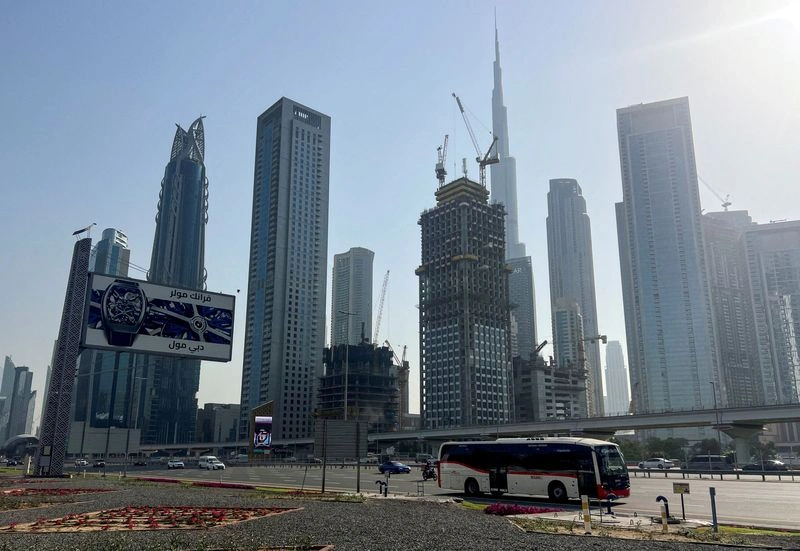
Gulf sovereign wealth funds are having their busiest year on record. In the first half of 2026 alone, funds from Abu Dhabi, Riyadh, Doha and beyond deployed $53.9 billion across 108 transactions — an all-time high, according to tracking firm Global SWF, cited by Semafor. Roughly half of that capital landed in the United States, including funding rounds tied to major AI labs, while China absorbed 17%. Abu Dhabi’s Mubadala alone deployed $15.2 billion in six months, making it the single most active sovereign investor on earth.
Pakistan is not in that story — and that absence is the story.
A Fund Built for Gulf Capital, Still Waiting
Islamabad didn’t sit idle. In 2023, Pakistan’s parliament passed the Sovereign Wealth Fund Act, creating the Pakistan Sovereign Wealth Fund (PSWF) explicitly to consolidate profitable state assets — including Oil & Gas Development Company, Pakistan Petroleum, and National Bank of Pakistan — into a single vehicle designed to court Gulf Cooperation Council capital, according to background compiled on Wikipedia. The logic was straightforward: give Gulf funds a clean, ring-fenced entity to invest through, rather than navigating Pakistan’s broader bureaucracy asset by asset.
The IMF pushed back almost immediately, objecting that folding seven profitable state enterprises into a fund with limited parliamentary oversight risked stripping away hard-won transparency commitments tied to Pakistan’s ongoing lending program. That friction — a sovereign fund built to attract Gulf money running into resistance from the same multilateral lender propping up Pakistan’s balance of payments — has never fully resolved, and it sits at the center of why Gulf capital allocators remain cautious.
Where the Money Actually Goes Instead
Research from Germany’s Stiftung Wissenschaft und Politik describes Gulf sovereign funds as instruments of foreign-policy power projection as much as return-seeking capital — vehicles that convert oil revenue into hard, soft, and sharp influence simultaneously, per SWP’s analysis. Viewed that way, the funds’ 2026 allocation pattern is legible: the US offers unmatched liquidity and access to frontier AI assets; China offers scale and manufacturing depth; both offer currency stability Pakistan cannot match.
The Middle East Institute notes the top five Gulf funds — ADIA, ADQ, Mubadala, PIF and QIA — collectively manage roughly $3.7 trillion and deployed over $73 billion in a single prior year, a scale that dwarfs anything Pakistan’s fragile rupee and thin capital markets can currently absorb without significant de-risking structures in place. Separate reporting from Alhurra shows Gulf funds accounted for about 43% of global sovereign spending in 2025 — nearly $126 billion — with AI infrastructure alone consuming 63% of sovereign AI spending since 2020. Pakistan has no comparable frontier-tech asset class to offer.
Where Gulf-Pakistan capital has flowed, it has done so through bilateral commitments rather than the PSWF itself — deals with Uzbekistan, Vietnam, Qatar, Spain, Pakistan and India involving Bahrain’s Mumtalakat fund totaled $1.74 billion, per Business Chief Middle East — a fraction of what Mubadala alone deployed in six months of 2026.
What Would Change the Calculus
Investment-diplomacy analysts note that Gulf capital increasingly follows a template: renewables and infrastructure for Mubadala, technology and entertainment for PIF, cultural and soft-power plays for smaller funds like Qatar’s, according to Diplo’s tracking. Pakistan’s most plausible entry points are energy infrastructure and agriculture — sectors where PSWF’s underlying assets (OGDCL, PPL, hydropower) already sit — rather than competing for AI or tech capital it cannot currently host.
The structural fix is narrower than headlines suggest: not more MOUs, but a resolution between the PSWF’s governance model and IMF transparency conditions. Until that’s settled, Pakistan will keep watching record Gulf capital flow past it toward Washington and Beijing.
Discover more from The Economy
Subscribe to get the latest posts sent to your email.
Banks
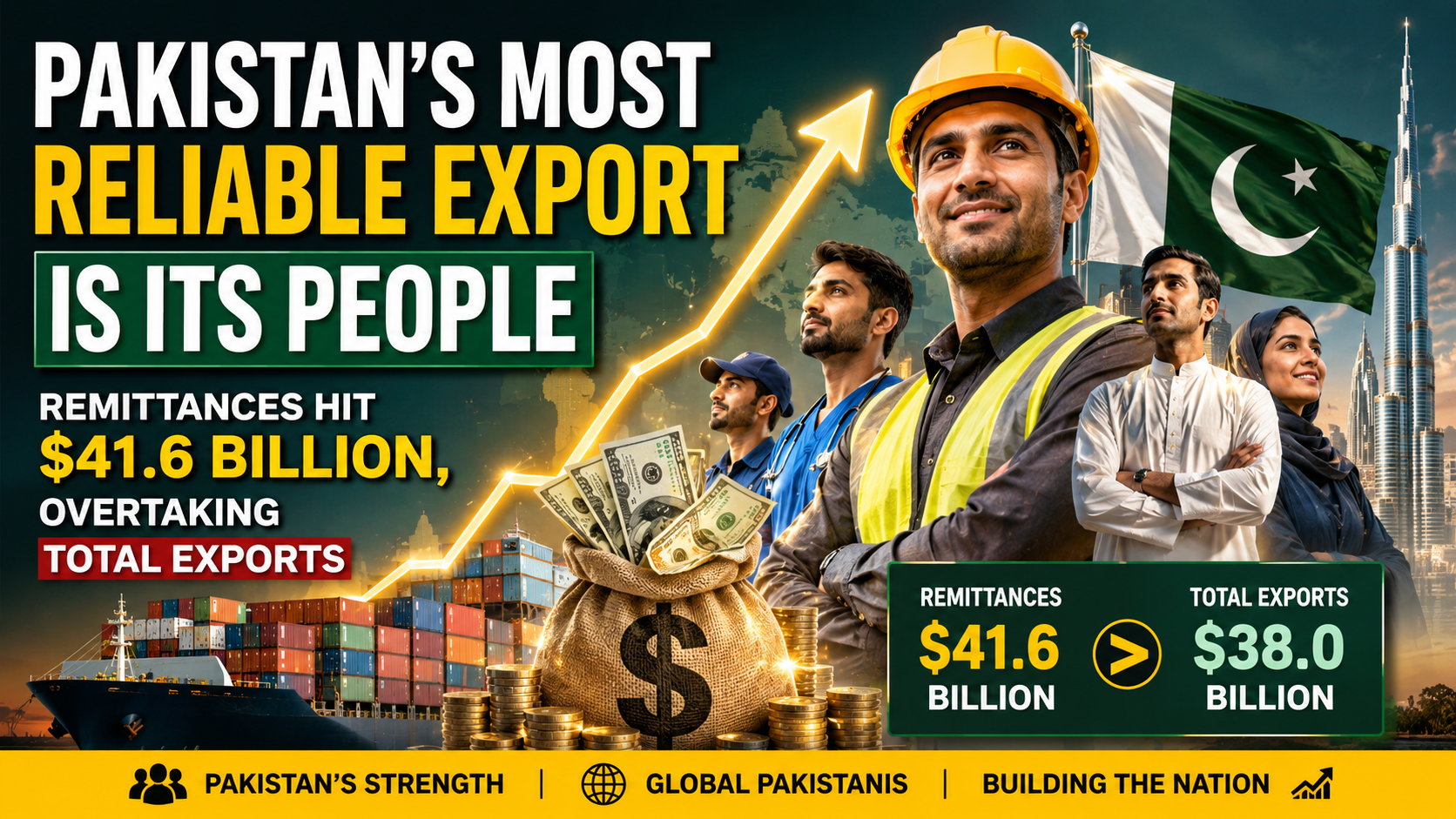
Pakistan’s Most Reliable Export Is Its People: Remittances Hit $41.6 Billion, Overtaking Total Exports
Introduction
For the first time in the country’s history, money sent home by Pakistan’s overseas workers has exceeded the value of everything Pakistan actually sells abroad. Remittances hit a record $41.6 billion in the fiscal year ending June 30, 2026, according to State Bank of Pakistan data — surpassing total merchandise exports for the same period and cementing a structural shift that economists are increasingly uneasy about (VOI World/State Bank of Pakistan).
The Numbers Behind the Milestone
Remittance inflows rose 8.6% year-on-year in FY26, up from $38.3 billion in FY25 (VOI World). Some reporting puts the full 11-month figure even higher at $38 billion before the final month was tallied, with May 2026 alone contributing $4.25 billion — an amount roughly equal to what the entire country spends on imports in a single month (Express Tribune). A separate Express Tribune report puts the full FY26 total even higher, at $41.58 billion, an increase of nearly $3.29 billion over the prior year, delivered “without structured educational, training or welfare support” for the overseas workforce generating it (Express Tribune — Remittances Without Structured Support).
Saudi Arabia remained the single largest source of remittances in June 2026 at $829.6 million, followed by the UAE ($792.3 million), the United Kingdom ($514.9 million) and the United States ($296.8 million), with Italy and Oman each contributing more than $100 million (VOI World). That geographic concentration matters: a substantial share of Pakistan’s remittance base originates from the Gulf, leaving the country’s external account exposed to labor market reforms, economic cycles and geopolitical developments concentrated in a single, currently volatile region (Business Recorder Editorial).
Exports Have Been Stuck for Years
The remittance surge stands in sharp contrast to Pakistan’s export performance, which has shown little sustained dynamism despite years of concessional financing, preferential tariff regimes and subsidized energy for exporters (Business Recorder Editorial). The textile sector — long considered the backbone of Pakistan’s export economy — has been stuck in a $15–18 billion annual range for years, even as a handful of forward-thinking textile groups have managed to grow exports and diversify product lines under the exact same operating conditions others cite as prohibitive (Express Tribune). Separately reported nine-month data for the fiscal year showed exports contracting 5.8% to $23.3 billion even as imports rose nearly 8% to $46.8 billion, widening the trade gap further (Minute Mirror).
Over the three fiscal years from 2023 to 2025, Pakistan received $95.8 billion in remittances compared with $91 billion in merchandise exports — a gap that reflects, according to Business Recorder analysis, a deliberate policy orientation that has effectively institutionalized remittances as the default tool for stabilizing the current account rather than addressing the underlying export weakness (Business Recorder Opinion).
The Dutch Disease Warning
Independent economists have begun explicitly framing this pattern as a precursor to Dutch disease — the phenomenon where a large, easy source of foreign currency inflow reduces the pressure and incentive to build a competitive tradeable export sector (Business Recorder Opinion). The policy dimension is not incidental: under IMF program conditions, a long-standing subsidy that had encouraged banks to actively mobilize remittance transfers was withdrawn in the 2026 Budget, contributing to a temporary slowdown in inflows during the early months of the fiscal year before the government released Rs30 billion from its contingency fund to help revive momentum (Business Recorder Opinion).
A Business Recorder editorial published in July 2026 was blunt about the implication: Pakistan’s overseas workers have effectively become the country’s “most reliable export,” with its own people functioning as its largest export commodity — a framing the editorial explicitly calls an unsustainable foundation for long-term development strategy (Business Recorder Editorial).
The Silver Linings
The remittance boom has provided genuine macroeconomic stabilization. Total liquid foreign reserves crossed $23.98 billion as of early July 2026, including $18.47 billion held by the State Bank of Pakistan itself, with the rupee holding relatively steady around Rs278 per dollar in the interbank market (Express Tribune — Remittances Without Structured Support). Inflation has also been easing, and large-scale manufacturing showed signs of recovery with 5.9% growth in earlier-reported data, while agricultural lending rose 14.4% during July–February, extending credit access to farmers (Minute Mirror). Separately, Pakistan has reportedly repaid roughly Rs4,722 billion in debt ahead of schedule and posted a historic milestone in IT sector exports, suggesting pockets of genuine structural improvement exist alongside the broader export stagnation (Radio Pakistan).
Why This Matters Beyond Pakistan
Pakistan’s experience is a useful case study for other remittance-dependent emerging economies navigating IMF program conditions. The core tension — using a reliable, low-effort capital inflow to paper over a harder structural problem in the tradeable goods sector — is not unique to Pakistan, but few economies illustrate the scale of the imbalance as starkly as a country where remittances now formally exceed total exports.
Key Takeaways
- Pakistan’s FY26 remittances hit a record $41.6 billion, surpassing total merchandise exports for the first time in the country’s history.
- Saudi Arabia and the UAE remain the largest single sources, concentrating external account risk in the Gulf region.
- Textile exports have been stuck between $15–18 billion annually for years despite sustained government support.
- Economists are increasingly framing the remittance-export imbalance as a Dutch disease risk rather than a stabilization success story.
- Reserves have strengthened to nearly $24 billion and the rupee has stabilized, but the underlying export competitiveness problem remains unresolved.
Sources: VOI World, Express Tribune — Remittances Dwarf Exports, Express Tribune — Remittances Without Structured Support, Business Recorder Opinion, Business Recorder Editorial, Minute Mirror, Radio Pakistan
Discover more from The Economy
Subscribe to get the latest posts sent to your email.

Supply vs Demand Shocks Explained: Market Equilibrium, Inflation Risks & Policy Responses in 2026

Microeconomics vs. Macroeconomics Explained: Key Differences, Interdependence & Global Impact

Devaluation vs Depreciation: Clear Differences, Causes, and Economic Impact

Purchasing Power Parity (PPP) Explained: Global Rankings, Living Standards & Why Nominal Exchange Rates Mislead in 2026

Remittances 2026: Global Trends, Household Resilience & Economic Lifeline for Developing Nations

Stagflation Explained: Causes, Global Impact & 2026 Economic Outlook

Understanding Foreign Exchange Reserves: Key Purposes and Global Impact

The Business of Gaming and Tech: How Global Economies Are Driven by Digital Consumerism

Crypto Daily Outlook: Bitcoin, Altcoins, and the Future of Decentralized Finance

Anthony Scaramucci’s Crypto Prediction: Why MicroStrategy’s Move Is Bitcoin’s “iPhone Moment”

Best Dividend Stocks 2026: European & Asian Blue Chips

World Bank & IMF Reports 2026: Why the “3% Growth” Consensus Is Actually a Debate

Elon Musk’s Boring Company Hits $23B Valuation After UAE-Led $3 Billion Series D

Middle East War Economics 2026: Oil Prices & Energy Markets

State Farm’s $5B Dividend 2026: Who Qualifies & Payout Dates

US-China Relations in Q3 2026: Trade Tariffs and Supply Chain Risks

Gold’s Wild 2026: From a Record $5,600 Peak to a 24% Crash and Back Toward $4,500

Oil Surges as Strait of Hormuz Traffic Collapses Again

The Rocket That Won’t Quit: Inside SpaceX’s Falcon 9 Launch Machine

Bank of England Set to Hold Rates Through Year-End, Reuters Poll Shows

SpaceX Starship Flight 14: First Orbital Attempt & Starlink V3 Launch Explained

The 2026 Crypto Regulatory Shift: What It Means for Institutional Investors

AI Chip Stocks 2026: The Best Semiconductor Investments Beyond Marvell

Top 30 Stocks for Investment in PSX for Massive ROI in 2026

Retail Earnings Week: What Home Depot, Target & Walmart Reveal

AI-Powered Training: The Next Multi-Billion Dollar Ecosystem in Fitness

Russia’s Black Sea Oil Exports Fall for a Fifth Straight Week

Tween Back-to-School Trends 2026: What’s Driving the $85B Season
-

 Markets & Finance8 months ago
Top 15 Stocks for Investment in 2026 in PSX: Your Complete Guide to Pakistan’s Best Investment Opportunities
-

 Analysis7 months ago
Johor’s Investment Boom: The Hidden Costs Behind Malaysia’s Most Ambitious Economic Surge
-

 Analysis7 months ago
Top 10 Stocks for Investment in PSX for Quick Returns in 2026
-

 Analysis7 months ago
Brazil’s Rare Earth Race: US, EU, and China Compete for Critical Minerals as Tensions Rise
-

 Banks8 months ago
Best Investments in Pakistan 2026: Top 10 Low-Price Shares and Long-Term Picks for the PSX
-

 Investment8 months ago
Top 10 Mutual Fund Managers in Pakistan for Investment in 2026: A Comprehensive Guide for Optimal Returns
-

 Global Economy9 months ago
15 Most Lucrative Sectors for Investment in Pakistan: A 2025 Data-Driven Analysis
-

 Global Economy9 months ago
Pakistan’s Export Goldmine: 10 Game-Changing Markets Where Pakistani Businesses Are Winning Big in 2025