
Analysis
Hong Kong’s IPO Crown Is About to Be Snatched — By a Single Deal

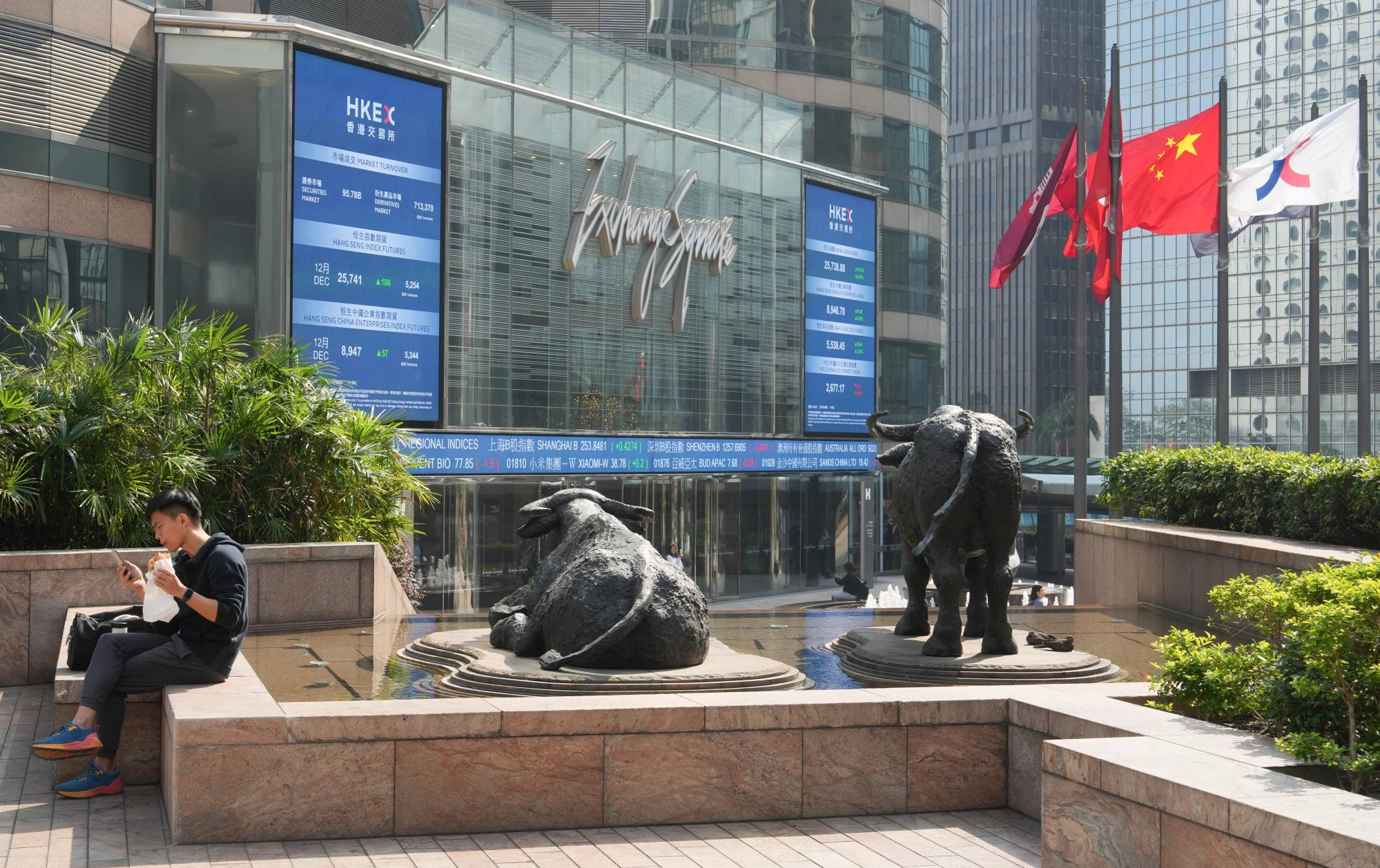
It took Hong Kong six years, three rounds of regulatory reform, and a historic wave of Chinese technology listings to reclaim the title of the world’s largest IPO market. It will take Elon Musk approximately one afternoon in June to take it away again.
On Wednesday, SpaceX filed its public prospectus with the US Securities and Exchange Commission, targeting a Nasdaq debut around June 12 under the ticker SPCX. The offering is expected to raise up to $75 billion at a valuation nearing $1.75 trillion — a figure that would make it the largest initial public offering in the history of capital markets, nearly tripling the $29.4 billion Saudi Aramco raised in 2019. That $75 billion sum would also exceed twice the total funds raised by every company that listed in Hong Kong across the entirety of 2025.
The arithmetic is blunt. The implications run considerably deeper.
How Hong Kong Got Here — and Why the Timing Stings
The Hong Kong Exchanges and Clearing’s (HKEX) reclamation of the global IPO crown in 2025 was not a fluke. It was earned, painstakingly, through structural reform and geopolitical tailwinds that converged in ways even optimists hadn’t fully anticipated.
According to data from LSEG, a total of 114 companies raised $37.22 billion on HKEX’s main board in 2025 — a 229% increase from the $11.3 billion raised in 2024. That pushed Hong Kong from fifth place to first globally, the exchange’s highest ranking since the pandemic-era boom of 2019 and 2021. Nasdaq finished second at $27.53 billion; India’s NSE and BSE followed in third and fourth.
The recovery wasn’t a single surge. It was built on a structural realignment. A record wave of A+H listings — companies trading simultaneously on both mainland Chinese exchanges (A-shares) and the Hong Kong exchange (H-shares) — accounted for more than 50% of total funds raised. PwC’s Hong Kong Capital Markets team recorded 76 A+H listings in 2025, up from 30 the year before — a 153% increase that reflected both Beijing’s strategic support for offshore fundraising and a fast-tracked listing process that HKEX had engineered specifically for such deals.
The momentum carried into 2026. By the end of the first quarter, KPMG reported that Hong Kong’s IPO market had raised HK$109.9 billion across 40 new listings — a staggering 489% increase in funds raised year on year, and the strongest first-quarter performance in five years. Nasdaq placed second in the Q1 global ranking with just $5.65 billion from 18 listings. Hong Kong wasn’t merely ahead — it was lapping the field.
Then came Wednesday’s filing.
The SpaceX Effect: When One Deal Reshapes a Market
The single most consequential fact about the SpaceX IPO isn’t the size. It’s the concentration.
At $75 billion, the SpaceX offering would alone represent more than the combined IPO proceeds of the second and third ranked global exchanges in 2025. It would, in a single transaction on a single exchange, transform Nasdaq from a distant runner-up into the unambiguous leader of the 2026 global IPO league table — regardless of what Hong Kong achieves over the remaining seven months of the year.
The prospectus filed in New York reveals a company of genuine complexity. SpaceX generated $18.674 billion in consolidated revenue in 2025, anchored by its Connectivity segment — primarily the Starlink satellite internet service, which now serves more than nine million subscribers and produced a quarterly operating profit of $1.19 billion in Q1 2026. Yet the company also posted a $2.589 billion operating loss for the full year 2025, driven almost entirely by the xAI division that SpaceX absorbed. In the first quarter of 2026 alone, the AI segment swung to a $2.47 billion loss on just $818 million in revenue.
Elon Musk will retain 85.1% of voting power through a dual-class share structure — 12.3% of Class A stock and 93.6% of Class B shares. Georgetown University finance professor Reena Aggarwal has noted that valuing SpaceX is inherently difficult because no comparable peer group exists. Reuters reported the company plans to price shares on June 11 before a June 12 trading debut.
What does this mean for the Hong Kong IPO market 2026 rankings? Straightforwardly: HKEX is almost certain to finish the year in second or third place, not first. Even under PwC’s bullish forecast — HKD 320–350 billion in total 2026 proceeds, approximately $41–45 billion — that figure falls short of SpaceX’s $75 billion target. A single private aerospace company raising more capital than the entire Hong Kong exchange raises in a year is not a competitive scenario; it’s a category event.
John Lee Chen-kwok, vice-chairman and co-head of Asia coverage at UBS in Hong Kong, acknowledged as much while choosing measured optimism: Hong Kong’s main board, he said, could remain in the top three this year even accounting for the challenge posed by US exchanges. That is almost certainly where Hong Kong will land.
What This Reveals About Structural Depth vs. Gravitational Pull
Can Hong Kong maintain its IPO market ranking in 2026?
Hong Kong is highly likely to remain a top-three global IPO market in 2026, supported by a pipeline exceeding 300 active listing applications and structural A+H listing momentum. However, SpaceX’s planned $75 billion Nasdaq offering means the exchange will not retain the top global ranking, which it held in 2025 after a six-year absence. The critical distinction is between a temporary ranking loss — caused by a singular once-in-a-generation listing — and a structural decline. On current evidence, Hong Kong is experiencing the former.
The picture is more complicated, however, than a simple “SpaceX effect.”
There’s a legitimate debate about what IPO market rankings actually measure. Hong Kong’s 2025 triumph owed much to the A+H structure — a mechanism that doesn’t exist on Nasdaq and doesn’t transfer. A+H listings are available exclusively to Chinese mainland companies that are already publicly traded on the Shanghai or Shenzhen exchanges and want offshore capital. They’re structurally embedded in the China-Hong Kong capital corridor in ways that no US exchange can replicate. KPMG’s full-year 2025 analysis found that A+H listings accounted for more than half of total Hong Kong IPO funds raised — a structural bedrock that insulates the market against competition in ways that headline rankings obscure.
Yet the same analysis exposes a vulnerability. A markets ledger built substantially on a single deal type — however structurally sound — remains sensitive to supply-side disruption. Beijing’s pace of approval for A+H candidates, capital controls, US–China geopolitical temperature, and the health of mainland equity markets all exert pressure on the same structural mechanism. The exchange is not diversified in the way, say, the NYSE is diversified.
That asymmetry matters when a US exchange can attract a $75 billion offering in a sector — commercial aerospace — where Hong Kong has essentially no issuer base at all. HKEX’s own March 2026 competitiveness consultation paper acknowledged that Greater China issuers typically choose between Hong Kong and the US, and that US regulatory developments bear more directly on HKEX competitiveness than developments in other non-US markets. The document was an unusually candid self-assessment from a regulator that had just reclaimed a global crown.
The Reform Agenda That SpaceX Just Made More Urgent
The SpaceX filing arrives at a moment when HKEX was already deep in the most ambitious overhaul of its listing rules in nearly a decade.
In March 2026, HKEX proposed a suite of reforms that, taken together, signal genuine structural ambition: halving the minimum valuation threshold for companies with weighted voting rights from HK$40 billion to HK$20 billion (approximately $2.6 billion); reducing the minimum market capitalisation for the revenue-based listing route; and — critically — allowing all IPO applicants to file prospectuses confidentially, a practice already standard in the United States.
That last reform is more significant than it sounds. Confidential filing allows companies to test regulatory appetite and valuation before committing publicly to a listing, reducing reputational risk. It was one of the specific advantages that US exchanges have historically held over Hong Kong in attracting high-growth technology companies wary of the spotlight that public-draft filings create. The irony is that SpaceX — which filed its S-1 confidentially with the SEC in April before going public — is the paradigmatic beneficiary of exactly the kind of process HKEX is now trying to replicate.
The biotech sector tells a similar story of structural deepening. DLA Piper’s 2026 market outlook noted that Hong Kong’s biotech index outperformed its Nasdaq counterpart by a wide margin in 2025 — rising nearly 100% compared to Nasdaq’s 20–30% gain — drawing global investors attracted by both the returns and the comparatively lower entry valuations. Since the introduction of Chapter 18A, which allows pre-revenue biotech companies to list in Hong Kong, more than 80 companies have joined the exchange. That ecosystem has reach in sectors adjacent to the kind of deep-tech companies that HKEX wants to attract through its newest listing channel, the Technology Enterprises Channel (TECH).
Still, the SpaceX listing clarifies the ceiling. HKEX’s structural reforms are necessary but insufficient to compete for capital-raising events of this magnitude. Elon Musk’s company didn’t choose Nasdaq because Hong Kong’s listing rules were too restrictive. It chose Nasdaq because it’s an American company, its investors are American, and the infrastructure — banks, lawyers, institutional relationships — for listing America’s largest companies runs through Wall Street, not Admiralty.
The Case for Not Panicking
Edward Au, southern region managing partner at Deloitte China, put the tension clearly at an April press conference: “The tide could change quickly,” he said, noting that US mega IPOs in AI and the space sector “could shift the global rankings quite easily.” He was right — and that’s precisely the argument for measured perspective rather than alarm.
Rankings are not destiny. Hong Kong finished fifth in 2024, first in 2025, and will likely finish second or third in 2026. What that volatility reveals is not structural fragility but the inherent lumpiness of large-cap IPO activity — a reality that affects every exchange, including Nasdaq, including the NYSE.
The deeper argument for Hong Kong’s resilience rests on the demand side. LSEG data shows more than 300 active IPO applications were in HKEX’s pipeline as of late 2025, including 92 A+H applicants alone. KPMG projects that number could grow. The listing queue for Chinese artificial intelligence companies — including names like Zhipu AI and MiniMax, which passed HKEX listing hearings in late 2025 — represents genuine, durable demand for Hong Kong as an international capital gateway. None of that pipeline disappears because SpaceX lists in New York.
JPMorgan, alongside UBS, has maintained its bullish posture on Hong Kong’s market, noting continued strong investor appetite for mainland technology and other listing candidates driven by the outlook for the Chinese economy.
There is also the question of what global investors actually want. For those seeking exposure to Chinese technology, innovation, and the mainland economy, Hong Kong is not interchangeable with Nasdaq. SpaceX’s Nasdaq listing will attract a specific class of investor with a specific risk appetite. The investors bidding for MiniMax’s Hong Kong IPO are playing a different game entirely.
A Crown, Not a Kingdom
The world’s largest IPO market in any given year is ultimately a title determined by a handful of very large deals. Hong Kong learned this in 2019, when a run of mainland mega-listings briefly carried it to the top. It learned it again in 2021, during the boom. And it’s relearning it now — this time, watching the crown travel in the other direction.
What HKEX has built since 2022, however, is something more durable than a rankings trophy: a reformed listing architecture, a deepening technology pipeline, and a structural A+H corridor with mainland China that no other exchange can replicate. None of that is erased by SpaceX’s June flotation.
The honest assessment is that Hong Kong’s IPO revival was always going to be tested by the gravitational pull of US capital markets when something genuinely historic came along. Something genuinely historic has now come along.
Whether the city’s exchange has built enough structural depth to absorb that gravity — and continue growing in its aftermath — is the question that matters for 2027 and beyond. On current trajectory, the answer looks more durable than the rankings suggest.
The crown moves. The architecture stays.
Discover more from The Economy
Subscribe to get the latest posts sent to your email.



Key Takeaways
- Rolex’s secondary market rose approximately 7.9% year-over-year as of 2026 (per WatchCharts data) — trailing Patek Philippe (+16.2%) and Tudor (+11.4%) but still outperforming Audemars Piguet (+3.4%).
- Rolex raised U.S. retail prices 4–9% in January 2026 (steel models ~5.6%, gold models ~8.7%), narrowing the historical gap between retail and pre-owned pricing.
- Not every model appreciates: steel sports references (Submariner, GMT-Master II, Daytona) have held value far better than two-tone or widely available dress references like the standard Datejust.
- The Lady-Datejust posted the sharpest 2026 gain among tracked collections — up 22.73%, from roughly $9,269 to $11,376 — driven by demand for smaller, “everyday luxury” watches.
- Gold’s rise past $2,400/oz has directly lifted the investment case for Rolex’s precious-metal references (Day-Date, Sky-Dweller, Yacht-Master).
The Model-by-Model Picture
| Category | 2026 Trend |
|---|---|
| Lady-Datejust | +22.73% (strongest performer among tracked collections) |
| Steel sports models (Submariner, GMT-Master II) | Held value well; corrected from 2022 peak but stabilized above retail |
| Daytona | Corrected from highs above $50,000 to the mid-$30,000s; still among the most sought-after references |
| Two-tone/widely available Datejust | Flat to negative — “holds value” is an overstatement for this category |
| Gold references (Day-Date, Sky-Dweller) | Lifted by gold’s rise above $2,400/oz |
Why the “Rolex Always Appreciates” Myth Is Fading
The pandemic-era boom pushed some references — the Daytona above all — to speculative highs disconnected from historical norms. Since the March 2022 peak, steel sports models have compressed meaningfully, and dealers who bought inventory near the top have in some cases faced 20–40% markdowns on liquidation. The lesson for 2026 buyers: Rolex as a category is not a monolith. Value retention depends heavily on specific reference, condition, and whether the piece comes with box and papers (“full set”).
What’s Actually Driving 2026 Strength
- Retail price increases raise the floor. When a new Submariner retails at $10,050 (up from $9,500), a pre-owned example at $11,000–$12,000 suddenly represents a smaller premium — narrowing the gap without secondary prices actually moving.
- Supply discipline remains Rolex’s core lever. The brand has never confirmed production numbers, and secondary-market premiums remain entirely a function of Rolex’s own manufacturing decisions — a risk factor as much as a support.
- Certified Pre-Owned rollout. Rolex’s now fully rolled-out CPO program has changed how buyers transact in the used market, adding a layer of brand-verified legitimacy that supports pricing.
The Case for Rolex as a Portfolio Diversifier
Financial advisors increasingly frame luxury watches not as a replacement for equities or bonds, but as a tangible, historically low-correlation diversifier — one that carries its own risks (illiquidity, condition-dependent pricing, no yield) but has demonstrated multi-decade resilience for specific references.
Is Rolex a good investment in 2026?
It depends heavily on the specific reference. Steel sports models like the Submariner and Daytona have held or grown in value; two-tone and widely available dress models generally have not. Overall, Rolex’s secondary market rose about 7.9% year-over-year in 2026, trailing Patek Philippe but ahead of Audemars Piguet.
Discover more from The Economy
Subscribe to get the latest posts sent to your email.

Navigating Mortgage and Loan Refinancing in a High-Yield Environment
Global public debt crossing critical thresholds has kept central bank policies volatile, resulting in fluctuating US Treasury yields throughout 2026. For homeowners and commercial property holders burdened by previous high-interest borrowing cycles, finding optimal refinance windows has become a high-stakes financial puzzle. Stalled disinflation and stubborn employment numbers mean rate cuts are incremental, requiring borrowers to act with precision.
Timing your mortgage or commercial loan refinance in this environment requires a deep understanding of yield curve movements and lender risk appetites.
Decoding 2026 Refinance Dynamics
The 10-Year Treasury Yield Benchmark
Mortgage rates continue to track closely with the 10-year US Treasury yield. When macroeconomic anxiety spikes debt issuance, yields rise, tightening consumer borrowing capacity. Savvy borrowers monitor weekly Treasury auctions to lock in rates during brief dip windows.
Hybrid ARMs and Alternative Structures
With fixed rates remaining elevated, 7/1 and 10/1 adjustable-rate mortgages (ARMs) have surged in popularity. These products offer lower initial monthly payments, giving borrowers breathing room until central bank easing cycles fully materialize.
| Loan Product | Current Rate Range | Best For | Key Risk Factor |
| 30-Year Fixed Mortgage | 6.2% – 6.8% | Long-term predictability | Higher initial monthly outlay |
| 7/1 Hybrid ARM | 5.5% – 5.9% | Short-term ownership / flipping | Rate reset risk after year 7 |
| Commercial Refinance | 7.0% – 8.2% | Corporate asset restructuring | Strict DSCR lender covenants |
Actionable Steps for Successful Refinancing
To maximize your chances of securing favorable refinance terms in a volatile market, follow a disciplined preparation strategy.
Boost Your Credit Score Immediately: Lenders in 2026 are applying stringent credit tiering; a 20-point increase can drop your APR by a crucial quarter-point.
Shop Regional Credit Unions: Smaller financial institutions often offer portfolio loans with more flexible underwriting than major national banks.
Calculate the Break-Even Point: Ensure your total closing costs are recouped through monthly savings within 24 months of closing.
“Market Strategist View: Refinancing in 2026 is an exercise in opportunistic timing. Borrowers must maintain immaculate financial profiles ready to strike the moment Treasury yields dip.”
Mastering the complexities of today’s debt environment ensures you can successfully lower your debt service costs and protect your long-term financial stability.
Discover more from The Economy
Subscribe to get the latest posts sent to your email.

The days of pulling generic auto insurance quotes based purely on your zip code and age are officially over. In 2026, insurance comparison engines are powered entirely by generative AI and real-time telematics. These platforms digest thousands of live data points—ranging from your driving smoothness via connected vehicle sensors to real-time traffic congestion patterns—to generate hyper-personalized premiums instantly.
For consumers, this evolution represents both a massive opportunity for savings and a hidden trap for penalty pricing. Understanding how AI algorithms evaluate risk is essential for anyone looking to lower their monthly auto insurance premiums.
How AI Comparison Engines Evaluate Your Risk Profile
Behavioral Telematics and Connected Cars
Modern cars stream performance data directly to insurance aggregators. Generative AI models analyze braking sharpness, acceleration curves, cornering G-forces, and phone distraction metrics. Drivers who maintain smooth, defensive habits are rewarded with dynamic rate cuts of up to 40% compared to traditional rating tiers.
Predictive Traffic and Weather Modeling
AI tools now cross-reference your daily commute route with predictive weather and accident probability models. If your standard parking location or driving corridor has a statistically higher incidence of uninsured motorist claims, your quotes will reflect that hyper-local risk assessment.
| Comparison Factor | Traditional Rating Model | 2026 Generative AI Model | Impact on Premium |
| Mileage & Usage | Annual estimated odometer reading | GPS tracking & live trip duration | High (up to 35% savings) |
| Driving Behavior | MVR driving record & accidents | Real-time braking, speed, & G-force | Critical (determines tier) |
| Vehicle Tech | Make, model, and safety rating | ADAS calibration & repair cost data | Moderate |
Strategies to Lower Your AI-Driven Insurance Quote
To outsmart the algorithm and secure the lowest possible premium in 2026, drivers must proactively manage their digital footprint on insurance platforms.
Opt-In for Telematics Trial Periods: Many insurers offer immediate 15% discounts just for installing their driving app; let it track safe habits for 30 days to lock in permanent savings.
Scrub Unverified Public Records: Ensure your motor vehicle report is free of clerical errors that AI risk models misinterpret as reckless behavior.
Compare AI Aggregators: Use platforms that integrate multi-carrier API feeds rather than single-brand comparison sites to find the best risk-adjusted rate.
“Industry Note: AI-driven pricing rewards transparency and precision. Drivers who actively manage their telematics data consistently out-save those relying on legacy quote calculators.”
Embracing AI comparison tools allows savvy policyholders to customize coverage limits precisely to their driving habits, eliminating wasted premium spend while ensuring robust protection.
Discover more from The Economy
Subscribe to get the latest posts sent to your email.

Anthropic Bans Sustained Abuse of Claude AI Under New Usage Policy Effective November 12, 2026

Jeff Bezos Three-Day Workweek View: What He Really Said

Celeste Frozen Pizza Discontinued: What Conagra Confirmed

US–China Critical Minerals Competition: Why a Trade Deal Cannot Fix Every Supply Risk

Oil Price Outlook 2026: How Supply Risks Reach Fuel Bills, Inflation and Business Costs

AI in Business 2026: Why Faster Employees Do Not Automatically Mean Higher Profits

Mortgage Rates in 2026: Why They Remain High and How to Compare the True Cost

Gold Price Outlook 2026: The Forces Behind the Forecasts—and What Could Reverse Them

Global Economic Outlook 2026: Growth, Inflation and Risks

Trump–Putin Diesel Deal: Why Zelensky Is Angry and What It Means for Fuel Prices

Anthropic Draws the Line: Why Claude’s New Usage Policy Explicitly Bans ‘Cruel Behavior’ Toward AI

Ynon Kreiz & Mattel’s Digital Transformation: Franchise Strategy and Financial Growth

Crude Oil & Petroleum Market Analysis: OPEC+ Decisions and Price Forecasts

Top US Convenience Store Chains: Store Counts, EV Charging, and Sales Trends

Oil Prices Break $100 in 2026: Middle East Conflict & Energy Markets

Middle East War Economics 2026: Oil Prices & Energy Markets

China Stocks Today: Are Big Economies in Asia Nearing a Market Bottom?

PSX Forecast 2026: KSE-100, IMF Reviews & Geopolitics

Crypto Daily Outlook: Bitcoin, Altcoins, and the Future of Decentralized Finance

Global Pension Systems Ranked: The World’s Best and Worst Retirement Frameworks

Enterprise AI Platforms Disrupting B2B SaaS in 2026: Full Analysis

World’s Largest Economies: Ranking the Top Global Powers

Elon Musk’s Next Moves: Disrupting the 2026 Global Economy

Pakistan Economy 2026: Inside the SBP’s Balancing Act

GasBuddy Market Insights: How Crude Price Shifts Impact Local Fuel Cost Averages

World Bank & IMF Reports 2026: Why the “3% Growth” Consensus Is Actually a Debate

Global Equity Market Divergence: US Tech vs. European Dividend Stocks vs. Asian Growth

Stock Market Today: Dow Climbs 500 Points as Markets Shake Off Inflation Jitters
-

 Markets & Finance9 months ago
Top 15 Stocks for Investment in 2026 in PSX: Your Complete Guide to Pakistan’s Best Investment Opportunities
-

 Analysis8 months ago
Johor’s Investment Boom: The Hidden Costs Behind Malaysia’s Most Ambitious Economic Surge
-

 Analysis8 months ago
Top 10 Stocks for Investment in PSX for Quick Returns in 2026
-

 Banks9 months ago
Best Investments in Pakistan 2026: Top 10 Low-Price Shares and Long-Term Picks for the PSX
-

 Analysis8 months ago
Brazil’s Rare Earth Race: US, EU, and China Compete for Critical Minerals as Tensions Rise
-

 Investment9 months ago
Top 10 Mutual Fund Managers in Pakistan for Investment in 2026: A Comprehensive Guide for Optimal Returns
-

 Global Economy10 months ago
15 Most Lucrative Sectors for Investment in Pakistan: A 2025 Data-Driven Analysis
-

 Global Economy10 months ago
Pakistan’s Export Goldmine: 10 Game-Changing Markets Where Pakistani Businesses Are Winning Big in 2025