
Analysis
Pakistan’s $3.45 Billion UAE Repayment: A Quiet Milestone in Debt Discipline or a Signal of Shifting Gulf Alliances?


There is a particular kind of silence that follows the settlement of a long-overdue debt—not the silence of resolution, but of recalibration. When the State Bank of Pakistan quietly announced this week that it had completed the full repayment of $3.45 billion in UAE deposits—$2.45 billion transferred last week, and a final $1 billion wired to the Abu Dhabi Fund for Development on April 23—the transaction barely registered above the din of daily financial news. It deserved more scrutiny. Pakistan’s UAE repayment is not merely an accounting closure; it is a geopolitical signal, a stress test passed, and a cautionary tale compressed into a single wire transfer. Whether it marks the beginning of a more disciplined chapter in Pakistan’s external financing story—or merely the latest improvisation in a long-running drama of borrowed time—depends entirely on what Islamabad does next.
The Transaction in Context: What the Numbers Actually Mean
To understand the significance of the Pakistan UAE repayment, one must first appreciate what these deposits represented. The UAE funds were not conventional sovereign loans with rigid amortization schedules. They were bilateral support deposits—a form of quasi-balance-of-payments assistance that Gulf states have used to extend financial lifelines to Pakistan in exchange for strategic goodwill and, in this case, an interest rate of approximately 6% per annum. They had been rolled over repeatedly, functioning less like debt and more like a perennial line of diplomatic credit.
That arrangement ended. Reuters reported in late 2025 that the UAE had declined to extend further rollovers, a decision that injected considerable urgency into Pakistan’s reserve management calculus. The SBP’s foreign exchange reserves, which stood at approximately $15.1 billion as of mid-April 2026—with total liquid reserves (including commercial banks) near $20.6 billion—have been rebuilt painstakingly over the past two years from a nadir that came dangerously close to default territory in 2023.
The repayment of $3.45 billion represents roughly 22% of SBP’s current gross reserves. In isolation, that is a substantial drawdown. The critical question is: how was it financed without triggering another reserve crisis?
The answer lies in a now-familiar triangulation. Saudi Arabia provided a fresh $3 billion deposit—including recent tranches that effectively backstopped the UAE repayment. The IMF’s ongoing Extended Fund Facility (EFF), under which a disbursement of approximately $1.2 billion is expected imminently, provided additional breathing room. And Pakistan’s improved current account position—driven by remittance inflows and recovering exports—has reduced the monthly pressure on gross reserves that characterized the 2022–2023 crisis period.
Key reserve dynamics at a glance:
- SBP gross reserves (mid-April 2026): ~$15.1 billion
- Total liquid reserves: ~$20.6 billion
- UAE deposits repaid: $3.45 billion (cleared in full)
- Saudi deposit backstop: $3 billion (offsetting the drawdown)
- IMF EFF tranche (expected): ~$1.2 billion
The net reserve impact, while non-trivial, is manageable—provided the Saudi deposit holds and the IMF program stays on track. Bloomberg has noted that Pakistan’s reserve coverage of import months has improved significantly from lows below two months in early 2023 to above three months today, a threshold that marks the boundary between acute vulnerability and cautious stability.
Geopolitical Subtext: Why the UAE Said No More
The UAE’s decision not to roll over its deposits—and Pakistan’s subsequent urgency to repay—deserves deeper examination than most coverage has afforded it. This was not a routine financial decision made by a technocrat in Abu Dhabi. It was, in all probability, a deliberate recalibration of the UAE’s strategic posture toward Pakistan.
Several threads converge here. First, Abu Dhabi has grown increasingly assertive in demanding returns—economic and diplomatic—on its bilateral financial commitments. The era of unconditional Gulf patronage, rooted in Cold War-era solidarity with Muslim-majority states, has given way to a more transactional worldview under Mohammed bin Zayed’s leadership. The UAE’s sovereign wealth and development finance arms have been reoriented toward projects that generate visible economic dividends: infrastructure concessions, logistics hubs, food security corridors. A deposit earning 6% and being perpetually rolled over does not fit that framework.
Second, there are whispers—louder in Islamabad’s policy circles than in international press—that the UAE’s appetite for Pakistan exposure has been tempered by frustration over the slow progress on a previously announced $10 billion investment framework. Pakistani officials have repeatedly cited Gulf FDI commitments in press conferences; the UAE’s private posture has reportedly been more restrained, pending structural reforms that would protect investor rights and reduce bureaucratic friction.
Third, and perhaps most intriguingly, the contrasting behavior of Saudi Arabia and the UAE reflects a subtle but meaningful divergence in Gulf strategy toward South Asia. Riyadh remains deeply invested in Pakistan’s stability—economically, through the three-million-strong Pakistani diaspora that remits billions annually, and strategically, through a security relationship that predates CPEC and will outlast it. The Saudi decision to provide a fresh $3 billion deposit at a moment of Pakistani vulnerability was not charity; it was the exercise of a long-cultivated strategic option. The UAE, meanwhile, is signaling that it wants a different kind of relationship: one based on investment returns rather than deposit patronage.
For Pakistan, the implications are double-edged. The loss of UAE deposit support is a vulnerability, but the pressure it generated also forced a degree of financial discipline that years of IMF conditionality had struggled to impose. There is a perverse logic to external pressure as a reform catalyst—and Pakistan’s Pakistan UAE repayment may ultimately be remembered as the moment when bilateral goodwill stopped being a substitute for structural adjustment.
Macro Implications: Credibility Restored, Fragility Unresolved
The repayment will register positively in several dimensions that matter for Pakistan’s medium-term financial credibility.
IMF compliance and program continuity. The IMF’s EFF for Pakistan has placed significant emphasis on reserve adequacy and the reduction of “exceptional financing” dependencies—a category that bilateral deposits from Gulf states comfortably fall into. The clearance of UAE deposits, while technically a reserve drawdown, signals to the IMF’s Executive Board that Pakistan is capable of meeting obligations without emergency renegotiation. This matters enormously for the next review and for Pakistan’s credibility as a program participant. IMF staff reports have consistently flagged the risk concentration in bilateral Gulf deposits as a structural vulnerability; their elimination strengthens the external balance sheet’s quality, even if headline numbers temporarily dip.
Borrowing costs and Eurobond markets. Pakistan has been effectively shut out of international capital markets for the better part of three years. The successful repayment of Gulf deposits—without a crisis, without a default, and without a destabilizing reserve drawdown—is precisely the kind of signal that sovereign credit analysts look for when reassessing risk. Pakistan’s sovereign credit ratings, currently deep in speculative territory with a negative outlook from major agencies as recently as 2024, may receive modest upward pressure. A Eurobond issuance—tentatively discussed for late 2026 if reform momentum holds—would benefit from this restored credibility.
Interest savings. The 6% rate on UAE deposits was not punitive by global standards, but it was meaningful. Retiring $3.45 billion in 6% deposits eliminates approximately $207 million in annual interest expense—funds that can be redirected, at least in principle, toward development spending or reserve accumulation. The opportunity cost argument cuts both ways, however: Pakistan had to mobilize Saudi deposits and IMF disbursements to fund the repayment, and those arrangements carry their own conditions and costs.
The rollover trap. Perhaps the most important macro implication is conceptual. Pakistan’s repeated reliance on rollover financing—from Gulf bilaterals, from commercial banks through swap arrangements, from the IMF itself—created a sovereign balance sheet that was simultaneously over-leveraged and under-transparent. The UAE’s refusal to roll over forced Pakistan to confront the true maturity profile of its liabilities. That confrontation, painful as it was, is healthy. Emerging market economies that normalize rollover dependency tend to accumulate what economists call “hidden” short-term liabilities—debt that appears manageable until it isn’t.
Broader Lessons for Emerging Markets
Pakistan’s experience with UAE deposits contains several lessons that resonate well beyond the Indus basin.
Bilateral deposits are not reserves. For years, Pakistan included Gulf bilateral deposits in its headline reserve figures—a practice that technically complied with IMF reserve definitions but obscured the contingent nature of those funds. When the UAE declined to roll over, the “asset” evaporated. Emerging markets that rely on bilateral swap lines and deposit arrangements should distinguish carefully between genuinely usable reserves and politically contingent liquidity.
Strategic patience has a price. Gulf states have extended financial support to Pakistan for decades in exchange for labor market access, security cooperation, and diplomatic alignment. That arrangement has served both parties—but it has also insulated Pakistani policymakers from the discipline that market-based financing imposes. The UAE’s pivot toward investment-conditioned engagement is a signal that the old model is evolving. Countries that adapted early—Bangladesh with export diversification, Vietnam with FDI governance reforms—achieved financing independence faster than those who remained in the patron-client groove.
The IMF as anchor, not lifeline. Pakistan’s EFF has been criticized domestically for its austerity conditions. But the program’s most valuable contribution may be structural rather than financial: it provides a credible external commitment device that makes it harder for governments to reverse reforms. The UAE repayment was made possible, in part, because the IMF program gave international creditors confidence that Pakistan’s policy trajectory was supervised. That confidence is worth more than any single disbursement.
Forward Outlook: What Comes After the Wire Transfer
The Pakistan UAE repayment is a closing act in one chapter and an opening gambit in another. The question now is whether Islamabad can convert this moment of restored credibility into durable financial architecture.
Several developments warrant close attention in the months ahead:
- UAE investment framework reactivation. Pakistani officials have long cited a $10 billion UAE investment commitment spanning agriculture, real estate, logistics, and energy. With the deposit obligation cleared, the relationship resets to a cleaner footing. Abu Dhabi is more likely to engage on commercial investment if the precedent of perpetual deposit dependency has been broken. Negotiations over specific project structures—particularly around Karachi port logistics and solar energy concessions—should be watched as an indicator of whether the relationship has genuinely evolved.
- Reserve diversification. Pakistan’s SBP has been, by necessity, a passive manager of a thin reserve pool. As reserves stabilize above $15 billion, there is space to begin thinking about reserve composition—longer-duration instruments, modest yield enhancement—without compromising liquidity. This is a second-order consideration, but it reflects the kind of institutional maturation that transforms a country from a perpetual crisis manager into a credible emerging market.
- Structural reform momentum. The IMF’s EFF conditions include SOE privatization, energy sector circular debt reduction, and tax base broadening. Progress on these fronts will determine whether Pakistan’s improved reserve position is a durable achievement or a temporary reprieve. The history of Pakistani reform cycles—promising starts, political reversals, crises—counsels caution. But the external pressure from Gulf states, combined with IMF surveillance and a more hawkish SBP, creates a more constraining environment than Pakistan has faced in previous cycles.
- CPEC and China’s shadow. No analysis of Pakistan’s external financing is complete without acknowledging the China dimension. Chinese commercial loans and CPEC-related financing represent significant contingent liabilities that do not appear in headline bilateral deposit figures but loom large in Pakistan’s actual debt service calendar. The clearance of UAE obligations does not reduce China’s leverage; if anything, it may increase it by narrowing Pakistan’s Gulf alternative. Islamabad’s ability to maintain productive relationships with Beijing, Riyadh, Abu Dhabi, and Washington simultaneously—without being captured by any single patron—is the central foreign policy challenge of the decade.
Conclusion: The Discipline of Necessity
There is an old observation in sovereign debt circles: countries don’t reform because they want to; they reform because they must. Pakistan’s Pakistan UAE repayment fits uncomfortably but accurately into that frame. The UAE did not extend its support indefinitely, and Pakistan found a way to repay—not through transformative fiscal discipline, but through a combination of Saudi goodwill, IMF programming, and improved current account dynamics. The outcome is positive; the process was improvised.
That distinction matters. A country that repays debt because it has built the underlying capacity to do so occupies a fundamentally different position than one that repays because a Saudi backstop happened to be available at the right moment. Pakistan is, today, somewhere between those two positions—closer to sustainability than it was three years ago, but not yet at the point where its external financing story can be told without reference to the generosity of allies.
The wire transfer to Abu Dhabi is a milestone. Milestones, however, are only meaningful if they mark genuine progress on a journey that continues. The question Pakistan must now answer—more for itself than for its creditors—is whether this repayment is the beginning of financial maturity, or merely the latest successful improvisation before the next crisis finds it unprepared.
History, in this part of the world, has a long memory and a short patience. The next test is already being written.
Discover more from The Economy
Subscribe to get the latest posts sent to your email.



The financial architecture linking London and Tokyo just received its most significant structural reinforcement in a generation. With the formalization of the £18 billion UK Japan investment agreement, a massive influx of East Asian capital is officially bound for British soil, targeting critical sectors from offshore wind farms to next-generation semiconductor facilities. This capital deployment isn’t a sudden twist of diplomatic fortune. It represents the culmination of multi-year bilateral negotiations designed to insulate both island nations from shifting geopolitical alliances and volatile global energy supply lines. For the British economy, long starved of transformative capital expenditure, the scale of this commitment marks a decisive shift in how whitehall secures cross-border corporate commitments.
The macroeconomic backdrop framing this arrangement is one of mutual necessity. Britain is racing against its own ambitious net-zero deadlines while grappling with a tight domestic fiscal environment that limits direct public subsidies. Japan, conversely, possesses massive institutional liquidity and corporate balance sheets eager to find yield outside an ultra-low-interest domestic arena. By matching Japanese private liquidity with British green assets, the two nations are pioneering a model of co-dependent economic security.
Recent data from the Office for National Statistics shows that foreign direct investment UK inflows have faced structural headwinds over the past five years. This capital injection acts as an economic shock absorber. This agreement solidifies a trend where sovereign economic survival relies less on sweeping multilateral treaties and more on highly targeted, sector-specific investment pipelines between trusted democratic allies.
The operational reality of the UK Japan investment agreement centers on massive infrastructure commitments led by some of Japan’s largest trading conglomerates, or sogo shosha. Chief among these is the Marubeni Corporation, which has committed approximately £10 billion over the next decade to develop offshore wind and green hydrogen projects in Scotland and Wales. Simultaneously, Sumitomo Corporation intends to deploy £4 billion into the UK’s electrical grid infrastructure, targeting subsea cabling projects that are vital for connecting remote maritime energy generation to urban industrial centers.
+-----------------------------------------------------------------+
|               £18 Billion Total Capital Allocation              |
+-----------------------------------------------------------------+
| [===================] Marubeni Corp: £10bn (Wind & Hydrogen)    |
| [========] Sumitomo Corp: £4bn (Grid Infrastructure)            |
| [====] Mitsubishi Estate & Others: £4bn (Tech & Real Estate)    |
+-----------------------------------------------------------------+
These numbers represent a significant scale of capital commitment. According to an official press release from the UK Department for Business and Trade, this coordinated deployment will directly support thousands of supply chain jobs from the Humber estuary down to the tech clusters of Bristol. On June 11, 2026, corporate executives from Tokyo finalized the project timelines during a closed-door summit at Lancaster House, ensuring that initial capital drawdowns begin before the end of the current fiscal quarter.
What makes this development distinct from previous corporate expansions is its deep integration into domestic industrial planning. The funds won’t merely acquire existing portfolios; they are explicitly earmarked for greenfield engineering developments. This includes funding for the specialized manufacturing vessels required by the offshore wind supply chain, a bottleneck that has routinely slowed down British maritime energy expansion. By anchoring these investments in physical supply chains, the agreement creates a structural relationship that cannot easily be undone by future political transitions or shifting market cycles.
What is the UK Japan investment deal?
The UK-Japan investment deal is a formal economic pact securing £18 billion in private Japanese capital for the UK economy. It prioritizes clean energy infrastructure spending, offshore wind supply chains, and semiconductor technology, strengthening bilateral trade while reducing supply chain reliance on autocratic states.
Moving beyond the immediate numbers reveals how clean energy infrastructure spending reshapes bilateral alliances in an era dominated by economic de-risking. Historically, Anglo-Japanese trade relations focused heavily on the automotive sector, defined by Nissan’s massive manufacturing footprint in Sunderland or Toyota’s operations in Derbyshire. Yet, the transition to electric vehicles and the fragmentation of global microchip logistics have forced a pivot toward structural energy security and technological independence.
       [ Tokyo Liquid Capital ] -----------> [ London Energy Assets ]
                  |                                     |
                  v                                     v
       Insulation from East Asian             Diversified Power Grid &
         Geopolitical Volatility               Supply Chain Resilience
The corporate strategy driving Marubeni and Sumitomo reflects a desire to lock in long-term regulatory yields. The UK’s Contracts for Difference (CfD) framework provides a predictable revenue model that appeals to institutional investors seeking alternatives to volatile equity markets.
Still, the strategic benefit for Tokyo is as much geopolitical as it is financial. By positioning themselves at the center of the UK’s energy transition, Japanese firms secure a foundational role in Western European critical infrastructure. This reality was highlighted in an analytical briefing by Chatham House, which noted that mid-sized democratic economies are increasingly forming exclusive technological and energy corridors to insulate themselves from supply shocks originating in East Asia.
The emphasis on microelectronics within this pact further illustrates this trend. A portion of the £18 billion is directed toward joint R&D ventures between British chip designers and Japanese materials manufacturers. As global technology supply chains splinter along ideological lines, this bilateral channel ensures both nations retain access to proprietary lithography techniques and specialized chemical inputs, independent of broader global market disruptions.
The downstream consequences of this investment will be felt most acutely across the UK’s fractured energy transport system. For years, the slow pace of grid connections has hindered the commercial viability of renewable projects, leaving finished wind arrays waiting up to a decade to feed power into the national network. The £4 billion injection from Sumitomo targeting subsea cabling and high-voltage direct current (HVDC) systems changes this dynamic entirely, accelerating the decarbonisation of the National Grid.
Current Bottleneck:
[ Wind Generation ] ---> [ 10-Year Grid Connection Delay ] ---> [ Consumers ]

With Sumitomo Capital Deployment:
[ Wind Generation ] ---> [ Fast-Tracked Subsea HVDC Cables ] ---> [ Consumers ]
This development will fundamentally alter the competitive profile of the domestic energy sector. As foreign direct investment UK flows concentrate in specialized infrastructure, domestic developers will find themselves forced to scale up or risk being sidelined by well-capitalized international consortiums. Data from the International Energy Agency suggests that countries adopting this type of concentrated external infrastructure financing see a 30% acceleration in actual project delivery times, though it often results in long-term infrastructure profits leaving the host nation.
What follows, however, is a complex labor challenge. The engineering skill sets required to deploy deep-water offshore platforms and advanced HVDC converters are in short supply globally. The influx of capital will trigger immediate wage inflation within the British engineering sector as firms compete for a finite pool of technical talent.
Educational institutions in northern England and Scotland will face immediate pressure to produce specialized technicians. The success of this £18 billion deployment ultimately hinges on whether the domestic workforce can scale alongside the incoming capital, turning financial commitments into operational infrastructure before the end of the decade.
Critics of the agreement argue that celebrating an influx of foreign capital masks a deeper structural vulnerability within the British state. Relying so heavily on external corporate actors to build and own core national infrastructure can be viewed as a failure of domestic capital mobilization. Figures published by the London School of Economics indicate that the UK continues to lag behind its G7 peers in domestic corporate investment, leaving it perpetually dependent on foreign balance sheets to achieve basic state objectives like net-zero carbon generation.
There is also the real risk of execution friction driven by Britain’s restrictive planning laws. While Tokyo has promised the capital, the UK’s planning system has historically acted as a graveyard for large-scale infrastructure ambitions. Local opposition and lengthy judicial review processes can delay offshore grid connections for years.
If Marubeni’s capital becomes trapped in bureaucratic inertia, the reputational damage could chill future post-Brexit foreign direct investment UK trends. This would turn a celebrated diplomatic victory into a cautionary tale of institutional paralysis.
The £18 billion agreement between the United Kingdom and Japan represents more than a routine commercial arrangement. It is a calculated exercise in strategic economic alignment between two nations attempting to secure their futures in an unstable global environment. By linking British natural resources with Japanese financial assets, the deal offers a viable path toward infrastructure modernization and supply chain security.
The true test, however, will not be found in the signing of agreements at Lancaster House, but in the ground-breaking ceremonies and engineering deployments across Britain’s industrial landscape.
Discover more from The Economy
Subscribe to get the latest posts sent to your email.

The ledger books of Silicon Valley have rarely seen such aggressive arithmetic. In the last quarter alone, venture capital flowing into generative AI firms shattered previous benchmarks, with total commitments eclipsing $25 billion. For the architects of Wall Street, this is not merely a surge in venture activity; it is a fundamental recalibration of asset allocation. Institutional investors, once wary of the opaque valuations surrounding unproven LLMs, are now viewing the compute-heavy nature of this transition as a defensible moat. The race has moved beyond the prototype phase and into an industrial-scale battle for infrastructure.
The macro environment remains taut. With central banks maintaining higher-for-longer interest rate stances, the cost of capital should theoretically stifle speculative exuberance. Yet, AI has proven to be a notable exception to traditional fiscal gravity. According to data from the International Monetary Fund, the productivity potential of artificial intelligence is decoupling from broader tech-sector stagnation, drawing capital into a singular, high-velocity vortex. This shift is not incidental; it is systemic. When the Bank for International Settlements released its latest quarterly review, the focus rested heavily on the concentration risk inherent in these massive, multi-billion-dollar funding rounds. The money isn’t just seeking innovation; it’s funding the construction of a new digital grid.
The mechanics of current AI fundraising trends
The primary driver behind these AI fundraising trends is the sheer physical cost of the transition. We aren’t just building software; we are building data centers, cooling systems, and specialized semiconductor foundries. Each round is a down payment on a proprietary pipeline of GPU access. As reported by Bloomberg, the scale of investment in infrastructure-layer startups now rivals the R&D budgets of the entire mid-cap tech sector combined.
This capital is coming from a coalition of traditional venture firms and balance-sheet-heavy tech incumbents. The distinction between “venture” and “corporate strategy” is blurring. When a major cloud provider anchors a $5 billion round for a foundation model startup, it isn’t just an investment; it’s a customer acquisition strategy. This creates a feedback loop: investors provide the capital, the startup buys the hardware, and the hardware provider books the revenue. This circular flow of liquidity is what allows valuations to reach dizzying heights despite a lack of clear, recurring enterprise revenue. Still, the participants are not blind. They are betting that the first-mover advantage in compute volume will dictate the winners of the next decade of digital commerce.
Analytical layer: The search for enterprise ROI
The market is currently wrestling with a simple, brutal question: When does the speculative phase end, and the utility phase begin? Investors are increasingly prioritizing companies that demonstrate tangible enterprise ROI rather than those that simply offer impressive model benchmarks.
How much is being invested in AI startups? Global investment in AI-focused startups surged to over $25 billion in the most recent quarter, representing a 30% increase year-over-year. This concentration of capital is directed primarily toward foundational model builders and specialized semiconductor design firms, as investors look to secure a stake in the core infrastructure powering the next generation of enterprise software applications.
What follows, however, is the structural reality of adoption. Many firms have moved past the “pilot” phase, yet the integration of these tools into core business processes remains fragmented. The secondary keyword, venture capital deployment, is now shifting toward “agents”—autonomous software that performs tasks rather than just generating text. Wall Street is watching closely. The valuation of a model startup is now tethered to its ability to integrate with legacy ERP systems. If a firm cannot demonstrate that its LLM reduces headcount costs or accelerates sales cycles, its ability to secure a Series D or E round is effectively neutralized. The era of “growth at any cost” has been replaced by a rigorous, metric-driven demand for operational efficiency.
Implications for capital markets
The downstream consequences of this capital concentration are profound. For traditional equity markets, the influx of liquidity into private AI firms creates a “talent and capital drain” from public markets. Why go public when private capital is available at such scale and with fewer reporting requirements? This trend risks hollowing out the public equity pipeline, leaving retail investors with limited exposure to the true growth engines of the AI economy.
Furthermore, policymakers are beginning to weigh in. The OECD has recently flagged the potential for market monopolization, noting that the sheer cost of AI infrastructure creates an almost insurmountable barrier to entry. If only four or five entities control the compute backbone of the global economy, the competitive landscape narrows significantly. We are seeing a move toward a high-fixed-cost environment where only the largest, best-capitalized firms can compete. This is a departure from the “garage startup” ethos of the early internet era. That said, the velocity of innovation remains high, as open-source competitors continue to chip away at the moat established by the proprietary titans. The market is betting on a winner-take-most outcome, but history suggests that technological shifts are rarely that clean.
The counter-argument: The bubble hypothesis
Critics of the current trajectory suggest we are in a classic capital-expenditure bubble. They point to the disconnect between the billions spent on training runs and the actual subscription revenue generated by generative tools. The skeptic’s view, often echoed by The Financial Times, is that many of these startups are “compute-traps”—entities that burn through endless cash to maintain their place in the GPU queue without a sustainable path to profitability.
These dissenters argue that when the interest rate cycle eventually turns or the enthusiasm for LLM output plateaus, the market will face a significant correction. They highlight the danger of “zombie” models—firms that survive only on the anticipation of an exit or a strategic acquisition, rather than genuine market demand. It is a cautionary tale that echoes the dot-com era, yet with one critical difference: the infrastructure being built today has immediate utility for high-end enterprise clients. The physical capacity for compute is a real, tangible asset, even if the current valuations assigned to software layers are arguably inflated.
The tension between speculative fervour and structural necessity will define the next eighteen months. Capital is not fleeing the sector, but it is becoming more discerning, more transactional, and significantly more demanding of proof. We are witnessing the maturation of a technological revolution, moving from the chaotic excitement of the inception phase to the cold, hard reality of industrial integration. The winners won’t just be those who raise the most capital; they will be those who survive the inevitable pruning of the current landscape. As the dust settles, the focus will shift from the sheer volume of funds raised to the cold calculation of the balance sheet.
Discover more from The Economy
Subscribe to get the latest posts sent to your email.
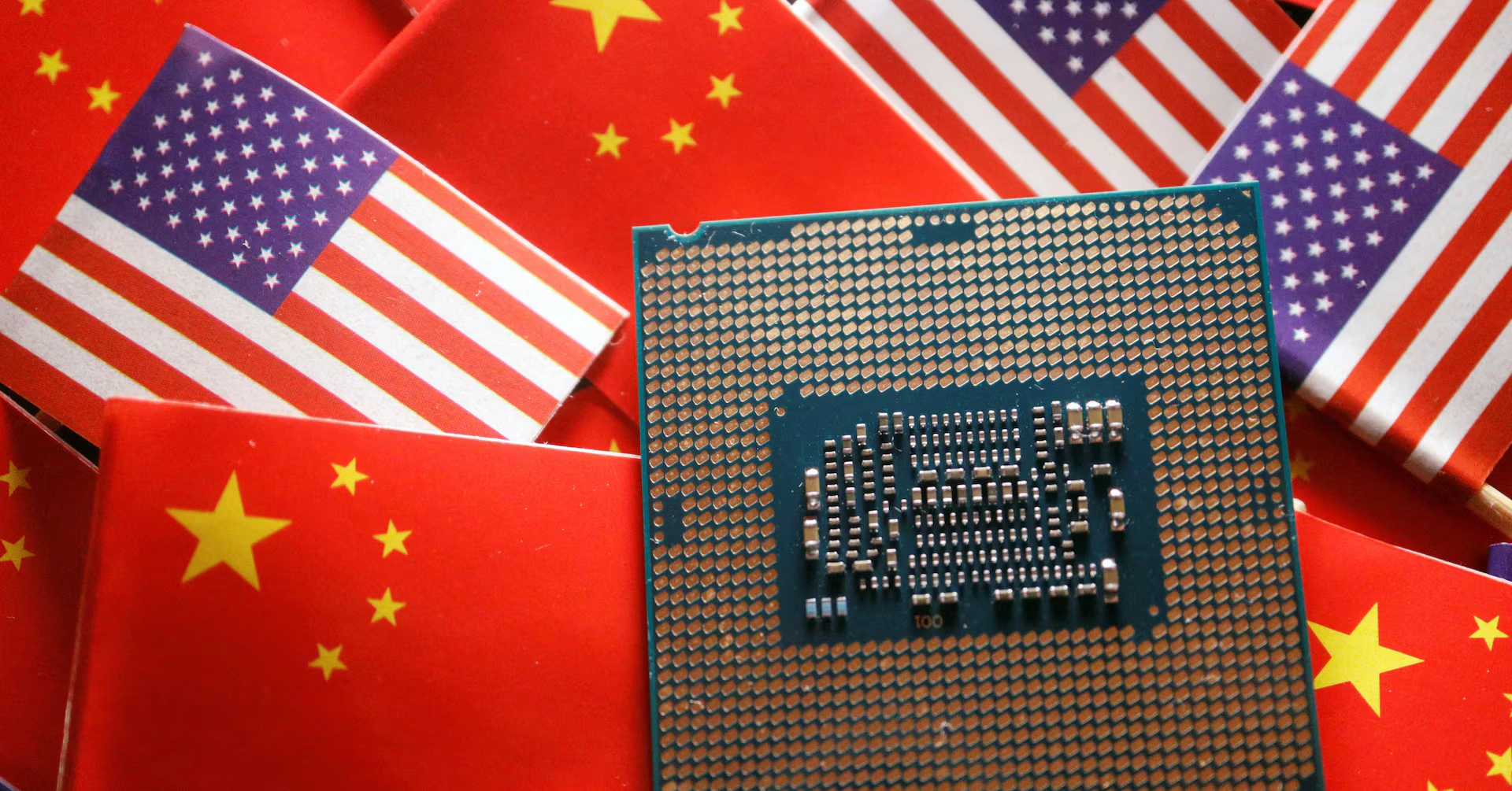
Deep inside a modern semiconductor fabrication plant, the difference between a functional artificial intelligence processor and a useless square of silicon often comes down to invisible pillars of metal. These microscopic vertical interconnects, known as vias, act as the electrical wiring between billions of transistors. To build them, foundries rely heavily on tungsten hexafluoride—a highly volatile, ultra-pure gas that deposits tungsten metal atom by atom.
For decades, the global supply chain for this esoteric process operated smoothly, largely out of public view. China mined the raw ore, Japan refined it into high-purity specialty chemicals, and foundries in Taiwan and South Korea baked it into the chips powering the digital economy. That quiet equilibrium is fracturing. With Beijing tightening its grip on critical minerals, the semiconductor industry faces a stark question: are China’s export curbs on tungsten the bottleneck that finally chokes the global AI hardware boom?
The Geopolitical Chessboard of Critical Minerals
The current anxiety pulsing through Tokyo and Silicon Valley did not emerge in a vacuum. It is the latest escalation in a tit-for-tat technology war that has steadily moved from final consumer products down into the foundational elements of the periodic table.
When Washington restricted Chinese access to extreme ultraviolet (EUV) lithography machines and advanced Nvidia accelerators, Beijing retaliated at the base of the supply chain. In late 2023, China imposed strict export licensing on gallium and germanium—two metals vital for advanced optoelectronics and military radars. A year later, antimony and graphite faced similar regulatory walls.
Now, tungsten sits squarely in the crosshairs. The arithmetic is unforgiving. China commands roughly 81% of global tungsten mine production, holding an effective monopoly on the intermediate chemical compounds, such as ammonium paratungstate (APT), required to feed overseas refineries.
Japan, despite its dominance in the semiconductor materials sector, is structurally exposed. The Japanese archipelago is functionally devoid of commercial tungsten deposits. Its chemical titans—companies like Resonac Holdings and Kanto Denka Kogyo—rely heavily on Chinese imports to synthesise the ultra-pure gases essential for global chipmakers. A disruption here doesn’t just threaten Japanese industrial margins; it jeopardises the fabrication of the advanced logic and memory chips necessary to train next-generation AI models.
The Core Development: Weaponising the Periodic Table
The mechanics of China tungsten export curbs are deliberately opaque, designed to inflict maximum anxiety while maintaining plausible deniability regarding trade warfare. Beijing hasn’t issued a blanket embargo. Instead, the Ministry of Commerce employs a complex system of dual-use export licences.
Under these regulations, Chinese exporters must detail the end-user and the exact purpose of the exported material before a shipment is cleared. This administrative friction acts as a silent quota system. Approval times stretch from weeks to months. In some cases, applications for shipments headed to countries closely aligned with US semiconductor sanctions languish indefinitely.
For Japanese chemical processors, this unpredictability is toxic. Semiconductor manufacturing operates on a ruthless just-in-time model. Fab managers cannot tolerate a disruption in specialty gas deliveries, because halting a modern 3-nanometre production line can cost tens of millions of dollars a day in ruined wafers and recalibration time.
Japan’s Ministry of Economy, Trade and Industry (METI) has been quietly sounding the alarm. In closed-door sessions throughout early 2026, METI officials and industry executives have war-gamed the cascading effects of a complete Chinese cutoff. The consensus is grim. While Japan maintains strategic stockpiles of raw tungsten, the specialised grades required for semiconductor-grade tungsten hexafluoride are notoriously difficult to store long-term due to degradation and strict purity requirements.
Furthermore, the surge in AI infrastructure has radically altered demand curves. High-bandwidth memory (HBM) modules—the critical companions to Nvidia and AMD logic chips—require complex vertical stacking. This process, known as Through-Silicon Via (TSV) technology, is highly dependent on precise metal deposition. The explosive growth in AI data centres has driven a corresponding spike in demand for advanced packaging materials, making the timing of Beijing’s regulatory tightening particularly painful for Tokyo’s materials sector.
The Structural Anatomy of a Bottleneck
To understand why this specific metal grants Beijing such disproportionate leverage, one must look at the physics of modern computing.
How does tungsten affect semiconductor manufacturing? Tungsten is vital in semiconductor manufacturing because it possesses an exceptionally low electrical resistance and the highest melting point of any pure metal. It is primarily used to fill “vias”—the microscopic vertical holes that connect different layers of circuitry within a silicon wafer. Without highly purified tungsten hexafluoride gas to deposit this metal, fabricating modern, high-density AI chips is physically impossible.
This physical reality creates a highly inelastic market. You cannot simply swap tungsten for aluminium or copper in these specific, microscopic applications without fundamentally redesigning the chip’s architecture—a process that takes years and billions of dollars in R&D.
When a foundry like TSMC or Samsung manufactures an AI accelerator, they utilise a process called Chemical Vapor Deposition (CVD). Inside a vacuum chamber, tungsten hexafluoride gas reacts with hydrogen, stripping away the fluorine to leave a perfectly uniform layer of solid tungsten inside trenches just a few nanometres wide.
Japan dominates the production of this CVD-grade gas, commanding over a 30% global market share. Yet, this dominance is an illusion of strength. The Japanese supply chain resembles an hourglass: wide at the top with numerous global semiconductor clients, and wide at the bottom with vast Chinese mining operations. The pinch point is the raw material flowing across the East China Sea.
If Beijing turns the tap, the global supply of AI chips doesn’t stop immediately. It slows down. Fab yields drop. Prices for advanced logic processors surge. The tech giants funding the AI revolution—Microsoft, Meta, Google—would find their data centre build-outs delayed not by a lack of capital, but by a lack of raw industrial chemistry. It is a brilliant, asymmetric pressure point. By controlling the raw dirt, Beijing exerts gravity over the most sophisticated technological ecosystem in human history.
Implications: The High Cost of Decoupling
The downstream consequences of this geopolitical squeeze are already rippling through global commodities and equity markets. The price of ammonium paratungstate (APT) has seen violent, anomalous spikes on the Rotterdam and Asian spot markets, reflecting the panic purchasing by Japanese and South Korean trading houses trying to front-run further export denials.
For policymakers in Tokyo, the curbs have triggered a frantic pivot toward supply chain diversification. The Japan Organization for Metals and Energy Security (JOGMEC) has accelerated its overseas investment mandate. We are seeing Japanese capital aggressively courting mining projects in geopolitically safer jurisdictions.
Consider the Sangdong mine in South Korea. Operated by Canada’s Almonty Industries, Sangdong was once one of the world’s largest tungsten mines before cheap Chinese exports forced its closure in the 1990s. Today, heavily backed by state-sponsored loans and long-term offtake agreements from Western and Japanese buyers, it is being resurrected. Similar capital flows are targeting high-grade deposits in Vietnam, Spain, and Australia.
Yet, throwing capital at the problem does not alter the temporal reality of mining. You can write a check in seconds; bringing a dormant deep-shaft mine into commercial production, securing environmental permits, and building an adjacent refinery takes anywhere from five to ten years. The AI boom cannot wait a decade.
For the businesses caught in the middle, the strategy has shifted from “just-in-time” to “just-in-case.” Semiconductor equipment manufacturers are actively researching ways to improve the efficiency of gas usage in CVD chambers, attempting to stretch existing stockpiles. Meanwhile, the legal and compliance teams at Japanese chemical firms are working overtime, trying to navigate the Byzantine requirements of China’s Ministry of Commerce to keep the shipments flowing, often at the cost of quietly sharing more supply chain data with Beijing than they would prefer.
The Counterargument: Why the AI Supply Chain Might Survive
It is crucial, however, to temper the panic with engineering reality. While China’s export curbs on tungsten pose a severe headache for Japan’s AI chip supply chain, they are unlikely to deal a fatal blow to global semiconductor manufacturing.
First, the semiconductor industry actually consumes a remarkably small fraction of the world’s total tungsten. The vast majority of the metal—roughly 60%—is used to make cemented carbide for heavy industrial cutting tools, drill bits, and armour-piercing munitions. Even a massive expansion in AI data centres requires only metric tonnes of ultra-pure tungsten, not the tens of thousands of tonnes consumed by heavy industry.
If push comes to shove, market economics dictate that raw tungsten will naturally flow away from lower-margin industrial applications and toward the hyper-lucrative semiconductor sector. Smelters outside of China can theoretically retool to upgrade scrap tungsten or lower-grade industrial ores into the precursors needed for chip manufacturing, provided buyers are willing to pay the massive premium.
Second, the semiconductor industry is arguably the most adaptable engineering ecosystem on the planet. Fabs are not standing still. Giants like Applied Materials and Tokyo Electron have been anticipating material choke points for years. There is aggressive, well-funded research into alternative interconnect materials. Molybdenum, ruthenium, and even cobalt are being actively tested as replacements for tungsten in certain via-fill applications.
While transitioning to a new metal introduces brutal engineering challenges—specifically regarding electromigration and thermal expansion—history shows that chipmakers will overcome the physics if the supply chain forces their hand. Industry analysts note that while substitution takes time, the sheer weight of capital flowing into AI ensures that alternative chemical pathways will be commercialised if Chinese supply becomes critically unreliable.
Finally, Beijing must weigh the macroeconomic blowback. Weaponising critical minerals is a one-way street. The moment China restricts supply, it permanently destroys demand by incentivising the rest of the world to fund alternative mines and recycling technologies. In the long run, Beijing risks accelerating the very decoupling it claims to oppose, losing its lucrative monopoly status in exchange for short-term political leverage.
The Friction of a Fracturing World
The conflict over tungsten is not simply a story about metallurgy. It is a leading indicator of how the global economy is restructuring itself for an era of persistent geopolitical conflict.
China’s export curbs on tungsten will not stop the development of artificial intelligence, nor will they completely sever Japan’s AI chip supply chain tomorrow. But they act as a heavy, unpredictable tax on innovation. They force billions of dollars to be diverted from research and development into supply chain redundancy, legal compliance, and the resurrection of uneconomical mines.
The seamless, hyper-optimised global supply chain that birthed the smartphone and the cloud is dead. In its place, a more resilient but vastly more expensive system is being forged. For the architects of the AI revolution, the greatest threat is no longer the limits of software engineering, but the hard, immutable physics of the earth.
Discover more from The Economy
Subscribe to get the latest posts sent to your email.

UK Japan Investment Agreement: Inside the £18bn Deal

AI Fundraising Trends: Wall Street’s Record Capital Influx

China Tungsten Export Curbs: Is Japan’s AI Chip Supply at Risk?

Pakistan Textile Body Welcomes FY27 Budget, Seeks FTR

US Economic Resilience: Why the Economy Keeps Defying the Odds

Global Strategic Oil Reserves Depletion: The Empty Vaults

Dubai Consumer Protection: 155,000+ Inspections Secure Price Stability

18% Shipping Sales Tax Abolition Sparks Maritime Economy Growth

Bank Indonesia Rate Hike 2026: New Mandate’s First Market Test

The Silicon Silk Road: How Memory Chips Rewrote the Retail Map

France opposes ‘anglicisation’ of EU trade talks

Anthropic Suspends Latest AI Models After US Blocks Foreign Access

Goldman and JPMorgan Ease Office Working Rules to Counter World Cup Disruption

AI Is Revolutionising the Stock Market — But the Risks Are Scaling Too

China Overhauls the World’s Biggest Surveillance Network with Advanced AI

Kevin Warsh Takes the Fed’s Helm — and Walks Straight Into a Rate-Hike Storm

S&P 500 Slips Back to 7,408 as Oil Storms Past $109, Bond Yields Clock 19-Year Highs

SpaceX IPO: Inside the $2 Trillion Market Debut

SpaceX, OpenAI & Anthropic IPOs: Wall Street’s $200B AI Test

How AI Is Forcing McKinsey and Its Peers to Rethink Pricing

KPMG Australia CEO Resigns After Whistleblower Claims Exposed Investigation Failures

Pakistan Budget FY 2026-27: Relief, Prospects, and the Tightrope Walk

Broadcom Market Value Loss: Revenue Forecast Disappoints

The Guardrails Are Down: How Meta and Google’s AI Models Fold Under Pressure

Is AI Already Putting Graduates Out of Work? The Grim Reality Facing the Class of 2026

Stock Market Correction Risk Mounts as Bond Yields Defy the Bull Case

Five PSX Stocks Worth Owning Before the Second Quarter Ends

Benefitbay Raises $18M to Build the Plumbing for America’s ICHRA Shift
-

 Markets & Finance5 months ago
Top 15 Stocks for Investment in 2026 in PSX: Your Complete Guide to Pakistan’s Best Investment Opportunities
-

 Analysis4 months ago
Top 10 Stocks for Investment in PSX for Quick Returns in 2026
-

 Analysis4 months ago
Brazil’s Rare Earth Race: US, EU, and China Compete for Critical Minerals as Tensions Rise
-

 Banks5 months ago
Best Investments in Pakistan 2026: Top 10 Low-Price Shares and Long-Term Picks for the PSX
-

 Investment5 months ago
Top 10 Mutual Fund Managers in Pakistan for Investment in 2026: A Comprehensive Guide for Optimal Returns
-

 Analysis4 months ago
Johor’s Investment Boom: The Hidden Costs Behind Malaysia’s Most Ambitious Economic Surge
-

 Global Economy6 months ago
15 Most Lucrative Sectors for Investment in Pakistan: A 2025 Data-Driven Analysis
-

 Global Economy6 months ago
Pakistan’s Export Goldmine: 10 Game-Changing Markets Where Pakistani Businesses Are Winning Big in 2025