
Analysis
Safe Havens No More: The $120 Billion Collapse of Dubai and Abu Dhabi’s Financial Myth

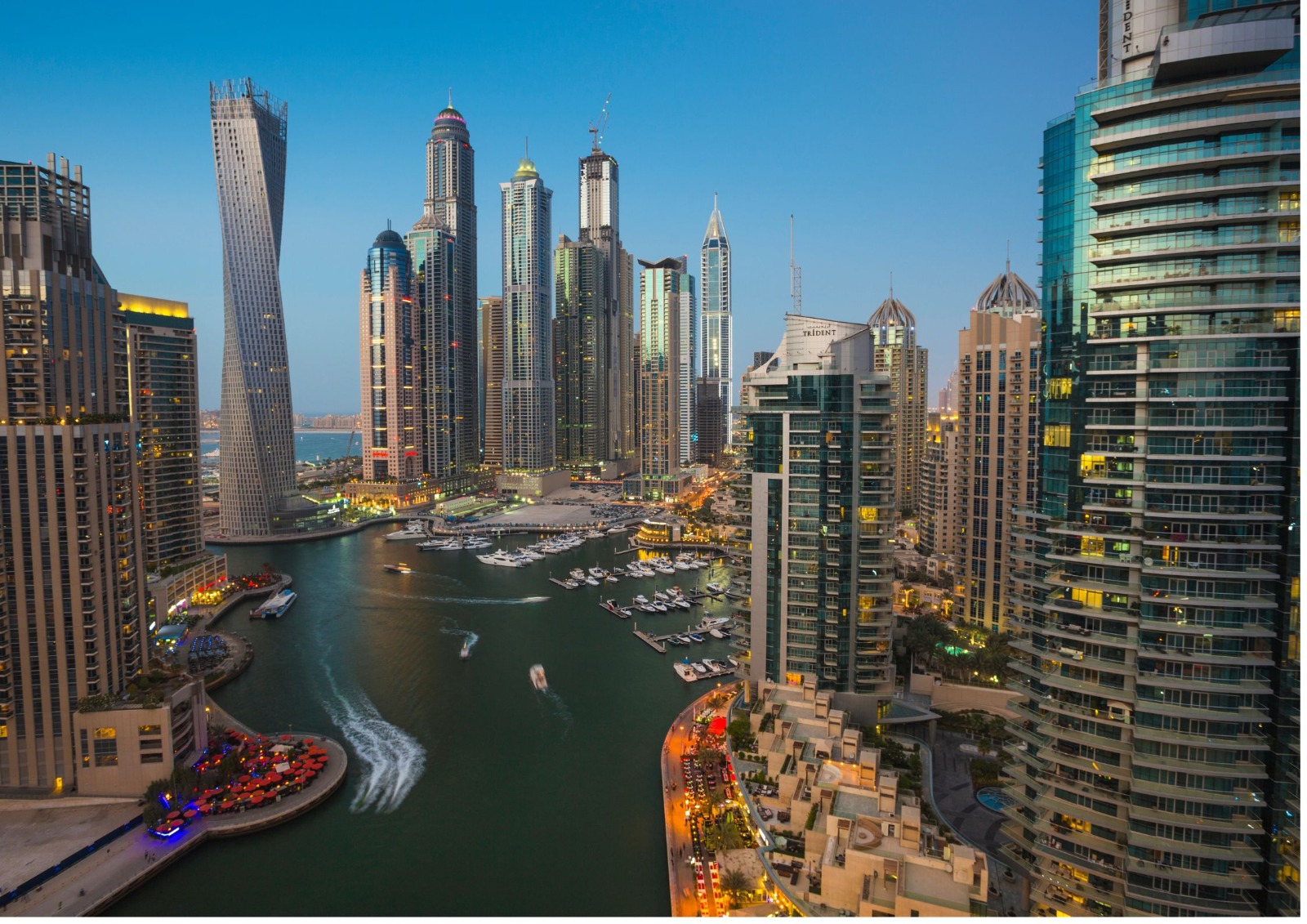
The US-Israel-Iran conflict has exposed a structural fault line beneath the Gulf’s gilded markets. What investors called safe havens are now ground zero for the most violent emerging market sell-off of the decade.
For two decades, Dubai and Abu Dhabi have sold the world a compelling narrative: that Gulf capital markets could transcend regional geopolitics, that gleaming towers and diversified economies had immunised them from the volatility that haunts their neighbours. That story is now in ruins — buried beneath $120 billion in erased market capitalisation, 18,400 cancelled flights, and the low drone of Iranian missiles over the Arabian Gulf.
Since the United States and Israel launched coordinated military strikes against Iranian missile sites and nuclear facilities on February 28, 2026, the Dubai Financial Market General Index (DFMGI) has plunged approximately 17 percent — its steepest sustained decline in a generation. The Abu Dhabi Securities Exchange (ADX) has shed 9 percent over the same period, shedding roughly $75 billion in market value. Together, the two exchanges have vaporised an estimated $120–$124 billion in market capitalisation, according to data from Gulf Business News. For comparison, the S&P 500 fell approximately 7 percent over the same interval — a painful correction, but nowhere near the structural shock coursing through the Emirates.
This is not a rout driven by sentiment alone. It is a geopolitical repricing — the markets finally doing what analysts long warned they might: acknowledging that no amount of architectural ambition or sovereign wealth can fully insulate an open economy from a war being fought within missile range of its airports.
The Anatomy of a $120 Billion Loss
When the Dubai Financial Market reopened on March 4 after a two-session regulatory closure ordered by the UAE Securities and Commodities Authority, the index immediately plunged 4.65 percent — shedding 302 points in a single session. The ADX fell a further 2.78 percent, or 309 index points, to 10,156. Banking and real estate counters, long the twin pillars of the UAE’s equity story, bore the sharpest selling pressure. Emaar Properties, the developer behind the Burj Khalifa and a bellwether for Dubai’s property ambitions, has fallen by more than 25 percent since the conflict began, according to Middle East Eye. Aldar Properties, Abu Dhabi National Hotels, and ADNOC Distribution each declined nearly 5 percent in a single session.
The losses represent more than a correction. They represent a fundamental reassessment of the risk premium attached to Gulf equity markets — what traders call the geopolitical risk premium — that had, for years, been dramatically underpriced. As Ashish Marwah, Chief Investment Officer at Abu Dhabi’s Neovision Wealth Management, told AGBI: “Our markets have a structural concentration in asset-heavy sectors like banking and real estate. These sectors are naturally sensitive to global macro cycles and interest rate environments.” When geopolitical shock is layered on top of macro uncertainty, the effect is compounding and brutal.
The Strait of Hormuz: Where Economics Meets Naval Blockade
The proximate cause of the UAE’s distress is not simply the war itself, but what Iran did with it. On March 4, 2026, Iran effectively closed the Strait of Hormuz — the 21-mile chokepoint through which approximately 20–21 million barrels of oil per day, or nearly 30 percent of global seaborne crude trade, normally flows. The closure was, as the International Energy Agency characterised it, the “largest supply disruption in the history of the global oil market” — eclipsing even the 1973 Arab oil embargo in its potential economic reach.
The consequences cascaded rapidly. Brent Crude surged past $120 per barrel almost immediately. QatarEnergy declared force majeure on all LNG exports. Iraq was forced to shut operations at the Rumaila oil field — one of the world’s largest — for lack of storage space as tankers remained stranded in the Gulf. War-risk insurance premiums for vessels attempting Hormuz transit spiked to levels that made commercial shipping economically nonviable.
According to analysis by SolAbility, the daily economic cost of the Hormuz closure approaches $20 billion in global GDP losses, with scenarios ranging from a $2.41 trillion hit under an optimistic reopening to $6.95 trillion under full escalation. The UN’s trade agency, UNCTAD, has warned that global merchandise trade growth is expected to decelerate sharply, from 4.7 percent in 2025 to between 1.5 and 2.5 percent in 2026, with the financial stress rippling outward to developing economies already stretched thin by post-pandemic debt burdens.
Here lies the central paradox: the UAE, unlike Qatar or Kuwait, has alternative pipeline routes — the Abu Dhabi Crude Oil Pipeline can carry up to 1.5 million barrels per day to the Port of Fujairah, bypassing Hormuz. And yet Dubai and Abu Dhabi have been more damaged by the conflict than almost any other Gulf market. The reason illuminates the UAE’s fundamental vulnerability: this economy was never primarily about oil.
Brand Dubai, Grounded
Tourism generated approximately $70 billion for the UAE economy in 2025 — fully 13 percent of gross domestic product — according to UAE state media. That industry is now in freefall. More than 18,400 flights have been cancelled since the conflict began. Dubai International Airport — the world’s busiest by international passenger volume, handling approximately 95 million passengers annually — was struck during Iranian drone offensives and shut down entirely on March 1. Emirates and Etihad suspended operations simultaneously. In a single day, more than 3,400 flights were cancelled across Dubai, Al Maktoum, Abu Dhabi, and Sharjah.
The scenes that followed were dissonant with every marketing image Dubai has ever projected. Wealthy expatriates, many of whom moved to the Emirates partly for its sense of security, reportedly paid up to $250,000 for private evacuation flights. Hotel bookings collapsed. Real estate brokers began offloading property at discounts of 10 to 15 percent to secure rapid exits, according to Reuters. Goldman Sachs analysts estimate that real estate transactions have dropped 37 percent year-on-year, with sales plunging more than 50 percent compared to February 2026. Dubai’s real estate index, which only weeks earlier had been praised by Savills as “one of the most dynamic property markets in the world” following record transaction volumes of $147 billion in 2025, has fallen by at least 16 percent.
By March 28, Iran had launched 398 ballistic missiles, 1,872 drones, and 15 cruise missiles at UAE targets — making the UAE the most heavily targeted country after Israel itself. While the majority were intercepted, debris caused material damage in both Abu Dhabi and Dubai, including strikes on or near the Burj Al Arab, Palm Jumeirah, Dubai International Airport, and the Fujairah oil industrial zone.
The Structural Fault Lines Now Exposed
For years, the UAE’s economic model was celebrated as a masterclass in post-oil diversification. Under the 10-year plan unveiled in 2023, UAE leaders set an ambition to position Dubai among the world’s top four global financial centres by 2033. That goal now looks distant — not because it was unachievable in peacetime, but because the model assumed something that geopolitics has violently undone: perpetual regional stability as a passive backdrop.
The UAE built its wealth on four pillars — finance, aviation, real estate, and tourism — all of which are acutely sensitive to conflict. Each of those pillars is now under simultaneous pressure. That is not the profile of a safe haven. It is the profile of a highly leveraged bet on stability. As Haytham Aoun, assistant professor of finance at the American University in Dubai, acknowledged to Al Jazeera, the sell-off should be seen as a “temporary shock” rather than evidence of structural economic damage — a framing that may be correct in the long run, but offers cold comfort to investors watching their portfolios contract by double digits in real time.
There are also governance concerns surfacing. Reports suggest Dubai authorities have arrested at least 70 British nationals for filming the aftermath of Iranian strikes, with fines of up to $260,000 and prison sentences of up to 10 years threatened for sharing footage. Whatever the security rationale, that posture sends precisely the wrong signal to the international investor and expatriate community the UAE has spent decades cultivating.
Forward Look: Capital Flight, Investor Confidence, and the Road to Recovery
The immediate prognosis for emerging market volatility in the Gulf is sobering. Unlike the 2008 financial crisis — which struck the UAE via liquidity channels and was eventually resolved by sovereign intervention — the current shock is kinetic and ongoing. Resolution depends not on central bank policy, but on the conclusion of an active military conflict whose timeline even US President Donald Trump has suggested could extend “four to five weeks” or beyond.
That said, there are structural reasons to resist full pessimism. The UAE’s sovereign wealth funds — including Abu Dhabi Investment Authority, one of the world’s largest at an estimated $1 trillion in assets under management — provide an extraordinary buffer that few emerging markets can match. Burdin Hickok, a professor at New York University School of Professional Studies and former US State Department official, noted that markets in Dubai and Abu Dhabi are likely to rebound strongly once the conflict is resolved, pointing to the fundamental quality of the underlying economic architecture.
The medium-term question is more pointed: will capital that has fled the Gulf during this crisis return? Or will the episode permanently recalibrate global investors’ risk models for the region, institutionalising a higher geopolitical risk premium that raises the cost of capital for Gulf markets for years to come?
The answer will hinge on several variables: the speed and terms of conflict resolution, the condition of Hormuz shipping lanes, the resilience of the UAE’s aviation and hospitality sectors, and — perhaps most importantly — whether the UAE government can restore the narrative of institutional transparency and rule of law that underpins long-term foreign direct investment.
What is already clear is that the comfortable myth of the Gulf safe haven — the idea that Dubai and Abu Dhabi somehow existed outside the arc of regional conflict — has been definitively and expensively dismantled. The $120 billion cost of that illusion will be measured not only in lost market capitalisation, but in the harder-to-quantify erosion of confidence that takes years to rebuild.
The Gulf, it turns out, is not beyond geography. And markets, however gilded, are not beyond war.
Discover more from The Economy
Subscribe to get the latest posts sent to your email.



Navigating Mortgage and Loan Refinancing in a High-Yield Environment
Global public debt crossing critical thresholds has kept central bank policies volatile, resulting in fluctuating US Treasury yields throughout 2026. For homeowners and commercial property holders burdened by previous high-interest borrowing cycles, finding optimal refinance windows has become a high-stakes financial puzzle. Stalled disinflation and stubborn employment numbers mean rate cuts are incremental, requiring borrowers to act with precision.
Timing your mortgage or commercial loan refinance in this environment requires a deep understanding of yield curve movements and lender risk appetites.
Decoding 2026 Refinance Dynamics
The 10-Year Treasury Yield Benchmark
Mortgage rates continue to track closely with the 10-year US Treasury yield. When macroeconomic anxiety spikes debt issuance, yields rise, tightening consumer borrowing capacity. Savvy borrowers monitor weekly Treasury auctions to lock in rates during brief dip windows.
Hybrid ARMs and Alternative Structures
With fixed rates remaining elevated, 7/1 and 10/1 adjustable-rate mortgages (ARMs) have surged in popularity. These products offer lower initial monthly payments, giving borrowers breathing room until central bank easing cycles fully materialize.
| Loan Product | Current Rate Range | Best For | Key Risk Factor |
| 30-Year Fixed Mortgage | 6.2% – 6.8% | Long-term predictability | Higher initial monthly outlay |
| 7/1 Hybrid ARM | 5.5% – 5.9% | Short-term ownership / flipping | Rate reset risk after year 7 |
| Commercial Refinance | 7.0% – 8.2% | Corporate asset restructuring | Strict DSCR lender covenants |
Actionable Steps for Successful Refinancing
To maximize your chances of securing favorable refinance terms in a volatile market, follow a disciplined preparation strategy.
Boost Your Credit Score Immediately: Lenders in 2026 are applying stringent credit tiering; a 20-point increase can drop your APR by a crucial quarter-point.
Shop Regional Credit Unions: Smaller financial institutions often offer portfolio loans with more flexible underwriting than major national banks.
Calculate the Break-Even Point: Ensure your total closing costs are recouped through monthly savings within 24 months of closing.
“Market Strategist View: Refinancing in 2026 is an exercise in opportunistic timing. Borrowers must maintain immaculate financial profiles ready to strike the moment Treasury yields dip.”
Mastering the complexities of today’s debt environment ensures you can successfully lower your debt service costs and protect your long-term financial stability.
Discover more from The Economy
Subscribe to get the latest posts sent to your email.

The days of pulling generic auto insurance quotes based purely on your zip code and age are officially over. In 2026, insurance comparison engines are powered entirely by generative AI and real-time telematics. These platforms digest thousands of live data points—ranging from your driving smoothness via connected vehicle sensors to real-time traffic congestion patterns—to generate hyper-personalized premiums instantly.
For consumers, this evolution represents both a massive opportunity for savings and a hidden trap for penalty pricing. Understanding how AI algorithms evaluate risk is essential for anyone looking to lower their monthly auto insurance premiums.
How AI Comparison Engines Evaluate Your Risk Profile
Behavioral Telematics and Connected Cars
Modern cars stream performance data directly to insurance aggregators. Generative AI models analyze braking sharpness, acceleration curves, cornering G-forces, and phone distraction metrics. Drivers who maintain smooth, defensive habits are rewarded with dynamic rate cuts of up to 40% compared to traditional rating tiers.
Predictive Traffic and Weather Modeling
AI tools now cross-reference your daily commute route with predictive weather and accident probability models. If your standard parking location or driving corridor has a statistically higher incidence of uninsured motorist claims, your quotes will reflect that hyper-local risk assessment.
| Comparison Factor | Traditional Rating Model | 2026 Generative AI Model | Impact on Premium |
| Mileage & Usage | Annual estimated odometer reading | GPS tracking & live trip duration | High (up to 35% savings) |
| Driving Behavior | MVR driving record & accidents | Real-time braking, speed, & G-force | Critical (determines tier) |
| Vehicle Tech | Make, model, and safety rating | ADAS calibration & repair cost data | Moderate |
Strategies to Lower Your AI-Driven Insurance Quote
To outsmart the algorithm and secure the lowest possible premium in 2026, drivers must proactively manage their digital footprint on insurance platforms.
Opt-In for Telematics Trial Periods: Many insurers offer immediate 15% discounts just for installing their driving app; let it track safe habits for 30 days to lock in permanent savings.
Scrub Unverified Public Records: Ensure your motor vehicle report is free of clerical errors that AI risk models misinterpret as reckless behavior.
Compare AI Aggregators: Use platforms that integrate multi-carrier API feeds rather than single-brand comparison sites to find the best risk-adjusted rate.
“Industry Note: AI-driven pricing rewards transparency and precision. Drivers who actively manage their telematics data consistently out-save those relying on legacy quote calculators.”
Embracing AI comparison tools allows savvy policyholders to customize coverage limits precisely to their driving habits, eliminating wasted premium spend while ensuring robust protection.
Discover more from The Economy
Subscribe to get the latest posts sent to your email.

Despite decades of bans and strict handling mandates, asbestos remains a silent killer across legacy manufacturing plants, shipyards, and modern green-energy infrastructure retrofits. In 2026, regulatory changes by the EPA and tightened occupational health standards have triggered a fresh wave of mesothelioma litigation. Manufacturers attempting to fast-track industrial transitions are encountering catastrophic oversight, exposing workers to legacy toxins and opening corporate parent companies to unprecedented liability.
Navigating a mesothelioma claim in 2026 requires understanding how modern industrial supply chains intersect with historical exposure. Trusts established decades ago are being audited under stricter transparency laws, altering payout ratios and accelerating fast-track settlements for terminally ill plaintiffs.
Modern Industrial Exposure Hotspots
Green Retrofitting and Renewable Energy Infrastructure
A primary source of 2026 asbestos exposure occurs during the decommissioning and retrofitting of older industrial facilities for renewable energy production. Workers insulating electrical grids, modernizing HVAC systems, or upgrading manufacturing floors frequently disturb encapsulated asbestos materials that were improperly documented or ignored during facility audits.
Automotive and Aerospace Supply Chains
With advanced manufacturing booming, workers handling specialized friction materials, gaskets, and heat shields face ongoing risks. Supply chain tracing has become more sophisticated, allowing legal teams to pinpoint exact corporate entities responsible for raw material distribution across multinational borders.
| Industry Sector | Primary Exposure Risk | Legal Venue / Trust | Avg. Claim Value Range |
| Green Energy Retrofit | Disturbed insulation, pipe lagging | Federal Tort / Manufacturer Trust | $1.2M – $3.5M |
| Shipbuilding & Marine | Boiler insulation, structural seals | Asbestos Bankruptcy Trusts | $800K – $2.4M |
| Automotive Manufacturing | Brake components, high-heat gaskets | Third-Party Product Liability | $600K – $1.8M |
Securing Maximum Compensation: Steps for Plaintiffs
Time is of the essence in mesothelioma cases. Plaintiffs and their families must act decisively to secure financial recovery before statutes of limitations expire.
Retain Specialized Counsel: Work exclusively with national mesothelioma law firms possessing deep historical databases of asbestos-containing products.
Audit Employment History: Document every job site, supervisor name, and equipment brand encountered throughout your career.
Expedite Medical Filings: Secure a formal pathological diagnosis quickly to qualify for expedited trust fund distribution and priority trial settings.
“Expert Insight: Modern asbestos litigation is no longer just about historical tracking; it is about holding modern corporations accountable for failing to conduct rigorous environmental safety audits before initiating industrial retrofits.”
By combining meticulous work history reconstruction with aggressive multi-trust filings, victims can secure substantial financial relief to cover specialized immunotherapy and family support.
Discover more from The Economy
Subscribe to get the latest posts sent to your email.

Asian Markets Outlook 2026: China, Japan & Singapore Stocks

Global Economy 2026: IMF Growth, Inflation & Private Credit

Current Account Deficit (CAD) : Causes and Impact

Balance of Payments (BOP)

The Falkland Islands Dispute: Sovereign Wealth, Offshore Drilling, and Market Impacts

Gross Domestic Product (GDP): Nominal vs. Real

What is Inflation and the Consumer Price Index (CPI)?

US-China Trade Competition 2026: Supply Chain Relocation Guide

Oil Prices Break $100 in 2026: Middle East Conflict & Energy Markets

South-South Trade Expansion: Digital Integration and Emerging Market Growth

$166B Tariff Refund Tapering Fast: Is Your Business Missing Out?

Stock Market Today: Dow Climbs 500 Points as Markets Shake Off Inflation Jitters

14th WTO Conference 2026: Tariffs & Global Supply Chain Impact

Swish Secures $24M Funding to Disrupt India’s $100B Food Market

State Farm’s $5B Dividend 2026: Who Qualifies & Payout Dates

US-China Relations in Q3 2026: Trade Tariffs and Supply Chain Risks

Gold’s Wild 2026: From a Record $5,600 Peak to a 24% Crash and Back Toward $4,500

Oil Surges as Strait of Hormuz Traffic Collapses Again

The Rocket That Won’t Quit: Inside SpaceX’s Falcon 9 Launch Machine

Bank of England Set to Hold Rates Through Year-End, Reuters Poll Shows

SpaceX Starship Flight 14: First Orbital Attempt & Starlink V3 Launch Explained

The 2026 Crypto Regulatory Shift: What It Means for Institutional Investors

AI Chip Stocks 2026: The Best Semiconductor Investments Beyond Marvell

Retail Earnings Week: What Home Depot, Target & Walmart Reveal

AI-Powered Training: The Next Multi-Billion Dollar Ecosystem in Fitness

Russia’s Black Sea Oil Exports Fall for a Fifth Straight Week

Top 30 Stocks for Investment in PSX for Massive ROI in 2026

Tween Back-to-School Trends 2026: What’s Driving the $85B Season
-

 Markets & Finance8 months ago
Top 15 Stocks for Investment in 2026 in PSX: Your Complete Guide to Pakistan’s Best Investment Opportunities
-

 Analysis7 months ago
Johor’s Investment Boom: The Hidden Costs Behind Malaysia’s Most Ambitious Economic Surge
-

 Analysis7 months ago
Top 10 Stocks for Investment in PSX for Quick Returns in 2026
-

 Analysis7 months ago
Brazil’s Rare Earth Race: US, EU, and China Compete for Critical Minerals as Tensions Rise
-

 Banks8 months ago
Best Investments in Pakistan 2026: Top 10 Low-Price Shares and Long-Term Picks for the PSX
-

 Investment8 months ago
Top 10 Mutual Fund Managers in Pakistan for Investment in 2026: A Comprehensive Guide for Optimal Returns
-

 Global Economy9 months ago
15 Most Lucrative Sectors for Investment in Pakistan: A 2025 Data-Driven Analysis
-

 Global Economy9 months ago
Pakistan’s Export Goldmine: 10 Game-Changing Markets Where Pakistani Businesses Are Winning Big in 2025