Connect with us

Analysis

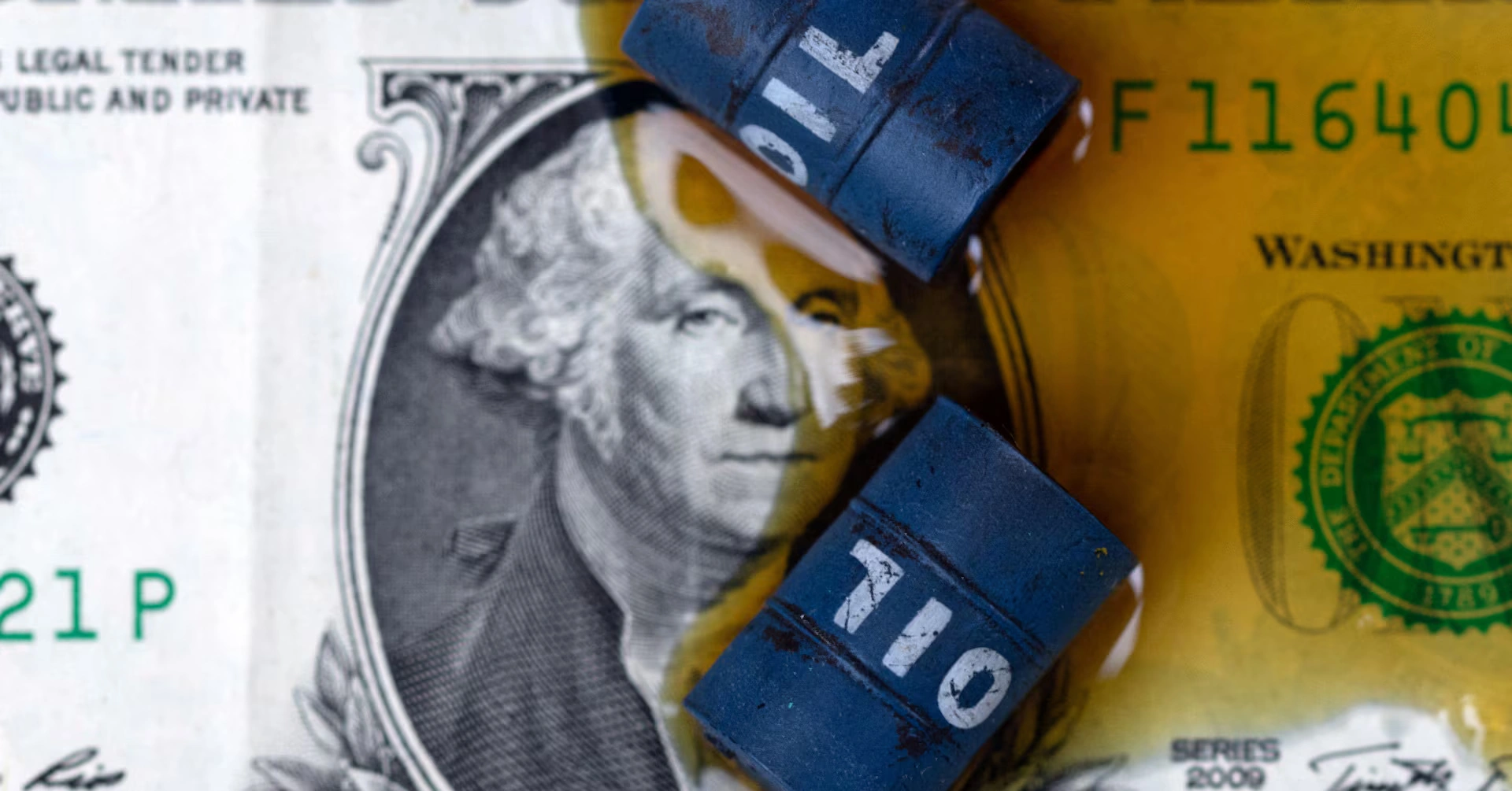
The Petrodollar Was Never Real — And That Changes Everything

Published

on

Every decade or so, a headline announces that the petrodollar is dying. Every decade, the dollar proves those headlines wrong. The reason is simple, and it is buried inside a category error that has misled analysts, alarmed investors, and distorted foreign policy debates for fifty years: the petrodollar, as most people understand it, does not exist.

Here is what the data actually show. According to the Federal Reserve’s 2025 International Dollar Report, the US dollar still accounts for 58 percent of disclosed global foreign exchange reserves, roughly 88 percent of all foreign exchange transactions, and approximately 50 percent of international SWIFT payments — a share that has increased slightly in recent years. The dollar’s throne looks nothing like what the doomsday narrative describes. Understanding why requires dismantling a myth that has been half a century in the making.

What People Actually Mean by “Petrodollar”

A 1974 Diplomatic Arrangement — Not a Treaty

The petrodollar story begins, as most origin myths do, with a grain of truth. In the wake of the 1973 oil embargo, US Treasury Secretary William Simon and his deputy Gerry Parsky flew to Riyadh. The deal they assembled was elegant in its symmetry: Saudi Arabia would price oil in dollars and reinvest surplus earnings — “petrodollars” — into US Treasury securities. In exchange, Washington provided security guarantees and weapons. The arrangement was, as one State Department cable noted, a geopolitical masterstroke. But it was never a formal treaty, never legally binding across OPEC, and never the singular mechanism underwriting global dollar supremacy.

The Recycling Mechanism That Became a Myth

“Petrodollar recycling” — the idea that oil revenues flow from Riyadh back to Wall Street, endlessly funding US deficits — became doctrine in investment banks and think tanks alike. The problem is that the underlying arithmetic has quietly collapsed. Brad Setser at the Council on Foreign Relations documented the erosion with characteristic precision in early 2026: Saudi Arabia ran fiscal deficits in both 2024 and 2025. The Kingdom was a net drain on global dollar liquidity, not a supplier of it. Aramco and the Public Investment Fund were issuing international bonds. Riyadh was borrowing to fund its Vision 2030 ambitions, not recycling surplus petrodollars into Treasuries. “The glory days of the petrodollar,” Setser wrote, “are over.” What was never quite a system has, in its most literal form, ceased to function.

Why the Phrase Is Economically Misleading

Invoicing ≠ Reserve Architecture

The core error in petrodollar thinking is conflating trade invoicing with reserve currency architecture. These are not the same thing, and treating them as synonymous produces dangerous conclusions.

A country that buys oil priced in dollars does not need to hold dollars indefinitely. It needs dollars transiently — long enough to settle the transaction. If that country holds euros, it enters the FX market for milliseconds, converts, pays, and moves on. No accumulation required. The dollar’s commanding role as a reserve currency — held by central banks as a long-term store of sovereign wealth — is driven by entirely different forces: the depth and liquidity of US Treasury markets, the breadth of dollar-denominated derivative and lending markets, the dollar’s role as a global collateral asset, and the crisis-absorption capacity of the Federal Reserve through its network of swap lines.

An IMF working paper published in September 2025, drawing on data from 132 countries spanning 1990 to 2023, found precisely this: global dollar invoicing shares have remained broadly stable even as geopolitical fragmentation has accelerated, and there is “no robust evidence consistent with effective policy initiatives to reduce dollar reliance in oil exports.” Even countries geopolitically hostile to Washington continue to invoice in dollars because the network effects — embedded in contracts, hedging infrastructure, derivatives chains, and supply agreements — are not dismantled by political will alone.

The Network Effects That Actually Sustain Dollar Dominance

Harvard economist Gita Gopinath’s Dominant Currency Paradigm offers the cleaner explanation. Roughly 54 percent of global exports are invoiced in dollars, even though the United States accounts for a far smaller share of world trade. This is not the result of gunboat diplomacy or secret agreements. It is the result of network effects so deeply embedded that switching costs are prohibitive. Importers and exporters alike manage risk against a dollar baseline. Commodity markets from copper to cotton are priced in dollars. The derivative markets hedging those exposures are dollar-denominated. Changing the invoicing currency of oil does not collapse this architecture; it barely scratches it.

Dollar Shares Across Key Global Functions (2024–2025)

FunctionDollar ShareSource
Global FX reserves56–58%IMF COFER, Q2 2025
FX transaction volume88%BIS Triennial Survey 2022
International SWIFT payments~50% (excl. intra-euro)Federal Reserve, 2025
Global export invoicing~54%IMF/Gopinath, 2025
Chinese firm trade invoicing (RMB)~25% (from 2024 data)IMF Working Paper 2025

Sources: Federal Reserve; IMF COFER

Recent Developments That Expose the Myth

Saudi Deficits, Not Surpluses

The collapse of the petrodollar recycling mechanism is not speculative — it is fiscal arithmetic. With Brent crude averaging just under $70 per barrel through 2025, and Saudi Arabia’s balance-of-payments breakeven requiring roughly $90 per barrel on seven million barrels per day of exports, the Kingdom cannot generate the surpluses that the petrodollar story requires. The Gulf Cooperation Council surplus — once the engine of dollar recycling — had shrunk to roughly $200 billion in 2025 across Kuwait, UAE, Qatar, and Norway combined, with Saudi Arabia contributing a deficit of approximately $33 billion. The geopolitical story has not changed; the economic plumbing has. This is the real death of the petrodollar — not Saudi Arabia accepting yuan for oil, but Saudi Arabia having no surplus dollars to recycle at all.

The Yuan’s Modest Rise and Structural Limits

China has made genuine inroads. Yuan-settled oil trades with Russia have expanded. France’s TotalEnergies completed a modest LNG transaction with China priced in yuan in early 2024. China’s Cross-Border Interbank Payment System (CIPS) now handles approximately 30 percent of China’s cross-border trade settlements. And yet: the renminbi accounts for just 2 percent of global foreign exchange reserves and under 1 percent of global trade invoicing outside China’s direct trading partners. Capital controls, limited financial market depth, and the absence of a deep, liquid sovereign bond market comparable to US Treasuries create structural ceilings the yuan cannot penetrate through political ambition alone.

BRICS Digital Settlement: Signal or Noise?

The BRICS 2025 Johannesburg summit confirmed active prototyping of a commodity-backed digital settlement instrument. Technical working groups are simulating blockchain-based multi-currency settlements. This is real, and it signals genuine geopolitical momentum. But it also illustrates exactly why “reserve currency transitions take decades” — as the IMF has repeatedly stated. Creating a settlement instrument is the first step in a sequence that ends, much later, with reserve accumulation, financial depth, and crisis absorption. The dollar completed that sequence over 80 years, backed by two World Wars, Bretton Woods, and an incomparably liquid Treasury market. No announcement from Johannesburg accelerates that timeline meaningfully.

Policy and Market Implications

What Investors Are Getting Wrong

The perpetual “death of the petrodollar” trade — short dollars, long gold, long yuan assets — has failed repeatedly for the same structural reason: it mistakes political signaling for financial architecture replacement. The dollar’s share of global reserves has declined from 71 percent in 1999 to approximately 56 percent today, a real and meaningful shift. But that shift has not flowed to the yuan (at 2 percent, it barely registers). It has flowed to non-traditional reserve currencies: Canadian and Australian dollars, the Swiss franc, and — critically — gold. Central banks purchased a combined 2,082 tonnes of gold in 2023 and 2024, the fastest accumulation pace since World War I. This is diversification within a dollar-dominated system, not flight from it.

What Policymakers Should Actually Watch

The genuine vulnerability is not oil invoicing — it is US fiscal credibility and the weaponization of dollar infrastructure. The use of sanctions against Russia in 2022 demonstrated that dollar-denominated financial networks can be deployed as geopolitical weapons. That demonstration has accelerated the search for alternatives among countries that fear finding themselves on the wrong side of US foreign policy. This is the real mechanism of dollar erosion: not oil trades in yuan, but the slow construction of parallel payment rails — Russia’s SPFS, CIPS, and bilateral swap agreements — that reduce exposure to SWIFT cutoffs.

What Comes Next — Scenarios and Recommendations

The dollar will not collapse. Reserve currency transitions historically require financial architecture migration across decades, not policy press releases. But three distinct scenarios deserve attention from policymakers and strategists alike.

Scenario A — Status Quo Drift: Dollar dominance persists at 55–60 percent of reserves through 2035, with slow, non-disruptive diversification into non-traditional currencies and gold. Most likely outcome.

Scenario B — Accelerated Fragmentation: A major US fiscal shock (debt ceiling crisis, sovereign downgrade) or expanded sanctions regime triggers faster reallocation. Reserve share falls below 50 percent by 2032. Tail risk, but not negligible.

Scenario C — Bipolar Settlement Architecture: BRICS digital settlement becomes operational and widely adopted among the Global South, creating a parallel but interoperable system alongside SWIFT. Dollar share stable in Western bloc; declining in BRICS+ corridor. Emerging over 10–15 years.

For policymakers in Washington, the lesson is counterintuitive: the greatest threat to dollar dominance is not Saudi Arabia pricing oil in yuan. It is overusing the dollar’s weaponized infrastructure to the point that adversaries and neutrals alike invest in exits. For investors, the lesson is simpler: stop betting against the dollar’s architecture because its mythology is fraying. The myth was never what held it up.

Conclusion

The petrodollar was always more story than system — a convenient narrative that explained dollar hegemony through a single, dramatic bilateral agreement rather than through the far more prosaic reality of network effects, market depth, and institutional inertia. That narrative had consequences: it produced decades of misguided alarmism every time an oil deal was struck in yuan, and it distracted policymakers from the real vulnerabilities in dollar dominance. The dollar’s reign is long, its architecture is deep, and its nearest competitors remain structurally unready. The question is not whether the petrodollar is dying. It was never quite alive. The question is whether the United States will protect the actual foundations of monetary power — fiscal credibility, open capital markets, and restraint in financial weaponization — before those foundations quietly erode.


Discover more from The Economy

Subscribe to get the latest posts sent to your email.

Continue Reading
Click to comment

Leave a Reply

Analysis

Five PSX Stocks Worth Owning Before the Second Quarter Ends

Published

on

Pakistan’s stock market doesn’t do anything quietly. In January 2026, the KSE-100 Index scaled an all-time high of 189,556 points — a figure that would have seemed hallucinatory to anyone watching the exchange crater in the summer of 2023. By early May, Operation Sindoor had knocked the index below 104,000, triggering circuit breakers and a one-hour trading halt as panic selling swept through commercial banks, cement, and energy counters alike. The recovery has been partial and fragile. Yet the volatility, for investors with conviction and a horizon measured in quarters rather than days, has done something useful: it’s separated price from value on a clutch of names that were, frankly, overdue for a reset.

With the second quarter of 2026 drawing to a close on June 30, these five stocks on the Pakistan Stock Exchange represent the clearest alignment of macro tailwinds, sectoral fundamentals, and current-price opportunity.

The five PSX stocks best positioned before June 30, 2026 are MCB Bank (shorter bond duration, highest sector dividend), Meezan Bank (Islamic banking structural growth), Lucky Cement (diversified industrial conglomerate), OGDC (oil production at six-and-a-half-year highs), and Fauji Fertilizer (dominant urea pricing power). Each offers a company-specific investment case resilient to the current rate and geopolitical environment.

The Context: A Market That Has Been Through It

To understand where the best PSX stocks for Q2 2026 sit in the cycle, you need to understand what the market has absorbed in less than five months.

The State Bank of Pakistan surprised analysts on April 27, 2026 by raising its benchmark policy rate by 100 basis points to 11.5%, marking the first rate hike since June 2023. The decision came amid heightened economic uncertainty, volatile oil prices from Middle East tensions, and inflation climbing to 7.3% in March — breaching the central bank’s 5–7% target range for the first time since October 2024.

That’s a lot to absorb. An unexpected tightening cycle, a geopolitical shock severe enough to halt trading, and inflation re-accelerating — all in a single quarter. Yet even within this turbulence, the IMF approved a $1.2 billion tranche on May 8, 2026, providing a floor of institutional confidence beneath the chaos.

The picture is more complicated than the bearish headlines suggest. Corporate earnings, though uneven, remained broadly positive through the first quarter of calendar 2026. Pakistan’s banking sector collectively achieved profits of Rs. 671 billion in 2025 — a notable increase from Rs. 600 billion in 2024, even as the benchmark policy rate saw reduction during that year. The structural story of Pakistan’s economic recovery, backed by a three-year IMF Extended Fund Facility, hasn’t reversed. It’s been interrupted.

The Five Stocks: A Selective Case

The best PSX stocks to buy in Q2 2026 are not sector plays or index bets. Each of the five names below has a company-specific argument that would hold up even if the macro environment stayed difficult. In aggregate, they represent the clearest risk-reward in a market that has, in the space of a few months, oscillated between euphoria and panic.

1. MCB Bank (MCB)

MCB is the quiet achiever. It’s not Pakistan’s largest bank, it doesn’t carry the geopolitical weight of Habib Bank or the growth narrative of Meezan, and that restraint is precisely the point right now.

Banks such as MCB Bank are considered relatively better positioned to weather the current rising-yield environment, maintaining shorter-duration portfolios that limit their vulnerability to mark-to-market losses. Analysts expect these institutions to recover more quickly as market conditions stabilize. While United Bank Limited is seen as the most exposed of the major lenders to yield duration risk, with an estimated post-tax hit of Rs. 117 billion to its book value, MCB’s shorter book shields it from the worst of that balance-sheet pressure.

MCB Bank offered the highest dividend in the banking industry at Rs. 36 per share in 2025, with an EPS of Rs. 45.73. For investors who want banking sector exposure without carrying UBL’s interest-rate duration, MCB is the structurally safer entry.

2. Meezan Bank (MEBL)

Meezan Bank is not really a bank play. It’s a demographic play disguised as a bank.

Pakistan’s Islamic finance sector is growing faster than the conventional system, driven by the same ideological and regulatory momentum that has transformed Malaysian and Indonesian markets over two decades. Meezan holds an unassailable structural position as Pakistan’s largest dedicated Islamic bank, and no conventional competitor can credibly replicate its Shariah compliance at scale.

Meezan Bank’s market capitalization stood at Rs. 870.71 billion as of May 12, 2026 — an increase of 78.62% in one year. Even after the geopolitical correction, the structural bull case hasn’t moved. Seven analysts unanimously rate the stock a Strong Buy, with an average 12-month price target of Rs. 577 — implying upside of over 16% from the mid-April price of Rs. 497.

The earnings execution has been precise. MEBL reported quarterly earnings of Rs. 12.10 per share against a consensus estimate of Rs. 12.09 — a number that signals a management team in full control of its cost and revenue levers. This isn’t a story about a rate cycle. It’s a story about irreversible market share in a product vertical that’s growing structurally.

3. Lucky Cement (LUCK)

Call it a cement company if you must, but you’d be underselling it.

Lucky Cement, through its parent and subsidiary network spanning polyester, soda ash, pharmaceuticals, chemicals, automobiles, and power generation, has assembled the most diversified industrial book on the KSE-100. That diversification is now providing real earnings resilience. Lucky Cement’s Q3 net income came in at Rs. 22.62 billion, up from Rs. 21.99 billion in Q2 — a business delivering sequential quarterly growth even as the broader index swung wildly around it.

The cement sector was the second-largest positive contributor to the KSE-100’s April 2026 recovery, adding 1,735 points to the index, with LUCK among the leading individual contributors at 768 points. When the market’s recovery was at its most selective — favouring fundamentals over momentum — cement and LUCK led the way.

Pakistan’s infrastructure ambitions, regardless of which government is in office, require cement. And Lucky’s ability to cross-subsidise its cyclical core with chemicals, automotive, and power revenues makes it structurally more valuable than a price-to-book valuation of the cement segment alone would suggest.

4. Oil and Gas Development Company (OGDC)

OGDC is the government’s most important listed asset and, at current prices, arguably its most overlooked one.

OGDC’s oil production crossed 40,000 barrels per day — its highest level in more than six and a half years — suggesting improving operational momentum despite receivable and curtailment challenges. That’s a material operational milestone, and one that tends to precede upward earnings revisions.

Analysts have adjusted price targets for OGDC to reflect updated expectations for revenue growth of 16.42% and a profit margin of 40.80%, with a future P/E of 12.84x — indicating a modestly stronger earnings profile being incorporated into their models. At a forward earnings multiple well below regional peers and with production volume trending upward, the downside is limited and the recovery trade is straightforward.

The circular debt overhang — historically OGDC’s most persistent structural discount — is actively improving. Cash recoveries now exceed billings, power-sector receivables have declined sharply, and the remaining backlog is expected to clear within the quarter, with gas expected to regain prominence in the production mix as new fields come online.

5. Fauji Fertilizer Company (FFC)

The final pick is the one most directly tied to what Pakistan is — an agrarian economy where the state of the harvest matters more to most households than the price of a US Treasury bond.

FFC holds the dominant market position in urea, the fertilizer that underpins Pakistan’s wheat and rice output. When the government needs to support agricultural productivity — and it always does — FFC is the conduit. That political economy backing is a structural moat most international investors consistently underprice.

The fertilizer sector was the fourth-largest positive contributor to the KSE-100 in April 2026, adding 987 points to the index. Fauji Fertilizer’s extraordinary earnings growth in the prior fiscal year — driven by fertilizer price increases and product diversification into urea, DAP, power, and food segments — has given the company a dominant market position that makes it a standout performer in its sector.

With inflation creating pressure on input costs across the agricultural chain, the farmers who need FFC’s urea have limited alternatives. Pricing power combined with volume certainty is a rare combination on the KSE-100.

The Analytical Layer: What the Rate Hike Changes, and What It Doesn’t

How Will the SBP Rate Hike Affect PSX Stocks in Q2 2026?

The April 27 rate hike to 11.5% is contractionary, but its equity market consequences are asymmetric. Banks with long-duration bond portfolios face mark-to-market pressure; banks with shorter books, like MCB and Meezan, face less. Companies with strong pricing power, like FFC, can pass cost increases through to consumers. Capital-intensive industrials with clean balance sheets, like LUCK and OGDC, are less sensitive to the risk-free rate than leveraged players. The five stocks selected here are precisely the names that the rate environment discriminates in favour of, not against.

The deeper structural question is whether the rate hike marks the beginning of a prolonged tightening cycle or a one-off response to a supply shock. The SBP’s Monetary Policy Committee assessed that the current supply shock may push inflation to double digits in coming months before it begins to ease, but inflation is expected to stay above the upper bound of the target range for most of FY27. That’s hawkish language, but it’s language tied to a supply-side shock — Middle East energy volatility, rupee pressure, monsoon uncertainty — rather than a structurally overheating economy. Once the supply shock fades, the easing cycle resumes. Investors who hold through the noise capture the full re-rating.

Implications and Second-Order Effects

The geopolitical volatility of May 2026 has done something that years of steady gains cannot: it has created entry points in some of Pakistan’s best-managed companies at prices that reflect fear rather than fundamentals.

AKD Research projects the KSE-100 to reach 263,800 points by December 2026, driven by anticipated monetary easing, a stronger external account, and sustained structural reforms. The brokerage expects the rally to be fuelled by higher returns on equity in banking, better profitability in E&P and OMC firms, and a strong fertilizer sector performance. Even the most conservative broker models see a meaningful floor well above current levels.

The IMF’s continued engagement is the key stabilizer. As long as Islamabad remains compliant with its Extended Fund Facility conditionalities — and the May 8 tranche approval signals it is — the macro floor holds. Forex reserves, which once threatened to fall to catastrophic lows, are now on a rebuilding trajectory.

What the volatility has done, perversely, is compress valuations on fundamentally sound names. A forward P/E of approximately 6.8x for the KSE-100 — against a historical average of 8x — is not a market pricing in deterioration. It’s a market pricing in fear. The difference matters to investors with a three-to-six-month horizon.

The Counterargument: Why This Might Not Work

Steel-manning the bear case is not an optional exercise on the PSX in May 2026. It’s essential.

The most credible risk to this thesis isn’t geopolitical noise — it’s fiscal slippage. The IMF noted that Federal Board of Revenue tax collections slowed considerably to 10.2% year-on-year during July–November FY26, implying significant acceleration required to achieve the budgeted tax collection target in the remaining months of the fiscal year. If revenue collection misses materially, the government faces a binary choice: cut spending aggressively in an election-sensitive environment, or risk programme derailment.

The yield shock has also left real scar tissue. The banking sector’s gross revaluation losses are estimated at Rs. 685 billion, with a net impact of approximately Rs. 95 billion across major institutions after adjusting for existing surpluses. This constrains the sector’s capacity to grow lending precisely when economic recovery should be generating credit demand.

And there’s the India-Pakistan dimension. The ceasefire that followed Operation Sindoor has, historically, proved durable. Both countries have strong incentives to de-escalate. But “historically” is not a guarantee, and a second shock event in the same quarter would test the thesis hard.

The counterargument is real. It doesn’t, however, change the specific company cases for MCB, Meezan, LUCK, OGDC, and FFC. All five have balance sheets capable of weathering an extended macro storm. The question is one of patience, not conviction.

Closing

Pakistan’s equity market is not for the faint of heart. Never has been. What it offers, repeatedly and to those willing to hold through the storms, is the chance to buy genuinely good businesses at prices that discount the risk rather than the reality.

The KSE-100’s journey from 40,000 points in mid-2023 to nearly 190,000 at its January 2026 peak was not accidental. It reflected a real improvement in Pakistan’s macro fundamentals — a collapsing inflation rate, IMF stabilization, recovering forex reserves, and a corporate earnings boom. That improvement hasn’t evaporated; it’s been temporarily obscured by a rate hike, a geopolitical shock, and the ordinary noise of a market that moves fast in both directions.

MCB Bank’s balance sheet discipline, Meezan’s structural growth story, Lucky Cement’s diversified industrial logic, OGDC’s production recovery, and Fauji’s pricing power represent the sharpest set of fundamental arguments available on the PSX heading into June 30. They’re not risk-free. Nothing in frontier markets ever is.

But in a market that has consistently rewarded conviction over caution, these five names make the case for both.


Discover more from The Economy

Subscribe to get the latest posts sent to your email.

Continue Reading

Analysis

The Race to the Regulators: Why AI Pre-Deployment Testing Has Arrived

Published

on

For most of the past two years, the dominant assumption in Washington’s corridors was that the Trump administration would keep its hands off frontier AI. The January 2025 revocation of Biden’s executive order on AI risk seemed to cement that posture. So when the U.S. Department of Commerce’s Center for AI Standards and Innovation announced on May 5, 2026 that it had signed formal agreements with Google DeepMind, Microsoft, and Elon Musk’s xAI — granting federal evaluators access to unreleased AI models — the pivot was sharper than most observers had anticipated.

The catalyst was not abstract policy debate. It was a model.

When security researchers at Mozilla pointed Anthropic’s new Mythos system at their code, the experience produced something close to vertigo. Bobby Holley, Firefox’s chief technology officer, said Mythos had elevated AI from a competent software engineer to something resembling a world-class, elite security researcher. That description — and its implications for every unpatched vulnerability in every network connected to the internet — lit a fire under the White House that no deregulatory talking point could easily extinguish. The Washington Post

The new AI pre-deployment testing agreements are Washington’s answer. They are voluntary, technically non-binding, and carefully constructed to avoid the language of mandates. They are also, in their quiet way, a structural reckoning with just how consequential the next generation of AI models may be.

What the CAISI Agreements Actually Do

The Center for AI Standards and Innovation announced agreements with Google DeepMind, Microsoft, and Elon Musk’s xAI that will allow the U.S. government to evaluate artificial intelligence models before they are publicly available. CAISI will conduct pre-deployment evaluations and targeted research. The announcement builds on earlier partnerships struck with OpenAI and Anthropic in 2024, which were the first of their kind. CNBC

The scope is broader than a checkbox exercise. CAISI has completed more than 40 evaluations to date, including assessments involving unreleased AI models. Developers frequently provide models with reduced or removed safeguards to support evaluations focused on national security-related capabilities and risks. The agreements also support testing in classified environments and enable participation from evaluators across government agencies through the TRAINS Taskforce, a group of interagency experts focused on AI-related national security issues. Executive Gov

That last point matters. A model tested with its guardrails intact tells evaluators relatively little about what it’s genuinely capable of doing. By examining systems in their more uninhibited state, CAISI can probe for the kinds of capabilities — automated cyberattack sequencing, biochemical synthesis guidance, manipulation of critical infrastructure — that frontier labs are increasingly warning about in their own internal research.

CAISI’s evaluations focus on demonstrable risks, such as cybersecurity, biosecurity, and chemical weapons. These aren’t theoretical threat categories. They are the precise domains in which advanced reasoning models have begun to demonstrate capabilities that, even in controlled settings, have prompted unusual candour from the labs building them. National Institute of Standards and Technology

Prior to evaluating U.S.-based AI models, CAISI recently examined the Chinese model DeepSeek, concluding it underperformed in several areas including accuracy, security and cost efficiency. That context is not incidental. Part of what’s driving Washington’s urgency is the competitive dimension — the fear that adversaries may be racing toward capabilities that American agencies don’t fully understand, even in their own country’s frontier models. Nextgov.com

CAISI Director Chris Fall has framed the institutional mission with deliberate precision. “Independent, rigorous measurement science is essential to understanding frontier AI and its national security implications,” Fall said. “These expanded industry collaborations help us scale our work in the public interest at a critical moment.” Federal News Network

What Does CAISI’s AI Pre-Deployment Testing Actually Involve?

CAISI conducts pre-release evaluations of frontier AI models by accessing versions with reduced or removed safety filters, testing in classified environments, and deploying an interagency task force — the TRAINS Taskforce — across government agencies. Evaluations focus on cybersecurity, biosecurity, and chemical weapons risks. The center has completed over 40 such assessments to date.

That question has real commercial stakes attached to it. NIST said the partnerships would help the agency and the tech companies exchange information, spur voluntary product improvements, and ensure the government had a clear understanding of what AI models were capable of doing. For the companies involved, this framing is tolerable — even attractive. A pre-release government endorsement, implicit or explicit, is worth something in enterprise procurement conversations. It’s harder to challenge a model that CAISI has already looked at. Cybersecurity Dive

Yet the capacity problem is glaring. CSET Senior Research Analyst Jessica Ji noted that government agencies simply don’t have the same amount of resources as big tech companies — either the manpower, technical staff, or access to compute — to run rigorous evaluations of these models. CAISI is a relatively lean organisation operating against labs that employ thousands of the world’s most skilled AI researchers. The asymmetry between evaluator and evaluated has no obvious near-term solution. CSET

The FDA Analogy — and Why It’s Both Tempting and Dangerous

The policy frame that has seized Washington’s imagination is, perhaps inevitably, the Food and Drug Administration. National Economic Council Director Kevin Hassett told Fox Business that the administration is studying a possible executive order to give a clear roadmap for how future AI models that create vulnerabilities should go through a process so that they’re released into the wild after they’ve been proven safe, just like an FDA drug. Bloomberg

The analogy is rhetorically clean. It is also, on closer inspection, strained in ways that matter for how any eventual mandatory regime would function in practice.

Drug approval is predicated on a relatively bounded hypothesis: does this compound do what it claims, without causing specified harms? The FDA’s clinical trial infrastructure, built over decades, evaluates outcomes in controlled populations against defined endpoints. Frontier AI models behave differently. Their capabilities emerge non-linearly from scale, training data, and interaction patterns that no pre-deployment test suite can exhaustively simulate. A model that passes a red-teaming exercise on Tuesday may discover a novel attack vector in production by Thursday.

CAISI conducts post-deployment evaluations to track risks that emerge after launch, since AI systems often behave differently under real-world conditions — including adversarial inputs and dataset drift — than they do in controlled testing environments. This acknowledgment, buried in the operational details of how CAISI works, quietly concedes what the FDA analogy papers over: there is no clean approval moment. Safety is a continuous process, not a gate. Arnav

Still, the political logic of the FDA frame is sound. It gives the administration a vocabulary for oversight that doesn’t require it to announce a regulatory regime. “Proven safe before release” is a message that plays well. The implementation will be considerably messier.

A bipartisan group of 32 House lawmakers has written to National Cyber Director Sean Cairncross urging immediate action to confront the high volume of cyber vulnerability disclosures cropping up from advanced AI systems. The letter marks an escalation in pressure on the Trump administration to confront the risks posed by frontier AI cyber models. That kind of bipartisan pressure — rare in contemporary Washington — signals that this issue has moved beyond the usual partisan channels. Axios

Second-Order Effects: Markets, Enterprise, and the Voluntary-to-Mandatory Gradient

The agreements announced on May 5 are voluntary. That status, however, may have a shorter shelf life than the companies involved are counting on.

National Economic Council Director Hassett said it’s “really quite likely” that any testing spelled out under an executive order would ultimately extend to all AI companies. “I think Mythos is the first of them, but it’s incumbent on us to build a system,” he said. When a White House economic adviser publicly floats universal applicability, the “voluntary” characterisation begins to function more as a transitional state than a permanent arrangement. Insurance Journal

For enterprise buyers, the near-term implications are more concrete. A CAISI evaluation — particularly one conducted in a classified environment, with results shared selectively across agencies — effectively creates an informal tier of government-vetted AI systems. The companies that have signed these agreements (Google DeepMind, Microsoft, xAI, OpenAI, and Anthropic) are, not coincidentally, the same companies that supply the overwhelming majority of frontier AI infrastructure to federal agencies. A new entrant — a well-capitalised European lab, or a fast-scaling domestic startup — that hasn’t been through the CAISI process faces an implicit disadvantage in federal procurement, regardless of whether any formal mandate exists.

The market signal is already visible. Following the announcement, Microsoft’s stock was down 0.6 percent in midday trading, while Alphabet, Google’s parent company, was trending in the opposite direction — up 1.3 percent. These are small moves, and reading too much into single-session trading is unwise. But the divergence may reflect a market reading of which company has the most to gain from tighter relationships with Washington’s AI oversight apparatus. Al Jazeera

The international dimension compounds the picture. The EU’s AI Act, which came into full force in August 2025, imposes mandatory conformity assessments on high-risk AI systems. The CAISI framework, built on voluntary agreements and classified evaluations, is a fundamentally different architecture — one shaped by American deregulatory instincts even as it begins to converge toward similar outcomes. The question of mutual recognition, or regulatory fragmentation, will land on the desks of trade negotiators before the decade is out.

The Counterargument: Testing Without Teeth?

Not everyone views the CAISI expansion as a meaningful check on frontier AI risk. Critics — some within the AI safety research community, others in civil liberties organisations — have raised a set of concerns that deserve a serious hearing rather than a dismissal.

The first is structural: evaluations conducted under voluntary agreements give the evaluated parties significant influence over what the evaluators can access, how results are framed, and whether findings lead to any material consequence. The new agreements allow CAISI to evaluate new AI models and their potential impact on national security and public safety ahead of their launch, and to conduct research and testing after AI models are deployed. What the agreements do not stipulate, publicly at least, is what happens when CAISI finds something troubling. The absence of a defined enforcement mechanism isn’t a technicality — it’s the central design question. CNN

The second concern is about scope creep in the opposite direction. The agreements build upon OpenAI and Anthropic’s agreements in 2024, which were the first of this kind. Each iteration has expanded the framework’s reach without a parallel expansion of CAISI’s evaluation capacity or legal authority. If the executive order now under consideration mandates testing without addressing the resource gap Jessica Ji identified, the process risks becoming a compliance ritual rather than a genuine safety check — something labs can credential-wash without fundamentally altering their deployment timelines. The Hill

Industry groups have been supportive: Business Software Alliance Senior Vice President Aaron Cooper said that CAISI brings the necessary expertise to work with private sector partners to evaluate frontier models for safety and national security risks, and called it the right institutional home within government. Industry enthusiasm for a regulatory body is not, historically, a reliable indicator of rigorous oversight. It can equally signal confidence that the oversight will remain manageable. Nextgov.com

A Framework in Formation

The agreements signed on May 5 are neither a regulatory revolution nor a fig leaf. They are something more interesting and more ambiguous than either characterisation allows.

Washington has moved from ignoring frontier AI risk to institutionalising a mechanism for examining it — in under eighteen months, and largely under the pressure of a single model’s demonstrated capabilities. That is, by the standards of government technology policy, fast. The CAISI framework exists, it has now absorbed five of the most significant frontier labs, and it has begun to develop the institutional muscle memory that eventually becomes precedent.

What it lacks is clarity on consequences. The voluntary-to-mandatory gradient that Hassett suggested — extending CAISI-style testing to all AI companies — would represent a genuine structural shift. Whether such an order arrives, and whether it comes with enforcement mechanisms or remains aspirational, will determine whether the May 5 announcements are remembered as a turning point or a photo opportunity.

The FDA comparison is imperfect. The analogy is imprecise. But the underlying instinct — that something this powerful, moving this fast, probably shouldn’t enter the world completely unexamined — is harder to argue with every week that passes.

The question now isn’t whether Washington will test frontier AI before it ships. It’s whether the testing, when it finds something, will actually matter.


Discover more from The Economy

Subscribe to get the latest posts sent to your email.

Continue Reading

Analysis

The Price of Fiscal Concord: Inside Pakistan’s Rs500 Billion IMF-Sanctioned Tax Overhaul

Published

on

Islamabad has concluded another round of grueling fiscal negotiations, securing an explicit nod from the International Monetary Fund for a sweeping suite of revenue-mobilization measures slated for the fiscal year 2026-27 budget. The agreement clears the path for the government to execute an aggressive tax enforcement strategy targeting between Rs 400 billion and Rs 500 billion in fresh revenue. Yet, the headline development is an unexpected retreat: the state is preparing to abandon the controversial Capital Value Tax on foreign assets held by resident citizens. In its stead, policymakers are wagering the country’s fiscal stability on an unprecedented digital containment strategy, aiming to force the vast, parallel undocumented economy into the formal net through real-time electronic monitoring and algorithmic surveillance.

The macroeconomic backdrop explaining this radical pivot is one of structural exhaustion. For decades, the state has relied on blunt, inflationary indirect levies to meet its fiscal targets while leaving politically sensitive sectors—such as wholesale distribution, retail trade, and large-scale agriculture—largely untouched. The strategy has reached its absolute ceiling. According to recent economic assessments from the World Bank Pakistan Overview, the country’s tax-to-GDP ratio has hovered at an unsustainable level of less than 10%, leaving the federal government trapped in a destructive loop of borrowing simply to service existing debt. The current structural adjustment program overseen by the IMF demands a permanent break from this ad-hoc policymaking. The state must find a way to generate durable, recurring revenue without triggering a total collapse in consumer demand or driving capital out of the country entirely.

+-----------------------------------------------------------------------+
|                PAKISTAN FY2026-27 FISCAL REFORM FRAMEWORK              |
+-----------------------------------------------------------------------+
|                                                                       |
|   [ REVENUE TARGET ] ------------------------> Rs 400-500 Billion      |
|                                                                       |
|   [ CORE PILLARS ]                                                    |
|      ├── 1. Technological Transition: Mandated Digital Invoicing      |
|      ├── 2. Base Broadening: Sales Tax Expansion & Loophole Closure    |
|      └── 3. Administrative Pivot: Rollback of Inefficient CVT          |
|                                                                       |
|   [ DATA INTEGRATION ]                                                |
|      └── FBR Core Systems <---> NADRA / Utilities / Banking Records   |
|                                                                       |
+-----------------------------------------------------------------------+

The Core Development: Scrapping the CVT and Re-engineering Enforcement

At the absolute center of this policy shift is a structural admission of administrative failure. The decision to roll back the CVT on foreign assets highlights the friction between ambitious legislation and the reality of global asset tracking. Introduced during a previous fiscal panic, the tax was designed to levy a premium on the overseas wealth of wealthy residents, capturing revenue from real estate portfolios in the Gulf and offshore financial accounts in Europe.

That plan failed to work. The Federal Board of Revenue encountered severe legal resistance, prolonged litigation in provincial high courts, and complex double-taxation conflicts that made enforcement practically impossible. The administrative expenditure required to track, verify, and litigate foreign asset valuations far outweighed the actual revenue trickling into the national treasury.

To satisfy the fund’s rigid insistence on verifiable revenue streams, Islamabad had to present alternative, highly predictable options. The resulting strategy swaps out the external wealth tax for an intense internal enforcement mechanism. The core of this new approach relies on the deployment of nationwide digital invoicing Pakistan protocols alongside a sweeping sales tax expansion.

By abandoning the low-yield foreign asset tax, the government secured the lender’s endorsement for a plan focused squarely on domestic consumption tracking and supply-chain formalization. Public disclosures from the International Monetary Fund Country Reports indicate that the lender has accepted these domestic structural adjustments, provided the automated systems are fully operational across all retail and wholesale distributions before the start of the next fiscal cycle.

The financial targets are exceptionally ambitious. To extract an additional Rs 500 billion from an economy dealing with sluggish industrial growth, the FBR cannot rely on simple rate increases. Instead, the agency is preparing to dismantle a long list of sales tax exemptions, zero-rated protections, and subsidized tax regimes that have historically shielded politically connected manufacturing cartels.

The state’s updated ledger shows that nearly half of the projected revenue gains will come from removing these domestic market distortions. Still, the success of this strategy depends entirely on the technical capacity of the state’s tax collectors. Without a significant upgrade in enforcement technology, the policy risks turning into another unfulfilled legislative promise.

The Analytical Layer: Inside the Digital Enclosure of the Retail Frontier

The shift toward a technology-driven tax regime marks a fundamental change in how the state plans to exercise its fiscal authority. For decades, the country’s informal wholesale and retail sectors—estimated by independent economists to represent more than a third of total economic activity—have successfully resisted integration into the formal economy through street-level strikes, political lobbying, and sophisticated cash accounting systems. What follows, however, is an effort to make tax evasion physically and operationally impossible through structural market design.

What are the new IMF tax measures for FY2026-27?

The approved measures target Rs 400-500 billion in fresh revenue by mandating end-to-end digital invoicing across supply chains, eliminating widespread sales tax exemptions, and expanding consumption taxes. Crucially, the plan abandons the low-yield Capital Value Tax (CVT) on foreign assets in favor of data-driven domestic enforcement and automated auditing.

The operational core of these Pakistan IMF tax reforms relies on real-time data cross-matching. Rather than relying on the self-declarations of merchants, the tax collector is integrating its databases directly with external entities. The system will continuously pull and analyze data from commercial electricity grids, municipal property registries, third-party banking transactions, and vehicle registration offices.

If a retail establishment in Karachi’s affluent Clifton district or Lahore’s commercial hubs shows a monthly electricity consumption profile matching a high-volume enterprise while declaring nominal revenue on its tax returns, the system automatically flags the variance and issues an automated assessment order. This removes the human element of discretion, which has long been a major source of corruption within the tax administration.

This structural shift alters the political dynamic of tax collection. Historically, shopkeepers could easily shut down local markets to pressure the government into withdrawing tax initiatives. By moving enforcement to digital invoices and electronic clearings at the distributor and manufacturer levels, the state is shifting the compliance burden upstream. A wholesaler or distributor will no longer be permitted to ship goods to an unregistered retailer without incurring an automated fiscal penalty on their own tax ledger.

The strategy creates clear economic incentives for self-policing within the private sector: registered companies will find it too costly to do business with informal enterprises. The policy aims to isolate uncooperative cash businesses, cutting them off from formal supply lines until compliance becomes their only viable option for commercial survival.

Still, this approach assumes the state can successfully execute complex IT projects across its entire economy. The FBR has historically struggled with system downtime, data leaks, and resistance from its own rank-and-file staff, many of whom view automation as a direct threat to their institutional influence. The transition to automated tax enforcement systems requires significant upgrades to server infrastructure, data centers, and advanced predictive analytics models. The true test of this reform will not be found in policy documents signed in Washington, but in whether the government can maintain system uptime when millions of transactions hit its servers simultaneously during peak retail seasons.

Implications and Second-Order Effects on Domestic Markets

The downstream consequences of this tax overhaul will reshape the country’s broader commercial environment. For corporate enterprises that have long operated within the formal tax net, the elimination of sales tax exemptions represents a significant disruption to cash flow management. Industries like textiles, leather, and high-end agriculture, which previously benefited from specialized tax treatments, will see their operating margins squeezed as they adjust to the standard consumption tax rate. Companies will have to dedicate more working capital to cover upfront tax liabilities, a challenge amplified by domestic interest rates that remain highly restrictive.

The domestic retail market will likely experience a sharp bifurcation. Large, organized retail chains that are already integrated into electronic payment networks stand to gain market share. As the enforcement of digital invoicing eliminates the price advantages previously enjoyed by informal, tax-evading competitors, formal retail operators will compete on a more level playing field. Conversely, small and mid-sized traditional retailers face a difficult choice: absorb the costs of compliance and digital integration, or face aggressive administrative penalties, asset seizures, and potential business closures. This tension will likely accelerate consolidation across the consumer retail landscape, driving smaller players out of business while favoring well-capitalized, corporate retail groups.

The macroeconomic impact on consumer behavior will show up quickly in inflation data. While the state insists that expanding the sales tax base avoids increasing taxes on essential goods, the historical reality of Pakistan’s retail distribution networks suggests otherwise. When distributors encounter higher compliance costs and strict digital invoicing requirements, they rarely absorb those expenses. Instead, they pass them directly down the supply chain.

As a result, average consumers will likely face a fresh round of price increases for everyday household goods, clothing, and processed items. This pressure lands on a population that has already endured several years of severe stagflation. Academic studies from the PIDE Institutional Repository indicate that broad-based indirect taxes without effective social safety nets often reduce aggregate consumption, which could slow down the very industrial recovery the government is trying to foster.

+-----------------------------------------------------------------------+
|                    SUPPLY CHAIN TAX TRANSMISSION                      |
+-----------------------------------------------------------------------+
|                                                                       |
|   [ Tier-1 Manufacturer ]                                             |
|        │                                                              |
|        └── Removes tax exemptions; faces standard sales tax rate.     |
|              ▼                                                        |
|   [ Regional Distributor ]                                            |
|        │                                                              |
|        └── Mandated digital invoicing tracks every single movement.   |
|              ▼                                                        |
|   [ Unregistered Retailer ]                                           |
|        │                                                              |
|        └── Choice: Face automated penalties or formalize operations.  |
|              ▼                                                        |
|   [ End Consumer ]                                                    |
|                                                                       |
|        └── Absorbs higher prices passed down the supply chain.        |
|                                                                       |
+-----------------------------------------------------------------------+

The long-term success of these measures will ultimately determine the country’s access to international capital markets. If the government hits its FBR tax targets 2026 and establishes a stable, expanding tax base, it will signal to international credit rating agencies that Islamabad can manage its fiscal affairs without relying on continuous emergency interventions. This fiscal stabilization is essential for lowering sovereign risk premiums and allowing both the state and private corporations to borrow internationally at reasonable rates.

Yet, if the digital enforcement strategy falters, the country risks falling short of its revenue commitments mid-year. That outcome would force the government to introduce sudden, disruptive mini-budgets, damaging investor confidence and straining its relationship with international financial institutions.

Competing Perspectives: Efficiency vs. Equity in State Extraction

The decision to scrap the CVT on foreign assets while expanding domestic sales taxes has sparked an intense debate among local economists, policymakers, and civil society groups. Critics argue that the policy change represents a clear capitulation to the country’s wealthy elite. By removing a tax focused on luxury properties and overseas bank accounts while expanding consumption taxes on domestic goods, the state appears to be shifting the financial burden of structural adjustment onto middle- and lower-income citizens. This dynamic raises difficult questions about the social equity of a tax regime that struggles to audit affluent citizens’ overseas holdings but deploys advanced digital surveillance to track the transaction of every local retail shop.

+-----------------------------------------------------------------------+
|                    THE EQUITY VS. EFFICIENCY DEBATE                   |
+-----------------------------------------------------------------------+
|                                                                       |
|   [ FISCAL EFFICIENCY VALUE ]                                         |
|   "Abolish complex, uncollectible wealth taxes (CVT) that stall in    |
|   courts. Prioritize high-yield digital tracking of domestic sales."  |
|                                                                       |
|                                 VS.                                   |
|                                                                       |
|   [ SOCIAL EQUITY CRISIS ]                                            |
|   "Removes tax obligations from elite offshore assets while placing   |
|   the structural adjustment burden directly onto local consumers."    |
|                                                                       |
+-----------------------------------------------------------------------+

The state’s economic advisors defend the approach on purely pragmatic grounds. They point out that a tax that cannot be efficiently collected is not a policy; it is simply political theater. The CVT on foreign assets was structurally flawed from its inception, yielding little actual revenue while tying up valuable administrative resources in endless court battles.

In a volatile fiscal environment, prioritizing predictable revenue over symbolic wealth taxes is an act of basic economic necessity. From this perspective, implementing end-to-end digital invoicing and eliminating market distortions across major industries is a fairer way to build a sustainable tax system. The goal is to ensure that every commercial transaction within the country contributes to the national treasury, replacing a broken model that relies on over-taxing a small group of compliant corporate entities.

Furthermore, independent analysts note that the focus on digital tracking addresses a systemic problem that wealth taxes often miss: the massive amount of untaxed capital sloshing through the domestic undocumented economy. Wealthy individuals frequently shelter their profits not just in foreign assets, but within unregistered local real estate, informal commodity trading, and cash-based distribution businesses. By focusing enforcement on these local supply chains, the updated policy targets the core mechanics of domestic tax evasion. The long-term goal is to transform the country’s economic structure, forcing informal capital back into the formal financial system where it can be used for productive investment rather than remaining hidden from tax authorities.

The Path Forward

The fiscal policy trajectory for the upcoming year is now clearly established. By anchoring its revenue strategy to digital tracking and domestic consumption taxes, the government has chosen a path that prioritizes systemic efficiency over political symbolism. The removal of the CVT on foreign assets confirms that the state is stepping away from complex, unenforceable global wealth taxes. Instead, it is focusing its energy on building a comprehensive digital monitoring system within its own borders.

This strategy represents a major gamble on the state’s technical capacity and political will. Success requires the government to resist pressure from powerful merchant groups, maintain the integrity of its data infrastructure, and ensure that automated compliance systems operate without political interference. The central challenge for Islamabad is to prove that it can build a modern fiscal system capable of collecting revenue efficiently and equitably from its domestic economy. If these automated systems deliver on their revenue targets, the country may finally break its dependence on repetitive structural adjustment loans. If they fail, the state will face an even deeper fiscal crisis, proving that true economic stability cannot be achieved through technology alone.


Discover more from The Economy

Subscribe to get the latest posts sent to your email.

Continue Reading

Trending

Copyright © 2025 The Economy, Inc . All rights reserved .

Discover more from The Economy

Subscribe now to keep reading and get access to the full archive.

Continue reading