
Analysis
US Trade Court Challenges Trump’s Basis for 10% Global Tariffs: Why a Trade Deficit Is Not a National Emergency

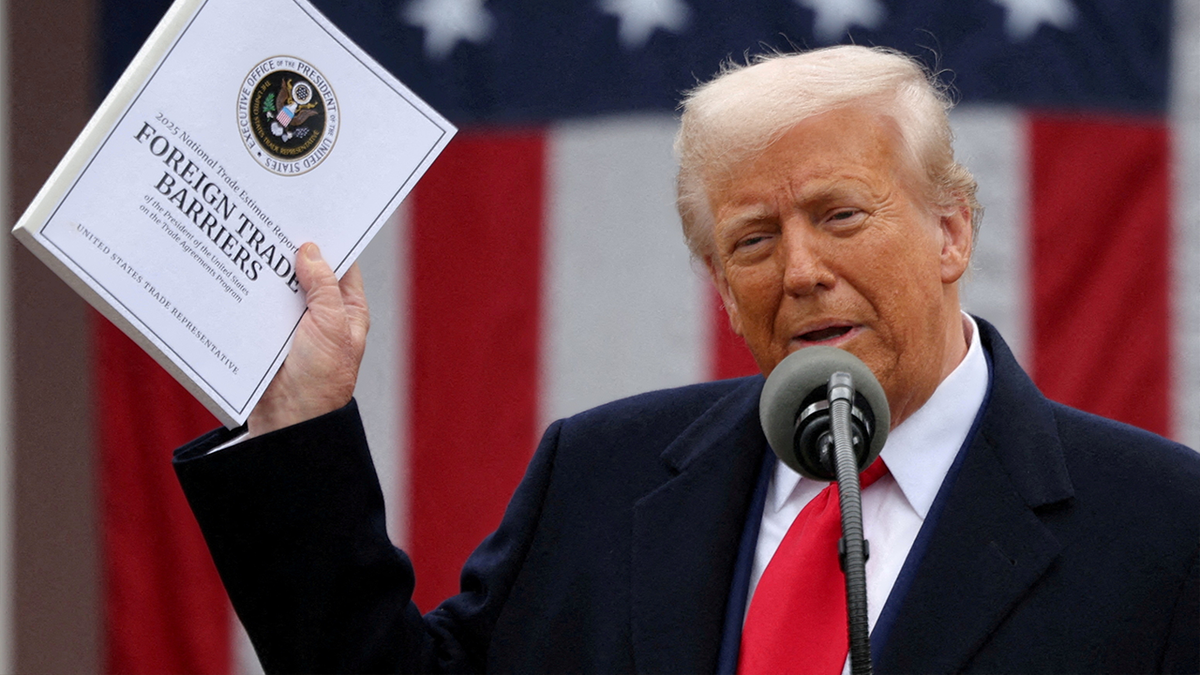
On a crisp April morning in lower Manhattan, inside the marble corridors of the U.S. Court of International Trade, something quietly extraordinary happened. Three federal judges leaned forward across the bench and asked a question that no courtroom had dared put to an American president in half a century: Is a trade deficit actually an emergency?
The April 10, 2026, hearing wasn’t dramatic in the Hollywood sense — no gavel-banging, no tearful witnesses. But the intellectual collision it staged between the executive branch’s sprawling tariff ambitions and the hard geometry of trade law may prove more consequential than any single percentage point of duty. The administration, having watched its primary legal instrument — the International Emergency Economic Powers Act — get clipped by a Supreme Court ruling in February that placed limits on IEEPA’s tariff-making scope, had pivoted sharply to an older, narrower tool: Section 122 of the Trade Act of 1974.
The argument, stripped of its legalese, goes something like this: America’s persistent trade deficit constitutes a “large and serious” balance-of-payments crisis, thereby triggering Section 122’s emergency powers and justifying a blanket 10% global tariff. It is a creative argument. It is also, as the April 10 hearing suggested with unmistakable judicial skepticism, a legal fiction dressed in emergency clothing.
Here’s why this matters far beyond New York’s trade court — and far beyond this administration’s tenure.
Section 122: A Legal Time Machine Stuck in 1974
To understand why the administration’s pivot to Section 122 is so legally tenuous, you need to travel back to the world that birthed it.
The Trade Act of 1974 was written in the immediate aftermath of the Nixon shock — the 1971 unilateral suspension of dollar convertibility to gold — and the subsequent turbulence of the Bretton Woods collapse. The world was still reconfiguring itself around floating exchange rates. “Balance of payments” crises were real, acute, measurable phenomena: countries running short of foreign reserves, facing currency runs, unable to finance imports. Section 122 was drafted as a temporary pressure valve — a 150-day surcharge ceiling of 15%, designed for genuine monetary emergencies in a fixed-rate world that no longer exists.
Applying that statute to the structural trade dynamics of 2026 is, to borrow a phrase from international trade law scholar Gary Clyde Hufbauer, like “using a fire extinguisher designed for a kitchen to fight a forest fire.” The instrument doesn’t fit the scale, the cause, or the conditions.
The United States recorded a goods and services trade deficit of approximately $901.5 billion in 2025, according to Bureau of Economic Analysis data — a staggering figure that has featured prominently in White House briefings. But a large trade deficit is not synonymous with a balance-of-payments crisis. This distinction is not semantic. It is foundational to everything that follows.
The Economics the White House Would Rather Not Discuss
The balance of payments — in the technical sense Section 122 invokes — is a comprehensive accounting identity. When you include both the current account (trade in goods and services) and the capital account (investment flows), they must, by definition, sum to zero. America runs a trade deficit precisely because it runs a capital surplus: the rest of the world, from sovereign wealth funds in Riyadh to pension managers in Frankfurt, pours capital into U.S. Treasury bonds, equities, and real estate. The dollar’s status as the world’s reserve currency is the engine of this arrangement — and also, paradoxically, its structural constraint.
As The Economist and the Tax Foundation have both noted in their analyses of Trump-era tariff economics: tariffs do not reduce trade deficits in any sustained, meaningful way. They may temporarily compress import volumes in targeted sectors, but they trigger retaliatory measures, strengthen the dollar as capital seeks safe harbor, and ultimately reconstitute the same aggregate imbalances through different channels. This is not heterodox economics; it is the mainstream consensus from Milton Friedman to Larry Summers, confirmed repeatedly in the post-2018 trade war data.
The Tax Foundation’s modeling of the 2025–2026 tariff regime estimated that a sustained 10% global tariff would reduce U.S. GDP by roughly 0.4–0.6% on a permanent basis, generate a one-time consumer price level increase of 1.2–1.8%, and create negligible long-run improvement in the trade balance. For American families already navigating elevated post-pandemic price levels, this is not an abstraction — it is a tax, regressive in its impact, falling hardest on lower-income households who spend proportionally more on imported goods.
What the Judges Actually Heard — and Why It Rattled the Room
The plaintiffs before the Court of International Trade on April 10 — a coalition that notably includes small and mid-sized businesses, the kind of enterprises that supply chains rely on but that rarely make the evening news — argued with quiet precision that the administration had failed to demonstrate the predicate conditions Section 122 requires.
The statute demands a “large and serious” balance-of-payments deficit — a term rooted in the IMF’s Article IV framework, implying reserve depletion, currency distress, and financing strain. The United States, which issues the world’s dominant reserve currency and borrows in its own denomination at rates the rest of the world cannot access, is structurally immune to the kind of balance-of-payments emergency Section 122 was designed to address.
The judges — appointed across different administrations, parsing statutory text with the detachment of surgeons — pressed the government’s counsel on exactly this point. What evidence supports a finding that this is a balance-of-payments emergency rather than a trade competitiveness frustration? The distinction is legally critical. Section 122 does not authorize tariffs to address competitiveness gaps, industrial policy grievances, or negotiating leverage. It is a narrow instrument for a specific monetary emergency.
According to Reuters’ courtroom reporting, the bench’s skepticism was palpable. Whether that skepticism crystallizes into an injunction or a full statutory invalidation remains to be seen — but the legal architecture the administration has constructed is now visibly load-bearing on a foundation the judiciary is actively questioning.
The Geopolitical Fallout: When Washington’s Emergency Becomes the World’s Problem
Step back from the courtroom for a moment, and the global stakes snap into focus.
America’s trading partners are not passive observers. The European Union, which Bloomberg has reported is preparing a phased retaliation package calibrated to maximize political pain in swing-state industries, is watching these proceedings with a mixture of legal curiosity and barely concealed alarm. Beijing, which has already imposed countermeasures and is selectively tightening rare earth export controls, views U.S. tariff volatility not merely as an economic irritant but as confirmation of a broader narrative it is actively marketing to the Global South: that the rules-based trading order is, in practice, whatever Washington says it is on any given day.
This is the deeper danger that neither legal briefs nor earnings calls fully capture. The WTO’s dispute settlement architecture — already weakened by the U.S. paralysis of its Appellate Body — cannot easily absorb an American precedent that redefines “balance-of-payments emergency” to mean “we have a trade deficit we don’t like.” If Washington can invoke that definition, so, in principle, can any nation with a current account imbalance and a sympathetic reading of its own trade statutes.
As Foreign Affairs has argued in its coverage of the post-IEEPA tariff landscape: the erosion of shared interpretive frameworks in trade law is not merely a legal inconvenience — it is a civilizational infrastructure problem. The post-World War II trading order was built not just on agreements but on the credible expectation that signatory states would not creatively reinterpret emergency provisions to avoid normal multilateral disciplines.
Legitimate Grievances, Illegitimate Instrument
None of this is to say American trade frustrations are manufactured. They are not.
The hollowing of manufacturing communities in the Midwest and South, the asymmetric market access that U.S. exporters face in protected economies, the genuine national security vulnerabilities exposed by over-reliance on single-source supply chains for semiconductors, pharmaceuticals, and rare earth inputs — these are real, documented, and politically potent for reasons that go beyond any single election cycle.
The question is not whether the United States should actively manage trade relationships. The question is how — and whether the chosen instruments are proportionate, legally defensible, and actually capable of producing the outcomes advertised.
Section 122 tariffs are none of these things. They are legally fragile, economically blunt, and diplomatically costly. They create genuine hardship for the small business plaintiffs filing in lower Manhattan — the specialty food importer, the independent electronics distributor, the craft furniture maker whose Brazilian hardwood costs just became a margin-killing emergency — without delivering the manufacturing renaissance the White House promises.
The economists who designed the post-Bretton Woods system were not naive about trade imbalances. They knew persistent deficits reflected structural factors — savings rates, investment flows, reserve currency demand — that tariffs could not meaningfully address. They built adjustment mechanisms: exchange rate flexibility, IMF facilities, multilateral negotiations. Those tools are slow and imperfect. But their imperfection does not validate the pretense that a trade deficit is a monetary crisis.
The Forward View: Courts, Congress, and the Cost of Ambiguity
Where does this legal drama lead?
The Court of International Trade could move in several directions. An injunction blocking enforcement of the Section 122 tariffs pending full adjudication would send an immediate signal to markets and trading partners. A full statutory ruling — finding that the current account deficit does not meet Section 122’s balance-of-payments threshold — would be a more durable constraint but almost certain to face expedited appeal to the Federal Circuit and potentially the Supreme Court.
Congress, meanwhile, remains largely absent from this debate — a dysfunction that deserves its own reckoning. The legislature has allowed decades of incremental executive branch tariff authority expansion without meaningful pushback or statutory clarification. Whatever the court decides, the underlying ambiguity in U.S. trade law will persist until Congress either reaffirms or reclaims its constitutional role over trade regulation.
For policymakers — in Washington, Brussels, Beijing, and beyond — the April 10 hearing is a reminder that the most durable trade policy is one anchored in law, economics, and multilateral legitimacy rather than executive creativity under pressure. Emergency powers are not economic strategy. A trade deficit is not a national emergency. And a courtroom in lower Manhattan, staffed by three patient federal judges, may be where the world’s most consequential trade experiment meets its legal reckoning.
The global economy cannot afford to wait for the ruling. But it is watching.
The author is a senior international economics correspondent and columnist whose analysis has appeared in leading global financial and policy publications. They cover trade law, monetary economics, and geopolitical risk from Washington and London.
Suggested Meta-Description (155 characters): US trade courts scrutinize Trump’s 10% global tariffs: can a trade deficit justify a balance-of-payments emergency? The legal and economic case is unraveling.
Related Links
- Bureau of Economic Analysis — U.S. Trade in Goods and Services
- Tax Foundation — Economic Effects of Trump Tariff Regime
- Congressional Research Service — Section 122 of the Trade Act of 1974
- Peterson Institute for International Economics — Tariffs and Trade Deficits
- WTO — Balance-of-Payments Provisions and Trade Law
- Foreign Affairs — The End of the Rules-Based Trade Order?
- Court of International Trade — Public Docket, April 2026
Discover more from The Economy
Subscribe to get the latest posts sent to your email.



Key Takeaways
- Rolex’s secondary market rose approximately 7.9% year-over-year as of 2026 (per WatchCharts data) — trailing Patek Philippe (+16.2%) and Tudor (+11.4%) but still outperforming Audemars Piguet (+3.4%).
- Rolex raised U.S. retail prices 4–9% in January 2026 (steel models ~5.6%, gold models ~8.7%), narrowing the historical gap between retail and pre-owned pricing.
- Not every model appreciates: steel sports references (Submariner, GMT-Master II, Daytona) have held value far better than two-tone or widely available dress references like the standard Datejust.
- The Lady-Datejust posted the sharpest 2026 gain among tracked collections — up 22.73%, from roughly $9,269 to $11,376 — driven by demand for smaller, “everyday luxury” watches.
- Gold’s rise past $2,400/oz has directly lifted the investment case for Rolex’s precious-metal references (Day-Date, Sky-Dweller, Yacht-Master).
The Model-by-Model Picture
| Category | 2026 Trend |
|---|---|
| Lady-Datejust | +22.73% (strongest performer among tracked collections) |
| Steel sports models (Submariner, GMT-Master II) | Held value well; corrected from 2022 peak but stabilized above retail |
| Daytona | Corrected from highs above $50,000 to the mid-$30,000s; still among the most sought-after references |
| Two-tone/widely available Datejust | Flat to negative — “holds value” is an overstatement for this category |
| Gold references (Day-Date, Sky-Dweller) | Lifted by gold’s rise above $2,400/oz |
Why the “Rolex Always Appreciates” Myth Is Fading
The pandemic-era boom pushed some references — the Daytona above all — to speculative highs disconnected from historical norms. Since the March 2022 peak, steel sports models have compressed meaningfully, and dealers who bought inventory near the top have in some cases faced 20–40% markdowns on liquidation. The lesson for 2026 buyers: Rolex as a category is not a monolith. Value retention depends heavily on specific reference, condition, and whether the piece comes with box and papers (“full set”).
What’s Actually Driving 2026 Strength
- Retail price increases raise the floor. When a new Submariner retails at $10,050 (up from $9,500), a pre-owned example at $11,000–$12,000 suddenly represents a smaller premium — narrowing the gap without secondary prices actually moving.
- Supply discipline remains Rolex’s core lever. The brand has never confirmed production numbers, and secondary-market premiums remain entirely a function of Rolex’s own manufacturing decisions — a risk factor as much as a support.
- Certified Pre-Owned rollout. Rolex’s now fully rolled-out CPO program has changed how buyers transact in the used market, adding a layer of brand-verified legitimacy that supports pricing.
The Case for Rolex as a Portfolio Diversifier
Financial advisors increasingly frame luxury watches not as a replacement for equities or bonds, but as a tangible, historically low-correlation diversifier — one that carries its own risks (illiquidity, condition-dependent pricing, no yield) but has demonstrated multi-decade resilience for specific references.
Is Rolex a good investment in 2026?
It depends heavily on the specific reference. Steel sports models like the Submariner and Daytona have held or grown in value; two-tone and widely available dress models generally have not. Overall, Rolex’s secondary market rose about 7.9% year-over-year in 2026, trailing Patek Philippe but ahead of Audemars Piguet.
Discover more from The Economy
Subscribe to get the latest posts sent to your email.

Navigating Mortgage and Loan Refinancing in a High-Yield Environment
Global public debt crossing critical thresholds has kept central bank policies volatile, resulting in fluctuating US Treasury yields throughout 2026. For homeowners and commercial property holders burdened by previous high-interest borrowing cycles, finding optimal refinance windows has become a high-stakes financial puzzle. Stalled disinflation and stubborn employment numbers mean rate cuts are incremental, requiring borrowers to act with precision.
Timing your mortgage or commercial loan refinance in this environment requires a deep understanding of yield curve movements and lender risk appetites.
Decoding 2026 Refinance Dynamics
The 10-Year Treasury Yield Benchmark
Mortgage rates continue to track closely with the 10-year US Treasury yield. When macroeconomic anxiety spikes debt issuance, yields rise, tightening consumer borrowing capacity. Savvy borrowers monitor weekly Treasury auctions to lock in rates during brief dip windows.
Hybrid ARMs and Alternative Structures
With fixed rates remaining elevated, 7/1 and 10/1 adjustable-rate mortgages (ARMs) have surged in popularity. These products offer lower initial monthly payments, giving borrowers breathing room until central bank easing cycles fully materialize.
| Loan Product | Current Rate Range | Best For | Key Risk Factor |
| 30-Year Fixed Mortgage | 6.2% – 6.8% | Long-term predictability | Higher initial monthly outlay |
| 7/1 Hybrid ARM | 5.5% – 5.9% | Short-term ownership / flipping | Rate reset risk after year 7 |
| Commercial Refinance | 7.0% – 8.2% | Corporate asset restructuring | Strict DSCR lender covenants |
Actionable Steps for Successful Refinancing
To maximize your chances of securing favorable refinance terms in a volatile market, follow a disciplined preparation strategy.
Boost Your Credit Score Immediately: Lenders in 2026 are applying stringent credit tiering; a 20-point increase can drop your APR by a crucial quarter-point.
Shop Regional Credit Unions: Smaller financial institutions often offer portfolio loans with more flexible underwriting than major national banks.
Calculate the Break-Even Point: Ensure your total closing costs are recouped through monthly savings within 24 months of closing.
“Market Strategist View: Refinancing in 2026 is an exercise in opportunistic timing. Borrowers must maintain immaculate financial profiles ready to strike the moment Treasury yields dip.”
Mastering the complexities of today’s debt environment ensures you can successfully lower your debt service costs and protect your long-term financial stability.
Discover more from The Economy
Subscribe to get the latest posts sent to your email.

The days of pulling generic auto insurance quotes based purely on your zip code and age are officially over. In 2026, insurance comparison engines are powered entirely by generative AI and real-time telematics. These platforms digest thousands of live data points—ranging from your driving smoothness via connected vehicle sensors to real-time traffic congestion patterns—to generate hyper-personalized premiums instantly.
For consumers, this evolution represents both a massive opportunity for savings and a hidden trap for penalty pricing. Understanding how AI algorithms evaluate risk is essential for anyone looking to lower their monthly auto insurance premiums.
How AI Comparison Engines Evaluate Your Risk Profile
Behavioral Telematics and Connected Cars
Modern cars stream performance data directly to insurance aggregators. Generative AI models analyze braking sharpness, acceleration curves, cornering G-forces, and phone distraction metrics. Drivers who maintain smooth, defensive habits are rewarded with dynamic rate cuts of up to 40% compared to traditional rating tiers.
Predictive Traffic and Weather Modeling
AI tools now cross-reference your daily commute route with predictive weather and accident probability models. If your standard parking location or driving corridor has a statistically higher incidence of uninsured motorist claims, your quotes will reflect that hyper-local risk assessment.
| Comparison Factor | Traditional Rating Model | 2026 Generative AI Model | Impact on Premium |
| Mileage & Usage | Annual estimated odometer reading | GPS tracking & live trip duration | High (up to 35% savings) |
| Driving Behavior | MVR driving record & accidents | Real-time braking, speed, & G-force | Critical (determines tier) |
| Vehicle Tech | Make, model, and safety rating | ADAS calibration & repair cost data | Moderate |
Strategies to Lower Your AI-Driven Insurance Quote
To outsmart the algorithm and secure the lowest possible premium in 2026, drivers must proactively manage their digital footprint on insurance platforms.
Opt-In for Telematics Trial Periods: Many insurers offer immediate 15% discounts just for installing their driving app; let it track safe habits for 30 days to lock in permanent savings.
Scrub Unverified Public Records: Ensure your motor vehicle report is free of clerical errors that AI risk models misinterpret as reckless behavior.
Compare AI Aggregators: Use platforms that integrate multi-carrier API feeds rather than single-brand comparison sites to find the best risk-adjusted rate.
“Industry Note: AI-driven pricing rewards transparency and precision. Drivers who actively manage their telematics data consistently out-save those relying on legacy quote calculators.”
Embracing AI comparison tools allows savvy policyholders to customize coverage limits precisely to their driving habits, eliminating wasted premium spend while ensuring robust protection.
Discover more from The Economy
Subscribe to get the latest posts sent to your email.

Neocloud Economics in 2026: GPU Debt, Utilization and Power

What Is a Neocloud? How AI GPU Clouds Work and Compare

Lula Re-elected in 2026: What Changes for the Dollar, Brazilian Stocks, and Interest Rates?

Lula Wins Brazil’s 2026 Election: Five Economic Tests for 2027

SSI November 2026 Payment: Why Benefits Arrive October 30

Russia Sanctions Waiver: What Asian Oil Buyers Gain

Asia Markets Weekly: How Oil, US Yields and the Fed Reach Tokyo, Kuala Lumpur and Karachi

Gold Near $4,000: Buy, Hold or Wait? A Pakistan Tola Price Guide

US 10-Year Treasury Yield Near 5%: The Hidden Cost for Pakistani Investors

Fed Meeting on October 28: Hike or Hold—and Why Pakistan Investors Should Care

Can Pakistan Turn US–Iran Mediation Into an Economic Dividend?

Oil Above $100: How Higher Crude Prices Reach Pakistan’s Rupee, Petrol and Imports

SBP Interest Rate at 11.5%: What Will Decide Pakistan’s Next Policy Move?

The Global South: Debt, Climate Finance and Investment in 2026

Crude Oil & Petroleum Market Analysis: OPEC+ Decisions and Price Forecasts

Top US Convenience Store Chains: Store Counts, EV Charging, and Sales Trends

Algorithmic Dogfights: Why the U.S. and China Must Establish Rules of Engagement for Autonomous Air Power

Who Is Shivon Zilis? The Neuralink Executive at the Center of the Musk–OpenAI Trial

Social Security Extra $90 Deposit: Who Qualifies for the October 2026 Medicare Rebate?

Corporate America Faces a New Debt Test as US Borrowing Costs Surge

Global Economic Outlook 2026: 7 Forces Reshaping Markets, Trade and Business

Gold Price Outlook 2026: The Forces Behind the Forecasts—and What Could Reverse Them

Gold Falls 3.7% as Yields Surge: Is Gold Still a Safe Haven in 2026?

MAS Allocates S$1.45 Billion to Five Asset Managers in Third EQDP Batch: Total Deployment Reaches S$5.4 Billion

Stock Market Today: Dow, S&P 500, and Nasdaq Retreat as Treasury Yields

Anthropic Bans Sustained Abuse of Claude AI Under New Usage Policy Effective November 12, 2026

Stock Market Crash in 2026? Warning Signs, Scenarios and a Calm Investor Checklist

Geopolitics and Your Portfolio: How International Affairs Move Global Markets
-

 Markets & Finance10 months ago
Top 15 Stocks for Investment in 2026 in PSX: Your Complete Guide to Pakistan’s Best Investment Opportunities
-

 Analysis8 months ago
Johor’s Investment Boom: The Hidden Costs Behind Malaysia’s Most Ambitious Economic Surge
-

 Analysis8 months ago
Top 10 Stocks for Investment in PSX for Quick Returns in 2026
-

 Banks9 months ago
Best Investments in Pakistan 2026: Top 10 Low-Price Shares and Long-Term Picks for the PSX
-

 Analysis9 months ago
Brazil’s Rare Earth Race: US, EU, and China Compete for Critical Minerals as Tensions Rise
-

 Investment10 months ago
Top 10 Mutual Fund Managers in Pakistan for Investment in 2026: A Comprehensive Guide for Optimal Returns
-

 Global Economy10 months ago
15 Most Lucrative Sectors for Investment in Pakistan: A 2025 Data-Driven Analysis
-

 Global Economy10 months ago
Pakistan’s Export Goldmine: 10 Game-Changing Markets Where Pakistani Businesses Are Winning Big in 2025