
Analysis
Poste Italiane’s €10.8bn Telecom Italia Gamble Is Italy’s Boldest Digital Sovereignty Play in Decades — And the Critics Are Missing the Point

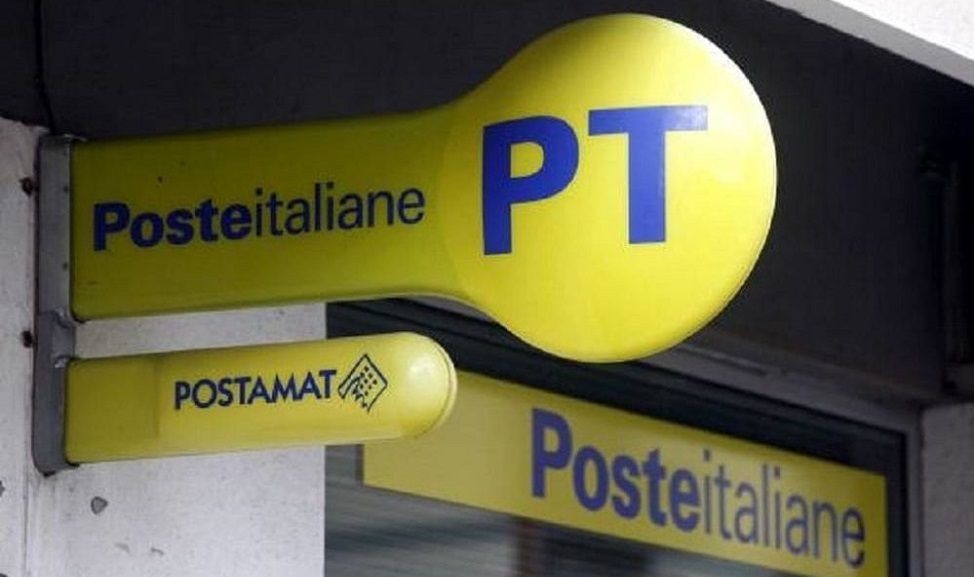
There is a moment in every audacious corporate move when the market panics, analysts reach for their sharpest vocabulary, and pundits line up to declare the deal strategically baffling. For Matteo Del Fante, the quietly methodical CEO of Poste Italiane who has spent nearly a decade transforming an Italian postal company into a financial-digital powerhouse, that moment arrived on the morning of March 24, 2026, when his company’s shares plunged roughly 7% after a surprise Sunday-night announcement that Poste would launch a €10.8 billion cash-and-share bid for full control of Telecom Italia — effectively returning Italy’s former phone monopoly to the embrace of the state, three decades after its privatization.
Picture Del Fante fielding questions on an analyst call that Monday morning. Calm, precise, slightly amused by the uproar. “We realized,” he told the assembled analysts, “that we were probably not going fast enough for the opportunity we had on the table.” It is the kind of remark that only lands properly if you understand what that table holds — and how long Del Fante has been circling it.
This, in essence, is the story the market has struggled to read. It is not a story about renationalization nostalgia or Giorgia Meloni’s industrial policy instincts, though those are relevant backdrops. It is a story about who controls the data arteries, cloud infrastructure, and cybersecurity architecture of a G7 economy in the age of artificial intelligence. Italy, it turns out, has decided the answer should not be a Connecticut-headquartered private equity firm.
The Real Story Behind the Poste Italiane Telecom Italia Bid
The offer values TIM at €0.167 in cash plus 0.0218 newly issued Poste Italiane shares per TIM share — a 9% premium to TIM’s closing price on March 20 — with the express goal of achieving a full delisting from Euronext Milan. CEP-Research Poste, which is 64% owned by the Italian government, already holds a 27.3% stake in TIM and wants to take full control of the country’s primary telecommunications operator. Sharecast.com The total consideration, in the event of full acceptance, comes to approximately €10.8 billion.
On paper, the numbers look modest. Barclays said in a report the bid’s 9% premium looked low, given also the benefits TIM might be able to get from further consolidation in the hyper-competitive Italian telecoms market. Sahm Capital James Ratzer of New Street Research went further, characterizing the move as an opportunistic attempt at renationalization, suggesting the premium was insufficient. TIM’s shares, which had more than doubled over the preceding twelve months, stayed stubbornly below the offer price after the announcement — the market’s way of suggesting it wanted more.
But premium debates, while legitimate, can blind analysts to the architecture of what is actually being assembled. Del Fante’s move is not a financial arbitrage. It is an infrastructure thesis dressed in corporate deal clothes.
Why a 9% Premium Is the Wrong Lens Entirely
Del Fante’s most incisive response to his critics came in an interview with the Financial Times published this week. He made two arguments that deserve serious attention.
The first concerns track record. “Since we acquired our stake in TIM, the company has outperformed. We are confident we deserve the same trust now that we have launched the tender offer,” he told the newspaper. Askanews This is not bravado. It is a rebuke to critics who treat state-linked ownership as synonymous with under-performance. Under Poste’s stewardship as TIM’s largest shareholder, the trajectory improved measurably.
The second argument is the more structurally interesting one. Del Fante noted that the offer would actually increase free float, since the state’s controlling share in the combined entity would fall from 65% to 50%, with new shares being issued to TIM’s investors. “In this sense,” he said, “it is a step towards the market.” Askanews This is, if you squint past the statist optics, a genuine point. The critics calling this renationalization are describing a transaction in which state ownership is actually diluted relative to Poste’s current structure.
Then there is the dividend argument — perhaps the most practically compelling one for retail TIM shareholders. “The offer is fair. We plan to start paying a dividend, which TIM shareholders haven’t received for five years,” Del Fante stated. Il Sole 24 ORE He added: “If you hold TIM today and accept the offer, you continue to benefit from the upside. The point is not just the immediate value we offer, but the opportunity to benefit from future synergies and a stronger growth trajectory under Poste.” Poste Italiane
For TIM investors who have watched the company cycle through debt crises, management changes, a contentious KKR-led infrastructure sale, and years of dividend drought, this framing carries real weight. The 9% cash premium is the floor, not the ceiling of the offer’s value.
The €700 Million Synergy Case: Credible or Corporate Fantasy?
Poste anticipates €700 million in annual pre-tax synergies, with €500 million derived from cost reductions and the remainder from cross-selling across their combined digital platforms. Total Telecom Sceptics are right to interrogate these numbers — synergy projections in M&A are notoriously optimistic. But the structure of this particular combination provides more credibility than the typical industrial merger.
Poste Italiane is not a stranger to TIM’s world. The two companies already share commercial initiatives; Poste Mobile, Poste’s own MVNO operation, runs on TIM’s network. The customer overlap between Poste’s 35 million-plus financial services clients and TIM’s consumer subscriber base is a cross-selling runway that does not require heroic assumptions to monetize. Del Fante and CFO Camillo Greco detailed synergy timelines: 50% of cost savings expected to land in 2027, 50% in 2028. Revenue synergies — the harder-to-capture kind — are projected to follow at 20–30% per year across the same window. MilanoFinanza
Earnings per share, Del Fante projected, will be positive as early as 2027 and in double-digit growth territory from 2028 onwards. FIRSTonline For a transaction of this scale and complexity, that timeline is aggressive but not implausible — particularly given that TIM, under Pietro Labriola’s tenure, has successfully executed its most consequential restructuring in a generation.
Data Sovereignty in the Age of AI: Poste’s Hidden Edge
Here is the argument that most financial analysis has inadequately grappled with, and which places the Poste–TIM deal in its proper geopolitical frame.
“Controlling core digital infrastructure — made of networks, cloud, edge computing — is essential to secure a sustainable competitive advantage,” Del Fante told analysts. The deal would put Poste in control of TIM’s data-centre network and its cybersecurity unit Telsy, and would expand Poste’s role in digital services directed at consumers, large companies, and government bodies. Global Banking and Finance
Telsy is not a household name outside Italian defence and intelligence circles. But it is one of the country’s most strategically sensitive assets — a certified cryptography and cybersecurity provider with deep government contracts. Folding it into a group that also controls postal delivery, BancoPosta’s financial rails, insurance, and now telecoms creates something that Italy’s competitors in European industrial policy — France with Orange, Germany with Deutsche Telekom — have maintained for decades: a vertically integrated national platform across which sensitive data never needs to leave the national regulatory perimeter.
Italy became the first country in the EU to approve a comprehensive law regulating artificial intelligence aligned with the EU’s landmark AI Act in September 2025, appointing the Agency for Digital Italy and the National Cybersecurity Agency to enforce it. International Trade Administration The Poste–TIM combination, if consummated, would position the resulting entity as the natural execution arm for Italy’s sovereign AI and cloud strategy. The combined group’s data centres would become the beating heart of a national cloud infrastructure at a moment when European governments are scrambling to reduce dependency on US hyperscalers and, increasingly, on Chinese hardware suppliers.
Poste Italiane aims to create a single company that would “represent the country’s largest connected infrastructure platform, a true engine of innovation, a hub of infrastructural and technological security, and a strategic pillar of the national economy” enabling “the country’s digital transformation” and the convergence of “networks, cloud, edge computing, data and digital identity.” TelecomTV
This is not political rhetoric. It is a description of what the AI-era national champion looks like when built from existing industrial assets rather than from scratch.
Why Renationalization Beats Another Failed Privatization — Revisited
The backdrop to this deal matters enormously, and most English-language commentary has underweighted it. Italy’s 1997 privatization of Telecom Italia was, in retrospect, a case study in how not to privatize a strategic national asset. The company cycled through successive leveraged buyouts by Olivetti and then a sequence of private investors that saddled it with debt levels — peaking near €26 billion — that consumed management attention for the better part of two decades and starved capital expenditure. TIM’s debt problems were a direct legacy of those successive leveraged buyouts that followed the privatization. Sahm Capital
The sale of NetCo — TIM’s fixed-line network — to a KKR-led consortium in 2024 for approximately €22 billion was the culmination of that saga. Italy retrieved partial control (the Ministry of Economy holds roughly 16% of the new FiberCop entity), but the country’s core fixed infrastructure now sits primarily in the hands of American private equity. The lesson absorbed by Italian policymakers was sharp: strategic assets sold under duress tend not to return.
Del Fante has noted that Poste has been monitoring TIM for five years — across successive governments. The bid is the result not of political pressure but of a five-year industrial thesis that became executable only once Pietro Labriola completed TIM’s deleveraging in 2024 and the company’s new institutional identity became clear. MilanoFinanza This is not opportunism. It is patience rewarded.
The Risks Are Real — And Del Fante Knows It
Intellectual honesty requires confronting the genuine risks in this transaction, because they are neither trivial nor easily dismissed.
The funding mechanism is the most discussed: the deal is partly financed through newly issued Poste shares, which explains the 7% share price drop on announcement day. Dilution is real. In the case of 100% adhesion to the offer, TIM shareholders would hold 22% of Poste’s capital, while the diluting effect for the state’s controlling share would be around 23%. Il Sole 24 ORE Managing that dilution without compromising Poste’s own balance sheet discipline will be Del Fante’s most technically demanding task.
Execution risk is the second major concern. Integrating a telecoms operator with over 40,000 Italian employees into a postal-financial conglomerate is not a weekend project. Del Fante has been careful to specify that TIM will remain “stand alone” within the group, with its organisational structure and iconic brand protected. FIRSTonline That may partly be political messaging — TIM’s brand has deep cultural resonance in Italy — but it also reflects a pragmatic integration approach that gives the merged entity time to capture cost synergies before attempting deeper structural changes.
On antitrust risk, Del Fante has been categorical: “There are no risks,” he told analysts, noting that no involvement from the European Commission’s competition directorate is expected. MilanoFinanza The deal does not obviously create market concentration problems since Poste and TIM operate in largely complementary rather than competing segments. But regulatory timelines in Italy can surprise, and the transaction must receive Italian antitrust clearance before proceeding.
The tender offer itself is scheduled to launch in July, with closing targeted for the fourth quarter of 2026 — an ambitious but feasible window if no shareholder fights materialize.
Del Fante’s Fourth Act: The CEO Who Built Italy Inc.
It is worth pausing on the man executing this transaction. Italy nominated Del Fante to a fourth term as Poste Italiane CEO, a nomination subject to shareholder approval at the April 27 general meeting — keeping a trusted veteran in his role overseeing a group central to the country’s savings system and increasingly active in strategic industries. Bloomberg This is a man the Italian state trusts with its most sensitive financial infrastructure — and is now entrusting with its telecoms future.
Del Fante’s tenure at Poste since 2017 has been defined by one consistent insight: that Italy’s large public companies are underused platforms. He transformed a sleepy postal group into a financial services leader, Italy’s top insurer by certain metrics, a logistics disruptor, and now the pivot of a national digital champion. He has said the bid was triggered partly by investor behaviour at a recent roadshow: shareholders were uninterested in everything except Poste’s digital transition and AI strategy, asking almost exclusively about those themes. Global Banking and Finance When your investors tell you what the business should become, it pays to listen.
Europe’s Industrial Policy Is the Bigger Story Here
Zoom out far enough and the Poste–TIM deal looks like the most concrete expression yet of a European reckoning that has been building since the Covid pandemic disrupted supply chains, since the Russian invasion of Ukraine exposed energy dependency, and since the AI race threatened to leave European companies perpetually behind American and Chinese hyperscalers.
The combined revenues of the two entities would reach approximately €27 billion, making the resulting group one of the largest industrial companies in Italy with a workforce of over 150,000. Sharecast.com That is not a national champion by default — it is one forged from assets that already exist, already serve millions of Italians, and already hold the licenses and regulatory relationships that would take a new entrant decades to replicate.
The critics who reach reflexively for “renationalization” as a pejorative are applying a 1990s Washington Consensus framework to a 2026 geopolitical reality. In that reality, the question is not whether the state should own strategic digital infrastructure — France, Germany, Finland, and others never really stopped — but whether the ownership structure actually serves the public interest and generates competitive returns. Del Fante’s bet is that a professionally managed, publicly listed, diversified group with a state anchor shareholder can thread that needle better than a private equity firm optimizing for a seven-year exit.
He may be right. The €700 million synergy case, the dividend restart, the AI-era data sovereignty logic, and TIM CEO Pietro Labriola’s endorsement of a deal that he has described as creating a “national champion” — these are not the signatures of a defensive, backward-looking transaction.
The Verdict: Italy Is Playing the Long Game — Finally
The Poste Italiane Telecom Italia bid is not a perfect deal. The 9% premium will need to satisfy shareholders who have watched TIM double in a year. The integration risks are genuine. The synergy timeline is tight. And there will be political noise — there always is when Italy reasserts itself in the ownership of major national assets.
But judged against the alternative — leaving TIM’s cloud assets, cybersecurity capabilities, and enterprise data infrastructure in the orbit of a shareholder base with no particular loyalty to Italian digital sovereignty — Del Fante’s move begins to look less like nostalgia and more like strategic lucidity.
“The point is not just the value we offer immediately,” Del Fante told the Financial Times this week, “but the possibility to benefit from future synergies and a stronger growth trajectory under Poste.” In the age of artificial intelligence, data sovereignty, and European industrial policy revival, that future trajectory may be worth considerably more than a 9% premium suggests.
Italy has spent thirty years regretting the TIM privatization. Del Fante is betting it will spend the next thirty grateful for what comes next. On present evidence, that is not a reckless bet at all.
Discover more from The Economy
Subscribe to get the latest posts sent to your email.



Key Takeaways
- Rolex’s secondary market rose approximately 7.9% year-over-year as of 2026 (per WatchCharts data) — trailing Patek Philippe (+16.2%) and Tudor (+11.4%) but still outperforming Audemars Piguet (+3.4%).
- Rolex raised U.S. retail prices 4–9% in January 2026 (steel models ~5.6%, gold models ~8.7%), narrowing the historical gap between retail and pre-owned pricing.
- Not every model appreciates: steel sports references (Submariner, GMT-Master II, Daytona) have held value far better than two-tone or widely available dress references like the standard Datejust.
- The Lady-Datejust posted the sharpest 2026 gain among tracked collections — up 22.73%, from roughly $9,269 to $11,376 — driven by demand for smaller, “everyday luxury” watches.
- Gold’s rise past $2,400/oz has directly lifted the investment case for Rolex’s precious-metal references (Day-Date, Sky-Dweller, Yacht-Master).
The Model-by-Model Picture
| Category | 2026 Trend |
|---|---|
| Lady-Datejust | +22.73% (strongest performer among tracked collections) |
| Steel sports models (Submariner, GMT-Master II) | Held value well; corrected from 2022 peak but stabilized above retail |
| Daytona | Corrected from highs above $50,000 to the mid-$30,000s; still among the most sought-after references |
| Two-tone/widely available Datejust | Flat to negative — “holds value” is an overstatement for this category |
| Gold references (Day-Date, Sky-Dweller) | Lifted by gold’s rise above $2,400/oz |
Why the “Rolex Always Appreciates” Myth Is Fading
The pandemic-era boom pushed some references — the Daytona above all — to speculative highs disconnected from historical norms. Since the March 2022 peak, steel sports models have compressed meaningfully, and dealers who bought inventory near the top have in some cases faced 20–40% markdowns on liquidation. The lesson for 2026 buyers: Rolex as a category is not a monolith. Value retention depends heavily on specific reference, condition, and whether the piece comes with box and papers (“full set”).
What’s Actually Driving 2026 Strength
- Retail price increases raise the floor. When a new Submariner retails at $10,050 (up from $9,500), a pre-owned example at $11,000–$12,000 suddenly represents a smaller premium — narrowing the gap without secondary prices actually moving.
- Supply discipline remains Rolex’s core lever. The brand has never confirmed production numbers, and secondary-market premiums remain entirely a function of Rolex’s own manufacturing decisions — a risk factor as much as a support.
- Certified Pre-Owned rollout. Rolex’s now fully rolled-out CPO program has changed how buyers transact in the used market, adding a layer of brand-verified legitimacy that supports pricing.
The Case for Rolex as a Portfolio Diversifier
Financial advisors increasingly frame luxury watches not as a replacement for equities or bonds, but as a tangible, historically low-correlation diversifier — one that carries its own risks (illiquidity, condition-dependent pricing, no yield) but has demonstrated multi-decade resilience for specific references.
Is Rolex a good investment in 2026?
It depends heavily on the specific reference. Steel sports models like the Submariner and Daytona have held or grown in value; two-tone and widely available dress models generally have not. Overall, Rolex’s secondary market rose about 7.9% year-over-year in 2026, trailing Patek Philippe but ahead of Audemars Piguet.
Discover more from The Economy
Subscribe to get the latest posts sent to your email.

Navigating Mortgage and Loan Refinancing in a High-Yield Environment
Global public debt crossing critical thresholds has kept central bank policies volatile, resulting in fluctuating US Treasury yields throughout 2026. For homeowners and commercial property holders burdened by previous high-interest borrowing cycles, finding optimal refinance windows has become a high-stakes financial puzzle. Stalled disinflation and stubborn employment numbers mean rate cuts are incremental, requiring borrowers to act with precision.
Timing your mortgage or commercial loan refinance in this environment requires a deep understanding of yield curve movements and lender risk appetites.
Decoding 2026 Refinance Dynamics
The 10-Year Treasury Yield Benchmark
Mortgage rates continue to track closely with the 10-year US Treasury yield. When macroeconomic anxiety spikes debt issuance, yields rise, tightening consumer borrowing capacity. Savvy borrowers monitor weekly Treasury auctions to lock in rates during brief dip windows.
Hybrid ARMs and Alternative Structures
With fixed rates remaining elevated, 7/1 and 10/1 adjustable-rate mortgages (ARMs) have surged in popularity. These products offer lower initial monthly payments, giving borrowers breathing room until central bank easing cycles fully materialize.
| Loan Product | Current Rate Range | Best For | Key Risk Factor |
| 30-Year Fixed Mortgage | 6.2% – 6.8% | Long-term predictability | Higher initial monthly outlay |
| 7/1 Hybrid ARM | 5.5% – 5.9% | Short-term ownership / flipping | Rate reset risk after year 7 |
| Commercial Refinance | 7.0% – 8.2% | Corporate asset restructuring | Strict DSCR lender covenants |
Actionable Steps for Successful Refinancing
To maximize your chances of securing favorable refinance terms in a volatile market, follow a disciplined preparation strategy.
Boost Your Credit Score Immediately: Lenders in 2026 are applying stringent credit tiering; a 20-point increase can drop your APR by a crucial quarter-point.
Shop Regional Credit Unions: Smaller financial institutions often offer portfolio loans with more flexible underwriting than major national banks.
Calculate the Break-Even Point: Ensure your total closing costs are recouped through monthly savings within 24 months of closing.
“Market Strategist View: Refinancing in 2026 is an exercise in opportunistic timing. Borrowers must maintain immaculate financial profiles ready to strike the moment Treasury yields dip.”
Mastering the complexities of today’s debt environment ensures you can successfully lower your debt service costs and protect your long-term financial stability.
Discover more from The Economy
Subscribe to get the latest posts sent to your email.

The days of pulling generic auto insurance quotes based purely on your zip code and age are officially over. In 2026, insurance comparison engines are powered entirely by generative AI and real-time telematics. These platforms digest thousands of live data points—ranging from your driving smoothness via connected vehicle sensors to real-time traffic congestion patterns—to generate hyper-personalized premiums instantly.
For consumers, this evolution represents both a massive opportunity for savings and a hidden trap for penalty pricing. Understanding how AI algorithms evaluate risk is essential for anyone looking to lower their monthly auto insurance premiums.
How AI Comparison Engines Evaluate Your Risk Profile
Behavioral Telematics and Connected Cars
Modern cars stream performance data directly to insurance aggregators. Generative AI models analyze braking sharpness, acceleration curves, cornering G-forces, and phone distraction metrics. Drivers who maintain smooth, defensive habits are rewarded with dynamic rate cuts of up to 40% compared to traditional rating tiers.
Predictive Traffic and Weather Modeling
AI tools now cross-reference your daily commute route with predictive weather and accident probability models. If your standard parking location or driving corridor has a statistically higher incidence of uninsured motorist claims, your quotes will reflect that hyper-local risk assessment.
| Comparison Factor | Traditional Rating Model | 2026 Generative AI Model | Impact on Premium |
| Mileage & Usage | Annual estimated odometer reading | GPS tracking & live trip duration | High (up to 35% savings) |
| Driving Behavior | MVR driving record & accidents | Real-time braking, speed, & G-force | Critical (determines tier) |
| Vehicle Tech | Make, model, and safety rating | ADAS calibration & repair cost data | Moderate |
Strategies to Lower Your AI-Driven Insurance Quote
To outsmart the algorithm and secure the lowest possible premium in 2026, drivers must proactively manage their digital footprint on insurance platforms.
Opt-In for Telematics Trial Periods: Many insurers offer immediate 15% discounts just for installing their driving app; let it track safe habits for 30 days to lock in permanent savings.
Scrub Unverified Public Records: Ensure your motor vehicle report is free of clerical errors that AI risk models misinterpret as reckless behavior.
Compare AI Aggregators: Use platforms that integrate multi-carrier API feeds rather than single-brand comparison sites to find the best risk-adjusted rate.
“Industry Note: AI-driven pricing rewards transparency and precision. Drivers who actively manage their telematics data consistently out-save those relying on legacy quote calculators.”
Embracing AI comparison tools allows savvy policyholders to customize coverage limits precisely to their driving habits, eliminating wasted premium spend while ensuring robust protection.
Discover more from The Economy
Subscribe to get the latest posts sent to your email.

China Stocks vs. Japan Stocks: Where Should You Invest in Late 2026?

VIX Index Explained: How to Trade Wall Street’s Fear Gauge Today

Commercial vs Residential Real Estate: Which Wins in 2026?

Presidential Stock Market Performance: How Trump’s Second Term Compares to History

2026 Real Estate Market News: Are We Heading for a Correction?

Bitcoin Price Forecast 2026–2027: Will the 4-Year Cycle Hold?

Fidelity Crypto vs. Traditional Brokerages: A Guide for Modern Investors

The 2026 Global Smartphone Market: AI Integration and Competitor Analysis

SpaceX IPO: How Aerospace Is Reshaping Tech Startup News

Fidelity Investments Review: Maximizing Returns in a Volatile Stock Market

How Crypto Transformed the Trump Fortune: A $1.4 Billion Financial Breakdown

Global Pension Systems Ranked: The World’s Best and Worst Retirement Frameworks

Global Supply Chain Vulnerabilities: From Eurasian Trade Corridors to Food Consumer Recalls

Why 5% U.S. Treasury Yields Signal a Global Market Regime Shift.

US-China Relations in Q3 2026: Trade Tariffs and Supply Chain Risks

Top 30 Stocks for Investment in PSX for Massive ROI in 2026

SpaceX Starship Flight 14: First Orbital Attempt & Starlink V3 Launch Explained

The 2026 Crypto Regulatory Shift: What It Means for Institutional Investors

AI Chip Stocks 2026: The Best Semiconductor Investments Beyond Marvell

Tween Back-to-School Trends 2026: What’s Driving the $85B Season

AI-Powered Training: The Next Multi-Billion Dollar Ecosystem in Fitness

Oil Prices Break $100 in 2026: Middle East Conflict & Energy Markets

10-Year Treasury Yield Hits 4.80%: What It Means for Rates & Portfolios

Fidelity Investments Review 2026: SPAXX Yields & Zero-Fee Funds

BRICS+ Cross-Border Payments 2026: Interoperability Explained

Shein Clothes Quality & Safety in 2026: What Lab Tests Show

MRVL Earnings 2026: Why Marvell Sank Despite Beating Estimates

China’s US$10.8 Billion Trade Shortcut: Why the Pinglu Canal Matters
-

 Markets & Finance9 months ago
Top 15 Stocks for Investment in 2026 in PSX: Your Complete Guide to Pakistan’s Best Investment Opportunities
-

 Analysis7 months ago
Johor’s Investment Boom: The Hidden Costs Behind Malaysia’s Most Ambitious Economic Surge
-

 Analysis7 months ago
Top 10 Stocks for Investment in PSX for Quick Returns in 2026
-

 Analysis8 months ago
Brazil’s Rare Earth Race: US, EU, and China Compete for Critical Minerals as Tensions Rise
-

 Banks8 months ago
Best Investments in Pakistan 2026: Top 10 Low-Price Shares and Long-Term Picks for the PSX
-

 Investment8 months ago
Top 10 Mutual Fund Managers in Pakistan for Investment in 2026: A Comprehensive Guide for Optimal Returns
-

 Global Economy9 months ago
15 Most Lucrative Sectors for Investment in Pakistan: A 2025 Data-Driven Analysis
-

 Global Economy9 months ago
Pakistan’s Export Goldmine: 10 Game-Changing Markets Where Pakistani Businesses Are Winning Big in 2025