
AI
OpenAI Robotics Chief Caitlin Kalinowski Quits Over Pentagon Deal: A Matter of Principle


On the morning of Saturday, March 8, 2026, Caitlin Kalinowski — one of the most accomplished hardware engineers in Silicon Valley and, until that day, OpenAI’s head of robotics — posted a resignation letter that read less like a grievance and more like a brief filed before history. “This wasn’t an easy call,” she wrote on X and LinkedIn. “AI has an important role in national security. But surveillance of Americans without judicial oversight and lethal autonomy without human authorization are lines that deserved more deliberation than they got.” A second post was more surgical: “My issue is that the announcement was rushed without the guardrails defined. It’s a governance concern first and foremost.” A third, offered perhaps for those who suspected personal animosity toward colleagues or leadership, offered a quiet clarification: “This was about principle, not people.”
In the compressed, often performative world of tech resignations, these three statements were remarkable for what they were not: they were not vague, not self-promotional, and not hedged. The OpenAI Pentagon deal — announced roughly a week earlier amid the wreckage of Anthropic’s collapse from government favor — had acquired its most credible internal critic. The question, for investors, policymakers, and the millions who have handed their most intimate intellectual tasks to ChatGPT, is what happens next.
The Backdrop: Why Anthropic Said No and OpenAI Said Yes
To understand why Caitlin Kalinowski quit, you first need to understand why Anthropic effectively lost its seat at the table.
In late February 2026, the Trump administration moved to designate Anthropic as a “supply-chain risk” after the company refused to remove safety constraints from AI systems being evaluated for Pentagon deployment. The designation — extraordinary in its scope — effectively barred Anthropic from key federal procurement channels and sent a chill through the broader AI safety community. The Economist reported that Anthropic’s chief executive had offered a public apology for language critical of the Pentagon’s approach, while simultaneously filing suit to contest the supply-chain designation — a posture that satisfied no one cleanly but illustrated the profound bind facing any AI company that takes its own safety commitments seriously in a Washington now hungry for deployable capability.
OpenAI moved with speed. Within days of the Anthropic fallout becoming public, the company announced an agreement to deploy AI systems — including models built on the GPT-4 architecture — on classified Department of Defense networks. The deal, as presented, included a set of claimed “red lines”: no use for domestic surveillance of American citizens without judicial oversight, and no deployment in autonomous lethal decision-making without explicit human authorization. These commitments were described as contractually enforceable and backed by technical safeguards. Reuters confirmed the structure of the agreement on March 7, noting that OpenAI had made internal commitments about the scope of permitted use cases.
The problem, as Kalinowski’s exit would make clear, was not the destination — it was the journey, and whether sufficient architecture had been built along the way.
Kalinowski’s Stand: From Meta AR to OpenAI Robotics — A Line in the Sand
Caitlin Kalinowski was not a peripheral figure at OpenAI. She had been recruited in November 2024 from Meta, where she had served as the lead hardware engineer for Project Orion — Meta’s most ambitious augmented reality effort and, by most technical assessments, the most sophisticated AR device yet produced by a major tech company. Her hiring was seen as a signal that OpenAI was serious about the physical layer of AI: robots, sensors, embodied intelligence, hardware that could operate in the real world rather than the controlled environment of a data center.
For someone in that role, the Pentagon partnership was not abstract. Robotics and hardware sit precisely at the intersection where AI meets the physical domain — which is to say, precisely where the most consequential questions about lethal autonomy and surveillance hardware arise. Unlike a software engineer working on a language model far removed from physical deployment, Kalinowski’s domain was the place where the rubber, quite literally, meets the road.
TechCrunch’s detailed reconstruction of events suggests that internal deliberations about the Pentagon deal’s scope were truncated — that the timeline was driven by the political opportunity created by Anthropic’s exclusion rather than by a mature internal governance process. Whether that account is entirely accurate is difficult to verify from the outside. What is verifiable is that Sam Altman himself subsequently acknowledged the rollout had been “opportunistic and sloppy,” and that the company moved to amend its terms following the announcement — a remarkable concession that validated, at minimum, the procedural objection at the heart of Kalinowski’s departure.
That amended framework, as the Financial Times reported, attempted to more precisely delineate the scope of permissible military use and to establish clearer governance mechanisms. Critics — including some who did not share Kalinowski’s decision to resign — noted that the amendments came after, not before, the public announcement: a sequencing that undermined the credibility of the original process.
The Economic and Geopolitical Stakes
The Sam Altman Pentagon deal controversy arrives at a moment of extraordinary financial and strategic sensitivity for OpenAI. The company’s most recent private valuation exceeded $150 billion, a figure premised not simply on its current revenue but on a projected future in which OpenAI becomes foundational infrastructure for both the private economy and, increasingly, the national security apparatus. Defense-tech investment in the US has surged since 2022; the convergence of frontier AI capability with DoD contracting is now a central axis of Silicon Valley’s growth narrative.
The economics of the Pentagon deal, properly understood, are attractive. Government contracts offer revenue stability that consumer subscriptions do not; classified deployments command premium pricing; and a sustained DoD relationship confers a strategic moat against competitors — including international ones — that money alone cannot buy. Seen through that lens, the decision to pursue the partnership is commercially rational.
But the consumer dimension is where the math becomes more complicated. Fortune’s analysis noted that ChatGPT uninstalls in the US surged by 295% in the week following the Pentagon announcement — a figure that, if sustained even partially, represents a meaningful threat to the subscription revenue base that currently underpins OpenAI’s operating economics. Simultaneously, Claude — Anthropic’s flagship product — rose to the top two positions in the US App Store, a direct beneficiary of the perception, however imperfectly calibrated, that it represents a more principled alternative.
This dynamic illuminates a tension that will define AI’s next chapter: the revenue logic of government partnerships and the trust logic of consumer adoption do not always point in the same direction. OpenAI is now navigating both simultaneously, with the credibility cost of the governance misstep weighing on both.
Geopolitically, the stakes extend well beyond OpenAI’s balance sheet. The United States’ ability to project technological leadership — and to persuade democratic allies that American AI is the right foundation for their own defense and economic infrastructure — depends in part on the perception that US AI development operates within a comprehensible, principled framework. A high-profile resignation by a senior AI executive citing surveillance and lethal autonomy concerns is precisely the kind of signal that adversaries amplify and allies register with discomfort. Beijing’s AI governance narrative — that American AI is militarized, ungoverned, and therefore unsafe for partner nations — receives unintended reinforcement when the governance critiques come from inside the house.
The implications for the US-China AI competition are layered. China’s state-aligned AI development model faces its own credibility constraints with potential partners in the Global South and among non-aligned democracies. But every governance stumble on the American side narrows the differentiation. The OpenAI military AI deal ethics debate is, in this sense, not merely a domestic regulatory question — it is a soft-power variable in a competition that will run for decades.
The Governance Failure at the Center of It All
It is worth being precise about what Kalinowski did and did not say. She did not argue that AI has no role in national security — she said explicitly the opposite. She did not claim that the deal’s stated red lines were illegitimate. What she argued, with notable precision, was that the process was broken: that the guardrails had not been defined before the announcement was made, and that deliberation had been sacrificed to speed.
This is a governance critique, not an ideological one — and it is, arguably, the harder critique to dismiss. An ideological objection to military AI can be engaged with on policy grounds. A process objection, particularly when corroborated by the CEO’s own admission that the rollout was “sloppy,” points to institutional dysfunction of a different and more consequential kind.
The question it raises is structural: does OpenAI — or any frontier AI company operating at this scale and velocity — have governance mechanisms capable of handling the decisions now being placed before it? The company’s board was restructured in late 2023 following the brief and chaotic dismissal of Sam Altman; it has since been reconstituted with a stronger commercial orientation and reduced representation of the safety-first voices that originally dominated it. Whether that reconstituted board is equipped to deliberate with appropriate rigor on questions of OpenAI Kalinowski resignation surveillance, lethal autonomy, and classified military deployment is a question that regulators in Brussels, London, and Washington are now, quietly, asking.
The European Union’s AI Act, which entered its enforcement phase in 2025, contains explicit provisions on high-risk AI uses — provisions that may bear on the contractual structures OpenAI is now building with the DoD. UK regulators, operating under a principles-based framework rather than the EU’s rules-based approach, have been watching the American developments with a mixture of concern and, one suspects, a measure of competitive calculation. If US AI governance appears compromised, the argument for European regulatory leadership becomes stronger — and European AI champions benefit accordingly.
What Happens Next
Several trajectories are now in play simultaneously, and the interactions between them will shape not just OpenAI’s future but the broader architecture of AI governance.
Inside OpenAI, the Kalinowski resignation will accelerate an internal reckoning that was already underway. The company will face pressure — from remaining senior technical staff, from its investors, and from the amended Pentagon framework itself — to build genuine governance infrastructure rather than contractual scaffolding. Whether that means reinstating a more powerful safety function, establishing an independent oversight board with real authority over defense-related deployments, or something more novel remains to be seen. What is clear is that the talent-retention argument for getting this right is now materially stronger: engineers of Kalinowski’s caliber do not leave quietly, and her departure will be a reference point in every recruiting conversation the company has with senior hardware and robotics talent for the foreseeable future.
For the Pentagon, the episode underscores that procurement speed and governance adequacy are not the same thing. The DoD has a long and often uncomfortable history of deploying technologies — from predictive policing algorithms to drone targeting systems — before the ethical and legal frameworks have caught up. The [OpenAI Amended Pentagon Deal] represents an opportunity to establish a more rigorous template, but only if the amended terms carry genuine enforcement teeth rather than serving as public relations scaffolding.
For Anthropic, the short-term consumer gains are real but precarious. Rising to the top of the App Store on the strength of a competitor’s stumble is a brittle form of growth; sustaining that position will require Anthropic to demonstrate not just principled postures but capable products. The [Anthropic Supply-Chain Risk Ruling] also remains unresolved: the company’s legal challenge to its federal designation is pending, and its outcome will determine whether Anthropic can eventually re-enter the defense market on its own terms — or whether it becomes, by exclusion if not by choice, the AI company that the US government declined to include.
For global AI regulation, the episode has provided a concrete and high-profile case study that will inform legislative debates from Brussels to Tokyo. The argument that voluntary self-governance by frontier AI companies is adequate has been meaningfully weakened — not by an external critic but by the resignation of one of those companies’ own senior executives, citing the inadequacy of internal deliberation.
Caitlin Kalinowski’s three posts on the morning of March 8 were short. Their implications are not. In resigning over what she called a governance concern rather than a personal grievance, she has done something that critics and regulators have struggled to do from the outside: she has placed the question of how these decisions get made — not merely what decisions get made — at the center of the debate. In an industry where process is usually treated as a means to an end, that reframing may prove to be the most consequential thing she has done at OpenAI, and she did it on her way out the door.
Discover more from The Economy
Subscribe to get the latest posts sent to your email.


AI
AI Infrastructure Debt Bubble 2026: $570 Billion in Global Debt Issuance Raises Systemic Risk Alarm

Morgan Stanley estimates AI-related global debt issuance will hit $570 billion in 2026, with hyperscaler spending exceeding $1 trillion by 2027. Oracle’s crisis may be the first systemic warning sign.
The question Wall Street was reluctant to ask openly throughout 2024 and most of 2025 is now unavoidable: is the AI infrastructure buildout generating a debt burden that markets have not yet properly priced?
The numbers have become too large to dismiss as routine capital expenditure cycles. Morgan Stanley estimates that AI-related global debt issuance will more than double to nearly $570 billion in 2026, with aggregate hyperscaler capital expenditure projected to exceed $1 trillion by 2027. That figure encompasses spending by Amazon, Microsoft, Alphabet, Meta, Oracle, and a growing constellation of second-tier infrastructure providers building the physical layer of the AI economy.
How the Debt Stack Has Built
The trajectory of Oracle’s balance sheet is instructive as a case study in the speed at which leverage can accumulate. In fiscal 2025, Oracle carried a net cash deficit of approximately $394 million after free cash flow. By the end of fiscal 2026, that had deteriorated to negative $23.7 billion in free cash flow, with long-term debt reaching approximately $124.7 billion. Capital expenditures of $55.7 billion in a single fiscal year represent a 162% increase from the prior year.
Oracle is not alone, though its position is the most stretched. The structural dynamic across the hyperscaler complex is that the companies investing most aggressively in AI data centre capacity are simultaneously facing competitive pressure on their existing software and cloud businesses from AI-native tools — creating a margin squeeze that occurs precisely when cash demands are highest.
Credit Default Swaps as an Early Warning System
One underappreciated signal in this cycle is the behaviour of credit default swaps. Fortune reported that Morgan Stanley’s Lisa Shalett flagged Oracle’s CDS widening as a potential early indicator of broader AI trade stress. CDS spreads — which function as insurance premiums against corporate default — had reached record levels for Oracle by early 2026, even before the most recent earnings-related stock decline.
The concern Shalett articulated was systemic rather than company-specific: “If people start getting worried about Oracle’s ability to pay, that’s gonna be an early indication to us that people are getting nervous.” For a company whose debt is included in major corporate bond indices, the widening of Oracle’s CDS spreads has implications not just for Oracle investors but for anyone holding investment-grade credit exposure broadly.
Bank of America Research described “the lack of clarity on hyperscaler borrowing” as “the key risk going into 2026” — a view validated by subsequent events as Oracle’s stock collapsed and CDS widened even further.
The OpenAI Nexus
A critical vulnerability embedded in the current AI infrastructure cycle is concentration around OpenAI as both the defining customer and the primary justification for hyperscaler spending. Oracle‘s remaining performance obligations are concentrated at least $300 billion in the OpenAI relationship. OpenAI itself is burning cash at what one analyst described as “an insane rate” and has committed to more than $1.4 trillion in total AI buildouts — a commitment that depends on the company’s own ability to sustain fundraising and ultimately generate revenue at scale.
The logical chain from that dependency is a concern articulated plainly by Melius Research: “It is hard to know if Oracle can stick to this capex plan if incremental business arises from the likes of OpenAI and Anthropic. Also, its competitors are unlikely to slow spending and could use Oracle’s spending moderation as the means to gain share.” The competitive dynamic creates a collective action problem: no single hyperscaler can slow down without ceding ground, yet the collective pace of spending is generating balance sheet stress across the sector.
Second-Order Vulnerabilities: Data Centre REITs and Chip Suppliers
The debt accumulation in hyperscaler balance sheets has second-order effects that are not captured in the headline AI capex numbers. Data centre real estate investment trusts — which provide the physical infrastructure that hyperscalers increasingly lease rather than own — have their own exposure to counterparty concentration and lease extension risk. Reports that Blue Owl, Oracle‘s primary data centre financing partner, declined to back the Michigan facility highlighted the fragility of the supporting ecosystem even when the primary tenant appears solvent.
Nvidia, whose chips underpin the entire AI buildout, has been insulated from these concerns by persistent demand that exceeds supply. But if even two or three hyperscalers simultaneously scaled back data centre spending in response to balance sheet pressures, the chip demand outlook would shift rapidly.
The Memory Shortage as Collateral Signal
CNBC reported in late June 2026 that “the memory shortage shaking Apple and Microsoft is an ‘existential crisis’ for smaller players” — a reminder that supply chain bottlenecks are not yet resolved, adding cost and execution risk to projects whose timelines are already being stretched. The combination of persistent demand exceeding supply, expensive debt financing, and uncertain monetisation schedules creates a financial engineering challenge that may prove harder to solve than the engineering challenges of building the data centres themselves.
The AI infrastructure cycle is not necessarily a bubble in the sense of zero underlying demand — the use cases are real and adoption is accelerating. But the debt structure being used to finance it, and the concentration of risk around a small number of foundational relationships, has introduced systemic vulnerabilities that markets are only beginning to price.
Discover more from The Economy
Subscribe to get the latest posts sent to your email.
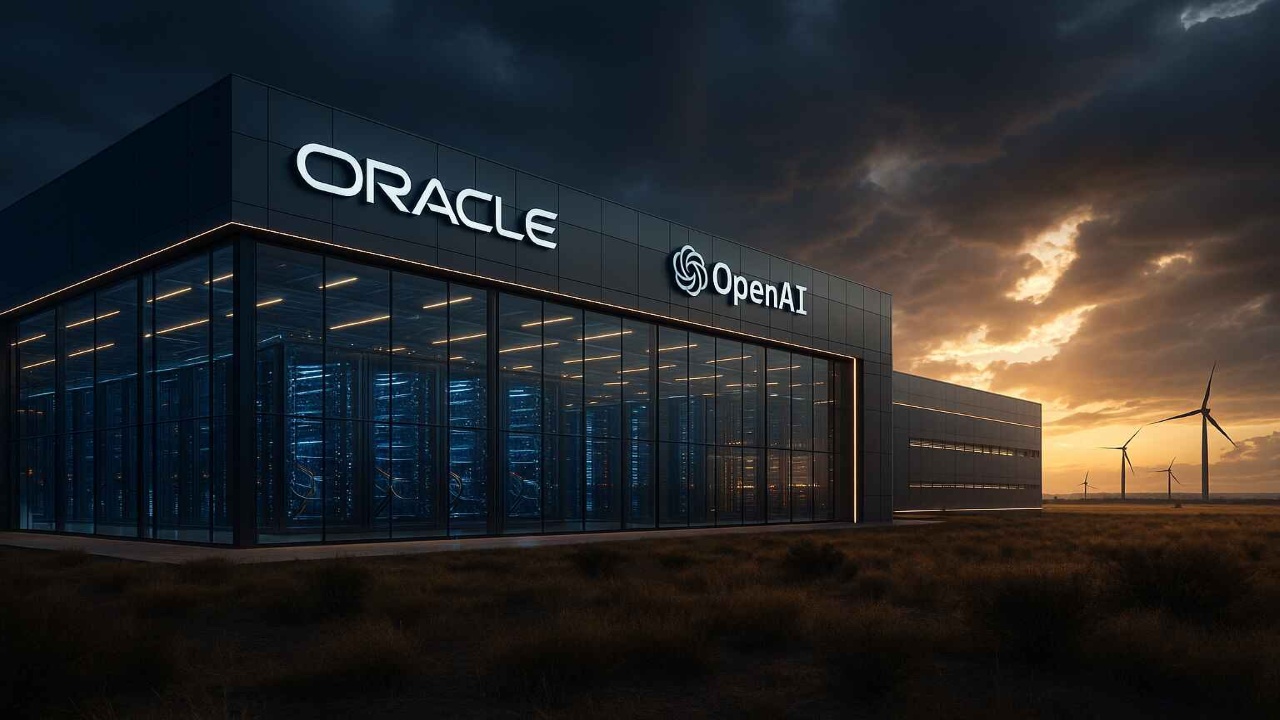
Oracle’s stock collapsed 24% in 2026 as $130 billion in AI debt and negative free cash flow of $23.7 billion rattled markets. Inside the hyperscaler’s existential reckoning.
Larry Ellison’s audacious pivot to AI infrastructure is drawing comparisons to the dot-com implosion — and for good reason.
Oracle Corp. closed out the week of June 27, 2026 with a stock price of $148.53, down 19% in a single week — the worst weekly performance since the 2001 technology bust. The collapse has shaken not just Oracle shareholders but the entire ecosystem of AI infrastructure optimism that has dominated capital markets for the better part of two years. What began as a generational pivot into cloud computing has become a cautionary tale about how quickly leverage can transform ambition into crisis.
The Numbers Behind the Nosedive
The arithmetic is stark. Oracle’s capital expenditures surged 162% to nearly $56 billion in fiscal year 2026, leaving the company with negative free cash flow of $23.7 billion — a dramatic deterioration from just a $394 million deficit in fiscal 2025. Long-term debt ballooned to approximately $124.7 billion by the end of the third fiscal quarter, making Oracle one of the most leveraged technology companies in history relative to its operating cash generation.
Despite posting total revenue of $67.4 billion for fiscal 2026 — a 17% year-on-year gain — investors focused on what was missing rather than what was achieved. Cloud infrastructure revenue did surge 93% to $5.8 billion in the fourth quarter, and total cloud revenue climbed 47% to $9.9 billion, demonstrating genuine demand. But those gains are being funded by capital markets in a way that is testing the boundaries of investor patience.
Having already raised $43 billion in debt and $5 billion in equity during fiscal 2026, Oracle announced plans to secure a further $40 billion in fiscal 2027 — on top of a previously disclosed $20 billion at-the-market equity programme. The announcement sent shares tumbling roughly 10% in after-hours trading on the day of the earnings call.
The OpenAI Dependency Problem
Central to investor anxiety is Oracle‘s lopsided reliance on OpenAI. The ChatGPT developer accounts for the majority — at least $300 billion — of Oracle’s remaining performance obligations. The concentration risk is extraordinary for a company of Oracle’s scale. If OpenAI stumbles in its own fundraising or fails to monetise its products at the projected pace, the cascade effects on Oracle’s revenue backlog — which rose 325% to an eye-catching figure that initially thrilled analysts — could be severe.
D.A. Davidson analysts warned in a December 2025 note that, “considering Oracle is already barely hanging on to an investment grade rating, we would be concerned about Oracle’s ability to live up to these obligations without restructuring its OpenAI contract.” The concern is not hypothetical: the cost to insure Oracle’s debt against default on credit default swap markets has hit record levels, a signal that bond investors are demanding higher risk premiums.
Morgan Stanley estimates that AI-related global debt issuance will more than double to nearly $570 billion in 2026, with hyperscaler spending potentially exceeding $1 trillion by 2027. Oracle sits at the most precarious position in that ecosystem — large enough to be systemic, but without the balance sheet cushion of Amazon, Microsoft, or Alphabet to absorb multi-year cash burn.
The Margin Trap
There is a structural problem embedded in Oracle’s strategy that goes beyond near-term financing concerns. The company’s traditional enterprise software business carries gross margins of approximately 77%. Infrastructure — the business it is pivoting toward — runs at margins closer to 49% at maturity, according to FactSet analyst consensus. That is a punishing dilution for a company that has historically been valued on premium software economics.
Analysts estimate Oracle will burn roughly $34 billion in cumulative free cash flow over the next five years before the infrastructure business turns cash-flow positive in 2029. “Four or five years is a long time,” Eric Lynch, managing director at Suncoast Equity Management, told Bloomberg. “That’s just not within our investment discipline.” The concern is compounded by reports — which Oracle denied — that completion dates for data centres tied to OpenAI contracts had been pushed back from 2027 to 2028.
Meanwhile, headcount declined 13% to 141,000 employees in fiscal 2026, with pullbacks concentrated in sales and marketing — the exact functions needed to defend the existing software business from AI-native competitors. Larry Ellison, absent from the most recent earnings call, has been surpassed on the global wealth rankings by Larry Page, Sergey Brin, Jeff Bezos, and Michael Dell as the stock’s decline eroded the paper value of his stake.
What Evercore and the Bulls Are Still Saying
Not every analyst has abandoned the thesis. Evercore maintained a buy recommendation, noting that “financing/leverage and the pace of equity issuance” would remain the central investor debate “even as demand signals stay strong.” The company’s fiscal 2027 revenue guidance of $90 billion was left intact, and adjusted EPS targets were nudged higher to $8.05. Evercore analysts argue that the backlog growth and infrastructure demand pipeline are real — the question is whether markets will extend the runway needed to prove it.
The broader tech software sector offers context: the iShares Expanded Tech-Software ETF (IGV) is down 16% year-to-date in 2026, while Oracle has fallen 24% — worse than the index but not in isolation. The investor thesis on enterprise software has broadly softened on fears that large language models will automate away categories of software that have historically commanded subscription premiums.
The Systemic Warning
Oracle’s distress carries implications well beyond its own share price. Fortune reported that Morgan Stanley wealth management’s Lisa Shalett flagged Oracle’s credit default swap widening as an early warning indicator for the broader AI investment complex. If confidence in Oracle’s ability to service its debt erodes, it signals that markets are beginning to reprice the risk embedded in the entire hyperscaler debt stack — a reassessment that could spread to data centre REITs, AI chip suppliers, and enterprise cloud vendors.
The debt load, the leadership transition to dual CEOs Clay Magouyrk and Mike Sicilia, the OpenAI concentration risk, and the structural margin compression collectively make Oracle the most visible stress test of the AI infrastructure buildout in 2026. Whether it passes or fails that test will shape capital allocation across the technology sector for years to come.
Discover more from The Economy
Subscribe to get the latest posts sent to your email.
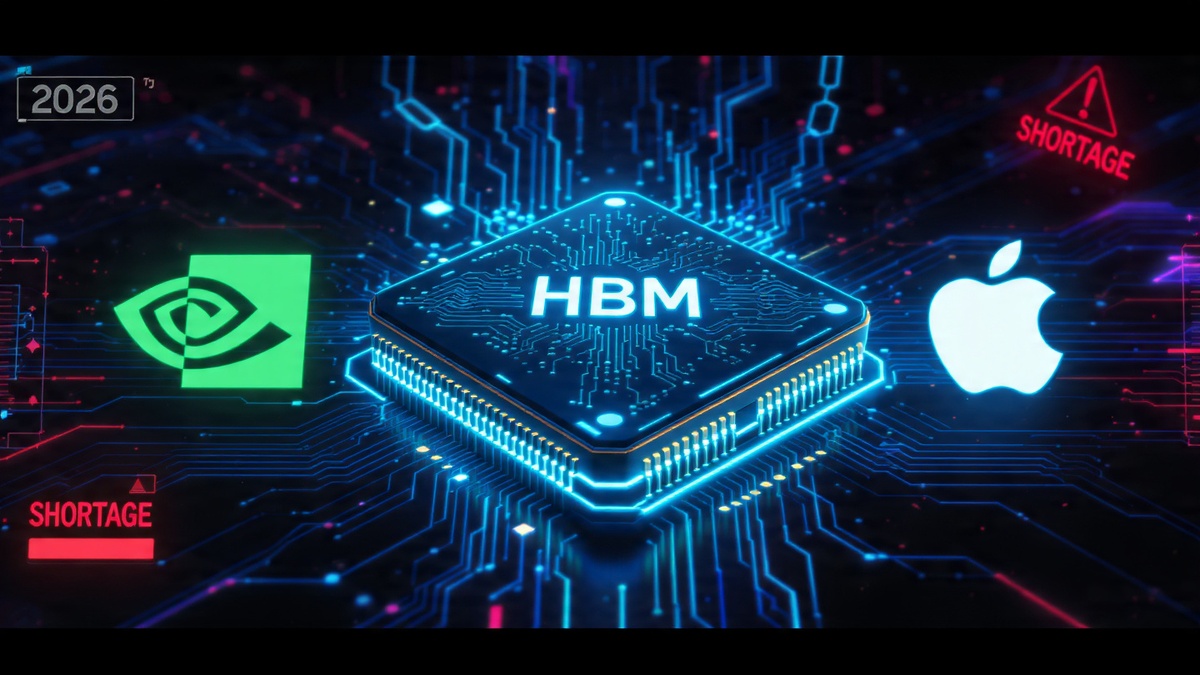
A global memory chip shortage is hitting AI hyperscalers, tanking Nvidia and Apple shares, and triggering a Wall Street rotation. Here’s what the AI sector’s supply crisis means for investors.The artificial intelligence boom that has driven Wall Street’s most extraordinary bull run in a generation is running headlong into a physical constraint: the world cannot produce memory chips fast enough to feed it.
On Friday, June 26, 2026, technology stocks extended a brutal weekly decline even as the broader market stabilized and advancing shares outnumbered declining ones. Nvidia slipped another 1% in early trading and was on pace for an 8% weekly loss—its worst five-day stretch in more than a year. Apple dived after announcing price increases for several iPad and Mac models, citing higher costs from memory chip shortages. Oracle and CoreWeave fell after the New York Times reported that OpenAI was considering delaying its initial public offering to as late as 2027.
What the headlines share is a single underlying cause: the cost of the memory chips that power AI infrastructure is rising faster than even the most aggressive hyperscaler budgets assumed, and the shortage driving that cost increase is not expected to ease before 2028.
The Architecture of the Crisis
Memory chips—specifically the high-bandwidth memory, or HBM, used in AI accelerators—are produced by a small number of manufacturers: SK Hynix, Micron, and Samsung. Demand for HBM has exploded because each new generation of Nvidia’s AI chips requires substantially more of it. As Nvidia pushes its product cycle faster to maintain competitive advantage, each cycle pulls forward enormous new demand for chips that take 18 to 24 months to ramp in production.
Micron reported strong quarterly earnings—its results have been spectacular—but the very strength of those results is the problem for the rest of the tech sector. Micron’s margins are rising because memory is scarce and expensive. The companies buying that memory—Microsoft, Amazon, Alphabet, Meta, and the rest of the hyperscaler complex—are absorbing higher input costs on a scale that is beginning to show up in margin guidance.
Analysts at Charles Schwab noted a “growing wedge” in the technology sector between memory producers like Micron—which is posting massive gains—and the hyperscaler stocks that are watching their AI infrastructure economics deteriorate. The latter group includes names like Microsoft, Amazon, and Alphabet, which are collectively projected to spend between $660 billion and $700 billion on AI infrastructure in 2026, according to research from Fair Observer.
Nvidia’s Problem Is a Market Concentration Problem
Nvidia entered 2026 having crossed a $5 trillion market capitalization—larger by GDP comparison than all but four national economies. That concentration made the stock not merely a bet on AI but a systemic weight in the S&P 500. Nvidia and its mega-cap technology peers now account for roughly 30% of the entire index—the highest concentration in half a century.
When Nvidia corrects, it does not correct in isolation. It reprices the risk premium of every fund manager with an S&P 500 benchmark, which is nearly every institutional investor in the world. The 8% weekly decline in late June—attributed to a combination of rising memory costs, margin anxiety among hyperscaler customers, and a broader rotation away from high-multiple AI stocks—had ripple effects across semiconductor infrastructure names including Lumentum, Marvell Technology, and Corning.
Apple Raises Prices—and Reveals the Exposure
Apple’s announcement of price increases for iPad and Mac models was notable for two reasons. First, Apple’s supply chain is among the most sophisticated on earth; if Apple could not absorb memory cost increases without raising consumer prices, the margin pressure is acute. Second, Apple’s pricing decision revealed an exposure that consumer electronics companies had managed to keep largely invisible through inventory buffers.
Those buffers, built up when memory was cheap, are now depleted. The shortage is forecast to persist through 2027 and potentially into 2028, driven by Nvidia’s accelerated chip release cadence and the insatiable demand of AI data centers for high-bandwidth memory. Analysts at Briefing.com noted that higher memory costs are seen “persisting throughout 2027 and perhaps into 2028, driven by increasing data center demand and Nvidia’s rapid introduction of updated AI chips.”
OpenAI Delays Its IPO—Absorbing the Lesson From SpaceX
The reported delay in OpenAI’s public offering is a direct consequence of two market developments: the broader tech weakness driven by the memory supply crisis, and the troubled IPO debut of SpaceX earlier in June, whose shares suffered heavy losses in the days following listing as global markets repriced risk.
OpenAI executives, who had targeted 2026 for a public offering, are now said to be evaluating a 2027 launch—giving markets time to stabilize and giving the company time to demonstrate that its AI infrastructure economics are sustainable at the scale that a public market valuation would demand.
The Rotation That May Define the Rest of 2026
The most significant market dynamic emerging from the memory chip crisis is not the decline in any single stock but the rotation it is enabling. As the mega-cap AI trade faces margin headwinds, investors are moving into financial and industrial companies, healthcare, and energy—sectors that had been overshadowed for years by the AI growth narrative. The Dow, weighted toward those steadier names, was holding up even as the Nasdaq declined through the final week of June.
That divergence—Dow up, Nasdaq down—is a familiar pattern in sector rotation cycles. It does not necessarily signal a bear market. It may signal the beginning of a more broadly distributed bull market, one less concentrated in five or seven names. The memory supply crisis, in that reading, is not the end of the AI boom—it is the first serious test of whether the boom’s economics are durable enough to survive contact with physical constraints.
Discover more from The Economy
Subscribe to get the latest posts sent to your email.

AI Infrastructure Debt Bubble 2026: $570 Billion in Global Debt Issuance Raises Systemic Risk Alarm

Argentina Economy 2026: Milei’s Fiscal Surplus, Inflation Drop to 29%, and What Comes Next

Global Economic Growth 2026: World Bank Cuts Forecast to 2.5%

Gold Price 2026: J.P. Morgan Forecasts $6,000/oz as Inflation, Iran War

US Section 301 Tariffs 2026: 60 Countries Face 12.5% Duties on Forced Labour Goods

China Economy 2026: 87% Semiconductor Surge, Property Crisis

Kevin Warsh Fed 2026: Rate Hold, Hawkish Dot Plot, and the End of Forward Guidance

SpaceX IPO 2026: $2 Trillion Valuation, Retail Frenzy, and the Risks

Oracle AI Debt Crisis 2026: $130 Billion Gamble Triggers Worst Stock Crash Since Dot-Com Bust

Male Labor Force Participation Rate 2026: Why Men Are Leaving & Economic Impact

Trump Tariffs 2026: Economic Impact, Household Costs & Trade War Outlook

China Economy 2026: Export Boom Masks Property Crisis & Investment Slump

US Inflation 4% May 2026: Is the Worst Over? Fed, Oil Prices

AI Memory Chip Shortage 2026: Nvidia, Apple & What Comes Next

PwC China Partner Payouts Cut Amid Evergrande Audit Fraud

Broadcom Market Value Loss: Revenue Forecast Disappoints

Investors Pile Into Bullish Dollar Bets as ‘US Exceptionalism’ Trade Returns

Here’s How Much It’ll Cost You to Be Part of SpaceX’s Record-Breaking $75 Billion IPO

Nasdaq Tumbles 4% as Chip and Memory Stocks Sink: A $1.2 Trillion Wipeout

How to Fix Pakistan’s Debt Economy: A Structural Blueprint

Smash Capital Leads $200M Funding for Allen Control Systems

Democrats Draw a Red Line Around Military AI — And the Pentagon Is Already Pushing Back

New Investment Super-Cycle: AI, Green Energy & Re-Shoring

Xponential Fitness Franchise Lawsuit: The $3.97M Judgment

Middle East Conflict Oil Prices: The $4 Surge Explained

Grinding the Already Ground: Pakistan’s Inflation Crisis

The End of the Chatbot: Why OpenAI is Tearing Up Its Most Successful Product

Musk’s SpaceX Lines Up Retail Investors for Record IPO Allocation
-

 Markets & Finance6 months ago
Top 15 Stocks for Investment in 2026 in PSX: Your Complete Guide to Pakistan’s Best Investment Opportunities
-

 Analysis4 months ago
Top 10 Stocks for Investment in PSX for Quick Returns in 2026
-

 Analysis5 months ago
Brazil’s Rare Earth Race: US, EU, and China Compete for Critical Minerals as Tensions Rise
-

 Analysis4 months ago
Johor’s Investment Boom: The Hidden Costs Behind Malaysia’s Most Ambitious Economic Surge
-

 Banks5 months ago
Best Investments in Pakistan 2026: Top 10 Low-Price Shares and Long-Term Picks for the PSX
-

 Investment6 months ago
Top 10 Mutual Fund Managers in Pakistan for Investment in 2026: A Comprehensive Guide for Optimal Returns
-

 Global Economy6 months ago
15 Most Lucrative Sectors for Investment in Pakistan: A 2025 Data-Driven Analysis
-

 Global Economy6 months ago
Pakistan’s Export Goldmine: 10 Game-Changing Markets Where Pakistani Businesses Are Winning Big in 2025