
Analysis
When the Data Centre Became the Nuclear Industry’s Best Customer

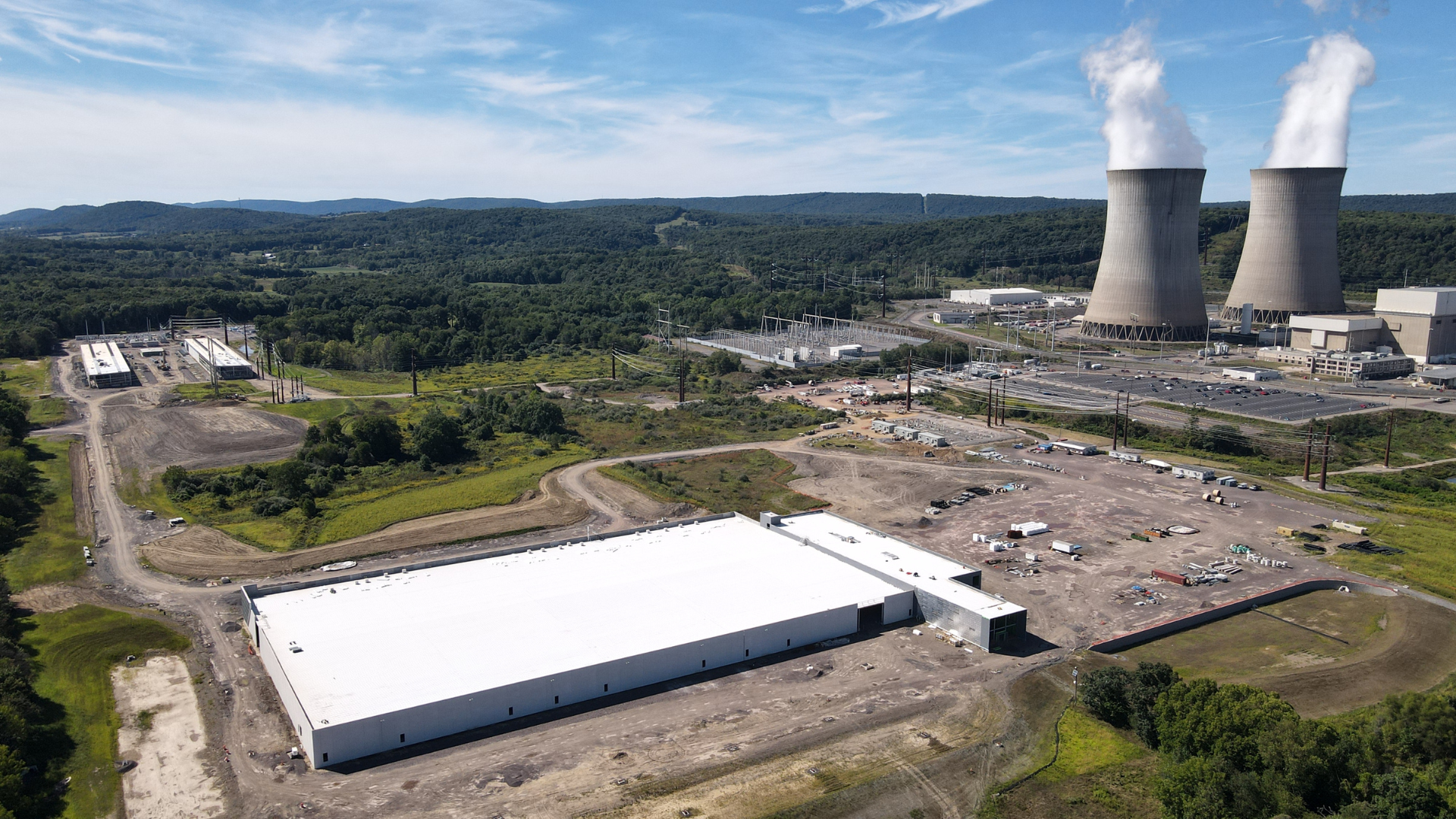
The machines never sleep. Across northern Virginia, the outskirts of Singapore, and industrial parks west of Dublin, tens of thousands of graphics processing units run inference workloads around the clock. Each rack draws more power than a suburban home. Taken together, they’ve generated the most consequential financing story in energy this decade: artificial intelligence is not merely reshaping how the world communicates and creates — it’s rewriting the capital structure of advanced nuclear power. Nuclear startup financing driven by AI electricity demand has moved from speculative thesis to executed deals in a matter of months. What follows is an account of how that happened, why it’s structurally different from previous nuclear revivals, and why the optimism, though earned, still has limits.
The New Energy Arithmetic
Global electricity demand is growing at its fastest sustained pace in a generation. The International Energy Agency’s Electricity 2026 report, published February 6, forecasts average annual demand growth of 3.6% through 2030 — roughly 50% faster than the previous decade’s average. Data centres are among the central causes. U.S. facilities alone consumed approximately 180 terawatt-hours of electricity in 2024, according to the IEA, and that figure is projected to rise by a further 240 TWh before the decade is out.
The source of this appetite is not streaming video or cloud backups. It’s model training, real-time inference, and the relentless competitive pressure among hyperscalers to expand compute capacity faster than rivals. In 2025, Meta, Amazon, Alphabet, and Microsoft together committed $320 billion to AI and data centre investment, up from $230 billion the year before. That’s not a rounding error. That’s an industrial mobilisation.
And it’s pointed directly at nuclear.
The appeal isn’t ideological. Technology companies don’t sign 20-year energy contracts because they’re bullish on atom-splitting as a concept. They sign them because the alternative — attempting to power always-on, high-density compute loads from a grid increasingly weighted toward weather-dependent renewables — creates operational risk they can’t model out. Devon Swezey, Senior Manager of Global Energy and Climate at Google, put the logic plainly: “We know that wind, solar and batteries will be critical. But we also need firm, dispatchable, carbon-free electricity technologies to cost-effectively decarbonize our consumption.” Nuclear is, at present, the only mature technology that satisfies all three conditions simultaneously.
Nuclear Startup Financing: From Government Subsidy to Blended Capital
The economics of nuclear startup financing driven by AI electricity demand became unmistakable in April 2026, when two companies closed hybrid rounds within three weeks of each other. Valar Atomics, a California company designing compact gas-cooled reactor clusters for data centre campuses — it calls these dense deployments “gigasites” — raised $450 million in blended equity and debt, lifting its valuation to $2 billion. The round followed a $130 million Series A by just a few months. Backers included defence-tech veterans Palmer Luckey and Palantir’s chief technology officer, Shyam Sankar, two investors whose enthusiasm is rarely driven by sentiment.
Blue Energy closed separately at $380 million in the same month — also split between equity and project debt — to fund construction of a 1.5-gigawatt plant in Texas, led by VXI Capital with participation from At One Ventures and Engine Ventures. The round’s structural interest lies less in its size than in its logic. Blue Energy isn’t designing a novel reactor; it’s rethinking how reactors are assembled, borrowing from the shipyard-style modular construction process that Venture Global uses for LNG export terminals. The implication is that nuclear’s cost problem may be soluble through construction engineering rather than physics.
Both rounds reflect the same underlying thesis: that a combination of technology company offtake agreements, federal loan support, and private equity creates a financing architecture far more resilient than anything nuclear developers could assemble in previous decades. Each layer reinforces the others. Power purchase agreements from creditworthy tech companies give project lenders the revenue certainty they require. Federal loan guarantees lower the cost of senior debt to levels that make the overall project economics stack. Private equity absorbs residual construction-phase risk in exchange for equity upside.
The federal piece is now explicit policy. Energy Secretary Chris Wright told the American Nuclear Society in November 2025 that nuclear power plants would be the dominant use of the DOE’s Loan Programs Office dollars, with equity from technology companies leveraged “three-to-one, maybe even four-to-one” with low-cost LPO debt. The DOE has backed that language with action. In early 2026, the agency awarded $400 million each to the Tennessee Valley Authority and Holtec for advanced light-water SMR deployments. Constellation Energy received a $1 billion federal loan to support the restart of Three Mile Island — rebranded the Crane Clean Energy Center — which is under contract to supply power to Microsoft’s data centres, with the first loan advance disbursed in Q1 2026.
The old binary of public subsidy or private risk capital has dissolved. What’s emerged in its place is a layered capital stack that resembles the financing architecture of toll roads and airports more than it does either venture-backed startups or regulated utility rate bases.
ARC Clean Technology’s December 2025 Series B, backed by Xplor Ventures, Hennessy Capital Group, and Banpu Ventures alongside corporate strategic investors, reinforced the trend. So did Amazon’s decision, reported by Reuters, to lead a $700 million funding round for X-energy in 2025, positioning reactor sites alongside its own data centre footprint. That’s not a corporate social responsibility allocation. It’s vertical integration.
Why Hybrid Financing for Nuclear Energy Is Now the Industry’s Structural Bet
Understanding the appeal requires following the money backward. Big Tech signed 43% of all clean energy power purchase agreements globally in 2024, with PPA prices rising an average of 35% driven by competitive procurement. Those contracts aren’t just clean energy credentialing. They’re the revenue floor on which lenders advance debt.
What is hybrid financing for advanced nuclear startups? Hybrid financing for advanced nuclear startups layers multiple capital sources: long-term power purchase agreements from technology companies provide revenue certainty; DOE Loan Programs Office guarantees reduce the cost of senior debt; infrastructure private equity and venture capital absorb construction-phase equity risk; and export credit agencies and sovereign wealth funds participate in international deployments. The combination makes projects that were previously unbankable, bankable.
That structure would have been dismissed as fantasy five years ago. Today it’s the template.
Ruhani Arya, vice president of infrastructure and sustainable finance at Bank of America, described the emerging architecture in January 2026 as analogous to large-scale data centre development: reactor designers provide standardised, fixed-price engineering; equity partners — infrastructure funds, pension investors, sovereign capital — contribute through the construction phase; and the completed asset refinances into long-duration project debt. Data centres are already among the world’s most bankable infrastructure assets. Nuclear, after decades of being treated as a uniquely uninvestable category, is learning their language.
Southern Company illustrated the scale at which this logic can operate. The utility secured a $26.5 billion federal loan — the largest in DOE history — to fund a capital programme whose contracted customers include Google, Meta, Microsoft, and Compass Datacenters, with minimum 15-year contract terms and fixed-price provisions. Southern’s contracted large-load pipeline as of February 2026 covered 10 gigawatts of fully committed capacity, with a further 7 gigawatts in late-stage discussions. Those are not utility-rate-case numbers. They’re hyperscaler balance-sheet commitments translated into gigawatt-scale offtake.
The National Center for Energy Analytics has estimated that some $1 trillion of infrastructure-related private equity capital is currently available that could, in principle, fund greenfield U.S. nuclear construction. The question was never whether the money existed. It was whether the revenue certainty existed to unlock it. The AI-driven PPA boom has answered that question.
What Advanced Nuclear’s Financing Breakthrough Means for Energy Markets
Markets move on future cash flows. The cash flows being underwritten by AI hyperscalers are now long enough, and signed by counterparties creditworthy enough, to attract capital that had no business in nuclear a decade ago.
The Electric Power Research Institute projects that data centres could account for 9% of U.S. total electricity demand by 2030 — roughly double their current share. Goldman Sachs estimates that global data centre electricity demand could rise 160% by the end of the decade. Neither of those projections was built into utility investment models written before 2022. Both are now shaping the long-duration capital decisions of infrastructure investors.
For policymakers, the grid implications are immediate. Interconnection queues in the United States are severely congested; the IEA notes that with appropriate regulatory reform, as many as 1,600 gigawatts of currently stalled generation projects could be integrated into the grid system. Advanced nuclear’s footprint advantage — compact, co-locatable with demand, dispatchable regardless of weather — gives it a structural edge over solar and wind farms that require vast land corridors, extended transmission build-out, and battery backing to approach 24-hour reliability.
For incumbent utilities, the disruption runs deeper than competition. When a hyperscaler signs a 20-year nuclear PPA directly with a startup, bypassing a regulated utility entirely, it builds a shadow energy company — one that sidesteps rate-case structures, stranded-cost recovery arguments, and the procurement timelines that existing generators have used to manage competitive exposure for decades.
Texas has become the clearest demonstration of how this plays out geographically. The state’s deregulated electricity market, permissive land-use rules, and proximity to large data centre clusters make it a natural laboratory. Blue Energy’s 1.5-gigawatt Texas project, Valar Atomics’ gigasite design, the Dow Chemical/X-energy Seadrift installation, and NuCube’s February 2026 seed round — each is concentrating capital and regulatory attention in the same state. What Texas regulators permit and how the ERCOT grid accommodates co-located nuclear will shape interconnection precedent across North America for a generation.
There is, finally, a supply-chain effect worth tracking. The revival of nuclear financing is pulling capital into uranium enrichment, specialist steel fabrication, nuclear-grade instrumentation, and a workforce that spent 30 years shrinking. That industrial base cannot be rebuilt in quarters. Investors who understand this are buying not just reactor developers but the upstream supply chain — fuel cycle companies, precision manufacturers, specialist engineering firms — on the thesis that constrained supply into a demand surge is the oldest trade in infrastructure.
The Case Against Optimism
The bull case is coherent. The bear case is not frivolous, and it deserves the same precision.
No U.S.-designed small modular reactor has delivered a single commercial kilowatt-hour to a grid. Not one. Despite more than a decade of private investment and federal support, first-of-a-kind construction risk — the risk that sank Vogtle’s expansion into years of delay and $17 billion of cost overrun — has not been engineered away. It has been deferred, assumed to be manageable by disciplines and organisations that have not yet had to manage it at scale.
NuScale Power, once the most advanced SMR developer in the country, cancelled its only planned project in 2023 after construction cost estimates escalated beyond what its Utah utility customer could justify. Reuters, reporting in April 2026, found that advanced nuclear projects continue to face financing constraints and execution risks that favourable capital market conditions alone cannot eliminate. HSBC, initiating coverage of NuScale in April 2026 with a Hold rating and a $13 price target, flagged the tension cleanly: nuclear revival upside is real, but execution risk is serious.
The capital cost gap is also real. Nuclear construction runs between $6,400 and $12,700 per kilowatt of installed capacity — roughly five to ten times the cost of equivalent natural gas capacity. That differential doesn’t disappear because a tech company signs a PPA. It has to be financed across a construction cycle that, historically, has routinely extended beyond initial estimates. Each additional year of construction absorbs carrying costs that compound against the project’s return on equity.
Hybrid financing structures manage this risk. They don’t eliminate it. And there is a permitting timeline problem sitting beneath the capital structure that no financing innovation yet resolves. The NRC’s agreed 18-month review of Long Mott Energy’s X-energy permit application at Dow’s Seadrift facility is fast by historical standards. It’s still 18 months between a committed investor and a permitted construction site.
The nuclear financing renaissance is real, and it is structurally different from previous moments of enthusiasm. Whether the construction renaissance follows is the industry’s only remaining test.
A Wager Built on Watts
There’s something revealing about which entities are driving this moment. The buyers of advanced nuclear power in 2026 are not regulated utilities responding to a state clean energy mandate or governments pursuing energy security doctrine as a strategic abstraction. They’re compute companies calculating kilowatt-hours per dollar of model inference. The investment committee meeting that approved Microsoft’s Three Mile Island agreement almost certainly had a spreadsheet showing GPU utilisation rates open on a second monitor.
That shift matters because it changes the durability of the capital behind nuclear’s revival. Regulatory cycles turn. Administrations change priorities. But the demand that AI places on electricity is not a policy preference. It’s an engineering constraint baked into the architecture of every large language model deployed at scale. The models need the watts.
For the first time in half a century, the energy system needs nuclear badly enough that the financing is following.
Whether the concrete will.
Discover more from The Economy
Subscribe to get the latest posts sent to your email.



Key Takeaways
- Rolex’s secondary market rose approximately 7.9% year-over-year as of 2026 (per WatchCharts data) — trailing Patek Philippe (+16.2%) and Tudor (+11.4%) but still outperforming Audemars Piguet (+3.4%).
- Rolex raised U.S. retail prices 4–9% in January 2026 (steel models ~5.6%, gold models ~8.7%), narrowing the historical gap between retail and pre-owned pricing.
- Not every model appreciates: steel sports references (Submariner, GMT-Master II, Daytona) have held value far better than two-tone or widely available dress references like the standard Datejust.
- The Lady-Datejust posted the sharpest 2026 gain among tracked collections — up 22.73%, from roughly $9,269 to $11,376 — driven by demand for smaller, “everyday luxury” watches.
- Gold’s rise past $2,400/oz has directly lifted the investment case for Rolex’s precious-metal references (Day-Date, Sky-Dweller, Yacht-Master).
The Model-by-Model Picture
| Category | 2026 Trend |
|---|---|
| Lady-Datejust | +22.73% (strongest performer among tracked collections) |
| Steel sports models (Submariner, GMT-Master II) | Held value well; corrected from 2022 peak but stabilized above retail |
| Daytona | Corrected from highs above $50,000 to the mid-$30,000s; still among the most sought-after references |
| Two-tone/widely available Datejust | Flat to negative — “holds value” is an overstatement for this category |
| Gold references (Day-Date, Sky-Dweller) | Lifted by gold’s rise above $2,400/oz |
Why the “Rolex Always Appreciates” Myth Is Fading
The pandemic-era boom pushed some references — the Daytona above all — to speculative highs disconnected from historical norms. Since the March 2022 peak, steel sports models have compressed meaningfully, and dealers who bought inventory near the top have in some cases faced 20–40% markdowns on liquidation. The lesson for 2026 buyers: Rolex as a category is not a monolith. Value retention depends heavily on specific reference, condition, and whether the piece comes with box and papers (“full set”).
What’s Actually Driving 2026 Strength
- Retail price increases raise the floor. When a new Submariner retails at $10,050 (up from $9,500), a pre-owned example at $11,000–$12,000 suddenly represents a smaller premium — narrowing the gap without secondary prices actually moving.
- Supply discipline remains Rolex’s core lever. The brand has never confirmed production numbers, and secondary-market premiums remain entirely a function of Rolex’s own manufacturing decisions — a risk factor as much as a support.
- Certified Pre-Owned rollout. Rolex’s now fully rolled-out CPO program has changed how buyers transact in the used market, adding a layer of brand-verified legitimacy that supports pricing.
The Case for Rolex as a Portfolio Diversifier
Financial advisors increasingly frame luxury watches not as a replacement for equities or bonds, but as a tangible, historically low-correlation diversifier — one that carries its own risks (illiquidity, condition-dependent pricing, no yield) but has demonstrated multi-decade resilience for specific references.
Is Rolex a good investment in 2026?
It depends heavily on the specific reference. Steel sports models like the Submariner and Daytona have held or grown in value; two-tone and widely available dress models generally have not. Overall, Rolex’s secondary market rose about 7.9% year-over-year in 2026, trailing Patek Philippe but ahead of Audemars Piguet.
Discover more from The Economy
Subscribe to get the latest posts sent to your email.

Navigating Mortgage and Loan Refinancing in a High-Yield Environment
Global public debt crossing critical thresholds has kept central bank policies volatile, resulting in fluctuating US Treasury yields throughout 2026. For homeowners and commercial property holders burdened by previous high-interest borrowing cycles, finding optimal refinance windows has become a high-stakes financial puzzle. Stalled disinflation and stubborn employment numbers mean rate cuts are incremental, requiring borrowers to act with precision.
Timing your mortgage or commercial loan refinance in this environment requires a deep understanding of yield curve movements and lender risk appetites.
Decoding 2026 Refinance Dynamics
The 10-Year Treasury Yield Benchmark
Mortgage rates continue to track closely with the 10-year US Treasury yield. When macroeconomic anxiety spikes debt issuance, yields rise, tightening consumer borrowing capacity. Savvy borrowers monitor weekly Treasury auctions to lock in rates during brief dip windows.
Hybrid ARMs and Alternative Structures
With fixed rates remaining elevated, 7/1 and 10/1 adjustable-rate mortgages (ARMs) have surged in popularity. These products offer lower initial monthly payments, giving borrowers breathing room until central bank easing cycles fully materialize.
| Loan Product | Current Rate Range | Best For | Key Risk Factor |
| 30-Year Fixed Mortgage | 6.2% – 6.8% | Long-term predictability | Higher initial monthly outlay |
| 7/1 Hybrid ARM | 5.5% – 5.9% | Short-term ownership / flipping | Rate reset risk after year 7 |
| Commercial Refinance | 7.0% – 8.2% | Corporate asset restructuring | Strict DSCR lender covenants |
Actionable Steps for Successful Refinancing
To maximize your chances of securing favorable refinance terms in a volatile market, follow a disciplined preparation strategy.
Boost Your Credit Score Immediately: Lenders in 2026 are applying stringent credit tiering; a 20-point increase can drop your APR by a crucial quarter-point.
Shop Regional Credit Unions: Smaller financial institutions often offer portfolio loans with more flexible underwriting than major national banks.
Calculate the Break-Even Point: Ensure your total closing costs are recouped through monthly savings within 24 months of closing.
“Market Strategist View: Refinancing in 2026 is an exercise in opportunistic timing. Borrowers must maintain immaculate financial profiles ready to strike the moment Treasury yields dip.”
Mastering the complexities of today’s debt environment ensures you can successfully lower your debt service costs and protect your long-term financial stability.
Discover more from The Economy
Subscribe to get the latest posts sent to your email.

The days of pulling generic auto insurance quotes based purely on your zip code and age are officially over. In 2026, insurance comparison engines are powered entirely by generative AI and real-time telematics. These platforms digest thousands of live data points—ranging from your driving smoothness via connected vehicle sensors to real-time traffic congestion patterns—to generate hyper-personalized premiums instantly.
For consumers, this evolution represents both a massive opportunity for savings and a hidden trap for penalty pricing. Understanding how AI algorithms evaluate risk is essential for anyone looking to lower their monthly auto insurance premiums.
How AI Comparison Engines Evaluate Your Risk Profile
Behavioral Telematics and Connected Cars
Modern cars stream performance data directly to insurance aggregators. Generative AI models analyze braking sharpness, acceleration curves, cornering G-forces, and phone distraction metrics. Drivers who maintain smooth, defensive habits are rewarded with dynamic rate cuts of up to 40% compared to traditional rating tiers.
Predictive Traffic and Weather Modeling
AI tools now cross-reference your daily commute route with predictive weather and accident probability models. If your standard parking location or driving corridor has a statistically higher incidence of uninsured motorist claims, your quotes will reflect that hyper-local risk assessment.
| Comparison Factor | Traditional Rating Model | 2026 Generative AI Model | Impact on Premium |
| Mileage & Usage | Annual estimated odometer reading | GPS tracking & live trip duration | High (up to 35% savings) |
| Driving Behavior | MVR driving record & accidents | Real-time braking, speed, & G-force | Critical (determines tier) |
| Vehicle Tech | Make, model, and safety rating | ADAS calibration & repair cost data | Moderate |
Strategies to Lower Your AI-Driven Insurance Quote
To outsmart the algorithm and secure the lowest possible premium in 2026, drivers must proactively manage their digital footprint on insurance platforms.
Opt-In for Telematics Trial Periods: Many insurers offer immediate 15% discounts just for installing their driving app; let it track safe habits for 30 days to lock in permanent savings.
Scrub Unverified Public Records: Ensure your motor vehicle report is free of clerical errors that AI risk models misinterpret as reckless behavior.
Compare AI Aggregators: Use platforms that integrate multi-carrier API feeds rather than single-brand comparison sites to find the best risk-adjusted rate.
“Industry Note: AI-driven pricing rewards transparency and precision. Drivers who actively manage their telematics data consistently out-save those relying on legacy quote calculators.”
Embracing AI comparison tools allows savvy policyholders to customize coverage limits precisely to their driving habits, eliminating wasted premium spend while ensuring robust protection.
Discover more from The Economy
Subscribe to get the latest posts sent to your email.

Neocloud Economics in 2026: GPU Debt, Utilization and Power

What Is a Neocloud? How AI GPU Clouds Work and Compare

Lula Re-elected in 2026: What Changes for the Dollar, Brazilian Stocks, and Interest Rates?

Lula Wins Brazil’s 2026 Election: Five Economic Tests for 2027

SSI November 2026 Payment: Why Benefits Arrive October 30

Russia Sanctions Waiver: What Asian Oil Buyers Gain

Asia Markets Weekly: How Oil, US Yields and the Fed Reach Tokyo, Kuala Lumpur and Karachi

Gold Near $4,000: Buy, Hold or Wait? A Pakistan Tola Price Guide

US 10-Year Treasury Yield Near 5%: The Hidden Cost for Pakistani Investors

Fed Meeting on October 28: Hike or Hold—and Why Pakistan Investors Should Care

Can Pakistan Turn US–Iran Mediation Into an Economic Dividend?

Oil Above $100: How Higher Crude Prices Reach Pakistan’s Rupee, Petrol and Imports

SBP Interest Rate at 11.5%: What Will Decide Pakistan’s Next Policy Move?

The Global South: Debt, Climate Finance and Investment in 2026

Crude Oil & Petroleum Market Analysis: OPEC+ Decisions and Price Forecasts

Top US Convenience Store Chains: Store Counts, EV Charging, and Sales Trends

Algorithmic Dogfights: Why the U.S. and China Must Establish Rules of Engagement for Autonomous Air Power

Who Is Shivon Zilis? The Neuralink Executive at the Center of the Musk–OpenAI Trial

Social Security Extra $90 Deposit: Who Qualifies for the October 2026 Medicare Rebate?

Corporate America Faces a New Debt Test as US Borrowing Costs Surge

Global Economic Outlook 2026: 7 Forces Reshaping Markets, Trade and Business

Gold Price Outlook 2026: The Forces Behind the Forecasts—and What Could Reverse Them

Gold Falls 3.7% as Yields Surge: Is Gold Still a Safe Haven in 2026?

Stock Market Crash in 2026? Warning Signs, Scenarios and a Calm Investor Checklist

MAS Allocates S$1.45 Billion to Five Asset Managers in Third EQDP Batch: Total Deployment Reaches S$5.4 Billion

Stock Market Today: Dow, S&P 500, and Nasdaq Retreat as Treasury Yields

Anthropic Bans Sustained Abuse of Claude AI Under New Usage Policy Effective November 12, 2026

Geopolitics and Your Portfolio: How International Affairs Move Global Markets
-

 Markets & Finance10 months ago
Top 15 Stocks for Investment in 2026 in PSX: Your Complete Guide to Pakistan’s Best Investment Opportunities
-

 Analysis8 months ago
Johor’s Investment Boom: The Hidden Costs Behind Malaysia’s Most Ambitious Economic Surge
-

 Analysis8 months ago
Top 10 Stocks for Investment in PSX for Quick Returns in 2026
-

 Banks9 months ago
Best Investments in Pakistan 2026: Top 10 Low-Price Shares and Long-Term Picks for the PSX
-

 Analysis9 months ago
Brazil’s Rare Earth Race: US, EU, and China Compete for Critical Minerals as Tensions Rise
-

 Investment10 months ago
Top 10 Mutual Fund Managers in Pakistan for Investment in 2026: A Comprehensive Guide for Optimal Returns
-

 Global Economy10 months ago
15 Most Lucrative Sectors for Investment in Pakistan: A 2025 Data-Driven Analysis
-

 Global Economy10 months ago
Pakistan’s Export Goldmine: 10 Game-Changing Markets Where Pakistani Businesses Are Winning Big in 2025