
Analysis
US Economy Far Outstrips Expectations to Add 130,000 Jobs in January

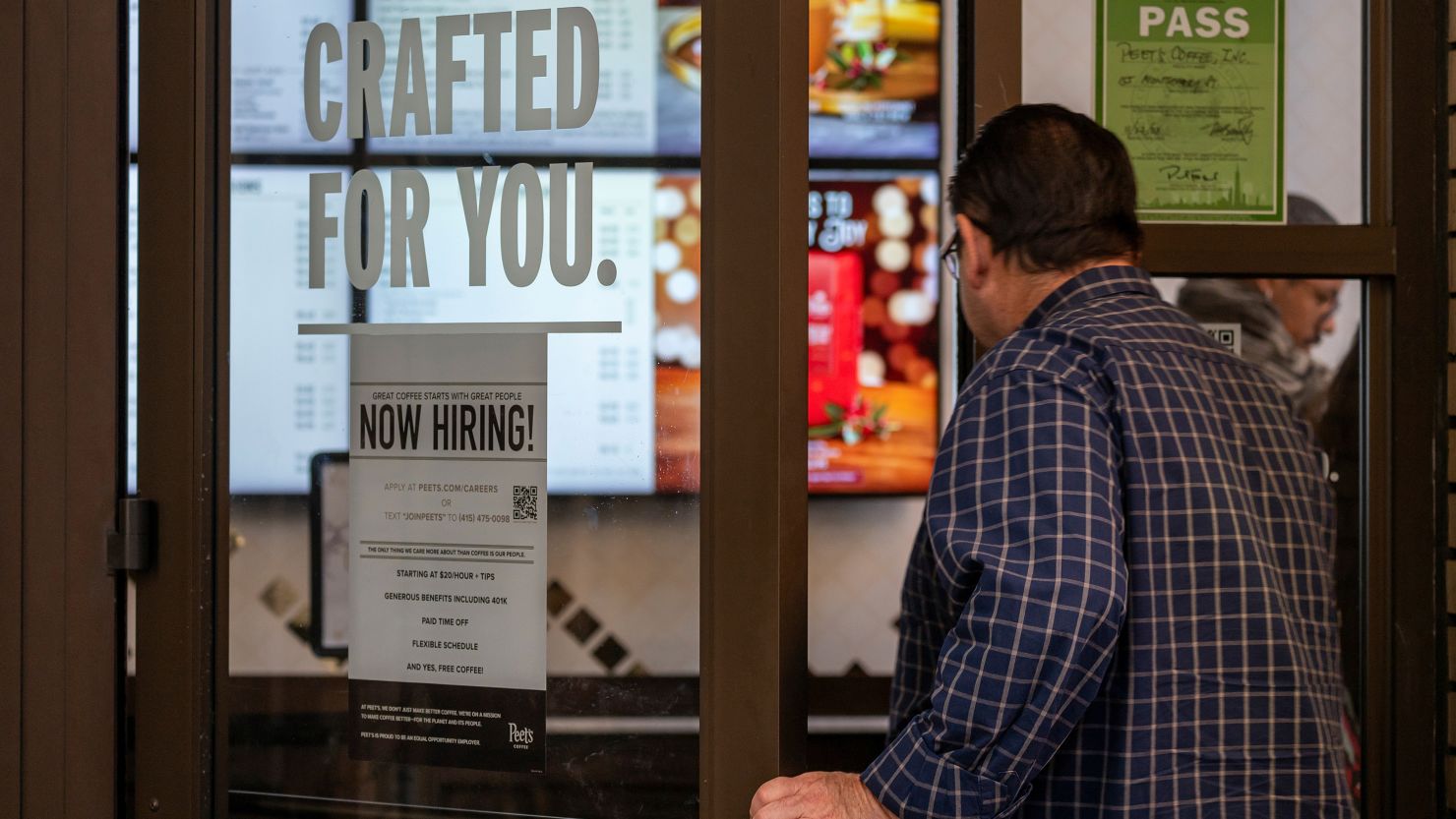
The American labor market delivered its most emphatic statement of resilience in over a year, as nonfarm payrolls surged by 130,000 in January 2026, dramatically eclipsing economist forecasts and offering the first substantial evidence that the post-2025 jobs recovery may finally be taking hold. The unemployment rate simultaneously declined to 4.3%, defying expectations it would remain unchanged at December’s 4.4% level.
The stronger-than-expected January payrolls represent more than double the consensus estimate of 55,000-75,000 jobs, according to the Bureau of Labor Statistics data released Wednesday. Perhaps more significantly, the robust hiring surge marks the strongest monthly gain since December 2024, punctuating what had been 12 consecutive months of historically anemic job creation that characterized 2025’s “hiring recession.”
Key January 2026 Jobs Report Highlights:
- 130,000 nonfarm payroll jobs added (vs. 55,000-75,000 expected)
- Unemployment rate: 4.3% (down from 4.4%)
- Labor force participation: 62.5% (slight increase)
- Average hourly earnings: +0.4% MoM, +3.7% YoY
- Household survey employment gain: 528,000
- 2025 employment revised down by 898,000 jobs
January 2026 Jobs Boom Explained: Breaking Down the Sector-Specific Gains
The January hiring acceleration wasn’t uniformly distributed across the economy. Instead, it revealed a familiar pattern that has characterized much of the labor market’s evolution over the past two years: healthcare dominance coupled with emerging momentum in previously stagnant sectors.
Healthcare led the charge with a commanding 82,000 jobs added, particularly concentrated in ambulatory healthcare services, which alone contributed 50,000 positions. This sector has become the backbone of US employment growth, accounting for the lion’s share of net job creation throughout 2025’s otherwise tepid year.
| Sector | January 2026 Job Gains | Trend |
|---|---|---|
| Healthcare | +82,000 | Strong momentum continues |
| Social Assistance | +42,000 | Robust growth |
| Construction | +33,000 | Notable turnaround after 2025 stagnation |
| Manufacturing | +5,000 | Modest stabilization |
| Federal Government | -34,000 | DOGE-related attrition continues |
| Financial Activities | -22,000 | Weakness persists |
Social assistance contributed 42,000 jobs, while construction—a sector that languished throughout 2025—added a surprising 33,000 positions. Industry analysts attribute construction’s resurgence partially to unseasonably warm weather in early January and reduced seasonal headwinds following weaker holiday hiring that resulted in fewer post-holiday layoffs.
“It was a January job surge,” noted Heather Long, chief economist at Navy Federal Credit Union, in comments to CNBC. “The surprisingly strong job gains in January were driven mainly by health care and social assistance. But it is enough to stabilize the job market and send the unemployment rate slightly lower. This is still a largely frozen job market, but it is stabilizing.”
US Labor Market Turnaround 2026: Understanding the Broader Economic Context
To fully appreciate January’s significance requires understanding the depths from which the labor market is emerging. The year 2025 marked the weakest employment growth outside of a recession since 2003, with just 181,000 total jobs added across the entire year—an average of merely 15,000 per month.
Wednesday’s report included final benchmark revisions that painted an even grimmer picture of 2025’s labor market performance. The Bureau of Labor Statistics’ annual reconciliation process, which squares preliminary survey-based estimates with comprehensive state unemployment insurance records, revealed that the US economy added 898,000 fewer jobs between April 2024 and March 2025 than originally reported. This massive downward revision—just shy of the preliminary 911,000 estimate—represents one of the largest adjustments in the four-decade history of benchmark revisions.
These revisions substantiate what many economists had suspected: that the much-discussed “hiring recession” of 2025 was even more severe than real-time data suggested. Every single month of 2025 saw its employment figures revised downward, collectively erasing 624,000 jobs from the original tallies.
The December-to-January Contrast
December 2025’s paltry 48,000 jobs (revised down from an initial 50,000) represented the nadir of the slowdown. Multiple economic headwinds converged: immigration crackdowns reduced labor supply, tariff uncertainty paralyzed business investment, and the Department of Government Efficiency’s (DOGE) federal workforce reductions created significant public sector drag.
Against this backdrop, January’s 130,000-job gain represents not just a statistical improvement but a psychological shift. While still well below the 186,000 monthly average of 2024, it suggests that the US economy may have found a floor—and possibly a foundation for gradual recovery.
Fed Rate Cuts Impact on Jobs: Monetary Policy Implications
The stronger US hiring data in January carries significant implications for Federal Reserve policy decisions in the months ahead. The January 28 Federal Open Market Committee meeting already established the central bank’s intention to hold interest rates steady at the 3.50%-3.75% range, and Wednesday’s employment report strongly reinforces that patient approach.
Federal Reserve Chair Jerome Powell has consistently emphasized that the labor market, while softer than in 2023-2024, remains in reasonably good health. At his January press conference, Powell characterized the unemployment rate as “broadly stable” and noted that “the economy is growing at a solid pace.”
The household survey—which the BLS uses to calculate the unemployment rate—painted an even stronger picture than the establishment survey. Employment in the household survey jumped by 528,000 in January, while the labor force participation rate edged up to 62.5%. This suggests genuine labor market strengthening rather than simply discouraged workers exiting the labor force.
“The data likely solidifies the Federal Reserve staying on hold with interest rates,” according to market analysts at CNBC. Regional Federal Reserve Presidents Lorie Logan (Dallas) and Beth Hammack (Cleveland) recently stated they’re more concerned about persistent inflation than unemployment, further signaling that rate cuts remain unlikely in the near term.
Economic Resilience Jobs Data: Wage Growth and Productivity Dynamics
Average hourly earnings rose 0.4% in January—modestly above the expected 0.3%—and are up 3.7% year-over-year. This wage growth rate represents a delicate balance: sufficiently robust to support consumer spending and maintain living standards, yet moderate enough to avoid rekindling inflationary pressures that dominated 2022-2023.
The interplay between modest job growth and steady wage increases reflects a broader shift in economic dynamics that National Economic Council Director Kevin Hassett recently highlighted. Speaking to reporters before the January report’s release, Hassett suggested that productivity gains—particularly from artificial intelligence integration—are allowing GDP growth to continue even with slower employment expansion.
“I think that you should expect slightly smaller job numbers that are consistent with high GDP growth right now,” Hassett noted. “Population growth is going down and productivity growth is skyrocketing. It’s an unusual set of circumstances.”
Challenges Persist: Federal Government Losses and Sectoral Weakness
Not all sectors participated in January’s recovery. The federal government shed 34,000 jobs as employees who accepted deferred resignation offers through the DOGE initiative in 2025 officially left the payroll. This brings total federal workforce reductions to 277,000—or 9.2%—since early January, the largest percentage decline outside of post-World War II demobilization periods.
Financial activities lost 22,000 positions, continuing a troubling trend in a sector that typically correlates with broader business investment and credit availability. Meanwhile, several major industries—including retail trade, transportation, and professional services—showed little to no change, suggesting that the recovery remains narrowly concentrated rather than broadly distributed.
The Washington Post characterized the report as showing “an unexpected boost in job opportunities” while acknowledging that much of the labor market remains in what economists call a “low-hire, low-fire” equilibrium.
Looking Ahead: Fragile Recovery or Sustainable Turnaround?
The crucial question facing economists, policymakers, and business leaders is whether January represents a genuine inflection point or merely a statistical aberration in an otherwise stagnant trend.
Several factors suggest reasons for cautious optimism. The construction sector’s revival could accelerate if weather patterns remain favorable and if anticipated infrastructure investments materialize. Manufacturing’s modest 5,000-job gain, while small, marks a stabilization after months of contraction. Most importantly, the healthcare and social assistance sectors show no signs of exhausting their hiring momentum.
However, formidable headwinds remain. Immigration restrictions continue constraining labor supply in key sectors. Tariff uncertainty—particularly regarding potential new levies on key trading partners—keeps business investment decisions frozen. Consumer confidence, while not collapsing, remains fragile amid affordability concerns and elevated prices.
Leading indicators paint a mixed picture. The New York Federal Reserve’s December 2025 Survey of Consumer Expectations showed job-finding expectations hitting a series low, with the mean probability of finding employment after job loss falling to 43.1%—the lowest reading in the survey’s history.
Meanwhile, ADP’s private payroll report, released before the official BLS data, showed only 22,000 jobs added in January, far below expectations. This disconnect between ADP’s private-sector estimate and the BLS’s comprehensive count suggests continued measurement challenges or potentially significant revisions ahead.
The Immigration Variable
One of the most significant structural changes affecting the labor market is dramatically reduced immigration. The Trump administration’s enforcement priorities have resulted in both decreased legal immigration flows and increased deportations, particularly affecting construction, agriculture, and hospitality sectors.
“Restrictions on immigration have restricted labor supply, and so that’s weighing on the job market,” explained Gus Faucher, chief economist at PNC Bank, to Morningstar. This supply constraint could paradoxically support wage growth while limiting overall employment expansion—a dynamic that complicates Federal Reserve inflation management.
Market Reactions and Investor Implications
Financial markets responded positively to January’s stronger-than-expected hiring figures. Stock futures ticked higher following the 8:30 AM release, with investors interpreting the data as confirming economic resilience without forcing the Federal Reserve toward premature policy tightening.
Bond markets showed more nuanced reactions. While the solid jobs number reduced immediate recession fears, it also extended the timeline for potential rate cuts, causing yields on 2-year Treasury notes to edge slightly higher.
Currency markets saw the dollar strengthen modestly against major trading partners, reflecting enhanced confidence in US economic fundamentals relative to challenges facing European and Asian economies.
The Bottom Line: Stabilization, Not Celebration
January 2026’s jobs report offers the clearest evidence yet that the US labor market may have successfully navigated its most challenging period since the pandemic, finding stabilization after 2025’s historic weakness. The 130,000 nonfarm payroll additions—while modest by pre-pandemic standards—represent genuine progress and suggest that the “hiring recession” may be approaching its end.
Yet this moment calls for measured assessment rather than unbridled optimism. The massive downward revisions to 2025 employment underscore the fragility that characterized last year’s labor market. The concentration of job gains in healthcare and social assistance reveals a recovery that remains narrowly based. And looming uncertainties—from immigration policy to trade relations to technological disruption—continue casting shadows over the outlook.
For workers, the January data brings mixed news. Those with skills in high-demand sectors like healthcare face improving opportunities, while professionals in finance, technology, and federal government encounter continued headwinds. Wage growth remains positive but insufficient to restore purchasing power lost during the 2021-2023 inflation surge.
For businesses, the report suggests a labor market normalizing toward sustainable equilibrium rather than overheating or collapsing. This environment supports measured hiring plans while reducing pressure for aggressive wage increases that could squeeze margins.
For policymakers, January’s figures vindicate the Federal Reserve’s patient approach to monetary policy. With unemployment low, job growth returning, and inflation gradually moderating, the central bank can afford to maintain its current stance while assessing how recent rate cuts continue working through the economy.
As February unfolds, economists will scrutinize subsequent data releases for confirmation that January’s strength represents a genuine trend rather than a statistical quirk. Leading indicators—from job openings to consumer confidence to business investment plans—will provide crucial signals about whether this labor market turnaround can sustain momentum through 2026 and beyond.
What remains clear is that after surviving 2025’s unprecedented weakness, the US labor market has demonstrated remarkable resilience. Whether that resilience translates into robust, broad-based recovery or merely stabilization at diminished levels will define economic narratives throughout the year ahead.
Sources: Data compiled from the U.S. Bureau of Labor Statistics, CNBC, The Washington Post, CNN Business, Trading Economics, Federal Reserve, and Federal Reserve Bank of New York.
Discover more from The Economy
Subscribe to get the latest posts sent to your email.



The traditional law firm model rests on a simple, historically unbroken equation: time equals money. Yet, that mathematical certainty is fracturing. This week, the legal AI start-up Legora announced an aggressive operational expansion, confirming plans to double its headcount from 140 to 280 employees by the end of 2026. This is not merely a recruitment drive. It is a calculated assault on the fundamental economics of corporate law. While legacy firms slowly pilot language models in isolated sandboxes, Legora is absorbing capital and engineering talent at a rate that suggests imminent, structural market displacement.
The expansion reflects a wider, irreversible shift in professional services. The broader macro environment for legal technology has moved from speculative funding to demanded utility. General Counsel at Fortune 500 companies are flatly refusing to pay first-year associate rates for routine due diligence. According to recent market analysis by Goldman Sachs, generative artificial intelligence could automate up to 44% of legal tasks globally.
This capital rotation is evident in the numbers. Legal tech investment rebounded sharply in early 2026, defying the wider venture capital contraction. Legora’s strategic hiring surge—heavily indexed towards machine learning researchers and former Magic Circle litigators—signals that the bottleneck is no longer technology. The bottleneck is taxonomy, compliance, and integrating vast arrays of unstructured legal data into highly regulated enterprise environments.
The Core Development: Scaling Beyond the Sales Pitch
Legora’s decision to double its workforce is funded by its recent, unpublicised $85 million Series C extension. That said, the specific allocation of this new human capital reveals the start-up’s long-term operational thesis. The company is not simply hiring sales representatives to push software licences. Instead, CEO Elena Rostova is recruiting aggressively for hybrid roles: legal engineers, compliance architects, and algorithmic auditors.
These roles address the primary friction point in enterprise legal tech. Off-the-shelf language models cannot draft a bespoke merger agreement without hallucinating non-existent precedents. To solve this, Legora is building proprietary, retrieval-augmented generation (RAG) pipelines overlaid with highly specific, jurisdiction-bound legal taxonomies.
- Legal Ontologists: 40% of the new hires will hold dual qualifications in computer science and law.
- Security Infrastructure: 30% are allocated to on-premise deployment teams, addressing the data sovereignty concerns of Tier 1 banks.
- Customer Success: The remainder will embed directly within partner law firms to manage change resistance.
The market demand for this tailored approach is acute. In a recent sector assessment, the Solicitors Regulation Authority (SRA) noted that 65% of large firms now expect vendors to provide indemnification against algorithmic errors. Meeting that regulatory threshold requires human oversight at scale. Legora’s hiring spree is a direct response to this compliance mandate. They are internalising the liability risk that major law firms are too terrified to assume.
Still, executing this expansion in a tight labour market presents unique risks. Recruiting talent that understands both the transformer architecture of modern AI and the intricacies of Delaware corporate law is notoriously expensive. Base salaries for these hybrid “legal prompt engineers” reportedly exceed $250,000, placing enormous pressure on Legora’s burn rate.
Generative AI in Law: A Structural Rebalancing
The narrative surrounding legal automation often centres on job losses for junior lawyers. The reality is far more complex and fundamentally alters law firm profitability metrics. When a task that traditionally billed for 12 hours is completed in 14 seconds by a proprietary algorithm, the law firm faces an existential pricing crisis.
How will legal AI change the billable hour?
Generative AI will effectively destroy the traditional billable hour model by decoupling time spent from value delivered. Law firms will be forced to transition to value-based pricing or flat-fee arrangements, as clients will refuse to pay hourly rates for tasks automated by language models in seconds.
This transition is already visible in the mid-market. Alternative Legal Service Providers (ALSPs) are weaponising platforms like Legora to win massive corporate contracts away from established legacy firms. By operating without the overhead of expensive real estate and bloated equity partnerships, these tech-enabled challengers offer fixed-fee corporate governance and contract lifecycle management.
To survive, traditional firms must redefine what constitutes “premium” legal advice. If drafting standard commercial leases is entirely commoditised, partner-level profitability will rely solely on high-stakes litigation, complex regulatory strategy, and bespoke M&A structuring. Legora’s product roadmap directly targets this commoditisation threshold. Their upcoming V4 engine promises to automate complex, multi-jurisdictional compliance audits.
The financial implications are staggering for the broader economy. Corporate legal spending represents a massive drag on business efficiency. A report by the Financial Times highlighted that enterprise clients anticipate reducing their external legal spend by up to 20% by 2028, entirely through the mandated use of vendor-supplied AI. Legora is positioning itself to be the tollbooth through which those efficiency savings flow.
Downstream Consequences: Markets, Regulators, and SMEs
If Legora successfully deploys its doubled workforce and captures dominant market share, the second-order effects will ripple far beyond corporate boardrooms. The most immediate impact will be felt by mid-tier law firms. Lacking the capital to build proprietary models or licence top-tier enterprise software, these firms face a severe competitive disadvantage.
Furthermore, the democratisation of legal intelligence fundamentally alters the power dynamics for Small and Medium Enterprises (SMEs). Historically, SMEs capitulated in commercial disputes against larger corporations simply because they could not afford the discovery costs. Platforms scaling at Legora’s velocity threaten to level this playing field. When AI can parse 100,000 emails for relevant trial exhibits in an afternoon for $500, the “war of attrition” litigation strategy collapses.
Regulators are acutely aware of this shifting terrain. The Bank of England has already expressed preliminary concerns regarding systemic risk if multiple global financial institutions rely on the same underlying AI infrastructure for regulatory compliance. If Legora’s models contain a systemic bias or hallucinate a specific compliance interpretation, that error could replicate across dozens of global banks simultaneously.
That said, the expansion of legal tech workforces also promises a surge in transparency. Regulators themselves are beginning to adopt these exact technologies to audit corporate behaviour. Legora has already confirmed pilot programs with two unnamed European antitrust authorities. The hiring of ex-regulators into their newly formed government relations team—expected to reach 15 staff members by September 2026—demonstrates a clear ambition to become the default compliance layer for state actors.
Competing Perspectives: The Hallucination Ceiling
Not all market analysts view Legora’s aggressive expansion as a signal of inevitable triumph. A vocal contingent of legal traditionalists and tech sceptics argues that the start-up is fundamentally mispricing the “last mile” of legal accuracy.
Language models are inherently probabilistic; they guess the next most likely word based on training data. Law, however, is deterministic. A misplaced comma in a £50 million credit facility can trigger catastrophic default clauses. Dr. Simon Aris, a visiting fellow at the Oxford Internet Institute, recently argued that companies like Legora are hitting a “hallucination ceiling.” He posits that pushing an AI model from 95% accuracy to the 99.9% required for binding legal counsel requires an exponential, rather than linear, increase in compute and human oversight.
From this perspective, Legora’s decision to double its headcount is an admission of technological failure, not success. The sceptics argue that the start-up is forced to hire hundreds of human reviewers to manually patch the inherent flaws in their generative models. If true, the unit economics of the business are fundamentally broken. They are simply operating a traditional, low-margin legal process outsourcing (LPO) firm disguised under a high-margin tech valuation.
Furthermore, data privacy remains an unresolved battleground. European clients governed by GDPR are increasingly hostile to cloud-based processing of sensitive litigation data. While Legora touts its on-premise capabilities, maintaining bespoke, disconnected models for individual clients destroys the network effects that traditionally make software-as-a-service (SaaS) businesses so profitable. The requirement to constantly update and patch isolated instances of the software requires a massive, sustained human workforce.
The Synthesis of Law and Code
The expansion of Legora is a litmus test for the commercial viability of artificial intelligence in high-stakes professional services. If the company can successfully integrate 140 new specialists without destroying its margin, it will validate the hybrid model of legal engineering. If it collapses under the weight of manual oversight and spiralling wages, it will confirm the traditionalists’ belief that human judgment is economically irreplaceable.
We are witnessing the painful, capital-intensive transition from bespoke craftsmanship to industrialised intelligence. The billable hour may not die tomorrow, but the infrastructure for its replacement is currently being built, coded, and tested.
Discover more from The Economy
Subscribe to get the latest posts sent to your email.

The San Francisco headquarters of Anthropic turned into a command center on Thursday night following a sudden directive from Washington. The Anthropic AI model freeze, issued via an emergency order by the Department of Commerce, marks a watershed moment in state intervention within Silicon Valley. Federal regulators blocked the deployment and export of the firm’s unreleased next-generation frontier system, sending shockwaves through global technology markets. For Chief Executive Officer Dario Amodei, the enforcement represents an existential hurdle that upends the capital-intensive roadmaps governing generative artificial intelligence. As capital flight threatens the broader sector, the company is now forced into a desperate regulatory re-engineering process to salvage its most advanced intellectual property.
This regulatory crackdown didn’t emerge from a vacuum. Throughout 2025, the Executive branch signaled an aggressive pivot toward protectionist technology containment, viewing massive frontier LLMs as critical dual-use infrastructure. According to a recent Federal Register report, federal oversight over compute clusters exceeding $10^{26}$ FLOPS has intensified by 40% over the last fiscal year. This aggressive stance reflects a wider geopolitical doctrine aimed at securing American algorithmic supremacy. Data compiled by the Center for Strategic and International Studies reveals that international capital flows into US-based AI laboratories reached $42 billion in early 2026, with a significant portion tied to cross-border deployment strategies that are now illegal under current mandates. By freezing Anthropic’s flagship models, the White House is drawing a definitive line in the sand. National security priorities now supersede pure venture-backed market expansion. This shift forces a fundamental reappraisal of the commercial viability of frontier systems, turning regulatory compliance into a primary battleground for survival.
The Core Development: Inside the Claude 4 Interdiction
The mechanical catalyst for this disruption occurred on June 11, 2026, when the Bureau of Industry and Security (BIS) issued an unprecedented temporary denial order. Officials targeted Anthropic’s unreleased model pipeline, code-named Claude 4 Ultra, halting both domestic deployment and external cloud testing. The agency utilized emergency powers under the International Emergency Economic Powers Act, citing classified audits that alleged vulnerabilities in the model’s autonomous cyber-defense evasion techniques. Reports from the Financial Times indicate that the decision followed a series of closed-door red-teaming exercises conducted by federal agencies. These tests revealed unexpected capabilities in automated malware generation that surpassed acceptable safety thresholds.
Anthropic’s internal response has been chaotic yet highly calculated. Amodei convened an emergency board meeting within two hours of the BIS notification to address the immediate operational fallout. The company’s immediate priority is convincing regulators that its safety protocols, known as Constitutional AI, can effectively mitigate the government’s specific national security anxieties. Internal memos leaked to the press show that the firm had already spent $120 million on alignment engineering specifically for this model iteration. The freeze effectively traps this capital in a regulatory holding pattern, preventing any immediate return on investment.
The financial impact of the freeze reverberates through Anthropic’s core capitalization structure. Major backers, including Amazon and Alphabet, are closely monitoring the situation as their cloud architecture roadmaps rely heavily on Anthropic’s frontier capabilities. According to analysis by Bloomberg Economics, the freeze could disrupt up to $1.5 billion in projected cloud services revenue for these tech giants over the next two quarters alone. With computational overhead costs running at an estimated $3 million per day, Anthropic faces a rapidly burning runway unless it can negotiate a swift compromise with Washington. This financial bleeding represents a stark lesson for venture-backed AI labs operating under an increasingly assertive state apparatus.
Geopolitical Realignment and the Trump Administration AI Policy
This enforcement represents a paradigm shift in how the state treats corporate intellectual property. Under the current Trump administration AI policy, software assets are no longer viewed merely as commercial products; they are treated with the same strict counter-proliferation protocols as nuclear centrifuges or stealth hardware. This aggressive mercantilism signals that the White House views the race for artificial general intelligence through an unyielding realist lens. The administration expects American laboratories to function as national assets rather than independent international enterprises.
Why did the Trump administration freeze Anthropic’s AI models?
The Trump administration froze Anthropic’s top AI models due to heightened national security concerns regarding dual-use capabilities. The Department of Commerce’s Bureau of Industry and Security intervened after internal assessments flagged potential vulnerabilities in Claude 4’s advanced cryptographic and autonomous cyber-offensive capacities.
The strategic consequences for Anthropic’s commercial position are severe. By restricting the dissemination of Claude 4, the government has inadvertently altered the competitive equilibrium of Silicon Valley. Competitors who have engineered models just below the federal compute scrutiny thresholds now possess an unexpected market advantage. The picture is more complicated for companies trying to balance international enterprise software contracts with increasingly isolationist domestic laws. This regulatory ceiling distorts normal market mechanisms, picking winners and losers based on bureaucratic compliance rather than technical merit.
Furthermore, this action highlights the fragility of the compute-centric regulatory framework. Government agencies are currently using hardware capacity as a proxy for raw intelligence and threat potential. This blunt approach penalizes architectural efficiency and algorithmic breakthroughs. As a result, venture capital firms are already reallocating funds away from raw scale toward specialized, narrow applications that evade federal scrutiny. The focus is shifting rapidly from raw processing power to defensive compliance engineering.
Market Disruptions and the Claude 4 Export Restrictions
The chilling effect of these Claude 4 export restrictions extends far beyond Anthropic’s balance sheet. Small and medium enterprises (SMEs) that built their product pipelines on top of Anthropic’s commercial APIs face sudden, systemic platform risk. If federal restrictions expand to current production models, thousands of downstream software applications could see their operational backbones severed overnight. This dependency highlights the profound vulnerability of the modern software ecosystem, where entire industries rely on a handful of centralized AI providers.
On a macroeconomic level, the intervention challenges the long-term viability of the American tech sector’s foreign revenue models. European and Asian enterprise clients are already reassessing their reliance on American cloud infrastructure. A research briefing from the Organisation for Economic Co-operation and Development indicates that corporate trust in trans-Atlantic data architectures has declined, prompting a surge in demand for localized, open-source alternatives. This flight toward sovereign AI models could permanently diminish the global market share of domestic technology giants.
The semiconductor supply chain will also experience significant volatility because of this freeze. If major AI labs cannot deploy next-generation models, their demand for high-end accelerators will inevitably contract. Market analysts project that a prolonged deployment ban could lead to an immediate oversupply of advanced silicon, disrupting production schedules at major foundries like TSMC. Still, Washington appears willing to accept this collateral economic damage to maintain absolute control over critical technologies. The downstream friction will likely recalibrate hardware valuations across the global tech sector.
The National Security Rationale vs. Market Innovation
Defenders of the administration’s aggressive intervention argue that the state is fulfilling its primary obligation to national defense. National security hawks point out that the speed of AI advancement far outpaces traditional legislative frameworks, requiring decisive executive action. A policy paper from the Heritage Foundation argues that failing to secure dual-use algorithms represents an unacceptable risk to critical infrastructure. From this perspective, the temporary economic disruption of private firms is a small price to pay to prevent advanced capabilities from falling into hostile hands.
Yet, critics within the scientific community argue this heavy-handed approach will ultimately backfire. By forcing an Anthropic regulatory response that focuses entirely on compliance over research, the government risks stifling the exact innovation that grants America its competitive edge. Leading researchers note that top-tier talent is highly mobile; excessive domestic restrictions may drive the world’s best computer scientists to jurisdictions with more permissive research environments. This brain drain would weaken domestic capabilities far more than any controlled export ever could. The global balance of technological power may hinge on where these researchers choose to settle.
The Cost of Sovereign Control
The confrontation between Anthropic and the federal government exposes the core tension of the algorithmic age. Silicon Valley can no longer operate as an autonomous nation-state, detached from the geopolitical realities of Washington. As the boundaries between commercial enterprise and national security dissolve, technology companies must accept a new reality where state oversight is permanent and pervasive. The financial and structural costs of this transition will redefine the economics of innovation for a generation.
The true measure of success for Anthropic will not be its next architectural breakthrough, but its capacity to operate within the constraints of a suspicious state.
Discover more from The Economy
Subscribe to get the latest posts sent to your email.

KEY FACTS: THE NEW IMBALANCE
- The Issue: A sharp widening in global current account deficits and surpluses, driven by US consumption and Chinese export overcapacity.
- Scale: Global imbalances have widened to nearly 3.5% of world GDP, approaching pre-2008 financial crisis levels.
- Key Drivers: Green technology subsidies, shifting manufacturing hubs, and retaliatory tariff regimes.
- SME Impact: Increased volatility in supply chains and currency markets; tighter access to cross-border trade finance.
The ships are backing up again. At the ports of Long Beach and Rotterdam, the visible symptoms of a macroeconomic fever are returning: a flood of manufactured exports from East Asia meeting an insatiable, debt-fueled demand in the West.
For the better part of a decade following the 2008 financial crash, the world’s trade ledger slowly equalised. The massive deficits run by the United States and the corresponding surpluses hoarded by China and Germany shrank to manageable levels. Politicians declared the era of dangerous global imbalances over. They were premature. Today, the global economy is threatened again by trade imbalances, and the architecture designed to manage these pressures is fundamentally fracturing.
The Return of the China Shock
To understand the current threat, one must look at how capital and goods are flowing in a post-pandemic, highly subsidised world. The structural forces are distinct from the early 2000s, yet the mathematical outcome is strikingly similar.
The United States is running a severe current account deficit, propped up by high fiscal spending and a strong dollar. Conversely, China, facing a profound domestic real estate contraction and weak consumer demand, has pivoted aggressively back to export-led growth. Beijing is pouring capital into advanced manufacturing—specifically electric vehicles, solar panels, and legacy semiconductors. This is generating a massive current account surplus, effectively exporting its deflationary pressures to the rest of the world.
The International Monetary Fund (IMF) recently warned that this divergence is unsustainable. When one major economy consumes vastly more than it produces, and another produces vastly more than it consumes, the resulting friction typically ends in a financial shock or a protectionist wall.
Structural Fragmentation and the Tariff Wall
What makes this wave of global trade imbalances particularly dangerous is the geopolitical environment. In 2005, policymakers sought to resolve imbalances through diplomatic forums and currency adjustments. In 2026, they are using tariffs.
We are witnessing the weaponisation of the current account. The European Union has erected steep duties on subsidised green technology, while Washington has effectively ring-fenced its domestic markets against foreign tech and automotive imports. This fragmentation forces global trade into inefficient, politically mandated corridors.
For mid-market companies and multinational supply chains, the fallout is immediate. A widening global imbalance historically leads to sudden currency realignments. If the US dollar eventually corrects downward to close the deficit gap, emerging markets holding dollar-denominated debt will face crippling repayment crises. The imbalances are not merely spreadsheet errors; they are stored kinetic energy in the global financial system.
Eligibility & How SMEs Can Access Trade Support Funding
While macroeconomic tectonic plates shift, small and medium-sized enterprises (SMEs) are the ones that must navigate the resulting supply chain shocks. Recognising the threat that global trade imbalances pose to domestic businesses, governments have expanded localized funding and advisory schemes to help firms diversify their export markets and secure supply chains.
In the UK, the Department for Business and Trade (DBT) operates the UK Export Finance (UKEF) facilities and the Export Support Service.
Who is eligible?
- UK-based businesses with an annual turnover of under £25 million.
- Firms experiencing direct supply chain disruption due to foreign tariffs or trade imbalances.
- Companies seeking to enter new markets to bypass concentrated trade routes.
How to apply:
- Audit Your Supply Chain: Before applying, document your reliance on single-nation imports (particularly those subject to new trade barriers).
- Access the Portal: Applications for the General Export Facility (GEF)—which provides partial guarantees to banks to help UK exporters access trade finance—are processed through the official UKEF portal.
- Required Documentation: You will need three years of audited accounts, a detailed export business plan, and proof of disruption or market opportunity.
- Approval Timeline: Standard advisory services are available immediately, while financial guarantees typically take four to six weeks for approval via participating commercial banks.
The Downstream Consequences for Markets
The second-order effects of these widening imbalances will shape the next decade of capital allocation. If surplus nations cannot recycle their excess capital into US Treasuries—due to geopolitical sanctions or changing risk appetites—that capital will seek alternative havens, potentially inflating asset bubbles in gold, commodities, or emerging market equities.
Furthermore, trade imbalances threaten the green transition. The West needs cheap solar panels and batteries to meet climate targets; China has the capacity to provide them. Yet, the political imperative to balance trade and protect domestic jobs means Western nations are taxing these exact imports. The irony is sharp: the effort to correct the trade imbalance will almost certainly increase the cost of the energy transition.
We are entering a period where trade policy and monetary policy are actively colliding. Central banks are trying to tame inflation, while trade ministries are implementing tariffs that inherently raise consumer prices.
The Efficiency Counterargument
Yet, not all economists view the current data with alarm. A dissenting perspective suggests that framing these imbalances as a “threat” misreads the reality of modern demographics and capital efficiency.
Proponents of this view argue that surplus countries like Germany and Japan have rapidly aging populations; it is entirely logical for them to save more than they invest, generating a surplus. Conversely, the US, with deeper capital markets and a younger demographic profile, is the natural destination for those savings. From this angle, the deficit is not a sign of American weakness, but of American financial magnetism.
That said, this demographic defence ignores the speed at which the current gaps are widening, and the political backlash they are generating. Efficient capital flows mean nothing if they trigger legislative trade wars that ultimately destroy that efficiency.
Frequently Asked Questions
What are global trade imbalances? Global trade imbalances occur when the value of a country’s imports significantly exceeds its exports (a current account deficit), while other nations export vastly more than they import (a current account surplus). Over time, this creates financial instability and currency volatility.
How do trade imbalances affect the global economy? They create systemic fragility. Surplus countries accumulate massive foreign reserves, while deficit countries accumulate debt. If surplus nations suddenly stop buying the deficit nation’s debt, it can trigger rapid currency devaluation, spike interest rates, and cause a global recession.
What is the main cause of the US trade deficit? The US trade deficit is primarily driven by high domestic consumption, a strong US dollar that makes American exports expensive, and significant government borrowing. It is amplified by importing cheap manufactured goods from surplus nations like China.
How can SMEs protect themselves from trade wars? SMEs can protect themselves by diversifying their supplier base, avoiding over-reliance on a single country for raw materials, utilising government export finance guarantees, and hedging against currency volatility through forward contracts.
The Path Forward
The global economy is threatened again by trade imbalances, not because deficits and surpluses are inherently evil, but because the political tolerance for them has evaporated. The system is attempting to balance the books through friction rather than cooperation. As surplus nations double down on manufacturing and deficit nations retreat behind tariff walls, the illusion of a frictionless global market is over. What follows, however, will be defined by whether policymakers choose managed decoupling or a chaotic fracturing of the global trade order.
Sources:
- International Monetary Fund (IMF) – World Economic Outlook
- World Trade Organization (WTO) – Global Trade Outlook and Statistics
- UK Department for Business and Trade – UK Export Finance Guidelines
- The Economist – The New China Shock
Discover more from The Economy
Subscribe to get the latest posts sent to your email.

Why Legal AI Start-up Legora is Doubling Its Headcount

Anthropic AI Model Freeze: White House Halts Claude 4 Deployment Over National Security

The Global Economy Is Threatened Again by Trade Imbalances

The £4m Lifeboat: Why the Treasury is Treating SME Debt as a Structural Contagion

Kevin Warsh Wants the Fed to Stop Explaining Everything

UK Japan Investment Agreement: Inside the £18bn Deal

AI Fundraising Trends: Wall Street’s Record Capital Influx

China Tungsten Export Curbs: Is Japan’s AI Chip Supply at Risk?

Pakistan Textile Body Welcomes FY27 Budget, Seeks FTR

US Economic Resilience: Why the Economy Keeps Defying the Odds

Global Strategic Oil Reserves Depletion: The Empty Vaults

Dubai Consumer Protection: 155,000+ Inspections Secure Price Stability

18% Shipping Sales Tax Abolition Sparks Maritime Economy Growth

Bank Indonesia Rate Hike 2026: New Mandate’s First Market Test

China Overhauls the World’s Biggest Surveillance Network with Advanced AI

Kevin Warsh Takes the Fed’s Helm — and Walks Straight Into a Rate-Hike Storm

SpaceX, OpenAI & Anthropic IPOs: Wall Street’s $200B AI Test

SpaceX IPO: Inside the $2 Trillion Market Debut

How AI Is Forcing McKinsey and Its Peers to Rethink Pricing

KPMG Australia CEO Resigns After Whistleblower Claims Exposed Investigation Failures

Pakistan Budget FY 2026-27: Relief, Prospects, and the Tightrope Walk

Broadcom Market Value Loss: Revenue Forecast Disappoints

The Guardrails Are Down: How Meta and Google’s AI Models Fold Under Pressure

Stock Market Correction Risk Mounts as Bond Yields Defy the Bull Case

Five PSX Stocks Worth Owning Before the Second Quarter Ends

Benefitbay Raises $18M to Build the Plumbing for America’s ICHRA Shift

Nasdaq Tumbles 4% as Chip and Memory Stocks Sink: A $1.2 Trillion Wipeout

China Warns of ‘Severe’ Global Conditions as Economy Shows Weakness
-

 Markets & Finance5 months ago
Top 15 Stocks for Investment in 2026 in PSX: Your Complete Guide to Pakistan’s Best Investment Opportunities
-

 Analysis4 months ago
Top 10 Stocks for Investment in PSX for Quick Returns in 2026
-

 Analysis4 months ago
Brazil’s Rare Earth Race: US, EU, and China Compete for Critical Minerals as Tensions Rise
-

 Banks5 months ago
Best Investments in Pakistan 2026: Top 10 Low-Price Shares and Long-Term Picks for the PSX
-

 Investment5 months ago
Top 10 Mutual Fund Managers in Pakistan for Investment in 2026: A Comprehensive Guide for Optimal Returns
-

 Analysis4 months ago
Johor’s Investment Boom: The Hidden Costs Behind Malaysia’s Most Ambitious Economic Surge
-

 Global Economy6 months ago
15 Most Lucrative Sectors for Investment in Pakistan: A 2025 Data-Driven Analysis
-

 Global Economy6 months ago
Pakistan’s Export Goldmine: 10 Game-Changing Markets Where Pakistani Businesses Are Winning Big in 2025