
Analysis
The Fed’s Leadership Reckoning: Powell’s Shadow Lingers as Warsh Steps Into the Storm

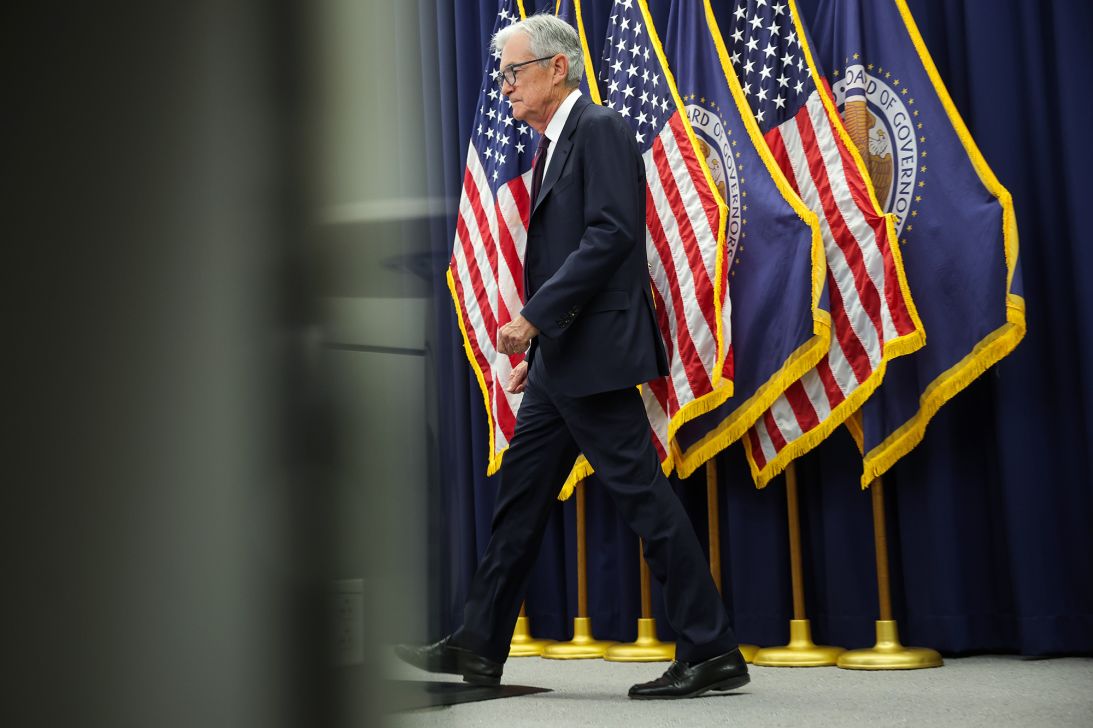
There is a particular kind of institutional vertigo that sets in when the most powerful monetary authority on earth changes hands in the middle of a geopolitical fire. On April 29, the Federal Reserve held its benchmark interest rate steady at 3.5%–3.75% for a third consecutive meeting — a decision that, in ordinary times, would have warranted a three-paragraph wire dispatch and a muted market shrug. These are not ordinary times.
Jerome Powell, conducting what was in all likelihood his final press conference as Fed Chair, arrived burdened by something rarer than any policy dilemma: the weight of an unfinished exit. Four members of the Federal Open Market Committee cast dissenting votes, producing an 8-4 split that CNBC’s reporting confirms was the most fractious FOMC decision since October 1992. At the same moment, the Senate Banking Committee advanced Kevin Warsh’s nomination as the next Fed Chair on a 13-11 party-line vote. And Powell announced he would remain on the Board of Governors — for reasons that are simultaneously principled, political, and deeply personal.
Welcome to the most consequential monetary leadership transition in a generation.
Why the Fed Held Rates Steady Amid Energy Shocks
The rate freeze itself was, paradoxically, the least surprising element of a deeply surprising day. Markets had priced a 100% probability of no change heading into the meeting, according to CME FedWatch data. The logic was austere: with the Consumer Price Index at 3.3% on an annual basis as of March — its highest reading since May 2024, well above the Fed’s 2% target — and the ongoing Iran conflict having sent crude oil above $100 per barrel, there was simply no defensible case for easing.
The FOMC statement was clinical in its diagnosis: “Inflation is elevated, in part reflecting the recent increase in global energy prices. Developments in the Middle East are contributing to a high level of uncertainty about the economic outlook.” That single sentence conceals enormous complexity. Energy price shocks are, in the Fed’s traditional framework, transitory — the kind of supply-side disruption that monetary policy cannot and arguably should not try to extinguish. Raise rates aggressively to fight oil-driven inflation, and you risk crushing employment. Ease to protect growth, and you risk allowing energy pass-throughs to embed in wage expectations and core prices. The Fed chose the third path: wait, and watch.
That patience has a cost. Personal Consumption Expenditures inflation — the Fed’s preferred gauge — has been running above 3% for the better part of two years, as CBS News noted in its pre-meeting analysis. What was once characterized as a transitory post-pandemic overshoot has calcified into something more stubborn: a structural plateau, driven now by energy geopolitics as much as domestic demand. The Fed’s dual mandate — maximum employment and price stability — is being tested not by a simple trade-off but by a chaotic collision of global forces that no interest rate committee in Washington can fully govern.
The Fracture Lines: Reading the 8-4 Vote
The four dissents tell four different stories, and Warsh would do well to read each carefully before his first FOMC meeting.
Governor Stephen Miran voted for a quarter-point cut, consistent with his dovish position since joining the Board in September 2025. His dissent reflects a genuine concern about growth: tariff headwinds, a cooling labor market, and the risk that excessive caution at the Fed tips a resilient but slowing economy into contraction. Miran is not alone in that fear — but he may be alone in his willingness to act on it.
The other three dissenters — Cleveland’s Beth Hammack, Minneapolis’s Neel Kashkari, and Dallas’s Lorie Logan — moved in the opposite direction. They did not object to holding rates; they objected to the statement’s retention of language implying future cuts remain in the cards. Their message, as Axios’s analysis captured, was unambiguous: with inflation in its sixth year above the 2% target and growth remaining solid, the FOMC should not be telegraphing easing at all. Remove the bias. Acknowledge the upside risks. Stop pretending the next move is obviously down.
This is the committee Warsh inherits. As KKM Financial’s Jeff Kilburg put it on CNBC, three of those four dissenters were “letting him know, we’re not going to let you lead us here.” That is a pointed welcome gift. It signals that any attempt by Warsh to deliver the aggressive rate cuts President Trump has publicly demanded will face substantial internal resistance — absent a genuine and measurable turn in the data.
Powell’s Exit Strategy: The Two-Popes Problem
No element of Wednesday’s drama was more unusual — or more carefully calculated — than Powell’s decision to remain as a member of the Board of Governors after his chairmanship expires on May 15.
Formally, Powell cited the ongoing investigation into Federal Reserve headquarters renovations. The Justice Department had handed the probe to the Fed’s Inspector General, and Powell stated he wished to see the matter reach “transparency and finality” before fully stepping back. His Board term runs through January 2028, and he signaled he would remain for “an undetermined period” while keeping a deliberately low profile.
The institutional calculus here is significant. Powell’s continued presence on the Board preserves a 4-3 majority of Biden-appointed governors — counting Powell himself, who was originally appointed by Trump before reappointment under Biden — against Trump-aligned nominees. It denies the White House an immediate vacancy to fill with someone more politically amenable on monetary policy. And it preserves a quiet counterweight, however restrained, against undue executive pressure on the institution’s independence.
Powell has been careful to frame none of this in adversarial terms. He is not positioning himself as a dissident. He congratulated Warsh publicly at the press conference. He pledged deference. But his very presence is a structural check, and all parties understand that. The “two Popes” dynamic — the emeritus and the reigning figure occupying the same institution — carries obvious risks of ambiguity and undermined authority. Powell, to his credit, appears aware of that tension, which is precisely why he has gone to lengths to minimize his visible footprint going forward.
His legacy, however, demands a fuller accounting. The Powell era — from February 2018 through May 2026 — spanned the Trump tariff wars 1.0, a global pandemic, the most severe inflation shock since the 1980s, the most aggressive rate-hiking cycle in four decades, and a partial easing cycle interrupted by Middle Eastern conflict. He made consequential errors: the 2021 “transitory” inflation miscall cost the Fed credibility it is still, in some measure, rebuilding. But his defense of institutional independence — against repeated and explicit presidential pressure — stands as a genuine achievement. The Fed did not become a political instrument on his watch. Whether that record holds under his successor is the central question of the next chapter.
Kevin Warsh and the Incoming Era: What His Stewardship May Look Like
Kevin Warsh is a man arriving at the Federal Reserve with a complicated relationship to his own reputation. His first stint as Fed Governor, from 2006 to 2011, produced a record that puzzled many economists: inexplicably hawkish in the aftermath of the Global Financial Crisis, he was seen as arguing for premature tightening at a moment when the economy desperately needed accommodation. That record has followed him.
Yet his Senate confirmation hearing testimony, as Invesco’s post-hearing analysis detailed, revealed a notably more nuanced posture. Warsh struck a broadly dovish, pragmatic tone — acknowledging the complexity of inflation in an era shaped by AI-driven productivity gains, tariff-induced supply disruptions, and energy shocks. He expressed openness to alternative inflation metrics like median CPI and trimmed mean inflation, which strip out extreme observations and may paint a less alarming picture of underlying price pressures than headline figures suggest.
On balance sheet policy, the picture is more hawkish. Warsh has been a persistent critic of the Fed’s $6.7 trillion portfolio — nearly eight times its pre-2008 size — and signaled interest in accelerating the drawdown. But he was careful to note, as Motley Fool’s analysis of his testimony observed, that meaningful balance sheet reduction is a deliberate, collective process requiring FOMC consensus and measured over years, not months.
On the critical question of independence, Warsh offered a formulation that was politically deft but left room for interpretation: “Monetary policy independence is essential,” he said in prepared remarks, adding that he was “committed to working with the administration and Congress on non-monetary matters.” The qualifier is load-bearing. Markets noticed. According to the latest CNBC Fed Survey, only 50% of economists and market strategists believe Warsh will conduct monetary policy mostly or very independently — a slim majority, and a 13-point improvement from the prior month’s survey, suggesting his confirmation hearing partially, but not fully, allayed credibility concerns.
The deeper tension is structural. Trump has been unambiguous in wanting lower rates, arguing that elevated borrowing costs disadvantage the U.S. competitively. Warsh is a creature of Wall Street and Washington, instinctively sensitive to the political environment he inhabits. But as Axios’s reporting highlighted, the hawkish bloc he inherits from this fractured FOMC will make delivering rate cuts — absent clear data justification — genuinely difficult. “Warsh will be hard pressed to get a majority of the FOMC to vote for rate cuts when core and headline PCE are running above 3% and GDP growth is holding firm at 2%,” observed Stephen Coltman of 21shares. That assessment is hard to dispute.
The Geopolitical Dimension: Energy, Tariffs, and the World Beyond the Eccles Building
What makes this Fed transition genuinely singular is the external environment it is occurring within. The Iran conflict has introduced a persistent energy price shock that sits awkwardly within traditional monetary frameworks. The Fed cannot bomb its way to lower oil prices, nor can it meaningfully incentivize domestic production through rate adjustments. What it can do — and what policymakers privately fear — is validate an inflationary expectation cycle if it eases while energy costs remain elevated. The signal matters as much as the substance.
Trump’s tariff agenda compounds the problem geometrically. Tariffs are, at their mechanical core, inflationary: they raise the price of imported goods, compress real consumer purchasing power, and trigger retaliatory measures that further distort trade flows. Their combination with an energy shock creates a dual supply-side squeeze that monetary policy is structurally ill-equipped to resolve. The Fed finds itself holding the economy steady not because it has solved the inflation problem, but because every available alternative carries greater downside risk.
For emerging markets, this posture carries its own collateral damage. Elevated U.S. rates sustain dollar strength, pressuring commodity importers and countries with dollar-denominated debt. Central banks in Southeast Asia, Latin America, and Sub-Saharan Africa have been forced into defensive postures — keeping rates higher than domestic conditions warrant, to prevent capital outflows. The Fed’s decisions ripple outward with a force proportional to dollar hegemony, and that hegemony has not diminished.
What Comes Next: Scenarios for June and Beyond
Warsh’s first FOMC meeting as Chair — likely in June — will be watched with an intensity normally reserved for geopolitical summits. The question is not whether he will cut in June; the data almost certainly will not support it. The question is how he frames the committee’s forward guidance, how aggressively he pursues communication reform (he has historically favored a more rules-based, transparent policy framework), and whether he moves quickly on balance sheet changes.
Three plausible scenarios frame the second half of 2026:
Scenario A — Cautious Continuity. Warsh adopts a deliberately conservative opening posture, holding rates steady through summer and focusing early energy on internal process reforms — communication, balance sheet review, and FOMC cohesion. This earns credibility at the cost of early growth-boosting moves.
Scenario B — Data-Dependent Easing. A genuine deceleration in energy prices — perhaps through a Middle East ceasefire or supply normalization — gives Warsh cover to cut once by year-end. This is the market’s mild base case and politically convenient, but risks appearing reactive to external factors rather than anchored in principle.
Scenario C — Hawkish Surprise. Persistent PCE above 3% and continued energy volatility push Warsh to endorse the hawkish bloc’s framing, removing the easing bias from Fed communications and signaling a rates-on-hold posture well into 2027. Markets would reprice, long-duration bonds would sell off, and the mortgage market — already strained — would tighten further.
The probability weighting, given what Warsh said in his confirmation hearing, likely favors Scenario A shading toward B. But the FOMC he has inherited is not easily managed, and the external environment could force his hand in either direction.
The Institutional Question That Outlasts Both Men
Beneath the tactical questions of rate paths and balance sheet trajectories lies a more fundamental issue that neither Powell’s cautious exit nor Warsh’s ambitious arrival fully resolves: the long-run independence of the Federal Reserve in an era of intensifying executive pressure.
The 1951 Treasury-Fed Accord — which separated debt management from monetary policy and established the central bank’s operational independence — represents one of the great institutional achievements of postwar American economic governance. As John Donaldson of Haverford Trust noted in the CNBC survey commentary, the degree to which Warsh and Treasury Secretary Bessent might seek to remake that accord is among the most consequential unknowns of the new era. Donaldson considers a breach unlikely. History suggests that unlikely does not mean impossible.
Powell’s decision to linger — quiet, unobtrusive, constitutionally present — may be the most meaningful gesture of institutional defense available to him within the constraints of his situation. It is an imperfect check. But imperfect checks, properly deployed, have a long record of mattering.
Warsh, for his part, enters the chairmanship with genuine qualifications: crisis experience, market fluency, and an apparent willingness to adapt his intellectual priors to new evidence. Whether those qualities prove sufficient to navigate the triple challenge of sticky inflation, tariff-distorted supply chains, and a politically charged White House — while maintaining the FOMC’s internal cohesion — is a question that will not be answered in June, or even by year-end.
What we can say with confidence is this: the Federal Reserve’s leadership reckoning has arrived at the worst possible moment — and that, in itself, is a test of whether American institutions are as durable as their architects intended.
Discover more from The Economy
Subscribe to get the latest posts sent to your email.



Key Takeaways
- Rolex’s secondary market rose approximately 7.9% year-over-year as of 2026 (per WatchCharts data) — trailing Patek Philippe (+16.2%) and Tudor (+11.4%) but still outperforming Audemars Piguet (+3.4%).
- Rolex raised U.S. retail prices 4–9% in January 2026 (steel models ~5.6%, gold models ~8.7%), narrowing the historical gap between retail and pre-owned pricing.
- Not every model appreciates: steel sports references (Submariner, GMT-Master II, Daytona) have held value far better than two-tone or widely available dress references like the standard Datejust.
- The Lady-Datejust posted the sharpest 2026 gain among tracked collections — up 22.73%, from roughly $9,269 to $11,376 — driven by demand for smaller, “everyday luxury” watches.
- Gold’s rise past $2,400/oz has directly lifted the investment case for Rolex’s precious-metal references (Day-Date, Sky-Dweller, Yacht-Master).
The Model-by-Model Picture
| Category | 2026 Trend |
|---|---|
| Lady-Datejust | +22.73% (strongest performer among tracked collections) |
| Steel sports models (Submariner, GMT-Master II) | Held value well; corrected from 2022 peak but stabilized above retail |
| Daytona | Corrected from highs above $50,000 to the mid-$30,000s; still among the most sought-after references |
| Two-tone/widely available Datejust | Flat to negative — “holds value” is an overstatement for this category |
| Gold references (Day-Date, Sky-Dweller) | Lifted by gold’s rise above $2,400/oz |
Why the “Rolex Always Appreciates” Myth Is Fading
The pandemic-era boom pushed some references — the Daytona above all — to speculative highs disconnected from historical norms. Since the March 2022 peak, steel sports models have compressed meaningfully, and dealers who bought inventory near the top have in some cases faced 20–40% markdowns on liquidation. The lesson for 2026 buyers: Rolex as a category is not a monolith. Value retention depends heavily on specific reference, condition, and whether the piece comes with box and papers (“full set”).
What’s Actually Driving 2026 Strength
- Retail price increases raise the floor. When a new Submariner retails at $10,050 (up from $9,500), a pre-owned example at $11,000–$12,000 suddenly represents a smaller premium — narrowing the gap without secondary prices actually moving.
- Supply discipline remains Rolex’s core lever. The brand has never confirmed production numbers, and secondary-market premiums remain entirely a function of Rolex’s own manufacturing decisions — a risk factor as much as a support.
- Certified Pre-Owned rollout. Rolex’s now fully rolled-out CPO program has changed how buyers transact in the used market, adding a layer of brand-verified legitimacy that supports pricing.
The Case for Rolex as a Portfolio Diversifier
Financial advisors increasingly frame luxury watches not as a replacement for equities or bonds, but as a tangible, historically low-correlation diversifier — one that carries its own risks (illiquidity, condition-dependent pricing, no yield) but has demonstrated multi-decade resilience for specific references.
Is Rolex a good investment in 2026?
It depends heavily on the specific reference. Steel sports models like the Submariner and Daytona have held or grown in value; two-tone and widely available dress models generally have not. Overall, Rolex’s secondary market rose about 7.9% year-over-year in 2026, trailing Patek Philippe but ahead of Audemars Piguet.
Discover more from The Economy
Subscribe to get the latest posts sent to your email.

Navigating Mortgage and Loan Refinancing in a High-Yield Environment
Global public debt crossing critical thresholds has kept central bank policies volatile, resulting in fluctuating US Treasury yields throughout 2026. For homeowners and commercial property holders burdened by previous high-interest borrowing cycles, finding optimal refinance windows has become a high-stakes financial puzzle. Stalled disinflation and stubborn employment numbers mean rate cuts are incremental, requiring borrowers to act with precision.
Timing your mortgage or commercial loan refinance in this environment requires a deep understanding of yield curve movements and lender risk appetites.
Decoding 2026 Refinance Dynamics
The 10-Year Treasury Yield Benchmark
Mortgage rates continue to track closely with the 10-year US Treasury yield. When macroeconomic anxiety spikes debt issuance, yields rise, tightening consumer borrowing capacity. Savvy borrowers monitor weekly Treasury auctions to lock in rates during brief dip windows.
Hybrid ARMs and Alternative Structures
With fixed rates remaining elevated, 7/1 and 10/1 adjustable-rate mortgages (ARMs) have surged in popularity. These products offer lower initial monthly payments, giving borrowers breathing room until central bank easing cycles fully materialize.
| Loan Product | Current Rate Range | Best For | Key Risk Factor |
| 30-Year Fixed Mortgage | 6.2% – 6.8% | Long-term predictability | Higher initial monthly outlay |
| 7/1 Hybrid ARM | 5.5% – 5.9% | Short-term ownership / flipping | Rate reset risk after year 7 |
| Commercial Refinance | 7.0% – 8.2% | Corporate asset restructuring | Strict DSCR lender covenants |
Actionable Steps for Successful Refinancing
To maximize your chances of securing favorable refinance terms in a volatile market, follow a disciplined preparation strategy.
Boost Your Credit Score Immediately: Lenders in 2026 are applying stringent credit tiering; a 20-point increase can drop your APR by a crucial quarter-point.
Shop Regional Credit Unions: Smaller financial institutions often offer portfolio loans with more flexible underwriting than major national banks.
Calculate the Break-Even Point: Ensure your total closing costs are recouped through monthly savings within 24 months of closing.
“Market Strategist View: Refinancing in 2026 is an exercise in opportunistic timing. Borrowers must maintain immaculate financial profiles ready to strike the moment Treasury yields dip.”
Mastering the complexities of today’s debt environment ensures you can successfully lower your debt service costs and protect your long-term financial stability.
Discover more from The Economy
Subscribe to get the latest posts sent to your email.

The days of pulling generic auto insurance quotes based purely on your zip code and age are officially over. In 2026, insurance comparison engines are powered entirely by generative AI and real-time telematics. These platforms digest thousands of live data points—ranging from your driving smoothness via connected vehicle sensors to real-time traffic congestion patterns—to generate hyper-personalized premiums instantly.
For consumers, this evolution represents both a massive opportunity for savings and a hidden trap for penalty pricing. Understanding how AI algorithms evaluate risk is essential for anyone looking to lower their monthly auto insurance premiums.
How AI Comparison Engines Evaluate Your Risk Profile
Behavioral Telematics and Connected Cars
Modern cars stream performance data directly to insurance aggregators. Generative AI models analyze braking sharpness, acceleration curves, cornering G-forces, and phone distraction metrics. Drivers who maintain smooth, defensive habits are rewarded with dynamic rate cuts of up to 40% compared to traditional rating tiers.
Predictive Traffic and Weather Modeling
AI tools now cross-reference your daily commute route with predictive weather and accident probability models. If your standard parking location or driving corridor has a statistically higher incidence of uninsured motorist claims, your quotes will reflect that hyper-local risk assessment.
| Comparison Factor | Traditional Rating Model | 2026 Generative AI Model | Impact on Premium |
| Mileage & Usage | Annual estimated odometer reading | GPS tracking & live trip duration | High (up to 35% savings) |
| Driving Behavior | MVR driving record & accidents | Real-time braking, speed, & G-force | Critical (determines tier) |
| Vehicle Tech | Make, model, and safety rating | ADAS calibration & repair cost data | Moderate |
Strategies to Lower Your AI-Driven Insurance Quote
To outsmart the algorithm and secure the lowest possible premium in 2026, drivers must proactively manage their digital footprint on insurance platforms.
Opt-In for Telematics Trial Periods: Many insurers offer immediate 15% discounts just for installing their driving app; let it track safe habits for 30 days to lock in permanent savings.
Scrub Unverified Public Records: Ensure your motor vehicle report is free of clerical errors that AI risk models misinterpret as reckless behavior.
Compare AI Aggregators: Use platforms that integrate multi-carrier API feeds rather than single-brand comparison sites to find the best risk-adjusted rate.
“Industry Note: AI-driven pricing rewards transparency and precision. Drivers who actively manage their telematics data consistently out-save those relying on legacy quote calculators.”
Embracing AI comparison tools allows savvy policyholders to customize coverage limits precisely to their driving habits, eliminating wasted premium spend while ensuring robust protection.
Discover more from The Economy
Subscribe to get the latest posts sent to your email.

Global Pension Systems Ranked: The World’s Best and Worst Retirement Frameworks

Global Supply Chain Vulnerabilities: From Eurasian Trade Corridors to Food Consumer Recalls

Why 5% U.S. Treasury Yields Signal a Global Market Regime Shift.

Federal Reserve Defies White House Pressure: Inside Trump’s Demand for Sub-1% Interest Rates After Historic 2026 Rate Hike

How Rising Interest Rates Impact Gig Economy Apps: DoorDash, Uber, and Urban Services

GasBuddy Market Insights: How Crude Price Shifts Impact Local Fuel Cost Averages

DoorDash Driver Payouts, Fee Structures, and Market Competition Analysis

OPINION:Breaking the 3.5% Growth Trap: How Pakistan Can Build a High-Productivity Export Economy

Global Equity Market Divergence: US Tech vs. European Dividend Stocks vs. Asian Growth

Asian Markets Analysis: Navigating Volatility in China, Japan, and Singapore Stocks

Stagflation vs. Soft Landing: How Central Bank Rates Are Reshaping European and Asian Economies

IMF & World Bank Global Economic Outlook: Growth Forecasts Across Europe and Asia

Fed Rate Hike Projections vs. Trump’s Interest Rate Policy: What Global Markets Expect Next

Singapore Stocks: The Ultimate Safe Haven for Markets and Finance in 2026?

State Farm’s $5B Dividend 2026: Who Qualifies & Payout Dates

US-China Relations in Q3 2026: Trade Tariffs and Supply Chain Risks

SpaceX Starship Flight 14: First Orbital Attempt & Starlink V3 Launch Explained

Top 30 Stocks for Investment in PSX for Massive ROI in 2026

The 2026 Crypto Regulatory Shift: What It Means for Institutional Investors

AI Chip Stocks 2026: The Best Semiconductor Investments Beyond Marvell

AI-Powered Training: The Next Multi-Billion Dollar Ecosystem in Fitness

Tween Back-to-School Trends 2026: What’s Driving the $85B Season

10-Year Treasury Yield Hits 4.80%: What It Means for Rates & Portfolios

Oil Prices Break $100 in 2026: Middle East Conflict & Energy Markets

Shein Clothes Quality & Safety in 2026: What Lab Tests Show

Fidelity Investments Review 2026: SPAXX Yields & Zero-Fee Funds

MRVL Earnings 2026: Why Marvell Sank Despite Beating Estimates

China’s US$10.8 Billion Trade Shortcut: Why the Pinglu Canal Matters
-

 Markets & Finance9 months ago
Top 15 Stocks for Investment in 2026 in PSX: Your Complete Guide to Pakistan’s Best Investment Opportunities
-

 Analysis7 months ago
Johor’s Investment Boom: The Hidden Costs Behind Malaysia’s Most Ambitious Economic Surge
-

 Analysis7 months ago
Top 10 Stocks for Investment in PSX for Quick Returns in 2026
-

 Analysis7 months ago
Brazil’s Rare Earth Race: US, EU, and China Compete for Critical Minerals as Tensions Rise
-

 Banks8 months ago
Best Investments in Pakistan 2026: Top 10 Low-Price Shares and Long-Term Picks for the PSX
-

 Investment8 months ago
Top 10 Mutual Fund Managers in Pakistan for Investment in 2026: A Comprehensive Guide for Optimal Returns
-

 Global Economy9 months ago
15 Most Lucrative Sectors for Investment in Pakistan: A 2025 Data-Driven Analysis
-

 Global Economy9 months ago
Pakistan’s Export Goldmine: 10 Game-Changing Markets Where Pakistani Businesses Are Winning Big in 2025